The power of believing in yourself

March 30, 2012

Too often, I see writers who don’t believe in their own talent, and look to others for verification. Thing is, no one else can fill your literary bucket o’ love. You may have a zillion people tell you that you’re the best thing since the chocolate martini, and you’ll never believe it because you don’t believe in yourself. The trick is to love what you’re doing, regardless of the outcome.

I see this every day in the authors we publish. Every one of them have faced amazing odds and punched through to the other side because they felt some power within that propelled them to carry on. My authors inspire the snot out of me, not just because of their stories, but because they faced huge odds and relied on little more than their own strength.

It takes huge confidence to be in this business, and at the end of the day, you only have your personal burning fire warming your soul propelling you onward.

So that’s my Friday wish for you, lovely readers. And if that’s not enough, just click on the video below. These kids are amazing, and I admit to taking great glee seeing that asshat Simon Cowell left with his pie hole hanging open.


Promo plan – beware the name dropping

March 29, 2012

"I knows lotz of peoplez..."

I’m a one for specifics. I often b-p-m (bitch, piss, and moan) about SPECIFICS when discussing query letters and synopses, and now I’m b-p-m’ing about it in book proposals. In a word, vague bites it. If you’re going to mention The Big HooHa Name in your proposal, then I really appreciate it when you back that up with specifics.

Here is an example of what I mean…something that drives me a bit batty because I see it so much in the promotion plan section of book proposals:

“Joe Bogglesfart is head of Big HooHa Group and has promised to help promote my book any way he can.”

What does this mean? It’s lovely you mention a Mr. BigPants, but how does his name and position specifically play into helping promote your book?

  • Is he going to have you on his radio show?
  • Is he going to host a signing event and make sure all the local media is there to capture your smiling mug?
  • Does he have the stuffing to get you on the Today Show?
  • Will he climb to the top of Mt. Everest and give a big shout out to the yaks?

See, without specifics, I consider this a throwaway statement because it has no meaning.

On the other hand, this is very helpful:

“I am long-life friends with Joe Bogglesfart, who is host of the popular morning show, The Anorexic Yak. He has promised to have me on his show upon release of my book.”

This lets me know that I may be able to anchor some national buzz for your book should this appearance come to pass.

I know it’s fun to be able to toss around important names because we hope that importance will leech over to us. But it has to mean something. The name Antonio Banderas will naturally have me breaking out in a post-menopausal sweat, screeching, “Where? Where? Let me at ‘im!” But unless Tony has offered to do a commercial on prime time TV discussing my brilliance, then he’s little more than a name that has no meaning attached to it.

The Foreword

Another pet peeve that drives me to mainline rotgut gin at noon is the promise of a Mr. BigPants foreword. Unless you really have that promise in the bag – preferably already written – then avoid saying it. I’ve seen all sorts of promises like this only to find out, after digging deeper, that well…um…er…Mr. BigPants’ foreword isn’t forthcoming after all.

It may be perfectly legit, and you thought you really did have that promise, but it looks a bit suspect if you’re standing in my Nikes. Avoid the problem by keeping it under your hat. If it does come through, think how your editor will do the happy happy joy joy dance and sing your praises ’til the beagles stop howling. After all, the fact that a big name has offered to write a foreword isn’t a selling point to me. Your book is the selling point, and everything is else is gravy.

I tend to think of this name-dropping thing as query-stuffing in much the same manner as when Mary Katherine Horner used to stuff her bra in sixth grade. It was as phony then as query-stuffing is now. I realize authors stuff their queries with big names so I’ll get all slobbery and ask for pages. And I may have done that many years ago, but now, after a few bumps and burns, I’m harder to impress.

It all comes down to the book. If the book and the author’s personal platform speak for themselves, then “big name” is simply icing on the cake. That way, if things fall through, I’m not weeping in my margarita.

In other words, no try to foolz us, ‘cos we getz mad.


Is your book a Fence-Sitter? Consider finishing your book!

March 27, 2012

I haz a sad. No, I haz a frustration. I read a proposal (unagented) that sounded right up my alley. The writing of the sample chaps was solid, and I stayed fully engaged right up to the end of chapter 3. Of course, I immediately wrote the author asking to read the full. And here’s where my blackened, soulless, little heart fell.

It isn’t written.

Now before you cry, “No fair, Pricey!” I’ll allow that many books are bought based on a few chapters, but it’s mostly in cases where the author’s agent is shopping ideas because the author has a track record, the story is known, or the author’s platform is so huge that someone would be insane not to buy the book. For the rest of us mortals, we are an unknown quantity with no discernible track record to hang our hats on.

For instance, I’m far more likely to nab something written by Lev Raphael than Jane Swanthbabble because Lev has a billion publishing credits to his name, and he’s a very respected writer. And he’s so nice, he can melt buttah.

Jane, on the other hand is a big question mark – a blank slate. She has no publishing credits, but she has a pretty good platform for her story. However, her story is personal, so I don’t really know if the ending will be a kapow and satisfactory, I have no idea how well the story will be organized, I have no clue whether she even has a story.

The Fence-Sitter Book

Not all books make us jump for joy or spritz them down with bug spray. There is a lot of gray area where we ask, “Do we like this? Is there a story?” Without having more to make that judgement call, that book sits on the fence – meaning it doesn’t have enough going for it to push it to one side (a publishing deal) or the other (rejection).

If we only have are a few chapters, it’s far easier to walk away rather than take a chance because publishing is expensive. I’ve bought a few projects based on a few chapters and ended up cancelling them because the final product fell far short of our expectations. Cancelling a project is expensive and a huge time-suck. If I feel a book is a fence-sitter, I have to go down my checklist to see if I can teeter it to one direction or another.

  1. Does it have a huge, universal appeal? If I know the topic is hot and vast, and not much is in the marketplace, I may consider taking a chance.
  2. What is the author’s platform? If the author’s platform is huge, then I’m willing to take the chance because I know the author will be a major advocate for the book.
  3. Do I love the book? If points 1 and 2 are a go, then it comes down to how much I love the book. And this is the hardest point to decide because I’m hindered with the lack of content.

It’s easier to walk away than it is to take the chance when confronted with a fence-sitter. Problem is, how do you know whether your book is a fence-sitter? You don’t. And that’s why I always recommend finishing your book.

Is this logical?

I understand people are extremely busy and have a million things vying for their attention, but I will never understand the logic in saying, “I’m waiting to sell the book before I finished it.”

My comeback is, “Are you committed to this book, or not?”

If this subject is near and dear to your heart, then why aren’t you writing it? What are you losing by not writing it? With a partial submission, I have few cues in which to formulate an opinion, so I have to draw conclusions that may not be valid; like questioning the level of commitment to your book.

That may be completely unrelated, but when we’re pouring thousands into publishing a title, we have to feel confident it and the author can go the distance for the life of that book.

I have bought many books from debut authors because the books were complete, but I’ve rejected far more because they sat on the fence and were incomplete.

I would think writers want to make themselves as attractive a target as possible, and you can only help that cause if you finish your book because it truly is the difference between “no thanks,” and “may I offer you a contract?”


“My manuscript has been professionally edited.”

March 27, 2012

It’s common to see this sentence somewhere in query letters, and I always wonder why authors think that’s an important inclusion. In truth, I would rather they leave this out because it’s not a selling point for me, and here’s why:

Editorial Blunder

When you state that you’ve enlisted the services of a third party editor, you are subconsciously raising my  expectations. That means that I’m double-secret-scrutinizing your manuscript, and any misplaced commas, poor syntax, misspelled words, lack of transitional sentences, pacing, flow, or plotting will have me clucking like a chicken loaded on too much grain alcohol.

Just last weekend I read a submission from an author who revealed that his work was beyond reproach because he had been “professionally edited.” Let me tell you, it was a hot mess, and I could only wonder at this “professional’s” qualifications. Needless to say, the author had two strikes against him…one, for revealing his editorial “help,” and two, for delivering an editorial mish mash of mush and not realizing it.

“Professional”

“Professionally edited.” Now, what does this mean? In truth, anyone can hang their shingle out and call themselves a “professional.” There are no state boards or licenses one must obtain to be labeled thusly, so this whole idea of “professional” is a bit of a misnomer.

There are many thankless souls who have spent years making their living as editor. They have edited many well-published books, possibly have done freelance work for solid publishers, and have excellent reputations. They are the precious darlings who I consider “professionals.”  When we had the Great Publishing Implosion of 2008-9, lots of talented editors lost their jobs, and they turned to doing freelance work.

But mixed in with this group, are those who have a barely-passing handle on grammar and/or know very little about content editing. If you, the author, don’t know the tools of your trade, then how can you know when your third party editor is as under-schooled as you are?

Because of this, it’s impossible for me to take this whole “professional” thing seriously. Out of literally thousands of submissions I’ve read, I signed one author who I feel got her money’s worth, We barely touched her manuscript when we signed her because it was so clean. And at that, I know the author really didn’t need to hire third party help because I’ve seen the writing brilliance on her blog.

And this brings me to my next point:  who gets the credit?

To Whom Should I Place My Faith?

When you tell me a “professional” has done the holy cross over your work, I have to consider whom to thank…you or your third party editor.

Case in point, an editor friend of mine wailed on about the editing nightmare she was having with one of her authors. The manuscript was pretty clean, but she wanted the author to make some rewrites to flesh out a couple sub-plots that would enhance the overall story. My friend made her suggestions and awaited the rewrites – which came back and were horrendous.

Missing was the fabulous signature voice that carried the book and convinced my friend it was a “gotta have it.” In its stead was clunky writing, missing transitions from each paragraph to the next/from one scene to the next. My friend was flummoxed. “It’s as if a whole different person did these rewrites.” A hot mess.

My friend was naturally suspicious about who actually finessed it to the point of being publishable because the author appeared ill-prepared to handle simple editorial rewrites.

So, you can see that this isn’t merely a matter of whom to thank for the clean manuscript, but it’s a red flag to editors because we’re wondering if  the author has the chops to handle the editing process. Having experienced this many years ago with an author who is no longer with us, I can attest that it’s enough to make me want to pull my hair out.

I appreciate authors who are honest with themselves. If you think you need to hire an indie editor, then do you believe your writing skills are evolved enough to be publishable? If it’s a matter of getting feedback, then join a writer’s group, or get a group of beta readers who will offer objective critique.

But if you feel that your grammar isn’t up to speed, then you really need to learn this aspect of your craft. It’s like a surgeon saying, “I’m really good at heart transplants, but I get all icky at having to crack someone’s chest, so I’ll hire someone else to do that.” You’re either a heart surgeon, or you aren’t. You’re either a writer and know the tools of your trade, or you don’t.

When To Use a Third-Party Editor

If you’re self-pubbing your book, then it’s mandatory to hire a good editor. There are so many horrible DIY books flooding the marketplace, and you want to make sure yours is glorified for its fabulosity, not its horrorosity. Make sure that the editor you hire has a solid background and has edited books published by solid commercial presses.

Another reason is, Why the hell not? If you have the disposable income and you don’t feel confident about your abilities, why not hire a third party editor? You can treat the experience as a private education, so you’ll be that much better with your next book. But always be aware that if this book is published, you’ll need to have the chops to handle rewrites. No running home to Mama.

It’s important to learn ALL aspects of your craft, not pick and choose the things that are fun. Otherwise, at some point, you will be found out – probably during editing phase and your editor is ready to jump off the Empire State Building. Be smart; save an editor from certain death or margarita-dependance, and enhance your brilliance.

And don’t include this in your query.


Be Writer Safe – Look Both Ways Before Crossing the Street

March 26, 2012

A woman is mighty mad at her doctor because he used her as the subject of his book, THE ADDICT: One Patient, One Doctor, One Year, published in 2009 by William Morrow, without her knowledge or, obviously, her permission.

In reading the article, two glaring thoughts bump around in the cavern that poses as my brain:

  1. Why did he do this?
  2. Where was William Morrow’s editor in all this?

As one who specializes in nonfiction, I am achingly considerate of a couple things:

  • Content. Is it real (hello, Greg Mortenson and James Frey)? If I can’t get satisfactory verification, then I walk away. Who needs the aggravation and possible lawsuits?
  • Permission. If someone comes to me with a biography or a story that involves someone other than the author, I need to see proof of permission. Again, who needs the aggravation and possible lawsuits?

I’m surprised the editor went to submission committee without having those permissions in place. And who knows? Perhaps the good doctor did provide “permission” and the editor didn’t follow through by contacting the subject of the book. I took note that William Morrow isn’t included in the lawsuit, so I dearly hope the editor covered her asterisk.

However, this lawsuit could adversely affect sales, which would make William Morrow, and the doc’s editor, ready to mainline cheap gin. I know I would. To be honest, this sort of thing really takes the jam out of my jelly doughnut because dishonesty is so destructive. The fact that this doctor would break the HIPAA Privacy Rule is beyond stupid, and could end up costing him his medical license, or at the very least, a healthy fine and swift kick in his dangling participles.

But this goes to an even deeper level, and that’s the fervent desire to be published. I use the analogy of crossing the street. Back in the Early Jurassic Era, when I was a wee bairn, I was standing on the corner with my sister – who is infinitely wiser and nine years my senior. I saw something across the street…a candy store…and made ready to dart out like a heat-seeking missile.

My sister grabbed my hand. “What? Are you barking mad? That truck almost smacked you!” She was right. Barreling down the boulevard was a huge garbage truck. I reflected upon the ignominy of meeting The Great Cosmic Muffin at his Pearly Gates and telling him I’d been wiped out by a garbage truck, of all things. Surely, some better demise awaited me…and when I was old and feeble.

My fervent desire for a sugar fix put blinders over my eyes, to where my sister had to save my sorry ass. So who is the one who saves your hide in your never-ending dream to cross the street to Published Land? Are you willing to be smacked upside the head by garbage trucks, or are you more careful about your safety and wait for the Crossing sign to light up?

This doc/author facing a lawsuit (and probably a “go stand in the corner” edict from his editor) didn’t have anyone holding his hand, telling him to wait until it was safe to cross the street, and he was like my six-year-old self who couldn’t wait, or didn’t care, to do things the right way.

Make sure you take better care!


Writing complaints aren’t a new phenom…

March 24, 2012

I read this post over at Brain Pickings and nearly laughed up a vital organ. It seems that writing woes are far from new. Even the holiest of holy had their darker moments. Those rascally monks…

Made me laugh out loud:
Now I’ve written the whole thing: for Christ’s sake, give me a drink.

Most true statement:
Let the reader’s voice honor the writer’s pen. Amen to that.


Can Your Agent Sell You? – Part 3: Specifics

March 23, 2012

So my first post in this series focused on the fact that not all agents are created equally, and the importance for authors to know the difference between DESCRIPTION and SPECIFICS when writing a query/synopsis. Is your agent doing a good job of selling you?

Yesterday’s post focused on DESCRIPTION via an example query/synopsis and how this kills any chance of capturing an editor’s attention.

Today’s example provides the counter punch – SPECIFICS.

This example comes from a very talented author we just signed a few weeks ago. I’ve known his agent, Claire Gerus, for years, and we’ve always joked about how fun it would be to work together. Our joking became reality when we signed two of her other clients last year (and who are achingly talented), and Scott Damian’s book, V-V-Voice: A Stutterer’s Odyssey.

Claire is the example of what agents do right. She knows how to make my mouth water AND provide me with SPECIFICS, so I have a clear idea of the story’s main points. The set up of this is a bit different because Claire wrote a proposal, which is common in nonfiction. I love them because it provides all the information I need at some point, and it’s all under one pinky-white cocktail umbrella.

(All authors should write a book proposal, whether you need one or not, because it forces authors to step outside themselves and consider their books as a commodity and not just the thing they love and sweated over. For more info about writing a book proposal, click here.)

COVER LETTER:

V-V-Voice…the word sticks in the back of your throat. Your mouth shudders as your teeth grit together. You push, trying to get the word out. A jarring, jackhammer sound gurgles out of your mouth. Your face contorts and your body shakes as judging eyes stare at you. A shameful feeling washes over you. Your soul is forever crushed.

These are the wounding, humiliating trials that 60 million stutterers worldwide endure each and everyday…and Scott Damian is one of them.

In this gritty, raw memoir, Damian details the stirring battles he endured while searching for a solution to his inability to speak without stuttering.

From his haunting blue-collar childhood in New Orleans to the physical and psychological scars that led Damian down a path of self-destructive behavior that was as crippling as the stuttering itself, “V-V-Voice: A Stutterer’s Odyssey” chronicles the struggles of one stutterer to do the unimaginable; to use his voice as an actor and a writer, and help others find their own.

This grabbed me immediately because I was shown how it feels to have words trapped in my mouth (something that has never been an issue for me, gah). I’m instantly transported into the author’s shoes. My immediate reaction is to open the book proposal and continue reading.

SYNOPSIS:

Imagine you’re a child who longs to be heard. You try with all your might to speak, yet you can’t enunciate that first word, that first letter, even that first sound. You are shoved around, thrashed, and punched by many of your peers because they think of you as different. Being called “stutter bird,” “freak,” and “retard” becomes the norm. Instead of having faith in yourself, you have more faith in how others perceive you.  A deep sense of fear and insecurity build up inside of you, and you have convinced yourself that you will never talk again. For you, there is no hope. No future. No salvation. All you can depend upon is your silence, for you know you will be a stutterer forever.

The first paragraph is always designed to grab, and I was grabbed by this. For those of us for whom speech isn’t an issue, this paragraph shows us what it’s like to fight daily to communicate without fear. This is the set up para, so I’m expecting the next paragraph will provide further detail.

Fast-forward to thirty years later. You have become a stutter-free adult. You have forged ahead through years of discouragement, disasters, and victories to become a successful actor and writer. Every day you speak the written word with clarity and precision. You now write the words others believe in. You utter phrases that move hearts and arouse emotion.

This is short and sweet, and outlines where the book is headed. The author goes from fearful, humiliated child to successful actor who is stutter-free. I’m still engaged because the first thing I’m asking myself is, “How did he get from there to here? That’s a story I want to read.”

How this stuttering boy became an articulate artist, and his unrelenting journey to find his true voice, is the heart and soul of the memoir, “V-V-Voice: A Stutterer’s Odyssey.”

And here is the log line, the ta-da.

This memoir is aimed to inspire the 60 million people world-wide who stutter, as well as to reassure and inform those who witness their loved ones trying to deal with a similar dysfunction. Most important, “V-V-Voice” will help readers understand what it means to be a stutterer, and bring comfort to millions who may be experiencing their own agonizing challenges and personal fears.

This is the marketplace paragraph, the info that tells me there are a lot of people who are in the same boat as the author.

This book will also speak to the dyslexic teenager out there who agonizes over reading aloud in his 8th grade class, but wants to one day become a playwright; or the kid with a lisp who longs to recite Shakespeare on a grand stage, or the shy office worker who yearns to ask out the one sweet girl who smiles at him every day.

Here are some specifics about what the author goes through during his childhood in order to give me a taste of where this book is headed and how deeply emotional and personal this book is. The true ah-ha moment.

Everyone has at least one trial in life to overcome. Everyone is looking for a glimmer of hope. These are the common threads that connect us all. During this time of recession, depression, foreclosure, natural disasters and war, readers are looking for inspiring stories. “V-V-Voice” not only brings inspiration to those who need it, it also confirms that by giving voice to our dreams, we will achieve greater rewards than we can possibly imagine.

This paragraph brings it home by bridging a common bond that unites everyone – the challenges that all humans face in some form or another. This gives the book universality.

A Word About Tailoring

No, I’m not talking about a ripped hem or missing button. I’m talking about tailoring your query, which is something Claire does, and makes me love her all the more. She knows we publish books that focus on everyday people facing extraordinary circumstances, so she appeals to that very element because she knows I’ll be looking for it. Too often, agents and authors don’t tailor their queries/synopses/proposals to those they query. So, in my case, if I don’t see the ordinary facing the extraordinary, and how they overcome and prosper, then it means I have to ask. Often, they don’t have the answer right away because they hadn’t considered those elements.

I understand agents or authors can’t possibly foresee every contingency, but if an agent or author is going to query someone, doesn’t it make sense to research the publisher and tailor their queries to whet that editor’s appetite? It may seem like a bother, but the idea is to sell the work, right?

I do this with cover letters I send with our media kits. I start with a template and tailor them accordingly. If one media contact has specific elements they’re looking for when deciding to offer an interview, I play those elements up so as to capture their attention. The smart agents, like Claire, do this. The trick is to decide whether your agent (or you!) are doing it as well.

After all, it’s all about the SPECIFICS.

I realize I’ve used nonfiction examples, which can offer leeway in the guise of a book proposal…which, as I said above, everyone should write – even you novelists. But I want to offer an example of a fiction query that hits the high points as well, so you may click here.

Go forth and be brilliant!


Making Sure Your Agent Can Sell You – Part 2: Description vs. Specifics

March 22, 2012


On the heels of yesterday’s post about description vs. specifics in a synopsis and/or query letter, I promised to show an example of both for comparison. Today’s example is DESCRIPTION…and akin to the type of synopsis I received last year – and something I still see quite a bit. Not just from authors, but agents.

To add a bit of reality to this synopsis below, I used an actual synop sent to me years ago and fluffed things around to protect the innocent.

——————————————–

HOLY COW, I HAVE HALITOSIS

I can’t believe my own reflection. I look okay, for a guy of twenty-seven…blond, blue eyes, just under six foot. But when I smile, holy crap. I look like I chiseled out Mt. Rushmore with my teeth. That’s what teeth grinding will get you. And my breath? Let’s just say that it melts my bathroom mirror. Nothing works, and I’ve tried them all. I’ve lost my job, my friends, my family, even my dog growls at me when I enter the room. What’s the point of going on?

I’m not a fan of starting a query letter or synopsis with actual text from the book. It means something to the author, but not to anyone else because it lacks context. It’s a throwaway, not a selling point.

Thus is the beginning of HOLY COW, I HAVE HALISTOSIS. The author, Max Mushmouth, is an Arizona-area dentist, minister, and part time ditch digger who grew up in a Southern working-class family that was afflicted with severe halitosis. In fact, halitosis pervaded Max’s formative years on every level.

This is an OK first paragraph. It intro’s the author, where he lives, his particular boggle, and how that boggle affected his life. At this point, I’m expecting specifics next…the WHAT, HOW, WHY.

Despite Max’s best efforts to break the circuitous heartbreak of halitosis that affected not only him, but his family members, Max found himself at the end bottom of the barrel—-alienated from his friends, unemployed, unloved, penniless, homeless and in the throes of halitosis so severe that it threatened to destroy his very life.

Unfortunately, this is description, scene setting. Not what I was expecting, but forgivable provided the next paragraphs lead directly into specifics.

HOLY COW, I HAVE HALISTOSIS begins as Max hits the skids.

Good lead in. However, as you’ll see in the next paragraph, this is a lost opportunity where the agent should have launched into the specifics of the author’s journey.

Then, in a blend of personal narrative, family history, and hard-hitting investigation, HOLY COW, I HAVE HALISTOSIS methodically weaves together all the strands of life, family, personal shortcomings, unfortunate genetics—and most of all, society’s fundamental misunderstanding of halitosis—which all combined into the near-lethal cataclysm that brought Max to his knees.

This is where the agent veers completely off course by offering up only the vaguest of descriptions. The first thing I’m asking is HOW and WHAT brought Max to his knees. Those are specifics. It doesn’t matter what techniques were used in organizing the book…who cares? I’ll figure that out when/if I read the pages. This is a throwaway, not a selling point. A lost opportunity to grab me.

Max combines his own personal narrative with labor intense investigation that exposes just how poor a job the American dental system does of caring for those afflicted with halitosis, and explodes the crippling, destructive social stigmas that still drive U.S. perception, professional and personal bias, and society at large to discriminate against and penalize those who are breath-challenged.

I see what the agent is trying to do here – provide the “gotta have it” element…that millions are afflicted and MUST read this book. I like this because it helps me decide whether this is blatant puffery or whether there really is a market who would buy this book. The problem is that she hasn’t provided any specifics, so I can’t appreciate the quality, or lack thereof, of the US dental system, or the viability of this book because I still have no clue what it’s about. It’s all just buzz words that sound really cool, but provides no backup. This is a throwaway, not a selling point. A lost opportunity to grab me.

Via a dynamic mixture of poignant and emotional flashbacks, professional and social analysis, and investigative journalism, Max Mushmouth uses his experience as both a survivor of halitosis and a dental-healthcare critic to evaluate family dental health and dental healthcare in the United States. This powerful, passionate memoir will offer education and hope to the millions of American families who suffer the oppressive weight of halitosis.

And this is where I blow out the candle and put the cat outside (if I had a cat, that is). This is an epic failure because the agent blew an entire page on nothing but description. I’m no clearer to understanding what this book is about than when I first opened up the file. If I was truly interested, I would have to write the agent back and ask them to please tell me with what this book is about. The specifics.

The author, this agent’s client, will never know of the lost opportunity, and I fear it will be hard to sell this book. Would you be surprised to know that this kind of descriptive query from agents is far from unique? I’ve seen HUGE agents send queries that were bantha fodder, and I always secretly wonder if they believe they sell works based simply on their own fabulosity. If so, no one sent me the memo.

Of course, most agents are lovely, and I adore them with all my heart because they take their jobs seriously and want the best for everyone – and take the necessary steps to make our little editor mouths water. It’s a good idea to ask your agent to see the query letter/synopsis they’re sending out. After all, you’ve worked this out together, so you should feel confident that what’s going out is the very best.

The synop above is what not to do. Tomorrow, I’ll show a synopsis that I thought was so coolio that I signed the author – to the utter joy of a very delightful agent – after one of the briefest turnarounds in Behler history.


You’re agented? Cool! But can she sell you?

March 21, 2012

I had the pleasure of meeting a lovely agent last year at a conference in Florida. We chatted about our specialties and were happy to discover she may have something I’d find interesting. A couple weeks later, she sent me the query letter and attached a one-page synopsis and the manuscript.

Sadly, that’s where things fell apart.

The query letter mentioned our meeting and thanked me for offering to take a look at the book. Oddly, there was nothing about the book. A query letter is a sales pitch, designed to be all mouth-watery, so I’ll be excited to read more.This was Strike 1.

She attached the synopsis, so I opened it up…which was all description.This was a huge Strike 2.

Here’s the thing:

  • It’s not important to tell me how the narrative is organized because I’ll find that out when/if I read the book. It’s a throwaway, not a selling point.
  • It doesn’t matter how the author puts the story together, and the various techniques used because I’ll figure that out when/if I read the book. It’s a throwaway, not a selling point.
  • It doesn’t help to tell me the book is poignant and emotional…show me. It’s a throwaway, not a selling point.
  • It doesn’t help to tell me the book will help millions…show me. It’s a throwaway, not a selling point.

In short, the synopsis was a lot of wasted space and opportunity.

Description is lovely when you’re talking about the insidiously adorable Antonio Banderas, but it’s a deal-killer when trying to pitch a book.

A synopsis is defined as a brief or condensed summary of the plot of a novel, motion picture, play.

Description, on the other hand, is defined as a statement, picture in words, or account that describes.

See how the two are different? So let’s use Antonio as an example (yes please). We can have a grand time describing Antonio ’til the cows come home – his exquisitosity (totally made that up), how his singing can melt buttah, and how his flamingo dancing weakens my knees. However, those descriptions don’t show me squat about who he is, his acting abilities, his professional accomplishments. That’s what you get in a synopsis.

The agent should know better, so that was Strike 3, and she was out. Sadly, so was her client/author.

So, here’s the deal; it’s in your best interest to understand the makings of a good query letter and synopsis. I know, I know, you thought having an agent would free you of this hassle, right? But you did something right in order to get her attention in the first place.

This isn’t my first rodeo with agents who did their author clients no favors, so it’s not a bad idea for you to see exactly what your agent is sending out to editors. It shouldn’t be a deep, dark secret.

Somewhere…anywhere…should have the following:

Genre: Seems silly, but you’d be surprised at the number of queries that don’t include the genre. We do have tinfoil hats, but we invariably leave them in our other purse. We gotta be told.

Word Count: Another favorite that gets shoved under the carpet. This is so important to editors, and is literally the difference between “yes please,” and “no thanks.” If something is 245,000 words, I’ll instantly reject it. If it’s 34,000 words, I’ll instantly reject it. If it’s between 50k – 90,000 words, now you’re in my ballpark. It’s bothersome to have to turn around and ask. An agent (and you brilliant authors) should know to include this.

Plot: This is where the tequila meets the margarita…the guts of your query.

  • Who is the main person in your book?
  • What is his/her story?
  • What does s/he want?
  • What does s/he discover?
  • What choices/decisions/changes does s/he encounter?
  • How is s/he influenced by those choices/decision/changes?

The offshoot could also include:

  • What terrible thing will happen/ would have happened if s/he chooses (chose) A; what terrible thing will happen/would have happened if s/he doesn’t/didn’t?

Tomorrow, I’ll put up an example of a description query letter that isn’t an attention-grabber and one that totally got my attention – so much, that I offered them a contract.


After visiting Boston, who cares about reality?

March 20, 2012

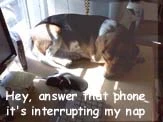
"Buzz off, I'm sleeping."

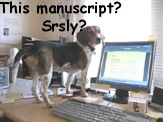
So now that I’m home from Bahston after visiting with Baby Daughter, only one thing remains: Reality. Unlike the beagle, who escapes this on a regular basis, I have books to send out to reviewers and media, promo plans to send to the sales guys, new authors to kiss and welcome, and editing to do.

I’m entering into this reality phase kicking and screaming because I really adored Bahston. I also learned that St. Paddy’s in Cali is like a vanilla shake when compared to Bostonians, who take this day as seriously as a book review from Kirkus. My liver may never recover, and have put it on a restricted diet of water.

In spite of the compromised state of my vital organs, I’ve decided that it’s good to leave reality every now and then because it puts new wind my sails, and helps me see my job with a clearer perspective.

It’s something I always recommend to anyone who has just finished writing a book. Walk away from it – go to Boston, Hawaii, the moon…only don’t start editing or rewriting because it’s too fresh and the temptation to noodle is too strong. Escaping reality replaces the constant reminder that, “Hey, I just finished writing a book…yippee skippie!”And when you do return to reality, you can appreciate the good and the warts.

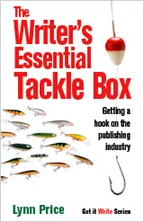
So if you’re stuck on your plot development, or just finished your book, skip out on reality and enjoy something completely different. Consider it part of your writing tackle box. As for the beagle, I’ve decided that her escape from reality would actually entail doing an honest day’s work.


Follow

Get every new post delivered to your Inbox.

Join 955 other followers

Powered by WordPress.com