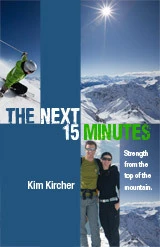
The Next 15 Minutes – Buy it ‘cos Dad LOVES it

May 12, 2012

I know, I know,  no one is allowed to use the “My mom loved my book” fodder, but this isn’t my book, so I’m going for it. My dad is so adorable and supportive, but the man simply does not read books. He has this weird thing where he falls asleep whenever he reads…and it’s not boring stuff.

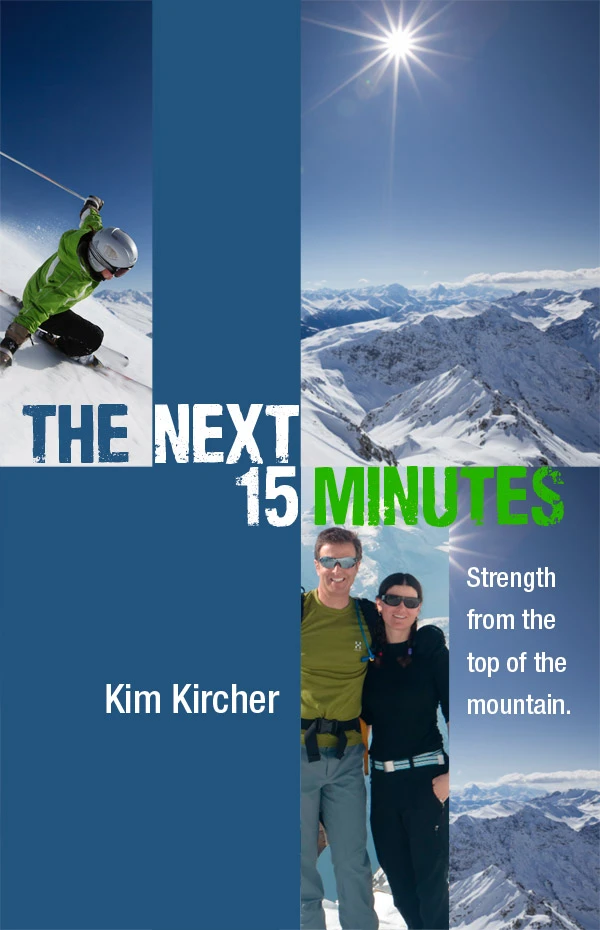
He told me how when he was at Stanford he used to have to walk around his dorm room while reading so he wouldn’t crash out. So it was a huge surprise when he told me he’d read Kim Kircher’s fabulous book, THE NEXT 15 MINUTES. AND LOVED IT. Dad has always been an adventurous guy…a pilot in the war, diver in college, travel-meister…anything that entailed learning and doing something exciting and new, you can count my dad in.

Given that, it’s no surprise how much he loved Kim’s book. Its action-packed stories of Kim’s equally amazing life is perfect medicine for my dad, and anyone who loves action more than being an armchair cowboy. Her experiences as a bomb-tossing avalanche techie, rescue Ski Patroller, mountain climber, and basically anything else that involves lots of guts, brawn, and danger becomes her savior while she takes on the biggest mountain of all – racing against time to find a suitable donor for her husband, who’s fighting bile duct cancer and has been given a year to live.

Dad loves how Kim weaves her mountain experiences (which are freaking harrowing) and applies the lesson learned to a particular scene that involves John’s diagnosis and dance with death. He’s found himself doing the same thing with his own past…like the time a big stuff Navy guy almost landed his plane on top of Dad’s plane, and it was only by the grace of Dad’s flying talents that he averted killing both of them. You manage to avoid certain death, and it tends to arm you for the many trials that Life throws at us mortals.

So if you’re the type who loves sports and harrowing “Holy CRAP” moments, I can’t think of a better book than THE NEXT 15 MINUTES. After all, what doesn’t kill you makes you stronger, right? Go Kimba, Queen of the Mountain.

Available in all e-formats, too!


Why Exclusives Are the Pinnacle of Suckosity

May 11, 2012

I’m a bit ranty today over the ridiculous thing called Exclusives, which means that your hands are tied from querying anyone else until said agent or editor has read your manuscript.

Off the Market

Exclusives suck because the author must take their manuscript off the market just so the agent or editor can read the manuscript without threat of losing it to someone else. Sometimes they’ll ask for a couple weeks or clear up to a month or two.

This is especially egregious if you’ve already sent your manuscript out to other agents/editors. Now you have to contact them and tell them to hold off reading because Ms. I’m-Too-Cool-For-School has requested an exclusive. Not only are you now cooling your heels for that one agent or editor, but you may not even hear back from them. Now what?

If the Phone Doesn’t Ring, It’s Me

You could contact them and ask for an update. What invariably happens is they haven’t even gotten to it and may ask for more time. It’s true that we’re all busy, but I find it bad form to prey on an author’s hope for publication or representation just so we can hog it. It goes against my sense of fair competition.

And after all that, will that agent or editor actually sign you? Sometimes the agent/editor will reject you after you give them a nudge, even though they probably didn’t read it. So what about the others you told to hold off? Will they still be interested, or will they blow you off? The risk is that you’re putting all your eggs into one basket to the exclusion of everyone else, and you may end up the ultimate loser.

You’re Hungry, and We’re Not

What really gets my goat is that agents/editors know authors are eager, so they can ask for exclusives as casually as asking for a margarita. They don’t consider what they’re doing to the author – it’s all about their own convenience, not about fair play (yes I realize that sounded really Pollyanna). Exclusives put a big bump in a level playing field. Not only is the author greatly hindered, but so are the other agents/editors who may love your book.

Numbers Game

Is it wise to decrease your odds of being read by many so the exclusive can have first dibs? Who knows? I’d be interested in hearing from those who granted an exclusive and were subsequently signed by that agent or editor. I’d be equally interested in hearing from agents or editors who ask for exclusives.

I guess what bugs me is the thought process that goes into exclusives; the implication is the agent or editor is so busy and important that the earth will topple off its axis if they aren’t granted special dispensation. Ego can be a good thing in this business, but arrogance is a killer. It’s not about us, per se, but the author.

This is a “You snooze, you lose” business. If I lose out because I didn’t jump quickly enough (and I do jump quickly for the most part), then I have no one to blame but myself. What I won’t do is force the author into an agreement that hinders their progress so I can sit on my tushie and read at my leisure…only to possibly reject it a month or two later. Frankly, I’d be embarrassed to sop up someone’s time only to say “no thanks.”

Should I? Dare I?

Do you have to grant an exclusive? No. The problem is that many who ask for them are high rollers, and the author wants to be associated with them so badly that they’ll say yes. A couple weeks isn’t that bad, I suppose, but what if you never hear back from them after prodding them? You have no choice but to forget them and move on. And be that much wiser the next time.

There aren’t too many agents who ask for exclusives and even fewer editors, so chances are you won’t encounter this. The thing to keep in mind is what will you say should someone ask.


“No one will publish a memoir from a nobody.”

May 10, 2012

This is what an author told me the other day. What the what? I’m still not sure if this was the author’s cop out for not being published after a long try, but I can assure you that “Nobodies” are published all the time; and here’s why:

Memoir or (Auto)Biography?

First off, we need to get our story straight. Are you writing a Memoir or Autobiography? The terms are often used interchangeably, but there is a difference that writers should be aware of because it means a world of difference to editors.

Memoir:  These are autobiographies that focus on a shorter period of the writer’s life and cover a specific aspect of that time period. They have a message.

For example, Amanda Adams’ fabulous, educational, uplifting book HEART WARRIORS, focuses on Amanda’s son, Liam, and how his being born with half a heart turned her into a Heart Mom/Warrior. Same goes for Ann Meyers Drysdale’s new book YOU LET SOME GIRL BEAT YOU? which covers Annie’s life. The focus remains on how she never let anyone talk her out of her dreams; and because she fought hard to stay true to those dreams, she is one of the most well-known women basketball players of all time.

As you can see, Memoirs are often about something life-changing.

(Auto)Biography:  These cover the whole enchilada of the author’s life, or a large portion of it. There usually isn’t a particular focus other than the author’s life. This is fertile ground for well-known people. Readers gravitate to their story because they are in the public eye.

This is where unknowns have a harder time getting a bite from a publisher. As hard as this sounds, there is a “who cares?” factor. Because no one knows the author, where is the hook to reel in readers? Oftentimes, these books are lovely for friends and family.

Memoir/Autobiography is an important distinction that many writers don’t understand, and it’s the difference between “No thanks,” and “Please send me pages.”

A Rocking Story to Tell/Something to Say

Again, I look no further than our own authors. Each book has something valuable to say – something that inspires, educates, and invites introspection. There’s a distinct point to our authors’ stories, and I can define each of them in one sentence.

What about your book? Is there a message, a hook, that you can define in a single sentence, or does your story look more like a diary of “First I did this, and then I did that.” Those tend to be snooze-fests unless you’re famous.

If you can define your story’s hook, then it’s vital that you stay there; on point. It’s easy to veer off the railroad tracks because it’s hard to stay objective. After all, this is your life, and it’s so easy to talk about the time Auntie Janie got a bit tipsy and danced on the bar wearing little more than a lampshade and her Manolo Blahniks. Depending on your story, Auntie Janie’s evening with the grape may be appropriate. And that’s the operative: is it appropriate? It may be a funny story, but it may lack context with your subject matter.

Veering off course is easy to do, and I often suggest making a chapter outline so that you’re forced to stay on track. If you refer to that outline, you’ll know exactly what it is you want to say in each chapter, and you’re less likely to stick in extraneous stuff.

Always ask yourself:  Does this scene fit the message to my book?

Is it Unique?

Memoirs have a specific focus, and many times that focus is far from unique. There are jillions of books that cover addiction, midlife crisis, divorce, cancer, mental issues, and editors tend to glaze over when we see another one of these memoir queries drop into our in box.

It’s ok to write in these subjects, but you have to make sure you’re saying something different from everything else already on the market. That means you have to read your competition in order to know that you have a unique story. The fact that it’s your story isn’t enough to send you to the top of the class.

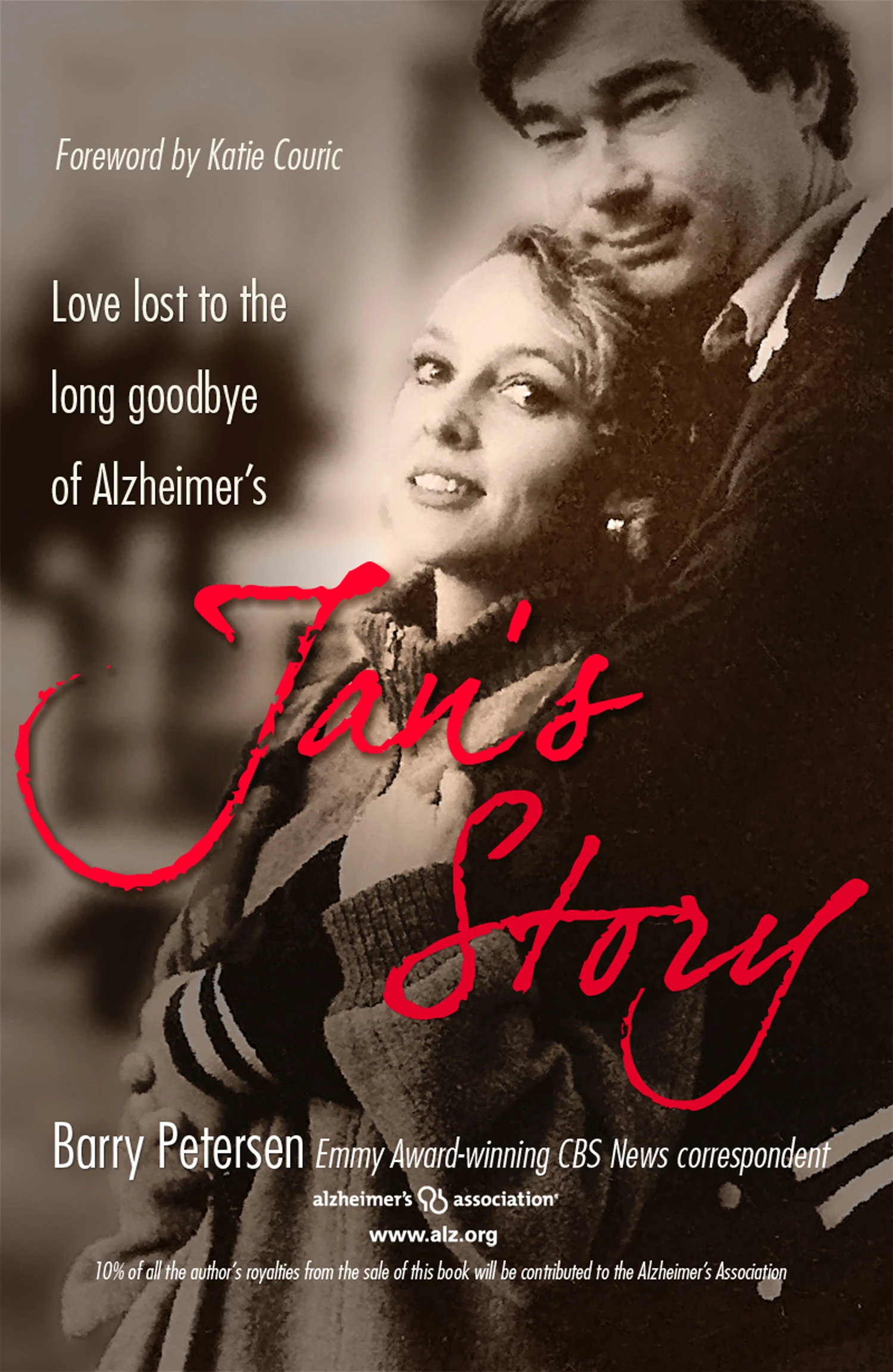
Barry Petersen’s book, JAN’S STORY, fits this bill. There are tons of Alzheimer’s books already crowding bookstore shelves. But it’s a whole different story when it comes to Early Onset Alzheimer’s. And at that, the story has to have a definite point other than, “My wife/husband has Early Onset.” Barry’s book focused on watching his wife slip away from him while he was still in the throes of a very busy professional life as a CBS journalist, and how Early Onset robs people of their life when they are still very young – quite unlike Alzheimer’s.

Too many times, authors make no better argument for their story’s unique qualities other than, “Well, it happened to me.” Yes, you are special, but I’m in the business of selling lots of books, and as lovely as you are, that isn’t a selling feature because it lacks a hook. Know your competition and be able to advocate your book’s specialness.

Who is Your Audience?

Many authors write their books and don’t give a thought about who will read them, so it can be challenging when I ask who is their intended audience, and how/where do I find them. The more well-defined your book is, the easier it is to know how and where to find your potential readers.

Platform

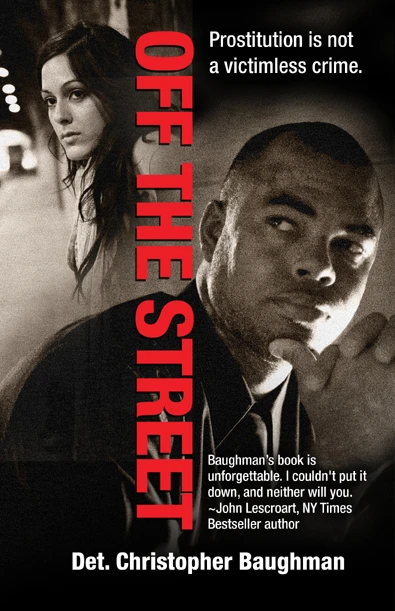
I know, I know, there’s that naughty “P” word again. But it’s there for a reason, which is the ability to get the book widely read. It’s not enough to have a great memoir about being a Las Vegas detective who takes down a pimp who savagely beats his “girlfriend.” The wider issue is human trafficking and how it’s far more pervasive and deadly than anyone has ever known before. So it’s no small wonder that Chris Baughman is in high demand with the human trafficking/child trafficking conferences, going so far as to capture high praise of someone in the government.

If you’re writing a memoir, you must have a platform that establishes you as an authority on your subject matter. Minus that platform, you’re going to have a hard time selling your book to a good publisher. I can’t be any plainer than that.

Is There Some Conspiracy?

An author asked me this at a conference after a tough day of agent/editor advance readings. No one wanted her memoir.

The quick answer is no. Having read her advance submission, I could understand why no one wanted her book. It simply didn’t have anything to say, and she had zero platform. I understand that constant rejection can lead to acid reflux and the idea that everyone is out to get you. But it simply isn’t the case. Don’t look without…look within. If you’re getting constant rejections, it’s a clear indication that something is wrong with your memoir.

Now, do agents and editors discuss particular horror stories? Yes. We’re a gossipy lot, just like authors. But we also talk about the cool authors just as much.

Do they blacklist? Eh. Depends on what you did. If you threatened to kidnap an agent’s kids if they didn’t read your manuscript, then this would spread like wildfire. But do agents and editors go out of their way to blacklist someone? Who has that kind of time? In short, there is no conspiracy or secret decoder ring that belches out an author’s name.

Should I Fictionalize It?

I’ve been asked whether it’s a good idea to fictionalize a memoir if the author has had a lot of rejections. It’s impossible to answer this. How much are you fictionalizing? Is the story big enough to fill a fiction billing with a great story arc? Also, are you a good fiction writer? It may seem a silly question, but I’ve seen many authors whose nonfiction is lovely and their fiction…well…isn’t. The talents that go into fiction differ from nonfiction, so you have to analyze whether you have the stuffing to write great fiction.

There are plenty of books I’ve seen that have “Based on a true story” stamped on the cover, and this makes it easier to promote because the author is talking about their life, even though the book is fiction. There’s a natural bridge.

I’ve seen stories that were fictionalized and I wished they’d made it a memoir. It’s a tough call, and you have to go with your gut.

But the endgame is that ‘Nobodies” get published all the time, and if your memoir is unique, has a clear message, you have a platform, and defined audience, then chances are that you could be among those who are looking at a contract offer. Good luck to you!


Here’s the thing about independent editors…

May 9, 2012

…it may not always work out the way you’d hoped. What do I mean? Let’s say you have a great story partially written, and your agent or your writer’s group suggest that hiring an indie editor would really kick it up a notch. So you spend some serious bucks and, voila! everyone is thrilled with the partial. Your agent sells your book, and you’re in Tra La Land.

So you go back to your indie editor and work with them on completing the rest of your manuscript, the agent and indie editor, and you are thrilled with the outcome. And then the editor comes back with your developmental edits, and leaves you muttering, “Whiskey Tango Foxtrot?? I thought my book was perfect.”

Here’s the thing about indie editors; their job is to spiff up the story you give them. Their concern isn’t making sure you have a marketable story with a large audience, your platform, your promotion plan, and selling lots of books. They can only work within the parameters for which they’ve been hired. The result can put you at odds with the editor who bought your book and who most assuredly has her eye  on the business end of publishing AND the artistic part.

This is the main reason I dislike buying partially written manuscripts. I do, of course, but I know the sample chapters in the book proposal have been massaged so that they sing. I’m never quite sure what the finished product will be, and I always cross my fingers and hope for the best.

This is also why I don’t get all gooey in the knees when someone mentions in their query letter that they worked with an indie editor. With that usually comes the belief that their work is a cut above and needs no editing – and that isn’t always the case. The manuscript may be very well executed and has a lovely voice, and excellent pacing, but it’s off the tracks from what the publisher’s editor wants, hence requested rewrites.

For example, an editor friend of mine bought a book she thought was going to focus on a horse trainer’s experience with working autistic kids and how working with the horses brought about big changes in the kids. Cool book, right? The partial she read was great, so she bought the book. What my friend ended up getting was the trainer’s biography – which isn’t what the agent had pitched to her. So the author was taken aback when my friend delivered her developmental edits that included massive rewrites…even though the author had worked with an indie editor.

“But my indie editor and agent loved the book as is,” replied the author.

My friend tried to make things clearer. “True, it’s a well-written story with great development and pacing, but that isn’t what was pitched to me.”

Of course, the indie editor had no way of knowing how the book was going to be pitched – all she knew was that she needed to help refine the book sitting in front of her. As for the agent, it’s something a lot of editors see – the agent is excited about selling the book. It’s not their job to think like an editor because they can’t. We’re all different. And the most important part is that the agent hasn’t seen the final product either because they sold the book based on a partial. What she thought she was selling and what my friend thought she was buying were different from the final product. Hello, rewrites.

So you can see how it’s easy for the left hand to not know what the right hand is doing. No one is at fault. The point of this post is not to place your entire end-all be-all on your indie editor. Just because you paid for her services doesn’t mean it’s bullet-proof. And yes, it may mean that your publisher’s editor may ask you to do rewrites in order to fit her vision of what she knows she can sell because she bought it based on a solid pitch. For instance, had the agent pitched my friend the horse trainer’s biography, my friend would have passed on the project.

Take a deep breath and understand that nothing is in cement until the book is actually printed up and out the door. Until then, all bets are off, and you may have to go back to the inkwell. It’s all a part of this madness we call publishing.


Requesting a partial or full manuscript – do I really read them?

May 8, 2012

Someone asked me this at a writer’s conference after downing a few more shots of tequila than prudent. The answer is yes. And no.

What looks great in a synopsis may pale when reading a few chapters. What looks great in a couple chapters may lose its edge in a 75,000 word manuscript.

But I do read them. I’d be silly not to…after all I did request it. I put the manuscript on my tablet and read on the couch, where I’m nice and comfy, and won’t be interrupted. However, the operative here is do I read to the very end?

Not always.

It’s a hard call – will the story pick up after a few lifeless chapters, or stay lifeless through to the end? If I’m engaged in the plot and the characters are well defined, I’ll probably stick it out so I can get a feel for the kind of editing that would be required and whether I feel the story is marketable.

More likely than not, I read to the point where I’m convinced the story no longer has wings. I get flack from authors when I reveal this at seminars; the thrust of their argument being that the story may pick up a few chapters downstream. And they wouldn’t be wrong to feel that way. On the flip side, I’ve rejected manuscripts after reading the first five chapters because nothing was happening, the plot had yet to find any footing, or the characters were as flat as my attempts at baking.

I’ve received wails of angst upon being rejected; “If only you’d kept reading; the story picks up at Chapter 15!” Chapter 15? If I did this, I’d wrap a rope around my neck and asked the beagle to kick the stool. It’s a matter of diminishing returns, meaning the more time I spend reading something that’s in big trouble from page one and I’m on Chapter 7 means that I’m prevented from reading other fulls that I’ve requested. It’s a gut call; is it worth the time to stick it out, hoping it’ll get better, or do I move on, hoping it’ll pick up after a bad chapter or two.

Because we we pub memoir/biography, my decisions also focus on the story’s marketability and author platform. If I begin to see warts, I’ll continue reading while weighing the message and marketability against the amount of required editing. There are times when a roughly-written manuscript is worth the copious amount of editing required to make it sing.

When Do I Stop Reading?

The quick answer is when I can’t find any reason to continue turning the pages, and that point usually hits around Chapter 4-ish.

Chapter 4-itis:   The first three chapters are usually the best because the author’s To Do list is filled with introducing the characters, the setting, fleshing out the plot; there’s a lot going on. But after reaching Chapter 4 or 5, the To Do list tends to run a bit thin, and I get the feeling the author is wondering “Now what do I do?”

Backstory:  This is when they usually launch into Backstory, which can be a deal killer because I simply don’t know enough about the story or the characters to care about backstory, and your message and platform probably won’t save you.

Backstory can add delicious dimension when used by someone who knows what they’re doing. Unfortunately, many don’t, and they fall into this classic trench and let their backstory become so top heavy that I can’t remember the main story…and I quit reading.

Characters:  If I don’t get a feel for your characters after three chapters, then I’m going to quit reading because I’ve lost faith that you’ll develop them more fully downstream. Your characters are the vehicle that moves the plot along. If they aren’t three-dimensional, then I can’t stay engaged with the story.

Perception:  A query letter can only reveal so much, so if I’m interested, I need to read the manuscript in order to get a better idea of what the story is about. For example, an author’s query letter led me to believe his story was about how he uses alternative medicine in his surgical practice. Given my weakness for this subject matter, I asked to read the full.

The reality was far different from my perceptions. The manuscript ended up being about the surgeon’s foray into studying alternatives for his own fulfillment, not what he uses in the operating room. So I stopped reading because the query letter and the book were miles apart.

Quality:  I’ve seen query letters that knocked me against the wall only to be shocked at the writing quality in the manuscript. And, sadly, that only requires reading a few pages to realize it’s not gonna happen.

The thing to keep in mind is this; if someone asks to read your manuscript, then they’re going to read it at some point. They may not read it all, but they will read it to the point where they no longer feel compelled to continue turning the pages. Hopefully, they will hit the end and cry, “Eureka! We got us a winner.”


E-book pricing – what are you worth?

May 7, 2012

My aunt, who is a lovely woman, equates retail price to quality and will bypass a modestly priced something-or-other in favor of the most expensive because she places her value on quality. She has no clue what the item cost to produce, and she doesn’t care. She knows that a particular brand or particular shop sells quality stuff. And what they hey, she can well afford it.

I agree with her philosophy to some degree – even if we do run in different economic groups – because I want the biggest bang for my buck. Reminds me of the time when the beagle bought cheap tequila to mix up a batch of margaritas, and we spent horrified hours watching little pink cheese graters float above a box of worm-infested Twinkies. Consequently, we stick to the good stuff.

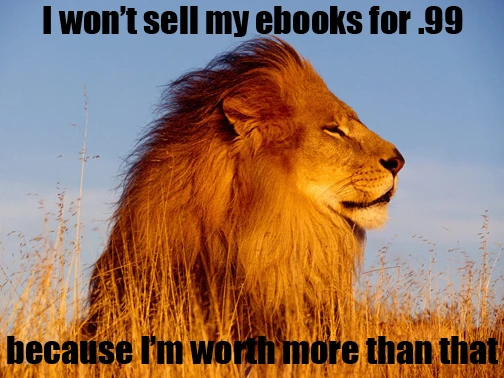
“You get what you pay for” holds grains of truth. So when Amazon became the Great Yoda of establishing e-book pricing, they set an artificially-generated worth to e-books of $9.99. Since they were the first, they had the advantage to make the call – even if that 9.99 was a loss leader for them. Publishers were forced into this retail price, kicking and screaming, until Amazon got into a slugfest with Macmillan, who wanted to set the retail price for their e-books.

Agency pricing turned the whole e-book pricing issue on its head. Readers howled at the higher prices, while smaller e-book publishers and DIY’ers – good capitalists that they are – dropped their e-book prices to .99 in an effort to gain traction for their books. In the real world of tight wallets (quite unlike my aunt), buyers gravitate to the best deal. This gave way to the insistence that consumers “deserved” lower priced e-books, and any publisher who charged near-bound book prices was a heretic.

The justification for this demand has been varied, but the prevailing consensus is based on the fact that publishers costs are lower. Eh? Whazzat? True, there are no warehousing fees and print run costs – but those are minimal when you consider the production costs, distribution, marketing, and promotion. And let’s not forget the author’s advance…

Given that logic, why should I have to pay huge bucks to buy the Photoshop program? If you consider the R&D costs that went into product design and implementation, Adobe has made money hand over fist – yet no one barks about how Adobe should drop the price to $15.95. Instead, we pay the retail price because we attach worth to the product.

So what about e-books? What are they worth, and who sets the gold standard? E-books are still in the evolutionary stage, so the gold standard hasn’t been established, especially since Amazon’s initial attempts got blown to bits. It’s a tug-o-war between the publisher and the marketplace. Since it’s still the Wild West, publisher’s have to individually decide what they feel their authors’ books are worth.

Deciding what we’re worth comes down to perspective. I’m of the opinion that e-books can’t be quantified strictly by production cost because it doesn’t allow for the actual product – the story. I would LOVE to pay $3.99 for a John Lescroart or Joan Didion book, but that ain’t gonna happen. Evah.Their publishers have placed more worth on their books, and charge accordingly.

Does that mean I should cry foul? What would it get me if I did? Nada, that’s what. My options are to:

  • Buy their physical books, which are priced about a dollar or two higher than the e-book
  • Buy the e-book
  • Go without

John and Joan are worth it, in my opinion, so I pay for the e-books because it’s my preferred reading option. It doesn’t matter that they have no print run costs or warehousing fees. It’s about the fact that authors and the production team, which consists of the editor, art dept., sales, marketing, promotion peeps, work just as hard regardless of how the book is published.

Of late, I’ve seen a lot of “You get what you pay for” remarks from readers, who feel those .99 e-books lack the same kind of attention to editing, story organization, plot structure, and writing ability – so the very marketing tool that was used to attract readers is now repelling them. I would agree. I’m a huge e-book reader, and I’ve bought a number of .99 e-books that turned out to reflect the price I paid for them.

Absent from this group are authors who jumped ship from their commercial publishers and are now DIY’ing their books, or those few lucky duck authors who made a boatload of money – this group is the minority. I’m talking about the huge majority of DIY’ers who have, for whatever reason, decided to strike out on their own.

Just scrolling through the .99 bin at Amazon is dizzying because there’s no way to determine the diamond among the coal. The thought processes are, “Ah well, it’s only .99, so if it sucks, I haven’t lost much money.” I don’t look at as the money aspect, but of the time suck. I’ve read some .99 and thought, “Well, there’s a few hours I’ll never get back.”

I consider the entertainment factor. Dinner and a movie costs a whole lot more that a John Lescroart book. Heck a movie costs just about as much if you include the popcorn and Sweet Tarts (and why bother going to a movie if you can’t have the popcorn and Sweet Tarts?). The $15.95 I spend on an e-book gives me far more pleasure for far longer. I may carry around a book’s impact for weeks or years. I can’t say the same for movies.

I guess it’s a matter of perspective. Readers complain that don’t own the e-book and, therefore, it shouldn’t be as expensive. Well, movie goers don’t own the Hollywood movie, either, yet they’ll shell out $20 for two-hour’s worth of pleasure and a sweet-tooth fix. And do we even want to talk about the price to go to Disneyland?

No one really knows how the Great E-book Pricing War will shake out, but the adage of “You can’t get something for nothing,” holds true. If you want something of quality, you’re gonna have to pay for it.


Time flies when you’re havin’ fun

May 5, 2012

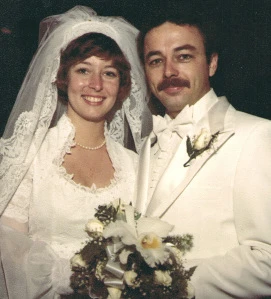
It was 33 years ago today that I married my bestest buddy and love of my life. We’d always referred to ours as an arranged marriage because my dad introduced us when I flew to Saudi Arabia, where Mom and Dad were working. Freddie was my dad’s lead cost engineer, and he used to come into Dad’s office, pick up my picture (which was one of those gawd-awful mall photos that you win in a drawing), saying, “Is this the girl I’m in love with?” What a suck up, though he swears he was being honest. Yah. Right.

But Dad thought the world of  him and introduced us the summer I came to visit. A few months later, Freddie decided not to renew his contract, telling Dad, “What can I say? I’m going to go home and woo your daughter.” Dad wasn’t sure whether to be ticked at losing his lead cost engineer, or be jazzed to be gaining a really cool son-in-law.

Ten months later, we got married. When Freddie proposed that prior January, I’d only known him six months, and three of those had him in Saudi. Looking back on it, I question my sanity. I mean, spending forever with someone you’ve only really been with for seven-ish months must mean there’s a loose screw running free in my head. But I trusted Dad, and I couldn’t deny the kind, generous, warm guy who made me giggle like a fool – and still does.

So here’s to you, Freddie J. You’re the jam in my jelly doughnut. Thank you for such a wild, crazy, fun life. You rock!


Check Your Facts

May 4, 2012

I was reading some online reviews of a book I was considering d/loading and was interested in the 1-3-star reviews (it’s where they expose the warts). Of note was the consistent complaint that the author (and ultimately, the editor) messed up a lot of facts that had to do with using computers before they were part of every household. Other complaints were over using vernacular that wasn’t a glint in anyone’s eye back in the book’s timeframe. A few took issue with calling the MC as “old,” yet he’s in his mid-50s. As someone who’s stepping over the halfway line of her 50s next month, I can assure the author that mid-50s is not old. Then there were the complaints about how the MC uses the same voice and thought processes when he was a child as he does as an adult, which shows a lack of continuity.

This all leads to one thing:  Research.

In this author’s case, it didn’t matter since the book is a NY Times bestseller. That said, it’s inexcusable not to properly research everything in your book. If you have a character participating in a religious ceremony, you’d better make sure that you have your facts right. It might not be  a big deal to you, the writer, but the reader is a lot like my mom, who could tell if I was even thinking about sneaking out of the house wearing my sister’s makeup…meaning you’ll be narced out before you can ask, “Where’s my royalty check?”

It’s just plain lazy not to go the extra mile to make your story bullet-proof. And not all editors will catch the mistakes. I remember handing over an edited manuscript to our final reader, and was gobsmacked at what he found. Saved all of us from serious binge drinking. And that’s why we have final readers – to catch that stuff. And publishers have final readers, but that doesn’t mean they’ll catch everything. The buck stops with the writers and, as writers, you should be sensitive to everything you put into your book.

The minute readers find an inconsistency, they’ll look for more. And what’s worse is they won’t trust you. Instead, they’ll expose this stuff in reviews, which could impact sales and your reputation. And don’t believe these authors (and their editors) don’t read bad reviews and make the changes to the e-book. I’ve seen this done numerous times.

In the end, don’t tempt Fate. Do the research and get it write.


“What do you mean?” – Finding hidden treasures in a rejection letter

May 3, 2012

Rejection letters:  No one likes to get them, and no one likes to write them. I’ve had my heritage questioned, along with invitations to make merry with various types of waterfowl or African wildebeests, so I stick with the least offensive…the template rejection letter:

Thank you for your query. Your story sounds interesting, but I’m afraid it doesn’t quite fit our current lineup. Best of luck to you in your literary endeavors.”

For a new author, it’s not apparent this is a template, and they pick it apart in order to discern some hidden meaning or crumb of hope. So they write back:

If you say my story is interesting, then why doesn’t it fit with your house? I read your guidelines and my story is a personal journey about my addictions. How can you like something yet not want to even read a few chapters?

*facepalm* They want decisive clarification for my rejecting them. I find it somewhat ironic that even a form rejection letter is questioned because I try to make it bullet-proof by keeping it one-size-fits-all. It’s not my intent to pound someone’s feelings (I feel receiving a rejection letter is enough), yet I need to get the point across that the work doesn’t scratch my itch.

Of course writers want to know why they were rejected and, rather moving on, some nuance every word in every line in order to derive some hidden clue…even from a form rejection letter.

However, there are certain cues that do incite the imagination to kick into high gear.

“Please feel free to resubmit.”

No guessing with this statement. And I mean it. These are times when I read the entire manuscript and feel the story has real promise. It’s very good and the characters are exciting. However, there are some big problems with the execution. It could be the pacing is uneven, or it’s top-heavy with backstory…big ticket items that would require huge amounts of our time.

So I offer some critique (because it would be crummy to spend that kind of time reading a ms only to leave the poor author hanging, wondering, “What do you mean?”) and off the author a chance to resubmit.

It doesn’t matter who says this, there is nothing vague about it, so don’t question it…just make your edits (where you feel the crits have some validity) and resubmit it.

“You might want to consider hiring an editor.”

So you resubmit, and you get this sentence back in your rejection letter. It’s rare when I offer that advice, but I do it in a few cases where I’ve seen your initial work and now I’ve seen your edited efforts. So let’s say you had serious pacing issues in the first go around; if I see that same problem in your edited piece, then I conclude that you’re not quite sure how to fix the problem. At that point, it makes sense to suggest working with an editor who can help you understand pacing which, admittedly, can be a tough concept to grasp without some hand-holding, and all they need is a bit of a nudge.

Now, I’ll cop to thinking some writers shouldn’t consider giving up their day jobs, but I would never suggest working with an editor because I suspect they don’t know enough to understand what an editor is trying say. If someone can barely put a sentient sentence together, then pacing and POV switches are beyond their capabilities. They need to take some writing classes in order to learn the basics.

Is this a red flag?

You might think it’s a red flag for someone to suggest working with an editor after only reading a few pages or chapter. And it may be. There are scams out there that offers kickbacks to agents or editors if they recommend a certain indie editor. But if this suggestion is made in general, without naming names, then I don’t really think there’s anything insidious about going on.

Personally, I would never make this suggestion after only reading a partial because I don’t know enough about the story to make that determination. But not everyone vibrates at the same frequency, and others may recommend working with an editor after reading only a few pages. And sure, the natural reaction would be to ask, “What do you mean by that?”

My suggestion:  don’t let it put your Victoria Secrets in a bind. You can’t possibly know what’s in someone else’s head, so don’t try. And whatever you do, resist the urge to ask them. Just move on.

Now, if you keep getting rejections and/or the same suggestion to get some outside help, then perhaps it’s time to consider whether your story has sea legs. Editors don’t come cheaply, so you want to get the most bang for your buck.

Be Professional

The biggest gift any writer can give himself is adopting a professional attitude because writing is a business. Anticipate that rejection letters won’t offer you any insight as to why you’re being rejection. It isn’t because editors or agents are soulless creatures (well, they are, but let’s not quibble the point) and love nothing more than squashing writers’ dreams. In fact, we adore writers and are always on the prowl for the right story to make our blackened hearts sing.

But we’re also hideously busy and we’ve learned that personalized rejection letters take time and open the door to some nasty replies. Don’t worry so much about the “What do you mean?” because you’ll drive yourself nuts. A no is a no, and the reasons often vary. One editor may think the character development is insufficient, while another may find it perfect.

Instead, get some feedback from your writer’s group, or the Share Your Work forum on the Water Cooler. There are many tools at your fingertips that are geared to help writers become more successful. And that is where your time is better spent…not trying to read between the lines.


No plans this weekend?

May 2, 2012

If you’re in the Greater Los Angeles area, I suggest you swing by the gorgeous UCLA campus on Saturday, May 5 @ noon, and pick up a copy of YOU LET SOME GIRL BEAT YOU? by Ann Meyers Drysdale, where she’ll be signing alongside her bud Kareem Abdul Jabbar.

Not only is this wonderful book about Annie’s amazing athletic career about breaking glass ceilings, but it’s about sticking with a dream. How many people told you that writing was a dumb idea, that you’d never make it, or why are you wasting your time?

And how many have you bowed to that narrow-minded sentiment? Well, neither did Annie.  Instead, she kept her head down, followed her dreams, married Dodgers legend Don Drysdale and had three gorgeous kids, and is now V.P. of the NBA Phoenix Pacers and WNBA Phoenix Mercury.

This is an uplifting story that proves just how far you can go if you work hard, don’t listen to the garbage, and have talent. Go Annie.


Follow

Get every new post delivered to your Inbox.

Join 898 other followers

Powered by WordPress.com