Offsite Events: Full Service or A La Carte?

July 30, 2012

I’m having a flashback to when gas stations actually had full service. The cute guy with wavy blond hair would come running out. “What’ll it be?” After devouring his blue eyes, I’d gulp out, “Regular.” Then another beach-bronzed piece of filet mignon would race out to wash my windows and check the oil. Gotta love full service.

I miss full service because I’m a klutz. I’ve dumped gas on my shoes countless times and glorped my own eye with the window wash squeegee. Friends thought I’d been mugged. “Nah, just fillin’ up with gas.”

Publishing has gone the route of gas stations. Some are e-book only, while others do print and e-book. Some have excellent national distribution, others have authors serve as their unpaid sales force. Some have full-steam-ahead editing, and others run their manuscripts through the spin cycle of a quasi-working Spellcheck. Some publishers are only interested in selling to bookstores and others are only interested in selling to their authors.

It doesn’t take a Mensa member to realize that one size does not fit all. We have a la carte needs, so it’s important to have a grip on how and where you think your books will sell. Obviously, the hot button is bookstores and libraries, but that’s only scratching the surface. What kind of support will you get from your publisher if your author tour includes a ton of special events that aren’t in bookstores? Who will organize that? Them? You?

Is your publisher Full Service?

Book Events

In these hard times, many authors are getting very good at looking to special events to promote their books. One of our authors blasts the roof off by promoting at basketball arenas. Another does it with the Alzheimer groups, while others promote in all kinds of off-the-chart places. So the question is one of, “How to you get the books there?” Well, in nearly every case, a bookstore handles sales, which means they order, transport, set up, sell, take down, and transport back to the bookstore.

And who coordinates this?

Well, in our case, we do. I feel better about doing this because I’m fluent in BookSpeak. Authors aren’t, normally. They have enough headaches going on without having to handle the book end. Often they don’t realize the need to constantly follow through to make sure the books are actually ordered and have arrived. I do. Any publisher does.

Just Because We Can Doesn’t Mean We Will 

A friend of mine who’s with a Big Six publisher told me that she’d rather eat a rusty razor blade than deal with offsite events because they’re such a pain. And they are because there are a lot of moving pieces. But that doesn’t mean they shouldn’t be willing to do it. Facts are, the big guns don’t have that kind of manpower to expend on one author. They’re used to dealing in bulk. Small fries like us can easily handle individual requests, no matter how much offsite events make us want to mainline Drano, because we don’t have nearly as many authors.

Why Would We Do It?

Why would we go through the hassle of planning offsite events? $$, of course. Not all books will necessarily sell as well in bookstores as they might at specialty events. Books like ours tend to be specific to a particular audience, so it’s logical to consider where and how an author can find them all under one roof. You can sell bucketloads more books at those kinds of events than a half-year in a bookstore…depending on the book.

The second reason is $$. Oh, I already said that, didn’t I? Not only will offsite events yield better sales, but the bookstores have finite shelf space. Books that we (I’m speaking collectively here, not just us) think will sell like hotcakes in the stores may experience very tepid purchase orders. Recently, I saw a case where an author’s first book created a HUGE reaction, and sales were insane. The publisher couldn’t get them out fast enough. It hit the NY Times bestseller list, and the author was interviewed far and wide. Everyone thought his second book would sell just as well.

Crickets.

B&N didn’t want it, few of the indie stores wanted it. Canadian  purchase orders were their only saving grace – and everyone is holding their breath the books don’t come sailing back in returns. Yet, mommy smut is selling at untold numbers. Go figure.

With a marketplace as volatile as this, is it any wonder everyone is scared of their own shadow? There is absolutely no rhyme or reason as to what will sell, so it’s all the more reason to know how far your publisher will go to chase down sales.

Authors, Don’t Attempt This On Your Own

Offsite events can be a mess in terms of returns, invoicing, delivery, coordination between the bookstore and the venue hosting the event. It’s a headache that no author should have to shoulder. When you’re talking to an editor, let them know if you have a strong ability to sell at specialty venues and ask them if they can and will support that. It’s the difference between assuming a huge headache and showing up with a fresh smile while letting someone else do the grunt work.


Printing up your book for submission purposes

July 27, 2012

Last weekend at a writer’s conference, I had an author press a book into my hand and urged me to read it. It turned out that she had printed up 100 copies of her book to use in place of the usual submission of the first three chapters. I felt like a heel for declining to take her book, but I did explain why.

For starters, I knew zilch about her book. Second, I’m at a conference, which means I have little spare room to stuff a book into my suitcase. Third, I can’t make effective notes in a book. Lastly, it’s just plain cumbersome. In fact, if you want a sure way to make sure editors and agents won’t read your work, print it into a book. If you want to blow your hard-earned money, print your work into a book.

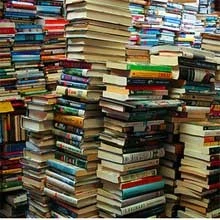
Nearly all of us have gone paperless, which has so many advantages that I hate to waste time listing them. But the most important is that we can shoot files around to our team. I can’t do that with a book. Additionally, can you imagine what our office would look like if everyone started sending printed books as part of their submissions? The picture above merely hints at the agony.

You may think you’re making things easier by showing up with a shiny book, complete with cover and all, but it’s more like bug repellant. I’ve received numerous printed galley submissions over the years, and I don’t even bother reading the letter. All of it goes into the trash can outside of my post office. Such a waste.

There’s only one thing you need to do when querying; follow the agent’s or editor’s submission guidelines. Nothing fancy, nothing hoo ha. Just follow the guidelines, and your chances of being read increase. Gimmicks don’t work. Really.

Should I Publish First to Capture an Editor’s Attention?

No. A kitten pees in his owner’s shoes every time an author goes DIY for the sole purpose of gaining attention with an editor. You have blown your first print rights, which sucks for an editor. It’s also a royal pain to wipe out an ISBN on a book. Once it’s out on the internet, it’s out there forever, which ends up creating confusion for the editor once the book goes to market.

If your intent is to be published by a trade publisher, then don’t DIY your book. It’ll backfire in a most unpretty way that will make you cry and lots of kitteh owners scream over their ruined shoes.


Perfecting Your Pitch – Make ‘Em Slobber

July 26, 2012

I was at a writer’s conference last weekend, where we had tons of fun, talked to a lot of talented writers, and heard a lot of fabulous stories. One thing that stood out at me is varied approaches authors took for the one-on-one pitch sessions. Some were shaking so badly that I wanted to give them a big hug. The idea that I, or any of my colleagues, are worthy of a fit of the shakes is ludicrous. There are times when I should be feared, but this isn’t one of them.

Conferences are fabulous things that allow agents, editors, and authors to collide in cosmically-perfect deliciousness. We are there for the authors – on call 24-3 (most conferences are about 3 days long). Additionally, authors can pitch their ideas and books to us in a more formal setting. The downside is that they’re timed and range from 10 down to 3 minutes. THREE MINUTES. Gah.

So how do you cram your fabulosity into 3 steenkin’ minutes? Clarity and brevity are your best friends. Most conferences send out advice to those who are doing pitches, but I thought I’d pass along some of my observations that may enhance authors’ Slobbery Factor. And keep in mind, this doesn’t pertain strictly to conferences, but anywhere you find yourself talking/pitching your book.

Memorize

Rarely are authors trained actors, so it’s impossible to sound natural while reciting your pitch. Because you’re reciting, you’re not engaging with me, and I want to get a feel for you and your story. Instead, I can almost see your brain kicking into high gear in order not to miss a single point. Your focus is on not screwing up, not on engaging me.

Whether it’s at a writer’s conference, a bar, or hanging out in your backyard, the idea is to connect with the person you’re talking to, and memorizing your pitch creates a barrier that’s hard to penetrate. I found this when I stopped authors in mid-pitch to get clarification on a point. My interruption threw them off, and I felt terrible for causing them to stumble around while mentally trying to remember where they’d left off. It was all very unnatural.

Hook – That One-Sentence Piece of Loveliness

A little tool that may help you is relying on your hook to do the enticing. I found myself asking many times over the weekend, “What’s your hook?”…meaning, what is the main pulling feature to the story? Puzzled as to what I was asking, authors gave their full pitch, and neglected to include the compelling elements that would pull me into their story.

In the world of publishing, less is better. If you’re taking five, ten, fifteen minutes to explain your story (which happens a lot), then I’m searching my purse for a rope and checking out the ceiling rafters.The idea is to get people asking for more, not looking for a way to check out on a permanent basis.

If you keep your hook to one sentence, then you’re inviting people to lean and and ask for more.

Example of a miss:

Janie works in a science lab and sees firsthand how hilarious and poignant her experiences are when working with patients.

The problem is those hilarious and poignant stories are the hook, and that is what’s missing here. The author has reduced her character to a one-dimensional chess piece who is simply moving around those stories. Nothing compelling here. It’s a pass.

Example of a hit:

A reluctant romance publisher works overtime to protect the identity of her newest author, an internationally known legal thriller, from a nosy book reviewer desperate for a juicy story in order to save his own career.

It’s a very quick overview. If you spice it up with adjectives, then you have the building blocks for the other guy to ask for more.

  • What made the publisher reluctant?
  • Why does she have a famous legal thriller author as one of her romance writers? Ooo…a book reviewer is desperate to save his own job and is looking for a juicy story…yes, yes, tell me more.

My book is a movie just waiting to happen”

I winced when several authors said this before I had any inkling of what their story was about. All authors believe their books would make a great movie…tell me something I don’t know. This isn’t a selling point. Your story is, so focus on that. If at some point there is an offer for movie rights on your book, I’ll toast to your awesomeness and pray you remember us little people.

Character-driven stories – lead with that

Seconds before the dinger rang, I concluded an author’s story was character-driven instead of plot-driven. I suggested she lead with that because her characters are the hook. If she can convey the deliciousness of her characters, then I’ll likely follow her into the gates of hell.

Is your story character-driven? If so, think about focusing on the personal characteristics that will naturally draw us in.

Example

Twist McPherson’s public recommendation that her ex business partner go screw himself intersected nicely with her desire to enjoy her permanent hiatus from the rat race, free-flowing Harvey Wallbangers, and basking in the sun. Navigating the helm of Dirty Little Secrets Publishing while herding five saucy writers and one reluctant internationally famous legal thriller was never a part of the plan.

Keeping the focus on the main character keeps us engaged in her adventure. It keeps it personal. If the character is interesting, an agent or editor will do the logical thing and beg for more information.

Focus on your main plot – not subplots and twists

Many authors have a hard time keeping their focus on the main plot. Because they know their story inside and out, they get caught up in all the connected subplots and twists. As a result, the other guy is checking to see how sharp those butter knives are and whether they’d cut through jugular veins without too much resistance. In a word, it’s boring.

If you’re tempted to spend fifteen minutes explaining every nuance of your book, be prepared to see people’s eyes glaze over. These subplots and twists often lack context when describing them, so they make the story sound mushy and disorganized in a pitch. We don’t need all the ancillary stuff. Those are the sweet little gifts that enhance the plot…but it isn’t the plot. Remember, less is better.

Audience

I bleat about this all the time, but it still remains a tough issue for many writers. You need to understand who your intended audience is so we know how to promote and market your book. Obviously, genre writers have an easier time with this, but it never hurts to have a healthy respect on how to nab your readers. I use this example quite often, but my Two Surfer Dudes post illustrates the importance of knowing your intended audience and being able to promote to them.

Mr. Two Surfer Dudes’ initial audience was other surfers, so we suggested a promo plan that got him in front of that audience in such a way that it exploited his platform (being a well-known surfer at that particular beach) in order to sell a very strange book.

Too often, authors don’t consider their audience and tend to say, “My book is for everyone.” Cool; do you know how to find “everyone”? I sure don’t. Is there something you can pull from your book that will appeal to a specific audience? Nothing is worse than asking the question and hearing, “Um, I don’t really know.”
Promotion

“How do you plan on promoting your book?” is a common question that I ask every author. That question is cropping up more often in fiction as well. And it doesn’t matter how you plan on publishing your book, mainstream trade press or DIY, you will need to promote your book on some level. If you’ve given this some thought…and you should…then an editor will want to hear it. The better your plan, the easier it is to become excited about a new project.
Platform

Platform and Promotion go hand in hand. As a publisher of nonfiction, I’m pretty sassy about authors having a platform in order to propel their books. We’re looking for that “resident expert” that quantifies their fabulosity. Fiction is a bit tougher, but Mr. Two Surfer Dudes proves my point about how a platform can mean the difference between indifference and “hey, dude, gotta buy your book.” Just because you’re a novelist doesn’t mean you can’t develop a platform that will enhance your footprint and make your editor love you like I love the beagle’s margaritas.

As writers, we never stop pitching our books, so it’s important to know how to do this in a manner that will make ‘em slobber. Go out and embrace your brilliance.


An Author Speaks Out

July 18, 2012

Warning: This is a long sucker. Sorry!

A lovely woman and I have been exchanging opinions on publishing. Her frustrations with trade publishing came pouring out, and I felt maybe answering her here would help others who are in the same boat.

Some background;  the author has gone the DIY route and suggested that the Age of Agents and Query Letters had met its demise. I jumped in to say, “Oh, nay nay,” and explained why. I went on to say that with all the publishing choices we have today, we should be rejoicing in options rather than creating an Us vs. Them situation. Thar be room for all.

And this is where this kind woman replied, and I thank her for allowing me to take this to a more public forum:

If I were an agent, I’d be thinking of creating a sideline: Book Shepherd. For those like me who don’t want to go the trad pub route, the BS (oops!) could act as my scout, guide, manager and mentor. I admit, it’s quite difficult to be the entire vertical stack, and I’d love some help. But I don’t see paying for some of the services that are out there, for ex, a traditional publicist (lots of bucks for unprovable results), or a new-age publicist (lots of bucks for tips on how to do it all yourself, online).

Agents aren’t hard-wired to be book shepherds because they have to know every aspect of the industry in order to properly set up their clients. Most agents don’t know enough about distribution and don’t have established relationships with distributors in which to place their clients.

Some don’t always know the editing ins and outs, or cover design. Nor do they have relationships in the marketing and promotional areas. These are all tasks that publishers assume, so there’s little reason for agents to worry about it. And they don’t. If you want good help, then go directly to established book shepherds who do have all those relationships and ability. But regardless, it’s far from free. Agents do, however, have established relationships with editors. That’s where they shine.

I dream of a partner who will tell me what I need to do (i.e. what works) and then help me get it out there. For example, hook me up with (don’t just give me a list of) book clubs and speaking gigs; find me the blogs to follow that will help me expand my reach. Tell me how much time to spend networking online, and which networks are most productive for my purposes. That would be a big time saver for me, as I’m doing that all myself, now.

On one hand, you’re celebrating going DIY, yet you’re frustrated about how hard it is. Successful publishing is hard. If it were easy, everyone would be a successful author, right?  And it’s far from free, which makes it difficult for you to have a partner who will give you all the advice you need in order to expand your footprint. More to the point, all the things you’re looking for are readily available on the internet. It just takes time and research on your part.

A publisher’s job is to get your book nationally distributed and market it on a national level. They don’t have the time or energy to do your job, too. Now, that said, publishers strategize with their authors in order to figure out a great promo plan that will hit up the author’s local area and support the publisher’s national efforts.

Going DIY puts all the responsibility on the author’s back, which is time consuming and expensive. The problem here is that you want all this for free and unless you’re with a good trade press, you’ll have to shell out the $$ for the help. Can’t get somthin’ fer nothin’.

You say trade publishing is a team of hundreds, but all I’ve ever heard is that we writers shouldn’t expect much help (the “unless you’re John Grisham” disclaimer). So, we’re told that we need to build our own platforms and come to the table with tons of ready buyers. If I can do that, what can a publisher offer?

The operative is “I heard.” You haven’t actually experienced this firsthand, have you? If not, then you’re depending on others’ stories to formulate an opinion. This is dicey because you’ll always find someone who will back up a preconceived notion, like “publishers won’t help you.” This is the same rhetoric that a lot of DIY groups like to pull out, and the truth is somewhere in between. A good trade press isn’t going to put all the money into paying out an advance and assuming the large production fees only to flip up their hands and say, “Sorry, we’ve done our part, you’re on your own.” They’d be out of business in months.

Publishers have to protect their investment, and they do that by marketing and promoting the book with all their might and using their sales and marketing teams.A DIY author is a team of one, so you have the burden of marketer, promoter, editor, cover designer, formatter. It’s a full time job and utterly exhausting.

Since we publish nonfiction, authors need to come with a platform that will get their books the attention needed to generate good sales. Such is the way with nonfiction. If I’m going to take a sports book, then I’m going to look for an author who has name recognition with her intended marketplace.

Fiction is different because it’s hard to have a platform for a fictional story. But that doesn’t mean that you don’t define your readership and know where to find them. It’s all a part of doing your market research and understanding where you fit within the marketplace. Your knowledge of your intended readership helps the publisher’s marketing teams come up with the best strategy for promoting your book.

I can get distribution on my own, both from online or in-person gigs; I don’t know that there’s a bricks-and-mortar outlet that matters anymore, so I don’t need a publisher for that. 

Bookstores matter a great deal. To date, this is still where most books are sold. While they sometimes drive me nuts, I would weep huge croc tears if they disappeared. It still remains the one place where an author can stand out with book signings and meeting their readers. Nothing sells a book better than when authors show their pretty faces.

Distribution is key. It’s the lifeblood of any publisher. Our distributor has gotten us so many places where I couldn’t get into on my own. They’ve tripled our sales. They pitch our titles far and wide, which gets us reviews and attention. Conversely, online distribution is a lot of white noise because everyone is competing for sales, yet you have no one representing your book and explaining why yours is so much better than another of the same genre.

Advances are minimal and profits low, sporadic and arbitrary, from the writer’s POV. Lastly, I don’t believe the publisher’s imprimatur means much anymore (if it’s just a bar to clear in order to be recognized by the NYT and reviewers, the expanded attention has to be weighed against the writer’s reduction in profits.) Am I missing anything?

Can you specify what you mean by arbitrary and sporadic advances because this doesn’t make sense to me. Are advances what they used to be? No. Nor should they be. You can’t pay out huge buckets of money, knowing full well that you’ll never make it back, and expect to stay in business. Publishing has been dealt a blow for the very reason that they paid out ridiculous advances that never came close to earning out. And guess who lost; thousands of editors, who were laid off and midlist authors who were shown the street.

So has Big Six publishing worked smart in the past? No way. And for many years, smaller trade presses were ridiculed because they didn’t pay what the big guns paid. We couldn’t because we had to act like businesses and work smarter and watching our costs. Because small trade presses are working smart, they are experiencing great growth and respect.

I think what bothers me most about this last part is that you’ve done very little research on the industry. You may have received a fair share of rejection and decided that those DIY sites are right; that we have it in for authors and suck stale Twinkie cream. However, the grass isn’t quite as green on the DIY side either, and now you’re upset and frustrated, and feel as though you have no chance for success.

And here is where I beg to differ. You get out of it what you put into it. Whether you go DIY or accept a publishing contract, if you work hard and do your research, you’re better armed to captain your success. I’ve know a few successful DIY’ers, and I cheer their success because I know how hard they worked. I see far more unsuccessful DIY’ers because they weren’t prepared for the difficulties of being a Party of One.

Always remember that you’re competing against companies who do this for a living, which means they have established relationships with A LOT of people in all walks of the industry. That doesn’t mean you can’t do it; but you have to be willing to roll up your sleeves and work harder than you ever have before. Not every book is appropriate for a publisher, so it’s fabulous that authors have other options that will get their work out to the marketplace. But it has to be for the right reasons, and the author must have their eyes wide open.

Publishing is a No Whine Zone. You either buck up and suck it up and do the necessary research, or you complain about what isn’t being done for you…which is a waste of time and talent.

Lastly, thank you so much, dear author, for allowing this discussion to take place here. It’s my intent to present authors with all the information they need so they can make informed decisions that will enhance their chances for success. Go forth and be brilliant.


Family Feeling vs. Feeling Right

July 17, 2012

“My publisher isn’t just a company, they’re family.”

<looking to the heavens> If only the Cosmic Muffin had seen fit to give me a buck for every time I hear that comment, I’d be bossing Him around. Here’s the truth:  A family vibe shouldn’t be your litmus for signing with a publisher. It’s all about their ability to get your book into readers’ mittens.

Family

Family is the place where you feel safe because you’re loved and supported. It’s that gushy “Hey, you can do anything” vibe that makes it easier to go out and do your best. No matter how rotten you may feel, your family is there to pick up the pieces and glue you back together. Huzzah families.

The problem with the Family Publisher feel is that they may be the very ones who make you fall into a million pieces, and then glue you back together with feel-good goo that has nothing to do with success. Vanity presses excel at this because it’s their only selling point. But it isn’t just vanity presses – the love-and-kisses bantha fodder knows no boundaries. It’s easy to fool a new writer with flattery, bells, and whistles because they don’t know enough about the industry to ask about distribution, editing, marketing, promotion.

And let me tell you, that family feeling disappears very quickly once the book is out and gathering dust in someone’s warehouse. Suddenly, that family is telling you it’s your fault for your book not selling, or offering a distribution package for $500. Feeling loved and supported now?

Feeling Right

But that doesn’t mean authors shouldn’t listen to their gut. I’ve had any number of conversations with authors we were interested in signing. I tell them how much I love their work and why, and what kind of editing I think the work entails. I also back that up by telling them how we work. I don’t blow smoke up their Vickie Secrets and make promises and guarantees because, hey, it’s publishing, and there are no guarantees. I go into detail about our business because I want them to make their decision based on facts, not because I like their writing. Flattery blinds way too many writers.

Because of this, agents tell me the author said it “felt right” to sign with us. It means that we’re all on the same page in terms of editing, promotion, marketing, and distribution. It’s a feeling based on a solid foundation that we are the best choice for their book and that we can get the job done. It’s not about flattery, but business.

I can’t express the importance of chemistry. The publishing process is an airtight environment where editor and author are locked in a metaphorical vacuum to accomplish the editing phase of production. If you don’t like your editor, you’re going to question every single edit with a microscope. Trust is absolute. And it goes both ways.

The Family Feeling is based on a foundation of flattery, which is effective in sucking in the uninitiated. Feeling Right is about chemistry and knowing your publisher is the right choice because they have the experience and track record to get the job done…and you click with the editor. Everyone likes to be flattered, and you can have both if you sign with a publisher who can back up that flattery with a good reputation for success.


Say Hallelujah

July 15, 2012

Agents are the Cosmic Muffin’s way of saying He loves writers and editors.

That is all.


Honoring Your Literary Blind Spot

July 12, 2012

Every author has a literary blind spot. For instance, I have a penchant for overusing the word “very,” so when an editor points that out, I’m hardly surprised. Way back in the day, I was also fond of POV switches. Editor wiped my hard drive of those, too. My point is that having my literary blind spot pointed out to me made me a much stronger writer…and this brings me to today’s “I want to put my head in an egg beater.”

We’ve been in contract negotiations for awhile with a particular book. Totally love it. Totally want it – even though it needs a heavy hand with editing. The story is fantastic. Oh, the places this book could go…tra la. Knowing all this, I just wrote the agent to suggest the author would probably be happier with someone else. My sin? Editing:  he needed them but didn’t want them.

Well, that’s not entirely true. He was willing to allow edits, but only on his terms. The problem is that he isn’t aware of his literary blind spot and I’m probably the first editor, or person for that matter, who pointed them out. As a result, he wants to pick and choose what edits he’ll allow and what will remain as is. Problem is, he’s not a writer, so he doesn’t understand the finer points of story organization and paragraph/scene transitions. And because he doesn’t understand, he doesn’t trust my critiques. He wants his story to remain as is because he feels it’s perfect.

Ask yourself; are you guilty of this? If so, please know that editors can’t work with one hand tied behind their back. If you’re serious about your writing, you need to honor the fact that you have a literary blind spot. It could be big or a minor. Either way, you’re not above requiring edits. Today’s email to the agent saddened me because nothing is more frustrating than watching a very promising book being hindered by an author who’s holding on too tight with their eyes closed.

Don’t let this happen to you. Believing your writing comes from the hands of the Great Cosmic Muffin could be the barrier between a not-ready-for-prime-time book and a publishing contract.


Colorful Metaphors – Does it Make Sense?

July 10, 2012

I remember reading a book where the main character’s wife was viciously murdered, and his reply was a salty, “Oh my gosh!”

I don’t know about you, but if someone I loved was viciously murdered, “gosh” would most certainly not be a part of my vocabulary. But that’s me. Everyone is different, and not everyone reaches for a colorful metaphor in times of angst, stress, anger, or pain. I admire their restraint, as I’ve made truck drivers blush on rare occasion.

Swearing, like anything else in writing, needs to make sense and used where appropriate. If you don’t want to inject an expletive, then at least have the character act appropriately by covering his eyes, falling to his knees and belting out a loud sob. But “Oh my gosh!” isn’t going to cut it.

But there’s always the other side of the coin, too, where every other word is enough to make my sainted mother swoon and ask for her smelling salts. The logical question to ask yourself is whether cussing makes sense.

Does It Make Sense?

Swearing is part and parcel of logical character development, and there should be proper motivation for a salty utterance. For example, if your Marine character, who just got back from a tour in Iraq, is saying things like “fiddlesticks” and he’s not the Army chaplain, then you’ve struck a blow for believability. Most military people I know can swear like the beagle drinks margaritas – it’s second nature. So if your character is uttering things like “Mercy me!” then you need to connect the dots as to why this makes sense.

I have a character in my novel who swears like a truck driver. I made her that way because it was a fun counterbalance to the fact that she’s an OB/GYN and a closet softie for pregnant women, and it drives her other doc friends nuts. It’s an affectation, like Telly Savalas munching on a Tootsie Pop in the Kojack series.

Overkill

What I didn’t do is riddle my character’s dialog with salty dog language because I didn’t want to overpower the reader. There was no point in doing so, unless she had Tourette’s. I had Mags swear just enough to remind the reader that she is a walking dichotomy of truck driver and caring doc.

Overkill is when a writer loses sight of the overall picture and focuses on one element that ruins a good story.

Overkill has many faces; exclamation points, humor, similes and metaphors, sex and violence, dialog tags, adverbs…and swearing.

Whenever I think about swearing overkill, I think of Good Will Hunting and The Blair Witch Project (don’t ask me why I saw it; it’s 1.5 hours I’ll never get back).

I wanted to love Good Will because the story is so good. But I was constantly distracted with the F-bomb overkill to the point where it ruined the movie for me. I’m no prude, but I kept wondering what was the point? I understand the need to show how Will is a rough-around-the-edges guy who happens to be brilliant and needs Robin Williams to help him find direction. But I found the reliance on every other word being an F-bomb tedious and sophomoric. Where is the literary genius with an entire book (or movie) jammed with dialog like, “Give me the f*cking car, you f*cking moron, or I’ll break your f*cking neck with my f*cking fist.”

It takes no talent to cuss ’til peel the paint off the wall. I remember my son, in the heat of a tense moment, letting his entire repertoire cut loose. When he was finished, I said, “Ok, now try it again, using your adult words.”

Effective communication? I think not. Any moron can inject soap-in-the-mouth invectives.

Distraction

When something is used to excess, it becomes distracting, and the reader loses focus on the story. I had a manuscript that contained some derivative of the F-bomb 760 times. It’s an understatement to say that I was distracted and had the author do some editing. You can easily get the idea across that a character uses a lot of colorful metaphors without driving a stake through the reader’s eye. Readers are very smart and will believe that your character is a bit of a vulgarian by simply getting in a cuss word here and there…and it’s not always the F-bomb. That’s what talented writers do. That’s the magic of effective storytelling.

Being distracted can to lead to being offended. While I think the notion of being offended has gotten way out of hand, I still hold true to the tenets that say swearing is/can be offensive, depending on the words and the situation. After all, you don’t swear in front of little old ladies and your girlfriend’s mother, right? RIGHT? If you don’t want to offend little old ladies or your girlfriend’s mother, then why risk offending your readers with over the top sewer talk?

Balance

Effective swearing shouldn’t be taken lightly. Ostensibly, your character is swearing for a reason. If it’s just for $hits and giggles, then it loses its power because there’s no point. There are characters who can’t blink without injecting a colorful metaphor, but that doesn’t mean you have to write them that way. A character isn’t just bawdy with his language; he/she has other characteristics that convey the point. Maybe he scratches where it itches, or drinks to excess, or leers at the secretaries or water delivery guy.

My point here is to think about balance. For instance, I think Damon and Affleck effectively showed Will Hunting as a rough around the edges character via his tough Boston accent and lack of proper English skills. The excessive swearing created an imbalance to the point where it’s the first thing I think of when I think of Good Will Hunting. And that’s tragic.

Creating a balance means that when your characters swear, they’re doing it to emphasize a point.

Trend

I realize the Great Blue Streak has infused itself into our culture with increasing frequency, which I think is sad because we’ve lost our ability to communicate effectively. Instead of of saying, “Your betrayal destroyed my trust,” we know go for the easy punch with, “Fuck you, asshole.” Sure, there are places where the latter is appropriate, but not throughout your entire manuscript. Then it becomes all Tell and no Show.

This trend is showing up in TV shows, and they appear to be excited as a kid ditching Sunday school to be able to say “bullshit” with impunity and, therefore use it as often as they can. To me, it’s simple-minded because they’re delighting in the shock value – when they should be focusing on content. Once or twice is fine because sometimes there is nothing better to say than, “Oh, this is just utter bullshit!”

And like any trend, it’s overused and as inelegant as the obligatory sex scene back in the 70s. You couldn’t watch a movie from that era where some actress wasn’t ripping off her top, even when it had zip to do with the story.

The most important thing to remember is that trends come and go. At the heart of it all, you’re a writer, not a vulgarian, so ask yourself if your colorful metaphors are overkill, a distraction, and lacks balance. You want your writing to be timeless, and just because our language skills have devolved doesn’t mean your writing should.


Promo Plan – Cool Idea vs. Cool Reality

July 9, 2012

I know I’ve blathered on about promo plans numerous times, but it just can’t be discussed enough. Whether you’re going DIY or looking for trade publishing, you need to have a realistic promo plan.

Let me give an example of what I mean.

Author’s Promo Plan:

I plan on approaching baby stores about carrying my book about preemies, including store chains like Babies R Us.

What an Editor is Thinking

Very cool! But where is the author’s market research to see if baby stores will actually carry preemie books…i.e. her preemie book? Where is the statement that says the author talked to a few store managers about whether they would be interested in such a deal? Where is the proof that this plan is even viable?

If it isn’t there, then an editor will see this for exactly what it is: An idea. While ideas are great, they aren’t a promotion plan.

A promotion plan is ability to implement.

What Makes Editors Gooey
So let’s change this around a bit so it catches an editor’s eye:

I have spoken with numerous baby stores in my area after noticing that they had no books about preemies, yet they have great preemie clothing departments. The managers were enthusiastic about the possibility of selling my book, especially when I offered to give a talk at their stores to preemie parents. Additionally, I talked the the head buyer of the preemie department at Babies R Us, and she was excited about seeing my proposal that would get my book into their stores.

See the difference? Editors love ideas. But what they love more is something that has been proven to be possible and is already set in motion by their publicity teams.

Editors have been around the block a few times and spot the difference between, “Hey! This is a great idea” and “Hey! This is reality.” Be prepared to have the goods.

Competitive Titles

Another thing that authors should know is their competition. I know it’s not good to talk in absolutes, but this really is something authors should do if they’re serious about their literary future. I’ve seen more than a few authors (or their agents) include title comps that are as old as the hills and twice as dusty in the attempt to show there’s a hole in the genre and their book will bring this subject matter up to date. Thing is, we do our own search, and if I see scads of books that are very current and very competitive to your book, then I’m going to shake my little finger at you ‘cos you done be busted.

And really, you need to do this anyway, so you understand what you’re up against. If you’re busy wondering why your cancer book isn’t selling, then maybe it’s because you failed to notice the bajillion cancer books already flooding the market. If you’ve spazzed out on establishing a platform, and you have no idea of your competition, then you aren’t properly prepared to sell many books.

You need to be able to speak intelligently to how your book compares and contrasts to your competition. I mean, won’t you look quite the silly if someone interviews you and asks how your book compares to last year’s big hit…and you don’t know it exists? Seen it; squicked out in sympathy for the author. Don’t be that author.

Writing a book is a romantic idea – no really, it is. We get this idea burning in our souls and take the time to get it out. We sweat blood, drink a lot of bad gin (or is that just me?), and wake up in the middle of the night with a brilliant twist of a phrase. But once it’s written, you haven’t reached the end. You’ve reached a whole new beginning, and how you prepare for that predicates the impact your book will make on the marketplace.

Don’t get caught with your Vickie Secrets down around your ankles. Separate the Cool Idea from Cool Reality, and keep your eyes wide open to your competition – and you’ll find an editor who simply can’t live without you.


Book Series – A Whole Other Food Group

July 5, 2012

For some reason, writers are in a “series” mood, and a lot of queries are inviting me to do the mambo with not one, but several books. I understand the attraction to writing a series because you have characters that you love and can put them into all sorts of different situations. You get all excited about the overall series and can almost taste readers’ excitement over your books, so you pitch the whole enchilada with reckless abandon. Me gots a fifteen-book series, and here they are!

Criteria for a Series

The usual problem I encounter is that the characters simply aren’t exciting enough to get me through the first book, let alone several others. Your characters have to be three-dimensional, walk-off-the-page real. They need to have a backstory that you can slowly reveal with each subsequent book, sorta like pinching the neck of a balloon and slowly letting the air out so it makes that squeaky noise that makes the beagle bark like a madwoman.

The second problem I encounter is WHY? There should be an intentional reason for turning your book into a series other than you’re hoping for longevity. It could be as simple a reason that you wrote the first book and feel there’s more for your characters to do.

Pitch One or Pitch ‘Em All?

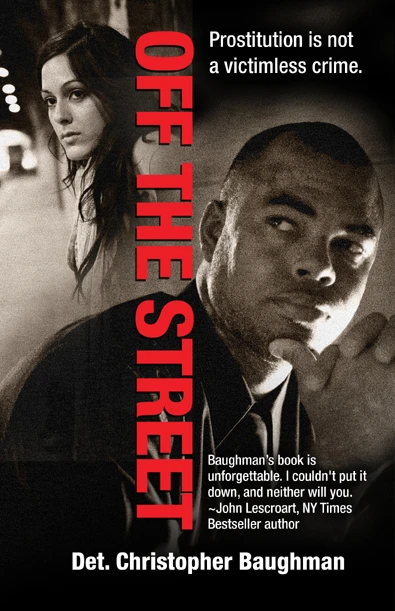
I appreciate authors who concentrate on pitching their first book. There may be a time when I see the potential for a series (Hello, Chris Baughman) and ask if the author has ideas for more.

What really kills it for me is the query letter that outlines each book of the series. It feels like a smorgasbord rather than a sales pitch. “Get yer pickles, potato salad, hamburgers, hotdogs, and Twinkies right here!” It’s  important that you to get me to love your first book. If you spend your query pitching all of them, then none of them carry any weight.

If you concentrate on that first book and get me to fall in love with it, then I’m going to get all slobbery if you mention that this is part of a potential series. I highlight potential because it’s my cue that the book is a stand-alone and not contingent upon subsequent books. This presents me with options that I may not have considered…such as the case with our author, Chris Baughman. His brilliant agent, Verna Dreisbach, got me to swooning over his first book, then casually mentioned he had plans for other books about his amazing human trafficking cases. And thus, the OFF THE STREET series was born, and we went from a one-book deal, to a three-book deal.

BoOm.

Me likes optionses (said in her very best Gollum voice).

It’s also important to define what kind of series you’ve written because it’s the difference between “Please send pages,” and “No thanks.”

Stand Alone vs. Cliff Hangers

Selling your series depends on what kind of series it is; Stand Alone or Cliff Hangers. Some publishers, depending on genre, are fine with Cliff Hanger series, and others are more comfortable with Stand Alone. It’s important that you define which yours is.

Stand Alone books have a main story arc that reaches their conclusion in that one book. The characters and their backstories continue throughout the series and blend into each new plot (Hello, Chris Baughman and John Lescroart – who is one of the nicest Big Authors around). Readers are seduced into buying the next book because they loved the first one, due to its story and the fact that they care about the characters.

Cliff Hangers have one giant story arc that’s broken up into a series. Their cliff-hangey endings seduce the reader into buying the next book to find out what happened. Each subsequent book produces its own cliff hanger, so you need to keep buying the next in the series. If it’s a successful series (Hello, Lord of the Rings), then it’s a cha-ching venture where everyone does the Happy Dance.

Risks:

Cliff Hanger series are interdependent. If one book sucks stale Twinkie cream, then it could signal the death knell for sales on future books because it’s a chink in a very-connected chain. If the reader doesn’t care about that one book, they may not care about the overall arc anymore. This happened to me with Terry Brooks’ Swords of Shannara series. I ate up his books when I was in college, back in the Early Jurassic Era. But when he cranked out a few duds, I lost interest in the whole arc and quit reading him.

Conversely, the Stand Alone series can withstand a lesser book and still retain their audience. For instance, a couple authors, whose books I’ve read for years, have put out a few smelly noses, but they’ve also banged out some really good books. They haven’t lost me as a reader because each new book has a new plot with characters that I’ve known and loved for years…provided they haven’t fallen victim to Series Bored-itits…

Fear the Dreaded Series Bored-itits

Series suffer from a unique problem, and that’s when the author becomes bored with their characters. It doesn’t seem to matter that there’s a new plot with each new book, the author has simply run dry with the characters. If the characters are reduced to one-dimensional, chalky stick figures, then who cares about the plot?

Of course, there are many plot-driven series, but your characters must do the heavy lifting because they’re the one constant in the series. They are what keep your readers coming back for more. When was the last time you said, “Oh, I can’t wait to see how that dull, lifeless, boring John Blutto saves the world”?

If you’re writing a series, you need to take The Series Pledge, which states:

  • I promise I will not become bored with my main characters.
  • They are the lifeblood of my series.
  • I will continue to develop their backstories and their evolution in order to make my readers feel all skippie dippie about each new book.
  • If I no longer feel skippie dippie about my characters, I will either kill them or let them ride off into the sunset. BUT I WILL NOT WRITE THEM ANYMORE.

You owe this to yourself so that you continue to write with passion, and you owe it to your readers, who have fallen for your characters enough to follow you with each new book.

The worst thing any writer can suffer is reader apathy.

The other worst thing a writer can do is drown their query with all the books in their series. Make me fall in love with the first one, and we’ll take it from there, OK?


Follow

Get every new post delivered to your Inbox.

Join 792 other followers

Powered by WordPress.com