 These questions came in the form of a comment to a post I did regarding why writers need agents. I felt this warranted its own post. Thanks to Michael for the great questions.
At last somewhere out there willing to talk to us mere mortal authors. I was beginning to think you editorial folk were imaginary and that publishers use your image to wear down writers. Phew!
No, you had it right the first time. We’re superhuman beings who fly around looking for writers to squash under our big red pens.
Still just what will it take to reach that pot of gold beyond the distant, sometimes invisible rainbow? I mean do we just surrender under the mountain of rejections we get from agents and write a new book?
What you’re really asking is whether you’re writing is good enough to continue the submission process, and I can’t answer that. No one can. The question of, “does my writing suck?” rattles through the brain of every writer, and that’s why writers hunger for experienced feedback. It’s also why writers get so frustrated when they receive form rejection letters. Getting honest feedback is gold, so writers should belong to several writers’ crit groups, whether online or in person.
Do we write a new book?
Absolutely. Writers should never stop writing. Just because you’re making the submissions rounds, you should be working on a new book. As long as you’re involved with some good writing groups, writers always improve with each new work. Most put their first books in their desks and let them gather dust, and they end up submitting their third or fourth book. Flip side of that is that I know plenty of first time writers who got their first book pubbed by very large publishers. In short, there are very few hard and fast rules. But knowledge rules all. Be smart and be informed about your craft and the business.
How do we even know our first book wasn’t of readable quality in the first place?
You don’t. I’ve known several writers who printed up about 25 copies of their books, distributed them to people they knew would be brutally honest. Based on the feedback, they went back to the drawing board and rewrote their work. They repeated the process after about a year after working with an editor, taking some classes, and joining crit groups. One ended up getting a very nice deal with a large publisher. The other is sitting on my desk right now. My feeling is that if you surrender now, you’ll always wonder whether you stopped submitting too soon.
More importantly, how do we get to first base with an agent?
First, write a great book. Do your homework and seek agents that rep the type of work you write. Take a look at your query letter and synopsis. Is it tight, clear, and short? Many writers unvalue the importance of a kickass synopsis, and I can say that a lousy one will have an agent or editor reaching for a form rejection letter in the blink of an eye. I know many agents who will quit reading after the first paragraph. I’m not saying this to scare you, but to educate you.
There are a couple posts on our blog here and here that deal with the pitch and writing a synopsis. Writing a great synopsis takes a hideous amount of time. And it should; your career basically depends on it.
It seems to me, as a writer that this is like the pimple faced geek trying to get a date with the most beautiful girl in school and the chance of her jock boyfriend knocking us mere writers on our literary arses is going to be yet another lesson why we writers of the future will remain in the past.
Are you kidding? “Mere writers” are being published every day. I’m not sure what “the writer of the future” is. I’ve not heard of this classification before. There are writers. Period.
Look, I’m going to be a bit tough here, because I think you and many other writers need to hear it. This business is extremely competitive and can be harsh. The writer needs to have a solid constitution that can withstand rejection and brutally honest critique – if not from an agent or an editor – certainly from reviews. Literature is subjective, and not everyone is going to like your words. The trick is finding the agent who believes they can sell your work.
Where is it written that life offers guarantees of fairness and the nice guy always finishes first? This is a business about making money by publishing marketable literature, and you have to treat this as a business. At no point in time have there been more writers. It’s a buyers market for agents and editors, and we have the luxury of picking the very best. If you’re looking for a sense of being given a chance, then you’re in the wrong business. No one will give you a chance. Someone will take your work on because they feel your work will land a nice publishing deal. Looking for a sense of fair play is best left to reprimanding one’s children.
Now, that I’ve succeeded in sounding cruel and heartless, let me add that agents and editors forge, for the most part, very good, and sometime very close, relationships with our authors. We’re human and are actually very nice people (for the most part). But make no mistake about it. It’s a business first.
What is the so-called ‘Diamond in the Rough’ they are looking for?
This is the manuscript that shows great promise by the merits of a fabulous plot, marketable idea, and great writing that may need finessing. I’ve known agents who’ve worked with their clients for a couple years helping to get their manuscripts ready for submission. In fact, we signed an author whose agent had worked with him on his manuscript for four years. The agent was very savvy and knew exactly what kind of prospects the work had and sought out publishers whom she felt would deliver the goods.
How does the pimple faced geek get the prettiest girl to notice them?
First, the pimple-faced geek shoves aside his insecurities and starts believing in the merits of their work. Nothing is a bigger turn off than the apologetic writer, and we see plenty of them. The writer who shows confidence is far more likely to be a presence during their promo phase. If I see an author who sees himself as a wanna-be, then I have a high level of confidence that he’s going to flop at promotion. Agents smell this as well. So, I’m not going to refer to you as a pimple-faced geek. You’re a writer, so start acting like one. Learn the business, get involved in the literary community. Join crit groups, get your work read to see if your work needs finessing or if you’re sitting on the next best thing. My mantra is ‘Knowledge is power,’ so surround yourself with as much information as you can. Your submission process will be that much stronger for it.
Like this:
Like
Be the first to like this.

 6 Comments |
 Permalink
 Posted by lynnpricewrites
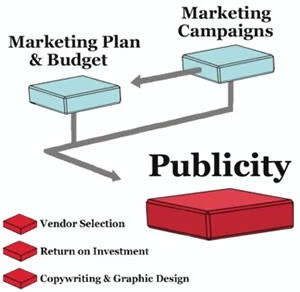







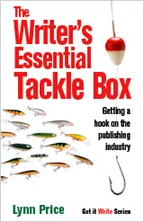 If you want the inside scoop on what floats our boats, The Writer's Essential Tackle Box is a must have. Out in November 2009.