It’s all in the marketing

March 29, 2008

(sound of phone ringing)

“Hello, Ms. Price, I’d like talk to you about Dogs Against Drugs.”

Huh? Mind you, I’m knee-deep in a submission about a mother who put Zoloft in her baby’s formula, so I can appreciate that my frame of mind may be a bit skewed. “Dogs take drugs?” I ask.

I’m envisioning cocker spaniels gone bad who sport stolen sunglasses and tattoos that say I eat kittehs for lunch. They hang out with a roving band of orphaned German shepherds who never bark in English and deal in the illegal sale of Beggin’ Strips laced with catnip. These are the types who also sell Poodle Porn calendars.

The woman on the other end of the phone clears her throat. “This is a program about police dog training…”

The clouds part, the angels sing. Clarity ensues. “Ohhhh…heh, heh. You ever considered editing your opening line?”


Be Honest or Stretch the Truth?

March 28, 2008

“Dear Benevolent Editor,

I’m a published author and have two books with PRINT-O-RAMA PRESS, and I’m looking to branch out. My books, Frying Eggs on the Sidewalk: the naturalist cooker’s guide and Lint In My Navel enjoyed fantastic sales in Barnes and Noble, BAM, and Borders…”

I see this a lot in queries. Authors who have published before talk about their maaahvelous sales in hopes I’ll be convinced of their brilliance. The only thing that convinces me of a writer’s brilliance is the writing and the plot. Great sales of a previous title are important because it tells me that your work sells and that you’re establishing a readership. It’s icing on the cake. And I love icing. A lot.

Writers are a smart bunch, and they know we like icing. Here in lies the temptation to go to the dark side and pad bios. This is the day of James Frey and Oprah buffoonery, so, just like I check out agents, I check out authors as well to make sure bios aren’t a fictionalized wish list. Hey, even my dreams are filled with me selling enough books to buy Hawaii.

If your book about knitting toilet paper doilies was printed by Publish America, don’t tell me Random House bought them as an imprint. Yes, someone actually tried this. If it hadn’t been so pathetic, I’m sure I’d have laughed up a lung.

If you tell me you sold gazillions, I’ll find out with a stroke of my pearly little fingers. If you tell me that you’re a marketing guru from ‘way back, I’ll ask a ton of questions to verify this. I had an author tell me that he had blurbs from four Very Big Authors. When it came right down to it, all he really had was their email address. Sheesh. I had another tell me they’d won a Pulitzer. Now that’s just plain insane, and I truly hope she’s been fit for a designer straightjacket and is eating checkers.

Look at it this way; if you lie to me, what kind of a relationship are you setting up with me in the future? There’s always the risk of slipping up between fantasy and truth. Trust me; I’m just like your mom. I have eyes in the back of my head, and I know if you’ve eaten those fresh-baked cookies I burned for dessert, and I’ll know if you padded your sales or your vanity publisher suddenly morphed into one of the Big Six.

Do what my mom always recommends; when in doubt, don’t.


Spring break

March 27, 2008

I miss being in school about as much as I miss the time I spilled my dinner on a guy I was trying to impress. But I do miss Easter vacation. They were mandatory. The schools shut down, and I was forced to sleep in, only to awaken when the waves were curling nicely at the beach.

Now that I’m all grown up (ostensibly), I don’t get an Easter vacation. The kids are all grown, so there’s no built-in excuse to run away and misbehave for a week. I have to conjure one, which wouldn’t be so bad, only I’d have to suffer the inevitable payback that a week of fun engenders. What is it about “you play, you pay” am I not getting?

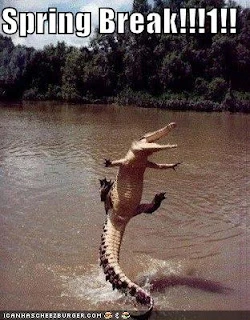
At any rate, the weather in southern California is way too beautiful for me to withstand. The windows are all open, a gentle breeze is blowing, and the sun is shining. I’m blowing the office off tomorrow and joining the ‘gator.


Book videos

March 27, 2008

I’m iffy about book trailers because they’re expensive, and I don’t really know if they sell books or not. It’s not like standard publicity where you’re in the public eye either through events, seminars, or magazine/newspaper articles and can entice someone to buy your book. A video is something that one either stumbles upon on YouTube and spreads like wildfire due to their content, or they see it on your website. And by the time they see it on your website, you’ve already hooked them (I hope) to buy your book. Having said this, I have to admit that this one cracked me up. And even though I don’t read this genre, I’m vaguely curious.


Publishing Industry – It Be Gettin’ Chillier

March 26, 2008

Does this translate that it’s going to be harder to get published? Yes. With millions of books being returned to publishers and fewer books being shelved – and this also includes Ingram as well – 2008 and 2009 are going to be very tough years for everyone connected with the publishing industry, as I blogged about here.

Publishers get paid by their distributors for books that were sold to bookstores 3-6 months prior. Any returns on those books are credited against the publisher’s next pay period. For the most part, this works just fine because publishers and their distributors are careful to weigh order fulfillment against demand.

For instance, if B&N corporate wants 15,000 units of a title for their warehouses, our distributor may give them 5,000 units. I know; it seems incredibly low. But a new title with low presales is an untested entity, and we aren’t sure where it’s going to fall out. In order to protect our financial solvency, we’ll send out fewer numbers. If the title shoots to the moon, our distributor can easily send out more units. Conversely, if the title has a so-so sell through, our liability is lessened because we have fewer returns six months later due to the fact that we under-filled the original order.

However, with the Borders upheaval, we’re talking about publishers receiving 10, 20, 30 thousand units PER TITLE. Remember, the sales for many of these books being returned have already been paid to the publisher. There simply isn’t enough buyer demand for ten thousand units to absorb those returns, so publishers have no choice but to write a check to their distributors. Predictably, this will be a huge financial burden, and many will have little choice but to go out of business.

We’ll weather this particular storm because we’ve seen it coming for a long time and made a lot of adjustments. Many, however, didn’t, and the belt tightening is going to spread everywhere. And, yes, authors will be affected.


Watchful Writing – Mind Your Characters

March 25, 2008

Manuscripts seem to come in two forms; those that contain characters so real you can smell their aftershave and those whose characters are as flat as my last attempt at baking a cake. Since we publish personal journeys, it only makes sense that the characters of our books are vibrant and rich.

Most of the authors I’ve talked to regarding character development have a single common thread; they invariably extrapolate bits and pieces from real people. They have a ready-made palette in which to draw upon. How many times have we heard “the truth is stranger than fiction.”? Same goes for characters. Some of the colorful people I’ve written about in my own writing actually exist in some form or another.

Great character development shouldn’t be overlooked because they are the conduit through which your story is told.

  • Do they have a quirk? – I have a gorgeous character who has the mouth of a truck driver. She can’t say anything without adding a colorful metaphor. What makes her likeable is that she’s a closet softie for pregnant mothers (she’s an OB/GYN) and is fiercely loyal to the few she considers good friends. This isn’t what defines her, per se, but it does make her memorable. In reality, she’s a composite of about four people I know. And none of them know this.

  • Personality traits – Personality traits add depth. Are they shy, outspoken, demanding, argumentative, loving, inquisitive, smart? Think of the people you know in your life and see if you can’t assign your characters some added depth. A lack of depth is one of my biggest problems with manuscripts because so many of them are lacking. The writer simply has them delivering dialog, and I have no way of getting a bead on that character’s personality, what makes them tick.

  • Physical description – There are a couple of schools of thought on description. Some writers go way overboard in writing a physical description, right down to the whiteness of teeth and whether they shave their armpits (ew). Some readers like to have description left up to their own imagination and others like a full rundown. Wherever the writer’s personal tastes regarding this matter, the trick to this not to give a description all at once like a shopping list. Dole it out in tidbits. Things like this drive me nutso:

She had a mane of thick, golden hair and startling blue eyes. Her long fingers sported equally long nails that were painted a deep green. Her feet were huge, and she could barely squeeze into the size 12 Ferragamos. She was tall, had a tiny waist and slender hips…blah, blah, blah.

The idea is that these sentences aren’t that bad if they are offered piecemeal. Try putting a sentence here on one page, a sentence there a few pages or chapters later – just enough to give the reader a general layout of the character. Shoving them into one paragraph slows down the narrative because you’ve stepped outside the story much like a commercial – “scuse me while I do the obligatory description here before I bring you back to your regularly scheduled book.” A useful way of adding a physical description without the reader being aware of it is to apply it with an action.

This sentence:

Her long fingers sported equally long nails that were painted a deep green.

Now becomes:

Her long fingers wrapped around his neck in one easy movement. Blood stained her painted fingernails, creating a holiday pattern of crimson red and deep green.

Okay, it ain’t Hemingway, but you get the idea.

· Plausibility – If you have a character who is shy, retiring, and is very short, they have to behave in the manner of a shy, retiring, short person. This character isn’t going to stand up in the front of a classroom of eighth graders, leap onto a desk and belt out a rousing rendition of “I’m A Little Teapot.” Yet I see this type of writing all the time and it’s because the writer hasn’t completely fleshed out their characters. They aren’t living, breathing entities to them, and this breeds mistakes and sloppy writing. If you’re going to write with characters (and who isn’t?), then you have to make them your best friends. I talk out scenes with my fellow writers, and someone would suggest my character react in a certain manner. Because my characters are almost as real as my fleshy buds, I know instantly how my character will react.

In short, much of what we write about in the fictional world comes from our imaginations. But we need to draw upon the real world in order to put our stories into perspective so that our characters leap off the page and hold us, the reader, hostage.


Writing Workshops

March 18, 2008

I just returned from the Novels In Progress workshop where I sat on a panel with three lovely and talented agents. It was like a breath of fresh air.

Writing is a solitary endeavor. Even if you’re sitting in the middle of Starbucks drinking over-priced legal toxins while cranking out a chapter or three, you’re still basically isolated, and nothing can retard the social process of writing faster than one who remains a slave to seclusion.

Wha’? Huh? Social process of writing? You betcha. It’s the notion that no man should be the proverbial island because they lose all focus on writing techniques, such as story and character development, POV issues, dramatic arcs, and all the other toys writers use to bang out a marvelous story. They also lose perspective to what’s going on in the marketplace. Getting out of your office and showing your work to other real live human beings is the best gift a writer can give to themselves – especially if it’s a writer’s workshop.

Writers need to get out among the living to gain perspective and knowledge. Novels in Progress was my first workshop that I’ve attended, and I it was fun sitting on a panel and speaking to fifty savvy writers. It made me realize that those of us who sit on the other side of the table become isolated as well. Sure, we get out a lot and rub elbows with agents, publicists, and all the other players of our business. But it’s not the same as getting out of our grind and attending a workshop where the sole purpose is for writers to hone their craft.

It put new wind in my own sails because the attitude and intent is far different from a writer’s conference, where writers attend seminars and we do all the talking. For writers, conferences, while very good, are about listening. Workshops are about doing – sharing work, getting direct feedback, and working long into the night to get it right. It was fun to just sit and listen and share information with some very talented folks.

So all in all, this past weekend was about my own social process of publishing, and I enjoyed every moment of it. And I became a convert to the notion of workshops being the writer’s new best friend.


Bookstores giveth and they taketh away

March 13, 2008

I’ve known about this for quite some time, but it is now official.

Borders’s announced their decision to display “as many as three times the titles as in the past” face out. That means that instead of the books showing spine out, their faces are pointed out toward the customer. I know what you’re thinking; way cool! And it is – on the face of it (pun mildly intended). That means that all the money we put into designing really great covers are going to scream out, “Buy Me!” And, in fact, that’s exactly what has happened, as Borders is reporting sales increases “in the double digits.”

But let’s carry this thought down road a bit. If there are more books facing out that means the stores must be adding more shelf space to allow for the extra footage, right? I wish. Come on, work with me…yes…that’s right. In order for more face outs, some stock has to go. Lots of it, in fact.

5%-10% of titles are headed out the door. Let’s put that in terms we understand: the reduction of inventory will be between 4,675 and 9,350 titles out of about 93,500. These are the books that aren’t selling well. They claim that “not selling well” are the books that sell one copy each year in each store. So far, children’s, food, cooking, travel, art and photography are taking the majority of the hit. Less so in fiction. Even though this change is expected to take place in six weeks, publishers throughout the country are already seeing record numbers of returns filling their distributors’ warehouses.

While it certainly is devastating, I can’t help but feel like I do when we have a brush fire – that it’s nature’s way of cleansing out the deadweed and underbrush. The publishing industry has been very slow to catch up to the times because it’s steeped in tradition and lots of old money. At some point the market was bound to force the issue.

We saw the advent of digital technology, and this created a whole new breed of publisher. Suddenly all kinds of books hit the market – many of them undeservedly so. We also saw online bookstores like Amazon.com. crop up. Now buyers have a choice between going to the bookstore or ordering books online in their underwear. The bookstores have long been like Atlas holding the world on his shoulders. And just like Ayn Rand’s fine novel, the bookstores have shrugged under the weight. I anticipate that a lot of small publishers will be unable to weather the changes and go out of business.

So what does that mean for you, Joe and Jane Author?

Authors need to create huge demand for their books

The author who doesn’t have a bang-on business plan on how to create a buzz and demand for their book will be passed up. The author with a platform is going to be the new norm. We’ve been moving toward this for years. This is the time for you to figure out your strengths and how they tie into your book. Are you a great speaker whose subject matter bridges in with your book? What about online presence? Are you a blogger? Do you have ties to your community that can branch out beyond its borders? Does your book have a tie-in with a specific group/audience? You might consider meeting with a publicist before your book is even finished in order to determine your book’s sea legs.

Publishing is undergoing an overdue shift, and no one can determine how this will all shake out. Gone are the days where an author can hole himself up by the fireplace and crank out book after book. Authors now are business people. Be smart, be prepared, and don’t get caught in the flames.


What’s that you said?

March 7, 2008

I’m a Creedence Clearwater Revival fan from the old days and found this hysterical. What does this have to do with writing? Absolutely everything. After all, we’re talking about clarity.


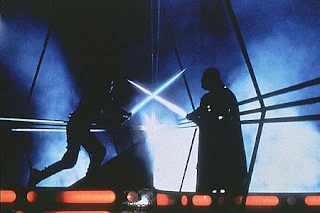
Yes, Young Jedi-Author, you WILL be edited

March 5, 2008

It started out innocently enough. A routine query dropped into my In Box. As I read, I became more disgruntled. Rather than detail the story, which encompassed one – read it – ONE sentence, the full page detailed how the manuscript had been edited to within an inch of its life and fell into the “manuscript that challenges a publisher to find a misspelled word” category.

Okay, this isn’t unique. I’ve had many query letters discuss the editing prowess of the author. But this author went on to say that since he wrote his story for a specific reason (don’t we all?) and it took years to write, that he didn’t want anyone editing his work. He asked if we ever publish works exactly as they are submitted. Shoot me now.

The short answer, of course, is no. But there’s more to it than that.

Misconception:
Many authors bite their nails that the minute the ink is dry on their contracts, we evil editors are going to slice and dice their manuscripts into a former shadow of themselves. Nothing could be more false because facts are, we don’t have that kind of time.

The story is either structurally viable or it isn’t. There have been times I loved the potential of a work but knew it needed far too much work than what I could ask of my editors. In those cases, I tell them they’re not ready for prime time and recommend they work with an indie editor. Face it; our words do not come from the hands of God. We all need editing.

Substantial Edits:
The question is; how much editing will be done? My querying author indicated that he’d concede to copy editing, but he’d feel like a hypocrite if a substantive edit was done. What he considers substantive and what I call substantive are probably two different things. My hands can’t be tied by an author’s interpretations of “substantive” edits. How does one go about defining this? At what point would the author throw up his hands at my editors and state they’ve done enough edits and won’t approve any more. Provided any publisher would be insane enough to agree to this, it’s easy to see the potential for a contractual nightmare.

Who Does the Edits? Me or You?:
This author went on to say that in his heart of hearts, he would no longer be the author and that the editor would be his co-author. He mused about the new version and whether it would be something he didn’t agree with. He feared embarrassment. Yes, this would be all well and fine, except that the authors do the rewrites. We do a page by page critique of the work and why the changes need to be made. The author’s paw prints are all over the manuscript, not ours.

We’ve paid to play:
Lastly, we’ve paid for the rights to publish a manuscript and make any necessary changes we deem necessary in order to ensure its marketability. We pour thousands into every title, and we have to protect our investment. These decisions are based on a whole team of experienced professionals, and it’s unlikely that we’re going to yield to an author’s desire not to be edited unless he’s Tom Clancy. It’s like selling your car to someone and retaining the right to tell that new owner how and where they may drive their new car. You can see where this is an unrealistic notion.

Now, does this happen where an author’s works are taken out of their hands? Yes. But the only case I personally know about focus on an extremely famous author who does great plotting and character developments but can’t write themselves out of a paper bag. Since the author has been around since the beginning of Time and has made gazillions for the publisher, the editors don’t bother the author with the rewrites – they do the rewrites themselves. It pisses the author off to no end, but, contractually, there is nothing the author can do except pocket the millions in advances and the love from adoring fans.

Conversely, are there authors whose works are pubbed without developmental editing? Yes. And like the author above, they make gazillions for their publishers and can call the shots. They are convinced their writing originates from the hands of God. It’s too bad, really, because their writing has suffered greatly, and I know many who no longer read their work. I know I don’t.

These cases are the extreme ends of the publishing spectrum. It’s done because it involves an obscene amount of money and huge publishers. If an unknown author pulled this stunt of refusing to allow edits, they’d find their backsides on the street looking for another publisher. To date, I’ve shown three to the door.

Are we all heartless? Some may think so. But, in reality, we’re very easy to get along with. It does us little good to get into a tug-of-war over edits. If an author is adamant about a particular change, we try find some common ground if we’re talking about a minor issue. A happy author is one who will stump for their book. It’s hard to sell a book if the author is uninvolved. It’s cheaper to simply let them go.

Impressions:
So, in the long run, what did this author tell me? Very little and a boatload. I knew nothing about the story but tons about the attitude. I have to make snap judgments about an author and their work because I have a hundred more just like it in my In Box. If a query letter is filled up with reasons why a manuscript should be left as written, this hints of someone who could be hard to work with.

It also tells me this author knows zip about the industry, and I’ve made it my policy to discontinue working with neophytes. If he did know the business, as he claimed, he’d never make such a presumptuous request. Any author who presumes to know more than we do about our business shows a lack of manners and education of the industry. This guy could have written “The Next Awesome Book That Will Rock The World As We Know It,” and I still wouldn’t work with him because he appears to be inflexible.

Options:
So what are the options to those who want to keep total control over their work? Print On Demand (which I call Print on a Dime) or vanity. While the trail of publication with these types are fraught with peril, it’s a given that they won’t touch your work if you make the request. Of course, no one will buy your book, either, because its inferior quality will ensure that it never sees the inside of a store or be distributed.

I recommended to this author that he self publish, meaning that he invest in the complete publication process of his book. He’d retain total control over every aspect of his book. It’s exhausting and expensive and only for the truly committed who don’t mind this being their primary business.

Always remember, Young Jedi-Authors – you will be edited.


Follow

Get every new post delivered to your Inbox.

Join 963 other followers

Powered by WordPress.com