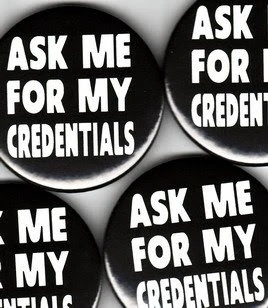
I had a phone call today from a lovely woman who wanted to write a “How to Write a Novel” book that dealt with the typical POV issues, character development, etc., and asked if I’d be interested in pubbing it. First question I asked was, “And your credentials for writing this are…?”
“Well, I wrote a novel…a mystery.”
“Published by whom?”
“AuthorHouse.”
Silent groan and twist of the intestinal tract. “Um, may I ask why you feel authoring a mystery that you paid to have published puts you in the driver’s seat above all the gajillions of How To Write a Novel already populating the shelf?”
“I thought you might say that,” she replied.
“Well, yeah. See, depending upon the work, author credentials are vital because you’re presenting yourself as an authority. If you’re writing How To Write a Novel, you’d better know what the hell you’re talking about, and a mystery book from a vanity press doesn’t cut it.”
In the same vein, I received an emotional missive the other day about how Hollywood is made up of spoiled richies whose millions buy jewelry and homes all over the world, yet they aren’t doing their job to speak out about ending the war. Despite of the huge holes I saw in his premise, his credentials were that he’d taught military dependents overseas. Huh? If he was part of the Hollywood set and knew this community intimately, I may have had a mild interest. But his presentation was disjointed and bolstered with nonexistent credentials that failed to convince me he knew anything about Hollywood or the war. I couldn’t take him seriously.
And that’s the rub of it. If you are writing nonfiction (and some fiction) and you’re calling yourself an expert, you better be able to support your theories. Believing it isn’t enough. You must have the qualifications that tell the reader you know what you’re talking about. It’s the doc who writes about the medical status of America or the airline pilot who writes about the Blackbird.
As much as I love the idea of writing about how Twinkies should be considered part of the vegetable family, I know better than to take the literary plunge because it would be based on nothing more than my opinion. And who cares about my opinion? Don’t answer that…I was being rhetorical. I’m not a dietician or nutritional expert, so readers are going to blow me off – as they should. The only caveat to this, and it’s a large one, is if the author has done miles of research and has a specific reason for the research – as in, “my uncle died of an inverted bellybutton, and I made him a promise on his deathbed that I’d find out all I could about Inverted Bellybutton-itis.” How can I, as an editor, not be drawn in with the author’s passion and motivation?
And yet I see submissions that have great intentions but no credentials to back up their claims. Remember, the reading public is a savvy beast, and we’re not all that stupid either. If you’re passing yourself off as an expert in something, your bio better support it. Otherwise, you don’t stand a chance.
Now excuse me; I have an interview with a Twinkie.
Like this:
Like
Be the first to like this.
 Leave a Comment » |
  goofy |
  Permalink
 Posted by lynnpricewrites

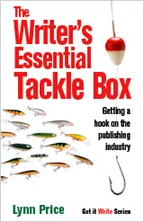 If you want the inside scoop on what floats our boats, The Writer's Essential Tackle Box is a must have. Out in November 2009.