Playing the waiting game

August 31, 2008


There is nothing more agonizing than waiting to hear a response from an agent or editor after sending out queries. The waiting game can give way to some unhelpful practices – namely, contacting said agent or editor. I’ve had hurry-up-and-waits contact me after a week. Writers would flip if they could see our physical and online mailboxes, jammed with hundreds of queries and pages we’ve requested. Always know that our lack of immediacy isn’t normally due to disinterest – we simply haven’t gotten to it yet.

What to do while waiting? Begin writing that next book that’s been nagging at you. I know lots of writers love to take some time off to air out the brain after completing the manuscript, rewrites, editing, querying, but others feel the need to keep their quills moving. And believe it or not, it’s actually helpful. First thing I usually ask is, “What are you currently working on?” I ask because I want to know if the author is a one-trick wonder or a serious writer.

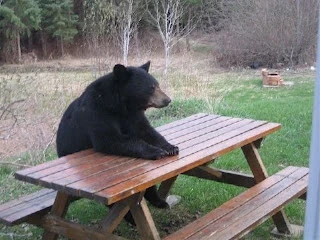
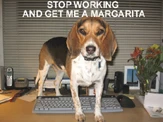
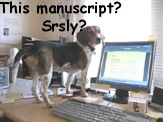
So, don’t be like the bear waiting to be fed. Dig on in!


“Why do you choose the books you do?”

August 30, 2008

That question always comes up because authors are eager to know what elements make for an eye-catching story. Man, if we could bottle that and sell it, I would be a Presidential candidate. All I can say is here’s what works for me.

Relevance: I look for the socially relevant themes to the story. Issues like family, medical care, aging, disabilities, death are all hot buttons that audiences can easily relate to. I leave the crime/mystery/action/adventure/SF/cookbooks/humor/YA/romance stories to others who have far better contacts than I. I know social relevancy.

The plot: Is the plot strong, meaning do I think it has enough meat for a reader’s teeth. Does it have good tension and put the main character at risk – big risk? That “losing something big” is what draws readers into a story.

The characters: In order for anyone to care about the risk factors of the characters, they have to be well developed, three dimensional. They have to leap off the page and react in a logical manner. Their dialog has to make sense and be in keeping with their personality. I want to be able to close my eyes and imagine they’re sitting across from me.

The message: Meaning, what did I learn? I look for stories that me thinking about the book long after I finished it. I want to come away from a story being smarter than when I went in.

True story; I read a manuscript and loved it. I mean LOVED IT. I was so ready to sign it, I could taste the ink. My submissions team was very dubious. Outgunned, I had to tell the agent it was a no-go. We were both devastated. Well, I was devastated, she was ready to kill me. A week passed, and I still couldn’t get my mind off that book. So going against my team, I contacted the agent, and, long story short, we bought the book, and I couldn’t be happier if I were twins.

The writing: This goes without saying, I hope, since it gets hammered on every writer’s site. I’ve seen wonderful plots with great characters that were wrapped up in lousy writing. Those are the authors who hear “I love what this story could be, but not what it is.” Some stories are too big for the writer’s abilities, and I can only imagine the extreme frustration.

Marketability: I may love it, but can I sell it? I’ve had to pass on works that I adored only because I knew I the genre buyers would more than likely pass on it. It may be a genre that’s vastly overwritten – like depression, personal cancer stories, anything TA Baron, JRR Tolkien. Tom Clancy, John Grisham-esque. They’ve done it already, so give me something original and new. This comes from knowing the genre you write. If you write medical fiction, you better have read all the other medical fiction stories out there so you can attest to your originality. I had an author submit a story to me that was achingly reminiscent John Grisham’s Rainmaker. I commented about the similarities to the author, who claimed to be an attorney. His reply? “Who’s John Grisham?” Ouch.

So, in a nutshell, these are the elements I look for in a story. I adore our books because they‘re strong and make memorable statements that keep people thinking. Long live the written word!


“So, what have you heard?”

August 26, 2008

“Hey, I heard about this agent. You know anything about her?”

Questions like this permeate the industry at every level. Whether the questions are being asked about an agent, editor, publisher, cover designer, publicist, or reviewer, there is one element that ties them all together; reputation.

Our reputations are all we have to distinguish ourselves within a crowded and incestuous industry. “What have you heard?” It’s human nature to share information. Whether it’s gossip or firsthand experience, word of mouth is a powerful tool. Good news and bad news travels like wildfire.

“I don’t think she likes anyone’s book.”
“She didn’t sell my manuscript.”
“I hate the way they edited my book.”
“She didn’t do anything for me.”

And it doesn’t just happen on the author side. We ask questions as well.

“I would never work with that author again.”
“She argued over every single rewrite.”
“He’s convinced his writing comes directly from the hands of God.”

It’s ignorant to think that we can make everyone happy all the time. There are detractors for the simple reason that sometimes things go badly. Sometimes they go very badly. But if bad things happen on a regular basis, reputation takes on a whole new definition. It would be great if we handled every crisis with a deft hand and calm heart. But face it, we’re human, and all of us have behaved badly at one point or another. The lesson is to learn from that behavior and decide how best to handle tough situations in the future.

Luckily, reputation has a generalized quality, where we take the prevailing average of someone’s behavior or abilities. And what a marvelous litmus test. Everyone screws up at one time or another, and people are pretty forgiving of that. What they want to know is, overall, how does this person stack up?

I don’t think enough people reflect on how their business practices influence how others perceive them. I’ve encountered many whose overall practices or behavior made me wince, and when I’m asked for an opinion regarding those folks, what do I say? What do any of us say? It’s the act of sharing information that gives rise to a reputation.

I’m a big believer in karma, that if we conduct ourselves in an honorable and honest fashion, we’ll rack up more goodie points than baddie points. Reputations are our calling card, and it’s wise so take care of how you treat people and conduct your business practices.


Do not fold, spindle or mutilate

August 22, 2008

I had occasion to send a rejection letter out the other day and went searching for the author’s SASE. In amongst the first thirty pages was this flowery, dainty little thing that smelled like lilacs. It was a lovely little 4 x 6 envelope, addressed to the author, complete with little hearts dotting the ‘i’s’ in her name. Gracious!

I thought this really cute when I was a freshman in high school, but then I grew up. Well, ok, there was that time I blasted an envelope with Vanilla Heartsong and drew little intertwining hearts all over the envelope and addressed it to Freddie-Poo Price, but he was six months in Saudi Arabia, so that doesn’t count. For everything else, I use a standard 10” business envelope and pretend I’m all serious and business-like.

It felt inherently wrong to put a rejection letter into something so frilly and fluffy. This was a happy envelope that should hold happy things – not “Hello, your work isn’t right for us.” As I folded, spindled and mutilated the rejection letter into the envelope, I swear I could see its little paper edges begin to curl and the little hearts deflate. Could be I need more coffee or a brain scan.

This stuff sets my teeth on edge. It’s not professional to include cutesy stuff with a professional correspondence. After all, you’re trying to give the appearance of being a serious writer. This goes for including unique envelopes. One writer included a coconut as his return address envelope. Yes, it was stamped and everything. He drilled a hole in the top, and I was supposed to curl up my acceptance letter and drop it into the hole. He even included a baggie to protect my letter. Sadly, the poor coconut held a rejection letter. If only his writing had been as clever as his choice of envelopes.

Dear, dear authors, we know you’re clever. We know this because you’re writers. But there are times when your artistic enthusiasm needs an enema. Put your talents into your writing, and keep the envelopes as boring and dull as they can be.


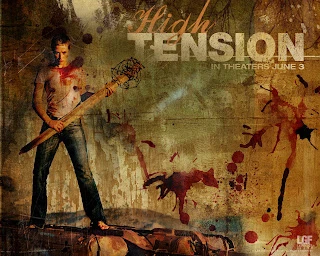
Tension

August 20, 2008

Hubby walked through the room and grimaced at the TV. “Ugh, how can you watch that show?”

“Because I like it,” sez I with all the reasoning of a five-year-old. Later that day, I thought about why I like the show, what elements keep me coming back.

My internal dialog mulled it over with one of my multiple personalities: – I like the characters.

Well, yeah, ok, but why do you like the characters?

I like how they interact with each other.

Yeah, yeah, but what keeps you coming back to the show?

Ah ha. Tension.

And that’s it. Every show has the main characters getting into some jam. Because the character development is so rich, I care about what happens to them. But it’s the tension that has me Tivo’ing through the commercials as fast as my little fingers can punch a button. Iwanttohurryupandseewhathappens!

And so it is with our stories. I’ve read books with thin plots, but the characters were real, and there was tension on practically every page. “Will Zoey get the guy?” or “Will Dr. Jellyfingers save his patient?” is the cliffhanger. The tension is everything building up to that penultimate moment. It’s where the character stands to lose something, and lose something big.

The flip of the coin is narrative and exposition. Sure, you need that to a degree, but your eye needs to stay focused on the issues that will keep the reader engaged. Tension, baby. Remember that experiment the news world tried a number of years ago, where they only broadcasted good, uplifting news? No one watched. Aside from making a social commentary on our lust for blood and guts, it boiled down to the fact that it was boring. There wasn’t any tension.

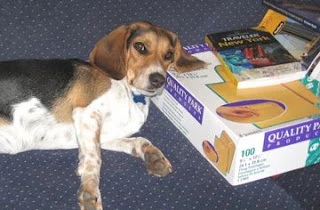
Will the Russians get out of Georgia? Will Michael Phelps beat out Mark Spitz in gold medals? Will I ever fire my secretary, the unreliable beagle? We keep tuning in every night because we want to see what happens. Tension is what makes a book a page turner. What about your stories? Is it filled with exposition and narrative (which slows down the movement), or do you fill your pages with tension?

So the next time hubby disparages my taste in TV shows, I’ll at least be able to give him a concise answer as to why I watch the show. However, we will not go into the intelligence behind my choices.


“Say it like it is, Lynn”

August 19, 2008

Jane Smith made a suggestion based on this post: “Write a post in which you say all the things you’ve bitten back over the years.” Ok, Jane.

Actually, our blog is the perfect medium that allows me to “say” all those things I wanted to say to some of the crazy and ludicrous situations that have happened over the years. Normally, and possibly unbelievably, I play it straight when confronted in person or on the phone because I really don’t like to be rude. Aside from the impression I may give, I can be well-behaved on occasion. But there are times when subtlety doesn’t work, and I’m forced to be…well…me. Dreadful as that can be.

Writer’s conference: This was a high-end conference that provided a marvelous breakfast buffet in one of their giant conference halls. I’m eating breakfast and jibber jabbering with some buds I hadn’t seen in a long time. This is our only freebie time, so we’re making the most of it. A woman nabs the empty seat next to me and smiles. I return the smile.

“I loved your book,” she says.

Wow, thinks I, not many people in this forum realize I actually wrote a book. Cool. She’s now my best friend. “Thank you.” Does she want me to sign her book? Invite me to speak at her wildly huge book club? Perhaps a party…?

She dumps a manuscript on the table and smiles again. “In fact, I think you’d be the perfect publisher for my book.”

Ahhh geez…what the heck was I thinking? The ol’ compliment ‘em and attack ‘em trick. Shoulda seen that one coming, dammit. I begin being polite. “You know, I’m eating breakfast, and this is my only free time. Perhaps we could do this later in the morning.”

“Oh, of course.” She takes the manuscript off the table and I think she’s leaving. Wrongo. “You know, my main character is very reminiscent of your main character.”

I put my fork down. “Uh, you’re pitching to me.”

She laughs. “Oh, I suppose I am. Sorry. It’s just that I’m so passionate about my story.” Well, duh, lady, what writer isn’t? She brings the manuscript back up to the table. “I think if you just read the first five pages, you’d be hooked.” She then launches into her synopsis. Argh!

Her failure to take a hint releases the beast from within. I put my fork down. “Look, I realize you’re passionate. We all are. But right now, I’m trying to figure out a nice way to communicate that this is not the proper time. Most people take the hint and approach me at a better time. Do you really want me to look at your work now that you’ve managed to raise my blood pressure a couple points?” I begin blinking uncontrollably to give the impression that I’m growing mentally unstable – not a real stretch. The clouds part and the angels sing. She apologizes and leaves. I don’t see her for the rest of the weekend. She’s probably writing nasty things about me on every bathroom wall from here to Arizona.

Phone call (just yesterday, in fact): “Behler Publications, this is Lynn.” (Yes, I do answer my phone because I can’t train the unreliable beagle)

“Yes, I’d like to know why you rejected me.”

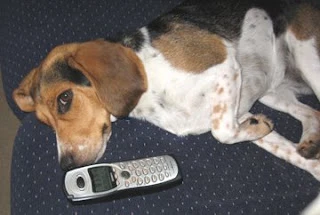
I turn and glare at the beagle, who’s lounging on the floor, chewing the corner of an ARC. You set me up, didn’t you? “Um, I’m afraid you’ll have to be more specific.”

“How specific do you need me to be? I asked a very simple question. Why did you reject me?”

I busy myself opening up my rejection file (I keep a log of everyone I’ve rejected). “Um, well, your name would be helpful.” Lynn, why don’t you just hang up on this guy? He gives me his name – Joe Idiot – and I begin shuffling through my files. I find the name and read my comments. Ach, this is one I actually chose to give a critique rather than a form rejection letter. Damn, damn, damn, I should be shot. “Well, my email to you says that there were too many things wrong with your synopsis, that I couldn’t make heads or tails of it, so I was rejecting it unread.”

“Yes, yes, I know that! But I want to know why you didn’t read the synopsis.”

My teeth are beginning to itch. “Because your synop was unclear.”

“How was it unclear?”

Now I know the beagle is behind this, and I make a silent vow to stop feeding her designer kibble. “I have no idea. I don’t keep the queries.”

“If you are going to critique my synopsis, then don’t you owe it to me to tell me exactly what’s wrong with it?”

There goes that unleashed beast from within again. “Um, no I don’t. See, I’m a publisher, and I review submissions that come into our office. It’s not my job to teach you how to write. That’s your job. And let me tell you what else is your job: learn the business, learn etiquette. You’ll be very lucky to receive any feedback on a rejection, so when you do get a tidbit, like what I gave you, then the proper response is, “thank you.” Or nothing at all. What you do not do is call up the editor and take them to task for…hello? Hello…?” Oh buggers.

Jane also requested: “And then take the right photograph to illustrate it.”

“Say what?”
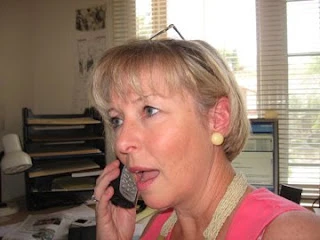
Proof that the beagle plots against me.


Don’t Touch My Voice!

August 18, 2008

This article on Biblio Buffet touches on the delicate subject of editing. I realize that editing is normally anything but delicate, and it’s not unusual to see heavy equipment rolling through the office. Just the other day a heavy fork lifter nearly crushed my unreliable secretary, but I digress…

Authors expect to be edited, both for copy editing issues like punctuation and sentence structure, and developmental editing which attends to content, plotting, story and character development. Editing is a foregone conclusion because our words don’t flow directly from the hands of God. But what makes a manuscript distinctive is its voice, and that isn’t something you screw with. After all, that’s why we bought the book. Sure, sure, the content is all-important, but how that content is communicated is what makes for worthwhile reading.

Thar be a huge difference between editing and killing an author’s voice. Voice is what gives our writing our personality, our style. It’s distinctive and unique. For instance, I love John Lescroart’s writing because he writes such great dialogue. His characters are like live beings and not made-up personalities who reside on paper. And when someone compares your writing to another author, they’re really talking about your voice, your style. Death to any editor who dares to mess with that.

If it’s my wont to say The guy who fixed my car sucks stale Twinkie cream then an editor better not come along and change that to, The man who fixed my car wasn’t very nice. Dammit, if I’d wanted to say he wasn’t very nice, I would have SAID so. But I wanted to make a point, to inject my personal brand of communication. One sentence has dimension and color, and the other is vanilla. It drops the sentence’s impact down a couple notches.

The world doesn’t need more vanilla, and I hope Lev is able to exact his revenge.


Cover design – “I’ve got this neighbor…”

August 17, 2008

Yes, yes, we hear this all the time. Joe or Jane Author has a neighbor who is a “great graphic artist.” Invariably, he’s great at designing garage sales posters and bake sales flyers. There is a whole lotta difference between fudgie brownies or scratched armoires and a winning cover design.

Covers are the author’s calling card, and they set the tone for what’s residing inside. As such, they should be reflective and complimentary of the content. Nothing bugs me more than to buy a book based on what I see on the cover (and no fair casting aspersions about my methodology) only to discover that what I saw on the cover had nothing to do with the story. Dang it, if I see a unicorn on the cover, there better be one in the book. And it better be a dominant feature of the book. I bought a book last year whose light shades of blue, green, and pink cover suggested light-hearted humor. Upon getting into the story, I discovered it was a morose journey about a suicidal stripper. Yikes. Talk about missing the cover art mark. I felt like I’d been a victim of bait and switch.

Readers don’t cotton to bait and switch tactics any more than they appreciate the used car salesman who fixes up a 1974 rust bucket with fresh paint and new tires while leaving ripped seats and missing steering wheel inside. Salesman Bob should fix the upholstery and get a new steering wheel, and suicide stripper’s cover should have had heavy fonts and dark colors. This is a “neighbor” mistake, and your neighbor should stick to his garage sales, and let the pros take over.

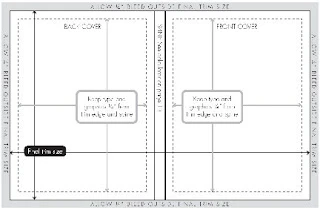
And don’t be taken in by professional graphic designers either. I see many designers who create amazing artwork, but they don’t necessarily make great covers. I had an instance where an author asked to use his designer. Sure, sez I. The graphics were fabulous. Problem was, they were so intricately detailed that they melted into a mish mash of white noise. The second problem was his use of colors. One color was dominant over everything else, and he used shades of it in all the characters. All those hues morphed into an indistinguishable globby mess. This was a design for a giant poster or a puzzle, not a 6 x 9 trade paperback.

Put a sticky note on your forehead: a professional graphic designer does not indicate book cover knowledge.

In order to have a great cover, you need to have a great cover designer – someone who is experienced in this particular medium. These guys understand packaging, color, font use, font size, graphics, what’s hot, what’s dated, and, most importantly, does it meet the ten-foot test. The ten-foot test is, simply put, whether the customer can see the cover and title clearly from ten feet away. Most authors never take that into consideration until they’re at a book event and see a cadre of squinting customers pass by. If the customers can’t see it, they’ll keep walking. And you know what? So will reviewers.


The truth about publishing

August 17, 2008

We’ve been found out; the truth exposed. This is how publishing really works.


Oh for pity’s sake…

August 16, 2008

Email exchange:

Author:
Good Day,
I’ll be brief as I know you are busy. I have a completed manuscript. This novella (8,533 words)…Shall I send an official query?
Thank You.

Me:
>Shall I send an official query?
No. Always a good idea to read a publisher’s submissions guidelines.
(my signature line is automatically inserted in all my correspondence)
Author:
Yes. It is even better to be ‘visionary’ and seek to resonate outside the box.

“Imagination is more important than knowledge”.
~Albert Einstein
Always a good idea to sign your name.
—————–
“Visionary?” “Sign my name?” ARGH! Dammit, why, why, why do I answer these instead of simply deleting them? Haven’t I learned that no good deed goes unpunished?


Follow

Get every new post delivered to your Inbox.

Join 963 other followers

Powered by WordPress.com