Press Release from Mission Viejo Mental Ward:

January 31, 2009

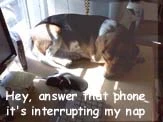
Ms. Price was admitted to our care late last night and is resting comfortably after a healthy dose of lithium, xanax, and vodka. Her faithful secretary, a very small beagle, said, “I couldn’t see anything but the whites of her eyes, and I knew it wasn’t from the rum punches I made at lunch. She began mumbling and drooling, saying something about, ‘an apology…an apology… he wrote a friggin’ aplogy.’ She then stood on her desk and started singing the ‘Star Spangled Banner.’ Scared the crap out of me.”

We expect Ms. Price to make a full recovery. But for now, we’re requesting that all contrite authors kindly hold off with their apologies until Ms. Price is feeling stronger. As a side note, the beagle was last seen in the company of a rottweiler headed for Sam’s Bar. Anyone knowing her whereabouts are urged to call Behler Publications.


Whoa there…got Voice?

January 31, 2009

voice1
Before you begin to write your query letter, don’t forget the most important aspect: you. Writing a pitch or a synopsis is a lot like a fashion show where everyone primped for hours in an effort to look their absolute best, and the best way to look your best is to allow your voice come through. Some of the most memorable query letters I received were due to the author’s distinct voice.

Voice is the term we use when describing an author’s writing style; how they’ve combined syntax (how they strand together a sentence), flow, tone, character development, dialog. It’s your literary fingerprint. It doesn’t matter how short or long your writing is, always inject your voice into it. More than anything, this is what we look for because it’s what makes your story come to life.

Here’s the pitch I wrote for a book I’m noodling with. I took out the “voice” so you’ll see what I mean:

Twist McPherson, young and newly retired from the advertising world, moves to Palm Springs and sets about writing the Great American Novel. After receiving a lot of rejection letters, Twist’s best friend Roz, a New York editor, offers to contact some her agent friends. But Twist wants to make it on her own. Unfortunately, the weakened economy is has forced publishers to look for the big blockbusters.

Twist decides to create her own publishing company and quickly finds herself with five ladies, all in their 70s, who write erotica under noms de plume. Twist enters the schizophrenic world of publishing with the help of Roz and Jack Crawford, a famous author, who puts aside his tenth book and his looming deadline to help Roz and Twist handle the growing public curiosity over these writers whose sudden popularity may force them out of anonymity, along with compromising the health of their husbands, who know nothing about their writing careers.

Technically this is sound; it introduces the characters, the conflict, and teasers. But it’s also pretty vanilla, and that’s because there’s no voice. It’s as if a robot relayed this information. Who cares?

Voice is important because it sets the tone of the story while allowing the writer’s style to come through. It is not necessary to say, “this is a lighthearted look at publishing gone horribly wrong,” (as so many authors do) because your voice says it all. And you really want to avoid these kind of statements because you’re telling me rather than showing me. And you know what? If a synopsis or pitch has a great voice, then we’re willing to overlook a lot. Here is the same pitch with voice:

Twist McPherson, young and newly retired from the advertising world, moves to Palm Springs and sets about writing the Great American Novel. After one too many Harvey Wallbangers and threats to wallpaper her bathroom with the growing pile of rejection letters, Twist’s best friend Roz, a New York editor, offers to contact some her agent friends. But Twist – so named for her metaphorical gifts of rearranging the male anatomy during tough business negotiation – wants to make it on her own. Her timing couldn’t be any worse. The economy has dropped the publishing industry to its knees, and publishers are only looking for the big blockbusters.

Twist is nothing if not pragmatic and takes up Roz’s flippant suggestion of creating her own publishing company. During her weekly Mah Jong game with a group of genteel ladies, all in their 70s, Twist casually mentions her plans. Before she can eat the olive out of her martini, Dirty Little Secrets, LLC is born, and Twist has a stable of five new writers who, under noms de plume, write some of the hottest, refined erotica to hit the shelves. As southern belle, Lucinda Du Pont, drawls over tea spiked with Jack Daniel’s, “Smut sells, dear.”

Twist enters the schizophrenic world of publishing with the help of Roz and Jack Crawford, blockbuster author of the world renowned Lawdog Mystery series, who puts aside his faltering tenth book and ignores his looming deadline in order to lend a helping hand through the maze of growing public curiosity over five hot-blooded retired ladies whose sudden popularity may force them out of anonymity – and their husbands into certain cardiac arrest should they ever learn of their wives dirty little secrets.

Do not take this tool for granted; keep it in your tackle box because it’s the difference between “yes, I want pages,” or “no thanks.”


Just paint a target on my head

January 30, 2009

Ok, what is it with people who can’t handle rejection? Man…two in a row. Is it the water? The lunar cycle? Crabs?

More importantly, why am I showcasing this? Because it highlights what not to do, both in a query and any subsequent correspondence.

I have completed a commercial novel: The American Car Salesman (86,000 words/300 Pages). The novel’s narrative lends itself to comparisons to such novels as Cormac McCarthy’s No Country For Old Men, William Kennedy’s Legs, and Russell Banks’s Continental Drift. The main character’s name is Chuck Testo. The novel is the struggle for order and affection in his personal life, against the greed and dishonesty in his business of car sales. Chuck Testo is a man who battles relentlessly with his own past and inner-balance. He’s the car world’s answer to Tony Soprano.

Chuck’s wife of seven years, Bernadette, has now become unhappy with the man Chuck is–a confused, two-timer, obsessed with Gordon Gekko and making money–and decides to carve out an identity of her own, a decision that goes against Chuck’s idea of a married woman’s role. His best friends, McKenzie, Quick Jim, Smitty, and Speedometer Willie, all want something from him. And now that he has replaced beloved dealership boss, Bobby Clark, who’s dying of cancer, Chuck’s enemies, Dealer Bill and Tony G, want even more. They want everything!

We follow Chuck and his cohorts on a haunting jaunt through Albany’s corrupt auto-world and the drug underbelly of Miami Beach, as the ghosts of unforgivable sin take hold. Will Chuck ever repay the debt to Murph, the man who raised him when his real mother couldn’t, and his real father wouldn’t? Will he live to an honest end or be buried in a grave of dishonesty? With the imminent arrival of the Internet and computer car-buying, Chuck is forever worried about the business changing around him. Like the song says: The future’s uncertain and the end is always near. Every human thought and sense is enriched with this novel. You’ll never look at your car salesman the same way.

I am currently an English & Writing Teacher at the high school level. I am a graduate of the College of XX (M.S in Education) and the University of XX (B.A. in English). In 1998 I was awarded a $1,500 scholarship from XXX Community College for a sample of creative writing I submitted. I have published a critical essay (Redacted) for an educational journal. Most recently I have had a short story (Redacted) published in a literary magazine Spell for Rain, and an editorial article published in the Times Union newspaper. I was a founding member of the Saint Rose Creative Writing Club. In September 2008, I was selected to participate in a Master’s Fiction Writing Class taught by 2007 National Book Award Finalist Lydia Davis (Varieties of Disturbance: Stories). I can send a full manuscript or partial at anytime.

(Redacted),
Thank you for your query. You have a tremendous amount of things going on, and, I’m afraid you’re long on description and short on plot. The description you have isn’t enough to compel me to read this without a plot. Best of luck to you.

Regards,
Lynn

I appreciate your feedback, Ms. Price. That is the first time that I have heard that critique. In fact this is a very plot driven novel. Perhaps the weakness is in my presentation. I hope you will consider looking at the first few pages of the novel or even taking a look at a longer more detailed summary. I have taken the liberty of attaching such a summary and a chap-by-chap to this e-mail. I hope you will consider, as this would be a tough way to get passed up, because the plot in this novel is very rich, if nothing more. Thank you.

Respectfully,
(Mr. Redacted)

(Ok, this sort of thing really chaps my hide because I didn’t ask for it. Never, never, never send something to an agent or editor if they don’t request it. It makes you look like a noob.)

Dear (Redacted),
I’m sorry for the confusion, but I’m afraid you misunderstood me. This was a rejection. Going from a vague description and little plot to a five page synopsis and chap by chap outline that I didn’t request is a huge jump. Again, apologies for the confusion. Best of luck to you.

Regards,
Lynn

No, I did not misunderstand you. I am sorry that jump was SO HUGE for you. But yes, your small-time apology from your small-time press is accepted. And now that I have been rejected from such an important figure in the publishing world (you), I think I am going to drop the dream. How’s that for vague description? Or would you classify that as synopsis? So, no, best of luck to YOU.

My parting shot:
I daresay that had you communicated with that kind of passion and clarity in your original query, your endeavors would have been far more successful. Your ego didn’t serve you well, otherwise you would have seen I was trying of help to you.

Sheesh, reactions like these are exactly why I usually issue form rejection letters. That’ll teach me.


Guess she told me, eh?

January 29, 2009

“Dear Ms. Price,
Your regecshun letter was the best thing that kould have happend to me becaus I got a great offer from “Really Bad Vanity Press That Gives Writers the Chance They Deserve” and my book is coming out next week. I had faith in my book even thoug you told me to take some writng classes so I kept at it and now am a published author. Thank you for not noing talent when it bites you on the ass.”

(Name redacted)

You’re so welcome.


Airing your laundry – just how clean are those bloomers?

January 28, 2009

Editorial Assistant: Wow, boss, thanks for the concert tickets. I hear this singer is good.

Overworked and Underpaid Editor: Hey, nothing’s too good for you. My secretary, the unreliable beagle, actually won these tickets in a game of strip poker. It was between her and a perky poodle, who lost when a Doberman with a serious overbite came roaring in with his chain gang and accidentally ate her and her diamond studded collar. Shhh…the band’s beginning…

The houselights go down and the stage is awash in bright lights. The first strains of Don Henley’s song “Dirty Laundry” fill the amphitheater.

Editorial Assistant: Oh I love this song!

“My name’s Jane Author and I’m mighty mad
I’m here to tell you that my publisher’s bad.
They canceled my book and then they showed me the door
My editor is nothing but a dirty skank whore…”

“Love ‘em when you’re up, kick ‘em when you’re down…”

Overworked and Underpaid Editor: (blanching) Oh my golly gosh. This … this is horrible.

Editorial Assistant: Why? I thought you said it’s good to expose rotten publishers.

Overworked and Underpaid Editor: Of course it is, you idiot, but we know her publisher, and they’re anything but bad. Great product, solid distribution, professional all the way. And the editor? Lovely creature. That is a good publisher.

Editorial Assistant: Well that singer makes them sound like the stuff I dug out of my navel last night. What gives?

Overworked and Underpaid Editor: What gives is production of the author’s book was canceled for any number of reasons, and she’s pissed. Sure, it sucks stale Twinkie cream to have your book canceled, but it’s a business decision that prevents the publisher from making a bad financial decision. No one is looking to screw anyone. For whatever reason, the publisher lost faith in the project. This happens every day from coast to coast. There is nothing sinister or scammy about it. It’s…business.

Editorial Assistant: Won’t this song hurt the publisher’s reputation?

Overworked and Underpaid Editor: Probably not. If the publisher has a good reputation, most people will see this song for what it is. There is always the risk a new agent or new author will hear this song and wonder what’s going on. Personally, I think the author is putting her own reputation at risk because she sang this song as simple payback. You cancel me, I make you look bad – tit for tat stuff. In reality, this laundry is of no real importance to anyone other than the involved parties. It’s a non-starter. But boyo, I’ll tell you that  grinding your ex-publisher into the sand because you’re hurt can come flying back to you with the intensity of overcooked oatmeal boiled in sardine oil.

Editorial Assistant: Why?

Overworked and Underpaid Editor: Because it’s bad form. They’ve shown themselves to be petty and immature. You don’t see me attacking authors who “done me wrong,” do you? I maintain my decorum because it’s the professional thing to do. This author’s song says more about her than the publisher she’s attempting to dis. And authors never want to appear as anything other than the consummate professional. Come on, Editorial Assistant, let’s blow this popsicle stand and tell the beagle to mix up some chocolate martinis.

Editorial Assistant: (snapping fingers) Hey, didn’t you cancel a project a couple months ago?

Overworked and Underpaid Editor: (nodding) I gave the author four tries with their rewrites. I finally lost faith that they could write.

Editorial Assistant:Well I heard they have a guest appearance on Maury Povitch next week.

Overworked and Underpaid Editor: Oh good goggley moggley …


Physical description in blocks of text, watch those bosoms…

January 28, 2009

Judy noticed the woman was tall, blond, and had a healthy bosom. She wore expensive jewelry as though she’d been born in it. Her nails were manicured to fine points and sported blood-red polish. The woman’s clothing was woven from the finest linens and silk that money could buy. Her black sweater offset the woman’s straight teeth.

I admit to a bias against physical descriptions that take up blocks of text like this. It derails the story. Here you have your reader’s mouth watering with action, and SCREEEEECH … let’s take a brief time out while we get a description of what the character looks like.

To me, these text blocks show a lack of agility and imagination because they’re all tell and no show. It’s like a menu, dry and flat. Action – Obligatory Description of one character – Action – Obligatory Description of next character. Ka-thunk ka-thunk.

It’s easier on the eye when writers weave in a few descriptions while keeping the story where it belongs – firmly entrenched in the action. Descriptions, in general, are a personal choice. Some authors prefer to leave their characters features up their readers’ imaginations. Others want to fill in every nitty gritty detail. I’m ok either way; but I do not like seeing text blocks. Show your writing chops by adding bits of description here and there.

Judy walked over to the snoring woman laying face down in the gutter and pulled the near-empty bottle of Jack Daniel’s from her jeweled-encrusted fingers. She shielded the woman’s body from the water that splashed up from a passing car. Could this be the senator’s missing wife? I’m betting someone will pitch a fit when they see mud and urine stains covering her Donna Karan slacks and sweater. She tenderly brushed the thick, blond hair from the woman’s face and noticed a finely manicured nail indelicately inserted in her nose. “Helloooo,” Judy whispered into a diamond-studded ear. “Anyone home?”

Ok, Hemingway it ain’t. But you see that it’s possible to give full descriptions while keeping the action going. Descriptions are great because they give us a frame of reference. In this case, it gives us a visual of the woman’s stature and, well, lack thereof.

This is something I see a lot in submissions, and my reaction is always the same; ka-thunk.

And while I’m bleating on about descriptions, be careful these descriptions make sense. For instance, in the example I used, I listed “a healthy bosom.” First off, who uses that term anymore? Sounds like something my grannie would have said right before she clucked her tongue. Yet I just read one today – in the book of a very well-pubbed author. For shame. Made me go “eww.”

Keep in mind that if you have a character observing another character, as I do above, ask yourself whether that observation makes sense. I mean, does it make sense to have Judy, a woman, take notice of this woman’s “healthy bosom”? Not unless she’s gay or it’s a foreshadowing that those bosoms are going to see some action fairly soon.

I recommend that you avoid the text block description. It’s clunky and almost acts like a quickie commercial break. If you make me take a commercial break too many times, I’ll order the beagle to fire up the blender.


Submissions guidelines, the editor, and the priest

January 26, 2009

confessional

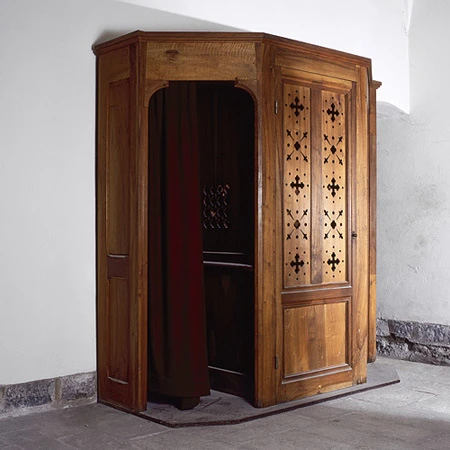
Overworked Underpaid Editor: “I’m sorry, Father, it’s been exactly one hour since my last confession.”

Patient Catholic Priest: “My child, why do you insist on plaguing me so much? Don’t you realize there are other people in line who have real problems?”

Overworked Underpaid Editor: “Hey, I resent that. These are problems that make me think ugly, vile thoughts. Thoughts of spilling blood and turning people into hood ornaments.”

Patient Catholic Priest:“Have you thought about getting a new job?”

Overworked Underpaid Editor: “No, Father, not once. You see, I adore my job…”

Patient Catholic Priest: “Yes, but you complain so much.”

Overworked Underpaid Editor: “Bear with me, Father? Just this one last time?”

Patient Catholic Priest: “One last time, my child.”

Overworked Underpaid Editor: “Forgive me, Father, for I have sinned. I wrote a pissy – ah, sorry, Father – terse email to an author today. I shouldn’t have, but it all got the better of me.”

Patient Catholic Priest: “What got the better of you?”

Overworked Underpaid Editor: “See, I get about 200 queries a month, and that’s a lot of reading and processing. Because I have such a load that comes into my inbox every day, I created this thing called ‘Submissions Guidelines.’ I did it to streamline the query process – to make my job easier. It tells authors exactly what we’re looking for, what we won’t accept, and the information that must be included in the query letter. Yet day in and day out, I get queries that make it obvious they never read my guidelines.”

Patient Catholic Priest: “Like what?”

Overworked Underpaid Editor: “Fantasy, young adult, mysteries, romance. Today, I just lost it and finally snapped. I told this author that had she grown a pair of eyeballs and looked at our guidelines, she would have spared us from wasting each others’ time. But since her brain was rectally inverted, she hadn’t bothered to check anything more than to determine if we have a heartbeat. Oh, it didn’t stop there, Father. I yammered on about how I was now forced to take time out of my day to send her a rejection letter because WE DON’T PUBLISH WHAT SHE WRITES. It, um, sort of took a downward spiral from there.”

Patient Catholic Priest: “Dearie me. What happened?” (whispering from the confessional booth) “Sister Mary Margaret, fire up some popcorn. This is getting good.”

Overworked Underpaid Editor: “Well, the author wrote back and told me to, um, uh, go forth and multiply with a rabid mongoose. I wrote her back and told her to make merry with the rotting corpse of a yak. Look, Father, I realize I was beyond naughty, but I don’t understand why authors don’t read the submissions guidelines. They aren’t there to amuse the tourists, but to help us from wasting each others’ time. Instead, I eat up time and resources answering people who don’t even write what we produce. Or they don’t give us what we ask for.

“For instance, I took out a hit contract on an author who didn’t give me the genre and word count in her query letter, even though I specifically state that in the guidelines. And the week before that, I sent a letter bomb to an author who queried me to ask me if it was ok to query me. What the fuc…heck is that about? Last month it was a query about a cookbook. COOKBOOKS!

“What makes my blood turn to liquid magma is that smart authors investigate publishers. They read the submissions guidelines and take a close look at the books we’ve published. They may even order one or two to get an idea of the quality of our editing and marketability of our books. I have piles and piles of query letters that I use as bird cage lining for my cockatoo, Screeching Mantis. It’s sort of taken its toll on me. I’m bad. I know this.”

Patient Catholic Priest: “Yes, I can see where one could be driven to commit heinous acts. I suffer from the same problems – with errant editors who complain a lot, for instance. Here’s your penance; do fifteen stations of the cross at the Mission Viejo Library, call your mother more often, eat all your vegetables, and refuse to answer anyone who hasn’t read your guidelines. The cookbook writers? Forget them. Same goes for the YA, mystery, and romance writers. Toss ‘em all. Writers are professionals, and if they can’t be bothered to follow common courtesy, then they don’t deserve your attention. Oh, and cancel the hit contract on that author.”

Overworked Underpaid Editor: “Yes, Father, I will, immediately. And thank you. You have no idea how much better I feel; like a huge weight has been lifted off my shoulders.”

Patient Catholic Priest: “And no more naughty letters or letter bombs. You are to correspond in a professional manner.”

Overworked Underpaid Editor: “Yes, Father.”

Patient Catholic Priest:“And, my child?”

Overworked Underpaid Editor: “Yes, Father?”

Patient Catholic Priest: “Try a shrink next time. You’re not even Catholic.”


“My story can’t be explained in the first three chapters”

January 25, 2009

arrogantThis is a common lament from writers. Their not-so-genteel remarks to me often include comments of, “if ONLY you’d read on to chapter 12, you would have understood the story.”
Dude. Seriously? If I have to read through eleven chapters in search of your nugget, I’d be better off having root canal sans Novocain, or a margarita with no salt because chances are that nugget doesn’t exist.

“I can’t explain my story in three chapters.”

What you’re really telling me is that you can’t organize your thoughts in a professional manner. No one is asking you to explain your story in three chapters – that would make for a pretty short book. We’re asking that you set up your story in those first three chapters so we know where it’s headed. That’s the purpose of those first chaps. If you can’t get your point across in that lengthy – yes, you read that right; lengthy – amount of space, then you’re probably a victim of rambling-itis. Readers are a sophisticated lot with short attention spans. Either get to the point or forget it.

“My story requires deeper reading.”

Please. This comment always makes me think of the frustrated artist who paints three-day-old meatloaf in earth tone metallics and frames them in cut-out garbage can lids, and screams, “No one understands me!” Well, yeah, we don’t. I have doubts these complaining writers afford that kind of patience to the books they buy, so why is their work any different? It’s hubris to insist that your story requires deeper reading, like you’re Deepak Chopra or something, and we lowly agents and editors should shove everything off our desks in order to pay homage to your gilded words.

These types of statements always make me think that the author doth protesteth too much. It’s tell and no show. If you can’t show me that your book requires deeper reading within the first three chapters, I’m willing to bet that the next twelve won’t reveal any epiphanies either. After all, we’re not stupid. Well, some of us are, but that’s a whole other post.

My point is that these cries of outrage are hobbyist, newbie writer stuff. I have never had an experienced, brilliant writer insist that I “keep with it.” They understand the minds of readers and get on with the business of writing a captivating story rather than complaining that we don’t “get” their three-day-old painted meatloaf.


More on writing your biography for a query letter

January 22, 2009

bio
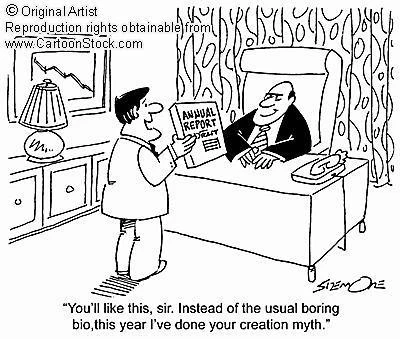
Among the elements that agonize authors when writing a query letter is their biography. Most scream from the heights of flagpoles, “I don’t HAVE a friggin’ bio!”

Well, sure you do. Everyone does. What they mean is that they don’t have publishing credits. Sure there are some editors and agents who want published authors only, but there are a large number of us who don’t mind new writers. But we need to know something about you, and it’s what you decide to say that makes a difference. Many make the common mistake of telling us stuff that’s either cliché or of no interest. Here’s an example of what I commonly see in query letters:

I write to relieve my stress as a corporate lawyer (plumber, mom, engineer, teacher, etc). My writing puts me into a make-believe world where I can control the lives and stories of my characters. It’s my goal to create plots filled with unique adventures and put my characters in situations that are filled with conflict – a mirror of everyday life. My creative writing class helps me improve my craft, so I can move closer to my real passion, building a writing career.

The problem I have with this is it screams “I’m a newbie writer.” We’re looking for a savvy writer, and this bio is pedestrian and a shining example of what invariably crosses my desk. Just like writing, we want to avoid fluff, and this is fluff. It’s a natural assumption that we all want to create great characters and plots, and we all have stress, so you’re not telling me anything new or vital. Who cares? I’m glad you’re taking writing classes, but this makes you sound like a work in progress. I don’t want a work in progress, I want a pro.

Another type of bio I see is the “my kids” theme:

I wrote my novel because my seven-year-old twin boys inspired me. I read to them every night, and I thought it would be great to read them something that Daddy had written. My family thought Twin Boys in TwinkieLand would make for a great addition to the fantasy genre.

This is cliché, hacker, hobby stuff. Most of us don’t care about your personal life and what drove you to write. We want to know what drove you to write this story. What elements did you feel were missing in the genre that your story could fill? We’re looking at elements about you that we can sell to the genre buyers and reviewers. We want to know that you’re well-read in your genre because too many writers aren’t, and they write stuff that’s already been done over and over.

Here’s an off the cuff example:
I wrote the children’s story, Twinkies Take Manhattan, because Twinkies have made a huge comeback in the US snack market, and I saw this as a delightful way to combine America’s favorite snack as a major character and dealing with getting lost in a big city and how to find help. The child safety classes I teach in the elementary schools are a true inspiration because children tell me that getting lost is their biggest fear. This important topic isn’t addressed in the current children’s genre, and Twinkies wraps sage advice in a very colorful package.

I don’t mention my lack of publishing credits, but rather I’m focusing on what I feel is the marketability and uniqueness of my story compared to everything else on the shelves. I’m trying to convey the existing popularity of my MC – anything that says “this is a book worth looking at.” You’re hyping your story while giving us a sense of who you are.

It doesn’t matter that in my real life I crochet toilet paper doilies and have 1,000 cats that I’ve potty-trained. Who cares? Focus on the story and why you wrote it. If you can’t tell me why you wrote that story as compared to something else, then I’ll suspect you’re a hobbyist and probably move on.

If you tell me that you just sat down one day and banged out this story because it was bursting inside of you, I guarantee that my eyes will glaze over. Again, who cares? Why this story? I’m looking for the passion behind the words. I don’t care if this idea came to you in a dream. If it did, then make it relevant to the marketplace, readers.

Why all this bugaboo about bios? It’s as I said, we use this info to sell your book. The more exciting the author, the more exciting the book. And that equates to genre buyers getting excited about filling out purchase orders. And that equates to a very joy joy day for all.


Character Investment

January 22, 2009

Characters are the vehicles in which a story moves along, right? So it’s not a stretch of our quasi-firing synapses that in order for readers to care about the story, they have to care about the characters. It’s called Character Investment, and I subscribe heavily to this because it’s what helps make a story bankable.

Plots are great; after all, it’s what drives us to turn the pages. But it’s the characters that make the plot come to life. I just rejected a manuscript I really wanted because the subject matter was wonderful, and the perspective was unique and marketable. The problem was that I couldn’t invest in the character because the author never let me know his character’s depth and breadth.

A fabulous plot is a wasted effort if I can’t get a feel for the characters. Who are they? What drives them? How do they react to confrontation or conflict? What thought processes do they encounter when trying to resolve a crisis? Are they hot heads or easy going? Do they tend to be punctual or late? What kind of books would they read? What foods do they like? Are they wine or beer drinkers? Do they have friends? What does their house look like? Their closets?

Obviously not all of these elements will be infused in the story, but I think this is a good writing exercise when developing a character. If they’re real to you, the author, then it’s easier to make them real in your story. And you definitely need to make them real in your query letter. The only flat thing in your manuscript should be the pages.


Follow

Get every new post delivered to your Inbox.

Join 963 other followers

Powered by WordPress.com