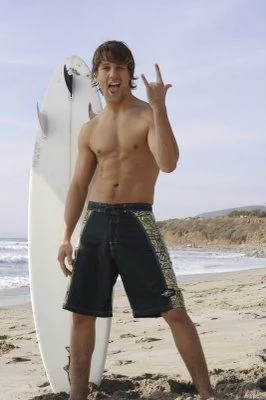
Two surfer dudes – promoting something from nothing

February 27, 2009

surfer8

I’m often threatened with flying wine glasses when I dare to bring up the “P” word while sitting at the bar during writer’s conferences. Note to self: don’t say the “P” word in the bar. Ever.

What is the “P” word? Promotion. Now put down that glass! I’m tired of ducking from pouty chardonnay.

So I have this workshop on Promotion, and it’s designed to help authors pull the elements from their books, or their lives, that will help create a platform where none seems to exist. I had this one guy – blond, wavy hair, deep tan, who said “dude” a lot. His book was SF and his main characters were these two surfer dudes – a lot like him, I imagine. He had done the vanity press thang and wondered how to sell the book. After a quick lesson in how his book would never be on store shelves, we set about making him memorable. Talk about a tall order. How on earth could we make lemonade out of this lemon? SF? Surfer dudes? Oy, my ulcer…

We first looked at who he is. A surfer dude who’s been surfing at the same beach all his life. He’s well-known down there, so the first suggestion I made is that he set up a weenie roast on the beach and give away dogs and a free book to the first 50 surfers. Do this for the next few weekends.

I recommended that his next step should be to hit up the stores that are right next to the beach and see if they’d be willing to carry his book on consignment. After that, I recommended that he go the skate/surfer stores in the area and do the same thing. Since those stores know him, I felt pretty sure they’d be willing to do this.

Since he was from the same area as I, I was tickled pink to see an article in the local paper about his weenie roast and a book. He even ranked a nice little interview out of it. My sons told me they saw his book in the surf shops, and that copies had sold.

Now, will this guy sell a gazillion copies and be reviewed by the Los Angeles Times? Probably not. But I’m sure he sold a few hundred units, and it was based solely on his ability to find a clever, unique way to use the “P” word to his advantage. and make people aware of its existence. If this guy can find the perfect wave, then I’m betting anyone can. Duuuude.

Edited to add:

This guy went on to pimp his book in a fabulous way. He started promoting surfing as an affordable, fun way to get fit and stay healthy. The schools thought his was the perfect message for their students , and he launched a whole new level of promotion that got his book out to a much wider audience. Last I heard, he quit his waiter job and began doing this full time. All because of an idea.

Duuude.


The Realities of the Industry – care for a domino?

February 26, 2009

domino1

“What’s the point? Will anyone want to take a risk on a first timer? Will anyone want to get behind a novel that may be compelling and interesting but doesn’t deal with any current hot button issues facing the American people? Should I just wait until the industry figures out what the future of publishing will look like and how they’ll make money from novels?”

Well, it’s all that and a bag of potato chips. I can hear the pain and frustration in every syllable, and I sympathize. The industry is undergoing an evolutionary process, and it’s about freaking time. For far too long, the industry has spent money like drunken sailors loaded on my great grandfather’s homemade kikapoo juice. You cannot toss money about and not have a comeuppance. And yes, it’s painful as all hell. People are being let go right and left, authors are being orphaned, and many worthwhile projects won’t see the light of day for a while because the industry has to right itself.

But it WILL right itself.

Had the industry run their businesses the way we small fry publishers do, this would have never happened. So where does this leave the author? Well, here are the realities:

Everything in this business is like Dominoes. If one domino falls, it impacts everything down the line.

The largest domino is the commercial New York publisher. They are looking mainly for the blockbuster books in order to stay afloat. Many midlist authors are being orphaned.

This affects the next domino, which are the agents, who would love to have a complete stable of blockbuster authors. But seeing as how we are forced to live in reality, no one knows a guaranteed blockbuster, per se, until a NY commerical publisher deems it a blockbuster as seen through their sales. Remember, there is no such thing as certainties in this biz; it’s all a crapshoot – hence our fondness for liquor and chocolate.

Agents, who in the past were able to sell their midlist authors, are now unable to do so. In order to find them good homes, they’re turning to the indie trade presses like us – the next domino. Oh joy joy, happy happy. The quality of works we’re being shown is beyond lovely. Same goes for the agents who are querying us. We’re not able to give anyone the huge bucks the NY publishers are, but we do have great distribution and put out a quality product. We are great homes for the agents’ authors.

The question is how long can this boon last for us small fries. We work very hard to keep our particular domino standing tall and strong. But agents need to make a buck, and they aren’t going to get rich off us. So the next domino to fall could be the agent. I’m already seeing agents who are accepting only the authors whom they feel are “big buckers” – authors who will earn a big advance.

So where does that leave all the other authors? It leaves you at the mercy of a very tight, competitive market. You are the next domino in the publishing line. In order to keep from falling over, you need to recession-proof your writing as much as you can, which translates to understanding how the industry works, knowing your competition, being well-read in your genre, and writing an outstanding story. You’re the ones who attend writing conferences because the networking can’t be beat. Every time I speak at a conference, my cold, black heart thaws just a bit when I see a giddy author who has just been signed by an agent or an editor. There is no better way to learn the inside scoop.

You also recession-proof yourself by paying close attention to your platform. If I have two similar stories and one author has defined and targeted her readership and the other stays at home and knits toilet paper doilies, who do you think I’m going to pick? In this day and age, authors MUST be prepared to promote, and he with the biggest platform wins. If you wrote a stunning novel about child abuse and you happen to be a prof on women’s issues, that’s a big yes because you can use that as a curriculum addition. If you can do it, then we can promote this to all the colleges who teach women’s issues. Cha-ching!

Now how does that help this question?

Will anyone want to get behind a novel that may be compelling and interesting but doesn’t deal with any current hot button issues facing the American people?

My answer is that there are always issues buried inside a book that can be fleshed out to correspond to a social issue – especially if it truly is compelling. Don’t even get me started on the SF author whose main characters were two surfer dudes. If that guy could do it, anyone can. Oh…I didn’t tell that story? I will in my next post. Promise. Pretty danged funny – I use that example in my seminar talks all the time.

As to the question whether anyone will take a chance on a first timer, the answer is of course. We do it all the time. If you’re in this game to retire on your gazillion dollar advance, then methinks you’ve set your goals a wee bit high right now. Yes, there are Cinderella stories, but they are few and far between. The trick to this game is finding the right agent or editor who believes in your story. Just because someone passed on it doesn’t mean that it’s not publishable; it may mean that they don’t believe they can sell it. Check out Janet Reid’s blog post regarding this issue. I laughed just as hard reading it as I did when she told me the story on the phone. It happens. We pass on stuff only to find out that it’s doing great somewhere else. And that’s the name of the game. Getting someone to love your project.

It’s ok to feel discouraged, but it’s also smart continue to believe in your talents. Without your domino, all the rest of us would fall. Research the industry, be educated, and don’t be an island.

The last domino? Why, the readers, of course. If we can’t give them what they want to read, then what? Let’s be sure to never let that domino fall.


The Review – pass the Kleenex and margaritas

February 25, 2009

I don’t review books, obviously, but I do send our books out for review on a regular basis. We’ve been fortunate to have received some fabulous reviews and, sadly, some that made me wince. Facts are that we can’t please every reviewer (or reader) 100% of the time. The best we can hope for is that the one stinker is offset by three great reviews.

What breaks the heart is how authors react to a bad review. Of course no one wants to be told their book sucked stale Twinkie cream, but those opinions are out of our hands, and we have to take those opinions with a grain of salt. I can sit in my office and phhttt all I want while calling the reviewer all sorts of nasty names. I may even consider having the beagle bite their legs, but I never take my displeasure to a public forum because it’s bad form.

I’ve talked to authors who blew their stacks over a stinging PW review, and my reply is always the same; at least PW REVIEWED your book. Know how many they passed on altogether? For every one book they review, thousands are turned down. So before you blow your ballast tanks over a bad review, consider that at least you GOT reviewed.

Act like a professional. Be gracious, and always say thank you. Never take the reviewer to task, and never tell them, “You so don’t get what I was trying to say.” Consider the possibility that you simply needed to say it better. The minute you spout off, you turn off readers, agents, and editors. You want people talking about your book – not you. A prime example of this is here. Gee, and I thought my job was tough…


Spreading out the Welcome Mat

February 25, 2009

As seen on Publisher’s Marketplace:

February 24, 2009
Non-fiction:Memoir
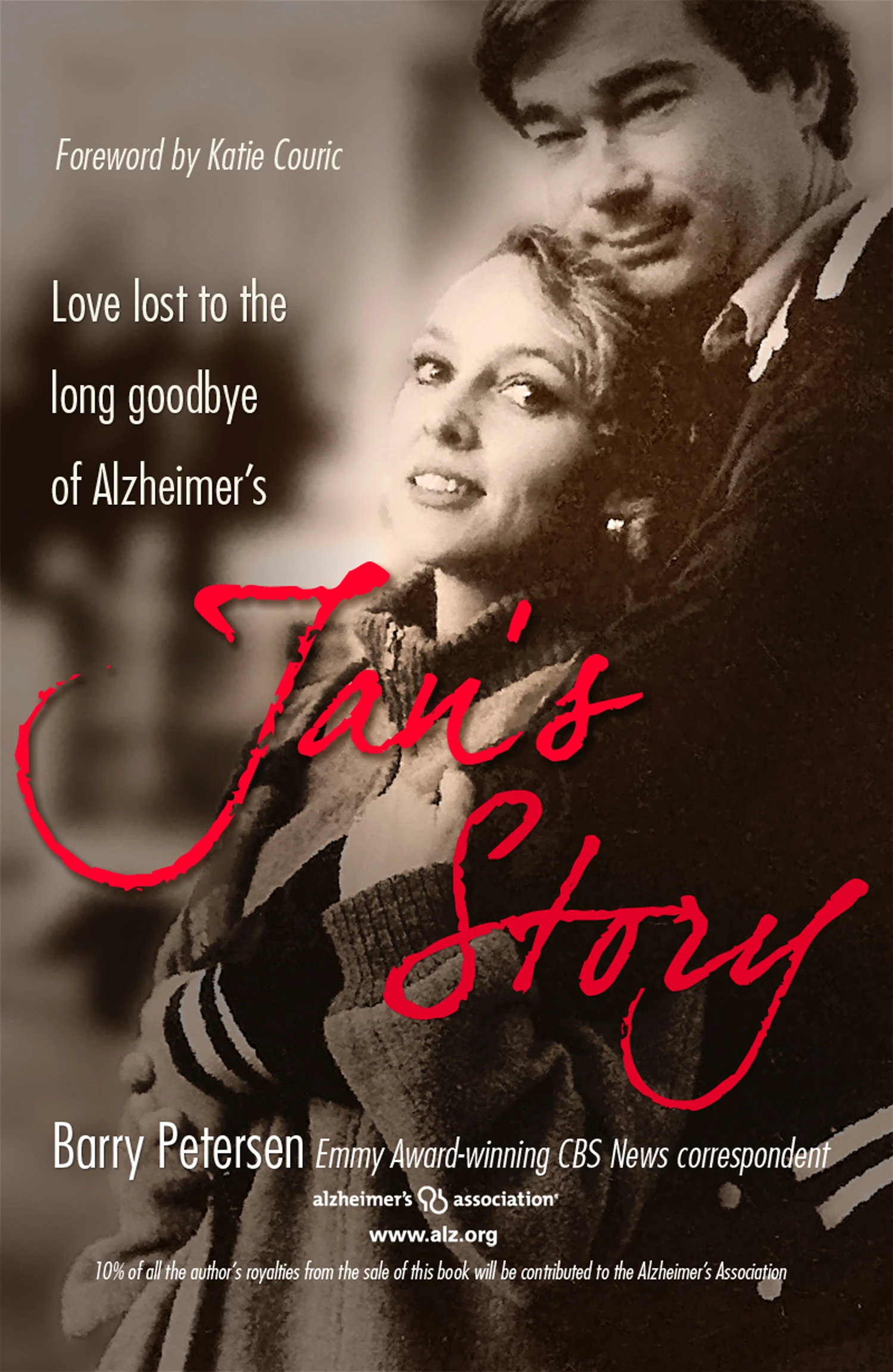
CBS News correspondent Barry Petersen’s JAN’S STORY: LOVE LOST TO THE LONG GOODBYE OF ALZHEIMER’S, the moving story of his beloved wife’s descent into Early Onset Alzheimer’s, to Lynn Price at Behler, in a nice deal, by Paul Fedorko at Trident Media Group. [email protected]

Are there any sweeter words? I’m beyond giggly excited. When Paul sent me the proposal, I shoved everything off my desk and grabbed for the Kleenex box.

CBS correspondent Barry Petersen is in the midst of writing a moving story about his lovely wife Jan, and I’m utterly hooked.

I had never heard of early onset Alzheimer’s before, and Barry’s story melted my heart and scared the hell out of me because of how it attacks a much younger population. Jan wasn’t that much older than I am when she suffered her first symptoms.This is an issue that isn’t widely discussed, and I couldn’t help but feel Barry’s platform and contacts make him the perfect person to bring this terrible affliction to the forefront.

I know what it’s like to be madly in love with someone, and the idea of suddenly having an expiration date on “forever” is the stuff nightmares are made of. Barry writes with a great voice that is free of maudlin and sugarcane prose but, nonetheless, made me feel every emotion that he has for Jan – a marvelous case of show vs. tell.

Sniff…so, Barry, after meeting and entertaining so many of the biggest names in the world, we hope you enjoy your stay at our happy little house. We’ll take very good care of you. If we don’t, I’m sure Paul will kill us.


Truth in advertising

February 23, 2009

As seen on a publisher’s website in their author FAQ:

  • Do we charge to publish books? NO – we are a small, traditional press and pay small author advances and royalties
  • Who holds the copyright? The author – and it’s your responsibility to obtain a copyright

Dadgummit, this just singes my Twinkies. First off, you’re a complete goober if you call yourself a “traditional” publisher. It shows you that you know zippo about the industry. It’s like a plumber calling himself an expert in “poopie in da pipie.” It’s plain silly and no client with a brain would call for this guy’s services.

Secondly, “traditional” publishers take out the copyright on behalf of their authors. It’s as basic as a doctor filling out the insurance forms for his patient.

On one hand, it’s nice they blew their own cover and revealed themselves to be the POD they claim to not be. On the other hand, it’s sad because most new authors won’t know what to look for. Gah…I can’t save ‘em all, but I do try to save a few.


Dead giveaways to Newbieville

February 23, 2009

Like Hansel and Gretel who left breadcrumbs that would lead back to their home, authors also leave little breadcrumbs that lead back to the Land of Newbie. Always remember, agents and editors don’t have a problem with new writers, but we do have problems with un-savvy, undereducated writers.

  • If your subject line says “Fiction e-querry,” you’re a bad speller newbie
  • If my name is misspelled, you’re a newbie. I mean, come on, how many ways can you screw up Price?
  • If your first line says, “ABC is a fictional novel…,” you’re a newbie. Dude. Novels are fiction.
  • If you tell me your characters are reminiscent of a quasi popular book and your plot is a distant cousin of another quasi popular book, you’re a newbie. Never assume that I’ve read every single book ever printed. I haven’t. And even if I have read the book in question, those characters and plots are often complex. If I have to sit and ponder the myriad of ways your characters and plots compare to already-published books, then your effort to sound cool and brilliant are lost on me. Besides, it’s lazy and inconsiderate, and makes me cranky. Don’t make me think any harder than I must. Besides, we all know what happens when we assume…

assume

  • If your story is filled with teenage angst about growing up, death, the future and your bio is filled with the fact that you crochet toilet paper doilies, you’re a newbie. The idea of your bio is to give me something I can use to promote you. Unless your main character crocheted a shawl for Ice-T’s microphone, I’m going to have a hard time making a connection between you and your story. Remember; I have to sell your book, and sometimes the author’s bio helps to cinch the deal. There is some reason why you wrote the book you did, so concentrate on that in your bio.
  • If you finish this off with, “I would love to send you my manuscript – complete at 150,000 words…,” you’re a newbie. This is miles too long, probably by half, depending upon the story. My eyes are guaranteed to glaze and my finger is already quivering over the form rejection letter.

The idea is to do everything to make an agent or editor do the joy-joy dance, not scream ’til their tonsils explode. Newbies manage to earn themselves a quickie trip to the cyber door faster than they can say “show me the money!” and, tragically, none of it had anything to do with their work. If we must reject you, it should be for the standard reasons of the work isn’t right for us – not that you’re undereducated to shoot yourself out of your own canon.


Gee, Lynn, tell me how you really feel…

February 22, 2009

To me, Vanity and Print on Demand publishing is akin to putting up your own lemonade stand and paying a drunk sailor to make the lemonade. There’s no sugar in the mix and the lemons aren’t ripe. There may even be some seeds and a dead fly floating around, further taking away from its appeal. And it’s up to you to put on a great big smile and convince everyone to buy it.

The drunken sailor can’t help you promote your lemonade because he’s keeping company with a fifth of Jack Daniel’s in the back alley. What’s worse is the sailor gets part of that money. If you’re lucky, he won’t drink all the profits and will give some of it back to you in a royalty statement.

Seen it happen too many times to believe any differently.


How many addresses did you say you have?

February 22, 2009

Dear, dear Author,
Thank you for your query. I’m afraid this was light on plot and long on description, and I won’t be interested in reading this. My concern is that you may never realize I’m not interested because you gave me no less than four different emails, two phone numbers, and your cellie, where you insisted on being reached, AND you didn’t email me from any of those addresses.

Now, were I kind and benevolent, I would have copy & pasted one of your four addys. But I’m in the middle of two cover design meetings and an editing consult, so my benevolence is being utilized elsewhere. In other words, I merely hit the “Reply” button. If you want to be guaranteed of a reply, email from that address. I’m a lousy secretary, and so is the beagle.

Yours in literacy,
Lynn


If you open your mouth, have something to say

February 21, 2009

Argh. I went to a very hoo ha author luncheon put on by the Friends of the Library. I’m talking yanking the fine jewels out of the vault (or in my case, off the beagle’s neck and paws), stuffing a designer hat on your perfectly coiffed hair and saying, “dahling!” a lot after you’ve gotten out of your Jag or Mercedes that handsome valets take off your hands while you sashay into one of the hoo ha-iest hotels in the area. It’s a fine lunch and free-flowing champagne.

So you can see there is a lot of build up, and I couldn’t help but hope the author of the moment was well prepared. Oh, he was handsome enough. I do like my eye candy just as much as the next person, but I’m equally concerned about what comes out of their mouth. It doesn’t matter how well-pubbed they are or how many awards they’ve won. People have made a huge fuss over this event, and he better not suck.

I came away lacking. So did Mom, and she’s the first one to extend platitudes toward anyone. Mr. Hideously Successful Author was funny in spots and obviously an adroit speaker, but he was an empty suit.

I couldn’t help but think of the many times I’ve spoken before crowds, both in a professional setting and an authorial one, and my only focus was to give the audience something to take away with them – a part of me that explained why I wrote my book or the details of my seminar. People know this guy by his books, so it would have been lovely if he’d spoken more about them; what message he’d hoped to impart with them, why he wrote the books, etc. I wondered if he was so famous that he felt like he could just phone it in and be cute and funny. Not for $65 a ticket, and forcing me to dress up, and be charming, thankyouverymuch.

It was a valuable lesson to anyone who does author events. Have a goal in mind when you speak. None of us are so entertaining that we can get by on our good looks *coff* and winning *coff* charm. We have to give our audiences a reason for coming. Don’t open your mouth and think a few jokes and clever quotes is going to cover it. Passion is your fuel for writing your stories, so tell the audience about that passion. Most of them don’t know what it takes to belch out a book, so let them into your world, let them feel your motivation for writing your stories.

If you open your piehole, have something of substance come out of it. As for that author…well, the dessert was lovely. Pass the champagne, willya?


“If you like me, why don’t you want me?”

February 19, 2009

The author was understandably confused. I had just critiqued her first pages and liked the work. It was entertaining, she’d kept me engaged throughout her 20 pages, I liked the premise, and her characters. Even though I liked it and felt there was probably an audience for it, I had to pass. Why?

I didn’t love it. I wasn’t passionate about it.

Why do I have to feel passionate about it? This is business, after all, and isn’t it enough that it may sell? No. Not for me. It could be a character flaw, but when I buy a project there are a lot of people I have to win over, and I use my passion for the project as my fuel. There are any number of ways I can get shot down before I extend a contract offer and sometimes the only thing keeping that project alive is my willingness to sink my teeth in and fight for it.

Now I’m not so jaded that I’ll ignore my submission team’s advice, but I have been known to go against the grain and pull a Frank Sinatra – and do it myyyyy waaaaay. This is when it’s good to be queen. But it has its double-edged sword as well, and that means that my maverick ways can bite me on the lower forty. That is why I need to feel passionate about the work.

This extends over into how we promote and market the work. The more head over heels in love I am, the easier the ideas come bursting into my melon. It also affects my copywork when I’m writing tip sheets and cover letters – those words have to flow from deep inside my gut because I know I have very little time to reach out and touch the person reading my cover letter and tip sheet in hopes of a review. I never say die to something I love and feel passionately about, and this is an author’s best friend. It’s also the luxury of being a small publisher.

So if you ever see a critique or rejection letter that says, “I like it, but I don’t love it,” this is invariably what we mean. That doesn’t mean you bite; it just means it’s not right for me.


Follow

Get every new post delivered to your Inbox.

Join 963 other followers

Powered by WordPress.com