Backstory is not for amateurs

May 31, 2009

Hooya, that’s a week of my life I’ll never get back. Not sure I want to, either.  I think the Cosmic Muffin decided he didn’t need the trouble, and the Devil decided he didn’t need the competition. Despite my best efforts, I’m going to live. The beagle assured me she had the office covered while I lay in bed praying for a quick death, but I had my doubts after rolling over in bed numerous times and coming face to face with her muzzle. On. My. Pillow.

Sleeping.

As a result, there are mounds of email and phone calls that went unanswered. I apologize for the delay. I know there are several can’t-wait-hurry-ups in the stack, and I promise I will get to you – after I’m done reprimanding the beagle for sleeping on the job. Her punishment is eating mass produced dog food.

I think the reason I got sick was because my defenses were down from the car accident. Those things really do a head job on you. I’m not one to hang out with the Kleenex crowd, and I wasn’t a sobby whiny-butt mess or anything. But I wasn’t quite me either. The body aches were just a part of it. It’s the mind aches that sap your energy and natural defenses. The lower you are mentally, I believe the more susceptible you are to other crud. I think it just opened me up to those lovely flu germs my daughter so lovingly brought home last week. I’m planning her disappearance as I type.

So in spite of being delayed by a few weeks, I’ll be back to my fighting strength very soon and all my mail and phone calls will be answered.

Ok, so what does this have to do with the title of this post, which is Backstory? Cagey broad that I am, I wanted to show a sample of effective backstory.

Much of what I read in submissions is backstory, and I’ve discovered there are actually two types of backstory; the useless bits of fluff that has zippo to do with the story at hand but is meant to add flavor; and the backstory that took place BEFORE the real story began. Either way, I’m hard on backstory because its presence (or the lack of it) takes a story from five hundred miles an hour to flying off the train tracks into oblivion.

I see your eyebrows reaching the northern confines of your face. “Lack of it?” Yup. As much as backstory can kill a story, backstory, if used in the fingers of professionals, is good. And necessary.

I think Carolyn Jewel nails a couple of points squarely on the head in her guest post about backstory on Kristin Nelson’s blog. She has some real gems:

Backstory: Can’t write with it, can’t write without it.
It’s that and a bag of potato chips. Your characters don’t just materialize straight off the page to create a story. Just because they’re figments of our fertile imaginations doesn’t mean they don’t have a past. And they should. Just as in real life; people who have had rich experiences are often the most interesting people. So it goes to reason with your characters. They have baggage and issues just like we do.

And this is where the tread often fails to meet the road. Writers want us to know their character’s entire backstory. It’s not needed, and it’s a big manuscript killer. Sure, it’s necessary for you to write the backstory because you may discover something really cool or complicated about your character that adds huge dimension to your story – but that entire background won’t make it into the final cut. But a tidbit of it will.

In the example I used at the beginning of this post, which is what I refer to as fluffy backstory, the main thrust is about why I’ve been AWOL for so long. The bit about why I think I got sick in the first place is backstory. It wasn’t necessary, but I added it to show the chain of events that I believed led to my being a dithering loser for a week. It rounds out the story a bit and gives it depth. Now if I had continued down that backstory line and blathered on about how it took me a week before I was brave enough to get behind the wheel of my car, then it’s no longer germane to the topic at hand, and the reader loses interest. Who cares?

Tidbits
Let fluffy backstory out in dribs and drabs; like a balloon that you slowly let the air escape while pinching the neck so you can make that squeaky noise that annoys the hell out of everyone. If you let all the air out at once, your story is all backstory and no meat. The reader loses interest. Reject. Tattoo this on your forehead: It has to be germane to the story in order to hold our interest.

There is another kind of backstory that is comprised of major meat and potatoes. Many of my rejections occur here with the comment, “I feel like you’re trying to tell two stories at once. Choose one and tell it.” What this means is that the author crashed the backstory into the current story and it’s hard to tell who survived. You need to call out a literary tow truck and clean up this mess. And this leads to Carolyn’s second gem:

The problem is that we are not writing a story about the backstory of our novel. We’re writing about what happens BECAUSE of the backstory.
That sentence is so freaking brilliant it makes me want to whack myself for not thinking of it first. Some stories are constructed such that the author wouldn’t have their current story were it not for the events that took place in the backstory. It’s always pivotal.

For example, in my novel, my protag Erik Behler’s young patient died a needless and painful death because his parents believed in using only alternative healing methods. Erik was devastated with the death and became a material witness against the parents in a very public court case  for child endangerment, which they lost and went to jail. From that moment on, he believed anyone who practiced alternative medicine was akin to playing Russian Roulette with a bullet in every chamber. Enter Kim Donovan, the new surgeon on the block who lights up his life. And utilizes alternative healing methods in her practice. Now he’s on a collision course with his professional beliefs and his heart. How can anyone be so insane and lacking in good judgment (let alone a freaking doctor) be the one to open his eyes to a whole new side of life? He’s repelled, yet in love. The two emotions can’t exist in his well-ordered, scientific world, and one of them has to go. Kim and Erik’s story is about what they do because of the backstory.

When do I let the air out of my balloon?
The good author knows how to tell the current story without letting the backstory have too big a voice in that collision. And this moves to when to let that air out of your balloon. Since you have finite amount of air, you want to let out the right amount of air at the right moment. You have to decide what part of the backstory your reader needs to know at any given moment so they understand what’s taking place in the current story.

For my book, I added a short prologue because I wanted to shock the reader with the pain Erik carries with him at all times. But I let small bitsies leak out at various points of the story to give the reader what I felt they needed in order to fully understand the opposite poles that are constantly tugging at Erik. In one scene, Kim has a very persuasive argument with Erik, and I quickly brought in Erik’s dying patient who, while struggling to breathe, looks up at Erik through sad eyes and says, “It didn’t have to be this way, did it?” That backstory had far more emotional impact to that scene than any amount of cerebral verbs and nouns that could have shot out of my fingers.

Avoid the Prologue copout
I’m not always a fan of prologues [yes, I know I'm talking out of both sides of my mouth] because it’s so easy to make them info dumps. They’re invariably boring, and that’s why many readers skip them (even though I think that’s really stupid). When properly used, I also think they’re very powerful tools.

I agree that my prologue was a dicey decision, but I tried taking it out first [which is what every author should do], and it didn’t have near the emotional impact I wanted for the story. The reader HAD to have that information first because it’s Erik’s foundation of who he is. He’s the walking wounded, but he doesn’t realize it until he meets Kim, and she forces him to confront an old wound and consider his biases.

Always remember that your story isn’t your backstory. If it is, go back and write that one first. If it isn’t, let it seep out slowly from your literary balloon, and you’ll find that you have a well-rounded story that’s filled with great dimension and depth.

Where am I?

May 28, 2009

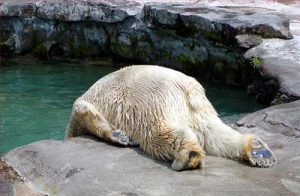
sick bearFlu. Dying. Avoid at all costs.


If you get a second chance, don’t blow it

May 26, 2009

I like to compare query letters to football. The author is the quarterback, and it’s their job to ensure that all the players understand the play in order to execute a run to the goal posts.

If you piqued my interest with your particular play (which is your pitch) but didn’t include all the pertinent details in order for me to know where to run downfield, I may ask you to try it again – meaning give me a proper synopsis.

I really don’t expect the SECOND EXCHANGE to go like this:

“What is this book about?”
This is the adventure of a boy and his dogs… Non-fiction

This bare bones reply is what you say to your neighbor, who you really don’t like very much because he borrowed your hedge clippers and never returned them. It’s a very quick, “bugger off” explanation that doesn’t invite further discussion. I’m not likely to ask for further clarification

This is a hapless log line that doesn’t promote excitement. A log line is that one-two sentence description of your book, and it’s purpose is to engender a “Oh, how cool! Tell me more!” Example:

An accidental publisher’s hands are full with five ladies in their mid-seventies, an internationally famous novelist, and a nosy reporter who is determined to expose their identities as writers of some of the hottest erotica to hit the shelves.

Log lines are quite unnecessary in a query letter because you don’t have much space to waste (queries s/b half to one page in length). Log lines are used in promotion; not queries.

I call this The AlmostTease. This is NOT what you present to an editor because it doesn’t give us enough information to make us care about your story. The Almost Tease makes you the fulcrum on a literary seesaw. The fulcrum isn’t a position of strength because you are powerless to  influence which way I will lean. Am I shopping for dog stories, and this one sounds interesting enough that I’ll put aside my irritation and play 20 Questions? Or will I fall in the other direction and reject it because it’s obvious the author doesn’t know how to write a query letter? Quarterbacks aren’t fulcrums; they’re about taking control,  action, being desisive and clear.

Getting back to our hapless quarterback, I asked for the plot, and this is what came back to me:

From the hope and desire to one day have a German Shepherd Dog, to police K-9 service, to successfully showing dogs, this is an adventure in love and the devotion shared between man and dog. This book is about a continuing adventure with a series of dogs and the relationship with them. It is a humorous and passionate story of incidents in that chain of relationships. If you’ve read “Marley and me,” then you will understand the “what” of this book. [bolding mine]

I’m sure this is inadvertent, but the author put the onus of my understanding his story squarely on my shoulders. He gave a general theme of the book and then basically passed me the football and told me to run the rest of the way to the goal posts. Problem is, he didn’t give me the play.

What aspects of Marley and Me explains the “what” to this author’s story? Is it Marley’s endearing and free-fall buffoonery? The trials and tribulations of the main characters’ lives? What? Stories always have a lot of twists and turns, and my tinfoil hat can’t begin to figure out what aspects of Marley and Me this author wants me to focus on. And what if I didn’t read Marley and Me? This author’s entire plan results in a disastrous tackle, and I’m left limping off the field with a broken finger.

This author does not understand the rudiments of PLOT:

Exposition: this is the information that gives the setting, creates the tone, presents the characters, and presents other facts necessary to understanding the story.
Dilemma: this is what creates and defines the plot. This is the conflict to the story
Climax: the turning point when characters try to resolve the dilemma. It’s high point of the story for the reader that results in the highest interest and greatest emotion.
Resolution: the events that bring the story to a close, it rounds out and concludes the action.

Authors are rarely given a second chance to clarify their queries, and if you are, don’t blow your second chance. Be a smart quarterback and deliver clear directions about where you want us to run.


Bigger is not always better

May 23, 2009

Ok, I know what you’re thinking; Lynn is pimping small indie publishers – that cagey old bat. And really, I’m not. I’m offering perspective that the grass isn’t always greener on the big guy side. I’ve been knocking around for a while now and have had a vast array of “holy crap, are you kidding me?” moments.

We all know the standard cliches to the big presses: reputation, bigger advances, bigger production budget, wider distribution, easy street.

Cliches to the small fries: the inverse – with exception to the reputation bit.

But there is a dark underbelly to the large houses that rarely swims into the mainstream consciousness, and this gives authors a false sense of security.

The first thing any author would do at finding out Big Hoo Ha NY Publisher offered them a contract is to immediately dance on the bar of their favorite watering hole and offer free rounds to anyone who knows the words to “I’m An Oscar Meyer Wiener.” The idea is that you’ve made it; you’re on easy street. Hello St. Martins and the Caribbean, baby.

But Hoo Ha Big NY Publisher is comprised of layers upon layers of people – many of whom spend money like water – and can, at times, have no clue about what the hell they’re doing. Hello “Hey, let’s try something new – a new direction!”

This happens a lot. Publishers decide to experiment with a new imprint or buy books of a particular idiom (bloggers, professions, etc.) because they think there might be some good sales in there. Let’s pretend they decide to sign a bunch of professional belly dancers. They ask you, belly dancer extraordinaire, to write the book, and of course, you’re wetting your pants with excitement. What you don’t know – can’t possibly know – is that they know squat all about belly dancers. This is outside their purview, so how do they market and promote these belly dancer books? Who is the readership? How do they pitch you to their sales teams? How do they, in turn, pitch you to the genre buyers?

Just because they’re Big Hoo Ha does not mean they are working smart. I’ve seen authors who are a couple scant months away from release and have no cover art, no ARCs, no idea of the projected print run, and haven’t discussed promotion with their editor and marketing person. I’ve talked to authors who were dumped because the grand experiment backfired, and the publisher lost their shirt. The publisher prevails most of the time. Oh, maybe they have to fire a couple editors, but they’ll remain on top. However, those authors are now orphaned. And what’s worse is that, now and forever more, their Bookscan sales will reflect that failure – regardless of who was at fault.

If our belly dancer author tries to pitch a new title to a new editor at Hoo Ha Publisher Down the Street, the first thing the editor will do is look at the author’s history. ahhh…well published; cool! Ewww…horrible sell through; bad. It doesn’t matter that Hoo Ha was the one to screw the pooch – no reviews, no promo or marketing – all the bad stuff falls on belly dancer’s shoulders, and she’ll be judged as one who doesn’t promote. A poor sell through makes authors nearly untouchable, and excuses are rarely tolerated.

If you find yourself in this position, you must be as proactive as possible. Either you or your agent should call to find out what the hell is going on with your book. We understand agents are mother hens, and we’ll endure a friendly, “hey, wazzup? It’s two months to the big release, and we have no cover art or a print run.”

But at that, agents know better than to become a nuisance, and this is where having a good author-editor relationship comes in very handy. Agents need to protect the agent-editor relationship because they can be easily blackballed  (which is a whole other post), and they also know editors are unlikely to change their wayward methods. It’s a fact that the squeaky wheel gets the grease, but it’s also a fact that should that wheel squeaky too much, they may get ignored.

How do you protect your book? Realize that all promotion is going to fall on your shoulders. You’ll be responsible for virtually every aspect of planning your events, writing your promo plan, finding your audience, and making this book a success. At this point, your publisher is probably mainlining GasEx and vodka, so they will be of little help or support to you. Make lemonade out of this lemon because it’s very hard to get a second bite at the fruit if your sales suck stale Twinkie cream. Yes, I realize I’m mixing my food groups again. I haven’t eaten breakfast yet, so everything sounds good.

Lastly, how can an author avoid this frustrating position? Ask questions BEFORE you sign on the dotted line. I’m always amazed that so few authors ask me questions.

  • Why do you want my book?
  • What is your vision for my book?
  • How do you plan on promoting and marketing my book?
  • What is the proposed schedule of production?
  • Is my book going out for review to the big trade mags?

If the editor says, “well, we’re trying a new direction,” then you need to decide if you want to be someone’s experiment. If you do, then be damn sure you have good answers that are in writing. Make sure you have a strong promo plan that includes knowing your readership because, depending upon how well prepared the publisher is with their grand experiment, you could be sitting behind a donkey’s arse.


Shameless Plug

May 22, 2009

This is what comes from being too sore, sick, and lazy to do any real work.


Do I sign or do I wait?

May 20, 2009

There are days when I win and days when I lose. Today I lost, but I’d like to think the author won. Or at least is in a position to see what’s beyond the horizon.

Let me back up here. A lovely agent queried me with a project I was very excited about. After reading the full proposal and sample chapter, I was all over it like a big dog.

I.
Wanted.
This.
Now.

This is when negotiations begin. We were close, but not close enough. After some thinking, the author decided not to accept our offer. Rather than be pissed off and jerky, I always appreciate how tough this decision is.

“Have I screwed up?”
“Will anyone still want me?”
“Should I have signed?”

The answer to all those questions is, I have no idea. The one thing I can say with absolute certainty is that authors who sign on the dotted line MUST be happy with the decisions they make. There is nothing worse than buyer’s remorse. Tattoo that on your forehead. Now. I’ll wait.

See, there is a lovely dance that takes place during negotiations. Editors are wondering, “How long has the manuscript been out on there?” Agents are wondering, “how far can we push the envelope?” How those negotiations work out invariably answers our questions.

I’m of a mind that the one I lost today is relatively new to the market. In the end, it doesn’t matter. I lost, and that’s it. Or is it? Many editors will pull all their coolbean offers off the table once the contract is refused. I think that’s shortsighted. If I loved the work enough to make the offer, why should I act like a spoiled sport and take my toys out of the sandbox and go home? Doing so forces the author’s hand, and that’s something I detest. I loved it before, chances are I’ll still love it again. If I don’t, then the Karmic Klown is smilin’ on me, isn’t it?

Regardless, I’m not a fan of strong arm tactics and don’t believe authors should feel pressured to sign a contract or lose the deal. It’s like the beagle; if I keep her on a tight leash, she always waits ’til I fall asleep and then squeezes out so she can carouse with those randy Dalmations down the street. If I just let her go, she always comes back. Authors need to know what is out there. If they get an offer right out of the shoot, they’ll always have a case of the “what ifs?”

I don’t want to work with a “What if?” author, no matter how much I love their work. It has to be right for both parties. If you’re put in this position, and you’re not sure what to do, consider that only you are in control of your future, and you have to rely on your gut and your agent. If you feel you can do better or want to find out if there is a “better,” then by all means take it.

The one I lost today is a big story and as much as I wanted it, I honor their decision to have their agent continue submitting it out. I think the authors knows little about the publishing world, and this is a perfect time to learn. Maybe they will find a house that meets every one of their needs. I hope they do. Heck, we all want the perfect scenario, right? There are many options that make up a “perfect deal,” and funnily enough, it’s not always about money. Authors need to find that out what elements make it “perfect” for them.

Is your work time sensitive?
Are you looking for more input to the creative process?
Are you looking for an editor who won’t try to morph your story into something you don’t resemble?

It could very well turn out that after knocking around for several months, you’ll find out your original offer was the right one, and maybe the original editor will have a sense of humor about it all. As far as I’m concerned, why would I squirrel a deal because the author wasn’t ready to sign on my time frame? My love for the project won’t fade, so why put the author in a tough position? Stupid.

Think hard before saying yay or nay if an offer falls short of your expectations. It’s true that the deal may not be on the table at a later date, but this is the beauty of having a good agent by your side. There are times when success comes early on – as I think it did with this author’s particular case – and you simply need to put a big toe in the water to see how many other fish are willing to bite.

Lastly, I know this is a gamble and scary to boot. But there is nothing worse than going through production with “shoulda, coulda, woulda” banging against your cerebral cortex.

As for me; heck, I’m holding out hope. I had an author shop his work for a long time before he came back because he realized I was the only one who shared the same vision for his work. I’m patient. But most important of all; I want the very best for authors, whether it’s with us or somewhere else.


Is abuse a part of the game?

May 19, 2009

In a word; no. Publishing is tough, to be sure, but at no time should an author suffer an abusive relationship with their agent. It’s a given there will be rewrites and lots of work to get the story ready, but an agent is not a sergeant at boot camp whose job is to send emails to their authors that include browbeating, profanity, and threats. I question the sanity of any agent who believes this kind of abuse is acceptable behavior.

And yet these situations exist because authors are kowtowed into believing that no one else will take them on because the agency has a good reputation. I would have never believed this crap went on had I not seen the abuse up close and personal. It turns my stomach.

Agents and editors do not require their authors to partake in strange meditations, have debates with philosophers, or ask them to defend the agent’s honor on writer’s boards. They take care of their own problems like adults. They do not send emails to their clients attacking editors, other agents, and writers. This is self-serving, wasteful garbage that gets authors no closer to finding a home for their manuscripts.

Agents have one goal: to get the work ready for submission and sold to a good house. Yet I’ve seen authors put up with horrible abuse because they want to be published that much. But consider this; if the agent is doing everything but getting your manuscript in front of editors’ faces, then you’re probably better off without them. The agents I work with do one thing; take good care of their authors and treat them with the respect they deserve. And you know what? They treat everyone else in the business with that same respect.

Abuse is NOT part of the game, and any author who is in this kind of relationship needs to get the hell out FAST. This behavior is a narcissistic need for total control and not at all about selling your work. Get out. Get free. Take good care of you and your work.


Is self publishing really that bad?

May 19, 2009

I hear that question a lot at conferences, and it always makes me wince because I know the question doesn’t come from someone who understands the business. They’re asking my opinion, and the truth is, there is no quick answer.

Sure, it’s easy to screech out a quick, “NOOOO! Save yourself! Don’t do it!”, but that wouldn’t really answer the “why?”

Before any decisions can be made, you need all the facts, right? It’s like looking at a used car’s shiny paint job, new interior, and brilliantly clean engine. Sounds great, yah? No one would ever guess it had been in a smash up on the 405 freeway during rush hour. Still want that car? Most people who are experienced at buying cars would know to ask for the car’s history.

So goes it with publishing. Most authors who ask me this question are still very green. They banged out their manuscript without really understanding how to write. Maybe they sent out a few queries and received a few rejections, and now they’re disheartened. It’s too much “I want” and too little “I know.”

If authors have all the facts, they can legitimately decide whether they want to go the self publishing route. So what questions need to be asked?

Intent: What is your goal? If it’s to sell or give away a few books to friends and family, and have a little fun, then this is probably the way to go. If your book sold to a publisher and you had no intent on promoting your book to a wide audience, your name will be mud, and you’ll have a very angry editor who may have a spiteful beagle for a secretary. Believe me; she knows people who know people.

Is your intent to get reviews from trade magazines? It’s unlikely this will happen because they won’t review self-pubbed works. That isn’t to say you can’t get blurbs from big names, if you know any.

Money: If you want to have a wider audience than friends and family, you need the greenbacks to fuel your dreams. This will pay for proper editing, cover design, interior design and layout, printing costs, warehousing, advertising, and promotion.

Platform: This is vital for every author, but even more important for the self pubbed author because they don’t have the backup of a publisher’s resources. They need that platform to draw audiences to their events. This takes understanding and analysis about marketing and promoting yourself and your book.

Product: If you’re doing this yourself, you need to understand how to present your book in the best possible fashion. This means getting a good cover, designed by a professional. There are a lot of tricks of the trade that goes into cover design, so don’t depend on your neighbor who designs garage sale fliers. They be a different animal altogether.

Distribution: Self pubbed authors won’t be distributed with a sales team and such, so this is going to be a major block to getting your book into readers’ hands.

In the end, the absolute hardest part for me is watching a very green author jump the gun. You have to learn to crawl and walk before you can run. Slow down, look, learn. Only then will you have the tools to discern a pristine car from a history of accidents.


Clever lines ain’t enough

May 17, 2009

I love someone with a sense of humor. In this business, it should be required in order to gain entry. All sourpusses must toss themselves under a bus or work for the DMV.

I’ll grant that there is a fine line between funny and over-the-top-trying-too-hard, especially with cover letters. I had someone say, “Read this or the beagle gets it.”

Yah, yah, the beagle stayed out past her curfew and pooped in my shoes. You can keep her. The line had no place in the query, IMO, because I felt they were trying to align themselves with me – as if they knew me. They don’t.

However, this one cracked me up: He hopes you will publish his book before his 80-year-old father gets tired of waiting and dies.

So why did I find the second one humorous? Because his proposal was so fabulous. His material was presented in a very serious, knowledgeable fashion that bespoke someone who knows what they’re doing. The dry wit was a surprise – as was his admission to possessing a nice ass. He got away with it because his platform is well thought out and professional. The gentle wit was an effective offering to a serious and professionally presented subject.

The first query was poorly done and lacked detail. They depended solely on humor to get their foot in the door, and this ain’t enough. I admit that editors can be distracted by shiny objects SOMETIMES. But not when it comes to a query.

So just know that humor is great provided you have the meat to back it up, and this means having a professional query or proposal that shows you to be a pro.

And, yah, I believe the author’s father will see his spawn’s book published.


When to stop the madness

May 16, 2009

I just read on a board where an author was “celebrating” his 700th rejection.
For. The. Same. Manuscript.

Dude. If you’ve received that many rejections, then you need to seriously consider retiring that poor thing to the confines of your desk. And yet I see this all the time; authors who stick to their one manuscript like the beagle to a chocolate martini.

Maybe I’m a turncoat for suggesting anyone give up on a story, but come on…after that many rejections, who’s left to query? I’m willing to bet the beagle’s booze fund that the only publishers left are those who are unable to get the book to market because they have zero distribution and marketing. Is this what you want for your hard work?

Maybe you worked five years on this story. Maybe longer. But time doesn’t equate a publishable story; it equates faith and commitment. While those elements are admirable, we don’t reward contracts based on how long a manuscript has been kicking around. It has to be marketable.

It’s like a salesman spending five years trying to sell strawberry-flavored Twinkies – a travesty in my opinion – and not getting a single sale. At some point that salesman has to consider the harsh facts; no one wants them, so ditch the Twinkies and find a product that sells.

I’m all for positive attitudes, but I also subscribe to keeping a foot entrenched in reality as well, and I question anyone who continues to push a hugely-rejected manuscript. Put that poor thing on ice and write a new story. Why continue the literary abuse? It’s been established there is something inherently wrong with the story. Let it go. Begin anew.

Sadly, I’ve seen authors sign with rotten publishers rather than ditching the manuscript, and I wonder if this is a case of ardent stubbornness. “I’ll be damned if this beast won’t get published!” The book will never see the light of day, so what have they gained? It’s a hollow victory.

Is it better to not be published at all than be published badly? I vote yes because I’ve witnessed too many horror stories [see the POD series in the Classic Posts]. It should be the goal to be a writer, not a published author. Those who push the square peg in a round hole are feeding their ego, not their talent.

Avoid membership of The Perpetually Rejected Club.  Overabundant rejection is not where a writer’s head should be. It should be on writing a fabulous story. If 700 people have told you that your story isn’t fabulous, then perhaps it’s time to stop the madness.


Follow

Get every new post delivered to your Inbox.

Join 963 other followers

Powered by WordPress.com