If you don’t research your stories, you’re an idiot

September 30, 2010

Rather a cranky thing to say, right? Not to mention rather rude. But for goodness sake, if you’re going to the trouble to write a story, doesn’t it make sense to know that your information is unimpeachable? Researching aspects of your story is vital for many reasons. Blowing out the foundations of your story makes me go all ranty like. So here goes…

I’m almost willing to excuse a small transgression, such as getting a factual person’s middle name wrong, or misspelled – I just look at it as a brain farty thing. It should have been caught, but ooops. However, if your story is in a setting that you know squat beans about, then you better research it to within an inch of your life. It has to be real and factual because someone has been to the place you’re writing about. If you blow it, you’ll receive howls of “bullpucky on an onion bagel!”

And rightly so. And this leads me to one of the worst blunders I’ve seen in a long time. Author Christopher Pike, a bestselling author of forty books wrote a mess of a book that got everything wrong – the characters, the customs, the country’s capital, and the country’s geography. Predictable, readers who knew better were upset and exacted their revenge with their book reviews.

At some point, one would think there would be a moment of clarity – as in, “oops, busted. I totally effed up.” But no – ’twas not to be. Not only did this author make HUGE FATAL mistakes because he was sloppy and stupid (yes, you heard me – stupid), but he didn’t own up. Instead, he created his own sock puppet to defend himself on Amazon. Ouch. It’s not often people can witness an author’s implosion, and Mr. Pike didn’t disappoint.

For starters, how can anyone defend the indefensible? He thinks Istanbul is the capital of Turkey? Holy Rand McNally maps, Batman – that would have taken as much time as tickling Google. Talk about lazy.

As you can see from the exchange, his blunders didn’t stop with blowing the capital of Turkey. He blew the entire foundation of his story. Meanwhile, I’m wondering what his editor is smoking to have not caught this mess. We’re not talking Publish America, where we expect this kind of mess – but this is a Harcourt book.

Just because someone is a bestselling author, they aren’t infallible. And poor, stupid Mr.  Pike  just detonated a bomb under his quill because he made an ass of himself, insulted his readership, and didn’t apologize.

This type of thing infuriates me because it shows his lack of respect for his audience. He was counting on them either being stupid (achingly unwise), or loving him so much that they’d forgive him for his transgressions.That’s hubris to the nth degree.

I’m miffed because I’m far from being a bestselling author, yet I slogged around the Peruvian Amazon for 17 bug-filled days with a medical team just so I could get the proper background for my second novel. Every bug bite I got, every giant spider I found resting on my shoes, every scabie baby I washed, I gritted my teeth, thinking, “oh, the things you’ll do for a goddamed book, Pricey!”

I went the nine yards to make sure my story will be unimpeachable – even if it cost me three layers of my skin from itching bug bites and the remaining half of my sanity. So when I see someone who’s all high and mighty taking the most heinous of shortcuts AND being a colossal goat manure, I see red.

It doesn’t matter if you’re writing about something as small as a Catholic ceremony or as large as the setting for your story – you better, by gollygosh, know damn well what you’re talking about because readers are smart, and THEY ARE WATCHING.

And really, is it worth risking your credibility?


Early drafts – don’t fear the necessary

September 29, 2010

“Argh! First draft? You think this is a first draft?”

The woman sitting across the table from me was distressed. It wasn’t her first draft. I knew that, but my point was that her advance submission of the first 20 pages READ like a very early draft.

And that’s ok. In fact, it’s great. Yah, you heard me – IT’S GREAT. Without those first drafts, where would we be? Remember, our first drafts are us telling us the story. And what is it about being all suicidal because our work doesn’t flow like buttuh and read like Hemingway? Ya think Hemmie got it right the first time he blew it out?

I’ve lost count of how many times I’ve had a scene or an idea rambling around the caverns of what masquerades as my brain only to get it down on cyber paper and discover that it doesn’t work. But I soldier on and barf it out. Why? Because I’m obviously still telling myself the story.

Our early drafts were never meant to be perfect, and we need to lean into our crapitude because we’re creating the launching pad for improvement. First drafts are building the foundation which consists of banging down the rebar and pouring the cement. As you refine each draft, let them cure – just like cement – so you can go back a couple weeks later and see the warts with fresh eyes. And you keep doing it until there’s nothing left to refine.

I told this to my bereft writer at the conference, and she still didn’t look convinced. This was her fourth passthrough and she expected perfection. Why? Is there some rule that says we have to be perfect after X number of drafts? Eh, that’s garbage thinking.

The truth is we rewrite until it’s finished. We listen to those who offer critique. We take our time, and we don’t rush the process. Yep, this takes a certain amount of maturity – something I see lacking in many writers – and experience. Few want to take that kind of time.

Writing is a process. We aren’t born with the ability to crank out a surefire winner. We need to learn writing fundamentals and then write a lot in order to develop our technique. Everyone is in such a hurry nowadays and they want their first books to hit store shelves while the cyber ink is still wet.

What happened to the idea of taking one’s time to learn the process and nurture one’s talents? Everyone wants immortality NOW without having to work for it – hello vanity publishing. Ugh, this drives me wonky because writers are missing the best part of the journey. The process is far more illuminating than the actual arrival. And that’s what our early drafts are – our process toward excellence (or so I hope!). Writers should embrace this experience, not be repelled by it.

We can’t rush the process, or we shouldn’t. Yet many do. And I see this with the queries I receive. Many, many writers have bought into the we want it now and we want it fast idiom, forgetting that you can’t force talent and marketability to meet your personal time clock.

I’ll say it again. Lean into your crapitude. Be willing to admit that your first drafts suck stale Twinkie cream. That doesn’t mean you can’t or won’t improve. It simply means you’re still on the road to excellence. Unless you’ve been given two weeks to live, what’s the rush?


The boutique query

September 28, 2010

Too often I reject a query because the author didn’t give me enough information about their story – or the right information. I’ve said this before, and I’ll say it again:

We need the plot:

  1. Your main character(s)
  2. Their dilemma – choices they face and the consequence of those choices
  3. The outcome of those choices

But it doesn’t necessarily stop there. The smart author goes the extra mile if they stumble across a house that specializes – they tailor their query. And most independent trade publishers specialize because we can’t do proper justice to all genres, but we can knock our particular slice of the pie clear out of the park. Additionally, we specialize because we know how to sell to that particular audience.

I received a query a while back that insisted their story was right up my alley – socially relevant personal journey. Their pitch, however, contained none of those elements and read like mainstream fiction. I wrote back and stated that since I couldn’t find any of the elements that define our guidelines, I had little choice but to reject.

The author wrote me back and gave me a bullet list of the socially relevant elements and closed by saying, “I have a four page synopsis I can send you.” This is wrong on a couple counts.

First off, the author has already received a no, so it does no good to come back with a “wait, wait! Do over!” If you’re gonna do it, do it right the first time. Asking for a do over tells me I’m working with a noob. These are people I avoid like an empty Twinkie box.

Besides, it’s plain illogical to offer up a synopsis as a means to redemption. If I said no to a query, what are the compelling reasons to read a four page synopsis? Right or wrong; we rely on the query letter to say yes I’d like to see more, or no thank you.

Yes, I think it’s dreadful that we have to do this here in the US, but it’s because of the sheer volume. Years ago, I used to ask for the query, one page synopsis, and first five pages, but I couldn’t keep up with demand so I had to cut back. Do good works slip through the cracks because of this? Undoubtedly. And that’s what I think this author was trying to convey – albeit clumsily.

Smart authors may have several different permutations of their query, depending upon whom they query. Remember, we don’t always have our tinfoil hats in our purses, so we depend on you to tailor your query so that it shows the elements we’re looking for.


Editing…

September 27, 2010

That is all.


Among my people

September 27, 2010

Have you ever noticed that people don’t understand you? I’m not talking about your everyday life, but your writerly life. Ours is a solitary endeavor and requires a certain amount of understanding from our loved ones to allow us the time to nurture our artistic pursuits. And as lovely as our family and friends are, they don’t really understand us – nor should they.

We’re whacked. Sometimes even I worry about me. I mean, what normal person writes scenes in the shower?

If we’re novelists, we dive into our souls to dredge out characters and plots that require lots of emotion and thought. Even nonfiction writers aren’t immune to prolonged hours alone putting verbs and nouns together in an artful manner. So at the end of a day of writing, we want to share our thoughts and frustrations.

Only, are they really listening? Can they really understand the fact that you’ve hit a wall in your book and you can’t go any further because it happens to be a pivotal scene that impacts the rest of the story? More than likely they’ll think you’ve been sniffing glue.

That’s another thing I lurve about writers conferences. I’m among my people. Everywhere I walked this past weekend at the SCWC in beautiful Newport Beach, I overheard bitsies and piecies of conversations.

Author 1: “I had to work for three weeks until my fantasy world finally sounded real.”
Author 2: (nodding sagely) I so get that. Took me a month before my Sci Fi world was real.
Thoughts of any normal person walking past: “Good holy laser blasters and unicorns…they’re freaking MADE UP…how REAL do they have to be?
If Authors 1 and 2 could read person’s mind: (shaking heads piteously) Meh, you so don’t understand.

And they don’t. And that’s ok. They’re outsiders. They’re pathetically normal. They’re to be pitied – or so I like to tell myself.

At the conference, I was paling around with a friend I hadn’t seen in a long time. Over breakfast, I related a story about the time I was writing a particularly emotional scene in my novel Donovan’s Paradigm. I finished the scene and burst into tears, sobbing like a freaking two-year-old who lost her little pink pony. My precious hubby came running downstairs, his face stricken. “What happened? Are you ok? Omigod, how can I help?” Truly one of the nicest, dearest hunks of manmeat ever to walk the earth. But he’s NOT a writer.

“I killed Hans!” I wailed.

He reared back and just stared at me. “You’re crying because you killed off a fictional character?”

“Y-yess,” I blubbered. “You know how much I loved Hans.”

Hubby just shook his head and went back upstairs, muttering, “Good god, she seemed so normal when I married her…”

My buddy commiserated – totally understanding my sadness. “I know what you mean. I had to kill one of my characters, too, and I just wept. But I made sure I was alone.”

Now, I ask you…where on earth can writers get away with this kind of conversation and not be carefully avoided or have offers of a long hospital stay?

Conferences, people. You must do at least one in your career. Agents and editors are at your fingertips for the entire weekend , and we don’t bite…much.

This is the place where magic happens – it’s our literary Disneyland. In fact, a very dear friend is about an inch shy of obtaining an amazing agent – I’m talking super agent here. And it’s because he read her advance submission and practically wrestled her to the floor demanding the full with the intent for signing.

As for moi, I asked for two fulls that I’m very blottwaddled about.

And besides, you’re among your people. No one will think you a page shy of a full chapter for channeling one of your characters.

Really.


Ever wanna know…

September 26, 2010

…what it’s like to be an editor or agent at a writer’s conference? It’s a lot of fancy footwork. Sorta like this…


Revisions, revisions – button your raincoat

September 24, 2010

I”m not sure what’s going on this summer, but I’ve received a huge share of works that appear to have never been revised. It’s like the authors belched their story out in much the same manner as the beagle after a full platter of nachos and sent it out into the world where sharp fanged, black-hearted editors will tear them to shreds.

Not once did the authors feel the need to sit back and let their story just marinate in its own juices. If they had, they would have seen the warts – rushed storyline, undeveloped characters, weak plotting, syntax/grammar issues. Instead, those little eager beavers fall prey to premature submitulation.

Lesson 1: What’s the rush?

You’ve taken all this time to write your story and it’s not going anywhere, so why the big race to shove it out the door? Reminds me of how Mom would barely button my raincoat before shoving me out the door to go play. This I can forgive, since I wasn’t the easiest child to raise – even for the infinitely patient like Mom.

But manuscripts must have their raincoats fully buttoned, or the water will come in and dampen their little pages in the form of a ton of rejection letters. Writing “The End” is literary catnip, and I understand the desire to send it outside to play. Just remember that chances are strong that it’s not yet waterproof.

And don’t let it marinate for a weekend. Let it sit for a few weeks, a month, longer, if need be. The goal is to see your story with fresh eyes, and it takes time to get to that point of objectivity.

Lesson 2: How/what to revise

Authors often ask me how to revise – should they focus on minor changes or go for the Big Kahuna and make major changes, or beagle forbid, try a completely different approach. My answer is: It depends.

There are no absolutes or rules in writing. You need to go with your gut. AND YOU MUST BE OBJECTIVE.

Minor changes: Sometimes a writer hits gold and the work only needs some minor tweaks. Maybe adding a short scene, or adding a couple sentences to clarify a point or develop a character. Yes, I’ve met such authors. No, they were not publishable.

Minor changes are done by those who buddied up to their Ego. As in:

“Hey, Ego, how’d we do with this manuscript?”

“Phhht…are you kidding? We totally knocked it out of the park. You need to be ready to take calls from those Pulitzer folks because you are going to be FAMOUS.”

Mr./Ms. Ego is not your best friend. (S)he is a vapid toolbag.

The Big Kahuna: This is where us mortals usually reside. We finally banged out our story, we let it marinate, and then we began reading. The usual reaction is, “Holy brainfarts, Batman, who wrote this dribble of rotten oatmeal? Surely I didn’t.”

It’s okay. Revel in your crapitude because you’ll find – after you’ve downed a pitcher of the beagle’s margaritas – that your story really isn’t that bad, and you’re simply seeing it with fresh [albeit inebriated] eyes. I recommend consuming an entire box of Twinkies, and then settling down for the Big Kahuna.

Yes, you may have to write complete new scenes, or add chapters. You may have to get rid of one character and add a new one. Or maybe the foundations suddenly got very shaky and you need to consider revising the intricacies of your plot. This happened to me. I went back after a few week’s marinating and flipped out. What was soooo fabo before now sucked stale Twinkie cream.

This. Is. Okay.

I gave Ms. Ego a vacation, got down to business and ripped the thing to shreds. There were major revisions to be done, and it took me a long time to get it to where I felt it was ready for prime time. I must have done something right because it went on to win a gold medal IPPY.

The point is that if you’re going to revise, why limit yourself to taking the easiest route? Oftentimes our first effort isn’t the best effort, so we shouldn’t be afraid to dig into our story and do whatever it takes to make it sing.

Lesson 3: Time factor

Yah, yah, everyone is in a hurry, and I can’t figure out this logic. What are you in a hurry for? You usually get one bite at the apple, and if you send out something that’s still green, then you’ll have blown your chances. I’ve had authors whom I’ve rejected send me the same manuscript three and four times – saying they revised it. It’s probably a character flaw within me, but if I’ve rejected something and didn’t invite the author to resubmit after a revision, then I don’t change my mind. It’s no longer fresh to me.

So time really is on your side in terms of doing it right. Show your revisions to your writer’s groups, your friends, family – anyone who will give you an honest critique. Get some balanced feedback because they’ll be able to tell you what does and doesn’t work.

Lesson 4:  How many revisions?

Heh, this is easy peasy – AS MANY TIMES AS IT TAKES. Okay, so it isn’t that easy, after all. You revise until you feel satiated. It’s a gut thing, supported by your beta readers. But you need to be mindful of getting into trouble.

The over-revision: I’ve had a few authors who have been revising for years. Of course, they’re at the point of shooting themselves because they believe it’s not right yet. In several of those cases the authors over-revised. It’s like when my mom,  sister, and I tried to make my aunt’s spaghetti casserole. None of us could remember the recipe in its entirety, so we kept throwing things into it. By the time we were done, it tasted like a mushy pile of goo.

Like my mom, sister, and me, authors don’t have an Off switch that prevents them from fidgeting and futzing to the point where the original story simply falls apart under its own malaise.

Lack of focus: Other authors have been revising for years because they lack a central focus – what is the story trying to say?

Without a defined intent of what you want your story to communicate, you’ll never know when you’re done. Instead, you’ll try to make your story scratch too many itches – say too many things – and you’re ultimately left with a mushy pile of goo that you keep revising because deep down, you know it isn’t saying anything. It just wanders aimlessly – like when I can’t remember where I parked my car.

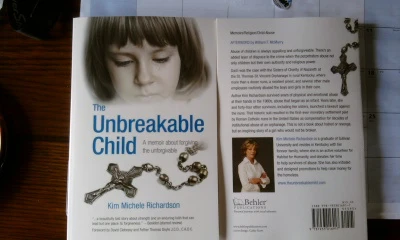
For a perfect example of focus and intent, I look no further that of one of our new releases, Charting the Unknown.

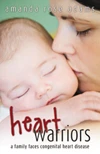
Travelogue essays/personal memoirs can be iffy if the author doesn’t have a clear focus on their central theme. Author extraordinaire Kim Petersen never takes her eye off the ball. She made me screech with laughter, clutch my heart, and grab for the box of Kleenex as she and her family got the point in their lives to where they decided to build a boat, dump it in the water, and proceed to shove off for the world at large [hello...including TWO teenagers!].

But what is always at the core of Kim’s fabulous book is her coming to terms with Fear – who Kim has imagined wears a Donna Karan suit and who holds all the power and calls all the shots. It’s a powerful theme because we all suffer from some sort of fear, right? And what more horrifying/perfect place to slay our personal dragons than cooped up in a boat, where we can’t outrun them? With a strong focus, Kim is free to introduce all kinds of other elements to her story that appeal to a very large audience – boaters, family issues, homeschooling, losing a child to SIDS.

And as talented as Kim is, I’m under no illusions that she revised many times.

Lesson 5:  Reading your revisions

Many of us read from our computer screens, and that’s fine. But when you believe you’re done revising, go kill a tree and print it out. Only from a printed page will those warts pop out in all their colorful glory. Take your evil red pen and mark that sucker up. Write notes in the margins, circle words, and cross stuff out that doesn’t work. This is exactly what we do when we edit.

Never, never, ever rely on your computer screen. You’ll miss the important stuff. Pinky swear.

Lesson 6:  Write a lot

In the end, revising is a gut feel. And this is why so many new writers miss the mark. They simply don’t have enough writing experience to have developed a sixth sense about their writing. Debut authors rarely publish their first book. It’s usually more like their third, fourth, or fifth book. They cut their literary teeth on all the other stories and learned the technicality of putting together a story and telling it in a clear, entertaining manner.

They also learned a lot about their own foibles. For example, I always include a ton of backstory in my first and second drafts. And why not? These drafts are me telling myself the story, and it helps me see my characters more clearly. But as I revise, I whittle the story down and revise it into a tighter format, keeping in the essential parts and tosspotting the crud. The more I write, the more I understand myself and my silly tendencies.

They used to bug me, but now I see them as an exercise I need to go through in order to get to the end. It’s part of my idiom and it works for me. However, the new writer hasn’t been writing long enough to understand their little idiosyncrasies and that they have a budding habit of overdeveloping their characters – which could result in a lot of rejections.

Suggestion: Write a lot. Don’t look to publish – just write. You’ll get to know yourself a lot better and your particular weaknesses and strengths. You’ll learn to find your voice [oh-so important].

In short, you’ll eventually learn how to button your raincoat so the water doesn’t come pouring in. Cos, baby, it can be cold out there!


Wahh…totally unfair

September 23, 2010

I normally love being a West Coastie, except when I have an author who’s an East Coastie and lives closer to my printer than I do. Reason being is that they get their books before I do. So I’m left with wailing like a two-year-old at not being able to see the final print run while my author and our distributor get to wag their tongues at me.

Kim tells me the final print run is lovely. I don’t get the run delivered to us until Monday.

Le sigh.

Beagle, fire up the blender so I can drown my sorrows.


Hostility, Mr. Konrath? I think not

September 23, 2010

I often stop by J.A. Konrath’s site because he’s quite an institution. He has spent countless hours helping/teaching authors the rigors of being a published author and his various ideas on promotion. His latest post discusses his e-book success. He made this comment:

If you go to conferences and ask the editors you meet about J.A. Konrath and ebooks, you’ll get blank stares, dismissals, or outright hostility.

As far as I’m concerned, nothing could be further from the truth. I’m thrilled for the man.

And why wouldn’t I be anything other than happy? For starters, I’m not his publisher – whew! But if I were, I’d work very hard to make him happy because he sells a lot of books. If an author has a winning combination, a publisher has to be a few paragraphs shy of a full chapter not to tap into that. Instead, his publisher has chosen to ignore him, so he’s gone on his own and become quite successful at it.

But let’s not forget that Konrath’s success didn’t appear out of thin air. As he states in his blog post:

I worked my ass off promoting that book.

Anything an author does on his/her own requires hard work, and I know of few authors who work harder than Konrath. And that’s the operative here.

Hard work.

Thar be no free lunch

It doesn’t matter whether an author publishes a book through a vanity press, a POD business plan press, or an e-book – being successful with any of those publishing options are dependent upon how hard the author is willing to work because they don’t have the safety net of a publisher. The author is on his own, so it’s up to him to establish a promotional plan that will allow him maximum exposure and distribution.

In the case of vanity and POD books, distribution is limited to the online databases like Amazon, since they are rarely on the bookshelves. Without a viable plan to get one’s book known, that book can sit on Amazon’s database ’til the cows come home. The same can be said for e-books. If no one knows your e-book exists – just as most people are unaware of someone’s vanity pubbed book – how can anyone buy it? Authors have to work double time to create demand because they are their own sales force.

My quibble with Konrath is they way he disses his mainstream publishers. They made him what he is today, so I feel it’s unfair to dismiss them so quickly. In his case, though, I feel it’s fair to say that he would be successful no matter whether he was mainstream pubbed or not because he understands how the business works and realizes that in order to sell, he has to promote. And he does this very well.

Just because he did it, doesn’t mean you can

However, Konrath is suggesting that everyone jump on the e-book bandwagon and take control of their publishing futures. It’s a great idea, but it’s folly to suggest that everyone can be as successful as he is. Make no mistake about it – promotion is hard work and dedication. Out of the thousands who go the self-e-book route, few have the walnuts to continue that kind of momentum.

Of course, there is always going to be exceptions to any rule, and Konrath lists those exceptional folks who have gone the e-book route and are doing very well even though they don’t have his platform. But what percentage do those authors represent out of the thousands who take the same route? I’m sorry, but I can’t help but feel Konrath is fueling the same feeding frenzy that vanity publishers employ -  “We’re giving you the chance you deserve!”

And I’ll say it again – not everyone is a J.A. Konrath. Or even those other authors he mentions.

And this is the crux of my boggle because I see many, many authors see his call to arms as a shortcut to success, not appreciating they don’t have the same kind of promotional fervor that one needs to successfully market a self-pubbed book.

I would never take away from anyone’s success, regardless of how they achieve it. But I do get cranky when I see a fever-pitched rally ’round the flag pole for an idea that simply isn’t appropriate for every author. He readily admits “I’ve been very lucky.”

There are no absolutes in this business, and this is where Konrath and I part company. He feels we’re dinosaurs. I’m not ready to turn in my scales and sharp teeth just yet. E-books are a viable option – just like self publishing can be – PROVIDED the author knows exactly what lies ahead of them and they understand how hard they’ll have to work to establish a platform.

But despite my small differences with Konrath, I give him a big huzzah because he’s earned it. And should anyone ask me at a conference how I feel about him, I’d them that very thing. And then I’d ask them to read this blog post because this isn’t a one-size-fits-all business, and authors need to know the other side as well.

ETA:

I also wanted to comment on his suggestion:

Think twice, and think again, before allowing anyone to buy your erights.

Let me just say that if an agent or author refused to allow the e-book rights, many editors would withdraw the contract offer. Think about that twice, and think again.


Backstory-atosis

September 22, 2010

I’m reading advanced submissions in preparation for this weekend’s Southern California Writer’s Conference in lovely Newport Beach, and I’m seeing a consistent problem – backstory. The problem is so pervasive and oppressive, it feels like a virus.

I’ve written about Backstory here and here. But there is one point I cannot drive home enough:

You are not writing a story about the backstory of our story. You are writing about what happens BECAUSE of the backstory.

Please. Tattoo this to your forehead and put a note on your ‘puter monitor. Agents and editors will thank you.


Follow

Get every new post delivered to your Inbox.

Join 963 other followers

Powered by WordPress.com