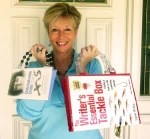
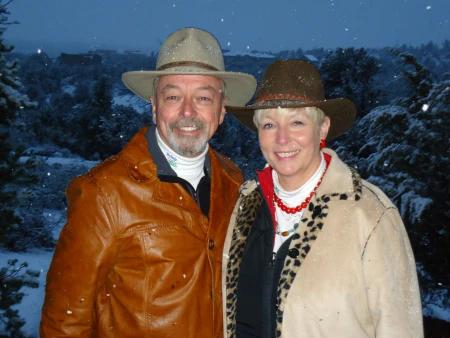
 Yes, we’ve been tasked as extras in the next Indiana Jones movie…
Happy New Year, everyone!
December 31, 2010
 3 Comments |
  Uncategorized |
  Permalink
 Posted by lynnpricewrites
Finally…some weather!
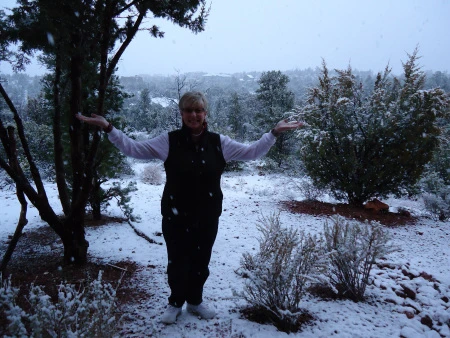
December 29, 2010I know, I know, the East is burying themselves out of numerous feet of snow while in California, we’ve been digging ourselves out of five feet of sunshine. Enough, I say. I want weather, too. So here we are in Sedona, AZ…and it’s snowing. Yay!
5 Comments | Uncategorized | Permalink
Posted by lynnpricewrites
Yep, that about sums up our Christmas…
December 27, 2010
4 Comments | Uncategorized | Permalink
Posted by lynnpricewrites
A Writer’s New Year’s Message
December 26, 2010My across the pond partners in crime Jane Smith and Nicola Morgan offered some very wise advice, and I’d like to make the same appeal on this side of the pond because the message has international appeal.
Your writing career is about creating balance. Over the past seven years, I’ve received thousands of query letters in varying states of disarray. Most, thankfully, were keyed into the right elements of professionalism. The rest…well…? It’s quickly apparent to an editor or agent when a writer is serious about their craft and when they’re just playing writer. And it starts with the query letter.
I’ve had the gamut – those that dared me to reject them because editors and agents are all asshats who couldn’t smell talent if it landed on their arrogant little noses, and others that begged and pleaded with me to read their work. Others have told me their book is going to “put your company on the map”/a surefire bestselling book/the most fantastic book I’ve ever read. There’s another group of writers who look at the query process as a lark and address their query letters “Hey, Ms. CrankyPants/Yo, Evil Red Pen Lady/Dear Beagle…all which result in instant death rejection. The last group takes me to task for daring to critique their writing in my rejection leter.
So what does all this say? Well, several things:
- If you don’t take yourself seriously, then who will?
- Taking yourself too seriously is bug repellent to editors.
- Treating your craft as a joke is a slap in the face to those whose lives are given over to producing great books.
- If you can’t handle being critiqued, then take up knitting.
It’s my 2011 wish for you to maintain a comfortable sense of who you are, what you’re writing, and whom you query. Never forget that writing success doesn’t come without it’s counter punch – rejection. Make it your intent to attain a measure of grace under fire, along with clarity and experience. Is your book simply not right for that editor, or are your literary grapes still green? Consider the possibilities, not the limitations.
And please, dear writers…always try to keep a lid on overreacting.
*stolen off Nicola Morgan’s site
5 Comments | Uncategorized | Permalink
Posted by lynnpricewrites
Aaaand, we’re outta here!
December 23, 2010The beagle and I wish all our wonderful readers and authors a very Merry Christmas and Happy Holidays. We’ll see you after New Year’s.
3 Comments | Uncategorized | Permalink
Posted by lynnpricewrites
“Traditional” publishing – let’s just change the definition, shall we?
December 22, 2010“Traditional” publishing.
Seems this term has been tweaked, twisted, morphed, and choked into whatever new upstart publisher decides it is – and this disturbing trend makes me want to mainline Draino because it confuses authors into making decisions that aren’t in their best interests.
“Traditional” publishing (lordy be, but I hate that word) means that they pay advances, they actively market and promote their titles, they assume all production and distribution costs, they have standard royalty rates, AND they have distribution to the marketplace (which, for small indies, means they signed a distribution deal with a reputable indie distributor whose sales teams pitch their titles to the national accounts, libraries, and specialized marketplaces).
Distribution
Yet I see “traditional” start ups offer no advances, don’t market or promote their books, and have zero distribution. And let me take the time to clarify distribution. These start up companies insist they have distribution because they’re “distributed” with Ingram. This is NOT distribution.
Let me say it again…THIS. IS. NOT. DISTRIBUTION.
Ingram is a centralized warehouse distributor for bookstores and libraries. This means that when a bookstore wants to special order a book, they either call their own warehouse (if they’ve stocked it), or they call Ingram. It’s easier to do this than call thousands of different publishers for the book.
Ingram doesn’t have sales teams who actively pitch titles to the national chains, indie stores, libraries, specialized markets. That job goes to independent distributors such as IPG, Consortium, NBN, etc., who act as a representative for their publisher-clients to the book trade—including bookstores, chains, wholesalers, libraries and specialty markets. They employ in-house and independent representatives to aggressively sell their client-publishers’ books to the marketplace .
There is a huge difference. When a company says they’re “traditional,” well…scratch your head because trade publishers really never use that term…then ask who their distributor is. If they say Ingram, Baker&Taylor, Quality Books, then ask if they have their own in-house sales teams and what kind of relationships they maintain with the corporate chains. If they don’t have any sales teams, you know they don’t have “traditional” distribution and they are not a “traditional” publisher.
Royalty rates – Cover price? Net vs. Abnormal Net
I see start ups who call themselves “traditional,” yet pay royalties on net (as opposed to paying on cover price), which is fine, BUT they don’t pay the standard net royalties, which means paying on the amount they actually received from bookstores (stores purchase books from publishers at a 45%-50% discount). Instead, they pay royalties AFTER they take out expenses that a “traditional” publisher assumes – which are:
- printing expenses
- production costs
- selling costs
- shipping/distribution costs
- returns
This is not a “traditional” publisher. This follows more of a vanity model. The difference is that instead of getting a fee up front from the author, the publisher pays themselves back at the back end.
So avoid being sucked into the dank waters of mushy definitions that these start ups are trying to employ in an attempt to make themselves appear better than they are. There is trade publishing, and then there’s everything else. Make sure you know the difference.
7 Comments | publishing terms | Permalink
Posted by lynnpricewrites
Prologues – this side of hell
December 21, 2010I understand why readers hate prologues and skip them. Since December is my Madcap Reading Month, I’m shuffling through requested partials and fulls until my eyes are bloodshot and I’m begging to mainline good gin. So far, we have one contract offer – not bad to my way of thinking. But the rest? Well, they have this little problem…
Prologues.
They can be a lovely thing or the blight upon all who read. This batch appears as though many authors drank from the same watering hole and collectively decided their stories needed prologues. I’ve never seen so many of the little blighters, and it’s worrisome because not a single one of them belongs there.
Not. One.
My little red pen has slashed through virtually every single one with these words: WHAT’S THE POINT?
And that is exactly the point. You don’t write a prologue because it feels good or your elbow itches. You write one because it belongs there. Prologues have to adhere to the same rules of good writing and story organization that your entire manuscript does – meaning that there is a reason for its existence.
Prologues, party of one
All too often prologues behave like the author’s private playground, and she is the only one who understands how to get on the monkey bars and everyone else is standing around, scratching their heads wondering how she did that.
What do I mean by this? Let’s say your story takes place in New York and centers on Character Jane finding a job in a tattoo parlour, but your prologue is about Character Jane as a mere infant and her favorite nanny used to read Playgirl. Holy Helvetica, Batman, what does this have to do with the main story? What on earth was she thinking?
Now if I ask the author, she can actually tell me. But her real problem is that she’s too close to her story and can’t see how unnecessary it is. She understands her Character Jane’s backstory and feels compelled to include it because she believes this information is integral to understanding the character. But what about the reader? Do they feel that same need to read it? No.
And that’s why readers skip prologues.
Calling Mr. Info Dump
I remember this guy in high school who ate whatever was left sitting on the lunch tables. Needless to say, he didn’t exhibit a svelte silhouette. He was the school vacuum cleaner. And that’s another problem with prologues. They’re often a book’s vacuum cleaner. Don’t know where to put all this errant information? Hey, no problemo…let Mr. Prologue eat it.
So before Jane or Joe Reader can get into the meat of your story, you toss all the leftover food that you couldn’t eat and stick it in the most vulnerable place in your book – the BEGINNING. So Joe and Jane reader are filled up to their back teeth with so much garbage that they need to purge. And they do this by putting YOUR BOOK back on the shelf.
And that’s why readers skip prologues.
Prologue info dumps are classic among new writers because they usually haven’t developed the art of intertwining information with the narrative. It takes practice and experience to seamlessly introduce information and keep the action going. And when you’re trying to show that you’re an experienced writer, this particular foible will expose you faster than the beagle can fall asleep.
So…?
So what do you do? Well, the safe bet is to simply not use a prologue. Just like surgery, a scalpel is a dangerous thing in the hands of a neophyte. Be safe and avoid them until you’re further along in your writing career. Will a prologue result in instant death rejection? No, but I’ll sure be scratching my head, AND I’ll be looking at your pages with a much tougher eye.
If your writing sings, then I will suggest that you ditch the prologue and sprinkle the information throughout your book. Or maybe you’ll read this and do it yourself.
Necessary
There are times when you need a prologue. My novel, Donovan’s Paradigm has a prologue. I wrote one because I needed to explain why one of my MCs reacts the way he does when confronted with a certain situation that is pivotal to the plot. It’s information the reader must have so that the story makes sense. If I had sprinkled that scene into the main story, it would have come out as backstory, which would have killed the emotional impact. In a word, I consciously wrote the prologue because it had to be there.
Brevity
Chapter length prologues is something I’m seeing fairly regularly. Prologues were never meant to be that long. Dictionary.com defines Prologues as, “a preliminary discourse; a preface or introductory part of a discourse, poem, or novel.”
They’re little precursors to the main story, with heavy emphasis on little.
Expectations…Say, huh?
Avoid making an editor reach for a bottle of tequila by always being clear about what your prologue is saying. I’ve read many prologues that forced me to re-read them because I was convinced I’d missed something. If I can’t figure it out, then I know the reader won’t either. The reason they weren’t clear is because it had zip all to do with the author’s pitch. If your book is about vampire cleaning women, then a prologue with were-beagles makes little sense. It’s a “say, huh?” moment. There needs to be a tie-in to the story that the reader can follow.
Parting Gift
As I said at the beginning, I really do like prologues because they can be delicious in the hands of a gifted writer. Before you succumb to the urge to write a prologue, ask yourself the following questions:
- What is the point?
- Is this information vital to the reader in order to understand the book?
- Is this the only place where I can impart that information?
- Is it short – two or three pages?
If you go into writing a prologue with clear intent, then you can avoid resting on this side of hell. To do otherwise is to invite red pointy pitchforks and eternal flame…and bad margaritas.
Like this:
One blogger likes this.

27 Comments | prologues | Permalink
Posted by lynnpricewrites
Jogging the memory banks – help a gal out…
December 19, 2010I talk to A LOT of authors. If you personally pitch to me (or anyone) and are invited to submit, then it’s a good idea to consider that we won’t remember you. I know, that sounded really rude, didn’t it? It’s not because you’re forgettable but that we simply talk to a ton of people.
Let’s put into perspective. Say you travel to about six or seven conferences a year and talk to literally hundreds of authors. Then let’s add in about twenty local appearances where you talk to dozens more. And just to make things really fun, let’s say that you also meet dozens more on social media. That adds up to a lot of people and a lot of stories, right? Given that, do you think you’d remember Jane Author or their title if they write to you two, three, five months later? Mind you, you’ve also been reading all the queries and submissions that come to your inbox every day. Now – do you really think your memory goes back that far? Be honest…
I rejoice when I remember where I parked my car.
So as a public service reminder, let me suggest that whenever you contact an editor (or agent) you met at a conference or event, ALWAYS reference who you are, title of your book, and a quick line about the plot. A title or author’s name isn’t enough. This doesn’t have to be a long diatribe – keep it short and simple:
Example:
Hi Lynn, I met you at the Pacific Southwest Writer’s Conference, and you invited me to send me a partial of The Case of the Inverted Bellybutton – a story about a beagle who solves mysteries…
One sentence will jog my memory, and we can go from there. Yay.
I’ve been to three major conferences in the past six months, so I have a lot of authors contacting me about sending their queries. I’m struggling because most were under the impression that I possess a steel trap memory, so they failed to give me any reference other than their name and the title of their book. Le sigh…a mind is a terrible thing to lose, yet mine seems to flopping around on some freeway underpass.
So help a gal out, willya? Give your full name, how we met, title of your book, and a brief sentence of your plot. It’s simply the polite thing to do.
2 Comments | empathy | Permalink
Posted by lynnpricewrites
The beagle’s Christmas card to you
December 17, 2010Some of the beagle’s friends want to wish y’all a Merry Christmas…
for those who can’t see the movie.
Like this:
One blogger likes this.

4 Comments | Uncategorized | Permalink
Posted by lynnpricewrites
Beware the big huzzah
December 17, 2010December is my self-declared time to catch up on reading my submissions. I’ve read several manuscripts with a certain peccadillo that resulted in rejection. Since the idea is to offer info that help writers be successful, I thought I’d share.
It’s what I call The Big Huzzah. Sometimes newer writers get so wrapped up in their stories that they see them unfolding in their heads like a movie. This manifests itself in long, drawn out scenes that appear to be vitally important. It isn’t until I read a page or two further that a fully developed scene with full character development is nothing but an inconsequential, throwaway scene.
What am I talking about? Let’s pretend the main character enters into a doctor’s office to find out some test results. There is along scene between the MC and the nurse who takes him back to the doctor’s office. She’s a surly wench who loves nothing more than causing her patients pain. Why poke a vein once to draw blood if she can poke three, four, five times? She takes great pride in scaring small children by bringing in a large, fake hypodermic needle. And she takes great delight in trying to scare the daylights out of the main character. The scene may go on for two or three pages before she finally delivers the MC to the doc’s inner sanctum.
And then she disappears from the story.
Forever.
Never to be heard from again.
And it doesn’t happen just once, but throughout the entire manuscript.
The point here is that the authors seem to have gotten carried away with their writing and were caught up in the visual movie playing in their heads. The result is that I didn’t know which scenes were important and which were extraneous because they turned every scene into The Big Huzzah.
How do you know the difference?
It might seem like Writing 101 to even ask the question, but I see this Big Huzzah problem often enough, and with talented writers, to warrant the blog space. So how do you know the difference?
The Big Huzzah: a scene where something important is revealed.
Inconsequential scene: literary vehicle that allows a character to get from here to there – entering the doctor’s office, getting out of the car and into The Tequila Zone, muzzling the beagle and allowing the UPS guy to come in, licking an envelope and putting on the stamp. It’s very short and sweet – possibly a small paragraph or two. It’s necessary fluff that writers need in order to keep the story sequential. After all, it would be odd to have your MC in a car, then suddenly talking to his doctor. How did he get there? Hello, Mr. Inconsequential Scene.
So it should seem fairly simple to see where the most literary time and expense should take place, right? Eh, not always. Sometimes that inconsequential scene has the potential to offer some delicious development to take place so that the reader can get a better insight to the main character.
Let’s say we’re at the very beginning of the book and the reader is still getting to know the MC. The MC can either get out of her car and enter the post office, which offers nothing more than getting from Point A to Point B – or she can get out of her car and get into a shouting match with a harpy who’s convinced she stole her parking place. This is a nice opportunity to delve into the MC’s psyche and personality without telling, but showing.
Nothing was learned, per se, in terms of revealing the plot, but the reader has gained valuable insight to the MC in order to be more immersed in that character. This is one of your main goals – if your readers don’t feel like they know your characters, they won’t be engaged in your story.
The idea is to create balance. Obviously, every scene is written with one purpose – to reveal and continue the story, so it’s always a good idea to justify yourself as to why you took an extra few paragraphs to have your MC get into an altercation with a nut job in the parking lot. If you can answer, “because I want the reader to see how plucky and quick-witted she is,” then I’d say you’ve justified that inconsequential scene’s raison e’etre.
Choose your places
But this doesn’t mean that you need to do this with EVERY scene. You need to choose your places where you’re going to expand on your inconsequential scenes. It’s not necessary to make a big deal out of answering the phone, reaching for a pad of paper, writing a very boring phone conversation, then signing off. As we say in the Price manse, “Don’t try to find Plato in a simple margarita.”
Confusing Confucius
The reason you need to strike a clear balance between the Big Huzzah and inconsequential scenes is because you risk confusing your readers. It’s like Debbie Garron back in high school…her life was one big drama. Nothing was ever small or no big deal. EVERYTHING was a big deal, flunking chem or getting a hangnail. It got to the point where no one paid her any attention because she was just being Dramatic Debbie. So when she slammed her hand in her locker door, no one raised an eyebrow at her screams because…well…it was Debbie.
This is NOT how you want your readers to react – and they will if you make every scene, big or little, a long drawn-out whoopie do – a Big Huzzah. They won’t know which scenes are important and should retain for further use, or what’s just a bag of mush.
The Gray Zone
See, there’s a lot of gray area with writing, which means there are few absolutes. You learn certain “rules” in order to become proficient and to know how to break those “rules.” This requires you to know which inconsequential scenes would be great fodder for a wee bit of character development and which inconsequential scenes are just that – inconsequential. Personally, I’d keep them to a minimum because it’s frightfully easy to make your story top heavy. Plus, you’d be amazed how it swells the word count. In the three manuscripts I read this month, the word counts were 112,000, 98,000, and 100,000 – and I’d be willing to say that 30,000 were blown out inconsequential scenes.
You’re going to have to feel your way along with this – as you do with all your writing. But hopefully you’ll be aware of the differences between scenes so we’ll recognize The Big Huzzah for what it is, while letting Inconsequential Scenes play nicely in the background.
5 Comments | writing | Permalink
Posted by lynnpricewrites

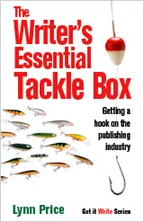 If you want the inside scoop on what floats our boats, The Writer's Essential Tackle Box is a must have. Out in November 2009.