Making a stink – know how, when, and why to do it

March 31, 2011

So Dorchester has promised to do right by its authors and pay them the royalties they are owed. Dorchester CEO Bob Anthony claims that Brian Keene’s call for a boycott of all Dorchester books because they’re selling e-books for which they don’t own the rights was “regrettable and not necessary to get our attention…”

Really?

While Dorchester was busy reinventing itself as an e-trade, they were happily ripping off countless authors by illegally selling their e-books. And those authors weren’t receiving any royalties. This abuse has gone on for far too long, without resolution. So obviously, the only conclusion one can infer is that Dorchester is stonewalling and ignoring their responsibilities to authors who are making them a lot of money.

It’s theft.

So what options are left to those who have sent countless emails and are continually are ignored? Make a public stink. There is no small amount of irony that Brian’s call to boycott coincided with Dorchester’s suddenly finding religion. There is nothing worse than being publicly called a thief or a cheat. The heat is now on them to follow through…and I hope they do.

This is definitely a double-edged sword because those who speak out carry some risk of blowback. As with any action, there can be an equally strong reaction, so one needs to be very cognizant of how, why, and when to make a stink.

Severity

I just had a very recent experience of my own where I had to go public with a serious problem with my own book. It gave me no pleasure because I hate discourse. But more to the point, I hate being screwed. My grievances were severe enough to take the step toward making an official stink.

Stealing rights, not being paid royalties…these are severe reasons to consider going pubic. Being angry because your publisher took your book out of print due to lackluster sales doesn’t meet the burden of severity. Go public with something like that, and you’re doing little more than waving your personal dirty laundry in public. No one cares or wants to see it.

The reasons should be of a contractual nature, where you can measure the severity of your grievance in dollars and sales.

Exhausting all options

But before you go charging to your local writer’s board, you really owe it to yourself and the other party to exhaust all your options. You email, or, if you’re in the same country, you call. You do this repeatedly in order to a) resolve the situation and b) set a foundation of abuse. If you’re able to maintain a dialog with the other party, then going public isn’t a good idea because there is at the very least, a line of communication. That it isn’t being resolved to your satisfaction isn’t reason enough to make a stink.

The caveat to that is if they’re bullshitting you. And by bullshitting, I mean that they are trying to re-define or re-interpret the terms of your contract. At that point, you’re at a crossroad because they’ve made it apparent that they are going to try every attempt to squeeze out of the problem via deflection. If this continues for lone enough, then it might be time for some stink-making.

Stay Calm

This is the hard part. You’re talking about a book that you sweat bullets over, and someone is messing with its viability. It’s hard to remain calm because you’re emotionally wrapped up in your book and your literary future. But you do yourself no favors when you come off like a screeching shrew and make wild personal attacks that don’t relate to the case at hand. If you truly have a legit grievance, then let those facts speak for themselves. Believe me, it’s hard to see the message through the vitriol.

Have your facts and proof

In order to make a stink, you need to fully believe that you hold the righteous and moral ground. That means you must have your facts straight and possess irrefutable proof. The first place you should go is to your contract. Language should exist that spells out the publisher’s duties and responsibilities. Your contract is your proof.

Make sure that you keep all your correspondence because it is the foundation of your claims.

The second place you should go is someone who is a very powerful, knowledgeable author advocate. They are often great resources for helping you make the right decisions in terms of recourse.

If you make a stink, expect that blowback will show itself with outrage and explanations from the other party. You need to be very certain you can refute their explanations to retain that moral ground. Let the facts speak for themselves. Anyone can explain anything, just like this ridiculous Dorchester article, to which my reply would be, “Sure. I’ll believe it when I see it.” In other words, talk is cheap. Actions are the only logical solution at this point.

Ask around, gather data

You will be surprised at the amount of information you’ll get if you ask around. “What have you heard/experienced?” are very powerful words because they verify that a pattern of abuse exists and you aren’t alone. Using my own recent experience as an example, I’d reached the point where there would be no resolution unless I made a public stink. All I had were my emails, that had been categorically ignored, and my contract.

I began asking questions of other authors with this publisher, gathering data, just to make sure I wasn’t an isolated case. That information proved to be a huge eye-opener. Based on what others were telling me, I felt I had the proper backup to go forward with my public complaint. I had the confidence to say that this wasn’t just a problem with me, but with a number of others as well. It was an established pattern.

Why?

The logical question is “Why did I do it?” What did I hope to achieve?

I’m not normally a disagreeable character – despite what the beagle says. But just like Brian Keene, I’d reached the point where there was nothing left. I was outraged at my treatment (especially since I’m in the business) and had nothing to lose at this point. I’d already written off my chances of finding resolution to the problem, so this wasn’t about revenge. It boiled down to the fact that I felt others should be warned.

In my line of work, I see far too many authors who have suffered from the arrogance, stupidity, naivete, or thievery of publishers, and I hate this. Without you fabulous writers, we’d be slinging hash in some roadside diner while forcing our errant beagles into panhandling. You should be treated with respect and honored for your talents. So my intent was to get the word out of my experience so authors could make better- informed decisions.

Hello…is anyone home??

Other reasons for making a stink is to get the other guy’s attention – such as in the Dorchester case. Nothing else was working, so why not make a huge public stink that would shame Dorchester into responding. I admit this was part of my reason as well. And yes, I had an immediate reaction which resulted in an equally immediate and amicable resolution. I was pleasantly surprised because I’d already given up my attachment to the outcome.

Do I believe the excuses given to me for my treatment? Not at all – not any more than I believe Dorchester was going to honor these authors by paying them and taking their illegal e-books off the market. I pray the Dorchester authors have an equally amicable resolution.

Revenge

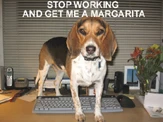
This is what happens when you don’t take the emotion out of your thinking. You’re pissed and want to attack and hurt the other guy. Tit for tat revenge is lame, so resist this. Personal grievances are equally lame. In truth, it’s not newsworthy and no one cares. Revenge is for the immature and unsavvy. You’re beyond this. If you’re not, eat some chocolate, have the beagle mix up some margaritas and consume at will until revenge has left your bloodstream. Yah, it’s that lame and damaging.

Is it worth it?

Stink-making takes precious time away from things that will garner far more happiness and success. To be honest, it’s a royal pain in the ass. But it can be worth it, too. So if you decide that you have no choice but to make a stink, you need to be honest about why you’re doing it, how to do it, and when to do it. In my case, I got exactly what I wanted, so it was totally worth it. I don’t have to chew the inside of my cheek in frustration anymore. I’m free. I’d forgotten what that felt like – and it’s damn nice.

But above all else, you MUST ask yourself if you’re prepared for the consequences of your actions. Consider what they might be and act accordingly. The one thing you don’t want to do is sully your own name in the process. Think about whether the other party is in a position to damage your reputation. It’s a fine line, and that’s why I say that you must maintain the higher moral, righteous ground based on facts and proof.

Don’t jump into stink-making on a whim because I promise you, it’ll bite you on the backside. And don’t make a habit of stink-making because you’ll be like the boy who cried “Wolf!” No one will believe you because you’ll be pegged as a Wendy Whiner. And no one likes a whiner.

On the other hand, no one likes being screwed. Handle this powerful tool with great care because you’re creating karma – and we all know karma can be a bitch.

Has there been a time when you were sorely tempted to make a stink and you didn’t? What held you back?

Or if you did, what compelled you to do so? How did it turn out for you and the other guy?

They’ve screwed up all our words.

March 30, 2011

I’m in a mood. I just came back from reading someone’s blog where the word “Indie Publishing” was mentioned. Oh, thinks me, do we have a new small trade press on sidewalk? No. She was talking about self publishing – as in DIY.

Blink. Blink.

How and when did “indie publishing” become the definition for doing it yourself, and why did I not get the memo? Indie publishing used to mean a small trade press who was independent – that they weren’t part of a conglomerate. They acted just like their big brothers in New York, assuming all costs of production, marketing, promotion, and distribution – but their balance sheets lacked the same number of zeros.

But there are no clear-cut definitions anymore, and it’s all up for grabs as to what means what. And that puts me in a mood.

Much has changed and gotten more confusing since the time I wrote my Definitions post a year and a half ago, and it makes for some puzzling conversations.

Vanity/POD/Self/Indie Publishing

Take the lunch conversation I had with a very lovely author. Over a tasteless lunch (but wonderful company), my friend told me how she’d pubbed her first book with a POD company.

Um, no you didn’t, sez I.

Yah, I did, sez she.

No, you pubbed through a vanity press…AuthorHouse. They’re a vanity press. You paid them money to publish your book.

It was her turn to blink. But they called themselves a Print On Demand sez she.

Heh, sure they did. It sounds a lot better than calling themselves what they are: vanity. Perhaps a more polite term is “subsidy press.” But the term was originally coined because the author pays for all the production costs, which is far from free – thus the company is appealing to the author’s “vanity.”

They are not Print on Demand, which is a whole other business model, and you’ll find the definition here.

But wait, it gets even better. While at a writer’s conference, an author told me she was published by an indie press. Ooo, I know lots of them…which one? Poisoned Pen? Tyrus Books? No, she said, iUniverse.

Blink. Blink.

Um, didn’t you have to pay to get your book published? Sure, she replied.

This is when I pinch the bridge of my nose and count to ten.

It wasn’t until I got back to my room and glugged back a glass of wine that I wondered, if iUniverse is an indie press, then what the hell am I? The idea of being classified with the likes of iUniverse or AuthorHouse is as attractive as having my eyebrows singed with a flamethrower loaded on crack.

But hold on – the Gods of Insanity weren’t done with me. At that same conference, an author told me she’d self published her book. Wow, sez I, gutsy move. What’s the name of your publishing company? AuthorHouse.

Blink. Blink.

Cue pinching of nose and counting to ten.

All I can say is that the vanity/subsidy presses have been hard at work retooling their PR strategy. And why not, they certainly have the money for it. So now the word is that they are one of the following: POD, Self-Publishing, or Indie Publishing.

There…doesn’t that sound nicer? Cleaner? More attractive?

It’s like the old saying, “I don’t care what you call me, just don’t call me late for dinner.” Except in this case, the axiom is, “We do care what you call us and we want to show you that we’re really nice guys as we stick our hands into your wallet.”

I have no problem with vanity/subsidy presses, per se. But I do have a problem with purposefully fooling the public in order to look gentler, kinder, benevolent. It’s like politicians calling for “revenue enhancements.” Puhleeze. Does anyone not realize it’s simply gentler word for TAX? Why do you think those blockheads changed the terminology? To make it more palatable, to fool us.

And this is exactly what the vanity presses do. “Let’s call ourselves something else so we sound better.” And it makes for very confusing conversations because there are so many authors who are genuinely flummoxed about the manner in which they published their book.

Eh, so what’s in a definition, Pricey? Well, glad you asked. If you make writers believe you are an “indie press,” then the writers have expectations about what you’ll do for them. They see their books as being on equal footing as, say, our books. And this is where disillusionment and anger sets in.

I know because I see it all the time at writer’s conferences. Doe-eyed authors come up after my seminars and ask if their iUniverse books will be nationally distributed because they said they are an “indie press” and, gee, you said in your seminar that you’re an indie press, too.

Cue the nose pinching and counting to ten again.

No. iUniverse isn’t on the same footing as we are. Not by a long shot.

But it doesn’t stop with vanity/subsidy. Print On Demand companies have done a lovely job of calling themselves “indie presses” as well. They aren’t. Not by a long shot. If you haven’t already, go check out my post on Definitions, where you’ll see what a POD company is.

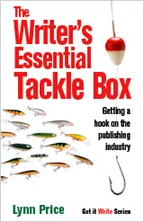
I give a seminar that breaks down all the different types of publishers, what they can and can’t do for you (based on my chapter from The Writer’s Essential Tackle Box). I also include the proper terminology so we can establish who is what. When I got to the Print On Demand section of my seminar, a woman in the audience got very red-faced and stormed out of the room. Yikes. I was fearful I’d hit a nerve.

Later that night, she bought me a glass of wine and apologized for bursting out of the room. She was recently published by a well-known POD press – except they don’t call themselves POD, but rather, “independent publisher.” Because of that, she thought she was going to be nationally distributed in bookstores, along with marketing and promotion. Yes, yes, she’d been told they use the Print On Demand for their books, but big deal…so does every other publisher. And as far as distribution is concerned? Bah, no worries, sez they. We have the same distribution as Random House – Ingram and Baker & Taylor.

Based on that, she’d signed her contract.

Only until she heard my seminar did she realize she’d been duped. And this makes me so cranky. POD publishers – the skanky ones – stay in business by fooling people. They water down the definitions and play loosey goosey with the truth in order to make themselves palatable. Why? To make money, of course.

Print On Demand printing isn’t the right term. It’s called Digital Printing, and yes, everyone uses it. It’s a cost effective way of doing a short run, say, for Advance Reader Copies (ARCS), or backlist titles. But less-than-honest POD publishers are very savvy at the art of dilution, and they water down the facts to make themselves appear to be our equal.

The long and short of it is this:  if authors never bought any of their books, the POD publisher would fold up their tent and go home because their primary marketplace is selling to their authors, not the bookstores.They are hindered by the fact that they don’t have distribution (Ingram and B&T are warehouse distributors – a different animal) , so they can’t sell enough books to keep themselves afloat.

I have written many posts on POD publishers because of the confusion they’ve created:

Print on Demand Series
POD and Readership
Series #1
Series #2
Series #3
Series #4
Series #5
Series #6
Series #7
Print on a Dime

I hope you take the time to read them because there is a lot of good information in there.

At any rate, all of this editing of definitions of vanity, indie press, POD, self publishing has made for some strange conversations because I first have to figure out what they mean by “self-pubbed.” Vanity is not self-pubbed. Check the copyright page. Does it have your name there? Nope. Did you set the retail price? Nope. Your publisher did.

You. Are. Not. Self. Pubbed.

Self publishing is when you are the publisher and you assume all aspects of production, marketing, promotion, distribution, and order fulfillment. You set the retail price, and it’s your name on the copyright page. It’s hideously expensive and time consuming, and not for anyone with weak intestinal fortitude.

What this screwing with our definitions has achieved is general confusion. And this is great for the wanna-bes. But I have to admit that it drives me buggy. A couple years ago I had a writer ask me what I charge to publish books.

Blink. Blink.

Where did you get the idea I charge? Oh, sez she, I read your bio the conference website, and it said you are an indie press.

Gah. Since then, I’ve changed our bio to say that we are a mainstream publisher. I don’t think the vanity and POD guys can stake that claim for themselves, so I’m safe.

For now.

I think.


door ringers and interruptions

March 29, 2011

I’m not sure what it is about our neighborhood that attracts so many door ringers. You know what I’m talking about – those annoying-as-hell people who make their living by ringing your doorbell to take donations to save bulimic whales, or buy magazine subscriptions to send some kid to self-esteem camp in Rangoon. There is nothing worse than being pulled away from my favorite pastimes of dish washing or cleaning up the beagle’s dinner that she hurked up on the living room carpet.

What is it about my neighborhood? Do we look more depraved than other neighborhoods? I would think these folks would want more bang for their buck and go hit up the neighborhood above us. They have about 3,000 homes and we challenge the growth charts at 36. And that’s including the greenbelt.

I try to be nice, and I could lie like a cheap rug and say that I smile politely and say, “No thank you. Oh, and have a lovely day.” But my kids would narc me out and say that I snarl like the beagle when she’s in full designer doggie chewie mode. Especially if I’m writing…like I was last weekend. The doorbell rang. I was alone, happily tippy tapping aways. I considered ignoring it, but I can’t do that any more than I can ignore a ringing phone.

On top of that, my hip is killing me, so it really hurts to hobble up from my desk (hurry up surgery!). So up I get, ow, ow, thinking this better be good.

“HI!” says the perky man in a suit. A suit? Who wears a suit on a Saturday? “I’d love to talk to you about your soul.” Ah ha, it’s then that I spy the bible he has tucked under his arm.

Blink. Blink. “My soul?”

It was the perfect opening for him to launch into something that involved Luke and Matthew. A few more blinks and I muttered something and closed the door.

My soul? Holy savior, Batman, I’m an editor. I have no soul.

What kinds of interruptions drive you to the brink of madness when you’re writing?


Surviving Edits in 12 Easy Steps – from my side of the desk

March 28, 2011

I know, I know, it’s all about the author. And it really is. My friend Carolyn Rosewood has a post on her blog about surviving edits, and I thought it would be fun to take her points and pull a switcheroo, just so you can see things from my side of the desk…if that sort of thing floats your boat.

1) CALM DOWN. Don’t try to read the entire document at once. You’ll get drunk, or at least be tempted to. And it’s very hard to edit while drunk. Not that I’d know.

What’s the worry? We get drunk here all the time when we’re editing. You think we keep the beagle around for her winning personality? Her margaritas are so strong, that we’re swinging from the rafters by noon.

Ok, kidding aside, this is sound advice. Reading crits it all at once is fraught with danger because you’ll see hundreds of comments off to the side and probably a separate page that includes a long critique about what she did, why she did it, and problems that she sees consistently cropping up in your writing.  It’s a lot to absorb, so take your time.

I’ve seen authors want to fold up their tents and go home because the editing process was so brutal. I admit that I do edit our authors to within an inch of their lives, so I’m sure they feel like they’ve been through a war zone by the time we’re done. But I’d like to think that our books are far better for it. Remember, it’s not personal. We love your books and we’re that unbiased angel whose sole purpose is to make your book shine.

2) Realize how much time and work your editor took with the changes. She did. Really.

Carol isn’t just whistlin’ Dixie here. We work our Vickie Secrets off during the editing process. We read Each. And. Every. Word. When I’m in editing mode, it’s not unusual to work from 5:30 a.m. to 7:30 p.m. And on the weekends. Especially if I have manuscripts stacked up like jets on the runway.

3) Learn how to use Track Changes in Word. Um… yeah… this one… learn it before those first edits arrive, okay? Trust me on this one. :)

Ok, if was cool to kiss Carol straight on the mouth without drawing the ire of her hubby and my Mr. Sweetcheeks, I would. We make certain assumptions when we sign a new author:  they are professionals, they know how to put sentences together in really groovy ways, they know the difference between a sentence fragment and comma splices, AND THEY HAVE MS WORD AND KNOW HOW TO USE IT.

Yes, yes, I know many of you hate Word, but it’s the gold standard by which we all work, so it’s wise to suck it up and get it. The freebie version OpenOffice is great, but it doesn’t read the comments correctly, so it can be confusing. This is fine for your personal writing, but if you have a book deal, for petesakes, buy Word. And learn how to use it.

I cannot begin to tell you how frustrating it is to try to teach someone how to use the Track Changes feature. It’s like the time I tried to teach the beagle to drive a stick shift. Utterly hopeless, and I had a hell of a time explaining things to the nice policeman who took exception to the beagle driving over his motorcycle.

4) Read through the entire thing first, slowly.

Yes, always a good idea to read it through first before you begin making edits or rewrites. Sometimes we’ve made a comment further down in the chapter, and you might think of something that will combine both those comments together in one single rewrite. Besides, reading it through first gives you the overall feel for what your editor is communicating with you.

5) Try not to freak out as you do (4).

I disagree. Freak the hell out. You know you want to. Don’t fight it. Eat a pound of chocolate and drink five martinis in a row. You’ll wake up with a terrible headache, but you’ve gotten it out of your system.

6) Edit at the time of day you’re most fresh. It will be easier. Trust me. Oh, and if you wrote the original MS to music, edit to that music as well. It will help you recall the emotion. :)

I agree with this. It’s the same for me as well. It’s much easier to edit when I’m fresh. Problem is, my “fresh” lasts for about an hour. That would make editing a single manuscript impossible, so I work even during advanced stages of staleness. And though I’m a bit gamey, I would much rather work all day long because I’m completely absorbed in your manuscript. I’m in the flow, the groove, mainlining the ink, riding the quill highway, doing the literary lambada…wha’? TMI? Ok, you get my drift. I’m engaged, as they say.

You, on the other hand, need to be clever and witty with your rewrites. It’s harder to do when you’re tired and cranky. Unless you’re the beagle, in which case that’s when you get your best work done.

7) Break the document into number of pages you need to edit each day to make your deadline.

8) Then double that number of pages, and set that as your daily goal. Just in case. Things happen, we get busy, and if you leave yourself no extra time you’ll miss your deadline. It’s part of some Law, I’m sure. And it will piss off your editor. You do NOT want to do that.

You’ll be given a deadline for your edits. It could be a couple weeks or a month. Whatever the deadline, DO NOT MISS IT. We have very tight schedules with little wiggle room. Things have been set in motion many months ago, back when the ink on your contract was still drying. Your editor discussed the season for your book’s release, had to talk to cover art, get all the copy written so it could get into their catalog. Sales teams have been alerted and have the book on their schedules to pitch to the national accounts. Sales kits have been developed. And on and on and on…

So while it may seen like no big deal to be a couple weeks late, you really have no clue how that delay can gum up the works. Think of your book as a giant water wheel. It has to turn at a certain rate in order to keep the water flowing at an even pace. Too slow, and you risk flooding. Too fast, and you risk going dry. Stick a rock in the sprockets, and the wheel stops turning altogether. The water builds up and overflows the banks.

Avoid this. Really.

9) Go through each change one at a time. Slowly. Most don’t take that much time. Honest. Most of mine are a simple matter of accepting the change.

This is solid advice. There are all kinds of edits – simple things like rephrasing a sentence or elaborating on one point a bit more. They don’t take too much thought. But there are times when the foundation needs to be retooled, or a character needs to be fleshed out more or a scene has to be totally rewritten. That ain’t no small thing, and you need to take your time in order to maintain the same voice as your manuscript. Consistency is key here.

There have been times that I made changes to an author’s manuscript, taking special care to write in their voice. I’m not talking adding paragraphs or anything. Small stuff, like adding some action to signify a dialog tag – She tossed the cup across the room and watched it break against Tom’s head. “There, you two-timing windbag. That’s what if feels like to be cheated on.” I’ll make the addition because I may have felt there were too many talking heads and no action. But I have to do this as if I’m the author, and maintain their voice. It’s like when I used to try on my mom’s shoes when I was a kid. I’d become Mom, and start ordering my brothers around.

In those cases, you need to judge whether your editor struck the right tone and either accept or reject the edit.

10) Remember it’s your story. If something doesn’t sound right, read it out loud. If it still doesn’t sound right, don’t accept the change, and write your editor a very sweet comment explaining why it just doesn’t sound right. They’re human beings too. :)

BWAHAHAHA! We’re human? When did that happen, and why didn’t I get the memo? It’s ok to disagree with your editor. I’ve had my authors disagree with me from time to time. Don’t be afraid to do this. Carol’s right – this is your book, and you have to be happy with it. But you also need to have complete faith in your editor because it’s their dime that’s funding this whole endeavor. They want you to to be successful.

If you’re really adamant about something your editor wants to change, consider the possibility that the reason she wants the change is because you didn’t write that scene well enough. So it’s not about the actual scene at all, but the scene’s literary quality. Be thoughtful about your edits.

Let’s use an example. Say you have a scene that you need in there because it’s integral to something big in your story, only the editor wants to yank it out. You need to fully explain your reasons for keeping it in to your editor so she has a clearer idea as to why you wrote that scene. Once she understands, you two can discuss how to strengthen the scene so it accomplishes what you intended. It may be that the best move is to yank it. But only through discussion can your editor better understand your motivation for things that you wrote and are attached to.

11) Take frequent breaks but make your daily goal of so many pages. If you get behind, you’ll only stress yourself out trying to make up the pages, and the changes won’t be as good as if you took your time.

Dammit, Carol, when did you plant a bug in my office, and where is it? I can tell when someone has rushed the edits because the quality is horrendous. Nothing can ruin a good book quite like lousy edits. When I see cases of this, I’m tempted to send the manuscript right on back to the author with a note, “Nice try. Do again, please.” I’m very fortunate in that my authors edits have almost always been fantabulously stupendous. We may go back and forth on a few issues, but my authors are geniuses. That’s not to say I haven’t had my times of frustration, tho.

12) Celebrate!! You have edits! From an editor! And you’re on deadline! That means you’re one step closer to the finished book, and it means you’re that much closer to being a paid writer. :)

Yes, I second that. When I have a manuscript in the bag, I celebrate by making Sweetcheeks take me out to dinner where I can order something that’s totally not on my diet and makes me feel sinfully fantastic. I’m excited because I know the author is thrilled and relieved to be past that tough bump in the road. I’m excited because I know we’re one step closer to making this fabulous book a reality. I’m excited because I can let the author relax for five minutes while we work our magic in the background.

And most of all, I’m excited because I know that we have another fantastic book that will soon be unleashed to the reading world, and I can’t wait for the explosion.

So yes, you will survive edits because it’s the last step you’ll make before your book becomes a reality. Enjoy the process. Really.


Public Service Announcement

March 25, 2011

It’s Friday, and that means you can slough off the day and be irresponsible. Or is that just me?

But while you’re busy contemplating your weekend, stop everything and  read 8 Fiddly Things You Can Do To Your Manuscript To Make Your Editor’s Day by Alison Janssen. I implore you…nay, I DEMAND it. Yah, it’s that good.


Ah, sweet revenge

March 25, 2011

So my post on spam-mail hadn’t been up more than 24 hours when I got another one. Unbelievable. I’ve never received so many in one week. Is there something in the water that entices authors to make ill-conceived decisions?

The spam-mail was all very lad-di-da…”Read my fabulous book!” The author was kind enough to provide Every. Link. In. The. World. If I didn’t want to order it from Amazon, I could order it from no less than 500 other sites. Lucky me.

But I had my revenge.

I wrote back to Mr. Spam-a-lot (Sorry, Monty Python):

Tell you what. I’ll consider checking out your book if you read this blog post

It was written with people like you in mind. Really.

I never expected to hear another word, which wasn’t the point. But the author wrote back and apologized, which I thought was very classy. He admitted that he was a self pubbed author trying to wade his way through the maze of self-promotion.

He made my point for me. So many times when you DIY, you have a fool for a client because you have tunnel vision. You’re so focused on your book, then getting it published, getting rejected, deciding to do it yourself, that you forgot the most important question of all…how do I do this the right way?

See, publishers have committees. You should see the list of people who give me feedback on cover art, titles, is this book a good choice to buy? And I cherish that feedback because I can’t rely on just my own instincts. I can be wrong, and I have to be willing to listen to those who are helping me sell the snot out of our books.

The DIY author doesn’t have this kind of support, so they make a ton of blunders. The sad part is that most DIYers run out of money and energy before they figure out how to do it right. They buy books that blather on about 1 gabajillion ways to market your book. I’ve seen those books and decided that the authors excel at one thing – selling their book to a gullible audience. It’s staggering the amount of information that is plain wrong, yet these books sell like hotcakes.

And this is where my poor Mr. SpammyPants is. He’s alone and struggling the best he can. His apology was heartfelt, and I could feel how overwhelmed he is.

Thing is, I’m only one spam-mail out of however many he blasted out. So while the apology was nice, and it gave me an opportunity to exact some revenge, the practice of  “Buy my book!” spam-mail will prevail.

Beagle, fire up the blender, it’s gonna be a long season…


How to make an editor want to drink Draino…# 547

March 25, 2011

Title your book with the word “Audacity” in it. Nothing sez, “Beagle, get me my bug spray!” faster than this word.

It. Has. Been. Done.

I freaking hate this word because I see in all over the place.

Let me backtrack a bit. The word, in itself, is fabulous. It’s strong and commands attention. But now I’m seeing it in the most mundane uses. The Audacity of Bananas. The Audacity of Sleep. The Audacity of Being a Couch Potato.

Depending on your usage, audacity can mean intrepid boldness, or bold or arrogant disregard of normal restraint. It’s a manly man word, and one that invites serious contemplation. When you overuse something, you cheapen it.

I’d hate for this lovely word to race up to the top of my Ick O’ Meter to the point where my eyelids invert and the beagle has to fetch me my Pepto Bismol. So while the rest of you are saving Japan, the whales, the manatees, polar bears, and Haitians, I’m saving the word Audacity. And my first official act is to implore everyone TO QUIT USING IT.

Otherwise, I must drink Draino.

That is all.


“You’re invited…!”

March 24, 2011

Blurgh. These invitations always dump into my inbox, which greatly annoys the beagle because it’s her job to manage my email. When she’s feeling particularly snarky, or hungover, she leaves these invitations in so I can share the annoyance. What am I talking about? Those irritating spam-mails that come from authors who sign up with those spam-mail services in order to create blasts about their upcoming event.

“Come to my book launch party!” – Wha’? Who ARE you? If I really stop to figure that out (and yes, I’m embarrassed to say that I have), it’s invariably someone who queried me a millenium ago.

One an author told me she sent me one of these irritating ditties to basically shove it in my face that she managed to get published quite well without me and that I was “a fool” to have rejected her.

Ohhh…a “shove it – watch me gloat” invite. How nice. Makes me want to get off my yacht and fire up the Lear just so I can make the event. And I’m certain she has a Nobel awaiting her just as soon as AuthorHouse sends in her book.

The gist of it is this; even if these event scheduler sites are free, they’re nothing more than spam.And what do we do with spam? Hello, Spam, meet Ms. Delete Button. She’s feeling a bit cranky today, so she will attend to you with great prejudice.

This is an extremely ineffective way to “promote.” And that’s my point. There’s effective promotion and there’s promotion that makes the recipient hope you see the undercarriage of a bus.

Vanity presses do the same darn thing. Just yesterday I got another one. “Who is this guy?” I kept wondering. The spam-mail was linked to iUniverse. How lovely. So is this iUniverse’ idea of “promotion”? So during my lunch break, I looked up the book because the name was familiar. Ahhh…the pieces were coming together. I’d rejected the book several months ago. So I guess that’s how it works. The author supplies the addresses, and the publisher or whomever goes to work annoying a lot of people by filling their in boxes with garbage they don’t want.

Book promotion is supposed to be meaningful, not a race to see how many people you can irritate in the least amount of time. You want more hits than misses. You want to attract your core audience in a manner that will have them slobbering over you and your book.

Spam-mail does none of those things – it’s like throwing a dart blindfolded and hitting your mother’s favorite lamp. And what’s sad is the spam-mail I receive is always from authors who pubbed with a POD or vanity press – so they don’t know any better.

Please, dear authors, take this into your dreamstate:

Do Not Spam-mail.

Attracting an audience takes time, sometimes lots of time. Get on Twitter, Facebook, whatever social media that floats your boat. And don’t direct all the attention to you, as in, “Hey, I wrote this really good book…!” because that just makes people pull out their bug spray.

In order to receive, you gotta give. It’s impressive how many authors I meet who do nothing but talk about their book their editing, their publishing experiences – and not give a rip about a two-way conversation. I see this a lot in social media as well. Authors only talk about themselves, or their latest post, or their upcoming book event, and never take the time to establish relationships – as much as one can do with 140 characters, right?

It’s easy to ignore these people…just like their spam-mails. And this isn’t an effective use of their time.

So rather than playing Let’s Spam My Address Book, put some thought and heart into promoting your book. Channel those old telephone ads – Reach Out and Touch Someone. But do it in a personal manner. Touch those you know. I know writing is a solitary endeavor and this gives us the luxury of being incredibly selfish. But now it’s time to look beyond the end of your nose and network with people. Create honest relationships.

It’s not always about how many people you know, but how many people know you in a good way. Take a look at your promotional efforts – and your personal efforts – and analyze whether you’re giving 50% to the relationship or you’re just spamming your way through life.

Don’t be the noob sending out the “Hey, you’re invited to celebrate the ever-fabulous ME!” spam-mails. Conduct yourself in a manner that makes people happy to see your name in their inbox and would be delighted to attend your book event. Or drinks. But the beagle insists that you pay…


Theft

March 23, 2011

I had an author write me last week asking about the possibilities of an agent or editor stealing her book. I assured her that we have far better things to do than rip someone off. For one thing, it’s insanely stupid because the original author’s work is copyrighted the minute her dainty fingers hit the keyboard.

But what about an idea? You can’t copyright an idea, so you’re open to all kinds of legalities that may not end in your favor. That being the case, I was especially happy to see that author Lisa Skye prevailed in her case against her former agent, Jayne Rockmill, for ripping off her book idea.

The gist is that Lisa shared her cookbook proposal with her agent, Jayne, with the idea of selling it. A publishing deal was brought to the table. However, Lisa and Jayne’s relationship soured, and the project, I Love Bacon, was shelved. So it was a huge surprise to Lisa that Andrews McMeel Publishing came out with a book under the same title. With Jayne Rockmill as the author. Beagle, cue the lawsuit music, please.

So while this article is the stuff that gives authors pause about theft, I still maintain that this shouldn’t be utmost in authors’ minds. True, the agent in question has beagle banhammer for brains because, even though you can’t copyright an idea, she had a signed agreement with her author, and it’s obvious the agent stole, capitalized, and profited on her author’s work after they went their separate ways.

I’m gobsmacked. Did Jayne, the “agent,” really believe she’d be able to pull this off without some sort of backlash? Did she think Lisa, the rightful author, would blend in with the wallpaper? Puhleez. How many of you would allow this sort of thing to happen with your idea and be willing to sit by and eat daisies? Is it worth the risk? Well, it seems that Jayne found out the hard way just how territorial authors are about their work.

And let’s not mitigate the giant headache Andrews McMeel Publishing must have been feeling. The fallout from this PR disaster does nothing to enhance their reputation, and they wisely offered Lisa a book contract in exchange for dropping her lawsuit against Jayne – their erstwhile, sticky-fingered author. It’s the fastest way to make the whole disgusting affair disappear. And in their defense, it’s probable they had no clue  – initially – about the genesis of the manuscript.

And just between you and me, I’d have a hard time signing with a publisher who produced MY stolen book. So I hope the deal was much sweeter than what was being reported because that stolen book is still very much for sale. I mean…how would you feel going to Amazon and seeing YOUR BOOK with someone else’s name as the author. My brain fails to process the indignity.

This is a situation no one wants to experience. I’m not familiar with Jayne Rockmill or her success as a literary agent, but it seems apparent she had little regard for her own reputation and is equally unburdened with the douchebaggery of stealing someone’s work. These are people for whom bedbugs and lice were created, and it wouldn’t bother me to see this agent-cum-ripoff artist “author” suffer the plight of both. Forever.

I hate, hate, hate it when these things happen because it puts suspicion on all of us. I’ve seen plenty submissions where I wished I’d thought of that idea, or that turn of a phrase. But I have scruples, a moral code, that says my position must be one of trust. For some, it’s all about the hollow victory – no matter how it’s won. But for most of us – nearly all of us – the idea of stealing someone’s work is akin to abandoning a dog on the side of the freeway.

So please, dear authors, don’t feel that one rotten apple ruins the bunch. BUT…know who you’re dealing with. Research those you query. Make sure that they have solid reputations…and make damned sure you have excellent backup of your book ideas. And, while I’m at it, I’d recommend that you slap out three chapters. That way, it’s no longer just an idea that can’t be copyrighted, but a book in the making. A book, which if stolen, could have far dire consequences for the thief – as in removing the book from the bookshelves.

As for the Jayne Rockmills of the world, karma is a biotch and the Cosmic Muffin is always watching…


Why editors will never give up drinking

March 22, 2011

No one likes a whiner. I know because I have a hard time keeping my eyes from rolling around in their sockets when someone assumes the position and blathers on about their lot in life. Blah, blah, blah…Don’t like it? Change it.

So, given that, I’m not whining about my lot in life. I love my job as much as I love Twinkies. And that’s a lot. But there are things about my job that make me want to run screaming for a fresh pitcher of the beagle’s margaritas…and that’s queries that fail to launch.

I realize I’ve written scads of posts regarding the ineffective query, but I do it in hopes that one writer will stumble across my blog and see the fatal mistakes they’re making that will result in rejection after rejection. They’ll scratch their heads and wonder, “What am I doing wrong? I have a great story here, so why don’t these idiot editors see that?”

Sigh.

I can almost feel their frustration oozing out of every pore. Thing is, I want you to be successful. I want your stories to be heard and enjoyed by readers all over the world. I want to be the one who makes it happen. But I can’t do any of that if you don’t tell me what your story is about.

What I don’t need to know (TMI):

  • Where you were when you wrote your book – The setting that inspired you is a lovely side story, but save that AFTER you signed your contract, where we’ll have plenty of time to jibber jabber about your background.
  • What your writing means to you – I’m truly thrilled that writing fulfills you and makes you feel complete. I feel the same way when I find the time to sit down and work on my novel. In fact, most writers feel this way. Join the club.
  • How far you’ve come in your writing expertise – We were all novices at one time, so it’s lovely you’ve progressed – but hardly earth shattering. It’s simply the natural, logical progression that comes from experience.
  • Your unknown poet/editor thinks your book is great – this is an offshoot of “Mom loved it.” I’m sure you love your mom or your unknown poet/editor, but this isn’t a persuasive argument. Unless Mom is packing heat or happens to be an award-winning NY Times bestselling author, you can safely leave Mom out of your query.
  • You’ve been querying for quite a while now and have a very good book – Again, the idea is to be persuasive. This kind of information tells me nothing. There are no points given for those who query the longest. It just means you might not have a marketable book, even though you believe otherwise.
  • That you’re looking for an agent to take you a long way – For some reason, this really bugs me. I’m not an agent. I’m an editor. This tells me the author is using a canned query letter and forgot to personalize it to say “editor.” It’s unprofessional. Am I being picky? Probably. But would you make the same mistake if you were applying for a job? Well, think of me as a future employer and see if that doesn’t offer some perspective on your delivery.
  • Your voice isn’t boring and that you have a lovely command of literature – This is something I have to determine for myself. Since we pour thousands into our books, I’m not likely to take your word for your talents. We all think we’re fabulous. And we should! But what you think is fabulous may not be so for me. Besides, it means nothing if I have no clue what your story is about.
  • You love literature, even though you are very young – I don’t really care how old you are. I’ve worked with authors in their 80s and authors in their 20s. The main thing I cared about is whether any of them wrote a great story. That you love literature is sort of a given. Otherwise, why write?

That an author included ALL these things into one query letter is why editors will never give up drinking. This was a heartfelt, honest query letter, but it gave me one sentence about the actual story.

ONE.

SENTENCE.

This, out of two solid pages of endless detail and pitter patter.

If you want to be successful, concentrate your efforts on this – and only this:

  • Who is the protagonist?
  • What is his/her story?
  • What does s/he want?
  • What does s/he discover?
  • What choices/decisions/changes does s/he encounter?
  • What terrible thing will happen/ would have happened if s/he chooses (chose) one path; what terrible thing will happen/would have happened if s/he doesn’t/didn’t?

Stick to the story and save an editor’s liver.


Follow

Get every new post delivered to your Inbox.

Join 963 other followers

Powered by WordPress.com