Approach your book idea thoughtfully

April 29, 2011

No, no, I’m not talking about holding the door open for your book idea and insisting they enter first. Or saying “please” and “thank you” to your book idea. I’m talking about the veracity of your idea – the legitimacy, the viability.

Believe me, I know what it’s like to get caught up in the fever of an idea. I remember when Barfy McLennon decided we should rip off the teacher’s afternoon lesson plan so we’d be forced to play on the playground for the rest of the day. It was Barfy’s idea. In fact, Barfy had two claims to fame in the third grade; 1) he held the only distinction of hurking on his desk during a math test and earning the coolest moniker of the school. The teacher felt so sorry for him, she gave him an automatic A, and b) thinking up great ideas.

So Barfy got me all a-twitter. YES! We would rip off teacher’s lesson plan. Playtime was in our grasp. The rest of the class would shower us with the good parts of their lunches. Victory and faithful obedience were assured. We tittered about it all during lunch and recess. By the time the freeze bell rang, my knees started to go shakey. Was I wussing out? Barfy would never let me live it down. In the end, I chickened out, satisfied to let Barfy claim all the glory.

I had come to my senses and realized this wasn’t a good idea.

And this is what I wish more authors would consider before they sit down to write their books. No, let me retract that. Go ahead and write it. Get it out of your system because I’m a proponent of following your literary urges.

But just because it’s an urge doesn’t mean it’s a good idea. What I mean by that is that it is either too personal to be marketable, or simply not an interesting subject matter.

The Approach

Let’s use the example of a query I got a couple weeks ago. The author is a cancer researcher and put together a bunch of vignettes about his patients. For starters, vignettes are hard to sell. I generally dislike them because the quality of the individual stories are inconsistent. Read one bad story, and you lose the reader. Bookstores shy away from them.

My problem with his idea  – aside from the fact that it was 200k words – was that it took the focus off of him, the author. The author is the glue, the golden thread that ties these stories together. Minus that,  you have a collection. Big deal. Cancer has been Done. To. Death. Do a search on cancer at Amazon. The pages go on forever. If you’re gonna do cancer, you gotta be unique.

The author approached his idea with good intention and conviction since these were people he’d treated over a long period of time. He got caught up in the notion that his patients made for a good book. But that’s not enough. What seems great in real life may not translate well to paper.

I didn’t feel the idea was marketable. However, if he’d approached this by simply asking himself, “What is the glue that makes my book a gotta have it?” Oh sure, he had the usual platitudes – inspirational, romantic (?), sad, thoughtful…blah, blah, blah. But what he couldn’t tell me is WHY. He couldn’t make a case for the viability of his book.

Now, if he’d approached his idea thoughtfully, he may have thought to make himself the central focus of the story and write about how his patients affected his life and changed his perception of how he views life – let’s say he’s a cynical, angry guy. By weaving in their experiences into his narrative, the reader can see how the author is affected and influenced by those who are suffering and dying. I find that compelling because I’m an old Sociology major from the early Jurassic Era, and I love stories about people who are altered by their surroundings – how they react to life experiences.

In one simple twist of thought, this book could have gone from uninteresting and unmarketable to “please send me pages.” That is why you approach your book idea thoughtfully. Letting your idea serve as your internal fuel is marvelous, but I caution against getting caught up in your idea. Don’t lose sight of the reality that you actually have to sell your story.

Is your story idea a good idea, or is it akin to stealing the teacher’s lesson plan? That takes thought, research of your genre, and understanding your competition.

As for Barfy? Well, he got caught for snatching the teacher’s lesson plan and was suspended for two days. Totally glad that I came to my senses and decided this was a bad idea.

Yes, there is something afoot with the beagle

April 29, 2011

Never turn your back on me.

I still can’t put my finger on it, but she’s got something up her flea collar. I can smell trouble from a mile away – and she reeks. Or is that the dead mouse she simply had to roll in yesterday? But whatever, I’m concerned about turning my back on her for a single minute. Last time I did that, she ate half my sandwich.

I’m also worried because I found a voodoo doll in my likeness (complete with bloody red editing pen) in her box of toys. This explains my bad hip. And there’s this strange gaggle of laughter she emits when she thinks I’m not looking.

And if that’s not enough, she has stolen all my glue, fabric, cardboard, and printer. Is she planning on building a shopping mall? A barbeque pit?

What the h-e-double hockey sticks is she up to? This can’t be Spring Fever…


Literary Agency clauses – something to ponder

April 28, 2011

Authors often ask me about the necessity of having a literary agent, and I always pop up to say, “YES.” Agents are lovely creatures who certainly make my life worth living. But they also make authors’ lives worth living as well. That said, there are some clauses that cause nothing but trouble and heartache, and publishing watchdog extraordinaire, Victoria Strauss, dusted off one of her older blog posts to discuss one of them.

Vic calls it the “interminable agency clause,” which means that your book belongs with that agency f-o-r-e-v-e-r. I call it the “watch your purse, you’re getting ripped off” clause. It’s one thing to have a book sell to a publisher and that agent has rights to collect commissions for the life of the copyright, but it’s quite another to have your out-of-print book be subjected to that agent’s sticky fingers as well. And this is something that Victoria brings up in her post.

Lots of authors have out of print books, and I can see where authors wouldn’t give their prior agents a second thought if they decide to take a reverted book elsewhere. After all, they did nothing to make that sale, so why should they collect a commission? This could be a rude awakening for authors – so please go read her post. Protect yourself!


Uh oh…the beagle is getting restless

April 28, 2011

I'm watching you.

I hate it when she gets like this. She gets all mopey and won’t answer the phones or file. That means papers are piling up, messages aren’t being returned, and instead of simply tossing me an offhand grunt, she’s evolved into full-blown growl.

I know she’s planning something, but I have no idea what it could be. Is she seeking employment elsewhere? Running away with that adorable Rottweiler down the street? Plotting a takeover of my position? I can’t be certain, but she’s been acting very strangely of late.

Ah…Spring Fling?


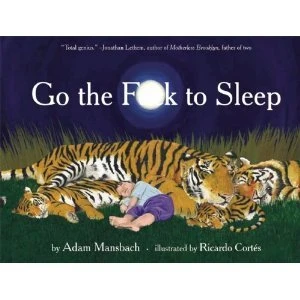
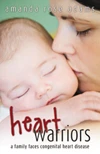
Tender new book for parents with small kids

April 27, 2011

I’d like to know where this book was when my kids were wee bairns. And yes...it’s a real book.


Query: Things you can leave out of your first paragraph

April 27, 2011

Let’s go over the realities of a query letter:  Your sole reason for sending one is to sell you book to an editor or agent. That means you stick to the business at hand – communicating your characters and plot. Oh yes, genre and word count, too.

That’s it. Class dismissed.

Except that’s not what many writers do. Instead, they get caught up with how to begin a query letter.

It reminds me when my mom taught me the rudiments of writing a letter:

  • Always address your letter with “Dear…”
  • Never start the first paragraph with “I,” because it calls attention to yourself ( and some other reasons that will destroy the space/time continuum).
  • Start a new paragraph when you start a new subject, but make sure to transition into that new paragraph.

Holy Emily Post, Batman. By the time Mom was finished with me, I asked if I could just call. Mom put up with a lot raising me. Good thing I was the last in line. If I’d been first, I’d be an only child.

But it got so that I became hand-tied (as opposed to tongue-tied) when I sat down to write a letter – usually a thank-you letter to my grandmother. I’d stare at the empty piece of paper for hours, wondering how to begin the darn thing. Why couldn’t I just go commando and write whatever came into my sometimes-working brain? Or use the phone? Surely, Grammie wouldn’t mind hearing my wee voice, right?

And this is what I feel about a lot of query letters I see. The author is unsure where to start, so they begin their query letters with all sorts of unnecessary details.

  • I wondered if you’d like to see the full ms, which several publishers are considering?
  • I found your publishing company through Publisher’s Lunch/writer’s conference/one of your authors/Twitter/Facebook/giant billboard on Fifth and Main (you look marvelous, btw)/ bathroom stall/the beagle was handing out flyers…
  • Stop what you’re doing and take the day off…my book is a guaranteed bestseller and will make us all millions (seen it, pinkie swear)

The beauty of a query letter is that you don’t need to start with all the usual platitudes that your moms drilled into your brains as kids. That’s right, kiddies…YOU HAVE PERMISSION TO DISOBEY MOM. Powerful stuff, don’t you think?

I do care that other publishers are considering your manuscript because I can plan accordingly. But I don’t need to be bashed over the head with this in the first para. Let me become entranced with your story, THEN pop it on me that several publishers are considering  your work. And by “considering,” I’m going to interpret that as you have genuine interest – not that you’ve queried other publishers. If I like your story, you can be certain that I’ll pounce very quickly. I’m known for it.

It doesn’t matter to me where and how you found our company. I know our name is out there in a lot of venues and you happened to bump into one of them. How lovely. And thank you for the query. But in the grand scheme of things, it isn’t riveting news. The only time this works is if we have common friends. Name dropping is fine. It won’t necessarily get you anywhere, but it’s nice.

When you open your query with invitations to play hookey, I’m sorely tempted, but unconvinced. However, do know that the beagle takes every invitation to skip out on work, and will take your suggestion seriously and curl up in the sun spot on my desk. But also know this: you’re not the first to suggest I take the day off because you are the answer to my every need. In fact, if I had a dime for every query that insisted their manuscript would “put us on the map,” I’d own Hawaii.

What does “putting us on the map” mean, anyway? We’ve been playing this fun game of publishing for seven years and have several bestsellers, book awards, lovely reviews, and lots of wonderful, successful agents who query us. Does that mean we’re “on the map”? If so, a number of authors beat you to it.

The other annoying thing about this “on the map” thing is the implication that your book is THE ONE that will blast us all into the stratosphere. In truth, you really don’t know that because you’re not a publisher. I love confidence in an author, but I’m not a fan of arrogance. Statements like this make me want to drop acid.

Now are times when I read a manuscript and see huge potential, and get a feeling the lid was going to be blown sky high – but until it actually happens, it’s all conjecture. The marketplace is a fickle mistress and I rarely count my chickens before they hatch….yes, I realize I’m mixing metaphors (blame the lack of enough coffee). So if I’m unwilling to lay claim to a guaranteed bestseller before a contract is even offered, then it would be wise for the author to take the same tack and develop a modicum of humility. Always know that as good as a project looks, there are a lot of things that can go wrong.

Sell me with your story. Nothing else. Just you, me, and your story. Forget Mom and her letter advice. Forget arrogance and sure bets. Stick to the facts and leave out the fluff.

Heck, I’ll even let you start your query with “I.”


Charging to attend a book event

April 26, 2011

I get Publishers Lunch every morning – and so should every person who’s involved in this crazy thing we call publishing. In my morning meal, I saw that a Denver indie bookstore is going to start charging people to attend a book event – anywhere between $5-$10. That money will be used as coupon toward buying the author’s book. I found the article on GalleyCat, so you can read the article for yourself.

Store owner, David Bolduc, explains:

“Publishers place certain expectations on us when we host events, and so in order to continually attract authors, we must fulfill these expectations. Oftentimes, in return for sending an author to a bookstore, publishers expect us to attract a certain number of people and sell a certain number of books.”

How do you feel about this? I have to admit that I was shocked at this decision. From a purely publisher mindset, I am concerned this will chase event goers away. For one thing, I don’t agree with this logic. Maybe some publishers have those expectations, but I always have the attitude that the author needs to have enough of a platform, or an enticing book, to pull in event goers.

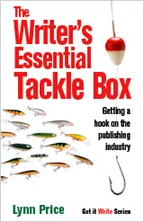
I know that when I was doing the big promo push for Tackle Box, I told the bookstores of all the writer’s groups I’d contacted and my belief that the event would be well attended. And they always were. But I did my homework because I didn’t want to sit on my arse with my finger up my nose. In other words, those stores had a compelling reason to host my book event, and that was to bring in shoppers who will buy my book and maybe a few more as well. I became a revenue stream for them.

And that’s the idea behind hosting book events. It’s give and take, and there has to be something in it for the one hosting the event. Otherwise, what’s the point? But then came along the vanity and POD authors, and bookstores saw a huge downturn in the quality of books that waltzed into those book events. The authors had zero experience, and their “publishers” were deliciously AWOL in terms of publicizing the event. The results were that few attend the events, and the store lost money. Or didn’t gain a thing.

So booksellers have become careful about whom they agree to host. Few will host vanity or POD books. Others demand a list of people who agree to attend. Others still, charge the author – or the publisher – to host the event. But to date, no one has ever charged the attendees.

Do you see this as an effective way to attract customers to come into your store? If anything, I see this as bug repellant. I have attended a number of my friends’ book events, and if I knew I was going to be charged $5 or $10 just to sit my rusty dusty in one of their chairs, I might think twice about it. True, I basically get paid back when I buy the author’s book, but what if I already bought the book? Or I bought the e-book?

I understand the owner’s plight – to get people to shop locally and support local bookstores – but I wonder if he’s shooting himself in the foot. You can’t mandate where people shop – especially in this economy. If a bookstore is going to accept the burden of hosting an event, then they do the natural things that will attract attention. They print up posters and hang them around the store. Some take out small ads in their local newspaper. They do it to create excitement and gain customers.

But how many customers are you going to attract if they know they’re going to be dinged just for attending an event?

I realize there are no easy answers. Stores are closing right and left – which makes me infinitely sad. Many stores have stopped hosting author events altogether – another sad plight. But what I don’t think is right is fleecing the golden goose to simply attend a book event.

I don’t know…am I wrong? Would you pay to attend a book event for an unknown author? Do you see this as a profit center for the bookstore and not much upside for the customer?


A word about log lines…

April 26, 2011

…they are supposed to be catchy little things. Tidbits that make your mouth go all watery and make you scream for pages. A hook. If they’re dull and lifeless, then why bother? Here’s one that fits in the “why bother?” category.

For the first time in his life a police Chicago police Lt. faces the “world of Absolute Depravity” (the title of the book is Absolute Depravity – so the author was going for a play on words – #loglinefail)

Not to put too fine a point on it, but what cop in Chicago doesn’t face some form of depravity? Rather than making an impact with this log line, I want to snerk. And that isn’t the author’s intention. The author didn’t realize this was supposed to be a hook.

So right out of the shoot, the author is facing an uphill battle because I’m underwhelmed and trying to swallow a snerk. It would have been better if the author had simply not used one – well, definitely not this line. And that’s just fine – we don’t need log lines. Log lines are for movies and books during the publicity phase. Publishers put them on the covers of their books, their media kits, their cover letters and tip sheets. Why? They’re teasers to pique the readers’ interest.

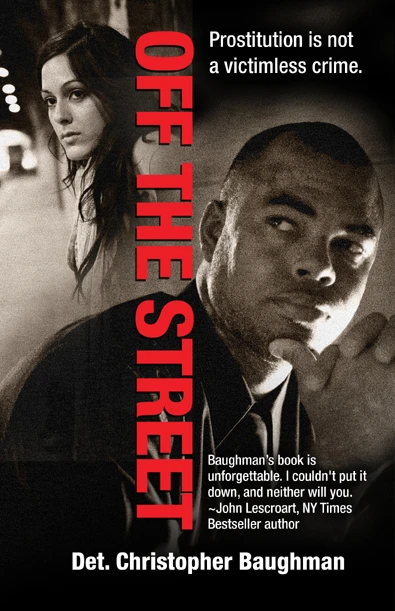
For example, we have a log line for Chris Baughman’s exciting new book, Off the Street“Prostitution is not a victimless crime.” We put it there to set up the reader – to hook them. Go look at the link and check out the cover. With that one sentence, readers know what the book is about. It’s a play on the oft-used line, “Prostitution is a victimless crime” by those who don’t see what the “big deal” is. That little log line puts forth the message that this kind of thinking is dead wrong, and Chris’ book shows the reader why. It’s there to deliver a message. It has a purpose. It has a hook.

Now, would that same log line been effective in the query? Nope. Not all by itself. But if Chris’ fabulous agent had put it in the first line of the pitch, it would have been perfectly fine.

The thing is, don’t expect one line to do your work for you. The author of the Chicago cop query had the line sticking out there, all alone, like a wet booger,as if he wanted to say, “Ta da! Isn’t this fabulous??” And no, it wasn’t. It fell flat because there was no hook.

Unless you’ve got something really clever and riveting, consider leaving it out. If you do have a cool hook, think about making it your first line. I want to know about your story, and a single line isn’t going to accomplish that task. All it can do is reel me in, like a fish on a line.

Another purpose for that log line is to use it at the bar when someone asks what your book is about. You will need to have that one-liner handy that will entice someone to put their drink down and say, “Tell me more.”

And that’s what it’s all about, hooking someone in to say, “Tell me more.” Thatsa log line, baby!


In the background

April 25, 2011

I was at a writer’s conference not too long ago and I overheard (in the bathroom, of course – where all the unguarded conversations take place, well, besides the bar) where a gaggle of women were lamenting that publishers don’t do anything to market books. I realize there is a whole subset species who don’t do any marketing or promoting of their author’s books, but that’s because their main sales clientele is their own authors. The rest of us sell to the reading public, so we have promote and market because we’ve already spent thousands in producing the book. We gotta sell it.

It got very quiet as I walked up to wash my hands – ah the power of a badge with a red stripe on it. They knew they’d been busted talking about…the enemy. And here I was…the enemy…in their midst. I managed a smile and said, “Depending on the kind of publisher you have, there is a ton of stuff publishers do in the background. We do catalogues that are sent out to thousands of markets, we do specialized advertising, printing up hundreds of ARCs to send out to reviewers and the media, and then distributing the books across the country. We push our authors’ names to radio and TV interviewers and send out countless media kits It’s all stuff you never see, and it’s all at the publisher’s cost.”

Little beacons of light shone in their eyes. Ahhh, we had no idea, said they.

And one of those background things is meeting with our sales teams in New York. Ah…Spring in New York…better damn well quit raining.

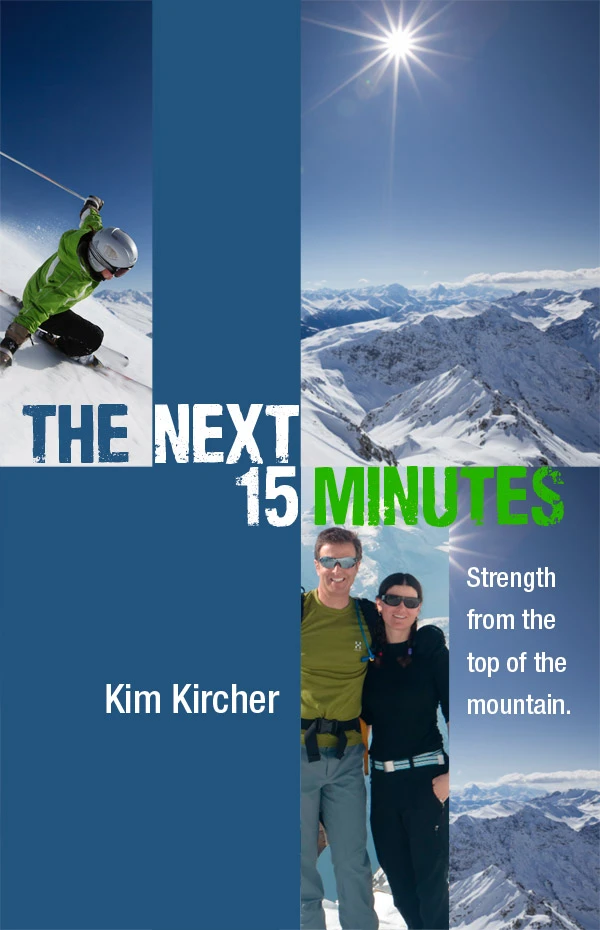
One of the manuscripts that we just finished editing is Kim Kircher’s The Next 15 Minutes – Strength From the Top of the Mountain. It’s a fabulous book that’s filled with double black diamond ski runs and equally double black diamond lives as Kim fights to save her husband’s life. Definitely put it on your To Buy list in October.

I wish we got 15 minutes to present our upcoming titles to the sales teams, but all we get is 13 minutes. Since we have four new books coming out, that’s…lessee…divide by 4, carry the 1, add 2… it comes out to 3.something minutes per title. Gah. How can I possibly shove all the wonderful things I have to say in 3.something minutes?

I love our books. I love our authors. Ask me about any of our books, and my face goes all gooey dreamy-like. I can remember first reading the submission, the editing process, cover design, watching a young bud burst into a gorgeous flower. And that’s what makes this process so wonderful. And what’s nice is that the sales teams get to see the passion we have for each title, why it’s a force to be reckoned with in the marketplace, and why readers want these books. These meetings are a godsend to creating a link between publisher and the good folks who are out there pushing our books to the marketplace.

Mind you, all of this is done at the publisher’s expense – just like attending bookfairs like BEA and the ALA. This year we can’t go because we get to see our baby daughter graduate college. But that doesn’t mean we aren’t making an appearance. Kim Michele Richardson will be doing two days of book signings (and handing out those gorgeous little book purses – along with free copies of The Unbreakable Child) at the ALA – American Library Association – in New Orleans. We’ll also have other titles there as well – again, at our expense.

These are things that the author never realizes is happening, yet these are venues where books get huge exposure. The sales teams get a better feel for a book when they talk to the publishers, and this fuels their passion for when they hit the road and talk to stores in their territories. Bookfairs expose your titles to store owners, librarians, and literary agents. It’s wonderful to be able to talk with the very people who are in the position to order books, and I’ve done countless pitches of our upcoming titles, and watched them take notes while I blabbered on.

Now why would you care about literary agents seeing your books? Well, it’s a domino thing, as in networking.  I know from experience that lit agents comb the large bookfairs to see whazzup. They talk to the editors and publishers, to get a feel for who they are. Remember, they’re looking for new publishers to query because big publishing has evolved to the point where agents need all kinds of options at their fingertips. We’ve talked to many agents at the BEA, and they’ve gone on to query us, and sell us books. Wonderful, gorgeous books.

Those agents talk to other agents, and pretty soon there are lots of solid agents querying your publisher. This elevates their reputation because they have the ability to sell those books well. And what does this do for your book? Exclusivity. Libraries and bookstores learn that publisher’s name and tend to place larger orders when they see the catalogue – and you are a part of that team.

So the next time you think about grumbling about your publisher, consider that there are a ton of things going on in the background that you’ll never see – but hopefully it will reflect in your royalty statement.


Doing the happy dance

April 24, 2011

Great leapin' glue and cardboard, Batman, I'm done!

Not only did I finish 50 purses for the American Library Association bookfair – where author Kim Michele Richardson will kick serious asterisks – but I completed editing on two of three manuscripts. I’m wandering around the house feeling lost. It feels very odd to have time to take a breath, which is only seconded by the fact that I’ve nearly forgotten what it feels like to do nothing.

Happy Easter, all.


Follow

Get every new post delivered to your Inbox.

Join 809 other followers

Powered by WordPress.com