Grateful Wednesday – leaning into the dark moments

November 23, 2011

In preparation for Thanksgiving tomorrow, I decided to sit down and count my blessings. It’s been hard to do since this flu thing kicked me on my rusty dusty and freaked me out because I’m due to go completely bip-bionic next Tuesday – and they won’t operate if I’m still sick. I guess those chest x-rays I had to take yesterday will either narc me out to the doc or pass me with flying colors. I finally decided not to worry about it.

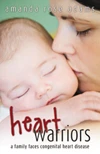
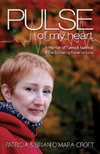
That said, my thoughts of late have been a bit more inward than I prefer. I like to look to my blessings around me, rather than focusing on me. I had my first whack on the head yesterday, when I talked to my fantastically talented author, Amanda Adams, author of the April release, Heart Warriors. I’d blown her off for several days because I was in a flu-fog and barely remembered to feed the beagle, let alone carry on a sentient conversation.

Just talking to Amanda about book promotion reminded me why I love this publishing thing so much. I get to work with the most talented people in the world. Their causes become my causes. I’m a fuller, more well-rounded, informed, thoughtful person because of my authors. Their stories humble me because they’ve overcome great odds to be where they are today, and I constantly ask myself whether I could do what they do. They inspire me in ways I’d never imagined. How totally cool is that?

Here I was blathering on about a silly flu, when Amanda told me her son is facing a pacemaker surgery. What a complete idiot I can be sometimes. Who cares if I’m coughing like a ten-pack-a-day smokestack? A little guy, only nine years old, is getting his chest cracked open for the sixth time to have a pacemaker inserted. And what’s worse is children’s heart defects gets a mere 1% of all that money the Heart Foundation takes in with their various money boxes you see at the grocery store and their numerous fundraising drives. 1%. And that’s because they have no representation on the Heart Foundation boards.

So yah, Amanda’s cause has become my cause. Not only is her book a bible to anyone who has a CHD child or a special needs child, but she’s taking up the fight to get more money for CHD families, who are invariably millions of dollars in debt due to countless surgeries. The honor is mine to publish amazing books like this.

I couldn’t have done any of this had it not been for a rotten scam publisher who destroyed my first book and pissed me off enough that we created our own publishing company.

Over the years, I’ve learned to lean into the black moments because, while they’re scary, I see so much good come on the other side. It gives me hope that even though I’m going through a rough patch, there’s something to learn and grow so I can move on to the next level. Sorta like Tetris. My authors teach me this every day…grace through adversity. Aren’t we all trying to reach for that brass ring in our personal carousels?

So how ’bout you? Have you been thankful for those dark times, and did they portend something wonderful? I hope so.

The beagle and I wish all of you a very Happy Thanksgiving. The blog be going dark for a few days until after surgery. Bless you all!


Lit Gods don’t love me

November 18, 2011

Go away, I'm sick

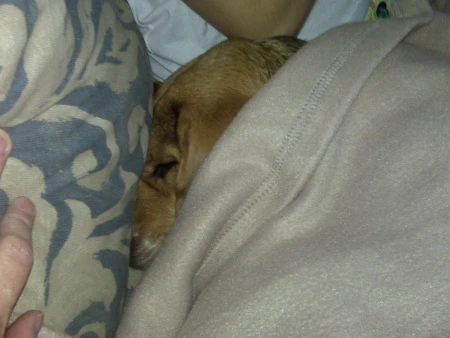
Actually, the beagle is fine. I’m the one who’s sick. Meh. Have a good weekend everyone!


Is this supposed to wow me?

November 17, 2011

Wow me, baby.

The first line in a query letter I received last month:

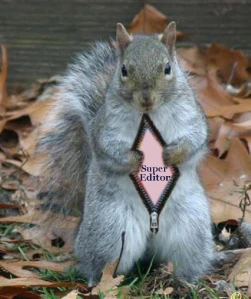
Soopah Editor from HooHa Publishing House and WhoaNellie Editor from Genuflect-When-You-Say-My-Name Publishing House both wanted to buy my book, but they were voted down by the submission board.

What am I supposed to do with this information? Should I fall to my knees and cry out a thanks to the Literary Gods for letting this author choose *me*…a significant little twig in the grand Po-Bah world of publishing?

Ok, maybe I’m getting a little snarkilicious, but this is exactly how my feeble quasi-working brain thinks when I see things like this in a query letter – especially if just one paragraph is dedicated to the book, and the other two paras are about how other people wanted this book. Just because Editors Soopah and WhoaNellie lurved your work – which I can no more verify than drink a pitcher of the beagle’s margaritas after a turkey dinner – doesn’t mean I will. Even if I could call up the Fair Ladies Soopah and WhoaNellie, the chitty chat would be fairly predictable.

Me: So, Soopah, WhoaNellie, thanks for the conference call. So whazzup with this ohmygoshamazingworkthatIgottabuy manuscript?

Whoa:  Um…oh yah, I liked the story a lot. Got tossed out at submissions committee.

Soopah:  Yep, me too. Bummer. Good book.

Okay, that sounded snarkybeans, too, didn’t it? But really, what will I have learned other than two other editors loved the book? It’s very cool, and this should verify to the author that she has something quite good. However, just because they liked it doesn’t mean I will.

We make decisions based on different parameters – the foremost being taste. Do we like the story, the writing? Is it marketable? If the answer to these questions are yes, then we don’t care if Mistress Gobalicisious, Queen of the Literary Gods, loved or hated the book. We love it, and we believe we can sell it. Being an independent publisher allows us a lot more freedom that Editors Soopah and WhoaNellie, which is cool. It allows us to take more chances. But in the end, it’s gotta sell.

I know this subject may seem pedestrian to many, but it’s another example of things authors do in their query letters to try to make their stories stand out, and it ends up having the opposite effect. It’s the same thing when authors include blurbs. A while back an author had one short paragraph about her book, and sixteen…I counted them…paragraphs filled with praise for the book – NONE OF WHOM WERE PEOPLE I REMOTELY KNEW. Even if I did know the author of a blurb or three, I wouldn’t be impressed because taste is subjective. I have to love it.

Remember, editors have no heart or soul, so we’re not swayed just because someone else says they loved the book. Everyone told me The Bridges of Madison County was to die for. I. Hated. That. Book. I’m probably the only one, so perhaps my taste should be called into question. But the point is that the opinions of a few supporters don’t a publishing contract make. So consider leaving the excess stuff out. Use the space in your query letter to make us drool over your book.

Now go out and be brilliant!


Why most of us don’t recommend

November 16, 2011

Publishing is about relationships and networking. Everyone likes a stuffed Rolodex of people who can answer a question, pass along info, or exchange the latest gossip. And in the odd case, make a recommendation. We protect our relationships like the beagle protects a fresh bottle of tequila, which means we don’t use up a “friend chit” on a whim. In a word, there are reasons why we don’t offer blank recommendations to those nervy enough to ask.

The first case is those who write back, after being rejected, and ask if I can recommend someone else to them. First off, that’s not my job, so I find this a bit cheeky. I know, I know, what does the rejected author have to lose by asking. Well, their dignity, if anyone is keeping count, because it’s just a bonehead thing to do. The editor has sent you a form rejection letter on your query. This means that they haven’t even read your work, nor have they established a relationship with you. A rejection isn’t an opening to invite further correspondence; it’s a “thank you, but we’re not interested in your work at this time.” Given that fact, why would they drop what they’re doing to use up a “friend chit” on you? You’re probably a lovely person, but the whole idea defies logic.

Yet I get requests like this all the time…and not just from people I don’t know. I get the occasional friend of a friend request, as in, “Acquaintance A is a friend of mine, and they said you might be able to help me with (fill in the blank).” This is head-bangy stuff because I’m in a position I don’t want to be in. I don’t want to offend my acquaintance, but I also want to nip this in the bud so it doesn’t get out of hand, and this makes me doubly grumbly.

Here is a good standard to live by: Agents and editors will only recommend something to someone else if they’ve read the work in its entirety and loved it.

I do this with manuscripts that weren’t quite right for us, but I had a feeling a friend might be interested. I don’t do it because the author asked me to do it, but because I wanted to do it. I’ll pick up the phone and pitch it. If they’re interested, I’ll send it. If I just automatically sent stuff to friends without vetting the work, how valuable do you think my opinions would be? They’d see my name and run screaming from the room. I’m not about to risk my reputation or tarnish my friendships any more than they would do to me.

We understand how tough it is out there, but unless you’re a good friend, please refrain from asking an agent or editor to read your work. We might appear to be as brainless as a Bing cherry, but we do have a few firing synapses, and we’ll offer to read someone’s work if we’re truly inspired.

The one thing you always want to be mindful of is being an imposition. We already have day jobs that are long and busy. We squeeze favors in where we can, and we hate to say no. But we will do so as a matter of self-preservation.

And look at it from a different perspective; would you appreciate people requesting favors of you during the course of your day job?


Editing – hold on to your garter belts

November 15, 2011

I was talking to an editor friend of mine, and she laughingly told me how she’d just sent off her first round of edits to her author. “I thought she was going to drench me with a fine spray of perspiration.”

Whyzzat? I asked. After all, she had been expected to be edited, right?

Oh yeah, she said. She just had no idea there was going to be so much redlining.

Ohhhh…I can relate. I’ve told authors how much I loved their manuscripts, how clean they are (the manuscripts, not the authors), and was excited to dig into the editing process. When they got my edits, they were convinced the nice lady who signed them had been replaced by the daughter of Satan.

I could hear the screaming from my batcave. “I thought you said it was clean!” they’d wail. “I’m bleeding red ink on every page! The horror, the humanity!”

Let me explain. When we read your manuscripts, we take a mental note of all the mechanics – spelling, punctuation, syntax, blah, blah, blah. There’s a point where our “Ick O’Meter” dings and we realize the mechanics need a lot of work. Next, we look at the story, the flow, pacing, and organization and let our “Ick O’Meter” ding…or not ding. Based on the dings we hear, we can measure the cleanliness of the manuscript.

So in our way of thinking, something may be deemed “clean,” meaning the foundation is solid and marketable. That doesn’t mean you produced an edit-free story. It isn’t until we get into the nitty gritty of editing that we find the warts and hit them with wart-off. We may have lots of comments about rewording a sentence, or reworking a scene – but to us , it’s still “clean.” To you, it looks like I made merry with a red pen on crack.

All I can say is don’t sweat this stuff. Your writing didn’t come from the hands of the Great Cosmic Muffin, so you’re gonna see lotsa red. Revel in the fact that your editor is working on little sleep, burnt coffee, and cheap booze to make your work rock its bad self into the hearts and souls of readers.

And yes, this takes faith. But then, you wouldn’t have signed with your publisher if you didn’t have faith they knew what they were doing, right??


Relationships – it’s gotta make sense

November 14, 2011

An old friend of mine (old, as in I’ve known her since high school, not wrinkly old) told me she was dating a guy we both knew in high school. My first instinct was to gag up my margarita. The guy was a tool bag, someone we hated, someone we loved talking about much we hated.

I considered that my friend may have submitted to a lobotomy at some point post-graduation and this was the reason for her sudden change of heart. Well, okay, thirty-seven years out of high school isn’t exactly sudden, but this guy was I-hate-you-for-life material.

In a word, it didn’t make sense. There was no context in which to understand this relationship without some serious ‘splainin’ from my friend. And this lack of context is something I’ve been seeing of late in the manuscripts that have crossed my desk. Memoirs can be especially vulnerable because it’s hard for an author to step outside of their own skin to adequately describe a relationship they already know like the freckles on their noses.

Regardless of what genre you’re writing, relationships gotta make sense. What characteristics meld these characters together? It’s not enough to say “Babs loves Jessie.” How? Why? It’s not unlike the questions I was asking my friend – after I got over the “ew” factor, that is. I needed details in order to appreciate that this guy had actually moved beyond the Neanderthal-jock-me-speak-in-single-syllables mentality and had morphed into something nearly-human.

The manuscripts I’ve been seeing lately are populated with relationships that have no golden thread. There is nothing discernible that connects them. I’m simply supposed to take the author’s word for it. And guess what? I won’t. If I’m not feelin’ it, I’ll move on.

It’s not just about character development, but relationship development. Just because you took care in developing your characters doesn’t mean there’s some automatic magnet that pulls those characters together. We can’t rummage around in your brain, or in my case scream to my friend, “Are you freaking KIDDING me?” You gotta thread the needle for us.

If a relationship doesn’t make sense, no matter how delicious your characters, then your readers will be less likely to engage in your book. Characters and their relationships are the foundation to your stories – fiction and nonfiction. If we can’t see the how and why to them, then readers will stumble over that disconnect.

Think about the magnetism that brings them together (I’m not talking about animal magnetism, you pervs) and the glue that keeps them together. You don’t want to tell us Annie and Joe are together, you want us to feel it.

As for my friend, she still has some ‘splainin’ to do because “Oh, he’s really grown up since high school,” doesn’t fill in enough blanks for me.


I know I’m a little early, but…

November 12, 2011

And make sure to look for Behler books there!


Faking It – acting like you know what you’re doing

November 10, 2011

“Come on, Pricey, buck up.”

That’s what I said to myself right before I got up to give the closing keynote speech at the Florida Writer’s Conference. I’ve given a ton of seminars over the years, but a keynote? Nevah. My knees shook as if some mad scientist had sucked all the marrow out of my bones. My hands shook, and my stomach threatened to hurk out breakfast.

“Be cool,” I said to myself through quivering lips. “Act like you’ve done this before and you know what you’re doing.”

Yah. Sure. In reality, I *did* know what I was doing because I do a lot of public speaking, it’s just never been on that scale. It was the closing keynote, and most people had probably beat feet for home. At least that’s what I concluded after taking a quick scan of the banquet room during breakfast. BoOya! A small crowd in which to make an utter ass out of myself. The Literary Gods were still with me – albeit taking bets on how much I’d suck.

I carried the memory of many keynote speeches I’ve heard over the years and how they scored on the Suckosity Scale. This was the last sentient thought I had before taking the stage. I looked out over the meager audience…wha’ the?? Holy Crowded Room, Batman, where did all these people come from?

I was toast. I felt it from the hallows of my grumbling intestines. Not only would I suck, but I’d suck in front of a lot of people.

Fake it, Pricey.

And I did. I noticed that my voice didn’t quiver, and my dry tongue didn’t stick to my cheek, and most happily of all, my knees didn’t buckle due to some mad scientist sucking out all the marrow in my bones.

As writers, we do a lot of faking it or acting like we know what we’re doing because we don’t want to be exposed as a noob – someone who doesn’t know what they don’t know…and doesn’t care. Even though we may be debut authors, we want to give the impression that we’ve learned how to present ourselves and our books in accordance to what editors and agents need to hear.

There’s faking it and then there’s faking it, which means you take the time to research whatever it is you’re hoping to aspire to rather than going in full steam without the slightest idea of what you’re doing, or how well you’re doing it. I see many writers who haven’t done thing one in learning how to present their books, and they immediately expose their brand of faking it – which results in an instant rejection.

  • Query letter says, “I have a nonfiction novel…” There’s no such thing. It’s either nonfiction, or it’s a novel (fiction). 
  • “My memoir is 15,000 words…” Right away I’m thinking your life wasn’t very fascinating if you could only squeeze out 15k words. This isn’t a book, but a pamphlet.
  • In the body of the email: “I have attached my query letter.” You should never, ever make your query letter an attachment. It belongs in the body of the email. Period.
  • Proposal says, “Once the book is published, I will create a web page and FaceBook page in order to establish my platform.” It’s too late. It takes a long time to establish a platform. Secondly, putting up a webpage and FB page doesn’t establish a platform. A platform equates to how people know you and are willing to listen to what you have to say. A website or FB book doesn’t establish an author as an expert in their field, it simply means you know a little bit about social networking.

The point of all this is to help writers become more successful and to pinpoint how easy it is to derail those attempts by not doing your homework. It’s ok to admit that you’ve never done this before, so you’re faking it. The key is to act like you know what you’re doing.

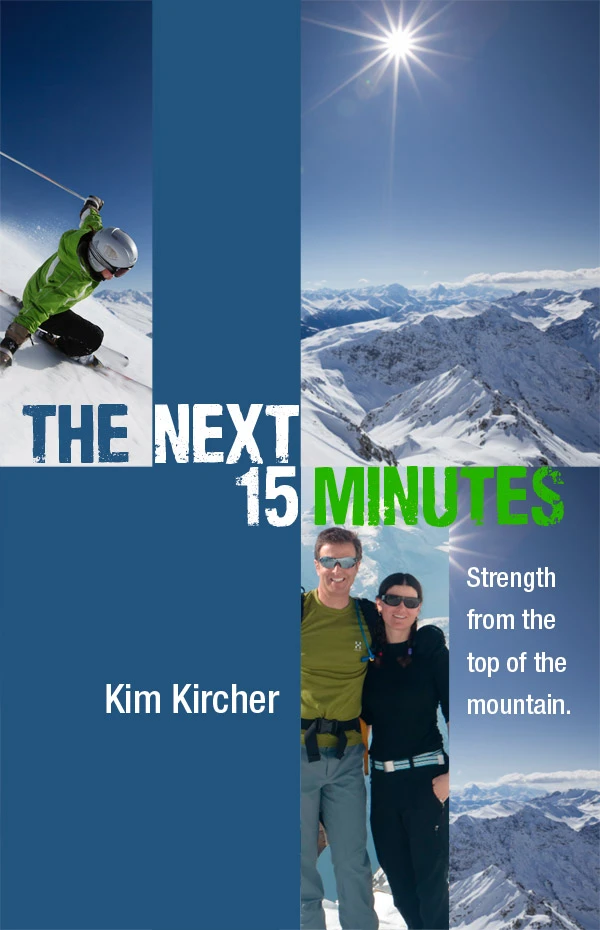
A classic example of this is our fabulous author, Kim Kircher, author of The Next 15 Minutes. I had the pleasure of meeting Kim at the Pacific Northwest Writer’s Conference during the editor/author sessions. I could tell Kim was nervous (she later told me she was quacking in her boots), but I could also tell she had done her homework. She knew exactly what information I needed in order to get a clear idea what her book was about. Ah, the art of effective faking it.

Whether you are looking for an agent, a publisher, or getting ready to talk to a crowd for the very first time, you want to be successful and give the appearance you know what you’re doing so people remember you for all the right reasons.

In listening to the fabulous interview that Kim gave the other day, she said something that really resonated with me. She talked about how skiers have to be wary of finding themselves in a tabletop slide because that top layer of snow will sweep them away if they are standing in the middle of it. What a great metaphor. How many times do authors find themselves in the middle of a tabletop slide in the publishing process and get swept away because they didn’t know what they were doing?

It’s okay to fake it, but be sure to know what you’re doing. Go out and be brilliant!


I see the beagle has been advertising my cooking again…

November 9, 2011


The public has been put on notice regarding the beagle…

November 9, 2011


Follow

Get every new post delivered to your Inbox.

Join 963 other followers

Powered by WordPress.com