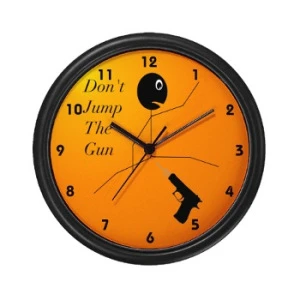
Cover Art: Jumping the Gun

December 30, 2011

I admit to being thick sometimes. What few firing synapses I have are often tasked to do multiple jobs, so there are moments when I read a query and think, “Huh?”
One of those times is when the author, in all his/her glory, is so uber excited about finishing their manuscript that they go ahead and design their cover art. They slap together their query letter and include cutsie pie jpegs of the cover art right above their name. They’ll have a website or blog that has their cover art prominently displayed as well.

Coolio, right?

Um. No. Nooo, no, no, no.

And this is where we get back to my semi-firing synapses. When I see that cover art in a query letter, I blink blink several times and re-read the query letter just to make sure this isn’t a previously pubbed book. Then I scratch my melon and wonder whazzup.

See, authors don’t do the cover art. That’s our job. You may be under the impression that you can use your cover art, and you’d be wrong. I’ve talked about cover art before here, so I won’t belabor the reasons as to why we don’t use authors’ cover art. But suffice it to say that while you’ve been busily working on your platform via your website and/or blog, you’ve also gotten people used to seeing your cover art. I’ve seen sites that were designed solely around that artwork.

This is a misfire for several reasons:
One - Your cover art will change, so why take the time to design something that won’t be used?
Two - When people see cover art on a site, they think the book is already published, so they may go hunting and pecking around for a book isn’t on the market place.
Three - Seeing a designed cover makes my intestines twist because I’m nervous there will be a bit of “discussion.” Cover art is emotional enough because the author has lived with a certain vision for a long time and may be shocked at what the publisher’s art department comes up with. It can get, ah, interesting.

Authors are always shocked when they see their cover art. Always. I have yet to publish a book where the author didn’t take a deep breath and feel their hearts explode just a bit. I figure that when a querying author has gone so far as to design their cover, then what kind of fun am I in for?

Lastly, designing a cover for your book is, well, amateurish. Unless you plan to self pub it, then you’re wasting time and money on something that won’t be used.

Your job is to write fantabulous books that make us swoon and toss beagle off desks. Our job – well, one of them – is to take care of your artwork. I recommend that you don’t jump the gun, and leave the artwork to the folks who offer you a contract.


Have email address, will abuse

December 29, 2011

Lots of people had new releases coming out in time for the Christmas season, and many writers went no further than their email address book to alert those unassuming victims.

Come! Buy! Attend my party! Blah, blah, blah.

Now before you accuse me of a mind meld with the beagle, hear me out. My business email address ends up on a lot of address books for various reasons – and it’s not just authors. The book announcement I received the other day came from a small POD publisher…how and why she had my email address remains a mystery.

Sure, I could just roll my eyes and delete the email…and I do. But since November on, the invitations to signings and launch parties have increased to ridiculous numbers. What’s worse is I don’t know A. Single Person.

Folks, this is NOT an effective use of your address book. We aren’t in there so you can abuse us at your whim. Instead, may I recommend some common sense and suggest that you only send email announcements/invitations to those you actually know? I realize common sense invariably goes out the window because authors are so wrapped up in their book that they don’t realize what a nuisance they can be.

Yes, it is exciting to see your book all prettied up in a cover and pages, and your friends and family will be just as thrilled for you. But I don’t know you, so my excitement levels will be in direct proportion to my “Who’s that?” comment. To you, it’s advertising. To me, it’s spamming.

No one likes spam. I mention spam to the beagle, and she snarls for days and makes lousy margaritas, so I keep it on the down low. And really, do you want to be known for being a spammer and abusing those in your address book? And this goes for parties and any other social gatherings. How many times have you been locked in a corner gripping your glass of Chardonnay as if it was your last vestige of sanity because some author had just published their book and HAD to tell you every last nuance to the plot?

Before you let your excitement overtake the rest of your firing synapses, stop and consider what the polite, classy thing would be. Then temper your thrills and chills by not hitting the “Include All” in the address line of your book announcements. Otherwise, I can’t be responsible for the beagle and her roving band of leather-wearing Dobermans.


The Big Oversell – it’s a domino thing

December 27, 2011

I remember when I got my first job. It was a candy shop, and the manager told me that all their employees could eat all the candy they wanted. Oh, how perfect was this job for me? The manager asked me about when I was available for work. I could smell those chocolate butter creams wafting in the air, making my mouth water. “I’m available after school and on weekends.” Yay. I got the job and was in choccie heaven.

Then came the truth. I really wasn’t available all weekends because I was in pep squad and had to be at our many parades and football games on Friday and Saturday. This put a crimp in the manager’s scheduling because she was depending on me to handle the weekends. She was less than happy and her furrowed brow told me I had oversold myself. I learned a valuable lesson back then. I discovered that it’s all well and fine to promise the moon, but if you don’t deliver, your backside will be hitting a few craters.

And this is something I see quite a bit of in the publishing field. Authors realize they need to provide a promotion plan and are tempted to be like my sideview mirror – you know what I mean…images look further away than they are. But in this case, authors appear better than they really are. In the case of nonfiction, we factor in the author’s platform and promo plan when discussing a book, and we see a lot of fluffery and puffery.

I see fluff and puff in three distinct stages:

Author Platform
Promo Plan
Author’s Participation

Author Platform

I tried to convince the candy manager that I was the best thing since sliced candy apples. Since I was only 16 and my first job, I had zero platform…meaning a record of previous employers who could vouch for my fabulosity. I hang my head in shame that she took my word for it.

And since I tried this little ruse to my own chagrin during my wayward youth, my BullCrappy-O-Meter is on the highest setting. Sometimes it’s like shooting mosquitoes in a tepid barrel of warm beer – like the writer who tried to convince me she’d won a Nobel Peace Prize. I guess she didn’t realize how screamingly easy it is to find that information. Likewise, it’s fairly easy to ferret out the biggest offenders simply by googling them. If someone says they are in huge demand as international speakers and I can’t even find a website or single newspaper article on them, then I get a ping from my BullCrappy-O-Meter.

It has to be logical. Anyone who has the goods has an electronic trail of breadcrumbs that lead back to their name. It’s verifiable. Word to the wise – don’t try to oversell who you are, ‘cos we’re gonna find out at some point.

Promotion Plan

Sadly, overselling doesn’t stop at trying to convince people of your fabulous platform. It also goes to the promo plan – what the author plans on doing to promote their book. In this, editors have to be better detectives because it’s not as easy to determine whether someone has the ability or desire to do what they say they can/will do until the rubber meets the road – meaning publication.

An author  can easily tell me that he has journalists from the NY Times and Chicago Sun Times waiting to do an interview on him, and he has major specialty groups waiting to schedule appearances and signings – and who am I to refute this? I can only vet so much, and then I have to trust at some point – a nerve-wracking thing, to be sure.

We use the promotion plan as an integral part of our overall marketing strategy. If the author says he’s tight with the ESPN producers, and they’re waiting to schedule an appearance, then we pass that information on to our sales teams and blast it out in our media kits. Sales are based on those promo plans, so when an author oversells themselves, those sales can very easily come back as returns.

Author’s Participation

It’s at this point when editors consider the merits of mainlining harsh chemicals and braiding their eyelashes because there’s no warning to when an author oversells himself. The promised plans simply never come to fruition. This means the editor, marketing, and publicity people are stuck doing all the national stuff and getting books shipped out to market, and the book is having a hard time finding footing because the author is AWOL.

It all starts with the submission committee. They discuss the book at great length, its message, quality of story, unique elements that make it marketable. They also take lots of time with how to promote the book, and a vital key to that process is the author’s participation. If the author sits on her hands and fails to do any of the things she said she would/could do, the she has just issued herself an invitation to her own funeral because that book will die. It’s almost a certainty.

Here is a truth:  Genre buyers always want to know what the author is doing to promote their book. Their pre-sales often hinge on author participation.

The Dominoes Begin to Fall

At some point, the big oversell will be very apparent, so what happens? Well, for starters, the author will incur her publisher’s wrath – and that’s never good. Then the dominoes begin to fall. The publisher has to quickly switch gears because all the support they had literally banked on is now gone. The problem is that it takes months to get a marketing and promotion campaign going, so right away there is a big hole that’s very hard to fill.

Meanwhile, bookstores begin receiving the pre-orders they wrote up based on those original promo plans that now won’t happen. Because the author is no longer a factor in promotion, the book loses a healthy amount of publicity, so those books will sit on the shelves until they gather dust. Then they’re bundled up in boxes and returned to the publisher. This costs the bookstore money because they allotted part of their budget to that particular title for that season.

This, in turn, makes the genre buyer a little miffed at the publisher for giving them a dogmeat book. So the buyer has to consider whether to trust the publisher in the future. This makes it harder for the publisher to gain traction in the marketplace, so future books could suffer from buyer backlash.

Publishing is a business where one’s reputation is paramount. We have to deliver what we promise, or we eat it for the simple reason that there are a ton of other publishers all too happy to take our shelf space.

The author’s own domino will also fall. Of course, your current publisher will never publish another one of your books because you’re untrustworthy. If you go to another publisher with your second book, they’ll look at the sales history of your first book. They may go so far as to call the original publisher. I’ve received calls from others, and I’ve made calls as well.

The worst domino to fall is that your publisher will re-prioritize you and your book. Your direct line to them is severed because the trust is shattered. No one wants this. Truly. The publisher will still do everything in its power to sell the book, but any special requests or favors you may have will fall on deaf ears. There are no winners for the author who oversells himself.

Be Honest

As I said earlier, the desire to be well published is strong. Everyone gets that. But when an author promises the moon and sun without fully thinking through whether they actually have the ability or time to accomplish them, they put a lot of people’s necks in a noose. Above and beyond all else, be honest with yourself and your editor. Don’t try to make yourself look bigger and better than you are because you won’t be able to perpetuate the ruse, whether intentional or accidental.

Analyze

The perfect promo plan is where the author analyzes their time and abilities, and plans accordingly. They look at those who can be helpful “big mouths” in promoting their book. For example, if you have a NY Times journalist friend, contact them and discuss the possibilities of having them do an interview. Stay in contact, too, because it’s not all that unusual for journalists to be reassigned or let go. If that happens, you can then alert your editor immediately, so she can make changes to the overall marketing plan.

I see a lot of promo plans that look like the author tossed a handful of darts and just wrote down whatever the dart hit. There’s little continuity or realistic expectation they can pull it off. It’s simply stuff that sounds really good on paper. Oversell.

Authors need to treat their writing careers as honorably and realistically as they do their day jobs because everything reflects back on them. If you tell your editor that you have journalists calling your house every week clamoring for interviews, then she’s going to expect to see those articles gracing the papers. If those articles never appear, then your editor is going to wonder whazzup. Do this too many times, and you’ll be the author who cried promo king/queen to deaf ears.

Conversely, there is nothing your editor won’t do for you if you follow through with your promo plan. Those authors always get attention because both sides are working toward the common goal of big sales.


Start your New Year off on the right foot, and finish your literary puzzle

December 26, 2011

I’m big on finishing my puzzles. They stare at me on the dining room table, calling and whispering at me to find that one piece that will complete a particular scene. After all, you can’t call something complete without all the pieces in their proper place, right?

And this is why the query that bumped into my inbox a few days ago made me feel as if the author hasn’t finished her literary puzzle. The sin?

I am in the process of researching promotion strategies.

Didja read that?

In.
The.
Process
.

The author had the synopsis and bio down, but blew it out of the water by not having all the pieces of her literary puzzle in place. In order for editors to determine if something is publish-worthy, they need to see a puzzle. I bleat this like a goat drunk on peanut butter daiquiris…if you write nonfiction, you need to have a promo plan that outlines your platform.

Writing your book and outlining your bio is only two-thirds of your literary puzzle. The missing pieces are vital, and I know of very few commercial publishers who appreciate an author’s query that creating a friendly online presence is a foolproof method of promotion. Those who say this either already have a very strong online presence and can back up that statement, or they have zero online presence and have no idea how long that endeavor takes and how hard it is to establish and maintain.

It’s not that we’re snobs. We would give our eye teeth to publish books based solely on their literary quality and message, but sadly, this isn’t the way of the world. We’re slaves to the publicity machine, and it’s really hard to make something out of nothing. If you sit at home knitting toilet paper doilies and your book is about trying to entice readers about postpartum depression, then how can your publisher market and promote your book when your potential readers don’t know you exist and you have nothing that establishes your fabulosity?

What do you bring to the postpartum depression party other than having suffered it? I know that sounds trite, but let’s put this into perspective. I’ve had two hip replacements, but I wouldn’t write a book about it because I don’t have any identifiable credentials about hip replacements other than my own experience. And unless readers want to know the joys of hippy hopping around Trader Joe’s after forgetting my cane, then who cares? I’m not so much of an expert as I am a participant. Big whup. There needs to be more meat on a book’s bones in order to attract an audience, and publishers know this.

There is too much money wrapped up into publishing, marketing, and promoting a book, and this is why publishers need to have a complete literary puzzle. Those elements are the foundation we use to pitch, market, and promote your book. Let’s broaden the horizon a bit. Will Library Journal will get goosey bumps over your cancer book if you collect navel lint and shape them into Christmas decorations? Or might they feel more compelled to bite if you are actively involved with the major cancer groups, give seminars to cancer patients, and are considered an expert in your particular field?

Experts

While I’m on the subject of experts, I’m not talking about advanced degrees, corporate sponsors, and people who kiss your ring (though that’s not too bad). Rather, it’s something that you establish yourself. Sounds self-serving, right? But think about the people you see interviewed on the Talking Head shows. They are always introduced as an expert in their particular field…even if it’s as innocuous as reading body language. But here’s a factoid to stick in your pipe and smoke:

Media Lurves Experts.

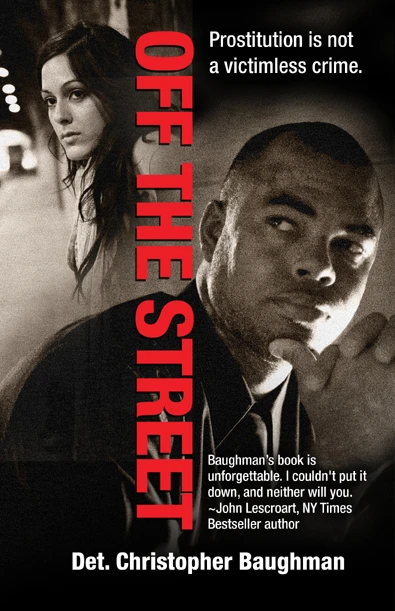
And it makes perfect sense, doesn’t it? Can you imagine the producer for Regis and Kelly saying, “Yah, let’s invite that lady who bakes radish casseroles and wrote that book about human trafficking.” No, they want someone who has the credentials to stand behind their book, an expert. Instead, they’ll invite Chris Baughman, who doesn’t bake to save his soul, but he wrote a fantastic book (Off the Street) that details how he rescues a lot of victims of human trafficking for a living. Simply put, there is no better expert than Chris.

Now, has anyone waved a magic Promo Wand over Chris’ head and deemed him An Expert? Nope. However, marketing folks are the Great Yodas at exploiting every last morsel of someone’s platform. But there’s a fine line to walk because they aren’t magicians. An expert must be able to withstand any and all questions tossed at them during an interview. So our radish casserole baker isn’t seen as a serious contender in human trafficking because she doesn’t have the broad based experience of human trafficking.

If you write nonfiction/memoir/biography, be prepared to sell yourself as An Expert. Merely saying, “I lived it,” doesn’t necessarily count. This only means that you’re an expert in your particular experience and lack a wider perspective. Interviewers will start out with your personal experience, but then move over to a larger context so as to grab viewer interest.

Passion vs. Blinders

The problem that usually gets in the way of an author completing their literary puzzle is they are so passionate about their story that they put on some fairly large blinders, which prevents them from analyzing whether they have a story at all. All of our authors are extremely passionate about their stories – as they should be – but they and their agents knew they had to sell their stories. And not just to me, but to their targeted readership. As such, they came prepared with both passion AND clarity about who they are and what makes them the best person to have written their book.

Honor yourself by stopping what you’re writing and ask yourself whether you’re wearing blinders that keep you moving in only one direction and prevent you from seeing the whole picture.

To Be or Not To Be

It may seem a silly thing to say, but books have a raison d’etre. I get a lot of people whose lives bump up an experience, and they decide to write about it. The problem is that most of the stories aren’t newsworthy.

I got cancer. Yawn.. so have a million other people.
I had a midlife crisis. Run me over with a missile launching Mack truck, who isn’t having a midlife crisis these days?
I’m going through a divorce. Shave my eyebrows and call me Shirley…you think you’re the only one?

They’re all too personal…so personal that I almost feel like a literary Peeping Tammy.

Book or magazine article?:  In addition to being too personal, many stories don’t have enough literary gas to make a book. Instead, they’d make great articles. It’s not that your story is any less valid, but that your experience simply is not a 65,000 story. Learn to appreciate the difference and ask yourself where your story fits.

The trick to putting together a fabulous literary puzzle is research. Knowing that your puzzle is a pie-sized bunch of awesome is the kind of confidence writers need when querying – and you only get that kind of confidence by knowing how your book measures up to what’s already out there.

And it’s not just your book – but it’s you, too. How do you measure up in a editor’s eye? Are you marketable? What are those marketable qualities? Are you an expert? If so, what is your particular expertise, and is it the same as everyone else’s who is your competitive equal? Is your platform exploitable enough to get those media types and book reviewers sniffing around? And most important of all – have you even addressed these issues? ‘Cos if you haven’t, then your literary puzzle is incomplete.


Truths For Mature Humans

December 22, 2011

I’ve seen this list all over the internet, and it makes me laugh every dang time I read it because it’s so TRUE.


Hey, nonfiction-ers, do you write in a crowded category?

December 21, 2011

This morning’s queries brought forth a story about cancer. I know the story is vitally important to the author, and I honor her for that, but I have no choice but to reject it because cancer has been done over and over and over. I’m not sure if the author realizes this or not because with memoir, many people have an experience and go no further than their laptop to bang out their story. They don’t know anything about trolling their competition.

Because this happens so often, I thought I’d share how editors look at stories written in crowded categories such as cancer, mid-life crisis, addiction, divorce, bipolar disorder, Alzheimer’s.

Since there are a gajillion books already written on these subjects, there is very little “new” under the sun. Authors should realize this because they need to tailor their query letter to win us over, to convince us their stories are unique.

When I say unique, I don’t mean, “Well of course my story is unique because the circumstances are different and the characters are different.” What I mean by unique is that the storyline/plot is unique from what’s currently on the shelves.

Do Da Research

Anyone writing a book should know their competition. You should choose at least three titles and be able to speak about how your book compares and contrasts to the competition. Not only do we use this information for promotion purposes, but we use it during our submission committee meetings. I heart authors who include this info in their queries. A lot.

Once you’ve analyzed your competition, you should be able to address your book’s unique qualities, what makes it stand out from all the others.

Confront the 500 pound gorilla

The next thing I suggest is to get it out there in your query letter. You and I know your story is in an overcrowded category, so address it. Kate McLaughlin, author of Mommy I’m Still In Here, did this, and she immediately won me over because she knew what I was thinking. Bipolar disorder is an extremely crowded topic, but Kate blew my doors off by acknowledging this fact and telling me the unique elements of her book.

I was hooked because it was/is a fantastic book, and I could see she understood the publishing industry and appreciated the dilemma of selling a book on this topic. Because we all knew the unique and uplifting message of Mommy I’m Still In Here, this book remains a bible for families and friends of those with bipolar disorder.

Platform – Who knows you, baby?

I know authors hate this word, but it’s the way of the world, so we may as well acknowledge it and appreciate it. Having a platform is the difference between rejection and a contract offer.

For example, I’d been considering a manuscript for a couple months. The writing was fantastic, but the story is written in a crowded category. I shared my concerns about the author’s lack of platform, and she wrote up several promo plans in hopes they would convince me that the story had legs. Alas, I finally had to turn her down. It hurt. If only the author was advocate for her subject matter and involved in foundations that deal with this topic, her book would have flown off the shelves.

As it stood, I knew our sales and marketing guys would have tossed a loaded brick at me if I’d come to them with this book because the first thing buyers are asking is, “What’s the author’s platform? What are they doing to promote the book?” The author has no affiliation with her subject matter other than her personal experience, so she had zero name recognition. That’s a death knell for a publisher – regardless of who that publisher is. I have colleagues with the Big Boys who have suffered from authors’ lack of platform.

Just because an author is with a Big Boy publisher doesn’t mean anything other than they may get more copies more widely distributed, but it doesn’t guarantee sales. If you write in a crowded category, then you need to work on your platform so you have name recognition. So many authors are dependent on social media, and I’m still wary about this dependence because social media is as crowded as the bookstores. It’s hard to swim to the top.

Consider your readership and become involved in foundations or groups where your book’s subject matter takes place. The more people know you, the bigger target you become – and we all lurve big targets.

In short, the world of literature is crowded, and there are certain topics that enjoy a huge number of titles. If your book is in one of those categories, then take some vital steps to ensure your success. Being an author these days puts you in a much more visible position by the merits of promotion. Take an unbiased look at your book and ask yourself what makes your book a gotta-have-it, and what those unique qualities are.


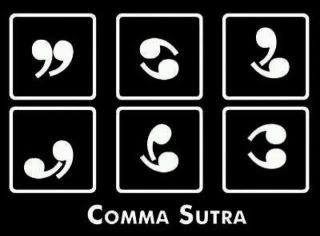
Who says punctuation isn’t fun?

December 19, 2011


The beagle has just turned it into a I Can Haz Purse for $40.


HOLIDAY EATING TIPS

December 19, 2011

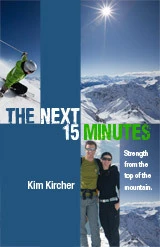
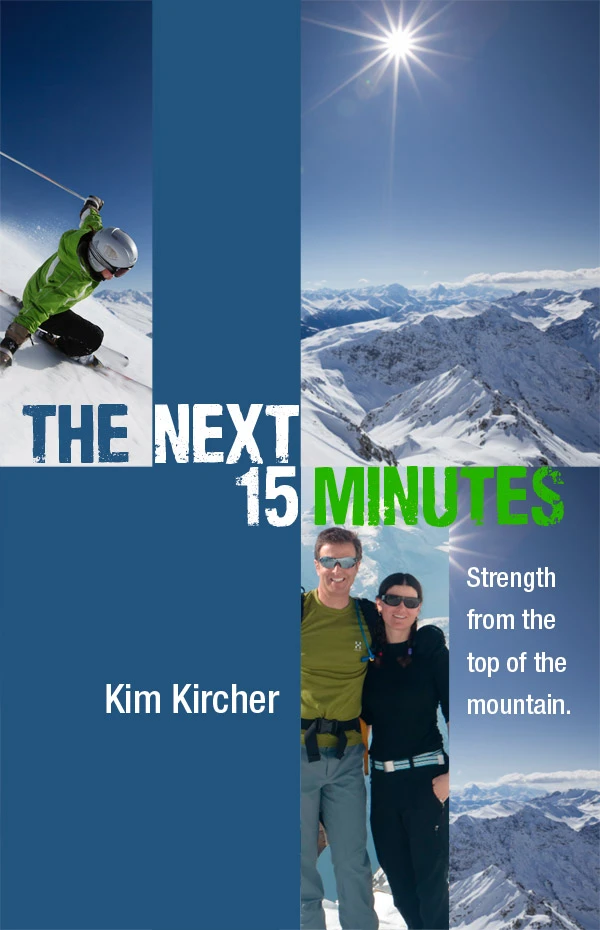
While Kim Kircher, author extraordinaire of The Next 15 Minutes is giving excellent advice on her blog about conquering holiday stress 15 minutes at a time, I’ve decided to go in the opposite direction and embrace my inner piglet:

1. Avoid carrot sticks. Anyone who puts carrots on a holiday buffet table knows nothing of the holiday spirit. In fact, if you see carrots, leave immediately. Go next door, where they’re serving rum balls.

2. Drink as much eggnog as you can. And quickly. It’s rare… You cannot find it any other time of year but now. So drink up! Who cares that it has 10,000 calories in every sip? It’s not as if you’re going to turn into an eggnog-alcoholic or something. It’s a treat. Enjoy it. Have one for me. Have two.

3. If something comes with gravy, use it. That’s the whole point of gravy. Gravy does not stand alone. Pour it on. Make a volcano out of your mashed potatoes. Fill it with gravy. Eat the volcano. Repeat.

4. As for mashed potatoes, always ask if they’re made with skim milk or whole milk. If it’s skim, pass. Why bother? It’s like buying a sports car with an automatic transmission.

5. Do not have a snack before going to a party in an effort to control your eating. Hello?! The whole point of going to a Holiday party is to eat other people’s food for free.

6. Under no circumstances should you exercise between now and New Year’s. You can do that in January when you have nothing else to do. This is the time for long naps, which you’ll need after circling the buffet table while carrying a 10-pound plate of food and that vat of eggnog. (Unless you’ve had a new hip installed. Then you must exercise every damn day)

7. If you come across something really good at a buffet table, like frosted Christmas cookies in the shape and size of Santa, position yourself near them and don’t budge. Have as many as you can before becoming the center of attention. They’re like a beautiful pair of shoes. If you leave them behind, you’re never going to see them again.

8. Same for pies. Apple, Pumpkin, Mincemeat. Have a slice of each. Or if you don’t like mincemeat, have two apples and one pumpkin. Always have three. When else do you get to have more than one dessert? Labor Day?

9. Did someone mention fruitcake? Granted, it’s loaded with the mandatory celebratory calories, but avoid it at all cost. I mean, have some standards.

10. One final tip: If you don’t feel terrible when you leave the party or get up from the table, you haven’t been paying attention. Re-read tips, and remember this motto:  “Life should NOT be a journey to the grave with the intention of arriving safely in an attractive and well preserved body, but rather to skid in sideways, chocolate and wine in one hand, body thoroughly used up, totally worn out and screaming “WOO HOO what a ride!”

Life is short. Drink the good wine first.

I must say that whoever originally wrote this had my best interests at heart.


Grateful Friday – Go Barry Petersen, Kim Kircher, and Gay Culverhouse

December 16, 2011

What a lovely thing to wake up to:

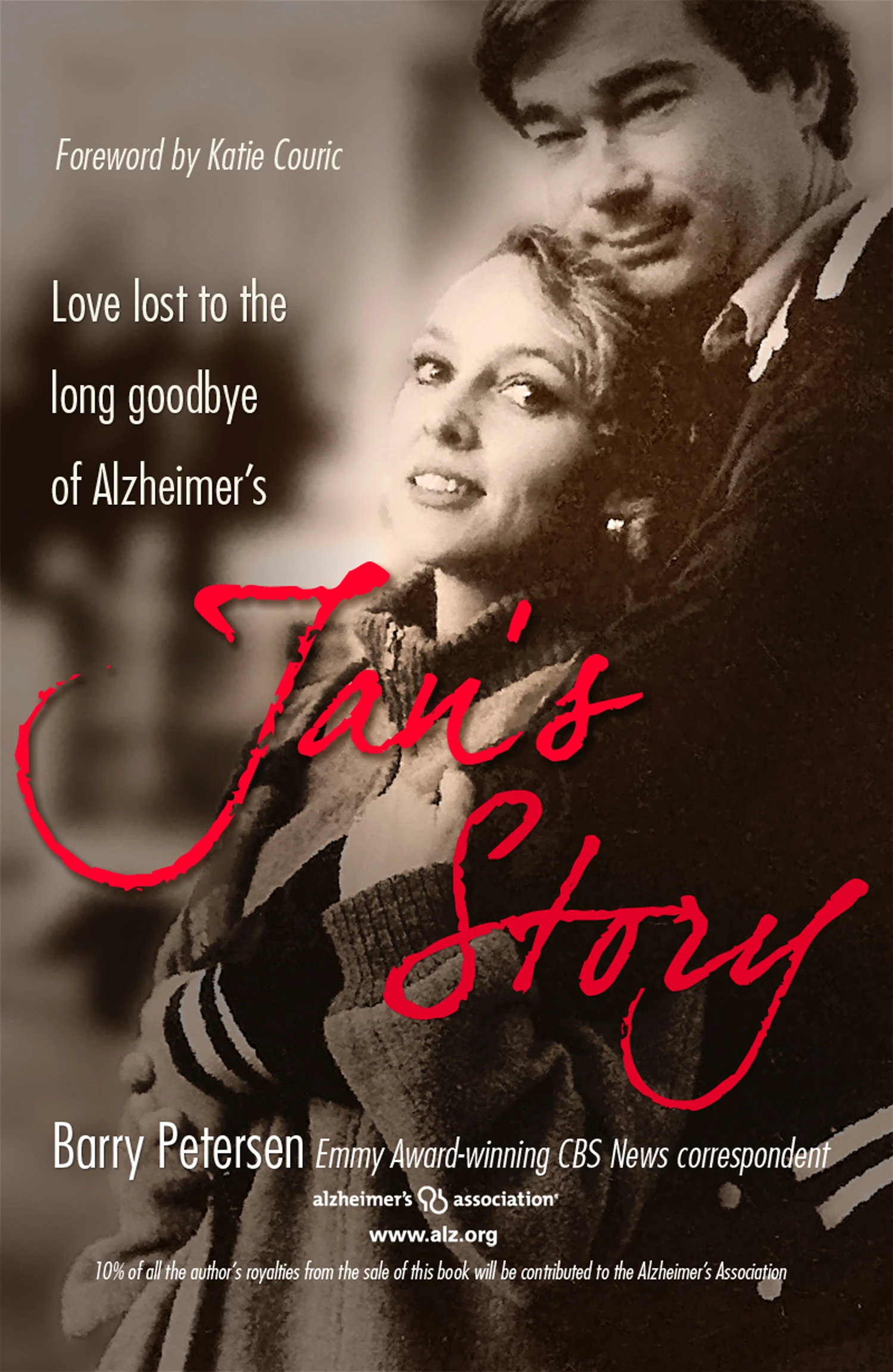
  • Barry Petersen, author of the heart wrenching Jan’s Story, is a Denver Post bestseller and managed to snag the #1 spot in the Paperback Nonfiction category. WoOt. If you know anyone with Early Onset Alzheimer’s, this is your bible.
  • Kim Kircher, author of the fabulous The Next 15 Minutes, has a lovely review in the Mountain Weekly News. If you are experiencing tough times, this is your bible.
  • Gay Culverhouse, author of the riveting Throwaway Players, has a lovely review in ForeWord Magazine. “Her book is an essential read for athletes, coaches, parents, and football fans.”

I love my authors.


For the writers in your life…

December 14, 2011

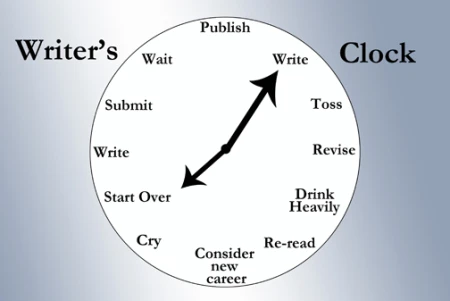
The beagle has added a new purse to her I Can Haz Purse repertoire. Actually, she has a whole bunch of them, which we need to add to the site…if she’d ever get off her butt and make a site, that is. Anyhoo, we’ve had a big reaction to the Writer’s Clock purse she designed, so she’s offering it for $40 (large size only).

We don’t have a model done yet (she’s working on it now), but here’s the graphic. Yes, yes, we all realize there should be more time for drinking heavily, but writers are busy and have much to do!

HOW DOES I ORDER?

All orders should be sent to the beagle’s email – [email protected] – with your order and contact info. The beagle will finish her margarita and contact you!


Follow

Get every new post delivered to your Inbox.

Join 809 other followers

Powered by WordPress.com