“The The Impotence of Proofreading,” by TAYLOR MALI is probably the funniest thing I’ve heard in ages.
Its impotent to proofreak
February 29, 2012
 1 Comment |
  Uncategorized |
  Permalink
 Posted by lynnpricewrites
Grammar lesson #1
February 29, 2012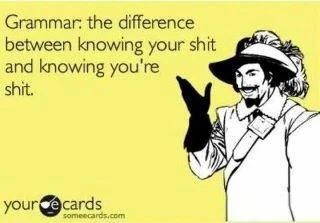
Mom and Dad are on a cruise, so I can safely post this without being made to stand in the corner…
Like this:
One blogger likes this.

1 Comment | Uncategorized | Permalink
Posted by lynnpricewrites
“Hah, faked you!”
February 29, 2012
My brother used to chuck this out at me, along with the accompanying waggy finger in my face whenever he pulled a fast one on me. I was about six when he told me that I could grow rocks…y’know, like plants. All I had to do is bury a rock, water it, and the next day I’d have a pile of newborn rocks. Totally believing him because, after all, he was ten, I found a cool rock, buried it in the dirt, and dutifully watered it.
I barely slept that night because I was so excited to see how many new rocks would be born because of my efforts. I raced out early the next morning to find a huge pile of glistening rocks. Excitedly hopping on one foot, then the other, it was all I could talk about over breakfast until my sister – who was a god-like creature because at fifteen, she knew EVERYTHING – rolled her eyes and belted out the truth.
There is no such thing as growing rocks.
My brother had lied like a cheap rug, and made me feel like a Class-A Idiot. Predictably, he grabbed his stomach and laughed his fool head off, wagging his finger and yelling, “Hah, faked you!” Asshat.
But I see signs of this in publishing, and I’m not alone in this. Agent Kristin Nelson doesn’t like the great fake-out any more than I do because it’s just a rotten thing to do. I’m talking about the authors who, in an attempt to get their pages read asap, tell the agent or editor they have an offer on the table. Because there is a hint of an expiration date on a manuscript, we drop what we’re doing and quickly read it in order to see if we want it and can blackmail convince the author they’d much rather sign with us.
In most cases, I read a few pages and wish the authors luck in their new endeavors because, like Kristin, I’m suspicious they’re telling a hot one with the “I’ve been offered a contract.” In short, the writing simply isn’t there.
Not too long ago, an author did this “I gotta offer on the table,” so I hurriedly read the pages and loved it. I asked for the full. He wrote back to say he didn’t really have an offer, but was trying to find out if he had a good story or not. My enthusiasm convinced him he was on the right track. Thankyouverymuch, I’ll get back to writing now. And hey, remember my name because I’ll query you when I’m finished.
Slow. Burn.
Oh yes, I will remember his name.
So why do we allow ourselves to get suckered? Because there are times when it’s for real, and the author does have an offer on the table. I had an author write me for advice regarding an offer she’d received. We got to talking, and I asked what her story was about. One thing led to another, and I signed her because she writes like the wind has a fabulous story.
There is a lot of magic that happens in publishing and is the main reason I love this insane business so much. There is nothing cooler than watching a story you’ve massaged and worked on for months on end finally hit the stands. It’s like watching your kid go off to college, except there are no tears and achy heart.
Every day, something amazing happens with one or several of our authors, and I can only sit back and bless the Cosmic Muffin for our good fortune. For those those who waggle a finger and taunt, “Hah, faked you!”, I can guarantee they will be paid back in kind because the Cosmic Muffin loves karma and keeps a very big score card.
8 Comments | liar liar | Permalink
Posted by lynnpricewrites
Doin’ the Bookstore Bop – some things you should know
February 28, 2012 Working with a bookstore can be a breeze or a nightmare, depending on how you’re published and whom you approach.
Of course, you’ve already read my post on how to get store managers mouths watering, so the next step is getting your book stocked for your event…and here is where the differences between bookstores can impact your frustration levels.
Stay with me here because understanding how books are ordered and sold impact you in a big way.
Book Ordering
Ingram and Baker & Taylor
All bookstores order from Ingram and Baker & Taylor because they are the two premier warehouse distributors and were designed for this very purpose. Without a centralized warehouse, bookstores would have to call a jillion different publishers to order books for their stores. Conversely, the publishers would be driven mad dealing with all the orders coming in from thousands of bookstores.
Ingram and Baker & Taylor make life a lot easier for everyone. But there is a rub. A lot of indie stores are working on an even narrower margin than the store chains, so they are motivated to get the best price for the books they order…which means they’re looking to undercut Ingram or B&T by getting a better discount through direct ordering from the publisher.
Two other choices of ordering:
Buy direct from the publisher: Everyone knows the shrinking shelf space isn’t just a science fiction anomaly, so it’s in the publisher’s interest to accommodate a bookstore with better discounts, if they can. It’s a pain for the publisher because they have to keep track of the accounting – and bookstores can take a long time to pay their bills. I have vivid memories of our accounting department tracking down years-old invoices that “somehow got lost.”
Buy direct from the publisher’s distributor: But what if your publisher has a distribution agreement with companies like Perseus, Consortium, IPG, etc.? This means publishers are precluded from direct selling to the bookstores. This makes things a bit tougher for the small bookstore because those distributors will only do business with stores who maintain accounts with them. Those who don’t have accounts have to pay for the books and shipping costs up front because the distributor doesn’t want to get stuffed with years-old unpaid invoices.
But the important thing is that the authors had their books for events.
And here lies the problem: The small bookstore doesn’t want to pay up front because it’s money out of their till before the books have even sold.
So how does this affect you, the author?
“Can’t Order Your Book”: The bookstore is running out of options that will best benefit his store:
- He can’t order from the publisher due to contractual issues with their distributor.
- He can’t order from the distributor because he doesn’t have an account with them and would have to pay for everything up front.
- He can order from Ingram or B&T, but he gets a poorer discount.
So what does he do? First, he analyzes how important this book signing is and weighs that against the bother of getting a poorer discount. Will the books sell? How many will he be forced to ship back? Is the hassle worth it, or not?
The next thing that happens is the small bookstore stresses out the author’s by saying, “Sure, I’ll host your event, but I can’t order your book.” He’s made his decision that he can live without the hassle, and pulls the standard cop out.
Beagle pucky.
As a commercially pubbed author, your book has the industry-standard discounts through Ingram and B&T, AND your books are fully returnable. That bookstore manager is telling you a steamy hot one.
This actually happened to one of our authors. He had a huge off-site event planned and had asked a used bookstore if they would act as the bookstore by ordering the books, transporting them to the event, and selling the books.This is nice because all the author has to do is show up and sign books for their adoring fans.
“No problem,” says they. We knew nothing of this event, so I nearly fell out of my chair when our author called two days before the event, in near hysterics at being told by the bookstore that they couldn’t order his books.
Huh?
The bookstore didn’t have an account with our distributor and didn’t want to pay up front, so they blamed us by telling our author it was our fault they couldn’t order the books…which is an absolute lie. He could have bought them from Ingram, where thousands of his books were sitting on their shelves, only he decided it wasn’t worth his time and effort. All our author cared about was having books in time for a huge event.
It was a disaster that should have never happened.
“You could buy back your books”: Some bookstores want to minimize their hassle-factor by agreeing to host your book event only if you buy back the unsold stock. This is utter craposity.
You should NEVER agree to buy back your own books. They’re are simply removing the expense of having to ship back any unsold copies of your book, while guaranteeing they make money on the deal, with no risk or loss. As a commercially published author, you do not and should not ever agree to this kind of blackmail.
“Sorry, not my problem”: The simple explanation is small bookstores who engage in this kind of behavior are risk averse and lazy because they’re trying to maximize their profit margin and minimize their effort by making you and your publisher do most of the work. It’s BS, and I’m grateful these kinds of stores aren’t the gold standard.
I have little problem dealing with this, but I do have a HUGE problem when they make it the author’s problem, who risk not having their books stocked because bookstore wants to save a few shekels. And who loses? The author.
Contrary to what the bookstore is telling you, this is not “business as usual.” You walk into any established store, and you’ll find most are very happy to handle the ordering issues and host your event.
You are an author, not a store
Authors shouldn’t be in the position of playing storekeeper…that’s for self-pubbed, POD, and vanity pubbed authors. Not commercially published authors. Say ta to any store who makes you jump through these ridiculous hoops. They either want your book, or they don’t. But you shouldn’t be in the position of sweating bullets to accommodate the store when they can easily get your book from Ingram or B&T.
Sales and distribution is your publisher’s job. Your job is to be brilliant and lovely.
You know what they say about Assume, right?
So how do you avoid doing the Bookstore Bop when planning your bookstore events with a small indie bookstore? Do your follow up. If a store agrees to host your event, be sure to ask them how they go about ordering your book.
- If they say they’ll order through your publisher, then understand there could be a hiccup if your publisher has a distribution agreement because they can’t fulfill bookstore orders…only their distributor can. Reaction: Panic
- If they say they can’t order your book, remind them they can order through the warehouse distributors; Ingram and Baker & Taylor. Reaction: Pity their suckosity.
- If they tell you they’ll order through Ingram/B&T, take comfort they are a good bookstore who is interested in gaining extra foot traffic and additional sales, and helping author gain a wider footprint. Reaction: Hug them and tell them you’re their bestest friend.
Last Tip to Save Your Sanity
Two week follow up: Call the store two weeks before your event and make sure they have your books. If they don’t, then remind them they need to get on it. Call again in a few days to see if they’ve ordered. If not, begin to panic, and talk to the manager.
One week follow up: Call again a week before your event. If they still haven’t ordered your book, grab the manager by the throat and threaten their ability to breed. Ok, not really. If they don’t have your book, I’d recommend calling your editor and asking them to intervene. I’ve done this any number of times and can often get to the bottom of the problem.
Yes, Virginia, Bandini Happens: The trick is to plan ahead for snafus because they do happen. You don’t want to plan a great signing event only to arrive and have zero books. This is a horror story that’s happened to almost every author on the planet, and it’s why many keep a few copies in the trunk of their cars. I had this very thing happen at a conference. The bookstore hadn’t brought over enough copies of my book from their store, and they sold out at the conference. They nabbed me and asked I’d brought any extras, which I had. I provided them with more copies, life resumed, and my books sold.
Be the Girl Scout by being prepared. It’ll save you countless sleepless nights, boils, rashes, threats of death and doom, and placing the blame where it doesn’t belong.
5 Comments | Uncategorized | Permalink
Posted by lynnpricewrites
Embrace your Early Drafts, and your Suckosity
February 24, 2012
Last Sunday was the last day of the San Diego version of the Southern California Writers Conference. I got up bright and early, did the shower thang and got dressed…and noticed that I’d forgotten to rinse the conditioner out of my hair. Good grief. Never done that before. So, I reversed the dressing process and rinsed the *&&% conditioner out of my hair, cursing like a truck driver at my stupidity. I only had two glasses of wine at the banquet the previous night…
I tossed my soaking locks in a towel and got dressed. Again. It wasn’t until I started drying my hair that I noticed that my tank top was on backwards. Good LORD. I took off the sweater and turned the damn tank top around, then put the sweater back on. The locks were finally dried and I now looked like I hadn’t been dressed by a myopic pygmy loaded on sour mash. A quick brush of the pearly whites, and I was off to breakfast. Except I noticed that the toothpaste I’d dumped onto my toothbrush smelled like my face cream. *facepalm*
One could say that I was having a “first draft” morning.
And that’s what first drafts are – it’s the safe place where you make all your mistakes and “Oh hell, what was I thinking?” Obviously I wasn’t thinking at all Sunday morning, and neither should you when you’re writing the first draft of your manuscript.
Your first draft is YOU telling YOURSELF the story.
I see many writers who have an idea brewing in their melons but are scared witless to actually put fingers to keyboard because, as Michael Steven Gregory would put it, they are afraid to suck. You need to lean into your suckosity because our words don’t come directly from the hands of The Great Cosmic Muffin.
I praise any author who has the guts to write their first draft without worrying about their suck factor because they are doing something many talk about, which is, “Oh, you’re writing a book? I’d like to do that.” To that, I’d reply, “Yeah? Well get off your rusty dusty and do it.”
First drafts are the only way you can get from your head to cyber paper and work out the plot kinks and character development. When I’m doing a first draft, I don’t worry about pacing and flow because I know I’ll hit that up once I have a solid foundation in which to build upon. For now, I simply need to barf it out there. It may not make sense, but you’re basically purging your brain of all the teensy details that have been building dust bunnies in the crevices of your brain.
When to Collect Crits
Many writers would rather have their eyelashes plucked with a rusty pair of pliers than allow anyone to see first drafts because they feel it’s too early, too raw. Backing up that notion are some conferences that suggest authors only sign up for advanced readings if they have a finished draft. Fartbaggery, I say. Conference goers pay a pretty penny to attend, and I see no reason why editors and agents can’t offer advice that will help writers gain some perspective from a knowledgeable source.
Many writers are curious as to whether they actually have a solid plot and good characters. As raw as these early drafts are, we are able (or darn well should be) to see the diamond in the rough and advise accordingly. And this is one of the things I adore about the SCWConference. Their goal is to see writers “don’t suck as much as they did when you got here.” That’s a direct quote.
Molten Lava
I can’t tell you how rewarding it is to spend time with my favorite peeps and see their faces glow and eyes light up over an observation I made regarding their writing. Early drafts are molten lava – they are easily changed and reshaped. Once the lava begins to cool, it really does feel like you’re killing your babies when you have to remove brilliant writing or scenes you loved, but have zilch to do with plot movement.
The trick is to treat your early drafts with great respect because they are the launching pad for something brilliant downstream. The problem I see is the writer who fails to recognize early drafts for what they are and, instead, decides to begin the query process or, after crushing rejections, take them to DIY.
Gratitude
Writers who appreciate the validity and importance of early drafts are peeps who will hopefully create a better end-product. As with anything, there are no guarantees. I’ve seen revision 20 on some works, and I knew they’d never see the light of day. The important thing is to have fun and be grateful that you had the guts to take the first step and write a book.
If your sole goal is to be published, you’ll probably spend some time being frustrated. If your goal is to write a story because it’s burning a hole in your lower intestines, then you’re acting instinctively and will be more apt to enjoy the journey. With each story we write, many probably belong under the bed, BUT the learning process is immeasurable.
Always remember that you learn something vital every time you write a new book. Nothing is ever wasted as long as you don’t keep yourself on Writer’s Island and attend a writer’s conference or are a part of a good critique group.
Never forget that your first drafts are your safe place where sucking is encouraged because as you refine and revise, you have nowhere to go but up.
9 Comments | first drafts, Michael Steven Gregory, Southern California Writers Conference, suckosity | Permalink
Posted by lynnpricewrites
Monopolies – the great money suck
February 22, 2012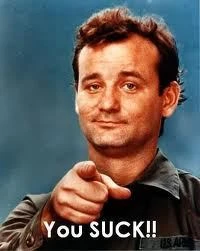
So Amazon has removed the Kindle titles of books who are distributed by IPG because Amazon wants to negotiate a more favorable contract – for Amazon. IPG demurred, so they are feeling the Amazon Backlash.
Mark Suchomel, head kahuna of IPG said, “Amazon.com is putting pressure on publishers and distributors to change their terms for electronic and print books to be more favorable toward Amazon.”
In other words, if you don’t pay, you don’t play. And the result is that you’re slammed out of the largest selling marketplace. And this is why I worry about Amazon’s overreaching power. They can dictate terms to distributors and publishers that are more and more onerous to our ever-shrinking profit margin. They’re reaching the point where it doesn’t matter whether they squeeze us out or not because they have their own publishing company.
Frankly this scares the stuffin’ out of me because I’m powerless to call any shots. If they’re slamming IPG, is my wonderful distributor, Consortium, next, and we’ll have to swallow untenable terms? Publishers have long bemoaned the “it’s the price of doing business” because it’s true.
For instance, if a publisher doesn’t accept returns on their books from bookstores, they’re slammed out of getting their books stocked. These books invariably come back in such poor shape that they can’t be used again. That means if we sent out 500 units and 150 came back, then goodbye 150 units…and we still had to pay for the print runs. That’s why publishers have to be mindful about what goes out and make sure it doesn’t come back.
Returns were a horrible little thing created to entice bookstores to buy a publisher’s books. Like taxes, it grew and expanded into an ugly behemoth that sucks money faster than the government. I’ve seen countless publishers go out of business due to massive returns.
Discounting is another hoop publishers have to jump through. Like returns, publishers started this to entice bookstores to order their books. And like returns, this turned into a huge money suck because publishers were competing against each other to see how large the discounting would go. So in that example, bookstores are the monopoly that keeps publishers paying the piper. It’s the price of doing business. And it’s an interesting piece of irony that both returns and discounts were started by publishers. Oh the tangled web we weave.
This is especially egregious because distributors like IPG, Consortium, PGW, Perseus, represent thousands of smaller independent commercial presses who don’t have their own sales staff. That means in order for our distributors to stay in business and do the fabulous job they do, they get a cut of our sales. If Amazon cuts more deeply into those margins, at what point will these smaller presses throw in the towel because they are no longer financially viable?
IPG’s publisher clients are holding their breath to see how this will end – and frankly, so is every other small commercial presse. And so are thousands of authors.
When you’re the biggest game in town, you can call the shots, and I only hope and pray that their monopoly doesn’t destroy all that’s good about publishing.
7 Comments | Uncategorized | Permalink
Posted by lynnpricewrites
Be glued to your TV tonight
February 22, 2012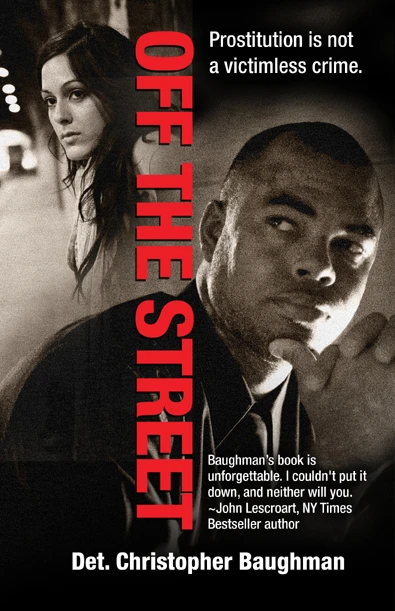
OFF THE STREET Detective/author to be featured on National Geographic documentary.
Las Vegas Metropolitan Police Department detective and author Chris M Baughman is scheduled to be featured in the National Geographic documentary “Sex for Sale: American Escort,” airing at 9 p.m., Wednesday.
Check your local listing for the National Geographic Channel in your area.
Go, Chris! You totally rock.
3 Comments | Chris Baughman, Human trafficking, Off the Street | Permalink
Posted by lynnpricewrites
Publishing – it’s all about what’s right for you
February 20, 2012I had a fantastic weekend at the Southern California Writer’s Conference down in San Diego. Michael Steven Gregory and Wes Albers successfully set the tone for the conference, while their backup band of Rick Ochocki and Cricket Abbott (I know I’m missing names here – forgive me?) do some very heavy lifting of their own to make a successful weekend.
One has to try hard not to have a good time. If you’re looking for rigid or formal – this is not for you. If you’re looking for a relaxed setting where smiles and laughter are the main menu, then you need to come to their next conference in September in Newport Beach. It’s an honor for me to be a part of this conference.
I gave four seminars over the weekend, and in each of them, I brought up publishing options because I wanted to clear the air about this whole “one is better than the other.” That’s not true at all. For some, e-publishing is appropriate. For others, commercial publishing may better scratch an author’s itch. What’s important – vital – is that authors RESEARCH all the publishing options out there in order to determine what is going to offer them the most success.
I really wish I had read Jim Hines’ blog post before this past weekend because I could have added his valuable information regarding Amazon’s DIY publishing options. I had no idea that Amazon carried this much power over an author’s book, which affects their royalties. This is important stuff. For instance, if a bookstore offers a special sale price for our author’s title, they still get paid the same royalty rate. The bookstores – or Amazon – are free to sell the book for whatever they want. They still had to buy the book from us (well, our distributor) for the same price they normally would, so the royalties don’t change for our authors.
But Jim is saying that Amazon authors are at the mercy of arbitrary discounting, which WILL affect their royalties because Amazon is their publisher. Amazon decides to drop a $2.99 book to .99, and the author is only going to get royalties on .99. As Jim says, if a retailer tried that with one of his commercially published books, his publisher would draw first blood. If the publisher tried playing footsie with the royalty rates, his agent would draw first blood.
And rightly so.
And this is when going it alone means sometimes feeling alone because you have no one to do battle for you – or with you. Does anyone think one little DIY author can do battle with Amazon?
Luckily, Jim didn’t loose much money during the pricing glitch because his income stream isn’t dependent upon his DIY books. But what if he’d sold 1500 units? 5,000 units? That loss would have been higher. And who are you going to complain to? Amazon is a huge corporation – not unlike the Big Six – and they are free to make decisions that are advantageous to their bottom line. Nothing more, nothing less.
Author-friendly is a relative term, and no one should be fooled. Take care in not giving your personal feelings too big a voice. Don’t let, “Oh, they’re so benevolent” color your decision-making. Know the facts.
3 Comments | Jim Hines, Michael Steven Gregory, Southern California Writer’s Conference, Wes Albers | Permalink
Posted by lynnpricewrites
Please…for the love of all that’s holy…do the research
February 15, 2012Since we publish books that have socially relevant themes, I get a lot of queries that insist their book is unique. For a soulless, black-hearted editor like me, this is bantha fodder because I can usually prove that statement wrong.
The query usually starts out something like this:
When I was going through cancer/addiction/mental instability/divorce/mid-life crisis/bereavement/any affliction of your choice, I searched for a book to help me, and couldn’t find anything (commence with breathless frustration here), so I decided to write about my experiences.
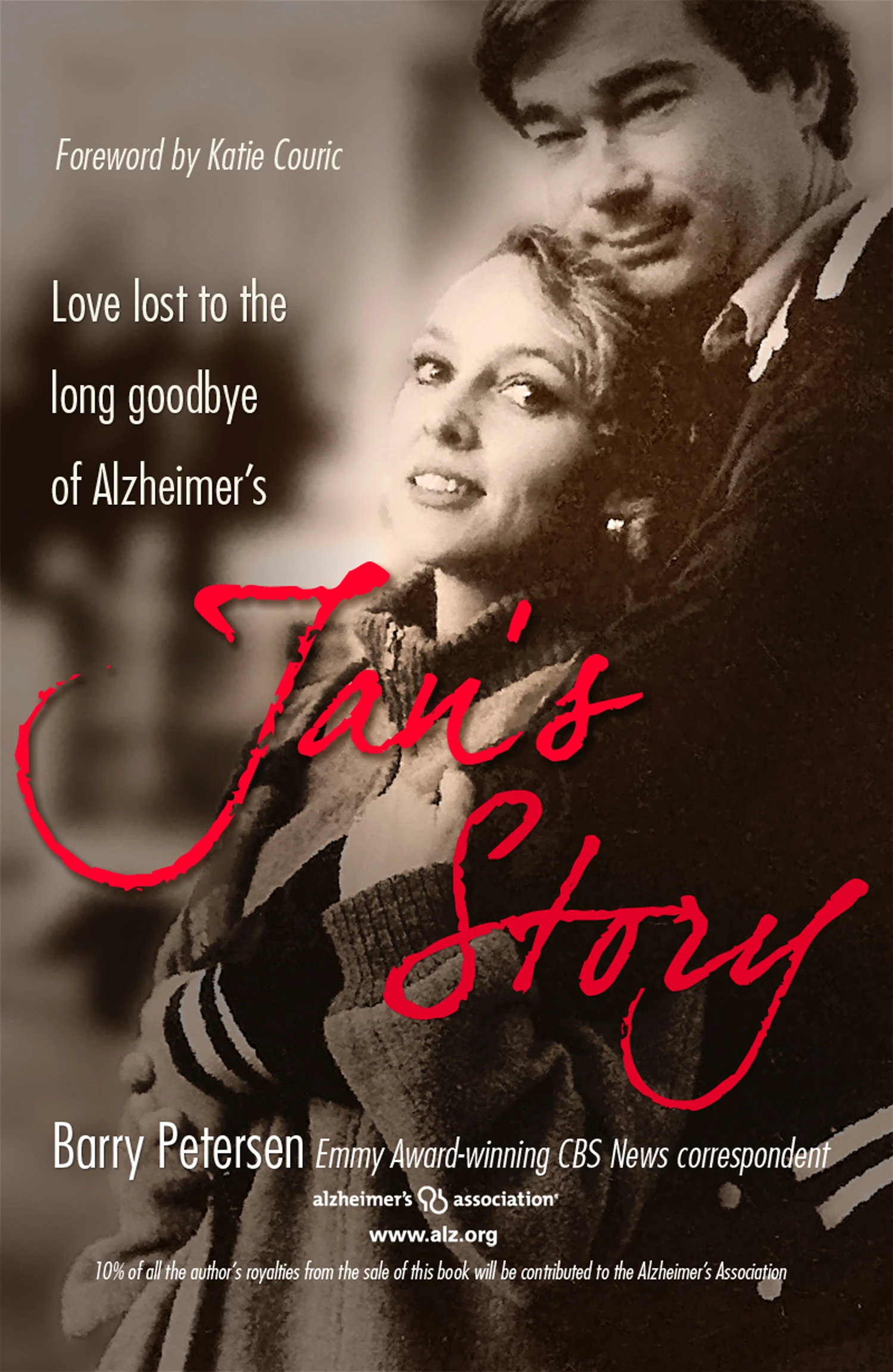
This never fails to flatten my pancake because it shows that the author knows zip about her competition. The one I received this morning dealt with Early Onset Alzheimer’s. She insisted that there was nothing on the marketplace. Eh? Whazzat? I’m still pondering whether to let her in on a secret – that we have a bestselling book about Early Onset Alzheimer’s.
I understand why the author wrote this – she’s trying to tell me that her book is unique, but she didn’t do the research to be able to back up that claim of uniqueness. To make matters worse, there isn’t an editor alive who doesn’t research the marketplace for competing titles to prove that very point. Our very careers depend on signing unique stories and being able to recognize a unique story at ten paces.
So what would be a more effective way to sell a book in a crowded category, such as Alzheimer’s?
Read Your Competition
As crummy as it may feel, it’s possible you don’t have a story because it’s already been done, and there isn’t anything in your book that says “new.” Only way to know that is to read the competition.
Analyze the unique qualities of your book compared to your competition
This is the tactic that Kate McLaughlin took in her book proposal for Mommy I’m Still In Here. She outlined the differences of her book to those of her competitors because she knew Bipolar Disorder has been extensively written about.
I went into research mode and discovered she was right – no one had the same kind of book. It was completely unique, and that’s why I bought it and still love the bejabbers out of it. She tackles new ground and perspectives that parents and loved ones of Biopolar sufferers should know about. Kate didn’t cop out by saying, “I couldn’t find anything,” because she knew darn well there were a ton of Bipolar books.
Whether you’re writing fiction or nonfiction, never forget that you’re selling yourself to someone who has seen it all and knows a lot about the marketplace. In order for you to meet that challenge you need to be an expert in your book and your competition. Saying, “I couldn’t find it,” is dangerous territory, and I posit that it’s a straw man approach best left to errant beagles who don’t care about credibility – only where their next margarita is coming from.
5 Comments | query | Permalink
Posted by lynnpricewrites
Happy Valentine’s Day
February 14, 2012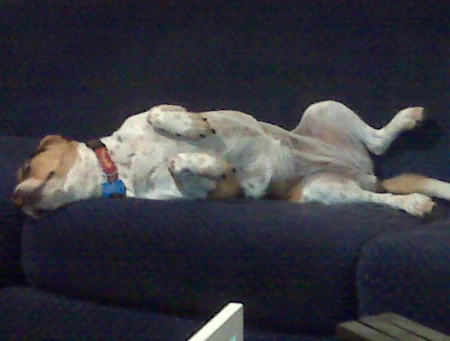
"This is what I'll be doing. How 'bout you?"
3 Comments | Uncategorized | Permalink
Posted by lynnpricewrites

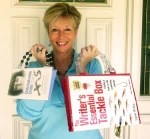
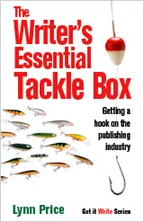 If you want the inside scoop on what floats our boats, The Writer's Essential Tackle Box is a must have. Out in November 2009.