Doing the Rant Boogey

March 31, 2007

I’m interrupting the POD series to reaffirm my very weary, time-worn assertion that submission guidelines are listed on agents’ and publishers’ websites for a reason, and it’s the smart, classy writer who resists the temptation to do whatever they want and simply follow the guidelines. That means they don’t include Auntie Bertie’s Mouth-Watering Brownies recipe in hopes of appealing to my sweet tooth. They don’t send me pages of eclectic poetry that has me reaching for my black beret and black turtleneck sweater and a sudden urge to start snapping my fingers. And they don’t send me songs written in my honor. Yes, all three of these have happened.

Why am I so full of vitriol today? Well, it’s a beautiful day, and I’m working…but that’s for another post. My wrath stems from receiving a submission whose cover letter said, “I’ve read your submission guidelines and am taking the risk that you won’t mind that I’ve included nothing you asked for but everything that I know you really want.”

Huh?

The submission consisted of the person’s previously published book by a well-known vanity press and a request that I read it because it’s the absolute coolest thing ever. A BOOK. I don’t want a book. I want the first 30 freaking pages double-spaced, TNR,12 pt. If I wanted a book, I’d put it in the guidelines. It may very well be that this person wrote a fabo book, but I’ll never know because she wrongly thought those silly ol’ guidelines were to keep the tourists out.

Newsflash: You ARE the tourist! They weren’t written for “those other people,” they were written for YOU too.

In the end, however, the pen is mightier than the sword. I wrote the person a lovely letter stating their assumptions about my benevolence were ill-placed. I bundled everything back into the SASE and shoved it into the mailbox. Unread. A complete waste of the writer’s eight bucks.

Moral: Don’t waste my time and your money. Don’t exploit my good humor; I only have so much of it stored at any one time. Follow the submission guidelines. To the letter. Otherwise we can never be friends. Ever.


POD Series #3 – Things that irritate me about the POD paradigm

March 31, 2007

I’m normally a live and let live type of person and am happy to offer a bit of advice only when asked. However, nothing gets the little hairs on the back of my neck stand up faster than the Print On Demand paradigm. Why? Because this type of business plan has broken so many hearts, and I see them cross my desk every day. This series isn’t an attempt to sway writers away from this type of publication, but to educate. Knowledge is power, and my sole purpose in writing this little series is to empower the writer.

Here are the things that bug me the most:

  • Poor editing – you get what you pay for. Low budget means they can’t hire the best editors.
  • Lousy covers – a small budget = inferior covers
  • Higher retail prices – there is a premium for ordering very small print runs as opposed to offset printing where large print runs drive down the printing prices and lower the retail price.
  • No marketing – POD companies, on average, don’t have a marketing budget.
  • Watch where the money is flowing – the POD publisher is dependent upon the author buying their own books at inflated prices to stay in business. In fact, their authors are invariably their only business. They already know they can’t sell to the bookstores so they sell to their authors. This is why you’ll usually see that POD companies have a huge number of released books. They need a high quantity of authors to offset those who don’t/won’t buy their own books. They already know that there are more authors who will buy their own books than those who won’t.
  • No reviews – POD books will never be reviewed by the large trade magazines. The stigma is that POD books are inferior and the trades make it very clear that POD books will not be reviewed. Ever.
  • No return policy – this is a huge issue. Whether a book sells or not, the publisher must pay for the print run. Returns on those books can strangle a publisher because it’s cash out and nothing to offset the balance. POD companies avoid this problem by making their books non-returnable. Bookstores, in return, won’t order or stock their books. Who get penalized? The author. Why? Because they bought 200 of their own books with the idea of selling them to the bookstores. Now they have to think of another way to market their books.
  • Zero distribution – small press distributors like Mid Point, IPG, Consortium, etc. make their money on signing publishers whose business plans are conducive to selling product to corporate buyers, indies, and libraries. The books have to be marketable, strong and have good appeal. The submission process for publishers is a lengthy and arduous process as the distributors pour over the publisher’s financials and lineup. In a word, it takes money; something POD’s don’t have.

Why do these things bother me? Because they NEVER tell the prospective author any of this. Instead it becomes a sad tale of after-the-fact discovery.


POD Series #2

March 27, 2007

All types of publishing are influenced by Budget. Why?
Catalogues / Advertising – The POD paradigm doesn’t allow for $$ to create a catalog of their books to send out to reviewers and bookstores. Nor do they have $$ for advertising of any kind.
Print runs – Low print runs to keep down costs. They usually wait for the author to put forth an order before actually printing up the book.
Return Policy – Most PODs have no return policy, meaning that bookstores can’t return the books if they don’t sell. Because of this, most stores won’t buy the books unless the customer pays up front.
Pricing – digital printing can cost more if one doesn’t shop around. The POD passes this pricing on to the customer, which is almost always the author, not a bookstore.
Editing and Cover design – you get what you pay for. PODs can’t afford to pay for great editors and designers. The work is often poorly edited, and in some cases only run through a spell checker. POD covers are all over the place. Some are great, others are painful. Most don’t understand the ten-foot test either – meaning you stand ten feet away to see whether the work is clear and memorable (in a good way!)
Reviews (sending out ARCS) – All commercial presses send out Advanced Reader Copies to the big trade magazines in hopes of a review. Trade mags won’t review POD books because they know those books lack editorial quality. Reviews are important downstream when corporate buyers are looking at purchasing a title.
Distribution
o Warehouse: Ingram, Baker & Taylor, Brodart. Don’t be misled. These are NOT distributors – they’re central warehousers. This is where stores invariably order from rather than calling up publishers for an order. And yes; they get their cut of the monetary pie. This means that the publisher has to discount the books. Very hard for POD companies to do because it ain’t cheap to do. For this reason, many PODs don’t list their books with the warehousers
o Independent Distributor: IPG, Consortium, Midpoint, etc. – These are the guys who work their butts off to get a small indie press nationally carried. In order to be a part of these types, you have to have a damn good product. They have a full national sales force who push a publisher’s titles into the hands of store buyers and libraries. Again, they get their piece of the pie.
o Getting into the bookstores’ database – Many POD’s don’t bother sending their books to the corporate buyers for consideration of purchase. Even if they have no hope of having their titles bought, it gets their books into the bookstores’ systems. This means that if someone comes in to order a POD book, the first thing the employee will do is see if it’s in their database. If it isn’t, no order will be made and the author has lost a sale.


POD Series #1

March 18, 2007


I’ve been looking for something fun to talk about, but I’ve hit a dry spell. It’s not for lack of fun in my life. Well, maybe that’s something to consider. On the other hand there’s some really fun stuff, but I can’t talk about it yet. And the other fun stuff isn’t germane to publishing. After all, no one really cares if I can touch the tip of my nose with my tongue after only one glass of wine.

So in the interests of keeping some semblance of professionalism, I thought I’d dive into the murky waters of the POD publisher. Why? Because this has to be the single most confusing entity that confounds many writers when they begin the submission process.

There’s a lot of meat here, so I’m going to break this up into a small series. This will serve the dual purpose of making me look terribly prolific and the information easier to digest.

There are different types of publishers – define the goal of your book before you research

· Commercial – Random House, Bloomsbury, Simon and Schuster, Behler (on a vastly smaller scale).

· POD – Print on Demand – many small presses are POD due to lack of $$.

· Vanity – pay to play – Xlibris, AuthorHouse – can cost thousands

· Self Publish – you are the publisher. This means you’re responsible for walking your manuscript through the entire process of publication. Not for the faint of heart. Advisable that you drink heavily should you take this course.

What is POD Publishing?

Print on Demand is both a business plan and printing method. Don’t confuse the two. The printing method is simply one where short runs are made digitally rather than offset – numbers smaller than 1,000. This allows for good quality books (depending upon the digital printer) to be printed for an affordable price. Great for printing up galleys to send to reviewers.

This technology gave way to the Print on Demand business plan, which isn’t as innocuous because it’s ruled by the lack of a Budget. Most POD companies have zero dollars and depend on their authors to be their own distributors, meaning the authors are responsible for virtually everything after the book is printed. This includes all sales, advertising, reviews, marketing and promotion. In the POD paradigm, money always flows to the publisher, not the author because the author is forced to buy his own books from the publisher at often inflated prices in order to sell the books. The publisher ALWAYS wins. The author often loses because he buys books with the intent of making huge sales. What he ends up with are cases of books in his garage.

Disclaimer: I’m talking generalities here. There are a number of pretty good POD companies out there. While they still adhere to the points I’ll be writing about, they’re honest about who they are and what they can and can’t do for their authors.


Keeping Stats

March 14, 2007

Every author should keep statistics on how many books they sold at author events. Sure, those numbers are kept with your publisher’s distributor and the bookstores, but I’ll bring out a case that highlights this reasoning.

Fact 1

One of our authors…subliminal message…Scot Stoneis a booksigning machine. He…subliminal message…Scot Stone…schedules, on average, two a month. And sells out. Every time. His publishers love him. His publishers’ distributor loves him as well.

Fact 2

Corporate buyers with the chains are an overworked lot. They get shifted around like my daughter’s shoes. Just when our distributor’s sales people get to know a buyer for a particular genre, they get moved to a different genre. The new Fantasy buyer bought Christian books for four years, and this creates a frustrating scenario on a couple of fronts. 1) The buyer isn’t up on the latest fiction authors. 2) The buyer isn’t familiar with the smaller presses

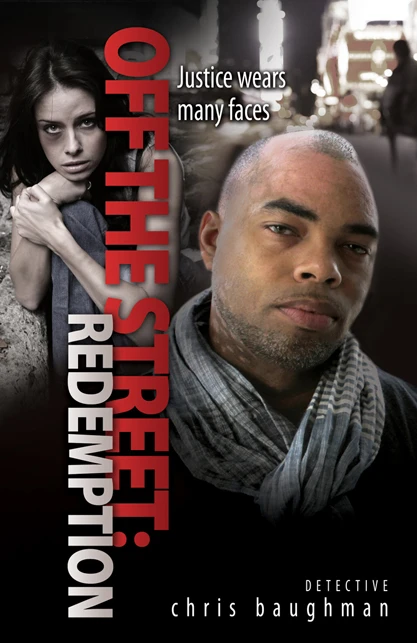
This forces the sales teams to reintroduce the publisher and their entire line. They may balk because they don’t know the genre and can’t judge what’s good and what’s not good. One such buyer actually wrung their hands over…subliminal message…Scot Stone…our author’s cover art. Huh? Okay, here’s the cover art. My indignation comes from the fact that this cover art is being used as a prop in George Clooney’s upcoming movie. If it’s good enough for Hollyweird, shouldn’t it be good enough for Barnes and Noble?

Da Reality

Okay, indignation aside, buyers (even the clueless ones) look for proof why they should order a book, and the first place they go is to Bookscan. Problem is, Bookscan doesn’t keep sales generated from signings so sales are underreported. However, if an author has kept his sales records, we will send that info to our sales teams and they lovingly stuff them under the buyers’ noses. Voila, those numbers suddenly look a whole lot better and hello national orders.

It’s all a wild game, and it’s the prepared person who learns the tricks. It’s hard to refute actual dates, places and sales numbers. Play it smart and keep a good record of yours.


Follow

Get every new post delivered to your Inbox.

Join 1,261 other followers

Build a website with WordPress.com
%d bloggers like this: