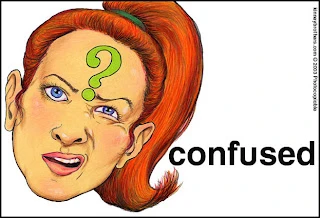
 “I’m totally confused – what is POD publishing?
“Are they a small press?”
“Is POD a good thing or a bad thing?”
These are the three most common questions I hear from bewildered writers. There are many discussions on various writers’ boards, and all of them continue to perpetuate a state of confusion.
History Lesson: POD publishing – Print On Demand publishing – got its start with the advent of the digital printing process, which allowed smaller print runs to be done for a reasonable price. Web based, or offset, printing is the standard form of printing whereby runs of at least 1,000 units clear on up to the hundreds of thousands are done for a reasonable price.
This digital printing process was dubbed Print On Demand because it allowed the publisher to print only where there was a demand for the book. All publishers – from the big houses down to the small commercial presses – utilize the digital printing process to some degree. Most of us use the digital press for our Advanced Reader Copies (ARCs), uncorrected proofs that are sent to the trade magazines for review, and to authors’ publicists, etc. We also use the digital process for backlist books whose demand is still quasi active but don’t warrant a large offset run.
What Happened Next: The Print On Demand digital printing process gave way to the Print On Demand business plan – and this is where the confusion began. Suddenly anyone with a pulse could now hang out their shingle and call themselves a publisher. Problem is, publishing requires money. Lots of it – something that the Print On Demand business model doesn’t have. After all, why should they? Printing teensy runs requires far less money. And the beauty of this was that these new publishers only printed books where an actual sale had come through – hence my dubbing this business model Print On a Dime.
Since Print On a Dime publishers don’t have the money to hire a crack team, which consists of experienced editors, cover designers, marketing people, and distribution, these digital books were far inferior to the commercial press product. They tended to sign authors whose writing wasn’t ready for prime time, editing was often horrendous, cover designs were amateurish, and storylines weren’t marketable or professionally written. To make things worse, books had no return policy, which is an industry standard. This meant that stores couldn’t return books and were stuck with the stock and zero demand.
Because of the overall lack of quality, the publishing industry quickly turned their noses up at this new breed of publisher. Stores wouldn’t carry their books and the trade magazines wouldn’t review their books. Distribution became a problem because Print On a Dime publishers couldn’t afford to accept returns for their books. After all, whether the books sell or not, the print run still must be paid for.
Over the years things have changed (return policies), but the basic premise remains unchanged, and Print On a Dime books remain the industry’s black sheep of the family. What’s unforgivable, in my opinion, is the wake of sorrow for nearly every Print On a Dime author.
“Are they a small press?”
In a word – no. Print On a Dime business models will tell anyone who will listen that they are, indeed, a small press. But with the advent of this model, the industry must further define “small press” in order to avoid confusion. The way I get around this is to clarify the difference by using “small commercial press” and POD press because the two business models are entirely different.
Print On a Dime business models often tell authors that they are a small press, and this makes them appear as something they aren’t through omission. They invariably don’t tell authors that they don’t do large print runs, that they don’t have proper distribution, their books won’t be reviewed, and they won’t be on store shelves. Instead they’ll say that, yes, they do print runs, which, technically, is correct – if not misleading, that their books are “available” in all the stores (meaning that they’re in the databases but not the shelves), that, oh my yes, we have distribution through Ingram and Baker & Taylor.
“Is POD a good thing or a bad thing?”
Obviously I’m the wrong one to ask. It’s my belief that many/most of the Print On a Dime publishers gain authors through a series of smoke and mirrors, and I have a real problem with that. What are those smoke and mirror tactics? Here are a few:
Tactic 1: “We give new authors a chance.”
Please. New authors are published by the big, mid-sized, and small commercial presses every day. This is used to ad nauseam in order to make the author believe that these are the good guys and all the big bad presses are trying to squeeze out new voices. In truth, publishing has and never will be mistaken for the Great Benevolent Society. We love good books, and we base our businesses solely on the belief that we can get a large number of people to buy them. In order to do this, we have to produce a quality product that will entice chain buyers to order our books and get them on the store shelves. Print On a Dime lacks money, so they can’t produce a quality product.
Tactic 2: “POD means digital printing, and all publishers use this. There’s no difference between us.”
This particular tactic creates so much confusion for authors because it creates the notion that the only differences between us is the use of digital printing and that PODs are being unfairly labeled. Large and small commercial presses do use the digital technology, but for far different reasons. Our business models are entirely different.
Tactic 3: “We’re saving trees, and that’s why we only print books that have actual orders.”
This tactic is routinely cranked out by a particularly nasty POD publisher and it’s quite painful to see this propagate various writers’ boards. There are two good reasons to have short digital runs. The first reason is Advanced Reader Copies. These are uncorrected proofs that go out to the media and trade magazine reviewers. This is often seen as an expensive luxury that Print On a Dime business models can’t afford because no one pays for these books. They come out of the publisher’s pocket.
The other reason is for using the digital press is for backlist titles. These are the titles that have been out for over a year, have gone through their print run, but still have demand – albeit smaller. In our particular case, we discuss what the demand is with our distributor and order a digital run based on those figures.
Tactic 4: “All authors, including those from the large houses, must promote their books.”
Yes, author promotion is extremely important in creating a buzz, and what irritates me so much about this tactic is that it creates this notion that what they’re asking of their authors is in some way industry standard. It isn’t. Many authors have PR plans that include giving seminars, interviews, TV appearances, etc. But all of this is done in conjunction with the commercial publisher. We send out literally hundreds of ARCs and press releases to anyone the author (or their publicist) feels serve as a “big mouth.” Print On a Dime publishers can’t do this because, again, it’s money out of their empty pockets.
The Print On a Dime author is forced into a much larger role than merely PR. They’re forced to go into stores and beg for shelf space or sell their books out of the trunks of their car.
Tactic 5: “Why of course we have distribution!”
Another misleading tactic that causes a ton of heartache because it’s not the truth. They’ll tell authors that they have distribution, which is the single biggest problem of their entire model. Yes, their titles are usually listed through Ingram and Baker & Taylor, but these guys aren’t distributors. They’re warehouse distributors – a centralized warehouse where bookstores can order books. Ingram and B&T do not have a sales force who is out there pitching their titles to the genre buyers. If there is no one pitching their books, then who is going to sell the books since the Print On a Dime business model lacks the funds for a marketing and sales team? Answer: the authors.
Print On a Dime makes their money by employing their authors as an unpaid sales force and distributor. Authors buy their books at often low discounts – 30, 35, 45% off the retail price. Some actually have tiered discount percentages whereby those who buy larger quantities get the larger discount. This is nothing more than an enticement for the author to buy more books and keep the publisher afloat. Some of the more distasteful PODs make very tidy sums of money with this practice and are able to buy helicopters and such.
In Closing:
Because Print On a Dime publishing is constantly in need of money, it’s not unusual that the principal owner(s) has a full time job elsewhere. If they’re spending eight hours at a day job, how much energy and time does anyone think will be left over for the publishing business?
Whether Print On a Dime publishing is a good idea is dependent upon the author. Many writers are anxious to be published immediately, and this is where PODs shine. They excel at creating this notion of entitlement – that every author deserves to be published. Before too long, the undereducated author says, “Hell yes, they’re right! I do deserve to be published.” And rather than perfect their writing and go agent hunting, they play right into the PODs hands and become one of the thousands whose books will invariably slip into the black hole of anonymity. Face it, publishing is a tough industry, so if something looks too good to be true, it invariably is.
I have to ask myself why anyone would dishonor their writing in this way.
Like this:
Like Loading...

 Leave a Comment » |
 Permalink
 Posted by lynnpricewrites


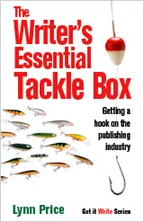 If you want the inside scoop on what floats our boats, The Writer's Essential Tackle Box is a must have.