How to check for a POD company

September 30, 2008

At the writer’s conference this weekend, a writer asked me how to recognize a Print On Demand company since she looked up several publishers online and couldn’t tell. “It’s impossible to tell since they don’t come out and tell you,” she said.

She’s right, most don’t because it would be bad for business. However, there are some “tells” that will help Joe and Jane Author make more informed decisions.

POD websites are geared toward the writer, not buyers.

The use verbiage such as:

  • Innovative, Passion, Drive, we’re different from all those publishers who have rejected you because they’re all cliquey, and we’re not.
  • Our goal is to give new authors the chance they deserve
  • We are a “real” publisher – (just to be clear, real publishers don’t use that kind of verbiage.)
  • We are distributed by Ingram and Baker and Taylor, the same distribution as the big houses (these are warehouse distributors, a centralized warehouse where libraries and bookstores call for stock fulfillment. This is the Numero Uno line PODs use, and it misleads the author into believing their books will be on store shelves.)
  • We have a strong presence on social networking sites (this means they’re very good at promoting their company, not their books)
  • We’re saving trees by only printing books as orders come in (this line could be its own post for its utter ridiculousness)

This is all razzle dazzle stuff to get the author imagining adoring crowds throwing money at you so they won’t realize there is no sales force, no distribution, no sales teams pitching titles, no print runs, no marketing, no trade magazine reviews, and no
store presence.

Remember, PODs operate with very little cash flow since their primary income is authors buying their books. Many have adopted a return policy on their books, but those policies may be so constrictive as to strangle bookstores ability to actually return the books. Same goes for discounting to the wholesalers. The worse the discounting to the warehousers and bookstores, the less desirable the product. This is why many bookstores won’t host book events for POD authors. Average discounting is 50-55%.

The idea that someone can do a quality job with little money is fantasy. The idea that someone needs to resort to sleight-of-hand to attract writers is criminal.


"We don’t want no stinkin’ agents"

September 30, 2008

Janet Reid had a post on her blog about Northern Illinois University’s new imprint not accepting agented manuscripts. It wasn’t enough for the imprint to say “we accept unagented work,” but they whacked out agents altogether. This does nothing but ping my BS radar.

Why would any publisher do this? I have thoughts of what do you have to hide? rattling around my pea-sized brain. Is your contract that unfriendly?

I know. I’m a publisher, so why would I run to the other side in defense of agents? My first reaction is why the hell not? I want what’s best for everyone – me, the author, the reader, the bookstores – and believe it or not, good agents play a participatory role in making that happen.

I’ve seen agents take on clients for years in order to sell their works because their belief in the project is so strong. I’ve also seen many agents spend long months forcing rewrites so they could try to sell an even stronger manuscript.

Additionally, good agents do my work for me. They screen out the raw stuff and show me the good stuff. They present it to me in a professional manner that includes all the information they know I need in order to make an informed decision.

They’re also marvelous referees. If there’s a case of bad ju-ju developing between the editor and author, the agent is there to jump in and save the day by having all the correspondence go through her. This is the difference between firing an author and publishing a fine book with our collective sanities intact.

I always wish a new imprint well because it’s good karma to do so. But I can’t help but scratch my head and wonder at this very odd decision. Don’t worry, Janet, I still love you.


Youwriteon.com/ POD, "your book by Christmas"

September 29, 2008

http://www.thebookseller.com/news/67…-free-pod.html

I make it a practice never to name names when talking about practices that scare the hell out of me. I’m making an exception because of the huge volume of potential victims.


In a nutshell, the Print on Demand business plan (which I’ve dubbed Print on a Dime) runs on shoestring budgets, which means they can’t afford to hire talented, experienced editors, cover designers, interior designers, sales people, distribution, or print runs – hence “print” on “demand” – they only print up books when a physical bought and paid for order comes in.


The key to any POD’s success is volume. Pretend for five seconds that I’m a POD publisher. Remember, I’m operating on a budget, so even though I don’t do print runs, I still have to pay that “editor” to shoot the manuscript through Spell Check and have the “designer” whup up some clip art for the cover. Since I don’t have distribution or a sales team, I don’t have buyers. Soooo, how am I going to stay in business? Who’s paying my bills? Answer: my authors via buying their books.


But it’s a crapshoot because maybe the first twenty authors I printed up didn’t buy their books, so I’m still running at a deficit because I have no money coming in. But the next fifty I bring in may want 100 units of their books. I sell those books to them at inflated costs, all while giving them a “discount.” But wait, the more you buy, the bigger your discount! Voila! I’m now able to keep the lights on. Now it’s easy to see that I need a high volume of authors at all times to keep me afloat and maintain the ratio of those who buy their own books higher than those who don’t.


And this brings me to this YouWriteOn/Legend Press “competition.” I view this as an invitation to do nothing more than pad bank accounts in epic proportions. 5,000 books in time for Christmas? Come on, people! No editing?


No one can get those kinds of numbers printed up in time for Christmas. Anyone with a brain in this business knows that printing in November and December is inherently slow due to the higher-than-normal demand. You want books to give to friends and family for the holidays, go to Kinko’s or Lulu.com.


Do anything, but please don’t tell me there are that many authors whose desperation to see their work between a cover is so great that they’ll allow their work to be treated little better than used toilet paper. This publisher doesn’t have to worry about trying to market these books because he knows full well the authors will pay big money for their “babies.” All PODs know this. If no author ever bought their own stock, PODs wouldn’t exist. It’s that simple.


Legend Press will laugh himself to the bank with all the extra cash flow, and most authors will have a garage full of unsold, inferior quality books, and empty wallets. It’s exhausting work to be the author, editor, promoter, marketer, fulfillment center. My strong recommendation is to NOT make this guy rich. Run.

For more about my views on POD:

Print on Demand

here - which launches a 7 part series on POD


One conference comes to a sweet ending

September 28, 2008

I just returned from the Southern California Writer’s Conference in Irvine, and all I can say is what a fabulous weekend. Michael Steven Gregory and Wes Albers outdid themselves to ensure everyone was directed to the right conference room and had plenty of water.


This was my first time speaking is this particular conference, and I came away energized and exhausted. The attendees were articulate, educated, and passionate. Man, what’s not to love there?


Being surrounded by bright and talented minds offers its own kind of high. I must have heard twenty five different pitches while gulping down over-priced wine at the bar (whose service was atrocious. I mean, really, if I’m standing around waving money, don’t you think a server would get the idea?), and it was a treat to see the passion dripping with every syllable. That face time is something I miss when I’m sitting in my batcave reading queries all day long.


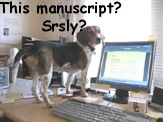
It’s also exhausting. Let’s face it, I’m not used to being that nice for so long. It’s a real challenge, and I had to come home and order the unreliable beagle to get some filing done just so I wouldn’t implode.

I can’t recommend conferences enough. This is the prime place to further a writer’s education. We writers are islands by the merits of our writing, and it’s easy to become immersed in our solitary self confinement. We need to come up for fresh air (or in my case, leave the batcave) and get some perspective.


The breakout sessions and one-on-one advanced submissions are scary, to be sure, and I respect the snot out of every single author who sat at my and other editor’s and agent’s table. It wasn’t easy, I’m sure, but they obtained some valuable crits along with learning how to take unbiased comments from a complete stranger. But it’s not all gloom and doom mixed with sweat and fear. We did so much laughing, I’m convinced I got an aerobic workout.


If you ever feel yourself getting stuck, I can’t recommend a writer’s conference enough. And if you see some demented woman sitting in the corner trying to shore up her smile with clothespins, it’s just me.


Conference fun

September 26, 2008

I’m off for the Southern California Writer’s Conference in a few hours. It’s an odd feeling to attend a conference in my back yard. I’m us to jetting or driving to hither, thither, and yon. I like the travel bit. Staying in the hotel puts me in a “conference” state of mind. Everywhere I go I see people with tags around their necks, carrying books or notepads. The bar scene is always fun because there are the friends I don’t get to see other than conferences and invigorating conversations going on.

I can’t think of a better way for authors to learn about the industry since we’re corralled in one venue for an entire weekend. It’s a hotbed of creative mojo, and I love every bit of it. I’d invite everyone back to my house for margaritas and nachos, but I don’t think I can convince my secretary, the unreliable beagle, to pull out the blender. Last time we did this, she drank all the tequila.

Hope to see you there!


Healthy, realistic attitude

September 21, 2008

J.A. Konrath’s blog post about artistic anguish hit home because I see the fallout of that mindset more than I care to admit – thankfully not among my authors, who are the best in the world. Inflated egos bite the big one because these people are so hard to work with. The notion of “suffering for my art” and “I can’t meet my deadline because I have writer’s block” pings my gag reflex. This is supposed to be fun, people. Stories come pouring out of us because we’re inspired from what burns within. If it ain’t burning, it ain’t because there is some magic gremlin that eats its way into our brains and steals our words. It’s called lack of concentration or motivation.


I’m a writer, and I feel motivated every time I sit down to write; when I’m depressed, pissed off, maniacally happy, or feelin’ just fine. I have a job to do, and I do it. I may write piles of crap that needs major editing later on, but I got the thought processes down. And like Konrath, I find the whole back-of-the-hand-to-the-forehead-woe-is-me thing as melodrama on crack. Get over yourself already. Rejoice that you have the good fortune to have a story inside of you that you’re putting down on paper.


Konrath’s roll-up-the-sleeves-and-get-to-work attitude is like a breath of fresh. His approach to writing and promotion is one of the healthiest I’ve seen because he doesn’t sit around waiting for someone else to make his success happen.


If it’s my name on the book, it’s my job to sell it. My goal is simple; to make my publisher money, so they’ll buy my next book.


(lustful sigh) I’m considering investigating cloning more closely. The next time I see Konrath at the BEA, I plan on stealing a piece of his DNA.


Promo schmomo

September 19, 2008

The bane of nearly every author is figuring out the promotional relevancy and viability of their manuscripts. Would it make you feel any better to know that we all wear wigs because we’ve pulled our hair out over the same issues? After all, a book can be sheer brilliance but without proper promotion, it’ll gather dust in someone’s warehouse. That’s why we take it so seriously.

When someone asks for a promo plan, what they’re asking for is the hook(s) – those one or two elements that can be pulled out and exploited by a publicist, sales team, advertising, reviews, etc. Who is the specific audience, and how do you, the author, think you can best reach them?

Don’t think it’s not important. Our distributor gets 100 copies of each book so the sales teams can go out and pitch the new title. They use that hook to reel in the genre buyers.

Here are some examples of what they say:
The War of the Rosens details the lives of an eccentric Jewish family in the Bronx who are forced to face the limitations and complexities of love and faith, and has ten-year-old Emma Rosen questioning whether her volatile family makes them ‘bad Jews.’”

Wheeling the Deal is a tip of the hat to a fast-talking, Hollywood entrepreneur/idea man the man who turned his back on the notion of ‘I can’t.’ by creating one of the largest independent post production shops in Hollywood by selling his father’s music to television and movie studios.”

After the pitch sessions, the first question the genre buyers always ask is, “What is the author doing promotion-wise?” If the salesman replies, “Um, sitting home knitting toilet paper doilies,” then guess what? No sale.

For The War of the Rosens, the author was very active with the New York Jewish community, so it got a very big push there and spread out due to its tender humor and amazing characters.

For Wheeling, the author is attracting the disabled community, and is spreading out due to its inspirational message and brilliant writing.

In each of those cases, there is a definable audience that we can put into our Rolodex. And that is exactly what we’re looking for when we ask for your promo ideas. So be a good Girl Scout and be prepared, ‘cause if we like your work, we’re gonna ask.


When Misery Loves Company

September 18, 2008

I just got done reading Kate’s (KT Literary) thoughts after reading 52 queries and felt an immediate kinship. “Sistah, I so hear you!” Number 9 made me want to spread out the high-fives all around.

Kate writes:


9. If you address me as “Dear Literary Agent”, I will respond with the similarly generic “Dear Writer.”

I can’t begin to count the many times I’ve been sorely tempted to do the same thing. Actually, I did address an author as “Dear Author” once. She wrote back to chastise me for not addressing her with her name. I believe the quote was, “What do I look like to you? Cattle?” Heh. Funny one, that. Just today, in fact, I was addressed as “Dear Editor.” There are those who would argue the “Dear” part. Come to think of it, there are those who would argue the “Editor” part as well, but I digress.


Kate’s post is an insightful window into our world, and authors are wise to take notice of her many comments and check their query letters. So thanks for the groans and laughs, Kate. Our worlds are insanely odd much of the time, but I don’t think any one of us would trade it for all the Twinkies in California.


Organizing the disorganization

September 18, 2008

I’m in the middle of reading my pile of advanced submissions for next week’s Southern California Writer’s Conference, and I keep noticing the same problem in every submission. Organization and character development.

Organization: Chapters have a reason for their existence; to gradually reveal the plot and impart information. That’s a total “duh” statement, but I’m alarmed at the consistency of this omission.

Set the scene in a way that doesn’t force the reader to ask questions. Make it clear what and why the scene is taking place. If there is something that needs explaining, EXPLAIN IT! In many cases I felt like I needed the author right next to me in order to ask what they meant by this or that. Since we haven’t perfected cloning, the burden is still on you, the writer, to convey your stories in a manner that the reader will understand. Such is the beauty (and bane) of our words.

A good way to avoid chapter disorganization is to bullet out each point for each chapter.

Character development: Lots of stories can get away with minimal character development because they are plot-based. Clancy, John Lescroart, Vince Vaughn are a few writers who come to my under-caffeinated mind. They don’t waste much space on developing their characters and that’s ok. The plots more than make up for it. However most of our stories aren’t plot-based, so those cardboard, one-dimensional pancake characters aren’t going to scratch our literary itch. We need to align ourselves with the something that’s as real as we are – dimension that makes us back away from our desks and look for that “move to the couch moment,” as super agent Peter Cox is fond of saying. It’s what makes the reader care.

With these two major elements missing from these works, the stories just can’t launch. Take a peek at your work and check to see if your chapters are disorganized and your characters are as dry as burnt wheat toast. Go on…check….I’ll wait…


A right way and a wrong way

September 9, 2008

This is not an effective or recommended way to open your query: “I propose that you acquire My Brilliant Novel.” Propose? I can’t help but feel I’m being commanded to do something. Hey, who’s running this insane asylum anyway? Me or you? It reminds me of the time my mom had me front and center as I’m trying to bug out the door to school wearing my skirt rolled up, which drove her insane. “I propose that you roll your skirt right back down where it belongs, missy.”

Nor is it a good idea to tell me that your work is nonfiction, but you’re more than amenable to make it fiction. It’s either one or the other. I can see the editing process unfold before me. “I can either rewrite this first line or the entire paragraph. No. Wait. I can rewrite the entire page. How ‘bout the entire chapter? The book?” It takes me back when I blew in way past curfew back in high school and tried to placate Mom by offering to do the dishes so she wouldn’t blow a ventricle. When her expression didn’t change, I offered to clean the bathrooms. Then the entire downstairs.

Ok, maybe I have issues…


Follow

Get every new post delivered to your Inbox.

Join 963 other followers

Powered by WordPress.com