“If Joe and Jane Big Selling Author can do it, why can’t I?”
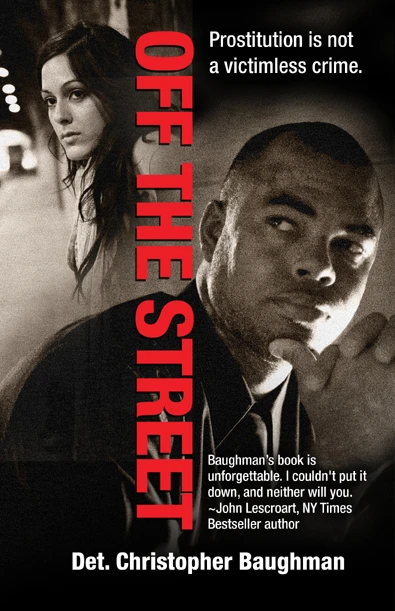
The reason you can’t do it is because you aren’t Joe and Jane Big Selling Author. “It” refers to breaking certain writing rules that does not transcend to mere mortals. Many writers derive their inspiration and writing patterns from those established authors whom they admire. My personal writing hero, for instance, is John Lescroart. I patterned my dialog after his, and nearly died a happy death when one of my distributor’s sales reps caught the similarities. My enthralled demise came when John himself told me, “us dialogers have to stick together.” Anything for you, John.
But John gets away with things that I can’t. He can switch POVs faster than my daughter’s hair color, and he never gets dinged for it. Same goes for his use of adverbs. John’s plots are amazing, he’s an internationally famous writer who makes millions, so he can pretty much do what he wants, and I’ll still love him and read every one of his books.
Why can’t I get away with these infractions? Because my editors would nail me to the wall, for starters because they know as well as I that reviewers would toss the book across the room and invite me to learn the rules of writing. This happens every single day, and many of those manuscripts cross my desk and those of my cohorts.
Emulation is a good thing to a point. Reading a lot of books helps writers understand pacing, flow, character development, keeping the fluff to a minimum in order to concentrate on the plot. But reading well known authors can also teach some bad habits as well. The following comments came from replies to critiques I’d made on rejected manuscripts.
“Even though the general rules of writing say to keep semicolons to a minimum in fiction, I saw a ton of semicolons in XXX’s novel. I thought it was okay for me to use them, too.”
This is always a bit of a nail biter for me because I’m basically saying, “Yes, do as I say, not as they do.” This is tough on new writers. Whom do they believe? This author makes millions and is allowed to dress up like a pink poodle, howl a the moon, and use as many semicolons as he wants.
“I saw a novel filled with adverbs, and the rules say to keep adverbs to a minimum.”
That author makes millions and is allowed to dress up like a pink poodle, howl a the moon, and …ok, see the pattern?
Just because you have read books where authors break these generally accepted rules doesn’t mean anyone can pull this off. This is murky water territory because new writers aren’t usually experienced enough to know how and when to break the rules and still have a viable work. I made the comment on an author’s work I rejected that they would do well to lighten their manuscript of 85% of their adverbs because it made for lazy writing. Yet I have other authors whose works are filled with adverbs, and the writing is still brilliant. They are experienced enough to know that adverbs can create a tell vs. show problem and work around it. I have an author whose mid-scene POV switches were called by Kirkus as being some of the best writing they’d seen in a long time. So it can be done….if you know how.
“Screw the ‘rules,’ Price. There should be no rules in writing other than grammar and such.”
If you can convince nearly all the agents and editors of this, then I will gladly march into my local Mexican joint and belt out a hearty rendition of Frank Sinatra’s “My Way” with a margarita on my head. The argument for insisting no such rules should exist is fruitless if you’re running up against a body of the publishing industry who disagrees with you.
Remember that the idea is to never give an agent or editor a reason to reject you other than the writing or story isn’t for them. It’s my opinion that new writers who are tempted to ignore these general rules of thumb are playing with fire because it is so easy to label the work as being pedestrian. Learn the techniques of writing and gain some experience so you know exactly how and when to break the rules.
Like this:
Like
Be the first to like this.
 2 Comments |
 Permalink
 Posted by lynnpricewrites

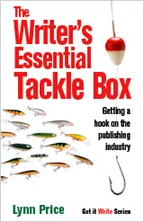 If you want the inside scoop on what floats our boats, The Writer's Essential Tackle Box is a must have. Out in November 2009.