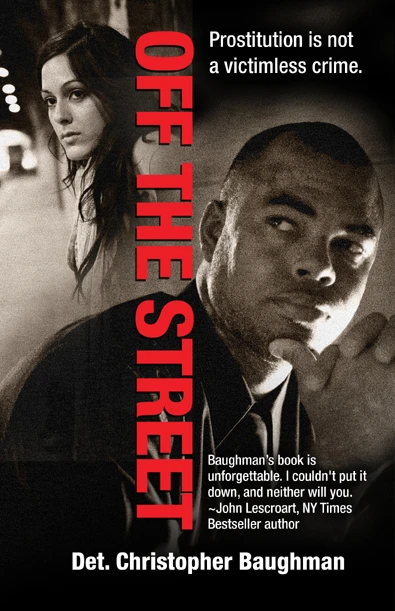
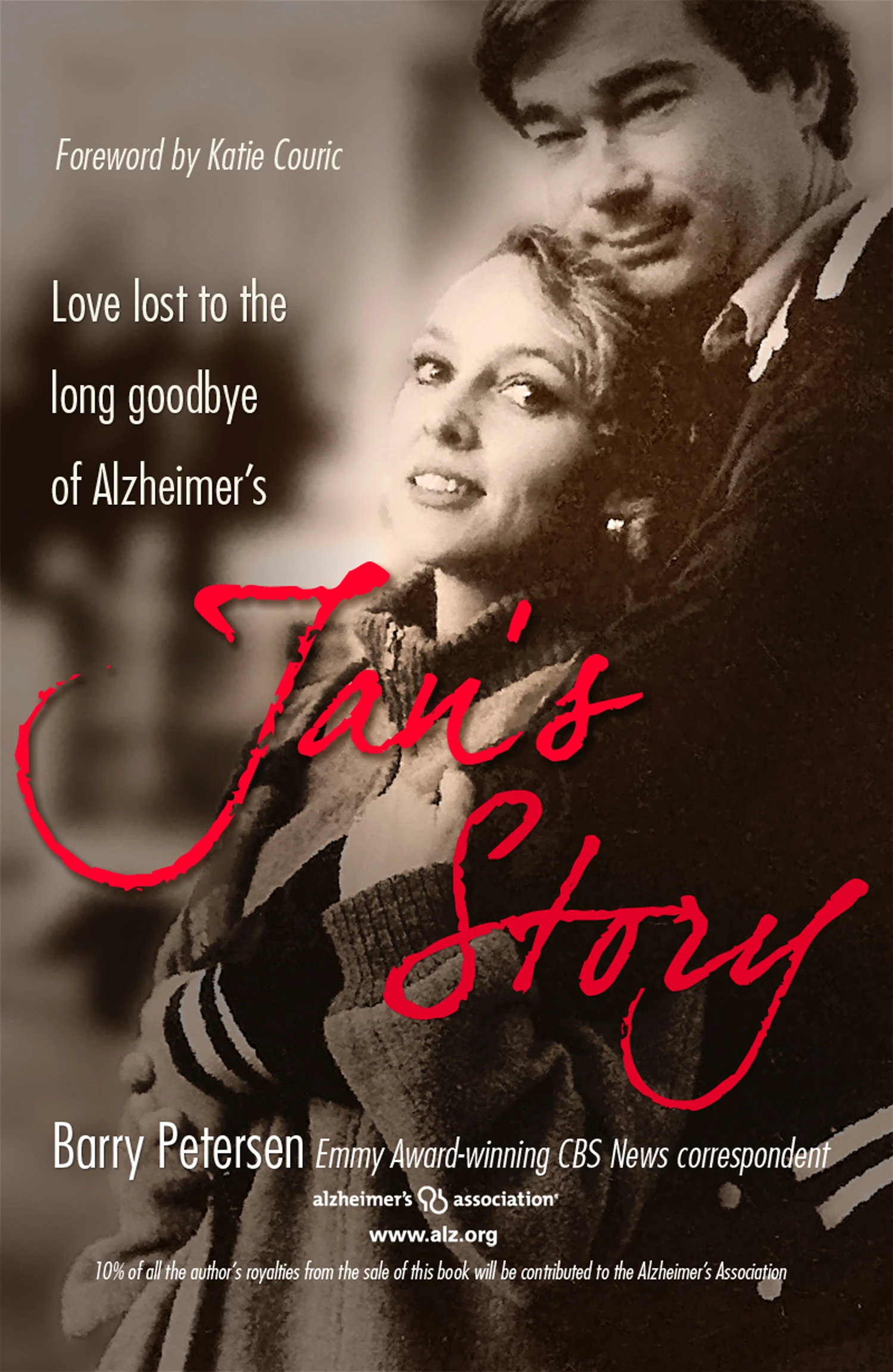
 I’ve had calls and well wishes from so many of my authors, that I’m overwhelmed. I so have the coolest authors that any publisher could ask for. Gang, without your fabulous writing, unending talent, and boundless enthusiasm, there wouldn’t be a Behler Publications. Thank you (and your darling agents) for submitting to us, thank you for your hard work and dedication. I hope for the very best for each of you in the coming year. Y’all rock!
I have the coolest authors in the world
December 24, 2008
 4 Comments |
  authors who rock my world |
  Permalink
 Posted by lynnpricewrites
Be careful and read the fine print
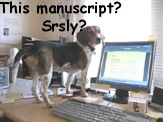
December 24, 2008Ok, so I lied. I really, really, really intended to laze around this vacation and not even think about work, but I woke up obscenely early with my brain buzzing and my fingers itchy. My first thought was that I need therapy. The beagle confirmed it when she refused to yield my pillow, and I didn’t kick her out of bed for her insolence. At any rate, here goes:
Publisher agrees to pay the Author 40% of the net profits received. This amount will be the cover price minus printing costs, distribution discounts.
I’ve been seeing variations of this statement cropping up in POD contracts, and I want to address this issue in order to expose this confusion. First thing the author is going to focus on is the 40% royalty. Whooweeeeehotdiggity! 40-freaking-percent? Yeehaw. It’s about that time when the author’s synapse stop firing, their comprehension slides into a puddle of goo, and they fail to see anything else.
The first hit is “net profits received.” Now, I’m not going to get all pissy about this because, frankly, it’s fair. Now put down the snowball and listen to this from a business standpoint. Unless you’re an author who has sell-throughs of tens of thousands of units, it doesn’t make financial sense to offer royalties on the cover price, because that isn’t what the book actually sold for. The publisher had to discount the book – anywhere between 50-60%.
Since the publisher is doing smaller print runs, say in the five-ten thousand range, their price per unit is smaller than had they printed up fifty-hundred thousand units. This means they’re paying royalties on an artificial baseline (the cover price) rather than what the book actually sold for. This decreases their profit margin. Many strong, solid smaller indie presses pay royalties on net, so while this is a pisser for the author, there is nothing untoward about it because everyone is making money on the book’s actual sale price. In this economy, I know several big publishers who are looking at the issue as well.
Where my red flag goes sky high is over the “minus printing costs.” Here is a delicious opportunity for royalty abuse because those costs are never defined. Go ahead and ask the POD to define those “costs.” I dare ya. Oh, they’ll give you some gobbledygook, but the realities are that those “costs” can be anything from a percentage of actual print costs – which is heinous because the POD is essentially defraying his printing costs by charging the author and hello! this would put them in the vanity arena – to “promotion,” “advertising,” and even “office expenses.”
What happens is that the author gets 40% of zip, nada, zilch, bupkis, nothin’, and the publisher gets it all, no matter how insignificant the amount is.
Unless you have a top-flight agent (in which case POD won’t be a part of your vocabulary) or your name will stop traffic, don’t get sucked in by big royalty percentages. Read the entire royalty clause. Better yet, get a literary lawyer. With POD, if it sounds too good to be true, it is. Always.
2 Comments | contracts, POD, royalties | Permalink
Posted by lynnpricewrites
Merry Christmas/Happy Holidays
December 23, 2008 I’m outta here ’til after New Year’s. Y’all stay safe, write tons, and enjoy the holidays.
-Lynn
5 Comments | vacation | Permalink
Posted by lynnpricewrites
I’m with a POD. Should I hire a PR firm?
December 21, 2008I’ve fielded this question any number of times, and my answer is always no. As I’ve stated many times, the Print on Demand business plan isn’t designed for risk. They make their money from authors buying their books at inflated prices or authors promoting their books successfully enough so buyers order from the online stores. There are no print runs to speak of, and the POD only prints books when there is a physical, paid for order. In some cases, extremely small runs of about 25 books or less may be printed.
Good PR firms need product, distribution, and store placement to make the effort worth their while. If the PR firm, or publicist, got the POD author a speaking gig, they would need sufficient stock for the event and plenty in the warehouses and on bookstores store shelves of the area where the event is being held. No POD can financially handle that big of a print run, and they definitely can’t risk the returns. So the author is doomed before he’s out the door. I would question the reputation of any PR firm that takes on POD authors because it’s like is like shooting fish in a barrel. They pick their client’s pockets and can’t perform. Who loses? The author. With the POD scheme, the author always loses eventually.
Leave a Comment » | POD, promotion | Permalink
Posted by lynnpricewrites
I need an editor
December 20, 2008As an editor, this sort of thing drives me insane. It’s like walking in back of a woman whose shirt tag is sticking up. We all want to tuck it back down, don’t we? But how, how, how does one fix this?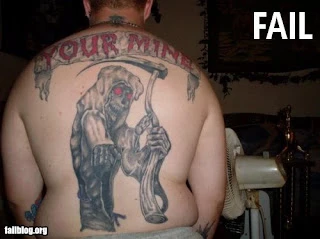
5 Comments | hysterical | Permalink
Posted by lynnpricewrites
The New Arctic Zone
December 18, 2008I was smacking my head as I walked out of the dentist’s office this morning. My appt. card said FEBRUARY 18, not December 18. What a tool. However, had I not made that blunder I would have so missed this: Now I realize my Midwestern and Eastern…and even my British friends find this dull. Who cares? A mountain range with snow? Whoopie doo. Try living under several feet of snow, Pricey. Yeah, I get that, except this mountain range is about ten miles from the beach, and the elevation is only about 1200 ft. It’s effing cold here in S. California – 53 degrees. The beagle and I are sharing warm brandy, and she refuses to climb out from under the “kivvers.”
 Somehow playing Beach Boys songs feels all wrong.
4 Comments | avoiding work | Permalink
Posted by lynnpricewrites
I’m a pack rat
December 18, 2008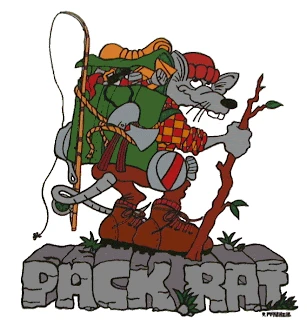 I never considered myself to be a collector of anything. Quite the opposite. How many times have I tossed out a nut or bolt in the garage only to have hubby come along a week later in need of such a nut or bolt? I never fess up to having tossed it because the garage is such a mess, that it’s just easier to blame/shame him into thinking his lousy garage maintenance is in need of an attitude adjustment.
So it’s with some dismay…ok, abject horror… that I pulled out my file folder that holds my research of writing tips that I’ve written and collected over the years. I’m on the last chapter of my book (yay!), and this chapter is all about the typical stuff that results in a rejection – grammar, POV shifts, dangling dipthongs…unless my daughter wore those to school today…basically a tackle box survival style guide. I even included a submission autopsy and a manuscript murder just for kicks. So the file folder is thick. In fact, it’s about five inches thick.
And here I’ve been laughing to my editors and distributors that this chapter will be done in no time. Someone shoot me now. Please. I’ve packed-ratted my way into a barbed-wire fence, and today is my comeuppance. It’s going to take me until New Year’s just to wade through this mess. When did I become so obsessive about comma splices and nouns that make your writing flat, or subject and verb agreement? The beagle took one look at the pile and fired up the blender. I opened up the file and found a petrified bug on the front page, right underneath my article about strategic planning before writing. Right. Strategy, my lower forty.
Yeah. Make that a double for me, beagle. This is gonna take a while.
1 Comment | deadlines, writing | Permalink
Posted by lynnpricewrites
Bad guys still wear black…eventually
December 16, 2008 Publishing is hard enough without having to wade through trying to figure out who the good guys are and who the bad guys are. It’s normally fairly easy to ferret out – and my new book (shameless plug) goes into more detail about this very thing – but there are cases when the bad guys wear white. These are the folks who cloak themselves in respectability in order to attain their personal agendas – and usually at the expense of the author.
In this business, personal agendas are always about money, and it doesn’t mean money going to the author.
YouWriteOn is enjoying some fabulous Christmas cheer this year with their “5,000 authors get published by Christmas” scheme. Jane Smith over at How Publishing Really Works and Victoria Strauss at Writers Beware have some particularly poignant posts regarding this little venture. What sucked so many into this particular web was that they are funded by the British Arts Council. “Why of course, they’re legit,” authors said in droves as they rushed to YWO’s Legend Press. They’re as respectable and honest as the day is long. Right-o.
Many were so convinced of this that they forked over $61 to buy their own ISBNs. Doesn’t seem so bad, you think. Consider that ISBNs go for a song depending upon how many you buy. For example, we bought 100 ISBNs, and they average out to 10 bucks apiece. So, where’s the other $51 going? Not sure how many of the 5,000 bought those ISBNs, which make them eligible for online store placement, but that is a huge profit center. And what’s this about authors receiving 60% royalties AFTER “printing costs”? What exactly does this mean? This is a perfect place for abuse because nothing is defined. And let’s discuss this no author discounts on copies they buy themselves. Why is that? Think the Arts Council knows about that?
They aren’t the only ones who appeared to wear white. Another publisher was recently outed as being far inferior to what they’ve been advertising. They started out with a huge bang in the publishing world and was handed the golden crown of respectability in every sense of the word. They had big start up money, knew where and how to splash it around, the ability to promote, and first class distribution. Everyone was dying to be pubbed by them and article after article appeared in the trade mags about how great they are.
And then the roof caved in. Suddenly all the ugly bedsores festered and stories of verbal abuse and personal attacks came tumbling out by their authors about review copies not being sent out, threats of taking books OP if authors ask too many questions, and royalty issues. Rumors of a personal agenda began spreading around while authors talked of the publisher spending more time and money on promoting his own book rather than their own.
And then there are the POD publishers who have the backing of famous authors (who ostensibly wear white). I can cite one such publisher off the top of my head that has some real trouble with math. Tthe contract states they pay on net. which isn’t an arrestable offense. However, their idea of Net is the total dollar amount received for the sale from the wholesaler or retailer MINUS their own costs associated with the sale of that book. And that, in my mind, IS an arrestable offense because it opens the door for all kinds of royalty abuse. There is no way to refute it or litigate it. What makes it even worse is the publisher’s site is so clean and tight, there are no red flag warnings. That author’s name recognition and support has sent hundreds of authors’ books to an early grave.
It’s enough to make me wonder what happened during our evolutionary process that would make allowances for such rampant malfeasance. I’m all for survival of the fittest. But survival of the most corrupt?
And what are authors to do about this? The lines have become blurred, and no one can place any confidence that someone funded by the Arts Council or holding the golden challis of publisher of the century is honest and good. Ask questions. Assume nothing. Talk to the authors of the publishers. Don’t be the first to jump into any “new” idea. In truth, there are no new ideas in publishing, and anyone telling you they’re “revolutionizing” the publishing industry is only looking to revolutionize the size of their wallets while emptying yours.
You’ll have to excuse me; I’m off to go change into my white riding pants, boots, spurs, and silver star. Beagle, get me my white hat and gun!
6 Comments | publishing, trust, YouWriteOn.com | Permalink
Posted by lynnpricewrites
“I self published my book.”
December 14, 2008
This sentence always makes me blink a couple of times because of the confusion surrounding it. Just like the Print on Demand mess – is it a printing technology or a business model? – self publishing terminology is one of those turns of phrase that entice me to out drink the beagle because most people botch it up.
Self publishing is when an author assumes complete control over all aspects of their book by creating their own publishing company. They own all the rights and purchase the ISBN in their company’s name. Self publishing can be a very viable publishing credit, as seen through Brunonia Barry’s self pubbed The Lace Reader, published through their company, Flap Jacket. They got great distribution through BluSky Media Group (which is our distributor as well). Through their hard work and great distribution, the book sold extremely well. So well, in fact, Harper Collins picked it up for $2 million. The sky is the limit with self publishing, and I’ve read many fantastic books from authors who took this. Mind you, it’s not for anyone suffering a weak bladder, high blood pressure, a drinking problem, or heart trouble.
Vanity presses, on the other hand, take all the decisions out of the author’s hands by charging money to publish titles under the vanity’s name, and those printing rights are the property of the vanity publisher. Authors are free to drink as much as they like because they have no control over the final product and can’t make any executive decisions, including print runs, return policies, and distribution. These books are not viewed as a publishing credit. This is an important distinction.
In truth, vanity presses started using the “self publish” terminology when they realized true self publishing had become quite respectable. They wanted to give authors the impression that forking over their hard-earned money to these companies would make authors a part of a “respectable” world as well. Problem is, it’s a lie.
You are either self published, or you are published by a vanity press. There is no gray area.
8 Comments | self published, vanity | Permalink
Posted by lynnpricewrites
Exclusives and demands
December 12, 2008
Warning: this is a rant.
“I had an agent request an exclusive. For a month.”
The author was miffed, and I can’t say as I blame her. I somewhat understand the agent’s plight. She’s busy, and she wants to grant herself the gift of time in order to review the work at their leisure. Please. We all know full well that leisure time in this business only happens when we’re six feet under the ground.
But is this fair? Is it right?
I know, you’re saying “FAIR? RIGHT, Pricey? What in this industry is fair?” Well, quite a bit, actually, but that’s a different post. What I mean by fair, is being fair to the author. You folks spent oogles of time writing your stories, getting them critiqued by beta readers, rewriting, getting off Writer’s Island, and you’re ready to hit the big time. The last thing you need is an agent throwing their weight by intimidating you into forcing an exclusive. While they sit on your manuscript, you’re taken out of the query game to sit on the bench for a month. If you run into another agent who requests an exclusive, that’s only two agents you can query in the course of two months. Sorry, but I think that sucks.
“I had an agent demand a list of other agents I’d queried.”
Ok, this is just damn cheeky, in my opinion. In reality, it’s none of their damn business. It’s like the time my boyfriend in college got all nosey and asked about my past. Yeah. Right. As dull as it was, like that’s any of his business? And, in truth, these agents are asking for all the names that your manuscript slept with. Oh, I understand the logic to the question. The agent wants to know how long the manuscript has been vamping around because it would/could be so humiliating to accept a manuscript that has slept with every agent in the industry. In truth, though, IT DOESN’T MATTER. It’s sitting on your desk now, Ms. Agent, so get over yourself, and read it. Remember, it’s all about the story.
This is a “you snooze, you lose” business, and I think it’s rotten for agents (or anyone) to throw their weight around with demands and exclusives in order to skew the playing field because it’s not advantageous to the author. I never demand that authors reveal the publishers they’ve queried because it’s none of my freaking beeswax. I always assume their manuscripts are in the hands of other agents and editors and have been known to move very fast. I’ve called authors on the weekend or in the evening in order to be the early bird catching the worm, and there’s no reason agents can’t do this as well. Then again, I’m preaching to the wrong choir, aren’t I?
Lastly, am I saying don’t grant the agent an exclusive or answer their request for a list of other agents you’ve contacted? Sadly, no. I can’t. Only you, the dear author, can make that determination. You don’t want to cut off your nose to spite your face, and your future could end up residing in the hands of that agent. But since it’s cold and windy in sunny southern California, I felt the need to be bitchy about something that squeezes the cream right out of my Twinkie.
Ok, rant over. Beagle, get me a margarita!
6 Comments | agents, rant | Permalink
Posted by lynnpricewrites

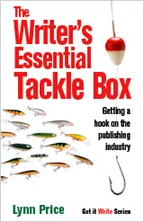 If you want the inside scoop on what floats our boats, The Writer's Essential Tackle Box is a must have. Out in November 2009.