Implosion of a house of cards

April 30, 2009

For the past seven months I’ve been watching a publisher implode in a most grand scale. Unlike the huge spectacles Vegas puts on when they implode a dead casino, this implosion is deathly quiet, something I’m sure the publisher appreciates as he continues to claw his way through the mounting disaster of his own making.

Over the past couple years, I read all the articles that christened them The Next Big Thing. Wow, they all cooed. Gee, they all marveled. This publisher is soooo amazing! But I was skeptical. After all, where did they come from? Who were they?

As the proverbial Cinderella story, they had it all; the little spuds from nowhere established great distribution and great reviews. Authors and agents queried them in droves. Books flew off the warehouse shelves into the genre buyers’ hands. It was every publisher’s dream – Instant Success. The fabo Goliath beats David at their own game! Yay! Power to the little spuds! But I was skeptical.

I never bought into the hype because if I know anything, it’s that there is no Instant Success. Oh sure, a book might hit the big time and put a publisher on the map. But they gotta stay there, and that takes smarts and experience – something this publisher lacks. A publisher cannot fake any part of their existence or raison d’être because there are too many checks and balances in place that make exposure not a matter of “if,” but “when.”

The reasons for their impending demise are many, but I think it comes down to arrogance, having an agenda, and abject inexperience. I can’t think of a deadlier combination for a publisher. Money alone does not guarantee success. We have to always keep our ears open, our opinions flexible to change, and be willing to learn. Doesn’t matter how long we’re in business, we never stop learning.

Why should I care about this publisher? I don’t. Not one whit. They splashed money around like the beagle does after one too many beers and didn’t bother learning how the industry works. They acted as if their money and splashy countenance would counter the boogeyman. Well, the boogeyman is very much alive in this business and is always ready to pounce, and if this publisher’s walls are made of cardboard, then let them fall flat on their face, right?

Problem is, my heart is with the authors and, as one who always yammers on about the pitfalls to avoid, I’m trying to define the red flags of this particular beast so authors can, in a literary sense, recognize margarine from butter. This publisher was Country Crock all the way, but their packaging said God’s Finest Butter; it was pristine and perfect. They gave the appearance of doing everything right, so how would anyone know different?

Here’s what I know:

  • Looky at me! I don’t know of any new publishers with zero publishing experience who made a giant splash when they first opened their doors. People just don’t climb out from under a rock and spend their way into the hearts of the industry without having some warts on their feet. Advice: be wary. Looks can be deceiving.
  • Confidence is very good for business. However, arrogance is like fingernails on a chalkboard. I’ve had the good fortune of being mentored by some top people in the business, and not one of them is arrogant. I have learned that people use arrogance to mask their inferiority complex. People with issues make lousy publishers. Advice: Avoid arrogant people because they are achingly difficult to work with. They will always be right, and you will always be wrong.
  • Agendas are bad. If a publisher has ulterior motives, they’re going to be unearthed at some point, and it’s going to get very ugly very fast. I’ve seen a few publishers whose expanding lineup was nothing more than a false front, designed to conceal the fact that they wanted to publish and promote their own books. As a result, the authors’ promotional efforts became less and less important to the publisher as they spent more time and money on their own projects. Advice: If a publisher is also a writer – which many of us are – check to see how much time they are spending on their own promotion compared to their authors. If they are less and less available to their authors, yet they are all over the place, this could smack of an ulterior motive to the reasons for their company.
  • Abusive publishers have something to hide. Whether it’s fear or frustration, publishers can’t take it out on their authors. If sales are tanking, the publisher must assume responsibility. If they suffered massive returns, they have only themselves to blame for overselling the books. They cannot send threatening emails out to their authors and browbeat them into engaging in useless self-promotion that has zero hope of selling a single title. It is not the author’s job to save the publisher’s ass. Advice: news like this will come out eventually, so keep your ears close to the ground. Talk to the publisher’s authors. If they’re unhappy, they’ll be pretty forthcoming about it. If you hear the same story over and over again, you can pretty much take it to the bank and cash the check.
  • Publishers do not piss off agents. Ever. The converse is equally true. This is the most gossipy industry because it’s small, and news travels fast. Publishers who anger agents are just begging for a quick bullet to the brain, and any publisher with a firing synapse knows this. It’s true that problems sometimes arise, but there is always an equitable, satisfactory solution. You never, ever risk soiling the relationship – especially if that agent is well-known. Advice: find out what agents say about a publisher. This is your best ally. If agents don’t like them, there is always a solid reason.

Since this publisher was so glamorous on the outside, I feel inadequate suggesting that an author’s best defense is to give all new publishers at least a year just to make sure those warts don’t exist. After all, flash and zing are attractive features, and I know of many authors and agents who got caught up very early in this nightmare.

There are few words to express the sorrow I feel over the authors who are involved with this house of cards. My biggest hope is that the publisher implodes quickly to avoid taking any more authors down with them. I have no confidence they will suddenly see the error of their ways. That ship has long since sailed.

Advice: It’s a tough world, my dear authors. Be careful, and ask tons of questions. Network.  Get to know people in the industry so you can ask their opinion. It doesn’t matter how great a company may look on the outside – and I mean stellar, hoo-ha, off-the-charts, gonzanga amazing – it’s the inside that will reveal whether a company has the stuffing to survive.

Be suspicious of dichotomies. An unknown, new publisher who spends money like water, yet has no previous ties to the industry or experience presents a pretty big bull’s eye on the industry dartboard.  Lastly, don’t jump too quickly; you might land in a frying pan, and you’re the butter.

The Day in the Life of a Writer

April 30, 2009

Watch. Listen. Learn. The truth to writing isn’t what you think…


Are we looking for an excuse to quit reading?

April 28, 2009

Do most agents/editors look more for what’s wrong than for what’s right in the writing? Do they focus more on errors than on strengths?

Quick Answer: Yes

Longer Answer: I know it sounds as though we are a heartless coven of witches and warlocks who sit in our darkened caves while sipping the blood of rejected authors. In truth, we’re not denizens of cynicism, but rather, we’re efficient.

The longer agents and editors are in business, the better able they are to sniff out a bad egg early on. We utilize those early cues such as spelling, grammar, organization, and sentence structure to wave our personal red flags. If a work is overloaded with these elements, why continue reading? It’s true that a fabulous story could be hiding amongst the mess, but I have yet to see it. Great writing and proper formatting, spelling, and structure go hand in hand.

I won’t cop to “this is how we all work,” because I know some of my brethren don’t have as itchy a trigger finger as others. However, the generalities are such that most of us look for a reason to continue reading. We read one line. If we like it, we continue on. If we like the page, we continue on. If we like the chapter…ok, you get where I’m going with this. Peter Cox – agent extraordinaire – calls it “moving to the couch.” If we continue to be entertained by your words, we’ll toss the beagle off the couch and read in comfort.

Why are we such crabby pants about this issue? Shouldn’t we be focused solely on the story?

Absolutely. To a point.

See, spelling, sentence structure, and organization are all a part of effective communication.  If you choose to omit an integral part of communicating your story, then you’re no better than the idiot mechanic who told me he hadn’t the foggiest notion as to why my car made a clangy-bangy sound when I came to a full stop. #2 Son Spawn looked underneath my car’s Victoria Secrets and discovered I’d been dragging a tunafish can all over town. Crikey, it was as obvious as the margarita in the beagle’s blender, but he never thought to look there. Dumb!

Words, imagination, and understanding the English language are the writer’s tools, and writers have a responsibility to know every aspect of their craft. Banging out a story is only half the job. You can’t create an effective product if one of those elements is missing. I [and nearly all of my fellow coven members] are extremely unforgiving of spelling and syntax blunders because there is simply no excuse for it.

The idea is to never ever give an agent or editor a reason to reject your work other than it’s not right for them. To be rejected because you fell asleep in English class is akin to the beagle forgetting to add a half a can of beer to the margarita mix. Last time she pulled that, I made her clean the showers. Don’t put us in a position where we hand you a scrub brush and Tilex.

Now, I’m off to my broom. I hear the wails from one of the coven members in New York screaming about POV switches.

*Thanks, Pelo, for the question.


Author events

April 28, 2009

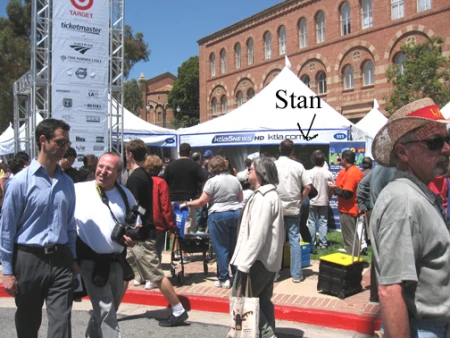
There is nothing cooler than having your faith restored that the written word isn’t dead. We had a lovely taste of that at this weekend’s Los Angeles Times Festival of Books. One of our authors, Stan Chambers, had a command performance at two booths this year since he was such a hit last year. Stan is a California news icon, and he can’t walk anywhere without someone stopping him to shake his hand, tell him how much they loved growing up with him, watching him cover some disaster that invariably plagued our fair city. He’s gracious and one of the sweetest people I know.

And this weekend he earned his bread. He was swamped at both the USC booth and the KTLA booth. And the books flew out the door. Ah, good stuff that makes any publisher weep with joy.

stanfestival

But the bigger picture is how wonderful these book fairs are. We saw hundreds of booths – self-pubbed author booths sat among booths from large publishers and bookstores. Everyone had a pitch and a gimmick, and it was great fun to watch the high level of interest in everything from the conspiracy theorists to the Ayn Rand Institute. Every genre was represented, and books bounced out the tents and into readers’ arms.

The coolest thing of all was walking the UCLA campus and watching people with their noses stuck in their new purchases. For every person who screeches, “The written word is dead!” I say bullpucky on an onion bagel. The proof is in the thousands who attended the weekend event.

I had the luxury of standing back from it all and watched people’s faces light up when they found just the right book. I thought I was the only one who finds a book and gives it a quick hug after paying for it – but I watched the same scene play out many times. Kids were begging their parents to stop and read them the book they were holding. How cool is that? Budding readers make me do the happy sigh. That a couple hundred readers are now reading Stan’s remarkable book about his life and the birth of broadcast journalism humbles me right down to my toesies.

It doesn’t matter what you read; horror, mystery, romance, mainstream fiction, or downright smut…Read on!  Somewhere, an author and their editor are blessing you.


Drinks anyone? Calling it a day on your writing

April 27, 2009

“I’ve worked for years, and I feel like binning the whole project. It’s not worth it.”

Add one part self-doubt and two parts loathing, and you have the perfect Fuhgedabouddit Martini.

Whether it’s the constant editing, rejections, or hitting a creative wall, almost every author I know has pondered their commitment to this writing thing.

It’s a tough call to know when a project should be left to make merry with the pens, lost erasers, and paper clips in your desk, or to soldier on and finish the work. Thing is; we are the heart and soul of our writing projects, and we either get our daily dose of passion from our literary hypodermic needles or we flounder.

And it’s not just having the passion for the project; it’s for everything that comes after. The rewrites, the query process, the production process, and the promotion. It takes a lot of passion to sustain a project from the birth of an idea to seeing the end product on the store shelves. Are you in your particular project for the long haul, or are you running out of gas? Are the huge numbers of rejections getting you down? Maybe it is time to review.

Finding your personal gas tank on empty is heartbreaking, and the first thing I’ve heard authors say is, “Damn! I wasted all this time – and for nothing!” Believe me, no phase of writing and querying ever goes for naught. There is some valuable lesson to be gleaned from every experience.

If you’ve hit the wall, drink the martini [compliments of the beagle], and then analyze all the great lessons you learned from the experience of writing [and querying] that work. It doesn’t matter if you’ve worked on it for five weeks or five years.

You.
Learned.
Something.
Valuable.

And look at it this way; there are no hard and fast rules that say a project has to stay dead forever. There may be three, four, or five other projects that follow, but nothing is ever really dead unless you bury it in your heart forever. If there isn’t dirt and a tombstone on that manuscript that rocked your world at one time, you can always noodle with it if you find renewed passion for it. And just like Lassie, sometimes the passion does return [unlike the beagle, who is known to bolt for the hills at the slightest whiff of a skunk].

So the moral of today’s lesson is not to force your writing. If you’ve lost your passion for it, then maybe it’s time to put it away for a day, a month, a year, or forever. But that’s the cool thing about writing; it can always come back to life when you have new wind in your sails.

And yes, I realize I’ve included more metaphors than the beagle has designer chewie toys. It’s Monday, and I’m allowed to operate heavy machinery without proper sleep.


Sex – yes or no?

April 26, 2009

No, no, get your brain out of the gutter! I’m talking about literature here. Sheesh.

What brought this boggle to mind is when I blew off the afternoon to watch TV with The Daughter Spawn. Sex in the City – the movie – was playing. I’m a latecomer to the series and admit to a guilty pleasure of loving this show. When the entire world was watching it, I had my nose stuck in Discovery Channel and The Food Channel [ironic since I consider kitchens as the devil's playground]. By the time I caught on to the series, it was playing fifteen times a day on regular TV. I couldn’t figure out why the show always ended five-ten minutes before the end of the half  hour.

Then I saw the movie.

Ohhhh…that extra footage was sex. Graphic member-throbbing, titillating, holy hot tamale in-yer-face sex.

I couldn’t help but wonder why the producers [hello, you little naughty girl, Sarah Jessica Parker] felt this was necessary. I’d been watching the watered-down version for months and thought they got their point across just fine. I found the full front-on whoopie-doo sex a turnoff.

It may be that I have a slipped gene somewhere – must ask Mom about that – but graphic scenes are shocking to me, which I guess is the point? But it reminds me of the seventies when the directors decided they wanted to push the envelope of propriety, and voila! gratuitous sex was born. So what would have normally been a fairly tame movie for a general audience was suddenly shot up a thousand blood pressure points all because we had to see some starlet’s areolas.  I always wondered why. Did the writers feel their story sucked so much that they needed to add an attention getter so people would watch the movie?

I can see it now; “Yeah, Joe, the movie bites the big one, but, hey, if we toss in Suzy Buxom’s silicone hot-buttered lungs, we’ll probably make a little profit.” Crikey, what happened to possessing a little class?

And this is how I feel about detailed, beginning-to-end sex scenes in literature. Unless you’re writing erotica or romance, less is better. Sex scenes have to make sense. To me – and this is my soap box  – gratuitous sex is a cop out and just plain lazy writing. Oh, my storyline is thin, but if I toss in some silk sheets bop time, it’ll attract attention. Indeed.

The problem with this is that most sex scenes are like slurping root beer out of a bottle at a five-star restaurant. The act is out of place with the setting. If your main characters are in a relationship, it’s a given that at some point they’ll go carnal, and writing about it may be a natural progression to the story. I’m good with that – got one of those scenes in my own novel. But does the scene require the actual groaning, smiling, biting, humping, feeling, and screaming? I’d rather have that left up to my imagination, thankyouverymuch.

I’m not exactly June Cleaver; far south of it, in fact. But it’s my personal opinion that writing graphic sex doesn’t enhance the sophistication of your story because most of them are poorly written and/or cliche. If you truly believe the graphic parts lend intrinsic value to your writing/story, try taking it out. I’m betting that in most cases, the reader won’t miss the gymnastics. Writers can easily do the lead-up and then cut to the post-mambo scene, allowing the reader make up their own mind as to what they did in between.

When in doubt; don’t. [jumping off soap box]


A Saturday funny

April 25, 2009

As writers, we should all know the definitions of the words we use, yes? Well, in case anyone is unsure of the meaning of a word, they really should treat themselves to this blog. I laughed so hard I snorted coffee through my nose.


“I’m so pretty…”

April 24, 2009

Cover art. Where would we editors be without cover art? We can have the Great American Novel in our lineup, but if it has snorky cover art, then readers may very well pass by it without a single glance. Goodbye sales, hello comments of, “what a beastly cover.” That’s why it’s vital to have not only great books, but awesome packaging.

Cover art, as we all know, is the precursor – the mood enhancer – to our books. If I see a book in pinks and pastel yellows with prancing unicorns, then I better see a fanciful, lighthearted story WITH UNICORNS inside because the cover set that mood [Don't you hate it when you buy a book that depicts a person or thing, yet that same person or thing is nowhere to be seen in the book?].

Now if that unicorn is smoking crack, then this is what I call intriguing and, even though I’ll mutter a “WTF?”, I’ll pull it off the shelves to investigate because it’s so contradictory. The story and cover has to match. For example, a pinkie, flowery cover design shouldn’t be sitting on a book about attempted suicide and death. You laugh, but I’ve seen these misfires.

And that’s the whole idea behind cover art. To entice and intrigue. Most editors give their designers a copy of the manuscript – it helps them with setting the tone. We go gooey over covers. Well, ok, I do because it’s the visual representation of our books, like unveiling a painting the painter has been working on for months.

And I get as giddy over cover designs as I did back in third grade when Billy Mayer gave me the half his Twinkie. Now that was true love. ‘Course next week, I decided Billy had cooties and deserved nothing short of a cold, black death, but I digress…

I realize it sounds trite to say that my intent is focused on visual appeal, but when I look on the ‘net and in bookstores, I often wonder if Quasimodo has a hand in some of the cover designs out there. I’ve seen scanned photos of actors from   movies (which resulted in a lawsuit threat), stock images from Corel that were artlessly tossed together with no consideration of color and font useage. If the cover looks cruddy, the assumption is that the inside will be as well.

Authors (and their agents) need to feel happy about their covers. A happy, prideful author is one who is excited to show off their books. And so should it be for you at the cover design phase. Chances are your contract won’t give you ultimate approval, but it should say something about allowing your input. Sometimes authors have fabulous ideas, and it’s wise to consider their input.

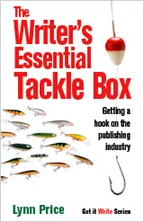
For those who self publish, there is often a strong desire to design their own cover, and I can’t warn against this enough. There are many tricks to the trade regarding eloquent design, and it really is the difference between sales and a warehouse full of books. I have a fabulous interview by the wonderful George Foster in the Tackle Box, and he goes into great detail about what makes for a great design – and why.

So if you wanna sell books, make sure you’re pretty. And anyone who insists the buying public (and reviewers) don’t judge books by their covers is smoking the same stuff as the unicorn.


You’re unquotable…oh, yes you are….(sung to “Unforgettable”)

April 24, 2009

Query Shark dislikes authors putting quotes in their query letters as much as I do. I realize authors think a quote from their book adds flavor but remember, we know zippo, bupkis, nada, nyet, zero about your story, so there is no frame of reference as to how the quote fits in with your story.

I call it the wet booger syndrome – something that just hangs there, and is a distracting mess. I read these and think, “oh, that’s nice. Wonder what they meant by it.” It distracts me from the topic at hand.

Rather than pulling me in, you’re making me scratch my head. You don’t want this. You want pure, unadulterated slobber along with a sudden urge to toss the beagle off my desk so I can read your work uninterrupted. Quotes won’t help you get there.

Every word has to count, and you have darn few that fit on one page. Don’t waste them with text that doesn’t reveal your plot or entice.


Self publishing book expo

April 23, 2009

So I received this email talking about the upcoming Self Publishing Book Expo and was asked for my opinion. Before I feel confident about giving an opinion, I need to know more about it. My first place was to PW, where I didn’t learn a whole lot. Further research is still showing up precious little info.

The expo is the brainchild of Diane Mancher and Karen Mender. Mancher said she will promote SPBE and had this to say:

“Self-publishing is one of the fasting growing segments of the publishing industry, and the time is ripe to have a place where these authors can interact with the public, mingle with their peers, meet representatives of the media who are otherwise unfamiliar with their work, and expose their books to a much broader audience.”

I agree that there are more authors turning to self publishing, but I wasn’t sure exactly what she meant by self publishing. Is she talking those who use iUniverse, AuthorHouse, and all their ilk, or is she referring to those authors who form their own companies and pub their own books? There is a landfill of difference between the two, and it’s important to make the distinction.

My thoughts are that while this could be an interesting endeavor, I’m uncertain as to how this expo will impact the publishing world, in general. Their intent for this expo strikes me as a bit thin. If the sole purpose is to mingle among their peers and the public, the $275 exhibitor fee seems like a lot of money that won’t yield much bang.

Authors want to see their books on store shelves, and the vanity press route closes that particular door. Is it their intent to discuss other mediums of promotion? If so, then a vanity press conference seem a better choice. It’s a lot of money to pay for a meet and greet. There has to be some great end game possibility for cash-strapped authors, and I’ve been unable to find it.

And what general public is going to pay an entrance fee? Potential authors? If so, it’s not like self publishing companies have a high acceptance standards, so why would an author spend the money to come to the expo? That leaves the general reading populace. Will they come?

I also wonder how many representatives of the media will attend. This isn’t mainstream publishing, and let’s face it, the media shows up to see the big name authors. Unknown names aren’t newsworthy, in general, so what is the attraction to pull them in?

Before self-published authors jump down my throat, let me say that I think the expo is a good idea provided it’s not just an expensive convention to rub elbows with other authors.  It’s good for any writer to understand how the industry works, how books are sold, and specifically, how self-pubbed books are sold. Education is key, but the fact that I can’t find much information about this event has me standing back and saying, “hmmm.”


Follow

Get every new post delivered to your Inbox.

Join 963 other followers

Powered by WordPress.com