Hoffman apologizes

June 30, 2009

Well bully for Alice Hoffman. She apologized, albeit poorly (through her publicist, for crying out loud!) for her outrageous behavior to Roberta Silman. I’m certain her publisher told her to either apologize or find herself looking for another publisher. As things go, she may find herself looking anyway. My email was flooded with people saying they would rather invert their bellybuttons than buy her new book – or something to that affect.

At the center of this mess is Roberta’s idiotic choice in revealing way too much of the book, which was a bonehead thing to do. Had I been the author of that book, I would have gone ballistic . . . in the privacy of my own gin tub. Then I would have called my editor, who, if she has any brains, would have contacted Ms. Silman at the Boston Globe and her editor to complain. I’ve done this because I see this as a part of my job. I didn’t do it because of the review – the review itself was favorable – lucky us. But the reviewer did the same stupid thing; gave away far too much of the book. I politely gave the reviewer of the newspaper (and the editor) a WTF?  Oh, geez,  sez they, really, really, really sorry.

Now, did I believe giving away too much would affect sales? No, and had Ms. Hoffman possessed a firing synapse, she would have realized the same thing. Ms. Silman’s review was an in depth analysis of the book, and people would still buy the book – until this happened.

Ms. Silman’s transgression hardly justifies having her personal email and phone number blasted across TweetLand. Authors get reviewed and critiqued all the time, and they MUST shake it off. They don’t write public letters meant to humiliate the reviewer. They wince, have a few margaritas, and freaking move on. Hoffman’s teapot lid is screwed on a bit too loose for my taste, and were I Silman, I’m not sure how forgiving I would be. I would also question its sincerity.

The Non-Apology:

And this brings me to another rant. Whatsup with the quality of apologies these days? Ms. Hoffman’s is a shining example of the crap apology. In case anyone forgot, the idea of an apology is to face the aggrieved party and say, “I’m sorry for my outrageous behavior. I regret that my actions hurt you. I realize I was wrong.” And they don’t do this through their damned publicist.

But today’s non-apologies are anemic. This is the usual fare: “I’m sorry if I offended anyone. I never meant to hurt anyone.” Folks, this is not an apology. They’re apologizing that YOU were offended, and it’s a sneaky way of saying, “the problem is with you, not me.” There is zero ownership, regret, or responsiiblity that their  actions were plain wrong. And people actually buy this garbage as sincere.

I think this all comes down to an over-developed ego. Pride prevents them from digging deep into their hearts to acknowledge that they did a very bad thing and actually regret it. Apologies can’t be flippant. As an editor, I’ve been on the receiving end of too many non-apologies, and I’ve put out a fatwah on insincerity. No apology is better than a non-apology. At least it’s honest.

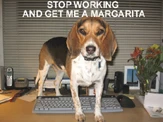
Dear, dear authors, no matter how much pain you’re in over a crit or review, please don’t jepordize your career over something that won’t amount to a hill of beans in the grand scheme of things. The earth will keep spinning on its axis, politicians will always be bums, the beagle will never stop drinking, and the written word will never die. Remember that, against the giant odds, you got published or critiqued. That’s far better than most ever get. Be grateful, be professional and for crying out loud, remember that above all else, you love to write. If you do go overboard, apologize for your aberrant behavior and beg forgiveness. Anyone can be a bonehead. Just make sure it isn’t you.

Alice Hoffman should have taken up tennis

June 29, 2009

It’s a fact that a bad review stings. This business requires a strong backbone and nonexistent gag reflex because, at some point or another, someone is going to say something about your writing that you don’t want to hear. That’s life; 100% of the people aren’t going to like your book. Get over yourself. How you react to it is what makes you gracious under fire or a rabid gasbag. How you are perceived should matter to you because it’s everything in this business.

This article is a shining example of what I’m talking about. Alice Hoffman’s over-the-top reaction to Roberta Silman’s review of her book reveals the intelligence of a bing cherry. She is a gasbag. There are people I would NEVER work with again because they proved to be bing cherry gasbags. Gasbags don’t sell books.

But Alice didn’t stop there. She blasted Roberta’s home phone and personal email over the internet, imploring others to contact her. Whoa. Now she’s no longer just a gasbag. She’s wandered into I’manutjob Land.

Alice, here is a newsflash, darlin’; there are idiots who don’t stop at sending nastygrams, and you need to know the risks you’ve placed on this reviewer. Idiots sometimes stalk and  do horrible things. I know because I’ve had this very thing done to me, and it scared the holy hell out of me.

And what about your publisher? Have they swallowed a carton of Rolaids for the embarrassment you’ve caused them? It’s no small wonder that you are suddenly “on vacation” and your Twitter page was pulled down.

I’ll tell you what; if you were my author, you’d be on something more permanent than a vacation. You’d be out on your butt. It wouldn’t matter how much money your book makes – who needs a psycho? You’ve ruined your reputation to the point where I’m hearing, “Whoa. What a bitch. I wouldn’t buy her book if it were the last thing in the store.” Your kind of nuttery doesn’t sell books, so who needs you?

Authors who feel the need to vent at a rejection or bad review should use that pent-up energy by smacking a tennis ball around or jogging. If you’re hurting, keep your feet moving and your mouth shut.


Drive-by verbing

June 29, 2009

I love clever writing, but I have my limits. Some of those limits are adverb-a-tosis and organizational-sepsis. There are a ton more, but what I’ve been seeing lately is a crime that leaves me begging the beagle to assemble her hit squad of German Shepherds. This is drive-by verbing – where through the magic of our imaginations we transport nouns into verbs.

Oh, I get it, all right. We have all kinds of accepted uses:

  • The beagle treed a squirrel, thinking it was the same beast that stole her beer at last weekend’s Poodle-Palooza.
  • Still hung over, she boomeranged onto the first branch.
  • I googled local AA meetings for the beagle.

These are accepted “verbs” that we all use, so I don’t mind seeing them in a manuscript, provided they are used in moderation. But I’m less sure when authors create new ones for the sake of being cute or clever. If it’s in the course of dialog, then this is fine. Heck, authors get away with murder in dialog that they can’t when it’s a part of the narrative.

See, the idea is not to make the narrative more clever than your characters, and drive-by verbing is one of those hinkey things that make for unbalanced storytelling. Great narrative, dull characters. It disturbs the space/time continuum and makes my teeth itch.

I had two manuscripts where the authors thought it would be great fun to do some drive-by verbing which resulted in my sucking down a choccie martini while grabbing a form rejection letter.

“She calendared Ella for the following week.”
“Roy dirtballed the eviction notice and spat into the ground.”
“Her emotions umbrellaed, matching the pouring rain.”

Okay, okay, I hear you screeching, “enough already! Make it go away.”

So what’s the problem with drive-by verbing? It invariably makes the author sound “ignernt.” On the face of it, I thought the offending authors were intellectually challenged. But as I continued to read, I saw a pattern of attempts to be cutting edge and clever with their narrative, while their dialog sat in sticky, uninteresting goo.

Please, for the love of all that’s holy, avoid drive-by verbing unless it’s in the dialog, AND it makes sense for your character. Otherwise, you will be held solely responsible for our painful groaning and heavy drinking. This type of thing makes the beagle margarita herself into a coma. And we don’t want that, do we?

[Mild apologies to the authors of these debacles, but, well, really...you needed a good spanking.]


If you really want to put me off my feed, do this …

June 29, 2009
I am the cousin of one of your authors and she recommends you highly. I am a good writer, probably better than[name redacted]…

This is not a selling point. It’s nothing more than saying, “My work is better than hers, so nyah, nyah.” It sets my teeth on edge.

Never diminish another author to make yourself look better – especially if it’s an author we work with, for crying out loud. The subliminal message is that we have poor taste in our choices, but you are here to save the day. I’m not impressed, and the beagle – equally unimpressed – pulls out one of the Cuban cigars she stole from a pack of German Shepherds. You don’t want to be responsible for the delinquency of a smoking beagle, do you? Isn’t it bad enough she drinks?

If you are a friend or relative of an author and you’re querying their editor, compliments go a long way. “I love the way Author ABC’s book turned out, and it was fun to see how the editing process improved the quality. That’s what made me want to work with you. I trust your editing and the vision you put into my cousin’s book…blah, blah, blah.” This puts a positive light on your friend/relative and on the editor you’re querying. It says, “I understand and appreciate that you are a good editor, and that’s why I’m querying you.”

The original sentence makes you look like you’re thinking (with great snarkitude), “Geez, Cousin Blutto’s writing sucked stale Twinkie cream, and he got published. So why can’t I?” Instantly my thoughts are; you can’t get published ‘cos you’re a jealous, competitive sourpuss, and the holidays with you must invite lots of drinking for your family.

You never get a second chance to make a good impression, so make sure that what you send out always strikes a positive tone.

Another way to put me off my feed is to call me to ask what kind of books I accept after I already told you to look at our website submissions guidelines during our first phone call. “I see what you don’t take,” sez they in all earnestness, “but I can’t find what you do take.” Envision head banging on desk. My head. I wonder if the caller is simply incapable of reading or they’re trying to get that vein in my forehead to explode. “Oh!” sez he in a moment of passing clarity, “there they are.” Yah, there they are, dude.

On second thought, maybe being off my feed isn’t such a bad idea. After all, I did eat more than my fair share of birthday cake…


Why do we write fiction?

June 27, 2009

It’s the weekend, and I should be outside paying homage to the sun as we Californians tend to do. But noooo. I’m indoors – like a fool – at my computer – because, as usual, that Nicola Morgan woman, once again, tweaked my nose with her life-pondering questions. Pity I didn’t see her post about writing fiction on Wednesday when she wrote it. I would have happily blown off a weekday to contemplate the more esoteric elements of my life. I’d put the whole thing off until Monday, but Morgan knows me all too well. Once that cat is out of the bag, I’m looking for a scratching post. She writes:

Why do we write fiction? Why should we? What does it do to the reader? Why? Why is it damned important? What will happen to the human race if we don’t do it and if readers don’t read it?

Now, Nicola’s post is more scientific and she uses all kinds of five dollar words because, let’s not pretend here, she’s a lot smarter than I am. Science and math were subjects that left me drooling on my desk, thus earning detention after school. So rather than talk about the brain – an organ I lack since losing it in a card game – I’ll attack this from the heart.

For me, fiction is about passion. Something is burning inside of me and screams to get out. The characters are like real beings, and they slam me down at the breakfast counter and tell me to shut the hell up because they have a whopper of a story to tell me.  I’ve considered the possibility that I’m mentally unbalanced [there have been rumors], but I think that burning passion is what drives a lot of novelists. We’ve been storytellers since the beginning of time, and it’s part of our genetic code. We were born with imaginations, and they simply can’t be corralled. Well, unless you play video games and watch MTV for hours on end.

I think our imaginations are what allow us to stay sane – or is that just me? It’s my escape from everyday life – my cosmic sigh. And isn’t that what fiction is about? Escape? We’re simply reading someone else’s cosmic sigh. Sure, our stories are often about realistic plots and characters, but they’re not our lives or our plots. This explains soap operas, eh? We escape to see how someone else handles a particular life-altering adventure and maybe, in the process, we learn a little something about ourselves.

I look at the characters of my own book, Donovan’s Paradigm, and I can’t help but admire the crap out of Kim Donovan. She has more guts than five of me, and the fact that she’s willing to take on the good ol’ boys of medicine gives me hives. I know I don’t have that kind of chutpah. She’s also a lot more stubborn than I am and tends to be “all or none.” Makes me want to give her a swift kick. But I have to admit that in my everyday life, I think about her and find myself wondering how Kim would handle that particular agent or author. She’d probably fillet them with her scalpel. In spite of her faults – or the faults of any character of any novel I read – I always pick up some grain of knowledge and pack it into my heart. Some of these grains incite real changes within me.

Personally, I don’t think readers will ever stop reading fiction. I look at how impacted genre fiction is – so much so that it’s hard to sell. This proves that we need our escape from reality. I think if we, as a race, did stop reading fiction, we’d become humorless automatons with no sense of imagination or humor. We’d be cutting off a valuable part of our humanity. Oh my GOD – we’d be politicians! So Nicola, bless her soul, can talk about narrative transportation, but I’ll simply say that it scratches my itch.

Crikey, Morgan, why didn’t you just ask for the whole meaning of life thing while you were at it?


Sustaining sympathy for your characters

June 27, 2009

I’ve been having a discussion about sustaining sympathy for characters, and I feel a lot of the problems arise because the characters aren’t real enough to the writer. Since the author doesn’t really know the ins and outs of their characters, they run out of gas. When the author runs out of gas, the reader quits reading because they’re bored.

Characters are the vehicles that propel the plot, so readers have to be engaged from beginning to end. A classic problem I see is the lack of character growth. We don’t go through life unchanged, so it’s unreasonable to think our characters do. Plots always have some intrinsic affect on the MC, and they can’t help but be impacted by what’s going on – just like real life. These are the qualities readers can sympathize with, that “Oh, yeah, I’ve felt that way, too.” Think of something you experienced in your own life – your own mini-plot – and reflect upon whether you’re still the same person you were before you experienced that personal plot.Think about the process you went through during that mini-plot.

I’ll use a really simplistic example. Perfect Hubby and I were in a horrible car accident a couple months ago. I was driving when we were shoved off the freeway at 70 mph by an SOB who never stopped. That experience affected me in ways I never expected. I’m not the same person anymore. As we careened into the concrete divider, I felt my soul grab hold of my body with a steely grip, “Nope, we’re not ready yet.” Because of that, I look at life through a different prism. I put up with far less crap because I understand life’s too short to waste my time. I value true friendships and the love of my family a lot more. I have a higher sense of not wasting time, yet understanding I need to stop and smell the roses. I appreciate the ability to openly share my fears and angst with Perfect Hubby because I understand and trust that he’ll listen. I also have a real problem with cars passing me on the driver’s side; I get really jumpy.

This is an evolutionary process that happened because of my mini-plot. It would be impossible for me to be the same person I was before. And this is how writers should view their characters because readers need to see how the plot affects the character, their relationships and their thinking. That’s how readers sustain their sympathy for your characters

Empathy
In order to keep readers engaged in your characters, you need to put yourself in your character’s shoes and understand how your character thinks and reacts. In another post on character development, I talked about making a detailed list that outlines your character’s traits. Now you need to slip into their skin and decide who they are on a deeper level, where they’re headed (keeping in mind the plot will give them several choices in which to go), and where they ultimately end up. For example, given the type of person I am, it would be out of character for me to never drive again and depend on others to get me around town. It would be illogical to withdraw from everything and everyone. This would force the beagle to collect on all the bets she placed with those mangy Dalmations, who thought I’d turn into a mole person.

Your character’s evolutionary process has gotta make sense, and that comes from knowing your character inside and out. Your empathy allows you to grow your character to change in a believable manner. I’ve read books where I felt I knew the character better than the author and they changed in ways that didn’t make sense. I ended up hating the book because I believed (rightly or wrongly) the author didn’t have empathy for his MC and miswrote him.

I’ve read lots of books that had huge plots and lousy characters, and those were as boring s the beagle’s attempts at cooking meatloaf. Conversely, I’ve read thin plots with fabulous characters and loved them because my sympathies ran at peak power. Whichever way you go, make sure your characters don’t drag your story down into oblivion. Those usually equal a rejection letter or an angry reader. Both suck stale Twinkie cream.


I like it right where I am, thankyouverymuch

June 26, 2009

There are two publishers I’m really glad NOT to be; Sentinel, who signed that nastypants, cheating Governor Mark Sanford, and Zondervan, who’s author, Kate Gosselin, the Kate of TLC’s Jon & Kate Plus 8, is embarking on a divorce.

Admittedly, as much as I think Sanford should be strung up by his G-string, his book has nothing to do with love, family, and marriage. HOWEVER, perception is everything, and publishers react to a sudden PR firestorm by reaching for a case of Rolaids and a bottle of Bourbon. His book discusses fiscal responsibility; spending less to balance the budget. Makes sense. Hell, if I have to do it in order to keep the beagle in designer chewie bones, seems that’s the least the damn government can do – considering it’s our money and all. But I digress.

If the public perception is that the author in question is a gasbag, they lose credibility. Lost credibility equals stagnant sales. Or it can. It’s a tossup, and editors detest tossups like the beagle hates milk. We want “for sure” to be slipping off our forked tongues.

Likewise, Kate’s editor could be sucking down heavy hallucinogens and booze because her divorce proceedings aren’t exactly the desired primer for her book LOVE IS IN THE MIX: Making Meals Into Memories. Unlike Governor Cheatypants, Kate’s book is defined by who she is and what she’s known for; a loving wife and mother to a pack ‘o kids. Again, it’s a tossup. Kate’s readership could very well rally around her because Jon got caught red-handed. But the rumors of her infidelity are also making the circuit, so she could be in some hot water, which is ulcer-makin’ stuff for her editor.

And that’s the problem with real life. I often hear people say, “there’s no such thing as bad publicity.” These people are invariably the very ones who behave badly and are in need of having their brains washed out with Draino. Bad publicity plays hell with our attempts to sell books. When I’ve finally succeeded in taking over the world, the first spell I cast will entice everyone to think about the consequences of their actions because it often results in a lot of people getting hurt.

In the meantime, I’ll thank the Literary Gods that my authors are very nice people who have a lovely moral code. I’ve ordered the beagle to deliver a box of chocolates to Zondervan and Sentinel.


I love to help and all, but …

June 24, 2009

Dear Lynn,

I heard you speak on Take Your Pick Date. [The usual nice platitudes inserted here] My book “Great American Novel” is complete and published. I have a website, YouTube interviews, reader reviews, synopsis, and a press kit.
[appropriate links included here]

I would be grateful if you could take a look at my site, read a few chapters of my book (it’s really great!), maybe take a peak at the YouTube interview and review my press kit. I’m looking for any advice you could give me.

Sincerely yours,
Hopeful Successful Author

Ach, stuff like this is really hard because the last thing I want to do is crush some author’s heart by telling him no, I won’t do this. I speak to writer’s groups and conferences because I love authors. It’s my fervent desire to pass along as much information on the publishing industry that my wee-sized brain has absorbed over the years. But it’s unreasonable to think I can offer personalized critique on this grand a level. I can’t. I have a business to run and my authors should rightfully string me up for doing for taking time away from them.

I always tell audiences that they may feel free to email me if they have a quickie question, but I can’t possibly read their synopses, query letters, first three chapters, advise them on their promotion plan, or recommend appropriate agents. I am not one-stop-shopping, so be mindful of not abusing my or any other speaker’s earnest offer of answering a quick question. There are times when I tell an author they may contact me anytime with specific issues, but this isn’t a blanket invitation, and I am very picky about this. You know who you are.

Along this same path are the authors who run to me for answers instead of searching the internet.

I’m not your mama; please do your own research.

I am not a walking encyclopedia and will do the same exact research you could have done had you not been sitting on your brain.

I never cease to be amazed there are those who will bleed my (or my colleagues’) goodwill for all it’s worth, sending me their books for review (or to re-publish). It seems silly to say “use your common sense” because there are many who were dropped on their head at a young age and lack this character trait, so I have to actually say it out loud.

USE YOUR COMMON SENSE. I ALREADY HAVE A JOB THAT ENTAILS MY OWN AUTHORS. IF YOU AREN’T MY AUTHOR, THEN DON’T SEND ME YOUR BOOKS AND SUCH

On a similar vein, I’d like to talk about Author Hogs. These are the types who go to writer’s conferences and writer’s meetings and hog precious time after the seminar to pitch their work to the guest speaker, blithely ignoring the six or seven other people waiting. Stamp this on your forehead:

THIS IS NOT THE TIME TO PITCH YOUR WORK.

Maybe your book is fabo, but the agent or editor isn’t in the right frame of mind to listen to a complete pitch. They just got finished doing a 1-2 hour talk and want to meet everyone who is politely waiting their turn. Being an Author Hog puts you at risk of getting shanked by those waiting.

There is also a time factor. We are very conscious about the scant few minutes between seminars to say hello and beat feat out of the room so the next speaker can come in and get set up. Even if it’s a writer’s group where we don’t have to bug out, listening to a pitch isn’t as easy as it sounds, and we’re rarely patient enough after giving a long talk.

It’s like the lady who pestered me breakfast at a weekend conference. I told her gently that I would talk to her later. She didn’t get the message and continued with her pitch. I got more direct. “Scuse me, madam, but I have scrambled eggs hanging from my lip, my gin-laced hot chocolate is growing a gooey skin over the top, and my jelly is getting crusty. Can we do this later?” I never saw her the rest of the weekend.

Unless I tell an author differently, mealtimes are sacred at writer’s conferences. I’m on duty for the entire weekend. That means you can accost me in the hallway as I’m racing to a seminar [as long as you can do the 50-yard dash], you can accost me in the elevator, in line at the buffet, at the bar [totally THE best place to bug me cos I have a drinkie in my hand and am relaxed]. But my actual sit-down-fork-in-piehole time is mine, mine, mine, and I will get cranky to those who are sensitivity-challenged.

If you really want to pitch, sign up for the pitch sessions. Yes, they cost money, but they’re good experience in talking to an agent or editor. We’ll ask you questions and try to draw you out. Best of all, we’ll give you feedback. You have us in the proper setting. I’m not worried about getting to another seminar on time or wondering where my lip gloss is. My synapses are firing in a focused direction; you.

You never want to feel that an editor or agent isn’t listening to you; and I can pretty much promise they aren’t after finishing a seminar. About all we’re good for is smiling and answering little questions.

Choose your spots carefully because I really would like to help and all, but…


Doin’ it backwards

June 24, 2009

I’m talking about writing, you little nastypants. Specifically, I’m talking about those who decide to self-pub their books – be it through a vanity press, or creating their own company and going it alone. I have a lot of authors who have gone this route who want me to look at their websites, read a wee chapter, and offer advice, as in, Am I doing it right? Am I good enough? Do I have a good product? What do I do next? How do I find my audience? All I can say is, don’t you think you’re a bit late to be asking?

Now my mother would spank me and take away my chocolate martini if she ever heard me say that, so I suck it up and give their websites a quick peekie boo – growling all the way because my sense of keeping Mom happy eats into time that I should be attending to my own authors, therefore making me stay up later at night. Thanks a lot, Mom. Lunch is on you next time, gurlfren’.

Authors who ask me for advice way after their book is published are doin’ it backwards. The time to ask about whether their media kit is sufficient, their website content is good, and how to find your audience is BEFORE you publish the book. Why? Because you’re going it alone. Unlike authors who are with commercial presses the self publishers has no one helping with all the goo that comes after production.

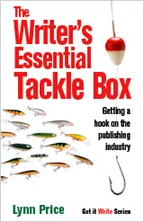
Most self-pubbed authors concentrate on the production process; they’re looking for a great cover designer – or they should be (hello George Foster who did a brilliant interview in Tackle Box and is about as nice as nice gets), they may work with an independent editor – change that to should (and the adorable and ever-smiling Mike Sirota fills that bill achingly well, and he’s also in Tackle Box) because too many self-pubbed books lack sufficient editing.

“Doin’ it backwards” authors don’t:

Understand their competition
If you don’t know what’s on the store shelves, how do you know you’re unique? Most self published authors don’t realize they have to know their competition, and that’s why I see so many “been there, done that” books. Understanding the competition gives authors the confidence to say, “there is nothing else on the market like this.”

Don’t understand their books won’t be on store shelves
I hear a lot of, “I had no idea” from self pubbed authors. They thought their books would be published and would be up on every bookstore shelf, and the truth is that they won’t. Depending upon who their printer is, the best they’ll get is to be on all the internet databases.

How to market/promote
Only until they’ve paid a bunch of bananas and their book is out and do authors realize how hard they’ll have to work to sell a single book. Commercially published authors have their publisher (and errant beagles) working in the background getting their book into the right hands. They have a whole web of people who know about their book’s existence. The self pubbed has themself, and it’s all too late that they discover how hard it is to create demand.

Audiences don’t grow on trees, sadly, so the savvy author has to know exactly who their readership is and where to find them. They have a solid plan that involves all tiers of promotion; personal appearances, writing articles, blogs, social networking. This should be addressed before the author begins production. It’s very hard to restart your engine when you’ve blown a gasket.

Retail price
Many self published books have retail prices that are five to six dollars higher than the marketplace. This puts that book at an instant disadvantage. There is no way in hell a 200 page book should retail for $20. Those high prices are a reflection of the higher printing fees. Self pubbed authors aren’t going to get the good printing deals that the repeat customer gets – like a commercial press – so their costs will be much higher. This eats into the profits.

Web content
I see a fair amount of self pubbed websites, and most of them lack the pertinent information that screams “Buy me!” The descrption is normally to generalized and vague and almost always lack the conflict and plot. They are filled with filler like, “beautifully written,” “gut-wrenching,”  or “soul-searching.” That’s the kind of fluff you see in advertisements; not in a website. One person’s “beautifully written” incites another’s gag reflex, so you have to be mindful of your content. Sell the story by being clear. Again, the reason self publishers have a tougher time with this is because they don’t have anyone giving them professional feedback.

Any time one of my authors creates a website for their book, I always give them my .02 worth because I know what info buyers need to see to make a decision whether to buy the book. I won’t say that I’m the Great Yoda on the subject, but I do know

There is nothing worse than the author who says morosely, “I didn’t know.” Avoid this by learning the business first so you’re fully prepared for what awaits you after your book is published. Don’t get me wrong; I have no problem with authors who go this particular route. After all, this is my day job, and I know how hard it is. It takes guts to self publish a book, and I’ve seen a few who did it very well. My main gols is to entice self pubbers to go into this endeavor with their eyes wide open and to stop doin’ it backwards.


Wise words to live by

June 23, 2009

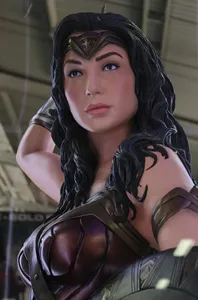
WonderWomanWhatever you give an editor, she will make it greater.
If you give her a manuscript,
she’ll give you a brilliant, marketable book.
If you give her a marketing idea,
she’ll give you an entire promotion plan.
If you give her mailing list of media contacts,
she’ll send out ARCs to every one of them.
If you give her a smile,
she’ll give you her personal cellphone number.
She multiplies and enlarges what is given to her.
So, if you give her any crap,
be ready to receive a ton of shit.


Follow

Get every new post delivered to your Inbox.

Join 963 other followers

Powered by WordPress.com