This comes from Gutsy Writer – a lovely woman who not only makes me laugh but bought me lunch.
Two months ago I attended a PR presentation by Kate Schwab in Ventura. She mentioned that the most successful book signings are no longer in book stores but where the author ties his book in with other local businesses. For example, with my memoir and contacts, I should focus on book signings at a Caribbean themed restaurant, or coffee house with reggae music, or a travel agent promoting Belize travel, and promote other businesses along with my book. Have any of your authors held events similar to these? …Starshine Roshell, who’s a columnist for the Santa Barbara Independent, held her book signing in an art gallery with donated cupcakes and balloons related to her book: “Keep Your Skirt On.”
The tradition of booktore author events has been evolving for the past number of years. Many bookstores have stopped hosting author events because there is no guarantee people will show up – hence my post about that very issue.
It takes time to plan a book event. The store has to order the books, get them logged into their system, print up posters, advertise, set up the author space with a table and a couple chairs. If few people show up, the event becomes a losing venture for them and they must return all unsold books – hopefully keeping a couple signed copies for the store – and taking down the author area.
After a while, it’s not worth it. Bookstores hold events to draw a crowd into their store and to support the author. Over the years, crowds have dwindled, and bookstores have changed some of their tactics regarding events. There is an excellent interview with Gayle Shanks – owner of Changing Hands Bookstore and president of American Booksellsers Association - in my book, The Writer’s Essential Tackle Box, where she talks about this very issue. Gayle, like many bookstore owners, want to see a list of people the author has invited – or they charge an event fee. This puts the onus on the author to ensure there is a crowd.
You’re probably wondering why stores are doing this. Got time for a wee history lesson? Time was, authors had the full support of their publishers, and their PR people contacted the stores to set everything up. They worked to alert people in the city where the author would be appearing in order to draw people into the event. Budgets decreased and those PR and marketing dollars were reserved for the big ticket authors. This made it tougher on authors because they didn’t know the first thing about doing their own promotion.
With the advent of POD and vanity presses, there is a larger body of authors who know even less about the industry and how to properly promote an upcoming event. The bookstores can’t shoulder that responsibility because it isn’t cost effective. Hence their new parameters of providing a list or paying a fee. This separates the wheat from the chaff pretty darn fast.
In the effort to create a different kind of splash, authors have taken to holding book events elsewhere. I think it’s an awesome idea. I’ve held book events for Donovan’s Paradigm at hospitals and had a blast. Adam Eisengerg, brilliant, handsome author of A Different Shade of Blue is planning events at various cities’ police museums. Kristan Nelson, talented author of the achingly sweet The Hair Princess and the Hog Temple Incident, held a fabulous event at a hair salon.
So the idea of going elsewhere for an event can produce some terrific publicity, but depending on where you’re holding the event, the amount of work can put the author six feet underground. Kristan Nelson, for instance, nearly croaked for all the effort put into that one event – even though it was wildly successful. Authors can’t maintain that kind of inertia, yet promoting the book is vital.
On the other hand, doing events at the hospitals was a cinch because they were held in the cafeteria. Docs and nurses came down there for their lunch breaks, and there I was with a medical fiction sitting on my table. It was a no-brainer and took very little of my few firing synapses to plan. Adam, I’m sure will be in the same boat, since the police museums have everything there to set up the event. I’d be willing to bet they’d even spring for the refreshments and do some advertising.
So the trick to off site events is to work smart, plan smart. Make sure that the venue is excited about hosting the event. The more enthused they are, the more willing they’ll be to help and maybe provide the yummies.
How Do I Get a Venue Excited About Hosting Me?
For years I’ve been eyeing this adorable little bar/restaurant that’s no bigger than my bathroom. It’s weency, but its brick walls and intimate atmosphere reminds me of one of those cool places you see in New York, where everyone sits around listening to people read their works while drinking fussy little drinks and eating veggie crackers. I would give the beagle’s supply of tequila to have an event there. The question is; they already have a great gig going, so what do I have to offer? What do I bring to the party that will entice them to hosting an event?
And that’s the crux to having an off site event. You always have to make the owner of the venue feel like it’s advantageous to host your event – that there is something special in it for them. After all, benevolence is a great thing, but it can be in short supply when you have bills to pay.
Tattoo this to your forehead: “What can I do for you?”
I have to come up with a compelling pitch to this adorable little restaurant. We’re writers, so we are all used to playing the pitch game, right?
Entice
Provide a benefit
Create a need
So my thoughts are for an “Author Night.” We can go one of two ways; [giving an owner options is always a good idea]. The first option could be to charge one flat fee at the door. $20 would buy the customer a book and a free drink or hors d’œuvre. Of course, that wouldn’t be enough, so the customer may decide to order dinner, or something more. This is a win for the owner. The second option is that customers would receive a discounted something or other off the menu upon purchase of the book. The manager can decide on the discount. Another win for the owner.
The idea is to entice the manager with the idea that hosting this event would be good for business. The other idea is to offer customers a benefit so they’ll attend the event. He’s going to be very happy to advertise this. In the meantime, I’m also contacting my core readership about the event as well.
Yes, this initial planning takes some time and thought. But you would have been working on your list of core readers anyway, right? The initial pitch can be converted any number of ways to fit the particular venue. If I decide to have an event at a gas station, my pitch to the manager would basically be the same, and I’d substitute discounted food off the menu for a discounted can of oil. The pitch is written to be interchageable. The intent is to keep as much stress off you, the author.
If you’re too stressed, you’re gonna burn out. But if you plan smart and work smart, you’ll find that these offsite venues are a total blast. I’ve seen some huge events where people were standing in the doorway. Because of the incentives the venue provided – be it discounted food or cans of oil – there is little doubt that a bookstore could have commanded that kind of attendance.
Sorry for the hideously long post, but it’s my aim to help authors be as successful as they can be, and thinking outside the box is a sure way to capture someone’s attention. Hope this helps!
And Gutsy, lunch is on me next time.
Like this:
Like
Be the first to like this.
 I just found out that one of our books, East Fifth Bliss, is being made into a movie. The star, Michael C. Hall from the dark and addictive Showtime TV show, Dexter, is my new best love and the absolute perfect actor to play the hapless Morris Bliss.
 Truly one of my all-time favorite books. I’m so excited I just may have to blow off the rest of my day. Douglas, my hat is off to you. It couldn’t have happened to a nicer man or a more talented author.
 7 Comments |
 Permalink
 Posted by lynnpricewrites
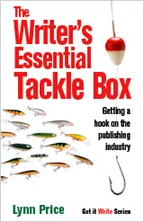 If you want the inside scoop on what floats our boats, The Writer's Essential Tackle Box is a must have. Out in November 2009.