How much do I say? And should I say anything at all?

August 30, 2009

I read a great article in Salon.com about someone who read a friend’s book. And hated it. The dilemma was what to say to the author. Cary Tennis asks the unique question of why say anything at all?

The article resonated with me because I am asked to read a lot of books from friends or acquaintances. I’m not talking about being a beta reader where crits are expected or a desire for my thoughts from in my editor’s chair.

No, this is a case of, “Hey, I just finished my final draft, and I’m dying for you to read it. As. My. Friend.” More often than not, this is cause for severe intestinal blockage and bellybutton inversion because they always expect a response. And I’m not talking about an honest response, but one that will ensure that our friendship remains intact. These are my friends, and their feelings can be hurt. Rejection from an outside source is one thing. Piss off or hurt a friend, and you’re talking a whole different playing field.

This puts me at odds with my practice of candor. I have a hard time lying, and it’s very difficult to go hunky bunky over a book that would have been better as birdcage lining – especially when the author is sitting across the table from me, desiring my approval.

I know I’m not the only one in this position. As writers, we all know fellow writer friends who are eager to have their bestest buddies read their latest tomes. They thrust them into our hands before we can politely demur. We’re at a distinct disadvantage due to our friends’ excitement and their blind belief they’ve written the Next Best Thing. We can’t easily hand the manuscript back and say thanks, but no thanks, can we?

How does one go about this without risking a late night visit by the literary hit squad? Cary’s advice is to maintain a policy of not saying anything. Some of my friends have a policy of  not reading their friend’s works.

My own policy is that if I say nothing about their work, that they please not ask me what I thought of their writing. They are free to interpret my silence, but at least I’m not risking our friendship by hurting their feelings.

Just so I’m clear; this is not the same case as when I actually ASK to read a friend’s work. Then all bets are off, and I will ask them if they would like a critique.

Sure, I’ve had a few who were miffed at me because they were laboring under false pretenses regarding their abilities. If their writing was FABULOUS, they deserved to hear it, by golly. They never considered the fact that if I believed their writing WAS fablulous that I would tell them. It’s not a perfect system, but it’s my personal “out” against having no friends.

The flip side

And this brings me to the other side of the coin; when you ask your friends to read your final draft. Please keep in mind that you have responsibilities.

  • No fair taking offense to any comments your friends offer. After all, you did ask them to read it.
  • Be sure you know exactly WHY you’re asking your friends to read your work. If it’s to have your ego stroked, think again. chances are, you may be the only fan of your work, so stay humble.
  • Help your friends out by telling them exactly why you want them to read your final draft and what you want from them. Lay the groundwork.
  • Understand that your writing probably still needs tons of work, so keep your ego in check and listen to what they have to say.

Friendships – good ones – should be able to withstand all kinds of things. But when it comes to writing, something evil and putrid takes hold – and no, it’s not my meatloaf – so take special care. In the end, friendships are much harder to replace than a story, yanno?


The ability to say “thank you”

August 29, 2009

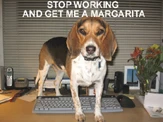
Still fresh on my Alaska buzz. Or is that the beagle’s welcome home margaritas? One of the things that stood out were, of course, the lovely people. Such fascinating stories from this independent bunch. You have to be hearty to live there, and they have marvelous stories to tell. Which brings me to the critique sessions.

I always approach these with no small amount of trepidation because I’m never sure how the author will accept my comments. I had a woman at another conference take great offense when I told her the writing was too much tell and not enough show. So much so that she stormed out of the meeting after telling me that “no one has ever talked about my writing that way!” After I picked my jaw up off my lap, I was philosophical, figuring I was not the first one to say this about her writing.  Rather than sit and listen, she tossed out a tarty rejoinder. Not that my observations are lined with gold, but the loss was hers.

Being critiqued is hard, especially when it’s the first time. You’re worried whether the agent or editor will deliver a scorched earth crit or soft pedal their comments with a nice mix of honey and truth. Is anyone ever fully prepared to grow a thicker skin in a matter of days or weeks? I don’t think so. The growing process starts after the first crit.

As much as I adore talking to authors, I look at crit and pitch sessions much the same as I do a tax audit because it’s hard to say everything I want to say in a fifteen minute time period. I always worry that I’ll come off too critical and kill the author’s spirit. I choose my words carefully and try to say things like, “I would like to have seen this or that” rather than pointing an accusatory red pen in the author’s face to drive home the point that their writing lacked character development.

Some agents and editors really cut to the chase and can be quite brutal. As much as it probably shocks everyone, I lack that gene [thankfully], and my tongue isn’t as forked as I may let on. Given the time it takes me to read and write up my comments on a separate sheet that contains examples and observations where the author may want to focus further attention, I appreciate authors who can smile bravely and say, “thank you.”

There is no other medium that allows authors to be critiqued by agents and editors other than writer’s conferences, and I always send out a cosmic high five to those brave enough to dip their toes into my inkwell. When I’m thanked for my time and efforts, well, it’s icing on the cake. Believe me, I understand you’re nervous and not as confident as you’d like to be.

So thanks to all you wonderful authors who remember those simple little words that make it all worthwhile. It’s the jam in my jelly doughnut.


Exposition Bermuda Triangle

August 28, 2009

Merriam-Webster sez:

Exposition: designed to convey information or what is difficult to understand

So we all understand what exposition is and the role it plays in our writing, right? It’s invariably that piece of dialog where one character reveals key information to another character. The problem I commonly see in manuscripts is the writer doesn’t understand how to use this tool in an effective manner, and it comes out reading like a clunky commercial break instead of a seamless flow.

Exposition is usually a by-product of some action that has just taken place, or is about to take place. As a result, writers commonly remove their characters from that action in order to reveal that vital piece of information. It’s so common that readers instantly recognize it and tend to skip over those parts – which is insane because it’s important stuff. But what it’s also subliminally saying is that you’re boring your readers.

Action scenes, no matter how physical, get a reader’s adrenaline pumping because something is happening. It’s hard to screech on the brakes to settle down for expository blather, even if its important. Writers take a commercial break from the action so they can get out the exposition. The commercial done, the action picks up where it left off. I look for exposition that takes place during the action, so as not to slow down the pace and tension the writer has worked so hard to create.

Here’s an example of action then stopping that action to allow for the exposition. I wrote this, so no taking potshots at my ability, or lack thereof.

Buford and Waxman struggled for the gun. Waxman shot off a round, narrowly missing Buford’s ear, before it flew out of his hand and went skittering under the couch. Both men threw themselves on the floor and reached out with wriggling fingers, hoping to feel the welcome touch of cold, hard steel.

Waxman was faster and gripped the gun to his chest before wrapping his fingers around the trigger and aiming the business end at Buford’s head. “Bang, dude. You’re dead.”

Buford, realizing his next move was a lifetime decision, put his hands up in surrender.

Buford sat handcuffed in the back of the cop car, wishing he’d been faster on the draw. This Waxman character was a nutter, to be sure, and he wondered if he’d last the night. The siren was loud, and Buford had to speak over the high pitched noise. “Why are you arresting me? I haven’t done anything wrong.”

Waxman laughed. “Nothing wrong? You fed my sister Cornflakes. Dude, she hates Cornflakes. I warned you to never buy them, let alone serve them to anyone in our family. Our dad worked the Cornflake assembly line for years, and his boss used to spit into the mixture right before it went into the boxes. Dad lost it one late night and hogtied his boss and dumped him into the flour vat where he suffocated on flour dust. The security cameras videotaped the whole thing, so I went in and stole the tape in order to protect Dad. Even though there’s no more spitting going on, the whole memory is too horrible to live with. Thanks to you, Sis is now in therapy and has developed a strange attachment to bananas.”

“Look, I like bananas, and I really dig your sister. And I make a mean banana split.”

Okay, here it is again with the exposition in the middle of the action:

Buford and Waxman struggled for the gun. Waxman shot off a round, narrowly missing Buford’s ear, before it flew out of his hand and went skittering under the couch.

Buford grit his teeth as he threw himself on the floor and reached out with wriggling fingers, hoping to touch cold, hard steel. “Why are you arresting me? I haven’t done anything wrong.”

Waxman laughed as he stepped on Buford’s fingers. “Nothing wrong? You fed my sister Cornflakes. Dude, she hates Cornflakes. I warned you to never buy them, let alone serve them to anyone in our family.”

Buford rolled across the floor and hid behind the easy chair recliner, narrowly missing the bullet that seared his ear. “What’s the big deal?”

Waxman gripped the gun and squeezed off another round. “What’s the big deal? You ass! Our dad worked the Cornflake assembly line for years, and his boss used to spit into the mixture right before it went into the boxes. Dad lost it one late night and hogtied his boss and dumped him into the flour vat where he suffocated on flour dust. The security cameras videotaped the whole thing, so I went in and stole the tape in order to protect Dad.”

Buford ran for the door, only to find it locked. He turned to see Waxman slowly walking toward him. The gun barrel looked dark and ominous. “H-hey, all’s well that ends well, right? The boss is dead, you got the incriminating evidence. What’s the problem?”

“Even though there’s no more spitting going on, the whole memory is too horrible to live with. Thanks to you, Sis is now in therapy and has developed a strange attachment to bananas.” Waxman raised the gun to Buford’s head, and smiled. “Bang, dude. You’re dead.”

Buford, realizing his next move was a lifetime decision, put his hands up in surrender. “Look, I-I like bananas, and I really dig your sister. And I make a mean banana split.”

Now, does exposition always need to take place during the action? Of course not. It depends on the story and what’s currently taking place in that particular scene. But I think if you can slip in some important piece of information at a time of tension and action, it keeps the reader fully engaged. Otherwise, the natural pace of exposition usually brings the story to a screechy halt. And that ain’t good writin’.


Kunati closing their doors

August 27, 2009

When I read the news on Publishers Marketplace about Kunati Publishing going out of business, I wasn’t sure whether I felt sorrow, joy, or relief. I’m sorry for all the authors affected by this decision, and luckily the editor is returning their rights. Some simply go belly up and the rights get tied up in bankruptcy court.

After further thought, I settled on relief. Relief because this company can’t harm  innocent authors. Now that it’s all out in the open, I felt compelled to bring an old post back to the forefront – to serve as a warning to authors to look for the signs. You’ll note that one of Kunati’s owners felt the need to make a rather rude appearance on the comments section and attack his own authors. A real class act all the way ’round.


Definitions – I know you believe what you think I said, but I’m not sure that what you heard is what I really meant

August 27, 2009

Whenever I go to conferences or writer’s boards, there are usually many terms being tossed about that are confusing because I’m not sure they’re using the correct terms. For instance, when I listen to an author talk about self publishing, I think I know what they mean until they start talking about how their publisher charged them for extra edits. Then I realize it isn’t self publishing they’re talking about, but vanity, or subsidy publishing. And don’t even get me started on Print on Demand – is it a business plan or printing technology?

The same can be said for those who use the term Traditional Publishing. Ach! Read my lips: There is no such term. A Print on Demand company made it up in order to insinuate that mainstream publishing is broken, and their way of doing things is the bestest thing since the invention of the Twinkie. Beagle, bring me my vapors.

Clarity is paramount in this business. It’s what allows authors to make educated career decisions for their books. So for the sake of clarity, I thought I’d put up the most commonly confused terms so you have a complete understanding of their meaning. It could save you from making unwise decisions or confusing those you’re talking to.

Digital printing: Also mistakenly called Print on Demand, creating confusion between the technology and the publishing business model. Digital printing is cost effective at low print runs of one to nine hundred units. All publishers use this process. Trade publishers use digital printing for their ARCs [Advanced Reader Copies] and backlist titles. THIS IS NOT A PUBLISHING BUSINESS MODEL.

Print on Demand/POD: THIS IS THE PUBLISHING MODEL. Publisher pays for all up front production fees. They utilize the digital printing technology because it’s cost effective at lower runs. Nearly all of them rely on authors to do the lion’s share of promotion and marketing because they don’t have any. They have no distribution. Their books are not commonly on store shelves. They probably have a return policy for cases of author events and such, but selling to stores on too grand a scale is risky because they can’t afford returns. This business model is meant to only print what is physically ordered [and paid for]. They make most of their money by authors buying their own books. This definition refers to PODs who take any and all genres.

Now, there is another side to POD, and that has to do with the niche genres. These folks are normally in the same boat in terms of lack of distribution and lower print runs. However, they may very well be so focused on one particular niche that they have established contacts with the niche bookstores and can sell directly to them. In these cases, their money doesn’t come from their authors buying their own books, but from actual sales. There is a huge difference with these types of PODs, so make sure you understand what your book [and the POD] is – niche or mainstream.

Distribution: This does not mean Ingram and Baker & Taylor. Those folks are warehouse distributors – meaning that when a bookstore needs books for their shelves or an author event, they call Ingram or B&T to fulfill that order rather than calling the publisher.

Distribution in publishing terms means that the publisher either has their own sales teams to pitch their catalog to the genre buyers and libraries [like the big conglomerates], or they get with an independent distributor who employs their own sales teams to perform those same services. These are companies like IPG, Ingram Publishing Services, Consortium, Perseus, Midpoint, etc. They also fulfill orders when they come in, so the publisher can concentrate on what they do best.

The reason I make this important distinction is because PODs are very adept at insisting they have “distribution,” when what they really mean is that their titles are listed with Ingram and B&T’s database. They have no one out there pitching their titles. This causes MUCH confusion [and abject sadness] for new authors who don’t understand the terms and think they’re getting something they aren’t.

Vanity/Subsidy: Pay to play publishing. Depending on the type of publisher, the author may incur all the fees or be “subsidized;” the publisher assumes some financial risk as well (but not much). Many call this “self publishing,” but that is wrong because the author doesn’t control any aspect of production. Nor do they have much say in how things will be done – including their retail price, which can be slightly higher.

They also use the digital printing process for their short runs. Publishers like AuthorHouse, iUniverse charge a package fee (very large) for their “basic” publishing option. They also have all kinds of a la carte charges that are geared to separate authors from their money even faster. Extra goodies like extra editing, book return policy [which is a complete waste since bookstores still won’t order these books], extra special hoo ha cover design [which is also a crock because they use the same graphics over and over again].

Now, there is another side to vanity, and those are the folks who are strictly printers. Lulu is a good example of this. Their fees are up front, they don’t do bait and switch. They are there to simply print your book. You can also have them purchase an ISBN if you intend on trying to get your book into the stores. I’ve had a couple friends use them and were very pleased with the results. I’ll just add that if you have a coffee table type book, they are lacking on the quality. But they do get the job done.

Trade publishing: also called independent trade/commercial publishing. They are like the conglomerates only they have fewer decimal points. They perform exactly as the large conglomerates do. They have distribution, experienced editing teams and cover designers, print ARCs to send to reviewers, print up cataloges, get their books on store shelves, have standard return policies. They make their money from selling to the stores and libraries.

Self publishing: The author is the publisher. He assumes every aspect of book production; he buys the ISBN, is responsible for all marketing and distribution, editing, cover design, interior design, and layout. It is his name [or his company’s name] that goes on the copyright page. The sky is the limit for these folks provided they have the time and capital to pour into their book.

They can get independent distributor’s sales teams pitching their books to the genre buyers [provided they meet their requirements and have a solid promotion plan], can get trade magazine reviews, and shelf space provided their promo plan is very good. There have been a number of extremely successful books that were done by those who self pubbed.

On a personal note, I respect the heck out of these folks. Drawbacks to this venture is the lack of publishing knowledge. This route is not for the weak of heart or thin intestinal wall lining. This is a full time job.

So there it is, folks. So now when you’re talking to fellow authors, you’ll be able to make sure that what they hear is what you really meant. And YOU will be able to know exactly what you’re getting into when seeking a publisher.


POD/vanity – confusion still reigns

August 26, 2009

While in Alaska, I sat on a panel with my learned colleagues and did a Q&A at the local Barnes and Nobel. Great crowd, great questions [and the cutest darned dog that I was dying to pet, but he was “working”]. The question came up regarding vanity and POD presses, and this is where the confusion arose because one of the panel members created the impression that they are the same – that PODs charge money just like vanity presses. They don’t. Since I was the only editor on the panel, I felt more informed about the particulars on the differences between these two entities, and I immediately disagreed with my panel member – a respected agent.

It got sort of silly at that point because my colleague – as much as I adore him – isn’t given to accepting opinions other than his own. It’s ok, he’s very good at what he does. I wouldn’t have belabored the point so hard except the authors in the crowd seemed truly confused as to how one tells a vanity from a POD. My panel member lumped them both into the same pay up front mold, and this made me wince because I evisioned all kinds of authors getting caught in the POD trap without knowing the facts.

Vanity Fact: Vanity presses such as AuthorHouse, iUniverse, etc. are pay to play. They charge up-front package fees to publish a manuscript. There is no thought about editing or clever cover design – even if you add that a la carte feature to your package. They do nothing about stocking in stores, except with order fulfillment, and authors do all the promotion and advertising. Vanity is simply a very, very expensive printer and fulfillment center. This means that authors always buy their own books to sell out of the trunks of their cars. It’s the only real way these books sell.

Vanity Fact: I just found out over the weekend that AuthorHouse and probably other vanity presses have an added $600 fee that will make a book “returnable.” Problem is, no bookstore will order these books, “returnable” or not, because they know vanity books have no litmus test for quality or any set standards other than the size of the writer’s checkbook. This “return policy” made my blood pressure spike a few points because it’s an outrageous scam that skirts along the lines of legality but fails miserably on the propriety scale.

POD Fact: To disagree with my colleague – PRINT ON DEMAND PUBLISHERS ARE NOT THE SAME AS VANITY. PODs don’t charge up front fees. This is an important distinction that authors MUST be aware of because they can get caught in the POD web without their realizing it. That’s usually the way PODs want it.

POD publishing is a completely different beast altogether even though there are similarities to vanity. Like vanity, PODs confine their printing to the digital technology [cost effective at small runs] – hence the name Print on Demand publishing. Print runs may be anywhere from five to ten books up to a hundred. Rarely more unless there is demand [orders].

But unlike vanity, POD publishers operate on a smaller budget, and this impacts their ability to compete in the marketplace. They don’t have distribution because they don’t have any promotion or advertising, or print in large enough numbers to make it worth a sales team’s time to push the books. Their editing and cover design is usually lacking because they can’t afford quality experienced editors or cover designers.

Most PODs do have a return policy, but since they have less operating cash, they can ill afford returns from bookstores. Remember, PODs have zero promotion and advertising, so it’s dicey for PODs to sell to the bookstores. All promotion and advertising is on the author’s shoulders, and this means few readers are even aware of the book’s existence. A book that no one knows about will sit on a store shelf for six weeks and be sent back to the publisher. Meanwhile, the publisher still has to pay for the print run. A returned book costs the POD publisher big bucks, so it’s easier to rely on their authors to promote and sell their books. This means the POD makes the bulk of their money selling books to their own authors. There is no risk in this. Bookstores = huge risk.

Regardless of a POD’s motivations, these are the facts. Their standards for acceptance are usually more relaxed because they need a large lineup of authors in order to offset those who don’t buy their own books.

POD Truth: If every author refused to buy their own books, that company would be out of business within months. A vanity press gets their money up front, so they’ll be around as long as there are writers willing to fork over their hard-earned bucks for an inferior result. POD is much more insidious in this case because they cloak themselves as “indie publishers,” and the writer doesn’t find out the truth until it’s too late.

Writers believe that since their “publisher” didn’t charge them anything up front, they must be a “traditional” publisher – as they often (wrongly) describe themselves. And this is where my esteemed bud and colleague is mistaken. Thar be a HUGE difference between vanity and POD, and I only wish we’d had the time to pursue this discussion, as I feared seeing many getting caught in a sticky web that usually brings about a ton of disappointment.


Alaska Writer’s Conference – I should be shot, drawn, and quartered

August 25, 2009

What a fabulous conference the Alaskans have! Jim Misko and his hearty band of event organizers put on a lovely time and made all of us feel welcome. The authors are a wonderful, warm lot with a ton of interesting ideas and fascinating stories. There’s something about living in the last frontier that brings out the imagination, and they had them by the barrel full.

Now, if I had only managed to avoid getting food poisoning, my Sunday would have been a whole lot more fun (and informative) than hugging the commode all day long. Because of whatever managed to wend its way into my digestive tract, I was unable to perform any of my duties on Sunday, and I’m beyond mortified. I’ve gone to conferences sick and near death, but I was always able to do my part.

Instead of wishing me to die for abandoning them, I received sweet phone calls from the event organizers asking if I needed anything. A gun would have been nice at one point. Their concern and care just about killed me, and I can only hope that I can return next year to redeem myself. What an embarrassment!

Jim, Jen, and everyone else, thank you for inviting me. I should be shot!


Follow

Get every new post delivered to your Inbox.

Join 1,261 other followers

Build a website with WordPress.com
%d bloggers like this: