“Did you see this?” my friend barked while waving the magazine around in the air, nearly spilling her wine in my lap.
“Get as mad as you want, dearie, but take it easy on the wine. It’s expensive,” I replied while moving her glass out of the strike zone. Man, I hate it when it’s my turn to buy. Somehow the wine always gets dumped everywhere else other than down our throats.
“Forget the wine. Did you see the review of my book? The bastards trashed me. I’ll be lucky to sell a single book after what those illiterate wheezebags did to me.”
I had seen the review. Indeed, it was less than laudatory. Now I was at a crossroads. Do I play the supportive friend and join her in planning a sacrificial burning of the trade magazine’s edifice at midnight, or do I stay true to my opinions in an effort to teach her something valuable about reviews?
She took a deep breath. I held mine. Don’t say it, don’t say it… “They just don’t get me!”
Arrrgghhh! Beagle, my vapors! STAT!
Ego is as ego does
Book reviews are nothing more than public critiques. They are sometimes warped by social standing [as in, "who's your publisher, baby?], politics ["Your views suck"], and pure snobbery ["You're sooo not cool enough to get a good review out of me. Besides, I'm in a bad mood, and tag, you're it"].
But at the end of the day, they are still crits – just like you get from your beta readers, writer groups, and friends. It’s very hard for writers to put themselves out there. They’ve dug deep into their creative souls and brought forth the contents that were churning within. Reviews carry a lot of weight behind their names, so they can be quite influential to sales. It’s natural to worry.
“Is it good enough?”
“Did I bore you?”
“Would you buy the book?”
Crits, however, are private. Reviews are out there for The Great Cosmic Muffin and everyone to read. There are no dark corners in which to hide from a sucky review.
Consider the unthinkable
But rather than hiding in embarrassment or spilling perfectly good wine in a fit of puffed up outrage, there is one thing to consider: was the review correct?
In my friend’s case, it was. The reviewer had, in fact, nailed every one of the minuses that I’d tried to show her during her final rewrite before she submitted it to her editor [big conglomerate publisher]. She ignored my suggestions, saying I didn’t get her story. Huh?
I detest this kind of brush off, yet I hear it all the time. If I or any other reviewer have concerns about a story’s structure, it is rarely because I/we don’t get it.
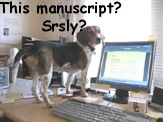
Furthermore, this comment implies that the onus is on the reader’s shoulders to understand your brilliance. And you know what? That thar be arr-o-gant. It’s like when I tell the beagle she misfiled the stack of papers. Again. She simply snorts and tells me she’s instituting a new filing system and it’s my job to figure it out. I’d fire her, but she always sweetens the pot by having a frosty pitcher of margaritas on hand to soften the blow. Authors don’t have that option.
The reader invests in you, the writer. They forked over the bucks to buy your book and took time out of their day/night to read it. Therefore, it’s your job to give them the very best you have to offer. It’s an unspoken contract, and that means that you listen to those who have read your book. To insult the reader or reviewer by stating they don’t get you means that you are completely innocent in this reader/writer relationship. I can’t think of anything more damaging to one’s writing future than to not pay attention to her readers whether it’s Jane Reader or a Library Journal reviewer.
Payback is a biatch
In my friend’s case, her editor shot the book out with barely a whisper [which my friend interpreted as a testimony of her brilliance]. So what her editor giveth, the reviewer taketh away. And now my friend was a pile of raging hormones [she's preggers], which only served to feed the fuel of her outrage.
“Darling,” I said gently, “did it occur to you that maybe the review brings out some valid points?”
A look of indignation crossed her face, suggesting that I had three heads and not one of them contained a brain. Le sigh. What a dilemma. Do I stick to my guns of honesty or do I commiserate?
Get outta your own way, baby!
The long and short of it is this: sitting back and saying “You just don’t get me” will never make you a better writer. It may very well be that the reviewer is a sodding pile of donkey droppings, but a smart writer NEVER dismisses anything. A smart writer considers the review to see if their comments apply. This requires a modicum of dispassionate objectivity. It’s easy to take offense, but it’s a lot harder to tell the ego to take a powder so you can consider the ways to improve your contract to your readers.
As for my friend… I lied like a cheap rug. After all, it’s her turn to buy lunch next time.
————–
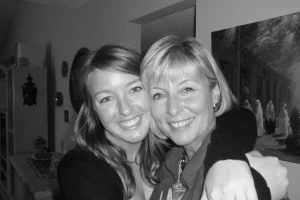
HAPPY BIRTHDAY, MOM!! You are the very best, and I love you dearly.
Like this:
Like
Be the first to like this.
 5 Comments |
 Permalink
 Posted by lynnpricewrites

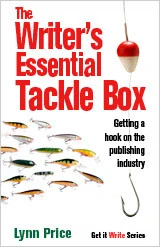

 If you want the inside scoop on what floats our boats, The Writer's Essential Tackle Box is a must have. Out in November 2009.