About Copywriting Ideas and Titles…

October 30, 2012

…um, yeah…you can’t do that. Let’s say you think up a great idea about a race of inverted bellybuttons whose diabolical plan is to overtake the world, but you never get around to writing it. Then you happen to walk past a bookstore and see a book that SCADS! has your same title and a story about a race of inverted bellybuttons creating havoc on Earth. Guess what? You have no claim over that idea, or the title. None, whatsoever.

The discussion of copyrighting ideas and titles comes up from time to time whenever a flap arises that challenges the patience of those in possession of a brain, and the latest bruhaha is a doozey. It’s over a Scottish cat. The Tobermory Cat, to be more specific. If you’ve been living under a rock, you may not have heard about this incredible story of an artist who lays claim to what, clearly, doesn’t belong to him, but nonetheless has launched a vicious attack against the author and her publisher who produced a book about…you guessed it; The Tobermory Cat. The sordid details can be read in The Guardian article.

The gist is that an artist had been trying to make a go of his paintings and such of this cat. A publisher, who had spent many years visiting Tobermory on the Scottish Isle of Mull, discussed the idea of a children’s book about the small town’s famous little cat with a local bookstore, who encouraged the idea. He went so far as to suggest the publisher and the newly-signed-on author visit the local artist and see about including advertising his paintings at the back of their book. It would be a win win for all parties. Except the painter didn’t agree.

He insisted the publisher and author were infringing on his rights because he was convinced he had made the cat famous via his Facebook page – which he hadn’t – and he would have nothing to do with the publication. Ok, so end of story, right? Wrong. The painter then enlisted the help of all his FB supporters to launch a gynormous smear campaign upon the publisher and the author. The details are horrendous.

Here’s a fact:  For all this artist’s bloviating and simpering, he can’t prevent anyone from writing and publishing a story with a vaguely similar idea, nor can he prevent anyone from using the same title. All one need do is let their fingers do the walking in Amazon, and they’ll see plenty books that have the same title. Sure, it’s a pain in the rumpus, but it’s also perfectly legal. That’s why publishers usually check titles first so they can avoid title confusion.

So what is protected? You can copyright a character in a series. Just try writing a skanky missive involving Mickey and Minnie Mouse, and you’ll have Disney breathing down your collar so fast, your neck will melt because they are trademarked. However, if you write a famous character who happens to be a mouse at a famous make-believe tourist attraction, then you’re on safe ground because there is no copyright violation.

There are specific laws regarding copyright, and before you go off half-baked like this very confused artist, you need to be sure that the law is on your side. Regardless of your feelings as to who is the wronged party, we have laws for a reason, and it’s to protect the innocent from being harangued by the simple-minded and emotionally-charged. The toll on the publisher and author come through very clearly in the article, and even though they are on solid legal ground, I’m sure they wish the idea had never come up. Such is the way of bullies.

A very sad case, indeed, and my heart goes out to the publisher and author.

*For great legal advice for writers (also includes an excellent breakdown of copyright), I suggest picking up a copy of lawyer extraordinaire, Donna Ballman’s book, Writer’s Guide to the Courtroom: Let’s Quill All the Lawyers.


How to drive an editor insane…

October 27, 2012

image

Thank you, Paulissa…


Are You Bug Repellant or Gracious?

October 26, 2012

At a recent writer’s conference, I watched one particular author make a complete fool of himself. A friend of mine was conducting a seminar, and this clod-hooved bovine came in late, interrupted my friend by introducing himself while pulling his self-pubbed books out and passing them around the room…causing the seminar to come to a screeching halt. My friend was gobsmacked. After passing his book around, he packed them up and left without a word! Predictably, my friend was livid.

At the banquet, darned if Mr. Rectal/Cranial Inversion didn’t sit down at our banquet table and do the same exact thing. Thankfully, he only got as far as the lovely woman sitting next to me. He even pulled out a CD player and earphones (must have an audio book as well), and insisted the woman take a “quick listen.” Meanwhile, the man made no attempt to engage anyone in conversation. He politely waited for her to scan the pages, whereby he packed up and left. My mouth was in my lap. Word in the hallway was that he did this the entire weekend.

This is not being gracious. This is bug repellant.

As extreme as this case is, there are degrees of Bug Repellancy that defy logic, and you end up working against yourself when promoting your books. Most of the mistakes I see come from self-pubbed and vanity-pubbed authors, and I think it’s because they are a force of one and have no one to advise them on effective promotion.

Social Media

While sitting on an agent/editor panel, we fielded the question about social media. Every single agent supported the idea that social media is a must. The two editors, including me, didn’t agree because we’ve seen how social media is a huge black hole of white noise.

It takes a long time to establish yourself on Facebook or Twitter, so if you aren’t already well-entrenched, then you’re in for a huge disappointment. If everyone is doing the equivalent of the annoying author I described above, then who’s listening? Screeches of “Buy my book!” in 140 characters has the same efficacy as the overused exclamation point – it loses its potency with extreme overuse. With Facebook, you still need to drive people to your page, so how will do that?

We all know that social media is a HUGE time suck – and there are a handful of cases where this modality has generated huge success. Ironically enough, I spoke with many self-pubbed/vanity-pubbed authors, and their complaints were same – promotion sucks stale Twinkie cream. If they’re depending on social media, then I daresay promotion does suck.

Many authors consider social media as the go-to destination for book promotion, and they soon find out that they’re simply one of a million other voices. So what works?

What’s Unique About You?

Maybe a better idea is to ask yourself why readers would want to read your book. Is your book yet another saga of substance abuse, or vampires and werewolves? There are so many books out there, what makes your book unique? This is one of the first questions I ask when considering a manuscript. I may love the writing, but I have to back away if I don’t feel I can sell it because it lacks a unique hook.

Talking about your book’s unique qualities is a far more effective tact than blathering on about “Buy my book!” In truth, few care. What tickles your fancy:

“Buy my book! Mom and Auntie Bertie loved it!”

or

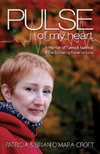
“Women are the heartbeat of the family and they never get sick…until they do, and all hell breaks loose. The nightmare happened to Brian O’Mara-Croft when his wife, Patty, suffered a ‘widowmaker’ heart attack. PULSE OF MY HEART is Brian’s and Patty’s journey on how they handled life, love, survival, and everything in between.”

One is a plea, and the other is an effective pitch about their book’s unique qualities and the elements that make this book a “gotta have it.”

But it’s a valuable consideration to those whose plans include a serious writing career. It doesn’t matter how or who publishes your book, you reach a far wider audience if you can speak to the high points of your book that will pique readers’ interest. What you’re showing is that you are thoughtful of your readership and not caught up in your own ego. You’re putting yourself in your readers’ shoes. That’s being gracious.

Go To the Source

Rather than throwing a dart and hoping it hits the target, go directly to your potential readers. There are a gajillion websites that cater to every genre, so it makes sense to become a regular. Rule #1 – NO DRIVE BY PROMOTION. Forum regulars detest this sort of thing.

Instead, be gracious. These are people who love your genre, so take the time to learn about them because the knowledge you gain is invaluable. Stop your fingers from commenting on blogs, and open your ears. If someone says something that you feel is poignant, then comment on it. Introduce yourself. Become a regular. By doing this, you’re gaining trust because you truly care about readers of your kind of book.

The universal agreement among all writers is that promoting a book is very hard work. I send out hundreds of TIP sheets and media kits for every one of our authors. I send them to print media, magazines, radio, and pertinent blogs, all in the hopes that someone will find it irresistible. I step outside the norm and hit up unlikely sources who might carry our titles and that our sales teams don’t approach. The goal is to hit the target audience with the biggest bang possible. We can accomplish far more by speaking to the salient points of a book with grace than we can by simply sending a book that says, “Read me,” or worse, pulling out your books with the expectation that everyone will slobber uncontrollably.

If you’ve put this much time into writing your book, doesn’t it only go to reason that you’d spend an equal amount of time showing yourself in the best light possible? Anyone can be bug repellant, as witnesses at this past conference, but it takes someone of heart to put their best foot forward and think of their audience, and not themselves.


Read With Intention

October 25, 2012

I was giving a seminar on character development last weekend, and I mentioned using dialog as a cool way to show your character rather than tell your character. What I mean is this:

Telling your character:

Jane was the quirky sort who looked at the world through a skewed lens. She was on a few degrees off plumb.

On the face of it, the sentence is fine, but what if her dialog never reveals these characteristics? Then I have no choice but to take your word for it; and I won’t.

Here’s an example of showing your character through dialog: 

“What’s the fun of attending this stuffy tea if we can’t have a little fun? I say we spike the teapot with cheap gin and watch those university wives get down with the funk. With a little bit of luck, they’ll hike up their skirts and splash about the marble fountain. It’d be the most fun they’ve had since having their braces removed.”

The dialog makes the first example sentence (tell) unnecessary. The reader already has it figured out that the character is a few degrees off plumb.

I always appreciate authors who show rather than tell because this adds an extra layer to character development. You’re getting the idea across about your character by letting her speak, rather than giving your readers a menu. As I always say, you can tell me something ’til the cows come home, but until you show me, well…I’d rather go cow tipping.

The author in my seminar asked about what books I could recommend that had “intentional dialog” – dialog that accomplishes the two-part goal of imparting information and showing some character development. Oboy…what books? There are a gajillion books out there that can teach writers all kinds of cool writing tips.

The trick is to read with intention. If you’re looking for cool dialog, read with the intent of analyzing effective dialog. For example, I patterned my dialog after John Lescroart because I love the delicious banter he creates for his two main characters in his Dismas Hardy series. He makes me laugh and keeps me turning the pages. Moreover, I care about the characters. So when I first started writing, I kept a close eye on how he developed his dialog. I figured out what I liked about his dialog is that it’s dry, minimalist, and witty.

I thought about all kinds of books I’ve read and loved the way the authors’ dialog worked toward character development, but I ended up unable to give him a definitive answer because I have no idea what he’s really looking for. Just because I love something doesn’t mean it’ll float someone else’s boat.

If you’re looking to enhance your writing, you need look no further than the books you love to read. Figure out the specifics of why you love the stories so much. Why do you love the characters? What methods did the author use to develop those characters so they leap off the page? Looking for plot structure or pacing? Examine how your favorite authors do it.

Go to your bookshelf and read with intent. After all, those who have come before us are brilliant and have kept our attention into favorite author status, so analyze the tricks they employed to capture your attention. It’s a lot cheaper than writing classes and How To books, no?


Do this instead of Facebook or Twitter

October 24, 2012

The result is that you’ll more fully enriched…


REact and PROact – developing your character

October 22, 2012

I spoke about character development this past weekend at the Florida Writer’s Conference, and part of my talk involved analyzing whether your main character has earned his/her Head Kahuna status, or whether she’s playing the wet booger. To whit, I pulled this post out of mothballs for a dust off.

originally posted 2/2011

I happened to be working on my book the other week and hit a stalemate. Nothing was working. What was wrong? I decided I was bored with my main character. She’s a saucy thing, and I felt she’d become dull and lifeless – much like my attempts at baking. Distressed, I walked away from the book for a bit so I could analyze the problem. At two 0′clock that next morning it hit me.

My MC was reacting to everything, and not proacting. What I mean by this is that she was reacting to situations going on around her rather than making something happen. I told her under no uncertain terms that if she was going to maintain Big Kahuna status, then she needed to be proactive. Ever the tart, she told me to get off my lower forty and write her that way. Wench.

But she’s right, of course. I do need to pull her out of her reactive role and allow her to do what she does best – take charge. Whether she’s observing her surroundings or involved in a big scene, she needs to be the proactive, driving force behind it. The minute I allow her to lose her star status, the story drags, and she becomes part of the background…definitely not her style.

Mind you, I’m not talking about my MC being the absolute star of every scene, but writing her so that she’s the focal point – even if she’s being quietly proactive. What I mean by that is that she’s still actively involved in the scene even though the current focus is somewhere else. For example, I need to describe the exotic settings because it’s integral to the story – and I need the reader to see it through her eyes.

It’s frightfully easy to fall into the trap of tell vs. show, as in:

Example 1:

She saw the jungle unfold around her, revealing a vast array of greens and yellows that she never knew existed. She walked past giant flowers and leaves.

Notice how the focal point is on the scenery? It’s ok, but a whole diet of “she saw” is dull and lifeless because she’s simply reacting to the scene by taking a backseat to the setting. So I rewrote it, using dialog, in order to make her proactive – and more in control of the scene:

Example 2:

Stepping into the clearing, the jungle unfolded around her, revealing a brilliant pallet of colors. She sucked in an unconscious breath. “Whoa. So this is what Picasso’s paintings would have looked like if he was on crack.” She fingered a flower whose deep red hues shimmered when it touched the sun’s rays. “I’ve never seen colors like this. They’re so vibrant, my eyes hurt. Tell me this isn’t poisonous, okay?”

And this is a bit of what I’ve noticed in submissions. The character is described in a query letter as having wonderful qualities, but upon reading pages, I notice how they repeatedly get lost within a scene.

If a writer isn’t paying attention, plot twists or scenes can take over and shove the MC against the wall. This puts them into the observer role. It’s one thing to observe a setting or situation and be a wallflower, and quite another to actively observe. And our characters do need to observe all kinds of things. How they do it is what turns them into reactive or proactive.

An effective way to keep your character proactive is through dialog or inner dialog because you’re keeping them front and center. The reader stays in their head, and this gives the character automatic control over the scene, no matter how big it is. And it also adds dimension to your character because we have a better feel for their thought processes. Example 2 (above) shows you that the character has some spit to her…something the reader wouldn’t have gotten had I stuck with Example 1.

Remember, the current story is taking place because something happened “offscreen” that initiated your character’s involvement, so those main characters are the vehicle that propel the plot. They gotta be proactive and own the story. It’s the difference between enjoying a book and tossing it against the wall.


The Dangling Carrot and Character Development

October 17, 2012

I ran this post last year, and I thought I’d run it again, since I’m giving this seminar at the Florida Writer’s Conference this weekend.

Since we specialize memoir/biography, I am regularly humbled by people’s experiences and how they had to dig deep to overcome whatever experiences unexpectedly entered their lives. It’s like the Cosmic Muffin looked down and said, “Ok, see that huge pile of goo I just dumped in your lap? Deal with it.”

We never really know what we’re made of until we face that pile of goo. Some people fold like a bad poker hand, and others rise to the occasion and become better/stronger/more thoughtful people for their experiences. These kinds of people don’t know they have the strength within them until they are tested to the limits. Many of have to gain those abilities along the way in order to overcome or push through their experience. Hardship and challenges are the great separator of the wheat and chaff. I love hearing the “wheat” stories.

I thought about those elements that make for great nonfiction and how they play into the character development of fiction. We all know that characters are the vehicles used to unfold the plot, so it goes to reason that these characters need to be three-dimensional in order to maintain our interest. I read a lot of manuscripts, and the biggest problem I see is with character development. They are flat, colorless things,which makes me think the author doesn’t know their characters well enough.

The Dangling Carrot may be an important feature to helping you give your characters a few extra layers and, therefore, a lot more interest and dimension. I’ve separated The Dangling Carrot into three distinct elements.

The Dangling Carrot – three part symphony

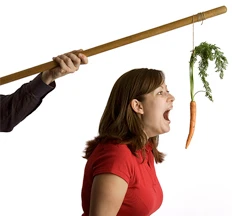
The Dangling Carrot is something waves right in front of your face, but it’s out of your reach. The harder you run to grab it, the more frustrated you become because it’s always just beyond your grasp. The only option left to you is to develop new skills in order to nab that dang carrot. You might have to test out a few ideas before you find the one that helps you achieve your goal.

So here’s how that normally plays out:

1)  Your character’s current life:  When we meet your character, he/she is rolling along with his/her life, la dee da.

2)  Holy shock, Batman!:  While your character is innocently moving through his life, something comes along to test/challenge/frighten/influence him. This event, which is your plot, dangles in front of him and upends his world.

3)  “Do I have what it takes?”:   The carrot forces your character to dig deeply into their souls to obtain/overcome/destroy/resolve the plot. The problem is the character doesn’t have the skills to overcome the obstacles facing him, and this forces him to draw upon a strength they didn’t realize they possessed. The act of denying your character of the skills in which to overcome the plot makes for a much richer story because the character is playing off the plot.

What moves the story along is the character’s journey of growth and maturation to meet this new demand because there are numerous choices the character can make that will influence the outcome.  Your character(s) has to rise to the occasion in order to achieve their goal, or they’ll fail. The lovely byproduct is that the character is changed forever, which is your “riding off into the sunset” moment, be it tragic or happy.

Even Superman has his Kryptonite, so absent the clear view of elements 1, 2, and 3, you create a disconnect that pulls your reader out of the story. I’ve found that if writers adhere to the Dangling Carrot, they are forced to delve more deeply into the psyches of their characters’ backstories. It’s an important consideration because I see far too many stories where I feel the author doesn’t really know their characters, that they sprung to life on page 1…which really isn’t the case.

Our characters have a backstory just like we do. They have baggage, fears, and Kryptonite. Your job is to have that clearly defined in your mind when you start to develop your characters. Otherwise, they could be lifeless gobs of goo that I don’t care about…the characters, that is, not the authors!

If you consider the three elements of the Dangling Carrot when you’re creating your characters and the structure of your story, it might be the difference of a ho-hum story to a “Stop the margaritas, beagle, I gotta have that story!”


Fall Leaves – Pricey No Blog

October 16, 2012

And now we know why Pricey isn’t getting much done

This path is right below our townhouse. Gorgeosity abounds.


Research

October 15, 2012

When editors say “Write what you know,” they don’t necessarily mean you’re the cop who writes murder mysteries or the doc who writes medical thrillers…it means know what you’re writing about. After all, not every writer has a job that coincides with the topic/plots of their books.

A friend of mine is a child psychologist who writes romance. Another bud makes her living selling garage doors…and I defy you to wrap an interesting book around that…so she writes fantasy. Heck, I’m an editor who wrote medical fiction. So what do we have in common? RESEARCH.

I’ve read many manuscripts where it’s obvious the writer did little to no research, and this is the primary killer for anyone who doesn’t write what they know because they are  gonna get busted by someone who knows more. Ouch.

I”m not talking about emotions because we can all tap into what it feels like to be dumped, or getting that new job, or falling in love. I’m talking about a main character who’s a surgeon. If you’re an editor (cough cough), then you better do some serious tap dancing in order to write that character and the story in a manner than convinces readers you are unimpeachable.

Never Underestimate Your Readers

It’s never wise to undervalue your readers. If you keep in mind that there is always someone who knows more than you, then you’ll find yourself writing to that person – which you should do.

An example of this would be the manuscript I read many years ago. One of the main characters had MS. I know didely about MS, so I handed off to my editor, who has MS, and she proceeded to rip it to shreds. I asked the author how much research she had done on MS. Come to find out, she’d done ZERO research. This is a noob mistake and, of course, the manuscript was kicked to the curb.

Make One Mistake at Your Own Peril

A friend of mine was lamenting a book who blundered over a Catholic ceremony, saying the author got it complete wrong. “It’s like she Googled it and accepted it as fact, and all she had to do is ASK A CATHOLIC.” Ouch. And because of that glaring mistake, my friend mistrusted every other point in the book.

Another example is the time I read a woman’s story about the Amazon. The main character went for a romantic moonlight swim with a hunk of man meat. As luck would have it, I’ve been to the Amazon and told her there is NO WAY you’d be doing anything other than running from the millions of bloodsucker mosquitoes that fill the air from dusk to dawn. The air is so thick with them that you can easily breathe them in. And the swim? Not a good idea, given the piranha that swim around. Commence collective “ew” here.

This was an advance reading at a writer’s conference, so I could alert her to the inconsistency. Had this been a query, she would have shot her credibility with me because it’s such a glaring misstep. If an author neglects to take the time to know every element of her setting, then what other shortcuts has she taken? Now I have to suspect every scene and wonder if she got that right as well.

The sad part of this scenario is that these blunders were simply a sidebar to a particular scene. It’s sloppy. Don’t let that be you.

Honor Yourself

The biggest gift you can give yourself as a writer is to honor yourself first and foremost and remember that your name is on the cover, which means that all inconsistencies will fall on your shoulders. Do you want to be remembered for sloshing a scene (and having it splayed out in reviews), or rocking a book? Respect your efforts.

Give Yourself Time

Writing a book takes time. Doing research takes even more time because you have to over-research in order to know what to keep and what to toss. I researched for a year because I know squat all about surgery. I relied on three different surgeons and thousands of hours of research…then running my chapters past those surgeons for clarity. The return benefit was that I had many docs ask what kind of medicine I practice. BoOm.

Whether you have a scene or an entire foundation that is outside your purview, give yourself the time to make sure you’re bullet-proof. There is nothing worse than having your words stamped in stone and discovering that you royally blew something. There are no take backs, so do your research!


“Holy hell, where do we put this?”

October 10, 2012

This is not MY closet…but it’s close.

Our first week in Pitts has been spent unpacking and putting things in their new homes. We went from a large home to a townhouse (since we don’t know how long we’ll be in Pitts). Oddly enough, I love the smaller space. Feels cocoon-y and warm. But the offshoot is that we are wandering around with glazed eyes muttering, “Holy hell, where do we put this?”

This means we have to do more weeding out. And it’s hurting. A lot. Stuff I’ve had and loved for a long time now have no place in my life. It’s stuff I haven’t worn or used in years, but kept “just in case.” Well, “just in case” never arrived…so it’ll have to find a new home somewhere else. I’m considering whether to be sad about letting these things go, but when I stop to think what’s in the pile, I can’t remember. So it must be the right thing to do.

I see a lot of manuscripts like this as well. Until you’re up against a cranky pants editor, it’s hard to know how full your closets and drawers are. You write like you have all the room in the world to fit in those delicious little things that put the jam in your jelly doughnut. And really, you should be thinking about downsizing from a large five-bedroom home to a three-bedroom townhouse.

The Chapter(s) From Heaven

I can tell an author adored a certain chapter because it’s written with style and eloquence and invariably stands out from the rest of the manuscript. But as the unbiased unpacker of your literary boxes, I end up muttering, “Holy hell, where do you put this?”

I know what it’s like to write chapters that sing like angels, and I dearly want to keep them in because, well, they sing like angels. And yet, my washwoman of an editor made me toss them. My darlings. Oh, how it hurt; but I knew she was right because they did nothing to advance the plot or the character development. They were like the jeans I’ve been hanging onto for-ev-er. I kept them because I really liked the colors. But I never wore them. With my wee closet bursting at the seams, I had to bid them adieu. And so must you do with your chapters that don’t have a proper drawer or hanger. Save those chaps…it’s possible they may work in another book.

Vomitus Dialog-a-tosis

I refer to dialog as a disease in this post because I see so many writers who don’t use dialog to their advantage. Dialog is delicious, and I’ve written about it numerous times. The main thing to remember is that most of our real-life dialog is vomitus blather. We get away with it (for the most part) because speaking to one another is wholly different than what you see on the page.

How many times have you written dialog and thought that it sounded much better in your head but doesn’t work at all on the page? That is the kind of attention you need when writing dialog. Roll it around in your head, then go ahead and type it out. Then. Read. It. Carefully and Objectively. Does the dialog bring you in or repel you? Or worse…bore you?

Boring dialog is the Meet ‘n Greet kind.
“Hi, how are you?”
“I’m fine, how are you?”
“Oh, I’m fine. Would you like a cup of coffee?”
“Yes, thanks. Sugar and cream, if you have it.”
“I do.”

Blah blah blah. This kind of stuff can make a reader reach for the rafters with a solid piece of rope. Since we know we can bore readers quickly, we should keep our dialog snappy and filled with stuff that has to be there. Just like your chapters, ask yourself whether your dialog needs to be there. What impact does it make? How does it advance the plot, keep the action going, and further develop your character.

Dialog is one of my favorite writing tools because you can reveal so much with so little effort. Instead of saying your character is shy (the dreaded show vs. tell), you can use your dialog to get that idea across.

The beagle grabbed her manuscript and glanced over at the rottweiler, who had barely said a word all afternoon.”Hey, how ’bout going for some drinks after this critique session is over? We can talk about plot formation.”

The rotty seemed to turn in on himself. “Um, thanks. I-I’d like to, but, well, I’m a guard dog and not u-used to being around so m-many writers. I never know w-what to say.”

Backstory

Backstory is like my penchant for purses. I don’t know what kind of sickness I have, but I never met a purse I didn’t love. Before the move, I tossed out a bunch. Apres le move, I tossed a few more. Yeah, it hurt, but it was the right thing to do…especially since I’d just ordered a new purse online. I need therapy, I know this.

Backstory is something that can creep up on a writer without their realizing it, and before you know it, your manuscript is bursting at the seams with a jillion little tidbits that probably slow down the pacing because it doesn’t play into the plot or character development.

Just like dialog, backstory is delicious if treated thoughtfully. Backstory is the stuff that took place “off camera,” and your story is the result of what happened “off camera.” It is NOT the story. Thar be a huge difference. Your “off camera” (backstory) is the catalyst for your story, so be mindful not to confuse the two. I see many manuscripts that are so crowded with backstory that I get confused as to which story the author is telling.

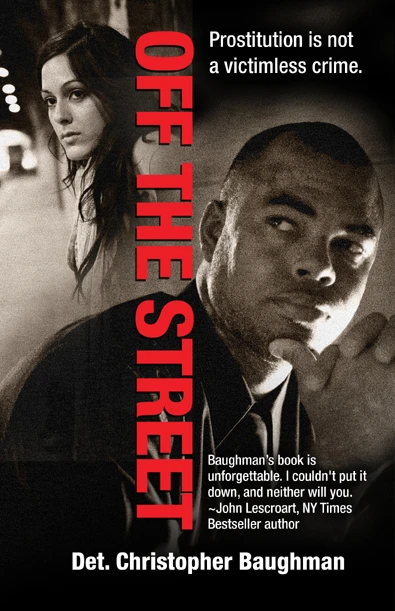
Effective backstory defines the character more clearly – like why Betsy freaks out whenever she sees a red Maserati – or it helps better clarify the plot – why Chris Baughman has such an unusual passion for saving victims of human trafficking.

These kinds of backstory give the reader their “ah ha” moment, so they can fully understand all aspects of the story and enjoy it more. Don’t leave your readers wondering, “Holy hell, why is this here?”

I’m still in the weeding-out process because it takes time to thoughtfully consider whether to keep something or toss it. And that’s the key here; grant yourself plenty of time to consider what stays in and what goes out. After all, you don’t want to toss that purse and decide a month later that you really wanted it after all.


Follow

Get every new post delivered to your Inbox.

Join 812 other followers

Powered by WordPress.com