I Love My Authors, and so Will You…

January 31, 2013

Three of our brilliant authors had wonderful radio interviews the other day, and I thought I’d share.

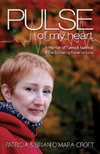
pulse-smBrian and Patty O’Mara-Croft experienced the worst nightmare a couple madly in love could ever face; Patty’s widow-maker heart attack. Their fabulous book PULSE OF MY HEART is a testimony to a love that can overcome horrible odds, role reversal, and the frightening world of conflicting medical advice. Through all the horrors and pain, Brian and Patty’s love and wicked humor not only maintained their sanity, but increased their love and appreciation for the ability to step up to the plate. Le sigh…I love a good love story, don’t you? You can listen to Brian and Patty’s interview here.


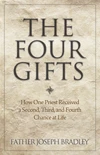
fourgifts-sm

Father Joe Bradley, author of THE FOUR GIFTS, puts to rest the myth that our lives are cemented in granite, and that we never get a second, third, or fourth chance at happiness. This is a man who battled addiction (even during his beginning days in seminary), and congenital heart failure that killed his beloved father many years earlier. This book is about reaching rock bottom and loving yourself enough to seek help and make positive changes in your life in order to save your life. Father Joe can be found giving amazing rock-it talks to audiences in San Francisco, and points beyond. Look out world, Father Joe has a mission to make people happy. You can listen to Father Joe’s interview here.


Writer Warning

January 30, 2013

That is all…

image


The Book Deal – Channeling Goldilocks

January 29, 2013

goldilocks

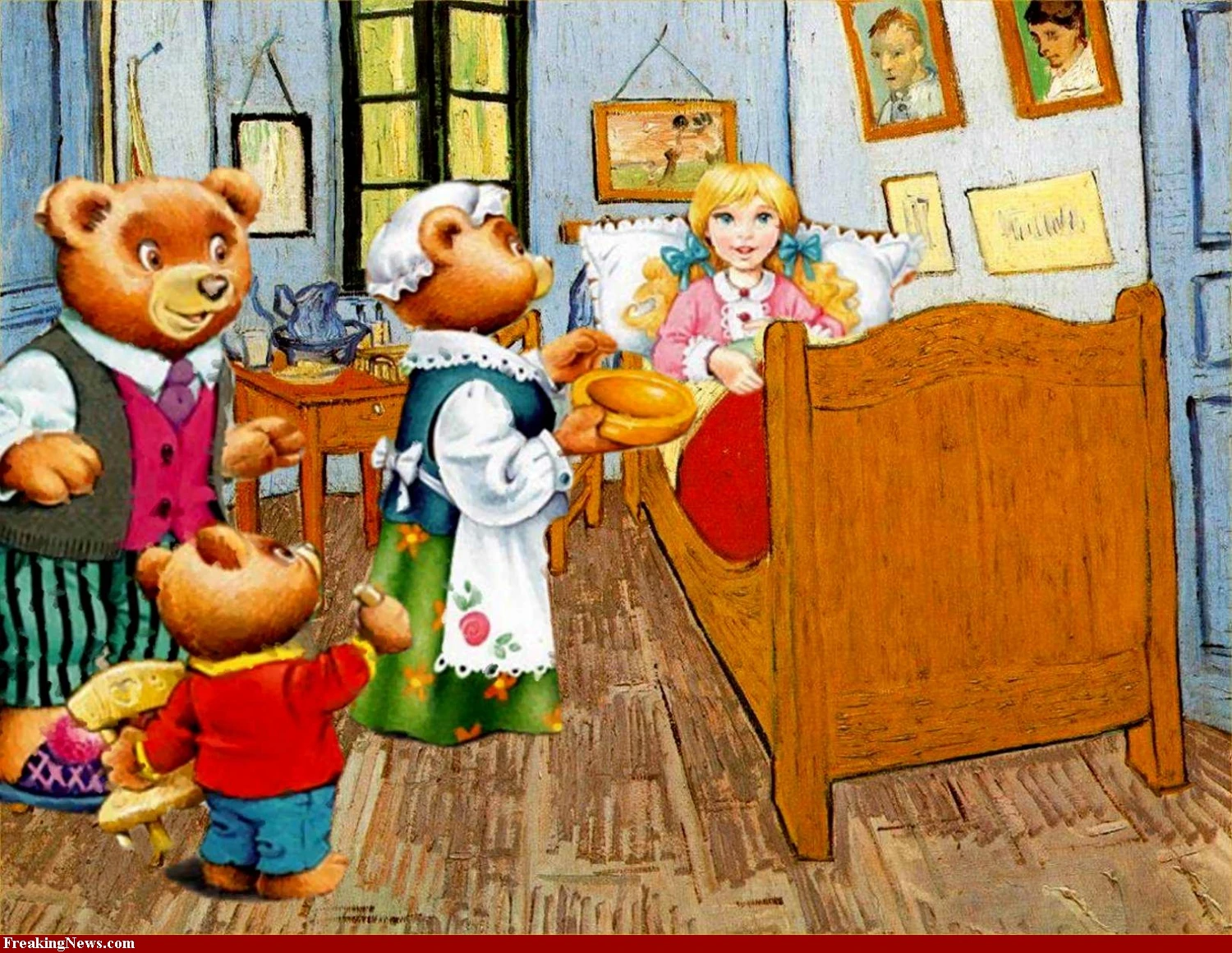
We all remember the story of Goldilocks and the whole “this bed is too hard, this one’s too soft, ahhh…this one is just right.” Well, a book deal is a lot like that. One may be feel too right, the other, all wrong, and the other is absolutely perfect. In order to figure out which book deal is juuuust right for you, it’s important to consider some factors that you may not be aware of.

For this post, I’m going to use Big Gun publishing, commercial trade press publishing, and e-book publishing. The golden thread that weaves its way through all types of publishing is MONEY. If you gots it, the more you can spends it on cool things like advances, editing, production costs, marketing/promotion.

Advances

Traditionally, paying an advance allowed the author to survive while writing his book. So the higher the advance, the more the publisher believed in the book’s potential. Along the way, the whole advance idea exploded into Mr. Stay-Puft marshmallow man in Ghost Busters. The reasons are many, but the end result is advances have often exceeded the publisher’s ability to earn back what they’d paid out, which resulted in many editors and sales people being handed their walking papers.

Big Guns:  They still pay out far larger advances than their smaller counterparts, but they pay them out to fewer authors because their cash flow isn’t what it used to be. They are beholden to their corporate leaders, and those books have to make a ton of scratch to continue feeding the corporate monster.

A giant payday is a lovely thing for the first-time author, but it’s also wrought with the demand to perform – a daunting task. If you don’t earn out, your Big Gun publisher may not be so happy, and you could be the one out on the sidewalk. As all publishers do (or should), they do a P&L statement and weigh the risks. Most of the time, it’s a matter of Pay It and Forget It…meaning that the advance is the only bit of money some authors may ever see because their books don’t earn out. In short, Big Guns, on average, are learning to be smarter because they’ve seen fellow Big Guns go bankrupt.

Trade Press:  Used to be called Indie publishing, but the self publishers sorta stole the verbiage, so Trade Press is used to define publishers who aren’t owned by corporations. They’re independent. And since they’re independent, they have to work smart. They can’t spend more than they have, and they have to feel confident the authors they sign will sell well. To that extent, advances are lower because they are more risk averse than their corporate brethren. If the book sells well, the author will make big bucks via royalties.

E-publishers:  Since the digital technology has exploded, we’ve seen an explosion of e-publishers because it’s cheap and there is little risk…which means they don’t need a lot of money or experience to hang out their shingle. It’s not unusual for e-publishers to pay zero advances. Many authors who sign with e-publishers are new writers, and are willing to accept these terms.

Production Costs

For the print trade, there are a lot of production costs associated with publishing a book, so the more you gots, the better the product – or so the saying goes. The standard costs are wrapped up in editing, cover design, layout, interior design, sales and promotion planning, print runs and other stuff I’m sure I’m forgetting at the moment.

Big Guns:  They gots money, so they can afford just about anything they want, depending on where the book fits on their list. If it’s a top list book, they’ll pull out the corks. If it’s midlist or lower, they will put less resources into the project, which translates to lesser effort to promote and market your book. That isn’t to say it won’t get out there because it certainly will. But it also depends on the genre and how it syncs up with their current lineup.

Many of my midlist author friends are very happy with their publishers, and a few have been sorely disappointed…and it all went back to genre. Some sell better than others, and the Big Gun is going to put more money into what’s selling better.

An unhappy byproduct to print runs is returns, and it’s the bane of every publisher. The odd thing about the Big Gun is that they’re all about shipping books out to market, and they don’t care as much about returns. Yah, sounds insane, and there is a huge explanation for this, but it doesn’t play into this discussion. Suffice it to say that if your editor says they’re printing up X number of books, you should ask how many they plan on shipping.

Trade Press:  Their budgets are smaller, but that doesn’t mean they can’t put out amazing books, and sell a ton of them. They have great cover designers, interior designers, and do a great job at layout. They meet with their sales teams to discuss marketing and promotion. For example, we are distributed by Consortium/Perseus, and I just had my sales meeting with them yesterday, where we discussed everything; titles, cover design, marketing and promotion strategy, and print run forecasts.

Depending on the book and genre, print runs aren’t as large as the Big Guns. Where they might do a print of 15k-20k units, the trade press might do 5k-8k units because they want to avoid returns. Books that are returned can’t be sent out again because they often look like they were repackaged by bipolar baboons…so that’s a loss.

Conversely, if the book explodes, it takes a week to get another run done (provided you have a very good relationship with your printer). It’s all about working smart and conserving costs, so those resources can be utilized with promotion.

E-publishing:  Production costs are, on average, lower because the e-publisher doesn’t have as large of an operating budget. They can’t afford to shoulder too much risk, so they need to conserve costs as much as they can. They don’t have print run costs, and their promotion costs are lower because everything is done digitally. For instance, we send out around 100 books to reviewers and media, so we not only have the printing costs, but the mailing costs, which have gone through the roof.

Since there is no physical copy, traditional media is less likely to pay much attention to the book, so this is an important consideration to factor in.

Editing

Editing is part of the production costs, but I wanted to talk about this specific issue because it’s the blood and guts to any publishing company. You can slap on a gorgeous cover and market a book ’til the cows come home, but if a book is poorly edited, you ain’t got nuthin’. Do this on a consistent basis, and your publisher will be known as a dud…and so will you, by association.

Big Guns:  It’s hard to find fault because they are the Great Yoda of the publishing industry. Since they were here first, it’s natural that they would have the greatest stable of fabulous editors.

But the Big Guns have a problem that others don’t, and that’s turnaround time. They still publish more books than everyone else, which means they have a lot of authors in the queue waiting their turn to be edited. The general waiting time for a book to be published is two years. And because they have so many books to publish, editors need to work very quickly.

I have some editor buds who work at the big houses and are exhausted at the lack of time. More than one bud has told me that books simply went out that weren’t editorially ready, but they had to meet the schedule. Ouch.

Trade Press:  Trade presses are smaller, they specialize in one genre, and their publishing schedule isn’t nearly as frenetic (on average). But they still need great editors. With the Great Publishing Implosion a number of years, we saw many editors walking the streets looking for an editing gig. Many have hired out to the trade presses on an independent contractor basis, provided they will pay them what they’re worth.

Without great editing, a book is nothing more than an empty suit, so trade presses make sure to have nothing but the best. Their business depends on having strong books, and experienced editors are worth every dime.

E-publishing: Here’s where things get really odd. Since e-publishers, on average, have a much smaller operating budget, they can’t hire the most experienced editors. Nor can they pay them a standard editing fee. Many editors at many e-publishing houses are paid a percentage of sales on the books they edited.

Not only is this incredible, but it forces the editor to shoulder the same kind of risks the publisher is…yet they’re not an owner. If a book they edited doesn’t sell well, that editor is going to make peanuts, and it’s not their fault.

Who would agree to such an arrangement? And this is the rub. Many e-publishing editors have little to no experience in the industry. Invariably, they are writers, which is fine, but just because you write doesn’t mean you understand editing. It’s an art.

So what is the quality of these editors? I’m sure they’re trying their very best, but that shouldn’t be a standard by which someone should be hired. And what about the attrition factor? You can’t ask someone to work for peanuts and expect them to remain loyal. What if they simply decide to just stop editing a book, midstream? Since many e-published authors are new, they don’t know this is out of the ordinary.

Sales

Sales are the lifeblood of publishers. We needs ‘em to keep errant beagles in designer chewie bones. So how do the various kinds of publishers get sales?

Big Guns:  They have a well-oiled machine, so their books (for the most part) are going to be shelved in bookstores. They have teams of sales people who put together a catalog of their upcoming releases and pitch to store buyers at the corporate and local levels. They have teams who  deal with national accounts like Wal-Mart, Target, Costco, etc. They send out advance copies to the media for review and publicity purposes. This is all done to make people aware your book exists.

This works well for many of their authors, but it depends on genre and what’s hot. The Self-Help book, or midlist mainstream fiction may not get the attention that a Young Adult. The big guns have a lot of mouths to feed, and they can’t feed them all.

Trade Press:  Since trade presses have a smaller lineup each season, they have more time to dedicate to each title. Since they specialize in a genre, chances are strong they have established relationships with media, which helps a great deal during promotion. For example, I had a radio host call me a couple weeks ago asking to interview a couple of our authors because he so enjoyed interviewing one of authors last year. If you have these guys in your Rolodex, it’ll go a long way to getting the word out to your author’s intended readership.

Since most trade presses are too small to have their own sales team that have enough clout to get the attention of the book buyers, they have agreements with distributors, who have sales and promo teams – and they do the same things the Big Guns do. Their experience and long reach go a long way to getting books shelved in stores.

If you’re considering a trade press, make sure you know who distributes them. If they say Ingram and Baker & Taylor, they’re telling you a hot one because those companies are wholesale distributors, meaning they fulfill orders placed by bookstores or libraries. They don’t have sales teams who pitch their catalog to store buyers.

E-book Publishers: Sales are online. Period. There is no other venue where your book will appear. I’ve noticed that the successful e-publishers do a great job at branding their company, so a book will sell well because of the publisher’s name recognition – not necessarily the book. This means that if you’re with a brand new e-publisher, you may not be happy with your sales. Simply put, no one knows who they are.

To date, I haven’t been able to nail an e-publisher down as to the specifics of their promotional practices, so I’m still, sadly, in the dark about how they promote individual titles. One thing I do know is that the successful ones publish a specific genre. Romance still seems to be the leader among successful e-publishers, so I’d be leery about an e-publisher who publishes all genres. They would have to have the editing expertise for all those genres, and I just don’t believe they have it…just as I don’t believe the small trade press can do justice to all genres, and they need to specialize.

How Long You Been ‘Round?

This is the most important thing to consider. How long has the publisher you’re considering querying been in business? My suggestion is to wait until a company is at least two years old because that’s about how long it takes for the warts to show, and for them to run out of their seed money.

No matter what publishing option you choose, you gotta channel Goldilocks. Their porridge can’t be too hot or too cold. It’s gotta be just right, which means that they have sufficient working capital, experienced editors, good distribution, healthy sales, and are adept at selling your genre.


Life is Worth Living After All…

January 25, 2013

beagle kittehs

The Setting: Rescue beagles snoozing on the top of the couch. Like cats. They are not allowed to do this. They know this. They do it anyway. Beleaguered and Moany Editor is coming off a 24 hour drinking binge, commenced over the news she’d lost all her email.

<ring ring> Rescue beagle #1: Phone’s ringing. You gonna answer that?

Beleaguered and Moany Editor: Why bother? It’s probably an agent asking me if I’ve had a chance to read her client’s submission, and I DON’T HAVE MY EMAIL!

Rescue beagle #2: Boy, she gets really tetchy, doesn’t she?

<ring ring> Rescue beagle #1: You really oughta answer that. It could be important.

<Beleaguered and Moany Editor shoots dirty look at both rescue beagles before answering the phone> Hello? Behler Publications, home of the broken-hearted and email-challenged.

Voice from the heavens who is masquerading as Amazing Techie Dude: Hey, Lynn? This is Amazing Techie Dude. Guess what? After three days of running five different programs to try to bust into your crapped out hard drive, I had success and am staring at your backed up email. Lemme have your Dropbox info, and I’ll dump it in there.

Beleaguered and Moany Editor <crossing herself, even though she isn’t Catholic>: Omigodomigodomigod! Life IS worth living after all! Thankyouthankyouthankyou!

Amazing Techie Dude: Now, about my fee…

——————-

So I’m up and running again and can get back to everyone who queried me. I’m so happy, I may let the rescue beagles stay on the couch top…as long as Rescue beagle #1 makes me a margarita. She’s part Chihuahua and insists hers are far better than The Beagle’s. We shall see.


When Computers Die…

January 24, 2013

dead computer

…they don’t go to Heaven, like dogs do. They go straight to hell because their owners must endure the blowback. Luckily, all my files were saved on CrashPlan (every computer user’s bestest buddy), but I somehow managed to muck up my email backup.

I knew my computer was trying to die (the bitch), and she warned me by refusing to go online or work the keyboard. I dutifully backed up my email and proceeded to mislabel it with the wrong date. A techie guy got my computer online one last time, so I could nab my email backup and stick it in Dropbox (another best friend to any computer user). I got down to my laptop…and that’s where things get a bit fuzzy. In short, I can’t find the damn email backup file.

I took my blown out hard drive to techie land, so they could rescue the file. As luck would have it, they can’t get the hard drive to work. Great. So now I’m missing a lot of emails, which are the life blood of my job. I’m currently nabbing an older email backup, but it’s still missing a few month’s worth of emails.

If you or your agent queried me and you haven’t heard back, please email me again. I’ve lost all my open submissions. And yes, I could cry giant croc tears because in the last six months, I’ve had two major computer blow-outs, and I’ve lost my sense of humor.

Too early to start mainlining cheap tequila?


Book Promotion – Don’t Be a TV Commercial

January 21, 2013

charmin bear

Am I the only one squicked out at TV commercials? I mean really…do we need to have a moaning hottie stretched across a Scrabble board telling Mr. Jack in the Box “No Nookie”? Is this the most effective way to sell a breakfast sandwich?

And what about the girl making out with a walrus in order to sell Skittles? Makes me want to hurk up every Skittle that’s ever gone into my pie hole.

Please don’t even get me started on the Charmin commerical with the bear family who can’t seem to learn how to clean themselves. Their tag line is “Enjoy the Go.”

Enjoy. The. Go?????? Good holy Helvetica, Batman. May the Cosmic Muffin strike me dead if I ever find myself amused because it’ll be a sure sign that I’ve finally gone ’round the bend.

Spam-a-Lot

And sure, we can probably agree this is not an effective way to market a product. But we also need to consider the gimmicks used to market books. With so many authors going DIY, I’m seeing some equally squick-worthy attempts at promotion. Most come in the fashion of the ever-irritating SPAM email. “Hey, lookie what Jane Author has written! It’s the coolest thing since Hemingway!”

Uh huh. Spammy emails – often sent by vermin passing themselves off as internet publicists – are bug repellant, not enticing nuggets of joy.

Book promotion is about calling attention to your book in a positive way that entices readers to hop, skip, and jump to their nearest bookstore. Spam emails have absolutely zero effect, and all you’ve done is separated yourself from your hard-earned dollars to someone who’s laughing all the way to the bank. Spam publicists will tell you they send “announcements” to “targeted” audiences, but that’s hooey. They have large databases and simply spam them with a click of a button. Collect $500, move on to the next sucker.

Hopefully, there are personal aspects that you can draw upon that will create a bridge between you, your book, and your readers, and spam publicists aren’t the way to go.

Look For the Golden Thread

I know there are more limitations if you write fiction. Not like you can exactly promote yourself as the owner of a purple unicorn and three trolls, right? But are there some elements to your book that can serve as a kickstarter? Something that connects you to your story and, therefore, your audience? I always harken back to Mr. Surfer Dude and his challenges of trying to sell his DIY surfer dude SF/Fantasy. We helped him make lemonade out of some serious lemons, without having to resort to inane gimmicks. He never made millions, but he ended up having a ton of fun, met a lot of new people, and sold more books than he ever dreamed possible, considering his storyline.

Blogs

I’ve seen some very effective marketing via author blogs. Blogs take awhile to gain an audience, so it’s best to have one going before your book ever comes out. One amusing blog began with the genre author’s journey of getting published…but that wasn’t the main fare. She has a wonderful sense of humor and her blog posts surround some inane, goofy thing she does, which tie directly into the type of books she writes. In short, she drew in potential readers through humor, but it ties in with her genre. So when she got a publishing deal, her book sold like hot cakes.

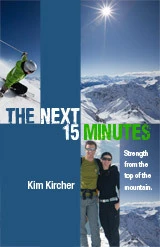
next15minutesI adore Kim Kircher’s blog, and not just because we published her fabulous book THE NEXT FIFTEEN MINUTES. I love her blog because it’s the perfect example of talking to her audience on  topics that connect her to them. Her posts always make me think because she finds the miraculous in her job as a bomb-tossing ski patrol Amazon woman. She ties her experiences on the slopes to everyday life – observations we can all apply to our lives. This is an example of everything done right because the tone of her blog is the exact tone of her fabulous book. And if you haven’t read it, run, do not walk, to your nearest bookstore and get a copy or three. Makes for the perfect Valentine’s gift.

I’ve seen a lot of misfires as well. Blogs that try to be too serious, for instance. Now, there are times when this makes sense; human trafficking would be very hard to make light, chatty posts. The trick is to match the your tone of your blog to the tone of your book, like Kim’s. Your book could have some very serious issues – heart attacks, for instance – but if your book includes a lot of things that are utterly hysterical, it’s perfectly appropriate to strike a lighter tone with your blog because it’ll pull in readers, who will want to read your book.

Seminars/Talks

These are delicious things because potential readers get to see you up close and personal. If you’ve discovered your inner hambone, I recommend these because a live audience is the best place to get instant feedback and wonderful questions. It’s also a lovely place to get more invitations to give more talks. Dropping seeds, and all that.

But take care. I’ve seen cases where the speakers were fabulous, but their books were disappointing because they had a completely different tone. More than once I’ve told authors to think about their talks. They get standing ovations for a reason, so they MUST carry that same tone in their books. It’s what their audience is expecting. And vice versa. Your talks and your book must be complementary, not war against each other. That’s as bad as a Charmin commercial.

Whatever form of promotion you choose to do, do it with dignity. Don’t be a dancing hamburger who’s crying about having no cheese. Don’t be the poor souls at Book Expo America, who wander the rows and rows of publishers wearing toilets on their heads, or dressed up as pickles (seen ‘em, pinky swear) hoping an editor will leap out, screaming, “I MUST sign you!”

Analyze your personality. Are you good in front of an audience, or would you be better doing radio? Are you a talented blogger, or do you write magazine articles? Follow your passion…after all, you went so far to write your book, so you owe it to yourself to keep your dignity and promote smartly.


When Ms. Inner Editor Goes to Sleep, So Must You

January 16, 2013

InnerEditor1

When writing, it’s sometimes hard to keep your inner editor awake. After all, a girl needs to rest.I’ve always imagined my inner editor is a haughty little thing who loves to wear blood-red stiletto heels, a matching wide-brimmed hat, and long fingernails she uses to gouge out my heart when I work without her.

And that’s the rub…working without our inner editors.While they’re off getting some beauty sleep, we writers are left on our own, without proper supervision, and we end up committing some blunders that make our inner editors’ teeth itch.

Mentioning names instead of using a pronoun

It’s ok to use a pronoun. Really. You don’t need to use the character’s name at every turn. I’ve seen any number of manuscripts read something like this:

Joe couldn’t see through the fog because Joe forgot his Darth Vader See-All glasses that Joe found in a Cracker Jack box. Joe wished he hadn’t been in such a hurry in leaving because Joe also realized he’d forgotten his magic gloves and bag of marshmallows.

Ok, there’s a bit of overkill in here, but not much. Going between a pronoun and the character’s name is a balancing act. Once the reader knows who you’re talking about, don’t be afraid to use “he” or “she.” Using the character’s name is tedious and clumsy.

Affections: Sighing, rolling eyes, running hands through hair

Another thing that happens when your inner editor catches some zzz’s is overdoing affectations. I’m currently reading a book that, I swear, if the author writes “rolled her eyes” one more time, I may begin rolling mine as a counter-attack. If your character runs his hands through his hair or shrugs his shoulders at every turn, then he becomes one-dimensional. Even I am given to committing drive-by eye rolls only once a day. If your characters are doing this every five minutes, then I’d wonder if they have Tourette’s.

Affections are great, but only if your inner editor is wakey wakey because they give depth to your characters. The trick is to avoid the cliche ones. Running hands through the hair (lordy, I love that one for some reason), eye rolling, shrugging shoulders, sighing…those are easy to rely on too heavily because we all do them. But it can look overdone in literature, so think of something unique.

If you have a tough time with affectations, do a bit of reflection and observation. What are your affectations? For instance, I noticed that I pinch my chin when I’m frustrated, and I tend to rub a knuckle across my lips when I’m searching for just the right word to use.

Observe your friends and family. I have a friend who twirls a glob of her hair when she’s engrossed in telling a story. One time she got so engrossed that she created a huge knot next to ear. I nearly laughed up a lung watching her try to tuck the knot behind her ear in an effort to pretend it wasn’t there.

Actions:  Walking across the room, slamming doors

Action can also get away from the writer whose inner editor is sawing logs. Action, when treated properly, is great because it gets a character from here to there. However, I see lots of walking across the room, slamming doors, drinking coffee…whatever…which doesn’t further a scene, but merely enhances it…you hope. It works for the most part, unless you allow the action to overtake a scene:

Jilly poured the gin into Jane’s and her glass. “So, have you decided whether to take the train or the bus?”

“I’m leaning toward the train,” Jane said, taking the proffered glass and taking a small sip. 

“I love the train,” Jilly said, setting her drink down on the table and reaching for a cookie. “I love peering out at the countryside.” She took a bite out of the macaroon.

“I know what you mean,” Jane said, picking up the other cookie and dunking it in her gin.

This isn’t so bad here, but if you have an entire scene of dialog where both characters are either drinking, eating, wiping crumbs, taking another cookie, the scene takes on  a ka-thunk cadence because the action slows down the pace by overtaking the dialog. You wouldn’t think action would slow down the pace, but your dialog has a pace of its own, and adding too much action can slow down the dialog.

Again, this is a balancing act because you want to avoid Talking Heads – where all they do is talk, and there is zero action. Action tends to be overused because authors are trying to avoid dialog tags like, “he said.”If John is busy picking up a beer while speaking, then you don’t need to add a “he said.” You’ve already identified who’s speaking by adding action.

It’s a great writing tool, but be mindful about supplanting one for the other without intention. You and your inner editor will decide how well balanced your scene is. It’s harder to do when she’s not on your shoulder, screaming at you.

Punctuation:  exclamation points, em dashes, ellipses

This is a terrible abuse because it’s so easy to do. When inner editors awaken to see the carnage, it’s all they can do to keep from mainlining cheap tequila. We writers have our little foibles. My weakness is ellipses. I love them because I feel they have a bigger impact than using a simple comma. It’s more dramatic. But a manuscript with a million of these little suckers should land me in jail without possibility of parole. And I’m not the only one. I once read a manuscript that had over 300 of them. I know because I did a Track Changes search in order destroy every one of them. That author needed therapy.

I learned my aversion to exclamation points when I read a manuscript with some-400-odd exclamation points. I began to see them in my sleep, and when I drove to Starbucks. The result of all those exclamation points was that the ceased to have any importance. Rather than actually writing tension or fear, the author stuck in an exclamation point, thinking that would convey the same message. It didn’t.

“Hold on! I’ll be right back!” Jack yelled.

“I don’t know how long I can wait!” Ann yelled back.

“If you don’t, there will be a huge mess!”

“I don’t care! If that gas station forces you to buy something before they’ll hand over the bathroom key, they deserve to clean up the mess!” Jane screamed.

Ok, been there, so I can understand Jane and Jack’s dilemma. But what those exclamation points are doing is taking the place of character development.

Jack wished he’d pulled off the road an hour ago, when Jane told him she needed to go. Now she was wild-eyed and had a haunted look about her as they stood before a locked bathroom door. “Hold on! I’ll be right back.” 

“I don’t know how long I can wait,” Jane said through gritted teeth.

Jack let the probable scenario play out in his head if he couldn’t convince Jane and her bursting bladder to hang on for a few more minutes. “If you don’t, there will be a huge mess.”

“I don’t care!” Jane screamed, while crossing her legs. “If that gas station forces you to buy something before they’ll hand over the bathroom key, they deserve to clean up the mess.” 

If you need to convey an emotion, then write it. Don’t let punctuation do the job of writing. Only place exclamation points where you really need them. Too many of these suckers is like when I eat too much fudge and I get a big ol’ canker sore on my tongue. You don’t want a literary canker sore, right?

Adverbs

I’ve had many discussions about adverbs, some that got quite heated. Only writers could draw blood over the proper amount of adjective usage, right?

My boggle with these suckers is that they are so seductive, that I consider them the Antonio Banderas of writing. They’re sexy, handsome, and soooo easy on the eye and, before you know it, your writing is filled with adverbs that crowd, clutter, and irritate your readers. Not that Antonio ever could…

“This beer is so astoundingly horrible. It tastes amazingly like dirty sock water. How can you drink this achingly awful swill?”

A manuscript filled with adverbs is overkill and there are plenty of readers who get to the point where they shout, “Yes! I get it, the beer is horrible and the character hates it. No need to stick fifteen adverbs in there to say so.” As with my love for Twinkies *sob*, moderation is key here.

Verbiage 

This is the fingernail on the chalkboard to any reader of period pieces. If your story’s time frame is in 1860, “cool” better be describing the temperature and not the wheels on a horse buggy.

We’re all looking for realistic dialog, but it can be taken to extremes if you inject to many “Well’s” “Look’s” “Um’s” Sure, we all say these words in general speaking, but that doesn’t mean it translates well to paper. I read a scene the other day that took up two pages and had fifteen uses of “well,” “look,” or “um.” Overkill.

So if you find your inner editing yawning, go join her. Writing is a team effort, and you shouldn’t work unsupervised. Ever.


Title Comps – What’s the Big Deal?

January 14, 2013

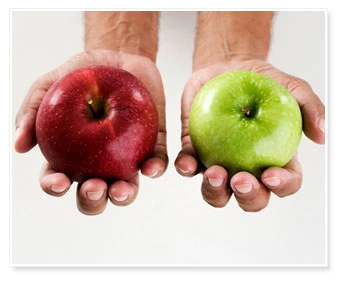
apples for apples

At some point in your query process, someone may ask you for a list of comparative titles (preferably three). You eyes will roll back in your head, and you’ll scream to the heavens. “Argh, I just wanna write. I don’t wanna be hassled with the business end.” There are few who have that luxury, so sticking your heels into quicksand isn’t going to help your writing career. It would be better to be ready, right?

The big question is this: Why do I need title comps?

A Frame of Reference

Sales teams and genre buyers need a frame of reference so they know how and where a book fits on store shelves, and how to appeal to readers. Sales teams can tell genre buyers, “Readers of that 2011 literary phenom, Invert Your Colon, will be attracted to this title, Eating Lawn Clippings: Live Healthy and Moo Like a Cow because it delves further into the health benefits of eating a freshly mowed lawn.”

Instantly, the genre buyers understand the book’s classification of where to shelve the book, and whether they want to issue an invoice for purchase. Now, of course, your publisher’s sales guys will do all the heavy lifting in terms of knowing how to pitch your book, but it’s really helpful if you, the author, are in touch with books that are comparable to yours. It’s a building block for us.

Just yesterday, I contacted one of our authors for title comps. Sure, I can get them myself – and I have – but his subject matter breaks new ground, so I’m naturally interested to get his feedback on the books he feels somewhat resemble his book, as a way of helping our sales and marketing folks.

Additionally, having a comparative title on the tip of your tongue helps when talking to readers. Imagine you’re sitting in a bar (easy if you’re the beagle). Someone asks about your book, so you give the general quickie synopsis because you’re a caring person and don’t want to put anyone to sleep. You can see the person looking a bit puzzled, as if he still doesn’t quite get what your book is about. But if you say, “My book has a similar theme to Gone Girl,” then a light bulb will turn on, and he’ll ask for more details and probably buy you a drink because you’re so fabulous. And that’s what you want; an invitation to talk more about your book.

Attracting an Audience

Title comps are a good way of attracting an audience, just like the bar example I gave above. Most writers read the genre they write, so they should have a strong idea of the titles that closely compare to their own.

It’s helpful when an author writes in their query letter, “Readers of Dancing With Sexy Toes will be attracted to my book, My Three Left Feet, because it deals with the same issues of foot fetishes, which was all the talk in America in 2012. Where My Three Left Feet changes course is when Merry, the main character, challenges today’s zeitgeist that dictates foot fetishes are abnormal and strange, by pursuing a high-fashion life of modeling foot apparel, thus bringing foot fetishes into the mainstream. “

This sort of thing is helpful to me because the author identifies a popular storyline, then tells me how she added her own twist. This tells me a couple things:

  1. She knows her competition
  2. She understands that she has something unique, and not cookie-cutter. This helps me decide whether I think this particular storyline will sell. And if I want to buy it, she’s helped me out by highlighting the selling points…which will attract an audience.

But I don’t wanna be pigeonholed!”

Yes, it’s true; by committing to comparative titles, you’re staking a claim as to what your book is, which can be tough if you’ve written something that’s a bit of a crossover. My suggestion would be to pick a couple title comps in both genres and give the same short comparison as I did in the above example.

Another reason writers don’t want to be pigeonholed is because they want to believe their books are for everyone. In truth, there are very few books that appeal to everyone. Furthermore, I don’t have “everyone” in my Rolodex, and our sales guys don’t, either. If you fit this description, then you need to tell yourself the truth; your book has a particular audience…who are they; and what books inspired you to write yours? How do they compare and contrast?

Don’t Get Caught With Your Vickie Secrets Down Around Your Ankles

I listened to a radio host interview a new author about her book. The radio host brought up a well-known title that ran along the same line as hers, and he wanted to talk about those elements. To my horror, the author coughed and hemmed, and finally said, “I didn’t read that book.” BoOm. End of interview. The radio host was caught flat-footed, and the whole thing went downhill from there. I nearly drove off the road because this was such a noob mistake.

You gotta, gotta, gotta know your competition and be able to speak intelligently to the contrasts and comparisons. Being caught with your Victoria Secrets down during an interview is a sure-fire way to never be invited back.

What Comps Do I Use?

They need to be current – preferably nothing older than three years. I’ve seen title comps that were written back in the 60s and were classics. Do you really believe your book can hold a candle to a classic? It may be that it can, but I advise letting others (like book reviewers) make that comparison…it’ll have far more weight.

Since you are well-read (or you better be!), it should be easy to figure out which books relate to yours. I groan loudly when authors tell me nothing compares to their book. Oh puhleeze…yes it does. Even if you’ve combined two genres, like Twilight, you still have comparisons. It’s a cop-out to use this lame excuse, and it makes me think that you’re not well-read. And if you’re not well-read in your genre, then chances are that you won’t be very affective at promoting your book…at least that’s been my experience with nonfiction.

So if you’re not up to date on books in your genre, get thee to a library post haste, and get cracking.

“Yabut, why???”

Ok, I hear you simpering out there. You’re busy writing and don’t have time to read. That’s like a surgeon saying he’s too busy operating to bone up on current techniques. You read because this is your art, and it behooves you to be an expert in your art. You read because it’s how you figure out if you have a story.

Case in point, an author queried me years ago about a book on cancer. Her query didn’t offer any earth-shattering stuff that hadn’t been written about many times before. I asked her what kind of reading she had done to know whether she had something new to say. Come to find out, she had done exactly zero reading on the subject. I sent her the Amazon link to the cancer books page and suggested she start doing her research.

Two months later, she wrote back to say that after all her reading, she realized she didn’t have anything unique to say. It broke my heart because I know she was sad to come to this conclusion. But it would have been far crueler to let her wander around thinking she had a marketable story. Better to know she has nothing new to say and give her the option of growing as a writer and delving into topics that aren’t covered in other cancer books.

If you write, you must read. If you write, you must know your competition. If you query, you must be able to speak intelligently about your competition and know how your book compares and contrasts. It’s simply good business. And you know what? This applies even if you plan to self-publish.


When You Have Editorial Differences

January 8, 2013

Frustration-Eats-Pencil2

So you’ve signed the contract, the ink is dry, and now your book is in editing. Yay! Welllll…maybe. There are times when authors will have  differences of opinion with their editor, and this can either go well or make you want to mainline Drano. Let’s face it, there are few authors who agree with every suggestion their editors bring up. Ten years in the biz has afforded me all kinds of experiences in the editor chair, so I thought I’d offer some perspective that may help you when your manuscript is under the bright lights.

Is It OK to Disagree?

YES. There have been many times where I felt something wasn’t working, and recommended it be edited out, and the author didn’t agree with the suggestion…and there’s nothing wrong with that. On more than one occasion, I’ve had authors write back to say they were very married to a section I wanted to cut. We talk about it and reach some resolution. Sometime it turns out that the scene is a key piece, but simply needs further development.

I’m good with this because I can’t appreciate the importance of a scene if it isn’t fully developed. But if you disagree with me, we can talk further to where I may see that cutting a scene would be the wrong thing to do. If you’re too nervous to say anything, then your book may suffer for it. You know your book and its intent better than anyone, so you are its best advocate during the editing phase.

How to disagree

But this isn’t to say that disagreement should take on all sorts of ugly. The editing process is a very personal, emotional experience, and authors don’t always appreciate their words being futzed with. I’ve had times when it would have been easier to invert my belly button than continue editing a manuscript.

You don’t need to shout and stamp your feet to be heard. Every editor has her process, so learn what it is and how to use it to ensure the lines of communication remain open and professional. I’m a big fan of using the Comments/Balloons in the Track Changes feature in Word. I highlight a section that I want to edit out, delete it (the Track Changes feature will show up with that section crossed out and underlined). Then I’ll highlight part of that section and add a Comment in the margin, where I say something like, “Suggest editing this section out. The scene is way too long and doesn’t go anywhere. It doesn’t enhance the chapter.”

If the author wants to comment on that, she can highlight part of that section and add her comment below mine – where I’ll see it when the edits come back to me. “I really love this scene because it’s pivotal to the plot.” We can further discuss our options.

What I love about adding comments in the margin is that it keeps things clean and clear. You’re not likely to cuss out your editor in a comment balloon. Instead, you’ll stick to the facts. What I don’t appreciate is a hysterical phone call or email about editing a scene.

How vociferously to disagree

Many years ago, I wanted to make some editorial changes to an author’s manuscript (who is no longer with us), and he fired back a very heated email, insisting that I didn’t like him. Another author refused to perform any edits because she didn’t own Word, and insisted that we edit via hard copy. Oh hell no. She’s no longer with us, either. Such toolbaggery isn’t helpful to your relationship with your editor, or the entire publishing process.

Some of my editor buds tell me horror stories of screaming matches and threats…nightmare makin’ stuff. And people wonder why we have margarita-mixing beagles…

We realize this is a nervous time for you. You’ve worked hard on your stories and don’t want them futzed with. But that shouldn’t equate to tearing out your editor’s blackened heart and nailing it to a dartboard. Whether you’re a brand new writer or one who has many books out, you need editing. Everyone does. I’m sure that Mrs. Cosmic Muffin edits the Cosmic Muffin all the time, and you just can’t go to any higher authority than that.

Keep it simple, keep it professional. Editing isn’t a personal attack on you, but merely editorial suggestions by an experienced editor who sells books for a living. It’s about trust. The more you trust your editor, the easier it is to keep it professional. If you find yourself blowing a hole in the ozone layer, ask yourself if you’re frightened to be edited and whether you trust your editor.

Trust Your Editor

A loaded bullet, to be sure. Most of the time you don’t even know your editor, so how do you know if she’s any good? Simple. You have faith in your publisher. You’ve read their books (or you darn well should have), so you have a solid idea of their quality. It’s vital that you trust your editor because theirs is the final word. The better you work together, the better the product.

I had an odd experience a few years back. I wanted to sign an author, and she wanted me to sign her, so we met for lunch. Her book was very good, but it definitely needed a strong editorial hand. When I discussed this with her, she became very protective because she was terrified that editing meant completely changing her work into something unrecognizable. I assured her that this would not only be a huge waste of our time, but there would be no point to sign her. Her agent reinforced my claims.

She was still nervous, and I decided not to sign her. If she’s this nervous now, before we even begin editing, what is she going to be like once we begin the process? It boiled down to the fact that she didn’t trust me. Then again, she wouldn’t trust anyone – and that’s a dangerous position to be in. If you have designs on being well-published, you’re going to need to place your trust in your editor. Talk to her, discuss the kind of edits she has in mind for your book. There is nothing worse than working with an author who doesn’t trust you.

Another author refused to discuss working on the ending of the book. The story was wonderful, but the ending needed tweaking. He refused. He believed his way was better than ours. We let him go. Trust. Have it, or go home.

If you find yourself in the throes of editing, and things aren’t going smoothly, then here is some additional advice.

Effective Communication/Effective Listening

Effective Communication and Listening are key during every step of production, but none more so than during editing. When I was but a wee bairn, my dad used to quote this saying around the dinner table: “I know that you believe you understand what you think I said, but I’m not sure you realize that what you heard is not what I meant.” Took me years to figure out what he was saying, but once the light bulb turned on, it has never failed to crack me up because it’s so true.

Email can screw that up faster than just about any other medium. If there is a sticking point during editing, for the love of Helvetica, schedule a Skype meeting or phone call. I adore Skype because we can go page by page and discuss questions or points. And it’s free!

Conversely, listening is an art. We get so caught up in getting our point across that we forget to listen to the other guy – and they may have very good ideas.  Say your piece, then actively listen to the other guy.

Choose Your Battles Wisely

There may come a time when you see your edits and consider throwing yourself under a Waste Management truck rather than face a very big task. It’s hard to look at a sea of red and not feel that your book has landed into an editorial mosh pit. “Do I really suck that much?” No…not at all! But you don’t see it that way. You think you’ve been ripped from stem to stern, so you dig your heels in and decide to  fight every single edit as a way of proving that you don’t suck. The fight really ain’t worth it because if you sucked, you wouldn’t have gotten the publishing deal in the first place.

Editing isn’t about give and take, or winning and losing; it’s about making your book fabulous. There are some edits that can be negotiated and others where there is zero wiggle room. I had an author plead with me to leave a very long scene in because it was meaningful to him. Problem is, it wasn’t meaningful to anyone else, and I insisted that it had to go. I know it hurt, but the author later told me that he never even missed the scene after reading the final edit. Yay…score one for Pricey.

The takeaway from this is to recognize the really big battles, the scenes that are hugely important. Deleting the overwritten bio of a throwaway character isn’t worth blowing a ventricle over.

Justify Yourself

Whenever I edit a scene out, I justify it in the margin comment, so the author understands my reasoning. If you want to fight for a scene or character, or backstory, then you need to justify it to your editor. “Because I really love it,” won’t fly. Won’t even float. You need to provide a solid foundation as to why you’re fighting for something to stay in. If your editor tells you it slows down the pace and doesn’t move the chapter along, then you have to justify why that isn’t the case.

That doesn’t mean she’ll buy it. Her word is final, so if you have a compelling reason for keeping something in, you gotta make sense. If you can’t, then your editor will probably rule against you and toss it. If so, let it go.

The Point of No Return

The one thing you want to avoid at all costs is arguing to the point where there’s no returning to the happy happy joy joy relationship. I guarantee that if you verbally abuse your editor (been there, done that), then you’re dead to her. Sure, she’ll edit your book to the very best of her abilities, but she will groan every time she sees your email address pop into her inbox. She won’t lift a finger to go above and beyond her regular duties…and you DON’T want that.

If you and your editor are at an impasse, then you both need to back away and cool off. Allowing things to escalate isn’t good for anyone, most of all your book. Don’t be afraid to apologize if you’ve stepped over the line. An apology is the great equalizer, and if you let your emotions run away with you, then you need to grow up, accept responsibility, and make things right. If your editor is the toolbag, then you’re going to have to grit your teeth and make the best of things. It’s very rare that the editing process is ever that contentious, but it does happen. Keep your head and emotions in check.

I’m unusually lucky. I have the most wonderful authors in the world. They are bright and talented, ask terrific questions, and make me think. But through the years, I’ve had some challenges – as any editor does – and I’ve had to swallow my tongue a few times just to keep from biting it (and the author’s head) off.

Rest assured, there will be editing differences, but it’s the author who knows how to play well with others in the sandbox who has a great time.


Series of Events or Plot?

January 7, 2013

chain_f

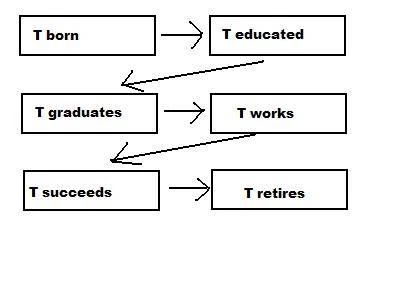
In playing catch up with queries, I’ve noticed a heavy concentration of queries written by authors who have mistaken a series of events for the plot. Thar be a difference. I don’t care about the series of events; I need the plot because it’s the guts to your story. It’s the reason your book exists. It’s the kapow.

A series of events is a collection of scenes that happen in the course of a book – it ain’t da plot. Note the difference:

“Sally goes to college, where she meets John, the hunky prime slab o’ beef who sits behind her in Math 207. They begin dating, only John is confused because he’s still hung up on his hometown girlfriend, Jane, and can’t figure out who he likes more. Sally, in the meantime, meets Derek in Science 101 and has her own share of confusion. It’s impossible for her to resist his curly hair and the fact that he can speak Pig Latin with a German accent.

Sally sticks it out with John, but lusts for Derek, until John goes home for semester break. Over a pizza party with a group from their science class, Sally ends up making whoopie with Derek. When John returns from semester break, Sally decides to tell him it’s over, that she’s in love with Derek and his German accented Pig Latin. John, meanwhile, discovers that Jane, his hometown girlfriend, has taken up with the undertaker’s son. His mind is made up and Sally is the only girl for him, only now she’s with Derek

John is so undone, he decides to transfer to Podunk University, so he can forget all about Sally. Sally, in the meantime, grows weary with Derek’s Pig Latin, and almost faints when he decides to shave his head. Goodbye sexy, curly locks, hello buzzhead. She begins to think about John. Was he really the one for her? She considers contacting him on Facebook, but he won’t accept her Friend Request. Her emails have gone unanswered, and he won’t answer her phone calls.

She gathers up the nerve to take a road trip to Podunk U and confront him, only to find out he’s disappeared. She goes over to the house of one of his friends to see if he knows where John is…”

…blah, blah, blah…get to the point already. And the problem is, there never is a point, and the query letter continues on for far too long, describing general scenes, but never revealing any reason this story exists. There is no purpose. What’s worse is we don’t even know who is the protagonist (I made this, btw).

Now there are times when a story is all that…a big conglomeration of nothing…and if your story looks like this, you may be in Lack-of-Plot Hell. On the other hand, your story really may have a point after all, but you’ve hidden it too well under long underwear and heavy jackets (forgive the frigid metaphors…it’s really cold in Pitts – yay!). If you don’t reveal the plot within the first couple paragraphs of your query letter, I’ll quit reading…pinky swear.

On the other hand, Plot (as defined by Dictionary.com) is the plan, scheme, or main story of a literary or dramatic work, as a play, novel, or short story. And here’s the thing; it may be completely different from your boring series of events. I had this very thing happen last week. I read a query that consisted of nothing but a series of events. I rejected it and explained why. A few days later, the author wrote back, thanking me, and included the actual plot. It was much more interesting, and vastly different from the original.
So let me show you what I mean. Here’s the plot to the mess I wrote above:
Sally feels terrible about the way she treated John while they attended university, so she travels down to the campus he transferred in order to forget her…only he turns up missing. Sally begins to consider the possibility that his disappearance is related to his math thesis, which challenges Einstein’s theory of relativity. Since Sally had worked with him the project, she wonders if she’s a target as well, and she’s torn between digging deep to find him and being concerned for her own well-being.

Boom. There it is in one paragraph. It’s a mystery, we know who the protag is, and the plot. All that other blather in the first example has squat all to do with the plot – and it’s this kind of writing that makes it impossible for me to care about reading more – which is sad because you can see the first example has zip all to do with the real plot as revealed in the second example.

So take a look at your query letter and see what you have; a series of events or the plot. Remember; the plot = your character’s journey.

  1. Something happened that created an experience for your main character(s). What is it? A murder? Cancer? Threat to world peace? Job loss? This experience is your trigger point for the story.
  2. Your character is uniquely qualified to have this experience. What is it? Was her loved one murdered? Does she or someone close to him have cancer? Is he a spy who can avert the threat to world peace? Did he lose his job?  What I’m looking for is how the experience relates to your main character.
  3. Your main character can make certain choices that will change the outcome. What are they? Call the police about her loved one’s murder, or investigate it herself and possibly become a target? How does she deal with cancer – does she fight or give up? Does he have enough strength and know how to avert world tragedy? Does he go on welfare, or does he take the only job available to him – which won’t cover the rent? I want to know what the personal stakes are for your main character. I’m looking to see how big the stakes are for them. If it’s a matter of a chipped nail, then there isn’t much to pull me in. However, if we’re talking about finding sanity and comfort in the wake of a major killer of a disease, then I can get wrapped up in that.

If you look at 1, 2, and 3, you’ll see that it’s far easier to avoid committing the Series of Events query letter, which I guarantee will result in a rejection.


Follow

Get every new post delivered to your Inbox.

Join 978 other followers

Powered by WordPress.com
%d bloggers like this: