LA Times Festival of Books

April 26, 2008

Ah.
So.
Now I see how it is.
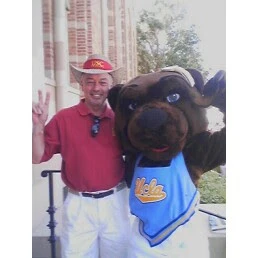
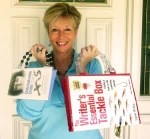
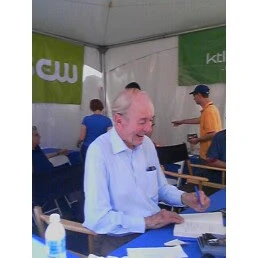
I drag my sorry flu-ridden carcass out of bed today so I can speak at the National Writers Workshop at Cal State Fullerton , thinking that my better half is slaving away at the LA Times Festival of Books booth (held at UCLA).

And what do I find? He’s dressed up in USC gear (his alma mater) so he can stick it to the Bruins. I ask you; does it look as though this man is working very hard? No, I don’t think so either.
At least we have our authors hard at work….go Stan !
As for me; I’m going back to bed.
Send reinforcements.


Dialog Formatting-a-occus, Dialog Tag-a-tosis, and Talking-Head- itis

April 19, 2008

These are three diseases that infect many potentially good works, and it all comes down to education. I’ve been amazed at the number of writers who don’t understand how to format dialog, use too many dialog tags, and engage in talking heads.

Underpaid Editor grabbed the blender.
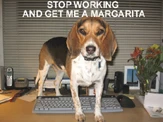
“Margaritas for everyone!” she shouted excitedly.

Overworked Intern tossed the slush pile into the air.
“Whoopie doo!” she screamed elatedly.

While I’m a sucker for a good margarita (and I do make the best in the world), this is a case of incorrect formatting. I just finished reading a submission where the writer had formatted every bit of her dialog in this manner. I was constantly confused as to who was doing the talking; and no, it wasn’t because of the margaritas.

I have a lot of people asking me how to know when to keep the sentences as one paragraph. Simple. You have a lead-in sentence and the dialog. The lead-in sentence matches the character’s action with the upcoming dialog, so it belongs in the same paragraph.

first sentence:
Underpaid Editor grabbed the blender. “Margaritas for everyone!” she shouted excitedly.

Overworked Intern tossed the slush pile into the air. “Whoopie doo!” she screamed elatedly.

The second offense in this example is the dialog tags. Writers rely on them to convey emotion, and this puts the stress on the tag and takes away from the actual dialog. Put the emotion into the lead-in sentence.

Dialog tags should be kept to a minimum because they tend to have a clunking sound after a while. There are so many better ways to reference multiple characters – hello lead-in sentence. They are so underutilized, and the results are dull, flat reading. Use your lead-in sentence to convey movement or facial expressions – anything that will add dimension to the characters – and get rid of the dialog tag.

Underpaid Editor grabbed the blender. “Margaritas for everyone!” she shouted excitedly.
Overworked Intern tossed the slush pile into the air. “Whoopie doo!” she screamed elatedly.

Now becomes:

Underpaid Editor ended her long and stressful week by grabbing the blender she kept stashed in the bottom drawer of her desk. “Margaritas for everyone!”

Overworked Intern tossed the slush pile into the air and jumped with excitement. “Whoopie doo!”

The third offense is the Talking Heads. That’s a case where there is nothing going on but dialog. This is fine if done in small doses, as it is here. But have this going on for a page, and you want to scream. Or drink. It’s all about flow. Besides, you’re missing a great chance to add flavor to this dialog.

Are there any of those little umbrellas we can put in the glasses?”
“You said you’d bring them.”
“I thought Underworked CEO was going to get them.”
“No way. He took all the petty cash to buy water balloons to throw at the UPS guy.”

Now becomes:

Overworked Intern watched her boss pull out the tequila, limeade, and ice. “Are there any of those little umbrellas we can put in the glasses?”
Underpaid Editor had to speak over the loud whir of the blender. “You said you’d bring them.”
“I thought Underworked CEO was going to get them.” Overworked Intern’s face fell in disappointment.
“No way. He took all the petty cash to buy water balloons to throw at the UPS guy.”

(those of you who caught the abysmal adverbs in the original version get a free margarita)Yes, I know, Hemingway it ain’t. But I used nary a tag, I reformatted this so the reader knows who is talking at all times, and I got rid of the talking heads. Margaritas anyone?


“My editor will clean it up”

April 15, 2008

Ach, I heard this comment again while eavesdropping on a group of writers at a conference last weekend. This sort of comment makes my teeth itch. Mind you, I have no idea as to the viability of that writer’s manuscript; it could be as clean as a whistle and would, indeed, be a case of letting us clean it up, or it could be riddled with POV switches, misuse of commas (most common problem), bad paragraph transitions, or a sundry of other problems. But what I see all too often are manuscripts that have terrific potential but are dismal messes, so I’m inclined to think this author I overheard suffers from a misplaced sense of priorities.

Do You Not Care or Don’t You Know Any Better?

A clean a manuscript is part of a writer’s tacklebox. If an author submits a copy editing meltdown, bad paragraph transitions, POV switches, or a sundry of other problems, it tells me they either don’t care or don’t know any better. It’s sad because I’ve seen this a few times in stories that were very good. If you don’t know or don’t care why should I, and is it my job to teach you? The answer to both questions is no.

If the author sends out something substandard, has he sold himself or his manuscript? Can he truthfully put himself in our shoes and be convinced he’s someone we would want to work with?

Put your best foot forward

There isn’t an agent or editor I know who doesn’t try hard to avoid working with the clueless or apathetic. We expect these basics to have been mastered eons ago. If a writer sends us an inferior product, our first assumptions are that the writer isn’t up to the task of rewrites. If he’s ‘ignernt’ about his own supposed craft, then what else doesn’t he know? This is how our feeble little minds work.

In a nutshell, selling a manuscript is like selling a car. If you want to sell that rusted out heap that’s been sitting in back of your parent’s house for two years, you give it a nice rub-a-dub, Armor-All the tires and interior, pry the gum off the dashboard, remove all the empty beer cans, and slap up an air freshener to hide the fact that you smoke like a chimney. You make that wreck on wheels look pristine so you can pocket the cash in time for that trip to Vegas. And that’s your goal here, isn’t it? To pocket a contract?

What are my choices?

Okay, so let’s hope that you’ve taken a look at yourself and understand there’s a lot you don’t understand about manuscript finesse, but you feel you have a winner manuscript that any agent or editor will duke it out just to sign you. A dose of reality is always good for the soul.

Unfortunately, I know many authors who experience this reality check backwards. They submit to a gazillion agents and editors only to be rejected over and over again because they prematurely played their hand. They showed all of us a great story with a heavy dose of editing dysentery, and the chances are pretty good that we’ll remember this should it land on our doorstep again. Do you really want to risk re-submitting to someone knowing you may have a black mark next to your name, or worse, not to resubmitting and decreasing your options?

Don’t do this backwards. Have an indie editor read and crit your work a number of times. Let them look for all the warts. Are there effective transitions between paragraphs? Are you working with one POV per scene? Are you comma-tose and need a lesson on how and where they go in a sentence?

And lastly, don’t be the writer I overheard and assume we’ll clean, powder, and press your Freddy Krueger literary nightmare into a work of art, no matter how great the story. Chances are very strong that we won’t.


The Platform – Hitting the bull’s eye

April 12, 2008

Anyone who knows anything about publishing knows about a writer’s platform. This is the name recognition the author creates for himself in order to increase his and his book’s visibility and, therefore, marketability. This, in turn, impacts sales. We all know that the bigger the platform, the bigger sales potential.

I had an interesting exchange last month with an author whose book I was interested in. I loved the work but was concerned about the author’s visibility. Her intended platform had potential, but it wasn’t fully realized yet. My submissions team ultimately turned it down due to this factor.

She did an amazing thing. She decided to pull the book from submitting it around and concentrate on establishing her platform. She knew exactly what she needed to do to get the engine started and realized through our conversation that she would be far more marketable if she had a fat, juicy platform to back up her brilliant writing.

And I’m not talking about nonfiction here. This was a novel. Based on our discussion and my advice, she pulled out a key element from her novel and decided there was a specific audience she could target. She’s in the process of writing a seminar that she can pitch to corporations. She just talked her glib little self into a motor corporation to speak for free. She plans on doing this until someone finally agrees that her message is worthy of pay. She’ll support this by writing articles to magazines that deal with this same key element.

Once she has established herself, she sees her book as being a natural shoe-in for any agent or publisher. She’d dead right, and I love her to pieces for her smarts. Want to know the funniest thing of all? This key element isn’t anything earth shattering. It deals with procrastination. For professional reasons, this issue hits especially close to home. This woman is taking something that could be seen as mundane and uninteresting and is turning it into something vital and new. Terribly clever.

Platforms are the difference between a 2500, 5,000 print run, and a 10,,000 print run. Or as Buzz Lightyear says, “To Infinity and beyond!” I hope she gets there.


“But I want to be published!”

April 12, 2008

I hear this all the time either through emails or writers’ conferences. I can attribute most writers’ angst and frustration to the fact that their goal is to be published, and I think this is pulling the cart before the horse. The goal is to write a great story, and to accomplish this, writers need to learn the aspects of writing, take their time, and nurture their ideas from their creative hearts to the printed word. It’s listening to endless critiques from writers groups and having the guts not to take it personally. It’s the smart writer whose mantra is, “It’s about the writing, stupid!” They attend classes or hire an indie editor. They want to be better. Publication isn’t a gleam in their eye because they realize they have too much to learn – about writing and about the industry.

One doesn’t wake up one day and scream, “I want to be a surgeon!” They have to go to med school and residency. It’s years and years of commitment, long hours, bad coffee, and no sleep. And while it’s oftentimes frustrating and they wonder why on earth anyone would want to do this, they keep their eye on the ball; to be a surgeon. Their goal is that consuming. When I hear the “I want to be published” whine, I always think that these folks want to be the doctor without having to go to med school or do a residency.

It would be far more helpful for the frustrated writer to rearrange the goal.


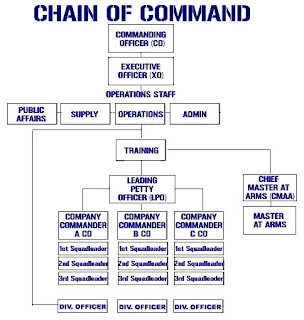
Chain of command

April 10, 2008

Publishers have a chain of command that must be followed, and authors are given a contact name to whom they direct their correspondence. The reason for this is so that the flow of information follows through proper channels. If an author goes rogue and contacts whomever they want, the right hand suddenly doesn’t know what the left hand is doing.

For example, if an author is in the editing phase, then I don’t expect to receive an email or phone call from the author complaining that they don’t like their editor or the rewrites they’re being asked to make. What do I do? Do I soothe the author’s hurt feelings and tell them they don’t have to be edited? Do I care if this is a case of a personality conflict or artistic conflict? No. I know my editors and support their decisions. So I invariably have to tell the author to grow an extra layer of skin, talk to their editor, and get on with the rewrites. I’m not happy about having my day taken up with someone going over my editor’s head and coming straight to me. Makes me cranky.

Likewise, if your publisher tells you that a promo effort isn’t going well, sales have tanked, and let’s rethink the PR plan; this does not mean the author should then call the publisher’s distributor to discuss what more can be done. This is fifty ways of unprofessional behavior. Why? Because now I have to answer to a justifiably cranky rep who had to take time out of his busy day to answer questions from one of my authors. The chain of command is broken, and I’m forced into trying to convince my distributor that my author hasn’t taken leave of their senses. This would be a flip-of-the-coin endeavor because I wouldn’t be necessarily convinced the author hadn’t taken leave of their senses.

Do not put your publisher in this position. It will make them very cranky. The publisher writes the rules because it’s their buck that is invested in your book. It’s the author’s obligation to follow those rules.

Read my fingers: it is NEVER okay to go over your publisher’s head. Ever.


Amazon and Booksurge

April 9, 2008

There has been a lot of anger blasting about the internet at Amazon’s decision to force POD and vanity presses to print with Booksurge or have the Order button removed from Amazon’s site. I know I’m in the minority here and am prepared to weather the snowballs. But looking at it from my side of the desk, I see that they’re trying to weed out all the publishers who don’t deserve to be in business because of they produce inferior work.

The amount of money required to deal with POD and vanity presses books isn’t inconsequential, and if they want to play with the big guys using a less than adequate business plan, then they’ll have to pay the price in order to remain on Amazon’s good side. Many POD’s and vanity presses have voiced their outrage and refused to move to Booksurge, and their titles will no longer be available on Amazon. Is that such a bad thing?

These POD’s and vanity presses have ruined the book market by flooding it with inferior product, and something has to give. It’s expensive to be a publisher, and it takes oodles of money to jump through everyone’s hoops to keep our titles on the shelves – and believe me, jump we do. While trade publishers spend thousands on every title, POD and vanity presses want an equal playing field while spending as little money as possible and cranking out some of the worst literature. Amazon is tired of it, and I, for one, applaud them.

You have to be tough to be in this business, and you either do well enough to play the game properly, or you suck it up and pay the price to play.


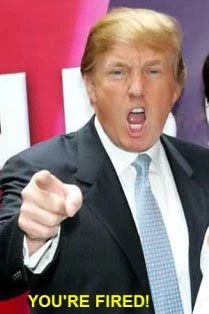
“You’re fired.”

April 8, 2008

I did the unthinkable yet unavoidable today. I let an author go. The relationship had always been rocky, and it got to the point where it was no longer worth the effort trying to fix the unfixable. I haven’t reached a stage in my evolutionary process where I can let these types of things to roll off my back. It bothered me a great deal, both on a personal level and a financial level. We put thousands into each title, and when something goes wrong we’re the ones who eat it. Remainders give us pennies on the dollar, so we don’t make this decision lightly.

While publishing isn’t a marriage, it’s close in some respects because we’re dealing with the intimacies of author’s manuscripts. To that end, it’s not nice to be at war. But there are those rare times when personalities clash. This is another reason why I love agents. They become the buffer between editor and author because all communication runs through the agent. This often results in the project moving forward.

The agentless author who decides to behave badly has no barrier between their impulsive proclivities and their editor. This type of author is not the sharpest pencil in the box because they’re setting themselves up for instant dismissal. Having the book already published doesn’t guarantee immunity. No one is irreplaceable. I’ve been told that “I’m creative, so I’m temperamental.” Bullcrap. People who say this are trying to justify why they’re a jerk, and it has NOTHING to do with the creative process. I’ve found that the experienced authors are a joy to work with because they understand the process.

On the other hand, new authors who know little about the industry are the ones who have caused me to reach for the Maalox. These are the ones who are in love with the idea of being a PUBLISHED AUTHOR rather than a writer. It’s ego vs. talent. And yes, on average, the larger the ego, the smaller the talent. Odd, that. Since these folks have no agent to be their go-to gal, they face some tough decisions: do they grow up, or do they tell me I’m a windbag? Remember, this is a career choice.

Which leads me to the meat of this post; chemistry. In a perfect world, everyone acts like grownups and shows the proper respect. Sadly, we don’t live in a perfect world, so we have to consider chemistry our best ally; do we get along together? Does it “feel” right, or does our spidey sense kick in to warn us off? Editors can be as quirky as some of their authors but, for the most part, we’re fairly stable because this is our livelihood. We’re blending business with a creative endeavor, and we pull no punches regarding editing, PR plans, design, marketing, and sales. This can create a perfect storm for the mature-challenged.

Ask yourself if you believe your agent or editor is someone with whom you can forge a lasting relationship? Because, believe me, we’re asking ourselves the same thing. We don’t mind being interviewed. Well, okay, I don’t mind. It tells me I’m talking to a savvy author who knows the rigors of publication and wants to be sure our two personalities can transcend beyond any challenges.

Words of Advice to Authors:

  • Always know that whoever is in charge makes the rules. This means that you can’t tell me what to do, when to do it, and how to do it. When you’ve poured thousands into production, then I’ll give you a microphone. Until then, mind your manners. No editor minds questions, but they do mind demands.

  • If you have a tank-sized ego, either have it surgically removed or check it in at the door. Otherwise, chances are that we won’t like you very much. If we sniff it out before we offer a contract, we’ll definitely take a pass.

  • Humility. If you don’t have humility, grow some, buy some, or borrow your dog’s. Be willing to apologize (a number of times) for telling your editor that her judgment resides just beyond her rectum. It just may save your literary ass. Flowers and candy may be required as well.

  • Be willing to listen. If we tell you our ideas for promotion, it’s a good idea to listen because what we’re really telling you is that’s how WE plan on marketing your title. Be sure that your PR efforts and our marketing efforts are in synch. If we’re marketing the skateboarding community and you’re hitting on the nursing community, there are going to be problems.

  • Don’t ever tell your editor to f*ck off. Ever. It’s just not good form. Flowers and candy will probably not save your hide, and you’ll be out on the street faster than you can say, “Hey, can’tcha take a joke?” And we will be sure that every agent and editor knows your name.

  • Ask questions. Be communicative. Be involved. Be proactive. Show that you’re in this goofy game for the long haul. Be that squeaky wheel (I shudder typing that). There isn’t much that I won’t do for a proactive author. If you want me to send a book to some wahoo Big Mouth (someone who knows a lot of people and is good at saying, “Hey, I just read the most amazing book.”) in the outer reaches of Rangoon, then I’ll do it. But if you’ve done nothing but whine and moan and ask me the same question, I’ll tell you that I’ve already sent out 100 copies and to send it yourself. Hey, despite the buzz on the street, we’re human, okay?

If my author had only followed a smattering of this advice, he wouldn’t be staring at the dreaded words: Out of Print.


“But I don’t have a bio!”

April 3, 2008

I hear that sentence A LOT at seminars, and it’s a source of much angst. I can see why. In this day and age of required PR platforms, writing a bio can be daunting if you have few or no qualifications. Writers instantly go into brain overload and either create bios out of thin air (yes, this has happened many times) or give me something that I don’t care about.

The reason we ask for a bio is because we want to get a feel for the person behind the book. I don’t care that you crochet toilet paper doilies and that you’re president of The International Crochet Toilet Paper Doily Group. Unless your book is titled Fifty Five Ways to Crochet the Bejabbers Out of a Box of Charmin, don’t include this stuff.

Whether you’re writing fiction or nonfiction, I want to know:

  • A smattering about you
  • Why you wrote the book
  • The book’s unique qualities
  • If you have anything else in the pipeline, and your writing goals.

Bada bing, bada boom.

This is not a bio (taken from an actual submission I received yesterday):

I’m Clueless is the title for my book. I have no background in writing. I have written poems over the years, but have never published anything. My only qualification is that I lived this story.

Talk about making me want to strangle myself. Let’s see if we can’t make a bit of lemonade out of this oh so sour lemon.

My name is Bessy Dumpbuckle, and I wrote this book because I grew up completely clueless and am well acquainted to living that life. I wore my shoes on the wrong feet, wore my clothes backward, and kept forgetting where I lived. I’m an avid reader of the clueless genre, like the bestselling Is Anyone in There?, and Calling the Mothership, Come In, Daniel. The difference with the current market of clueless books is that none of them deal with the joys of being clueless, and I feel my book will fill a void in clueless nonfiction. We clueless need to have good role models and to appreciate that there is great joy in not ever knowing what is going on around you. Not everyone needs to know how to tie one’s shoes or park a car. I plan on making this a fifteen book series that will replace the current myths circulating about the clueless population and make me a NY Times Bestseller.

Okay, so it isn’t Hemingway. But it does tell me that the author knows the market, why she wrote the book, she has something unique to offer, and that she plans on becoming successful through her series. It’s a sure bet that I’d dump the first submission (which I did). But I might take a second look at that same submission based on the merits of her bio. She convinced me to look further. Smart stuff.


When a manuscript feels sick

April 2, 2008

The scene: Dr. Editor’s exam room, which consists of a comfy leather couch and matching chair, some leafy green things that Dr. Editor tries not to kill, and gentle backlighting that highlights the new fish tank where three piranha pace back and forth in search of fresh meat. A smoky song from Aretha Franklin plays softly in the background.

Dr. Editor: (opens the door and greets a tattered and frayed manuscript) Come on in and have a seat. You look horrible. What’s ailing you?

Troubled Manuscript: I don’t feel well. My pages have been turned so many times, I feel like a Japanese fan. And my words? Ach, don’t even go there. They’ve been changed around so much, that I don’t feel like me anymore. I do still have a story in here, don’t I, doc?

Dr. Editor: I can’t know this until I do an exam. (she pulls out her magic red pen and begins to inject the pointy end into the patient)

Troubled Manuscript: (recoiling in fear) No! No! Not the red pen!

Dr. Editor: Relax, it’ll only sting a little bit. I have to do this to make the proper diagnosis. Ah, yes, I see some problems already. Here is a case of the “wasies.”* and its evil twin sister, the “hadies.” See here, you have a ton of “was seen,” “was given,” “had said,” “had forgotten.” There is a place for “was” and “had,” but not in front of a verb – if you can avoid it. Reason being it that there is a tendency to overuse them, and they weaken the verb into anonymity. “was seen” now becomes “saw.” “Had forgotten” becomes “forgot.” And so on.

Troubled Manuscript: Oh, my little pages look all red now! What am I going to do?

Dr. Editor: A way to make life a bit easier would be to do a universal search and find in Word for “had” and “was,” and correct the ones that are sitting in front of a verb. (Dr. Editor looks deeper with her magic red pen) Okay, you’re going to need a colonoscopy.

Troubled Manuscript: WHAT??

Dr. Editor: It won’t hurt very much. But see here, you have a lot of colons and semi-colons. These are good for teaching or reference manuals, but they should be used at a minimum for nonfiction. You, my pulpy little friend, are fiction, and colons and semicolons have no place on your pages unless absolutely necessary. Fiction is about flow and pace. Colons and semi-colons are about brevity, and they interfere with the natural flow of fiction.

Colonused to emphasize a series of elements or a list of whatever preceded the colon. The first word after the colon is lower case unless it introduces a speech in dialog.

Example: I was sad and reached for my favorite comfort foods: chocolate, Twinkies, and a bag of potato chips.

Change to: In my sadness, I needed my best friends, my comfort foods, and knew the pantry was filled with chocolate, Twinkies, and potato chips.

Semicolon – stronger than a comma but weaker than a period. The most common use is between two independent clauses not joined by a conjunction like “and” or “but.”

Example: I hate watching soppy love movies in public; my nose runs and my eyes swell up like I’ve been stung by a bee.

Change to: I hate watching soppy love movies in public because my nose runs and my eyes swell up like I’ve been stung by a bee.

Troubled Manuscript: Okay, so I need a colonscopy. Is there anything else?

Dr. Editor: ‘Fraid so. You suffer from what I call Transitional Paragraph-iotis.

Troubled Manuscript: Sounds serious.

Dr. Editor: It is. You lack proper transitions from one paragraph to the next. This can send an otherwise good story into septic shock. Each paragraph needs transitional sentence to leave one paragraph and set up the next paragraph.

Example: I watched the gopher leave his hidey hole to steal my peanut butter sandwich. He wore a triumphant little grin as he cleaned jelly off his twitchy little whiskers. I was enraged and hungry. From that moment on, I declared a fatwah on all gophers.

Beth’s disdain of rabbits came from a childhood memory when the neighbor’s white lop eared bunny stole all her Easter eggs… blah, blah, blah

You can see there is no transition between the first and second paragraph. You’re talking about gophers and peanut butter sandwiches, then you suddenly switch to Beth hating rabbits. It makes the reader wonder about the tie in between the two paragraphs. One thing you never want to do is take your reader out of your story. Make it easy for them and give a transition.

Example: I watched the gopher leave his hidey hole to steal my peanut butter sandwich. He wore a triumphant little grin as he cleaned the jelly off his twitchy little whiskers. I was enraged and hungry. From that moment on, I declared a fatwah on all gophers. But as much as I hated gophers, nothing could compare to my friend Beth, who believed that all rabbits should rounded up and sent to Mars.

Beth’s disdain of rabbits came from a childhood memory when the neighbor’s white lop eared bunny stole all her Easter eggs…blah, blah, blah

See how the transitional sentence now gives the second paragraph clarity? (At this point Troubled Manuscript breaks into tears) Look, I know it’s tough to hear all this, but out of all your ailments, this is the worst, and it will require you to go through every single sentence and paragraph in order to make sure you have properly set up each new paragraph.

Troubled Manuscript: (wiping eyes) I-I’m not ready for publication, am I? (Dr. Editor shakes her head) Are you sure there isn’t a vaccination you can give me?

Dr. Editor: Sorry, there aren’t any easy fixes in writing. Knowing what the mistakes are and how to avoid them is the best medicine. However, finding them and recognizing them is quite another. For this, I may send you over to my good friend, Indie Editor Spyglass, and have your eyes checked.

*Thanks, Mike.


Follow

Get every new post delivered to your Inbox.

Join 963 other followers

Powered by WordPress.com