Say it ain’t so – “prepublished”??

September 29, 2009

I laughed myself silly when I saw Jane’s blog post about this achingly asinine term “prepublished.” I went over to Editorial Anonymous’ blog – where Jane got the information – and thought, oh come on, you two. No one is really that stupid.

Are they?

And then I started making my usual rounds to various writer’s boards and saw the term being used. In a serious manner. No, no, no, no. Please don’t use this silly, nothing term. You are not pre – anything. You are unpublished. Plain and simple.

Remember the Golden Rule; you always want to conduct yourself in a manner that tells agents and editors that you understand the business. This means you don’t say things like:

  • fiction novel” (a novel is fiction),
  • indie publishing” when you’ve been published by a vanity press or POD press because “indie publishers” are small independent trade publishers.Vanity and POD wear entirely different stripes  (see Publishing Definitions post).
  • My book has distribution when it’s only listed with Ingram and Baker & Taylor (see Publishing Definitions post).

And you don’t say you are prepublished. This, and the other terms above, make you look like a noob – people who don’t know and don’t care. Agents and editors don’t mind new writers, but we avoid noobs like the beagle avoids sobriety.

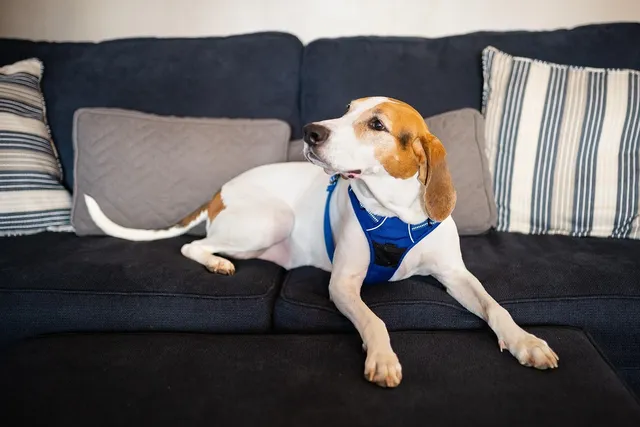
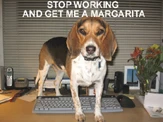
And speaking of the beagle, she is mixing my morning coffee. If you’ll please excuse me, I have the feeling that I’m predrunk.


Networking – catching the right fish

September 28, 2009

beagletrouble

The beagle chose a good weekend to be naughty. I’m in such a great mood that I’m almost willing to overlook the poodle, Irish Setter, three shepherds, and a Dalmation who were dancing old Three Dog Night songs while the blender whirred away with the good tequila I bought last week.

Mind you, I said almost.

The object of my cheery outlook on a Monday is the Southern California Writer’s Conference. Michael Steven Gregory and Wes Albers, and their collection of angels who go beyond the call of duty, always put on a wonderful weekend that’s guaranteed to make you laugh and learn. But the bigger issue is networking. This is the place where you can have one-on-one time with editors and agents. It’s not just the advanced submissions, where we read twenty pages of your story, but the personal face time during and after a seminar. It’s sitting around the bar or hallways talking books, ideas, and publishing, sharing stories and experiences. Where else can authors do this with agents and editors?

I gave two seminars this weekend; Backstory Bedlam and Who the Hell Are All These Publishers? and sat on an agent/editor panel. The thing I love about doing seminars are the questions. This is a great opportunity to ask (and have answered) those burning publishy questions you’ve always had.

I respect the heck out of authors who attend conferences, regardless of where they are in their writing journey. They are the ones who go the extra mile to to learn the industry and improve their craft. This is the place where you can ask whether alien pygmies is a growth genre, or discuss the advantages/disadvantages between a large conglomerate publisher and an indie trade press. Authors can get a feel for who we are – that we’re relatively normal and that we don’t suck the jugulars of budding authors. Much.

This is where relationships are forged – and believe me, this is an industry of relationships. Our job is to be on call so as to be accessable to authors. Dibs on the bathroom, though, ok? I met a lot of wonderful authors – as I always do. My tally? I asked…no, that’s not quite right…I demanded a full. Post haste.

In fact, I loved the writing so much that I used one of the pages in my Backstory Blunder seminar in order to show an example of a brilliantly-written backstory. Unbeknownst to me, the author was sitting in the seminar (I hadn’t met her yet). I can’t imagine how I missed her beet-red face staring down at her hands as I read her work and pointed out all the things she did right. She didn’t get the guts to introduce herself until much later in the evening. Argh!

Is it possible she would have  caught my attention in a sea of queries? Not sure. But hers was part of my advanced submissions, so I was duty-bound to read it. As yet, I still am not sure what the story is about, but I don’t care. Her writing is that good. That’s the beauty of advanced submissions. It gets your work in front of agents and editors.

Then there is always the banquet, where we can really kick things up a notch. It’s casual, friendly, relaxed, and always includes a bar – special thanks again to Jeff for the margarita. It’s a unique experience for everyone to put faces and personalities to the names and writing. I’ve had authors contact me many months downstream, and I’ll give them my attention because we made a connection at some conference.

Think about these points the next time you hear about an upcoming conference and think they’re nothing more than meat markets. Real book deals are made all the time at these events. Will it be you? Who knows? But one thing for certain is that you won’t come away unaffected, and you will have made some great networking contacts.


Sometimes life is just too good

September 25, 2009

The good life in my world means that the boss is gone, gone, gone. Off to another writer’s conference. For the whole weekend. Yippeee! I can sleep all I want, drink all I want, carouse with the new Golden Retriever who just moved in down the street – lawdy, he’s hot – and be a lady of leisure.

Yep, life is rockin’ in my little world. What shall we discuss? The finer points of designer doggie chewies? Various brands of tequila? My to-die-for margarita recipe? Why beagles rule and cats drool? Really. I’m here for you. I’ll just be reclining on my couch…
Luv,
The Beagle

beagle-weekend


Brief timeout – for football

September 24, 2009

Ok, I graduated from UC Irvine, so I shouldn’t have any dog in this particular race, right? Irvine doesn’t even HAVE a football team. But I made one miscalculation. I married a USC Trojan. These people aren’t Trojans for four years. They’re Trojans for life. They bleed Cardinal and Gold, for goddsakes.

I either watch the Saturday games with him, or I become a widow for five hours. I prefer to drink choccie martinis and watch. Last Saturday was to my detriment, as USC lost to a team they should have slaughtered.

It is with this sentiment that I take a brief time out so that Hitler can defend coach Pete Carroll. And I thought publishing was tough…


There are no short cuts in publishing

September 24, 2009

Boyo, if I’m not having to watch the beagle 24/7 lest she steal my computer, I’m cooling my heels with that Morgan woman. If that’s not enough, I’m doing it with that Smith woman as well with her post about self publishing. Have I no original thoughts myself? Apparently not. At least not today.

But I wanted to attack the self publishing game from a different angle, and Jane’ s thoughtful post gave me the perfect lead-in. Jane’s post warns about the overall folly of self publishers who use this option with the sole idea of getting picked up by a trade publisher. As always, she’s absolutely right.

Remember, there are no short cuts in publishing. It takes money, experience, knowledge, and time. Lots and lots of time.

I’ll get it out there right now; I have the utmost respect for those who become their own publisher to produce their book. It’s hard going, and I’ve seen some respectable works and fabulous Cinderella stories come out of this publishing option.

However.

The vast majority go into self publishing without knowing what they’re doing. It’s like a first year medical student trying to perform heart surgery. Sure, maybe they’ll successfully open the patient up, but once they begin climbing around inside they have no clue as to the next step. Problem is, their patient has a giant incision in their chest, and it’s bad form to drop the scalpel and say, “Holy mother of the cosmos, what do I do next?” Dude, that’s what residency is about.

There is no publishing residency except the school of hard knocks, experience, and research. Most self publishers go in like our poor intern and don’t understand how books are sold. Nor do they know the difference between having their title listed in the warehouse distributor’s databases (Ingram, Baker & Taylor) and having distribution with sales teams who pitch their titles to genre buyers. They lack the understanding of how to properly promote their books. They don’t understand their competition, and worst of all, they are sorely underfunded.

You cannot be in this business without knowing what you’re doing and having solid financial backing.

Sadly, most self publishers don’t realize that until it’s too late. They’ve had their eye on the Big Prize and forgot about the steps that would help achieve that goal.

The Island Syndrome

We all know that writing is a solitary endeavor and that we need to stop what we’re doing and come up for air. This is when the beagle usually serves up margaritas, chips and salsa. Once we’ve finished our tomes of brilliance, our first dose of reality invariably comes from editors and agents. These are the folks with an experienced, unbiased eye, and they usually communicate via rejection letter or a contract. Or writers use beta readers and crit groups. The point is, their stories have allowed to be knocked around for a look under the hood.

But too often that isn’t the case, and writers stay on Writer’s Island and never grow.

From what I’ve seen with most self published books, the plot is tepid, the characters are underdeveloped, and/or they lack satisfying endings. They lack proper editing. When they receive rejection on top of rejection, they decide to take control of the production strings. “I’ll publish this myself and those cranky editors will see they really missed out. And while I’m at it, I’ll be so successful, they’ll offer me a multi-bajillion dollar deal.”

Reality: Few authors are accidentally successful and get a sweetheart deal without breaking a sweat.

Jane’s blog post details how agents and editors go running for the sales records of the self-pubbed book. If they are low, then it’s buh-bye time. Low sales means that you have one or more of the following:

  • A lousy book
  • Inferior promotion – due to lack of money, time, knowledge, defining your readership
  • No distribution (I’m not talking Ingram’s here)

No one is going to touch your book without a solid sales record. And why should they? They are looking for books with legs. The self publisher who understands the business knows this and takes all the necessary steps to present a strong, viable package.

Authors often ask me what can the big publisher do for them, besides an advance, that a self pubbed author hasn’t already done themselves? In a word; distribution. A well-established publisher can launch a self-pubbed book further into Reader-Ville with the long arm of their media and distribution channels. Those books will be on shelves across the country, thus giving the previously self-pubbed author a lot more exposure. They can also get your book reviewed, and this is great in the credibility department.

There is nothing more comforting than having an entire team backing up an author’s book. It’s far easier than going it alone. Established publishers have far more names in their Rolodex than you do, and this comes in veeery handy when trying to blast your book into the wild blue yonder.

Another concern you, the self pubbed author, may have is whether the established publisher will feel you’ve exhausted the bulk of the market. In many cases this is true. It depends on the publisher, the book, the sales, the author’s platform, and what markets they hit. However, there is an untapped market you probably haven’t hit because you simply aren’t big enough to do it; foreign rights and foreign distribution.

In short, don’t be our poor intern. If you want to control every aspect of your own operation, then go through the residency program and learn what it takes to perform a successful surgery. If you doing this to get noticed by a larger publisher, you can see the amount of hard work it takes to accomplish this. If you want to be with a large press, then make that your first publishing move. Otherwise, you may want to think about playing the lottery.


Beagle takes control

September 23, 2009

Lynn is off reading advanced submissions. I’m tired of being ignored and watching her evil red pen flash across pages like spilled blood, so I’ve commandeered her computer. This is my kinda dog…

Luv,
The Beagle

holyshitdog
Dog For Sale

Free to good home. Excellent guard dog.
Owner cannot afford to feed him anymore,
as there are no more drug pushers, thieves, murderers, or molesters
left in the neighborhood for him to eat.
Most of them knew him as “Holy Shit.”


In the beginning…there was the beginning

September 22, 2009

Crikey, Nicola Morgan and I channeling each other again. I suspect the beagle is leaking my posts in exchange for beer. I wrote a post about beginning your story, so inspired by the a batch of submissions I’ve just finished reading. Each of them had “beginnings” trouble.

Now my post will read like week-old meatloaf – and lord knows my meatloaf suffers greatly the minute it pops out of the oven. So thanks, Nicola, for making me look like a copycat. I wave my little red pen and a few dangling modifiers in your general direction.

Ok, on to my original post that I wrote last Sunday.

As we all know – because we’re all frighteningly educated and savvy – that the beginning of your story carries the weight of the world on it’s little pages. Not only does it have to intro the character or basic situation so we have a proper setup, but it must hook the reader as well. I broke down the element of Beginning into these four elements:

  1. Where Am I?
  2. When Am I?
  3. Who Am I?
  4. Where Do We Begin?

Where Am I?

I admit it; I have an aversion to getting lost. I have this centuries old fear of getting lost and never finding my way back home. There I’ll be, a hundred years old, aimlessly driving around, wondering how I managed to drive to Houston when I live in California and was only going to the store for eggs.

In a word, vague doesn’t work for me, yet I see many beginnings where I have no clue of the setting. Think of the movies; do you ever see an opening where you don’t know where they are? Of course not. It’s visual. Well so is your book. If we have tactile information, we’re happy. It’s fine if you want to keep the location a secret because it’s key to your story. But you need to describe where your scene opens. If it’s in a white room, describe it. Undoubtedly, a character will be in that room, so an effective way to describe the room would be through their eyes. It gives it a “Where the hell am I?” quality, and lets the reader know they’re supposed to be confused as to the location. But at the very least, you’ve properly set the scene.

Do not make me ask for directions. If I do, it’ll probably come equipped with a rejection letter. And I’ll end up in Montana.

When Am I?

Ok, I also am a time freak. No, I don’t look at my watch every five seconds unless I’m waiting to board a plane. I have this phobia of missing my flight because I’m reading a book and lose all sense of time. Gee, I sound like a nutter, don’t I? But, pinky swear, I made the last call for boarding on my flight to Alaska last month because my nose was planted in my Kindle.Talk about sphincter pucker.

So I want to know when this story takes place. Again, refer to the movies. You can easily see the time period because you have a visual reference. If they’re getting into flying cars and zapping a quick cuppa in their glove compartment micro wave oven, then we know the story isn’t taking place in the 1800s.

Just because you’re writing a book doesn’t mean you can ignore an important piece of the pie, like the time period.I read a story not too long ago where the MC was desperately looking for a phone booth to warn someone of an impending attack. “Wha’?” sez me? Pull out his trusty iPhone, for crying out loud. It wasn’t until chapter 5 that I realized the story took place in 1978. Oooohhh. The Clarity Bell ringeth. And Overworked and Underpaid Editor is frustratedeth.

We must have a time reference because it’s how we can discern a story’s plausibility. Time is a key element to the story’s foundation. When it is AWOL, I’m a-reachin’ for a rejection letter.

Who Am I?

I tend to glom onto the first character I see in the story because characters are the vehicle by which the story unfolds. My wee little brain is looking for attachment. If your beginning is populated by a minor or insignificant character, you better make sure it’s clear as to why they were the proper choice.

Likewise, I want to know who your character is – assuming it’s your MC. Have you ever been at a party where no one introduced you to that guy in the center of all the fun? He’s the one cracking jokes, mixing yummy drinks, making everyone feel at home – yet you know nothing about him.  You want to care about him by what you see, but you need to dig deeper. After all, he could be someone who hates beagles and trips little old ladies when they cross the street.

Did I start in the right place?

Often I’ll get through one, two, even three chapters and wonder when the book is going to truly begin. Most of the transgressions are that nothing is going on, and that’s your biggest litmus test. The author may think they are setting up the character and setting, but what they’ve accomplished is creating two or three boring chapters that don’t reveal anything.

Look at your opening chapters. Is something of import or interest going on, or can you ditch it and never miss it? Remember the Golden Rule; every sentence, page, and chapter has to have a reason for being there. If you can take those chapters out and still have a rockin’ story, then perhaps you started your story in the wrong place.

The reader will give your book one or two pages before they either skip to the cash register, or put it back with a discreet yawn. Start your story at a spot where the four basic elements (above) are rockin’ and rollin’.

As for the beagle leaking my posts? I’ve taken away her tequilla and blender until she breaks. As for that Morgan woman; sadly there is no stopping her.


Word Count Boogie

September 20, 2009

This comment came to me this morning via our old blog. It was posted under my post Word Count – Ya Want 150,000 or 70,000 – You Pick – which laments authors who offer to change their word count for me. My other point in that post was that the sweet spot for word counts is between 50,000 – 100,000. The commenter brought up a point that I hear quite a lot, and I wanted to give this attention I feel it’s due.

Well, Ms. Price, I think any reader who loves to read likes a good lengthy book, as those novels usually have well fleshed characters that aren’t one-dimensional and bland. I purposefully make an effort to go out of my way to find thick books when purchasing my month load (yes, I buy in bulk lol).

However, when there is appx. 150,000 books published in the US each year, and only 10% of those earn back their advances, and then when you cut that in half (7,500) to find out which ones actually become reputable titles featured or reviewed by mainstream media, that means that only 150 books a week are able to keep their ink above water. So one can hardly blame an agent if he wants to pass on a book that has a gambler’s chance at succeeding if it’s going to be costly.

Let’s just put it this way; it’s easier for an agent/agency to pick at reasons to decline the majority of queries they receive than to become enthused over something that will, according to studies, most likely flop and cost more money to publish than it earned.

I don’t like the publishing world today, but that’s the truth.

Like you, I love a big fat book as well. But studies show that the majority of readers don’t. Sales suffered with the larger word count books of yesteryear, so publishers couldn’t justify their production. That isn’t to say the large count book is dead – it’s just that publishers have to be careful about their choices.

I don’t agree with your assumption that larger word counts equate to fully developed characters. If it takes 220,000 words to flesh out a character, I wager there is something seriously wrong with the writing.

A large word count in books published by trade publishers means it’s a very big plot – like political thrillers, fantasy, SF – and a belief they will sell well.

On the flip side, it’s true that we’re all cost conscious. Large word count books equal larger production costs, which equal larger retail price. We have to weight a big word count against the probability that a debut author will sell enough books to make it worth the higher costs. But if a story is big enough, we’ll fight for it. Where most of us draw the line is when the query letter boasts a 185,000 or 240,000 words. This is gynormous and will earn an instant rejection for the reason that there are few plots that require that large of a word count. Experience tells us that newer authors tend to write giant word count books, and that’s why they are weeded out very quickly. Does this mean some good works are lost in the rejection pile? Possibly.

The publishing world is far from perfect, and there are as many people who berate the industry for its faults. But I think we do a pretty good job of  weighing the massive amounts of submissions we receive against our understanding of the marketplace. As I’ve said before; we can never be mistaken for the Great Benevolent Society, and, like it or not, massive word counts are a strike against the writer.

Those who rail about word counts go one of two ways; they learn the business, or find homes with PODs or vanity presses – companies for whom the marketplace isn’t their source of income.


First impressions

September 19, 2009

wetcat

I taught my kids that, right or wrong, first impressions are important. I taught them to consider how they present themselves when confronted with a new meeting. Like job interview. Or a teacher. Evidently payback is a bitch because I got the same eye rolls I gave Mom back in high school when she suggested that my skirts were too short. She feared I’d make a bad impression at school. Ma, everyone’s skirts were that short, remember?

Only now that my kids are older are they realizing ol’ Mom wasn’t such a dingbat after all, just as I did when I grew up…last year. First impressions are hard to overcome.

The same can be said for your first paragraph. I’m reminded of those street repair signs that are currently crowding a street where I go to pick up our mail – “This site reserved for future construction.” I think manuscripts should have a similar sign hanging on the blank page: “This site is reserved for future opening WOW paragraph.”

Readers, as a whole, tend to lean toward ADD (attention deficit disorder). If the first paragraph is slow or overwrought with prose, they put the book down and keep moving. As an editor, I’m equally guilty of this. If that first paragraph doesn’t grab and intrigue me, it’s a red flag. Yikes! A red flag on the first para? Is it really that tough?

Yup. It’s really that tough.

Now that’s not to say I’ll stop reading, but I’ll do it with less excitement. Especially if your second paragraph is equally dismal. So what constitutes a great opening paragraph?

A Great Line

I love a story that begins with a great first line. In my novel, Donovan’s Paradigm, my first line was, “Wake up and get your ass out of bed!” It was my MC’s alarm clock. I happened to really find a clock with that very alarm and thought it would grab the reader with something fun. Fun = hooked. The responsibility with a great line is that you have to back it up with a good paragraph. And then a few bazillion more good paragraphs. But at least your reader won’t put the book back on the shelf. They’ll keep reading. And that’s the point, right?

Simplicity

There are plenty of us writers who tend to get lost in our verbosity because we can visualize what we want to say – only it comes out in a long and confusing paragraph. Everything we saw in our brain looks on paper like my spaghetti casserole surprise. Here’s a prime example of what the mind visualized went terribly wrong on paper:

When Alice looked in the mirror, one day before she was to leave for college, when the birds were singing, a gentle breeze wafted into her room, and she listened to the distant sounds of lawnmowers, she decided the dress she put on made her look frumpy.

I uttered a few Whiskey Tango Foxtrots under my breath before reading it five more times. This was a poor choice for an opening paragraph, and I’m sure it broke a few laws on its way to Writer Oblivion. If you want to say a few things about the setting, may I suggest that you break it up? The comma is a lot like the beagle; it’s useful, but it can’t be expected to carry a lot of weight. Clearly, this sentence required a comma that could bench press my car.

Remember the KISS rule: Keep it simple, sweetheart.

Action

Lots of us love our first paragraph to open in the middle of action. It has the natural tendency to pull in the reader. It doesn’t have to be thriller action, but any kind of action – as simple as throwing a dart:

The dart went wide and hit the mahogany paneling.
“Shit.” Kim Donovan squinted through one eye at the picture taped to the dartboard’s center, took aim with her last dart and let it fly. “Oh, hell yes, she throws, she scores! That’s a hundred points for the pissed off surgeon.” The dart stuck between the eyes of the gaunt, late-for-a-shave mug. “So, you pathetic windbag, how’s it feel to be wearing a dart? That’ll teach you to tell me how to care for my patients.”

Action makes us sit up and pay attention because it exposes the character to react in a proactive manner. Proactive = interested reader.  The reader already begins wondering what the “windbag” did to the MC to have her throwing darts at his photograph. They instantly see she’s full of piss and vinegar because why else would she be throwing darts in her office? At lest that’s the intent I hope to achieve since this is my current WIP. But I digress.

Dialog

Dialog is another attention-getter because you have characters interacting with each other. Where there is interaction, there is something going on. Like Action, you’re creating a proactive environment.

Overworked and Underpaid Editor looked at the empty blender and glared at the beagle. “Did you really need to drink all the margaritas?”

“Sorry,” the beagle said through a small burp. “You were on the phone and the ice was melting. So sue me.”

“I may. Better yet, I’ll let you take your next vacation at the city pound.”

Going the literary route

Be very careful here because going the literary route can be a snoozefest or be of such wonderful quality that the reader is sucked in. I feel that Douglas Light’s beginning paragraph of his award-winning East Fifth Bliss is the Great Yoda of “Grab thy reader by the jugular.”

There are two theories.
The first:
After brothing up a world with water and soil and fish and plants and beasts that stand on two feet and talk and would eventually want credit cards and cell phones and satellite TV, God dipped his finger in the wetness between New Jersey and Long Island and summoned forth the rock called Manhattan. By doing so, He set in motion His austere plan: one day, there’d be an island replete with towering steel buildings and shabby brick tenements, dying trees, and co-ops with monthly maintenances more than most Americans’ mortgage payments. It’d be a paradise filled with hundreds of concrete parks littered with losing lotto tickets and fried chicken bones. Rats would frolic on doorsteps. Dogs would defecate on the sidewalks. Squirrels would charge at the passing people, having no fear.

When I read this, I shoved everything off my desk – including the beagle – and read his manuscript in one sitting. I am giddy over getting the Kindle/iPhone version of his book up very soon.

Set The Tone

Many authors forget that the beginning paragraph sets the tone for the entire book. No wonder many first paragraphs shiver in fear and drink heavily. It’s a big responsibility. So, dear authors, take care to treat your first paragraphs with extra respect. They are the first impression of your story and you, as a writer. And besides, is there anything worse than an inebriated first paragraph?


Promotion schlomotion

September 17, 2009

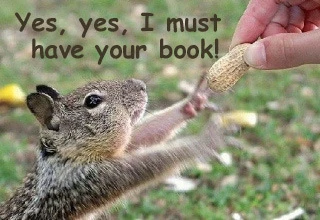
yes I must have your book

Fact: We promote to sell books. The trick is to promote smart-like.

Nobody Likes a Suck Up

I bear witness to a fair amount of queries that include some margarita-worthy promotional ideas. Keep in mind that I drink to forget. Here is a collection of promo ideas gathering dust in my computer’s bowels which I classified as being in the Suck Up Category:

“I plan on buying a bed and breakfast, and this will be the perfect place to promote my book.”

Seriously? You’d buy a major business JUST to promote your book? And you expect me to believe this?

“I plan on selling my house and going on a national book tour.”

Ok, this just plain scares me. One, that she’s just crazy enough to do it. Two, that she has no focus.

And then there are the hard sells:

  • “With the proceeds of my book, I plan on curing world hunger.”
  • “I want to feed the homeless with my royalties.”
  • “My plan is to aid cancer research with my royalties and advance.”

THIS IS NOT A PROMO PLAN. These are dreams. Very nice ones, but dreams nonetheless.

These authors are trying to make the case that their pet projects (no matter how noble) will generate demand and exposure for the book.

It won’t.

In truth, any money authors make from their books in advance money and royalties are plunked back into paying for their publicist, travel expenses, or the more mundane aspects of life like toilet paper and gin.

It’s no small wonder my computer needs the occasional enema.

When you write your promotional plan, and trust me, you will be required at some point to provide one, make sure to present realistic goals. Chances are the heart is willing, ready, and able to make that national book tour. But is that a reasonable expectation? Unless you’re a Big Author, your publisher will not pay for one city book tour let alone a national book tour.

Do you do you have enough expendable cash laying about gathering dust? If you’re like most of us working stiffs, you don’t, so don’t try to beef up your promotion plan in order to flip up our Vickie Secrets because we’re pretty immune to the big suck up.

Do Your Research – Gimme something to work with

Now I’ve seen a number of authors get pretty huffy when asked to provide a promotion plan. Their attitude is, “I wrote the thing, promotion is your job.” Well, yes, that’s true. However, the days are gone when debut authors can sit back and peel themselves fresh grapes and watch the soaps all day.

Fact: people buy books because they met and liked the author.

This means you gotta get out and show you’re pretty face. The first thing genre buyers ask is, “what is the author doing to promote their book?” If our sales folks say the author is eating bon bons around her pool, a purchase order is unlikely to be forthcoming.

In a nutshell; be prepared to promote.

Secondly, we ask for a promo plan not just for you, but for us as well. What I’m looking for in a promo plan is the author or agent who has done extensive research that is germane to their book. The more information you can give me, the better able my pea-sized brain goes into overdrive on how best we can promote your book. Remember, we’re a team. It ain’t all you, and it ain’t all me.

I included Adam Eisenberg’s original promo plan as an example of what I’m talking about:

REACHING THE TARGET AUDIENCE
In addition to the usual places to promote compelling police stories there are:

Women Police Organizations: There are more than 25 local, state, national and international associations for female police officers.  These include the National Center for Women and Policing (“NCWP”), and the International Association of Women Police (“IAWP”), which represents the concerns of more than 29,000 female cops nationwide plus women police from across the globe.  The IAWP is affiliated with organizations in 45 different countries, and publishes the quarterly magazine Women Police Magazine.

These organizations communicate with their members via magazines and the Internet.  Coverage and promotion of A Different Shade of Blue in their magazines and on the IAWP and NCWP websites would gain the attention of women police worldwide.

Police Museums: There are many police and law enforcement museums around the country including:

  • New York City Police Museum
  • American Police Hall of Fame and Museum, Florida
  • Los Angeles Police Historical Society
  • Seattle Metropolitan Police Museum
  • Phoenix Police Museum, Arizona
  • Cleveland Police Historical Society and Museum
  • Nevada Police Museum

These museums would provide powerful locations for promotional events, and they also have on-site gift shops that sell books and other items about police work.

An increasing number of blogs by police officers, corrections officers and dispatchers provide a way to get the word out:

  • Coptalk.blogspot.com
  • Crimlaw.blogspot.com
  • 3daysnopay.blogspot.com
  • 5150world.blogspot.com
  • 911dispatcher.blogspot.com
  • phxflurry.blogspot.com
  • 911girl.blogspot.com

There are a wide variety of mystery and true crime reader conferences, conventions and listserves including:

  • LeftCoast Crime
  • Bouchercon
  • Sleuthfest
  • Crimebake
  • DorothyL

Because this was so thoroughly researched, we had a ton of useful information in which to launch A Different Shade of Blue. In addition to our national distribution responsibilities, we took over some of the list and Adam and his amazing publicist Peter Handel did the rest – and then some. The result has been nothing short of fabulous.

Your job as an author doesn’t stop at The End. It’s just a whole new beginning. The more you provide us in your promo plan, the better able we are to see 1) how much you understand about the industry and 2) how much you understand your market and how to find them.

Now that puts the jam in my jelly doughnut.


Follow

Get every new post delivered to your Inbox.

Join 963 other followers

Powered by WordPress.com