Distribution – another piece of the publishing puzzle

November 30, 2010

Publishers always have distribution on the brain because it’s a vital piece of the marketing puzzle. If you can’t get your books out to market, then it’s better to just stay home and take up knitting nose warmers. I’ve had it on the brain more than usual because we’re in the process of signing with a nice big fat distributor.

Maximizing one’s exposure is why publishers place such a huge importance on distribution, and this is why it’s important to authors to understand the idea of distribution because it will impact your book’s sales.

Product

Distribution, simply put, is the delivery or giving out of an item to the intended recipients. So, first and foremost, you need product. The intended recipients are readers. To get product out to readers, it needs to be stocked in places where they can easily find them.

And this is where things can get a little interesting.

Publishing Options

With the advent of publishing options – trade, POD, vanity, self-publishing – there has been an attempt to blur the definition of distribution by claiming this are murky waters. It’s no longer about the simple “product in, product out,” but the degree and intent in which that is accomplished.

This muddy thinking advocates that even though POD, vanity, and self-pubbed books aren’t distributed in the same manner of trade books, they are available for ordering – and that constitutes distribution. It doesn’t, and here’s why:  Nothing is being shipped out to the marketplace. Being listed on a database, such as Amazon and B&N.com isn’t distribution – it’s merely a listing. Being a part of a list is akin to finding a needle in a haystack because there is no guarantee your book will be found unless someone stumbles across it.

And this has huge implications to authors because it all comes down to exposure. I’ve seen firsthand what crap distribution can do to a title. It’s an uphill battle to get the book placed within the bookstores – where most books are bought . On the other hand, I’ve seen the power of having our books in the stores all over the country. Good distribution casts a wide net that launches a book into the hands of our intended recipients.

I’ve seen any number of POD presses insist that their books are distributed by Ingram and Baker & Taylor. This is NOT distribution. Ingram and B&T are centralized distribution warehouses that ship to the bookstores when they place an order for an author event or to replenish stock. A centralized warehouse is more efficient than having bookstores calling hundreds of different publishers to buy books. Ingram and B&T are the middle men and don’t have sales teams who pitch titles to bookstores and libraries.

The reason this makes me see purple is because it fools authors into believing they’re getting something they aren’t. Know the difference.

Marketing and Promotion

The ultimate judge of whether a book is any good falls to the overall consensus of readers. But they have to know that the book exists – and this is where marketing and promotion plays an invaluable role in the distribution puzzle.

While distribution is about delivering product to the marketplace – how many units of the product that go out depends on expected demand. Stores don’t want to be burdened with stock they don’t believe will sell, so one of the big things they look at is the planned promotion for the book. Does the author have a platform – meaning how many people know the author? How much publicity is being generated for the book?

Trade publishing depends on a set of ingredients that make up a successful recipe for sales:

  • Quality product
  • Distribution
  • Marketing and promotion
  • Sizeable print runs

But what about the POD/vanity author?

Options for the POD/vanity author

Bookstores don’t expect POD and vanity books will have a great demand because they do very small print runs. Their budgets make large print runs risky because they still have to pay for the print runs – whether the book actually sells or not. Furthermore, their budgetary concerns prohibit marketing and promotion, so POD and vanity authors need to find their intended recipients elsewhere. And this is perfectly fine. I’ve seen authors sell a lot of books because they had very effective marketing and promo plans that targeted readers.

The trick to this is to understand that a) you’re on your own, b) your book won’t be in the bookstores except for special order, and c) this is going to cost you time, money, and patience.

  • If you have a proactive personality and love doing public events, you have increased chances for success.
  • If you have solid editing and understand your competition, you have increased chances for success.
  • If you know how to let readers know your book exists, you have increased chances for success.

Publishing is changing. It always has and it always will. I’m all for it. Yeehaw. The important thing to keep at the forefront of every author’s mind is how they can best ensure their books will have maximum exposure. It may be that you’re happier going the DIY route, and I wish you all the best. Just always be mindful that without distribution, no one’s book stands a chance. So decide what options best fit your writing career, your book, your personality, and your budget.


Writing a book proposal – you are in the driver’s seat

November 29, 2010

Depending on what you write, you might be asked to write a book proposal. This will probably come from your agent. So you’ll sit down and dutifully ploink it out. You’re attempting to do your very best, but hey, you’ve never written one before so you hope you’re doing it right. But then you remember that you have an agent who will check it over again and finesse whatever needs finessing. Glory be, thinks you, I’m saved.

I’m here to say that you’re not.

How do I know? Because I’m the beanbag reading the end result, and too many times I’ve been scarily underwhelmed.

Let me say it here and now: You are in the driver’s seat. Yes, I realize your agent has the car keys, but judging from the questionable quality proposals that sometimes pass over my desk, I wonder if said agents checked the proposal before sending it out, or whether they don’t know enough to realize it needs more work.

Either scenario doesn’t bode well for you because the quality of a query or proposal is a direct reflection on your agent. And you want editors to like them/you. However, while they have the keys to the car, you are the one supplying the gas, and it’s your responsibility to make sure that you always know what you’re doing. And that means writing an effective book proposal.

I blogged about what goes into a book proposal, so be sure to go look at it. But I want to point out some of the common problems I see in book proposals that leave me scratching my head.

Overview/Concept Statement/Synopsis

This goes by many names, but the important thing to remember is that it’s the raison d’etre of your book; the synopsis, and the how and why you came to write the book.

I recommend that you avoid the “we see Main Character do this, we travel with Main Character to blah, blah, blah, and we share the Main Character’s sadness/heartbreak/joy/brilliance blah, blah, blah.”
I’m not quite sure why I detest this whole “we” type of writing, but I think it’s because I feel like I”m being talked to by a tour guide:

“And on your right, we will see an errant beagle rip a query letter to shreds. If we wait a minute, we will see an editor come screaming out of her office…”

I don’t feel like I’m being pulled into the story. I’m being told, not shown. If you’ve pitched your story effectively, there’s no need to play the tour guide and tell me what “we” will see or feel because I’ll get it already.

Mechanics

Somewhere in your proposal, you need to include your estimated word count and estimated time of completion. This is vital. And by golly, if you estimate the project will be finished by thus and such date, then you better etch that on your forehead. Fear of missed deadlines are one of the reasons I drink.

Market

This is the section where you discuss the specifics of the intended market. It’s also a playground for all kinds of silliness, and it drives me buggy. When a proposal is filled with vague “people who love to be inspired/challenged/frightened blah, blah, blah,” it makes me wonder if the author (and agent) really know the intended market, or whether this has a market at all. I won’t do your homework for you.

Well…um…actually that’s not true. I will. When something piques my interest, I investigate the book’s viability like the beagle does when she gets wind of a good sale on tequila. BUT, it irritates me, so does that count?

I need to know that you understand the marketplace and that you know you have a large reader potential, AND that you know where they are. Why do they want it? Why do they need it? See, what you’re doing is convincing/proving to me that your book has wings and can fly straight to the bestseller list. Me likes that. Me accountants likes it even more.

Comp Titles

Oboy. This is an itchy issue because this requires you to know your competition. I’m amazed at the number of people who have no clue as to their competition. At some point in your writing career, someone is going to ask. How would you feel if Katie Couric is interviewing you and asks, “Say, Brilliant Author, who would you say is your closest competitor?” Sorry, but sucking your thumb with a deer-in-the-headlights look doesn’t translate well in front of millions of viewers.

But before you ever get to that stage, your editor is going to ask because her sales teams are going to ask – because the genre buyers ask them. It’s Dominoes, and it all flows back to you. If your comp title section fails to list any comps and instead says something like, “there have been any number of books on Topic A, but they are of a political/humanistic/artistic flavor…so they don’t really compare,” then this is a Title Comp Fail.

And. I. Will. Be. Cranky.

First thing I’ll do is go over to Amazon and prove you wrong because I fail to accept there are NO BOOKS that remotely compare to yours. You might be very good, but there is always a book that compares to yours. That an agent would allow you to get away with this in your proposal makes me wonder if they have rocks in their heads. And yes, I’ve seen this numerous times.

If you do include comps, then I want to see how your book compares and contrasts. After all, if the book doesn’t contrast, then why bother? That book already exists. What is that something new that you bring to the party?

Additionally, make sure that your contrasts are compelling. If you wrote about police addiction and your contrast is that your book deals with short, bald cops with police addiction, then that’s hardly compelling. You’re picking nits, and we’ll bust you for it.

Stamp this on your forehead: Wimping out on comps is not acceptable. If you can’t provide comps, then you have some serious reading to do.

Marketing and Promotion

Book proposals must, must, must have a promo plan. If you or your agent didn’t include one, my mind will be officially blown. And this shouldn’t be anything like, “I will be available for book events.” That’s like saying you’ll use soap in the shower. Duh. In my particular world of nonfiction and limited fiction personal journeys, I”m looking for authors who have a platform that will command attention. And I’m not unique in this endeavor.

Avoid generalities like, “Brilliant Author travels all over the US and will feature the book at her talks.” What talks? Where is she going? To whom is she talking? How large are her audiences? 10? 50? 100? 1,000? It makes a difference.

Statements like, “Brilliant Author has contacts at several major and local newspapers,”  also make myblackened heart shrivel up because there aren’t any specifics. You may as well tell me you know the president because how can I verify that? Besides, telling me you know people doesn’t equate a promo plan. I’ve seen cases where Big Names were promised to offer a foreword or public support, and those plans mysteriously disappeared. Unless an author already has it in hand, I’ve learned to be leery.

A promo plan is just that – a plan. It things like:

  • “Ms. New York Times columnist has already agreed to write a review/interview when the book is released.”
  • “ABC Talk Show Host has agreed to have me on her show.”
  • “Several Mr. Huge Radio Personalities have scheduled interviews.”
  • “I have a regular column with HuffPo that deals with the same issues in my book.”
  • “I am scheduled to speak to Audience ABC in New York, Los Angeles, etc. while on a X-city book tour.”
  • “Sooper Dooper Magazine has accepted three excerpts from my book for their Pick-A-Month issue.”

These are specific plans that name names and takes numbers. These are plans my sales teams can take to the libraries, indie stores, and genre buyers when they ask, “what is the author doing to support book promotion?”

We look to see how many people know you. Yes, Virginia, writing is a business these days, and those who reach the top are those who are properly prepared and sufficiently educated about the industry.

A book proposal is a vital piece of information that we need to sell your book to a lot of people. If you have an agent, that’s great, but you can’t necessarily depend on them to ensure your proposal rocks. Some agents are incredible, but not all are, so make sure that you’re sitting squarely in the driver’s seat and can pop out a fabulous proposal that will have editors jumping on their desks with joy joy thoughts.

And may I also suggest that novelists would be well-advised to write a book proposal. If nothing else, it forces you to think about the true worthiness of your book in ways you hadn’t thought of before. The more you know, the better advocate you are for your book.


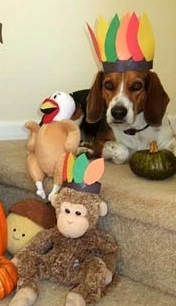
Why the beagle loves Thanksgiving

November 28, 2010

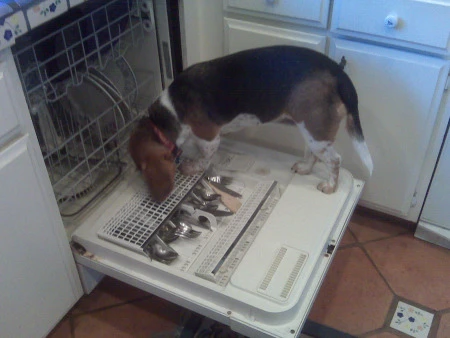
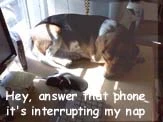
Forget answering phones - give me dirty dishes


Order of things – query

November 28, 2010

Call me old-fashioned, but when I order dinner at my favorite restaurant, Joe’s Slop House and All Things Margarita, I don’t expect to receive my dessert first. Nor do I want my dinner roll with my strawberry margarita. ‘Course, if I’m at home, all bets are off, and I’ve been known to eat dessert for dinner.

My point is that there’s an order of things people expect to experience when going out to dinner. The same goes for a query letter. If you remember only one thing, you’ll never go wrong:

Editors need to know what the story is about.

That’s it. Easy peasy. That means you don’t need to begin your query letter with any of the following:

  • Why you decided to query me in particular – it’s sweet that you think I may be nice, but flattery doesn’t get you to the front of the class.
  • Tell me that there are crooks in this business, and godbless Editors and Preditors – these are things we are already aware of. It has nothing to do with us, so what’s da point?
  • Tell me that you queried me because I’m recommended on Editors and Preditors – this, I already know, too. And bless Dave Kuzminski for his tireless efforts for maintaining this huge database.
  • Tell me that you’re not naive when it comes to sniffing out the crank publishers – not only do I not care, but I have my doubts. What does this have to do with your story?
  • Tell me your entire bio and philosophy on what’s wrong with the US – by this time, I’m gathering up rope and eyeing the ceiling rafters. Is this a dissertation or a query letter?
  • Tell me all the things you don’t want your book to say – this could go on all day. How ’bout focusing on what you do want your book to say; the intent, the message. Otherwise I feel like I’ve been unwillingly dragged into your private conversation.
  • Tell me that you aren’t writing this book with the idea of making any money – while I understand what you mean, and it’s very nice, the fact that I’m pouring thousands of dollars into your book and have an entire sales team committed to selling the book, you can bet your verbs and nouns that my eye is on making money. And I expect your eye to be focused on that same goal.
  • Whoopsie, where’s da word count? If you don’t tell me your word count, then I have to ask. But worse, if I have to ask, it’s because you didn’t do your job.
  • The rambly pitch – just…don’t. I need to know:
    - What does your main character want?
    - What keeps him from getting it?
    - What choices or decisions does s/he face?
    - What terrible thing will happen if he chooses one path and what terrible thing will happen if he doesn’t?
    Stories, including memoirs, should have some flavor of these elements because it’s what draws readers in and engages them. If your story is a wandering “she did this, she did that,” then I’m going to be looking for the compelling issues. If more writers asked themselves, “why should the reader care?” I think the quality of query letters would improve.

Remember, a query letter is a job application, and it’s every author’s job to write the best job application they can by giving only the pertinent information. There are a lot of people vying for a limited number of slots, and we have the luxury of choosing the very best. The idea is to make sure that you’re the cream, not the dregs.

After all, does anyone want their bill to arrive the same time as their dinner?


Holicraze

November 23, 2010

And so it begins, the slowdown of the Holicraze…where errant editors and even more errant beagles abandon their respective posts to reconnect with real life. We’re off to the desert for Thanksgiving. The beagle and I wish a Happy Thanksgiving to all our fabulous authors and to all our fabulous readers.

Right. Happy T-giving my furry butt

Ok, maybe the beagle isn’t quite in the holicraze spirit yet…


And how is your set of pipes?

November 22, 2010

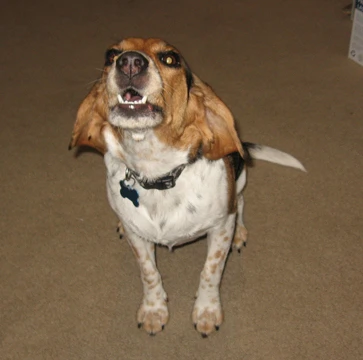
I sing for you

When I say pipes, I mean your voice. No, not the one you use to warble in the shower and make small beagles howl in protest…your literary voice. Lately I’ve been seeing a lot of potentially terrific manuscripts except they lack voice. Rather than the rich usage of deliciously placed verbs and nouns, the writing is flat and lifeless – reminiscent of my last attempt at baking.

Editors aren’t looking for stories where anyone could have written them, but stories that have a distinct flair, stories that suck you in because the writing is so compelling. It’s a fair bet that no one would pay to hear me sing because I sound like a drowning wildebeest. But people will pay to hear Luciano Pavarotti because he’s got a set of pipes that make me bark like a dog.

But this idea of voice is elusive and many writers don’t understand what we mean by voice. So I dug into my tackle box and decided it might be time to dust off some applicable posts. Happy reading.


Canceling a project – reality check

November 21, 2010

I had a very tough decision to make last week – I canceled a book contract. I read the final product and decided the manuscript couldn’t be saved.

These decisions are never easily made because of the time and effort already expended. It’s been a painful time for everyone involved because it came as a shock to both sides. I was thinking, “what the hell?” and I’m sure the author was thinking much the same thing.

In order to avoid this kind of pain, I thought I’d go over some of the elements that may lead to this sad end.

Yes,Virginia, Projects Can Be Canceled

It’s natural to think that you’re on Easy Street once the ink is dry on your contract, and for nearly every author, that’s true. However, a contract can go south at any point during the production process – and they happen for all kinds of reasons.

The most common reason is orphaning – when the editor leaves the publishing house. With the editor’s exit, the author has lost their advocate, the person who fought for and bought the book. There isn’t much an author can do about this, and they have to hope that another editor will be willing to pick it up.

Other reasons for canceling a project can be artistic differences, personality differences, severe miscommunication, or a sudden change in the marketplace which would render the project iffy to readers.

The important thing to remember is that projects can and do get canceled for reasons beyond your control. But what about the ones you can control? In the estimable words of Joan Rivers, “can we talk?”

Did You Discuss the Final Product?

It doesn’t matter whether the project is still unwritten and at the proposal stage, or if it’s complete; before I sign a new author, I go over my vision for the book. It may be that the author and I are on different pages as to what we think this book should say and how to say it. It’s vital to establish this so there aren’t any surprises when the author turns in his/her final manuscript.

If you are offered a contract for publication, MAKE SURE YOU DISCUSS YOUR JOINT VISION. There is nothing worse than having your editor tell you the final isn’t at all what she was expecting. If both parties have discussed it, then there is no room for confusion.

Or is there?

Did You Deliver the Goods?

If you and your editor thoroughly discussed and agreed upon the ultimate vision for your book, then it’s your responsibility to deliver that product. After all, that’s the story your editor bought. And to buy that book, she had to advocate the marketability of your book to her submissions team.

And in spite of how much an editor advocated the strengths of your book to her submissions team, and as much as she may have striven for open communication, she is always aware of the risk that she might not get what she is expecting.

In order to avoid this, always have the vision that you both agreed on taped to your monitor so you don’t stray off the beaten path. This is what killed the project this past week. I dug out our email communication and saw that we had both agreed on how this story should be organized and structured. The final product wasn’t anything like it, and I was devastated.

And angry.

See, it’s not just a matter of “oops, I drove off the main highway, heh, heh, lemme rewrite that.” While you’re busy writing and editing, I’m giving your book info to our sales teams who go out and generate traction for the book. They’re testing the waters to see book buyers’ reactions. So there is a lot of time, expense, and energy being expended on your behalf. If you don’t deliver the goods, then what do I tell my sales teams? My cover designer?

Always remember, it’s not all about you. You have an entire team working on your behalf in order to ensure our mutual success. You have a responsibility to live up to your part of the bargain.

Just Let Me Rewrite It

So maybe you didn’t deliver the goods, and your first reaction is to offer to rewrite it. It’s not that easy. Even for little spuds like us, we placed you in our seasonal lineup. Now we have to decide whether we’ll take your book out of the lineup so you can perform the rewrites and alert our sales people, or whether we’ll let the project go.

The reason we might opt for letting the project go relies on the level of faith and trust we have in you. See, we’ve already had our vision conversation and everything was ostensibly clear as a bell. Having you turn in something completely off course shakes our faith in your ability to get the job done. We’re wondering if you have a retention problem or whether you simply decided to disregard all previous conversations and write what you felt like.

Either suspicion isn’t exactly good news for you. Publishing a book is a lot like getting married. If one of the partners can no longer be trusted, the other party has to decide whether they can forgive and forget, or whether to cut their loses before something else blows up. Offering to rewrite your book makes me personally want to scream, “why didn’t you do that in the first place? After all, we TALKED ABOUT IT.”

Besides, I may have reasons why I no longer trust you to rewrite it.

Did You Consult Others?

Sometimes authors get a book deal and decide they’re too scared or nervous (or new) to tackle this task all by themselves. So they hire an indie editor to help them along – to keep them on the straight and narrow. The problem with this is the number of people a writer may consult.

I’ve seen very new, green, raw authors hire a bevy of different people with varying levels of writing experience, and the result was that the authors had no clue as to which advice was valid. If they didn’t like what Editor 1 had to say, they’d simply consult Editor 2…or Editor 3. They’d keep going down the line until they found someone who would tell them what they wanted to hear.

This isn’t editing; it’s musical chairs. And the one who will end up not having a chair when the music stops is the author – not the consulting editors.

If you decide to hire a whole team of editors to get you through the day, the buck still stops with you, and it’s your literary neck on the line. It isn’t your indie editor’s responsibility to translate what you and your publisher discussed and agreed upon.

Lastly, if you’re so inclined to hire outside help, your best bet is to hire ONE editor and for crying out loud – listen to them.

Did You Check Your Ego at the Door?

Listening to others requires that authors need to give their egos a serious time out. Authors are working with people who are more experienced and that means the author’s ideas will be stretched, tweaked, edited, red-lined, bent, and jiggled. Authors whose egos are in check realize their words don’t come directly from the hands of the Great Cosmic Muffin, and those extra set of experienced eyes are a godsend, not a threat.

But too many times, authors fight the very people they hired – which strikes me as a waste of money. The ego just can’t let go of the fact that someone DARES to critique their brilliant tomes. In fact, I’ve seen many cases where new writers hired outside editors specifically as an ego stroke – they were supposed to be the author’s private cheerleading team.

As hard as it is to show your work to a professional, you need to remember they are there to help you. Show them your rewrites so you can be sure that you’re on the right course. After all, you’ll need to show it to your publisher, so wouldn’t it make sense to feel confident about that final result?

The ego plays a lot of mean tricks on people, and no one is more susceptible than the new writer. And this is where the new writer may lose their publishing contract. Best advice, ditch the ego. They suck.

Is The Story Bigger Than Your Talents?

This is where I see the ego also playing too big a role. There are times when a story is simply too big for a new writer to tell effectively. Stories require major organization, foundation, character development, pacing, flow, continuity, and keeping one’s eye on the ball. If you don’t have enough writing experience, you can turn a great story into something sophomoric and unmarketable.

This is what happened to my canceled project. The story was huge and multi-layered, and the author simply didn’t have the writing chops to accomplish the job. What are your choices if this happens to you?

  • Consider shelving the project and take the time to perfect your craft.
  • Write the story and get in with a good crit group.
  • Hire an indie editor – and listen to them.
  • Consider a ghost writer

In short, there are reasons for a contract being canceled but, to me, there is no reason for canceling a contract because the author committed these particular errors. Right or wrong, publishers assume they’re working with professionals, and it doesn’t matter if they’re debut authors or multi-published authors.

Always give yourself a reality check, and maybe you can avoid making noob blunders and hearing the devastating news that your contract has been canceled.


Welcome to the madness, Kim Kircher

November 20, 2010

Another brave soul has joined our ranks with her fabulous book, The Next Fifteen Minutes, and I couldn’t be happier if I were twins. This makes the FOURTH Kim we have in our lineup of merry authors. I seem to be collecting them. Are all Kims brilliant writers? At this point I’m inclined to say yes .

I had the pleasure of meeting Kim at the Pacific Northwest Writer’s Conference in Seattle this past July when she blew my doors off at her pitch session. Actually, she blew the doors off several agents and editors. I felt an instant connection to Kim and her story. I mean, hello…look at her. You’d never know she has a license to toss dynamite out of helicopters to prevent avalanches, or that she’s a decorated ski patrol woman and an EMT. This woman lives for adrenaline rushes like the beagle lives for good tequila.

All that, and she was put in a position of powerlessness when her husband lay dying with bile duct cancer. Can you imagine anything worse than being a take-charge person and forced into submission while doctors decide whether your husband will live or die? People like Kim aren’t hard-wired that way. They take action.

Kim’s story appealed to me because so many of us feel powerless when confronted with events beyond our control. Instead, Kim falls back on her training and experiences in order to maintain the strength needed to help her husband – and her sanity.

I drew inspiration from Kim’s take charge outlook and daring. It’s when things get tough that we dig deep within our psyche – the raw elements that define us – and draw upon that inner power to overcome anything, whether it’s tossing bombs into snowbanks, taking an injured skier down a steep slope, or saving your husband’s life. And heck…that’s what we’re all about, right?

So welcome, Kim #4 – damn glad to have you!


“Psst…wanna make me famous?”

November 19, 2010

So answer me this -would you write a book only to give away virtually all your rights, including your copyright, use of your name, and ability to sign other contracts for fear of being “in conflict,”  control over your own publicity for a mere $250? And more importantly, would you be willing to incur a $50,000 penalty if you  admit to working with this someone who offered you this book deal?

No?

Well then you’d be saying no to James Frey’s latest dalliance with gasbaggery. Yes, that James Frey is trekking around the country stumping his self-aggrandizement by asking students in MFA programs if they’d like to make him famous. I guess being infamous has gotten tedious, and he says achingly disturbing comments like, “I should have never fucking apologized to Oprah,” while wandering around the classrooms in his stocking feet.

In return for a chance at immortality,  students/authors allow Frey to review rip them off by having them sign contracts that force them to give up their rights for a pittance. What hurts the heart is that he’s getting takers; so desperate are they to be published.

There are a lot of eloquent blog posts that detail Frey’s horrible contract and his ability to be little more than spittle from a diseased aardvark. But one thing I hope you take away from this is that publishing deals have to be right for everyone. Allowing someone to steal your work and take away all your rights and control isn’t an opportunity – it’s abject insanity.

You can’t use this as a publishing credit because, hello, does anyone believe that Frey will give anyone their due by using the author’s real name? Not in this lifetime. He wants all the glory for himself, which is ironic considering that he’s known for being a liar and costing people millions in lawsuits.

Don’t you think it’s right to honor your hard work, your imagination, your talent by putting your story into the hands of those who will pay YOU, distribute YOU, market and promote YOU? This isn’t a stepping stone, it’s a brick wall. And it has only one direction – straight into a brick wall. You write not for the purpose of making someone else rich off your hard work. You deserve full credit and all the compensatory benefits of having belched out a great book. Isn’t the world tired of this weasel yet? The naivete scares the ever-livin’ stuffing outta me.

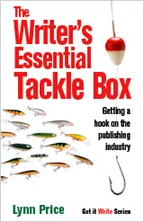
Note to self: get thee to the MFA programs and hand out copies of The Writer’s Essential Tackle Box because these folks need to learn the publishing business.


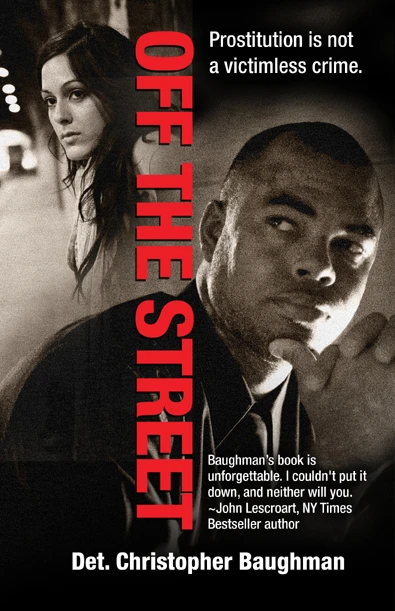
Go, go, Chris Baughman!

November 18, 2010


Wonderful article on our author, Chris Baughman. This is one of our most important books because the message is vital to anyone who loves someone. Go. Read. Buy in March, 2011!


Follow

Get every new post delivered to your Inbox.

Join 963 other followers

Powered by WordPress.com