Querying: what kind of a salesman are you?

February 28, 2011

I remember when we were shopping around for new couches. The saleslady didn’t seem to know a lot about the couch set we were looking at and did a lot of head scratching. Since she had so little information or knowledge about the couches, we were at an impasse. When hubby accidentally discovered that the center back folded down into a console with drink holders, heaters for either ends of the couch and back vibrators, we nearly jumped out of our collective skins.

Sold!

The  saleslady was surprised and said, “Oh wow, I didn’t know those couches did that.”

Clunk. Say, dearie, do you work on commission? If so, I gotta wonder at the size of your paychecks.

So she made a sale quite by accident. She had nothing to do with it because the merits of the couch spoke for itself. Lucky her.

But what about your stories? Hopefully, your book speaks for itself and sells on its merits. But in this day and age of modern nonfiction (and some fiction), including your platform or  promotional ideas is an intelligent way to speed yourself right up to the head of the class. So the last thing any agent or editor wants to see is, “I’m always open to suggestions for further marketing/promotional ideas.”

That’s nice, but we assume any author with a firing synapse would be open to ideas. To actually state this makes me think that you know there are more promo ideas out there you could think of, but for whatever reason you haven’t. And I have to say that whenever I see this statement, it often comes at the end of a so-so promo/marketing plan. So I already know you’re basically saying, “sorry there isn’t more!”

Just like the couch saleslady, we assume you are the professional trying to close the deal. This means you have to show me how the center console folds down and has drink holders and buttons for heat and back vibration (which is damned fabulous, I might add) because I might not discover it on my own.

Empathy is a great way to enhance your sales pitch because it forces you to think ahead. You know what questions are running through our melons and can head us off at the pass:

  • Is the story strong and marketable?
  • Can I sell the story and the author?
  • Is there a large audience for this book?
  • What is the author’s promo plan?
  • How many people does she know?
  • How many people know her?
  • Is she immersed in the community who might read her book?

This kind of sales job is much more effective than telling me you’re open to suggestions. We always have suggestions. And so do our marketing and sales folks. What we need to know is that you’ve taken the steps to sell yourself.

Now, I really must get back to my couch. Beagle…fire up the blender!


Publishing and Perspective

February 25, 2011

I’ve been going to writer’s conferences for years, and after awhile I begin to recognize familiar faces who attend every year.

Every year? you ask. It’s not as nutso as you think. Conferences aren’t retreads of their previous cons. They mix them up and update it with new speakers and seminars. They also look for agents and editors who are looking for authors with wonderful books. So just because you didn’t score a publishing deal or agent representation last year – or the year before – doesn’t mean you won’t this year. Or the next.

Writing is a process, and you never know when you’ll listen to a seminar that speaks to you. It’s that ah ha moment where the clouds part and the angels sing. Eureka! you scream before running back to your laptop and rearranging a story arc, character development, plot twist. You simply can’t put a price on that magic moment that elevates your story or gets you over a rough patch.

The biggest hurdle is battling the fear of failure. Rejection letters have a way of flagging authors’ determination to keep on keepin’ on, but I have seen authors who have pitched their books – refined them – pitched them again – for a few years in a row…and found a great agent or a contract offer for publication. Is it worth all the angst of rewrites and learning? Well, I certainly think so, and I’d bet those who scored deals would agree. Writing is a learning process, and with each step backward, hopefully there are three steps taken forward that will get you closer to your goal.

I wish more authors appreciated and respected the entire writing process because it’s a journey from Point A to Point B – and yes, rejection is an integral part of that process. There is so much that is learned through trial and error – and attending conferences. It’s one of the reasons why I dislike the vanity route so much. Instead of taking precious time to learn the craft and the business, authors rush to what appears to be the quickest path to publication, never realizing all the vital steps they missed along the way.

Always keep in mind that where you are now has nothing to do with where you’ll be in the future. You have no idea where you might be a year from now, so enjoy the learning process and embrace the journey. Greatness could be lurking right around the corner. And that is why I love this business.


Irritant #1 – Special Requests

February 24, 2011

It usually starts innocuously enough:

…”I read about your company and it fits exactly what I write. (Aw, sweet) I made sure to read your submission guidelines, blippitity, blah, blah…”

Then derails itself unmercifully:

“but I was wondering if I could also include a synopsis (which would be very useful since the plot has a number of unexpected twists ), as well as a few short chapters, or a number of pages to illustrate style and writing ability?”

Beagle, fire up the blender.

He is basically asking permission to break the rules. Ohhh, by all means, my friend. No way should you have to follow those pesky guidelines. After all, YOU are special! In fact, let’s just forgo all those silly steps that streamline my job because, hey, it’s all about you!

Send me your full.

No!

Forget that, how about I just send out a contract right spanking now?

<beagle slaps Pricey across the kisser a few times, enjoying the moment way too much>

Wha’? Huh? Oh. Sorry, I lost myself again.

I can be accused of several things, but vague isn’t one of them. Ask anyone who knows me. I have taken the idea of clarity to a higher art form in the attempt to save time and confusion. I’d like to think that my submission guidelines reflect my philosophy of “this means YOU,” and that nothing other than a simple query letter will be allowed.

I’m not sure how my little friend could have read those guidelines, and all the crankiness that goes with it, and still ask for special treatment. But I’ll wager that he has some serious chestnuts. For that, I should give him some credit. And I have; he has the distinction of being the first email that I’ve deleted unanswered today.

I’m guessing my invitation to the Great Benevolent Society will be rescinded…


Hook and Title

February 24, 2011

At the writer’s conference this past weekend, I noticed a consistent problem with the authors I spoke to: lack of a hook and titles choices. Oddly enough, both go hand in hand in that they are designed to capture readers’ attention.

Hook

After reading author’s pages, reading their synops, and talking to them, I found myself asking, “yabut, what’s your hook?” And this is where the struggle began because I was basically asking them to justify the viability of their book.

A hook, simply put is a point in a story that grabs the reader’s attention. It’s the difference between mundane and exciting. Your hook is tied into your plot, which should have some sort of struggle going on (conflict).

For example, I spoke with one author whose full I’d read a while back. I liked the story but felt there wasn’t a big enough hook to draw in readers. It was about the life of a beleaguered principal who faces a group of unruly teachers. The problem was that nothing was really happening. The unruly teachers is the foundation – the starting point of her plot – but she needed to have a hook, that sit-up-and-take-notice grabber. So we talked over breakfast (another great reason to attend conferences), where she told me her MC was frustrated at not being able to fire the teachers.

Ah ha.

So his ultimate struggle isn’t with the teachers, but a deeper, immovable object. The teachers are the foundation, but that personal struggle gets exhausted pretty fast, and she can’t sustain that for an entire book. However, if the MC decides to take on the teacher’s union, NOW you’re talking a hook. She was aghast. “It’s so controversial,” she said, fanning herself with her napkin. “Exactamundo,” I replied. “Never, ever fear controversy – it sells, baby.”

Controversy is a fabulous hook because it gets people talking, discussing the issues. Even though her book is fiction, the book is steeped in truth. Additionally, she has a terrific platform of thirty-five years in the classroom (now retired), and a platform means publicity. With the current strife going on in various states about unions, hers is a very timely book – and she is right smack dab in the middle of it. Now I’m seeing radio interviews, TV appearances, and personal appearances because there is nothing on the market like this book, and her perspective is quite unique.

This book was going nowhere fast – yet a short breakfast together turned that all around. Yah, hook is that important.

So take a long, objective look at your book. Can you determine what your hook is? Is it big enough? Are there controversial elements that you can exploit? Can you confidently answer the question, “What makes your book viable and unique?”

Titles

Equally important to capturing attention is your book’s title. I saw quite a few misfires this past weekend. If I can’t guess the genre based on the title, then it could be a title misfire. If you’re writing nonfiction, your title should be clear and adequately describe the book’s content. And, of course, be catchy.

I had a one-on-one with an author whose title and subtitle made me think it was Self Help. Her pitch, however, made it clear it was a memoir. The first thing I did was suggest a new title that personalized her book. Oddly enough, when we began discussing title options, it actually began to alter the focus of the book from memoir to possibly Travel Essay. Funny how a simple thing (and, in truth, there is nothing simple about titles) can change your book’s perspective. Titles be powerful things.

Recently we had title changes on two of our books. Our sales folks felt the original titles lacked power and clarity. Above all, a title needs to set the tone for the book. Our first book was titled Anomaly. I’d really waffled on it at the outset because I knew there would be a populace who (sadly) didn’t know what anomaly meant. And who or what is the anomaly? The cover art wasn’t enough to identify what the book was about. In short, the title had to go.

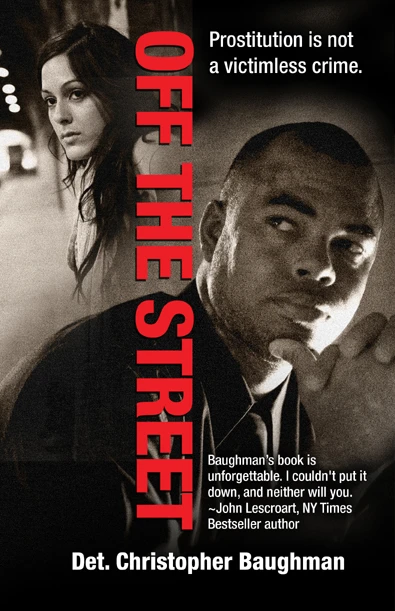
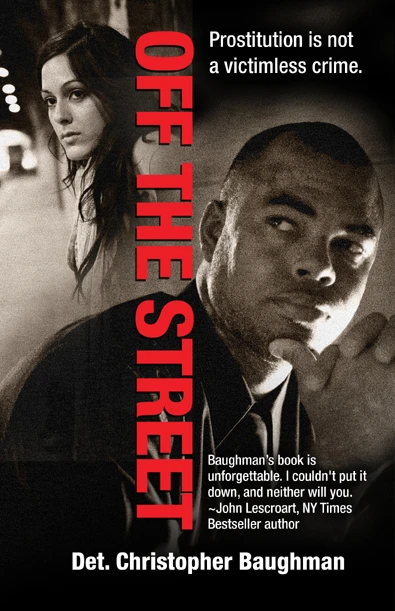
So we noodled around with different titles. The sales and marketing folks asked me the gist of the story. “Well, it’s about Chris Baughman, a dedicated and passionate detective, who leads a special unit whose job it is to take pimps off the street – knocking off the head of the beast by arresting them, bankrupting them, and seizing their millions of dollars of assets. But he goes a step further by taking the girls off the street and putting them in touch with professionals who can get them into shelters, school, etc.”

“So,” they said, “it’s Off the Street.”

Bingo.

Our second title was originally called Violence: The underbelly of the National Football League. I thought it a powerful title, but after talking to author and former Tampa Bay Buccaneers president Gay Culverhouse about the scope of her book, I felt the title didn’t adequately describe the content. Neither did the sales and marketing folks. So after long talk, whammo, presto change-o, the title became Throwaway Players: Concussion crisis from PeeWee football to the NFL.

And don’t be afraid to use a subtitle…especially with nonfiction. Publishers have all sorts of tricks to get the point across. You’ll note that Off the Street doesn’t have a subtitle, but if you look at the cover art, you’ll see that we added a byline: “prostitution is not a victimless crime.” This tells readers exactly what the book is about in a matter of nanoseconds.

And this is what you’re looking for; a catchy title that describes the book.

Obviously, fiction offers more freedom to be artistic and vague – but personally, it drives me nuts when I can’t glean the contents from the title and cover art. So choose your catchy title with care. It should be representative of the book, not too obscure, and, of course, catchy.

Sadly, there is no formula to a great title, so it’s a lot of trial and error. And feedback.

And don’t freak if your agent or editor changes the title. They’re not doing it to ruin your day, but to make the book more marketable, memorable. I can’t tell you the number of times I’ve read advanced submissions to books with weak titles, yet there, among the pages, I noticed a much more powerful title  lurking about.

There is nothing sweeter than being able to suggest a new title that excites the author. Am I brilliant? Ah, I’d like to think so, but alas, it’s only because I’m an unbiased observer and can see things the author can’t.

If you find yourself stumped with a title, go no further than your manuscript. The answer is in there. Really. It makes no sense, but I do get excited when a query comes in with a great title. Right or wrong, I think that if the author thought up a great title, the content must be equally amazing. And that, my dear writers, is the same psychology that attracts readers.

So don’t downplay the importance of Hook and Title. They are the face of your book. Considering the plethora of great books running about, you can’t afford to take shortcuts.


REact and PROact

February 23, 2011

I happened to be working on my book the other week and hit a stalemate. Nothing was working. What was wrong? I decided I was bored with my main character. She’s a saucy thing, and I felt she’d become dull and lifeless – much like my attempts at baking. Distressed, I walked away from the book for a bit so I could analyze the problem. At two 0′clock that next morning it hit me.

My MC was reacting to everything, and not proacting. What I mean by this is that she was reacting to situations going on around her rather than making something happen. I told her under no uncertain terms that if she was going to maintain Big Kahuna status, then she needed to be proactive. Ever the tart, she told me to get off my lower forty and write her that way. Wench.

But she’s right, of course. I do need to pull her out of her reactive role and allow her to do what she does best – take charge. Whether she’s observing her surroundings or involved in a big scene, she needs to be the proactive, driving force behind it. The minute I allow her to lose her star status, the story drags, and she becomes part of the background…definitely not her style.

Mind you, I’m not talking about my MC being the absolute star of every scene, but writing her so that she’s the focal point – even if she’s being quietly proactive. What I mean by that is that she’s still actively involved in the scene even though the current focus is somewhere else. For example, I need to describe the exotic settings because it’s integral to the story – and I need the reader to see it through her eyes.

It’s frightfully easy to fall into the trap of tell vs. show, as in:

She saw the jungle unfold around her, revealing a vast array of greens and yellows that she never knew existed. She walked past giant flowers and leaves.

It’s ok, but a whole diet of “she saw” is dull and lifeless because she’s not proactive in the scene. She’s taking a backseat to the setting. So I rewrote it, using dialog, in order to make her proactive – and more in control of the scene:

Stepping into the clearing, the jungle unfolded around her, revealing a brilliant pallet of colors. She sucked in an unconscious breath. “Whoa. So this is what Picasso’s paintings would have looked like if he was on crack.” She fingered a flower whose deep red hues shimmered when it touched the sun’s rays. “I’ve never seen colors like this. They’re so vibrant, my eyes hurt. Tell me this isn’t poisonous, ok?”

And this is a bit of what I’ve noticed in submissions. The character is described as having wonderful qualities in the query letter, but upon reading pages, I notice how they invariably get lost within a scene.

If a writer isn’t paying attention, plot twists or scenes can take over and shove the MC against the wall. This puts them into the observer role. It’s one thing to observe a setting or situation and be a wallflower, and quite another to actively observe. And our characters do need to observe all kinds of things. How they do it is what turns them into reactive or proactive.

An effective way to keep your character proactive is through dialog or inner dialog because you’re keeping them front and center. The reader stays in their head, and this gives the character automatic control over the scene, no matter how big it is. And it also adds dimension to your character.

Remember, the current story is taking place because something happened “offscreen” that initiated your character’s involvement, so those main characters are the vehicle that propel the plot. They gotta be proactive. It’s the difference between enjoying a book and tossing it against the wall.


I haz a mad

February 22, 2011

So I get a call from my little post office box guy who tells me I have a package waiting for me. I have an extremely busy day, but not knowing if the package was important or not, I dropped what I was doing to go up and get it.

It was from an author.

He’d sent a book.

He was pitching it to me.

Enter scene where editor commences spurting steam out her ears and uttering words that would make my mother blush.

I quickly scanned the letter and dumped the entire package into to the trash outside the PO. I have a confession to make: I toss every single book that I didn’t request. So like every other author who thinks agents and editors will drop everything they’re doing to read someone’s book – rather than submitting a proper query – he wasted $4.75 plus the price of his vanity book. I wasted my time picking it up.

Was this rude? Maybe. Probably. But what good does it do me to have submission guidelines when some yahoos won’t bother to read them?

I will never stop screeching this: DO NOT DO THIS. PUHLEEZE.


Publishing…where is it headed?

February 21, 2011

This seemed to be the prevailing theme at this weekend’s Southern California Writer’s Conference in San Diego. Event organizer Michael Steven Gregory tossed this question out in his typical trademark fashion (honestly, you have to experience MSG because he’s impossible to adequately describe in print).

Since he asked the question about where is publishing headed, he posited that power should return to the hands of the authors. I can’t disagree with that. After all, without authors, we publishers and agents would be slinging hash and the beagle would have to get a real job. MSG went further to suggest that big NY publishing would be dead in four years.

I’m not a prognosticator, so I can’t say whether he’s right or wrong. I do know that NY publishing has undergone a huge change because I see it in the submissions that come to me. The big advance money is drying up and the big guys aren’t buying the kinds of books they did years ago. They need the big blockbuster books because they have a lot of mouths to feed. And guess where those good books are going? Yup. To littler spuds like us.

The notion of the big pay day has changed, and I can’t say I’m sad to see it go because it was unsustainable. These books hardly ever earned out, but they kept tossing money around like it was water. It was good times for all. Lots of books were printed, lots of stores bought them – and as long as the balloon didn’t pop, things could remain unrealistically status quo.

From a financial/business standpoint, this made little sense. Small publishers couldn’t act that way. They had to remain  financially solvent at all times, and that meant not spending more than they had in reserves. That’s why, traditionally, small publishers didn’t get the big books. “They don’t pay enough,” the agents would say. And sure, it’s logical to gravitate toward the bigger payday.

And then the bottom finally fell out and the big guy’s had their comeuppance. “Holy bouncing checks, Batman!” they cried. “We gotta lay off a ton of people to keep ourselves afloat.” Agents also had a huge reality check. Their big paydays were affected as well. So in the course of a few years, we saw the Great Return Implosion, where publishers suffered record-breaking returns from bookstores and the Great Editor Layoff – which is still happening today. NY editors are now finding themselves working as agents or indie editors. Many agents decided to do something else because they couldn’t make the big sales to sustain their businesses.

So Michael Steven Gregory’s opening salvo this past Friday night was a call to arms for authors to get into the driver’s seat – don’t be afraid to consider self-publishing. “Publishing as we know it is dead,” he said.

While I’ll agree that NY publishing is undergoing a huge evolution – and fighting it every step of the way – I also did a bit of squirming in my seat Friday night and wondered if they’d sling me up on stage and pass out rocks. I felt slightly irrelevant. Passé. And this bothered me a great deal because I felt there is much more to publishing that meets the eye. It’s one thing to heed the call to the battle cry and chant “death to publishers!” and quite another to actually go out and do it. And be successful.

Understanding how books are sold

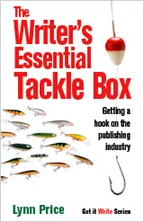
Anyone considering publishing their own book MUST know the publishing business and how books are sold. Remember, you’re competing against publishers who have been doing this for a long time, and you need to know how to navigate those same waters. I see so many authors who self-pub – either via vanity or true self pubbing – and they didn’t understand how hard and expensive it is to should the complete burden of producing and selling a book. They end up disillusioned and broke. Prevent that outcome and educate yourself on the business so you can tip the scales for your success (suggesting Writer’s Essential Tackle Box).

Quality

One of the biggest uphill battles that I see with a self-pubbed book is quality. Usually what happens is someone writes a book and tries to sell it – to no avail. So they say, “the hell with it, I’ll do it myself.” The problem is, many times those rejections are a sign that there’s either no market for the book, or it’s poorly written. Sometimes rejection is an indication that you need to write a better book rather than soldier on with something that has little chance of sales.

But let’s go on the assumption you have a good book and are determined to be your own publisher. Part of that education process should include cover design, editing, interior design, and more editing. The reason self-pubbed books have a bad reputation is because they richly deserved it. All you need to do is go over to Jane Smith’s blog Self Publishing Review to see that many books are substandard in their quality.

This means you need to hire an excellent editor who can run you through the rinse and spin cycle, and hire a respected cover designer to complete the outside look. But don’t stop there – hire a good interior designer who will do a proper layout of your manuscript. Sure, the average Joe and Jane reader may not notice that bottom text doesn’t align from page to page, or that the sentence spacing is unusually narrow, or that you orphaned your sentences in odd places at the top and bottom of the pages. But they will notice that it’s harder on the eyes to read. There is an art to interior design. I recommend that you avail yourself to it.

Distribution

You can write the best book in the world, but if no one knows of its existence, then it’ll sit there gathering dust. Most authors are limited in distribution because their footprint goes only as far as their feet can take them. That isn’t to say they can’t sell a lot of books at their local events – I’ve seen plenty who have – but they’ll reach a point of attrition, and this means they need to travel further outside their local community.

To date, the best way to get a book seen is on a bookstore shelf. And this requires distribution – something that is beyond the reach of the self-pubbed author. Publishers have distributors with teams of sales people and marketing and promotional experts whose sole job it is to sell your book. They have national ties and exposure. And they have a reputation within the publishing/buying community which is hard to deny. They open doors. They get sales.

Marketing and Promotion

In order to prevent your book from falling between the cracks into oblivion, you need to market and promote. This is expensive and time consuming. I’ve had conversations with many authors who vanity press published, and they were exhausted – as were their checking accounts. They bought tons of books in hopes of selling them within a few short months. Years later, they still had a garage full of books. And it’s not because they didn’t try. It’s because they were ill-prepared for the rigors of marketing and promotion.

Bookstores are much pickier these days about who they host for signings, so the self-pubbed author may find himself searching high and low for a store who will take him on. Self pubbed authors need to understand the art of marketing a product and capturing someone’s attention long enough so they’ll buy it.

Remember, the self-pubbed author is competing against publishers who already have established relationships with media outlets because it’s their business. It will be vital to think outside the box and have a solid promo plan that will attract attention. The one thing you cannot do is sit on your hands and wait for the money to roll in. It won’t. Everything is on your shoulders, so if you don’t make it happen, it won’t happen. You don’t have the support of a learned, experienced team to help you out. And this is where most self-pubbed authors lose heart.

So it may be that you’d like to take complete control of your publishing future. But if you do, you have to appreciate the realities of swimming upstream. As Michael said in his talk, publishing is changing – on that we can agree – and where it’s going is anyone’s guess. But the one constant is exposure, quality, talent, time, distribution, and money. There are the Cinderella stories out there, to be sure, but don’t make the mistake of believing they’re the norm.

They are the exception. And hopefully, so are you!


Saving lives, one woman at a time

February 18, 2011

It’s not often that you get to see the person behind the book, but that’s not the case with our author Chris Baughman. He was on Las Vegas news last night when a reporter did a story on what Chris and his Pit Investigative Team are doing to cripple prostitution…they’re going after the pimps, who live amazingly opulent lives from the labors of their girls.

This isn’t a story you should walk away from – that this would never happen to you or someone you know and love. Chris reveals how insidious these pimps are. They never tell their new girlfriends what they do. It’s not until the girl makes an emotional commitment to the guy that he tells her what he expects her to do. If she doesn’t, she is often seriously beaten and threatened.

Chris has files upon files of women he has saved who were forced into slavery, all their money taken from them, and their “boyfriends” buying cars, furs, jewelery…for themselves. If the women try to leave, they are severely beaten and sometimes taken out into the desert and killed – a very public warning to other women who may try to leave.

Chris and his revolutionary team are out there fighting the good fight, saving women from beatings and death. These are your daughters, your friends, mothers, and aunts.

If there is one thing to smile at, it’s the reporter. In her dialog with the news anchor, she mentioned Chris’ book and held it up. She did a very quick flash and put it down – and didn’t mention the title. Now most people would be bummed with such an offhand move. But she had to do this because we changed the cover art and title, and she didn’t want to confuse anyone. Bless her little microphone.

Prostitution is not a victimless crime, and this report shows exactly who suffers the most. Click on the link. Watch it. And when Off the Street hits the stands in September….buy it!


Conflict Conundrum – why is this so hard?

February 17, 2011

Day in and day out, I reject queries because they have no discernible conflict. Conflict is what keeps readers turning the pages. I’ve had a number of authors email me back, in a tizzy over my claims of no conflict. “What do you mean there’s no conflict,” they wail. “Janie Sue is always so mad at Billy Joe…if that ain’t conflict, what is?”

Um.

That ain’t conflict. Not the kind I’m talking about. In the past, I’ve used all sorts of lovely language to describe what I mean by conflict. It’s the idea that the MC has something to lose, or something he wants, and the paths they take that will influence the outcome. It’s about that time I usually see authors’ eyes glaze over at conferences. And then it hit me: why all the silly wordiness?

Conflict is about struggle.

Period.

Now that’s something simple that an author can stamp on their forehead. All stories have a character who is struggling for something, right? If not, then there isn’t much of a story.

Conflict isn’t just about action, like bomb threats or tossing chairs through windows. There is inner struggle, too.

Perfection

This idea of struggle has some lovely unintended consequences; the idea that your characters aren’t perfect. I see many stories where the characters are a bit too perfect, as if the author loves them so much that she doesn’t want to put them into a bad light. The problem with this is the reader will lose interest. No one likes a Barbie or Ken doll because they’re flat, boring, and predictable. Predictable people don’t suffer struggle or conflict. They just bland themselves through life and let all the really exciting, cool things happen around them, not to them.

But with conflict, now you have a character who is struggling for something, and this forces the author to reveal more insights about the character’s psyche. Now you have dimension.

One size fits all struggles

Look around you; is life perfect? Are your friends and family perfect? Is your life perfect? Not a chance. What are the struggles? For the beagle, it’s usually a struggle to get another designer dog chewie out of me, or to shove my papers aside on my desk so she can take her morning sunbath. And this brings forth the notion that not all struggles have to be gynormous.

Our books are usually filled with subplots that enhance the overall plot. Within those subplots and twists, you still need to have a struggle or you’ll fun into the fatal “who cares?” from your reader. Don’t be afraid to noodle around with the size and scope of struggle because some of the small ones can be just as delicious.

Realistic conflict

Something that I come across periodically is the unrealistic or cliche struggle. Both make the beagle gag. Readers don’t have the patience for this type of thing because they’re too savvy.

Spare me from another woman who, in the midst of a mid-life crisis, struggles for a new love/new life, only she’s too old/too fat/too shy/too busy and turns to her best friends for guidance. Been there, done that. To. Ad. Nauseum.

Likewise, drop me from a fourth story building if I see another story that involves a woman’s struggle to keep from falling in love with her arrogant, ornery, pig boss. The woman needs a shrink, not flowers. Bleh.

Conflict that is bigger than the characters

Don’t you hate it when your story becomes bigger than your characters can handle? This can happen with external struggles…things like your MC solving a murder or saving the world. These little blighters can run away with your story because they’re outside of your character’s control. A common problem I see with external conflicts is that the MC is placed in more of a reactionary role, and they get overshadowed.

Remember, your characters are the vehicle that moves the conflict/struggle/plot along, so they have to be at the forefront of the story. You can’t have them competing with one another.

Balance

If your plot is of the external type, solving a mystery/murder/saving the world/Egypt, you’re still going to have personal struggles with your MC. Let’s use an example:

Joe Bazooka is embroiled in saving the unicorns from certain annihilation from those damned pesky trolls,who like to use them for mining gold. Joe is the fearless type, so he prepares to do battle. However, he keeps getting naggy text messages from his mother, the queen, who blathers on about how she’d love to have grandchildren someday and she’s not getting any younger, blah, blah, blah. While it’s true that he and Princess Delicious have done some serious lip locking, he’s afraid of committing to just one woman. After all, once he saves the unicorns, then it’ll be raining nubile women…but Princess Delish won’t wait forever, and she is HOT. Is it worth the young nubiles when he has the very best? And what ho, has she been making goo-goo eyes at Bart Bodacious?

Ok, so you have external and internal struggles, which makes for a richer, more fully developed story because you’ve maintained balance between them. The story wouldn’t have been nearly as rounded out had the focus remained on Joe’s battle with the trolls because we don’t have any sense of Joe’s personal baggage. This keeps us aligned with him while he goes out and saves the unicorns…and hopefully gets the girl.

So the next time you think about your plot, remember that you need to keep your old buddy Struggle heavily involved. Otherwise, what’s the point?


Jumping the gun

February 16, 2011

I was wading through my Submissions folder last week and came across an interesting submission that I’d received the end of January. I began reading it and thought this would be perfect for us. I went back to the email query the agent had sent to get more details. She had included the author’s website, so I mosied on over. Wha’? There, at the top of her page, was the proud announcement that her book – the one I was reading – was now available on Kindle via their CreateSpace thingy.

Blink blink.

If I may offer a bit of advice – I would strongly recommend NOT doing this. We editors are touchy, black-hearted folks and we hate nothing more that feeling like we’ve been scooped. And putting a book out on Kindle is a scoop of sorts because you’re basically opening up your hand for anyone to see and exposing what cards you’re holding.

If you really want to be published, get a good agent. If you already have an agent, then get out of their way and let them do what they do best.  Jumping the gun like this is doesn’t make sense. Furthermore, dare I say it, it’s unprofessional. This is akin to the writers who vanity publish their books because they think it’ll give them more exposure to hungry editors. In reality, it acts as a repellent.

Yes, I see why they do it. They’ve heard the Cinderella stories about getting picked up for a multi-gazillion dollar, 50-book deal. But for every ONE of those deals, there are thousands whose books have a one-way ticket to obscurity.

If you’re serious about being published by a mainstream publisher, then I strongly recommend not jumping the gun and scooping possible editors by publishing your book, either via vanity or e-book. For starters, many of us won’t touch something that’s already out there. Do I want to hassle having two versions of your book out there and risking your unedited book being confused for my thoroughly edited book?

Nope. It’s simply not worth it.

Exposure comes in all sizes and shapes, and the best exposure is your platform. The bigger it is, the more excited an editor will be to fight for your book. But a Kindle version is simply that. It takes time to develop a readership, and the longer you leave that book up, the less likely an editor will be touch it.

Instead, relax. Let your agent work for you. Start writing that next book, take a walk, drink a pitcher of margaritas…anything…but don’t jump the gun.


Follow

Get every new post delivered to your Inbox.

Join 823 other followers

Powered by WordPress.com