Make me laugh…win a book

June 30, 2011

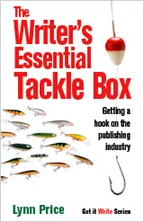
It’s true that writers are the cleverest of all, and over the years your comments have made me think, and most of all, you’ve made me laugh. So I’ve decided to reward such cleverness by choosing a Great Comment of the Month. The winner gets a freebie copy of The Writer’s Essential Tackle Box.

June’s winner was Becky for her comment in the post The Eleventh Commandment. The Beckster made me laugh out loud, so her book is winging its way to her house.

I love to laugh and I love to share, so this seems to be the best of all worlds, no?


Agents as publishers

June 30, 2011

I know many of you have heard about agents who are now becoming publishers – whether for ebooks, or facilitating self-publishing ventures. There are a lot of differing opinions on this, but I recommend reading Victoria Strauss’ blog post on this issue. As is her usual style, Vic breaks down the controversy into nice bite-sized pieces so that writers have a clear view as to the potential hazards of this alarming trend.

I realize that as a publisher, I would be against agents becoming publishers. But the issue goes deeper than that, and Vic nails it on the head when she quotes Peter Cox:

“Once you become your client’s publisher, you then become a principal in the transaction [which] means you can no longer function as the client’s agent.”

I don’t care if well-respected agents are doing this – it’s a conflict of interest. And who loses? The author. It’s always the author – make no mistake about it. And I think what bothers me the most is that big name agents are doing this. Given their credibility and reputation, writers are under the mistaken belief that the agent is working in their best interests. Are they?

Is it possible to work in your best interests if they have a vested interest in keeping you right in their back pocket? Will they ignore that request for pages from a publisher?  Will they recommend not accepting that contract offer? It’s hard to ignore the fact that publishers have more experience selling books to the marketplace and better distribution than an agent/publisher. Selling books to the marketplace is what we do for a living. If your agent’s time is split between being an agent AND publisher, then are you getting their full attention?

I applaud Vic bringing up the influence an agent can wield with a writer. Think about it; you’ve signed with Ms. FaboAgent, and she wants to discuss the possibilities of going ebook, or self-pubbing. And hey ho, Ms. FaboAgent can facilitate this! So do you really believe that writer will get a fair and balanced picture, or will Ms. FaboAgent present a very biased perspective because she has much to gain?

I realize agents are scrambling around trying to remain relevant in this ever-changing world of publishing, but is this the right way to go? It appears as though my question is merely rhetorical because I think they will. But I cringe at the playground for potential abuse that is being opened with this growing trend.

All the more reason why authors must learn the industry in order to make informed decisions that will impact their writing careers.


When authors get hit with the stupid stick

June 28, 2011

Ok, I have an outrage going on and am in quite a mood. I’m talking about this article about some imbecile (I refuse to call him a writer or author because they know better) who staged a fake kidnapping to sell his book. It seems he thought it would be “great press” to stage a fake kidnapping of agent’s children in order to get their attention. From the article:

But that was just the beginning. Davis staged and filmed a kidnapping (“I checked with a lawyer first to make sure I wouldn’t get in trouble”) to post on the website, then sent an e-mail to a wide variety of agents. It began: “By the time you receive this, I will have already kidnapped your child.”

Please excuse the vulgarity (especially you, Mom), but WHAT THE FUCK IS GOING ON? I’ll tell you one thing – had he written me, he’d be hearing from my lawyer AND the FBI. And furthermore, I’d have to think twice about any publisher who would sign this fool.

Dear, dear authors…resorting to trickery – and in this case scaring the stuffing out of agents – is NOT how you sell a book. If anything, it might earn you a visit from your local constabulary.

Avoid the stupid stick because when your stunt gets publicized, it will most likely not garner the reaction you were hoping for. Instead of being famous, you be infamous, laughed at, fingers pointing in your direction from mothers who tell their children, who are recoiling in horror, “See, honey? That’s what an idiot looks like.” Rather, rely on your talent as a writer because readers aren’t dumb. They’ll see through the “Authorpreneur” pranks and rip your book to shreds.

It’s a dicey thing to let your promotion outshine your talents. Or in this case, creating palpable fear. This man is detestable, sick, and twisted for threatening agents to publish his book within 90 days, or they’d never see their kids again. It’s obvious that when the stupid stick came around his street, he stood in front of it, screaming, “ME! ME!”


The Eleventh Commandment: Calleth not editors

June 28, 2011

And God did sayeth unto his flock: “Calleth an editor, and the skies will doth darken and thunder will striketh you deader than a doornail.”

I’d listen to God, He’s got game.

If you’re ever tempted to call an editor to see if you have a “good idea,” don’t. Just…don’t. We aren’t here to vet your ideas, and unless you’re an agent or one of my authors, calling to engage in a friendly chit chat is more irritating than running out of sacramental wine.

Just today, an author called and expected me to drop everything so he could run not one idea, not two ideas, but “several” book ideas past me to see which one I liked the most.

Blink Blink.

At first I thought it was one of my reprobate friends who love tweaking my last vestiges of sanity. But, alas, this was truly a lost soul.

I told the gent it wasn’t my job to help him determine which book idea is the best. It’s my job to read queries and see if the story looks interesting and fits in with our lineup. That’s how the game is played. Publishers aren’t review sites – that’s why God invented writer sites, where authors can vet their ideas and get crits on their writing.

I understand that it’s frustrating not to simply pick up the phone and talk to an editor, maybe ask her to hear out an idea or three, but we have submission guidelines in order to streamline our lives. If we had to sit on the phone all day, we wouldn’t get anything done, which consist of far more than reading query letters. And it makes me grind my molars to hear, “Yah, I read your submission guidelines, but I thought I’d preempt the process in order to move things along at a faster pace.” Um…faster for whom, exactly?

What makes some people think they’re so special that they can invade someone’s day, knowing full well that it’s not cool? What has engendered their sense of entitlement?

It seems that my incredulity knows no limits because my jaw hung slack while he told me that he expected the two of us to figure out which idea had the most promise, and then he’d go ahead and write that book. Man, I want what he’s smoking.

Rather than be well read in his genre and having a good idea about his competition, he thought it perfectly normal to let me do his work for him. Like we have nothing BETTER to do?

Some people really do believe they’re too cool to adhere to the rules. If you’re one of them, please remove your brain with a rusty spoon and demand a better model. The world doesn’t need another soul who believes his own press. That’s why God created Charlie Sheen. Be smart, follow the guidelines, ingratiate yourself by understanding the business of writing a great query or proposal, and knowing how to conduct yourself.

Ah, who am I kidding? I’m just ticked off I didn’t hang up on him. Next time, babe. Next time.


Other things you can safely leave out of your query

June 27, 2011

I just finished reading a post over at Query Shark, and it appears Janet Reid and I are channeling one another because she mentions the very things that I received in three different queries this weekend – all which aren’t helpful in rating a high score on my Wow O’Meter.

“I’ve just completed…”

I’m not quite sure why authors feel this is a helpful thing to communicate. It isn’t. For starters, I now have the impression that your manuscript is literally hot off the presses…or fingertips, as the case may be, and you’re all jumpy happy excited to get your work out there. So jumpy happy excited, that you haven’t stopped to consider how unready you really are. I’m willing to bet the beagle’s remaining bottle of tequila it could use some serious polishing.

Trust me; you do not want me reading what you’ve just completed. You need to sit on your newly finished tome and let it marinate before you go in and begin refining and tweaking and rewriting and using small sticks of dynamite. When you use this term, I believe I’m seeing your first draft, and this makes me want to reach for the bottle of Draino.

And the worst part? That one sentence tells me I’m working with someone who doesn’t understand the industry.

“I’m a published author.”

Once again, Janet read my mind. When I see this, I figure you’re a DIY’er, which means I’ve never heard of you or your book because it never reached the marketplace. Telling me you’re a published author really tells me nothing unless you include your title and publisher. Most DIY’ers don’t, so I look them up and see AuthorHouse or some other pay-to-play press. A vanity book doesn’t count as a publishing credit, so I will still look at you as an unpublished author. Why? Because there is no litmus for talent with a vanity press, other than the size of your wallet.

On the other hand, if I look you up and see that your publisher is someone I know, I have to wonder why you didn’t include the info. It’s really easy; just say something like, “I’m the author of Beagles Who Imbibe (BigWooHoo Press, 2008).” And you’re better off putting this info at the bottom of your query. Most of us would rather dig right into the story, than have to wade through your bio, how much your Aunt Grace lurved your book, why you wrote it, and the many people you’d like to thank for believing in you. *facepalm*

“I chose your company because…”

It doesn’t matter why you chose us. The facts are that you did, so let’s get on with it, shall we? Forms of flattery aren’t effective because we have no hearts or souls. It’s sweet that you think we’re the bee’s knees, but it doesn’t mean you have a marketable story. And that’s why we’re here, so let the games begin.

Preamble Gobbledeegook

Lots of queries start out with backstory. I see why authors do this; they feel it’s important to convey who their characters are and how they came to be caught up in this particular plot. It isn’t. Simply start where the action begins. Your query is only a page long, so you need to get to it pretty fast. Just the facts, thankyouverymuch. We don’t need to know how Jack came to be caught up in saving the world from pygmy unicorns, we just need to know what he’s doing to fight those rascally unicorns and save the world.

“Have you ever wondered why beagles drink so much?”

Rhetorical questions. Meh. As Janet sagely mentions in her blog post, they suck stale Twinkie cream because they might not elicit the answer you hoped for. What happens is you take us out of your query. Consider the above question, and let’s pretend someone wrote that in their query. Now, I have lots of experience with drinking beagles, and my brain is off to the races wondering if I should initiate an intervention on her behalf, or fill her tequila bottles with ginger ale. Before you know it, I’m totally out of your story and into my own head.

That’s not where you want me. Rhetorical questions are fluffy, nonsensical things that offer nothing to your story, so my recommendation is to avoid using them.

Brag or apologize

I always like to know a wee bit about the author, but I’m not crazy about the author who tells me she’s fabulous and brilliant, or one who apologizes for not being a famous, multi-published author, but insists that she has what it takes to write a great book. First off, this is telling, not showing. These two ends of the Confidence Spectrum equates to the author basically telling me to trust them because…well…they said so. That ploy never worked with me when Mom said, “because I said so!” so I can assure you it won’t work with me when an author says it.

It’s a good idea to avoid braggadocio or acute under-confidence. If you have something brag-worthy, simply say it. “I’m the author of Bestselling Novel, which won a PEN Award.” And you don’t need to have a publishing credit to wow me. “I’m a detective who was awarded the Heroism Medal of Abject Coolness, and my experiences are the foundation of my book.” This tells me you have a platform in which to showcase your knowledge of your subject matter. You’re unimpeachable, which is verra cool.

If you have none of those things working for you, then don’t feel compelled to build yourself up. Go with what you have. Or don’t (for fiction). With nonfiction, you really need to have a platform.

But most of all, have confidence that your plot will carry the day, and an agent or editor will ask for pages. And leave the blurky stuff out – it doesn’t add or enhance you or your story.


Message to Amazon from bookstores: “Go blow yourself…”

June 23, 2011

What am I talking about? Amazon’s foray into mainstream publishing. The excited authors are now ready to go forth and promote. Where do they want to promote? Why at a bookstore, of course. Yes. A physical, brick and mortar bookstore. And this is where Seattle Mystery Bookshop owner JB Dickey levies some very good points with an Amazon author seeking a book signing event at his shop. Go read the exchange. It’s quite enlightening.

Not surprisingly, the authors requesting signings are being turned down because bookstores see Amazon as the enemy. And with good reason. Amazon is the Costco of the book-selling industry, selling one kind of vinegar in 50 gallon drums, while indie bookstores are the specialty shops that sell those unique little escargot forks and truffle olive oil. And now Amazon would like to call upon those same bookstores to sell tons of their books and make all sorts of money.

The stores are saying, “Thanks, but no thanks.”

I feel JB Dickey has a valid point. Amazon has undercut the marketplace by discounting books…just like Costco. As a result, the bookstores are suffering lost sales and are being forced out of business. And now Amazon expects those very bookstores they’ve decimated to play ball and host signings for their authors?

Hmm. Even though I’m an ardent free-market advocate, I’m tempted to suggest Amazon go blow thyself. As a publisher, I can attest how we all have been devastated at the plight that has befallen the bookstore industry. They are our bread and butter, and we hate the thought of a monopoly taking hold that will put them in the position of telling us publishers how the game will be played. We’ve already seen their overreaching power when Amazon removed all of St. Martin’s books from their site during negotiations.

I don’t like Amazon’s heavy hand, and I really don’t like Amazon’s authors expecting a helping hand from the very bookstores whose livelihoods are being threatened. Does that mean I hate Amazon in totality? No. I have a Kindle and love it. We are all on budgets, and I don’t apologize for looking for the best deal. That’s what free market allows. On the flip side, I think Amazon has a pair of brass ones to suggest bookstores shouldn’t be anything but grateful for the crumbs Amazon passes along.

I look at Amazon’s foray into publishing the way I look at an ingrown toenail. If you don’t pay attention to it, it can infect your toe. If you really ignore it, you might lose your entire foot. They have the money and power to ingratiate themselves into the hearts of many authors. But how long can that Costco mindset thrive when you grow so huge? At some point quality will suffer, and that will be in the manner of lousy editing. But hey, if you’re the only game in town, who’s gonna complain?

Scary, no? I’d be really interested in hearing bookstore owners’ thoughts on this issue.


Publishing Glossary

June 23, 2011

This glossary written by Rick Walton is hysterical. My personal favorite:

Editor–a young woman with just slightly more power than God.

I think Rick is achingly insightful. I especially like the fact he called me young. Wheee.


Follow

Get every new post delivered to your Inbox.

Join 1,261 other followers

Build a website with WordPress.com
%d bloggers like this: