Closing Out 2012: A Bit o’ This, and a Drab o’ That

December 31, 2012

lynn-beagle

So it’s snowing great big donkey balls here in the Pitts, and I’m loving every second of it. The kids are all here for a New Year’s visit, and they’re having fun jumping and playing in the snow. In between the Prices conquering every bar in downtown Pitts, I’m taking some time to catch up on long-ignored queries, which brings me to a generalized list of things that make me go, “Hmmm…”

A.  “Yep, I’m all that and a bag of potato chips!”

This is where the author tells me he/she does extensive public appearances on their previously pubbed books. Here’s a sekrit…I can see that. It’s called Google. If I google you and don’t see hide nor hair of anyplace where you’ve spoken, or can’t even find your website, then I’m going to think you’re overselling yourself.

It’s true that many private affairs don’t have a Google footprint, but authors’ websites usually have a calendar where they will be appearing. So here’s a tip; if you do a lot of public appearances, it’s really helpful if I can find them somewhere. That way, I’ll really know if you’re are all that and a bag o’ chips.

B. “My previous books sold like hotcakes!”

I can look that stuff up, too. Admittedly, the numbers are representative at best, so I have to take them with a grain of salt. I mean, it’s possible you sold 2500 books, an Bookscan only reports 2 sales (because there are a lot of sales outlets that don’t report to Bookscan), but it’s unlikely. For instance, if your book sold through Costco, it means that your book is also selling well on the national market, and that’s what I’m looking for; your national readership. My problem is that I have no way of verifying those unreported sales, so it’s a good idea to keep that in mind.

Instead, it might be helpful to tell me how your books sold. For instance, “I do a lot of seminars and that’s where the bulk of my sales took place.” Ah. This tells me that you have a platform….which I will also check out. Word to the wise; just don’t fudge yourself because it’s embarrassing when you’re busted.

C. “I don’t have a book proposal.”

Sigh. If you’re going to write nonfiction, then you really need a book proposal because it helps editors appreciate your fabulosity. In fact, I’m a huge proponent of everyone writing a proposal because it pulls you out of the author chair and into the business chair. It gets you thinking about your book as a product, not just the darling of your imagination. I’ve written posts on book proposals numerous times because they are such a wonderful aid to an author.

Look at it this way; do you want to give anyone a reason to reject you? Of course not. So if you’re writing nonfiction, then know up front that you’ll probably be asked to provide a book proposal at some point, and how dumb will you feel if you have to say, “Um, can you wait while I write one?” You always want to be prepared.

D. My address

It’s a silly thing, really, but I can’t help it – it strikes me as inane to include my mailing address at the top of the e-query. Maybe I am being a picky pants, but an email isn’t a formal business letter, where you put your address, the date, then my mailing address, blah, blah, blah. I can see the date stamp. I know where I live…though there have been times when I wasn’t too sure, but that’s a whole other story…

Just begin your query with Dear Lynn/Holy Mistress of Literacy/Goddess of the Written Word…all forms of fawning salutation are welcome.

E. Your Bio

I’ve been getting a rash of queries that don’t seem to know where to start, so they begin with the author’s fabulosity. I’m certain every one of you are marvelous people (as most writers are), but you really aren’t the whole enchilada. Your story is. You could be the most famous person on Earth, but if your story is about your toenail collection, then your bio means squat all.

Yes, it’s true that nonfiction looks for the writer with a platform, but everything still hinges on your story. Lead with that, and mention you at the end. I won’t fall to the floor and beg to sign you just because you have an amazing life. I’ll do that if you have an amazing story. Thar be a difference.

F. To Whom It May Concern

I don’t know why this bugs me so much, but whenever I see a query letter with this salutation, it takes all my willpower not to hit the Delete button. More often than not, I give in to the urge and dump it. In short, it’s incredibly rude. Would you address a cover letter to your potential boss as To Whom It May Concern? Hell no. You need that job, so you’re motivated to find out their name and as much as you can about them and their company so you look intelligent.

The same tenets apply here as well. Your query letter is a job interview, and gaining an agent’s or editor’s attention depends on how well you present yourself. Not bothering to look up an editor’s name screams “I don’t give a ripsnort about who you are.” And you should. After all, you want to be sure that the hands you place your story into are one that will take care of you and your book. I see this salutation and think, “What a toolbag” because my name is easily seen on our website.

G. “You’re Wrong.”

This just happened to me last week. I received a less than complete query letter, so I had little choice but to judge it based on what I had, which was very little – so I politely rejected it. I included some comment with the hopes the author could see where he might improve the quality for future queries. He immediately wrote back telling me I was wrong, and his story really was fabulous. The problem is that the gent didn’t show me his story was fabulous. He assumed that because he is the Great New Author, that I would jump tall buildings to sign him.

Let’s face it, query letters are life-sucking bags of buffalo chips that make us consider sniffing glue – but it’s a cover letter for a new job, and should be treated with respect. If I don’t know…

  1. Your main character
  2. What event is dumped in his lap (terrorist takeover by poisonous grasshoppers/opening up a publishing company/seeking comfort and sanity at the top of a snowy mountain/
  3. How he goes about fixing, solving, resolving the event

…then I don’t have the full picture of your story and have little choice but to offer a polite “no thanks.” It really bugs me to have an author write back and tell me I’m wrong, as if it’s my fault for not “getting it.” I mean, sure, there are plenty times when I am wrong, and I can be thick sometimes, but I won’t accept any responsibility for your incomplete query letter…and I might write you a snotgram informing you of that very thing. Maybe.

So as we head into the 2013, see if you can’t stick a few more resolutions into your already-bursting bag of tricks:

  1. Thout shalt not commit toolbaggery.
  2. Query letters be thy job interview, and thou shalt be clear and concise.
  3. Thou shalt be gracious with rejection and view them as learning lessons, not personal attacks.

Happy New You, everyone!


“Loved Your Book, Can’t Publish It”

December 27, 2012

love-book

A murderous look was spreading across my friends’ face…or I imagined it was, since we were talking on the phone. She has the propensity to develop a tick in her her right eye when she’s pissed off, and her latest rejection letter offered plenty fodder for an entire body twitch.

They freaking loved my story,” she spat out. “The story is well written, characters are well formed, terrific pace, great voice…and they still rejected me? Argh! And here’s the worst part; they say they can’t do it proper justice. What does it takes to get a bite? How can I keep hearing how much agents love my book, but won’t take it on? What am I doing wrong?”

Boyo, she has my sympathies because it’s possible she’s not doing anything wrong. And what’s worse, is that I’ve written those very same rejection letters over the years. I realize how frustrating it is because, believe it or not, I’m equally frustrated. The author has all the right ingredients of talent and story, but I don’t feel confident that I can sell it to a wide enough audience.

Sales are our proving grounds…if we can’t sell enough books, then we’re gonna lose money. So I tried to give her my thoughts from my own experiences in hopes that she wouldn’t toss herself under a garbage truck filled with dead Christmas trees.

Audience

I want the author to know how much I loved their work, but sadly, I don’t think it has a big enough audience. You can write like the wind, but I’m dubious of there being a huge demand for books on whistling belly button tricks.

Or perhaps, you’ve written something that has been written about to ad nauseum…like Dystopian YA, or vamp/romance, or addiction, death and bereavement. I could go on for days. My point is that your writing may be brilliant, but the marketplace simply can’t handle another space odyssey, or a book about midlife crisis – especially if the author has zero platform.

I know it’s little consolation to the author, but I think it’s important they know there’s nothing wrong with their writing…but the subject matter.

And just because I don’t believe I can do it justice doesn’t mean another editor won’t feel differently. The time to sit up and listen is if you keep hearing the same thing in your rejection letters.

Recognizing market trends:

In between beating your head against a wall, you might be wondering how to recognize market trends, and whether that would increase your success for a publishing deal. Here’s the thing; you can’t. If authors paid strict adherence to trends, then it would mean that while you’re busy defining the trends that exist, someone else bucked the system altogether and decided to write something new and different. Look at the Twilight series. Stephanie Meyers bucked the trend by breaking the entire mold.

Then there’s the concern as to how long that trend will remain viable. I remember when Dan Brown’s DaVinci Code came out. This was back when we published fiction, and nearly every query I saw was some sort of DaVinci Code knockoff. Drove me and every other editor nuts. Thankfully, the trend burned itself out. Nowadays, I hear my editor buds groaning over the vamp/romance genre.

Dystopian YA has been really hot, but even now, I see that trend slowing a bit. So how long before it gives way to something else? My point is that once you’ve recognized it, it may be on its way out by the time you find an agent, they sell it, a year or two before it’s published…

Exploiting opportunities to create audience demand:

Okay, so it’s near impossible to recognize and depend on market trends, so the next thing you may think about is creating demand for your book, and how do you go about it. For nonfiction, which is my domain, this is more easily defined. Either you have a ready audience for say, Early Onset Alzheimer’s, or you don’t. There are a million Alzheimer’s books out there, but very few on Early Onset, so we saw a huge opportunity for Barry Petersen’s book, Jan’s Story. The Alzheimer Association got on board almost immediately, and the book just exploded from there. Exploitation to the extreme. Cha-ching.

Fiction is harder. Stephanie Meyers already knew there were huge audiences for romance and vampires, so she ended up blending the two and creating a whole new sub-genre. Fiction takes an editor who believes in your story and feels there is a large enough audience (or crossover, like Twilight) to create a marketing and promotion plan around your book.

But the responsibility also lies with you, the author. You need to be well read in your genre so you can figure out if your plot is a Been There, Done That, or if it’s unique. Think about the kind of reader who would read your book and why they’d read it.

We all know publishing a book is a crapshoot, and we know that our investment may pay off big time, or circle the toilet bowl…no matter how much money we toss at the book.

Financial Restraints:

I often hear authors complain that the reason their work is rejected is because publishers have their eyes on the bottom line. Well, sure, that totally exists. We put tens of thousands into each title, whether it sells or not, so we’d be insane not to worry about our bottom line.

Money has dried up, so large publishers are afraid to take chances on the fringe book – like Twilight was. But that doesn’t mean a really good book isn’t going to see the light of day. It’s a matter of finding that one editor who sees the brilliance in the work and feels it’ll sell well.

Sadly enough, there are no easy answers when it comes down to who gets the publishing deal and those who don’t. We’ve all read books and wondered what the editor was smoking when they signed that book. There’s no formula for an editor having faith that a book is en fuego. We look at the sales of books that fit within that genre, and analyze whether we can adopt a viable promotion plan that will sustain the book.

In the end, I told my friend to pick herself up, dust off her jeans, and keep on keepin’ on because , frankly, the alternative sucks stale Twinkie cream. It does no good to give in to bitterness or paranoia. The system isn’t against you; it’s just trying very hard to give readers what they want to read and make a few bucks to keep the beagle in tequila.


Whoever Told You Editing Was Easy is Nuts

December 14, 2012

do not want dog

I’ve spent the past ten years reading fabulous manuscripts, signing authors, editing, and sending those edits back to the authors. Aside from showing them their cover art for the first time, editing is the most sphyncter-puckering thing I do. Well, aside from telling the beagle when we’ve run out of tequila.

The biggest culprit in the sphyncter-pucker arena is Time. It’s been months and months when you turned in your manuscript, and Father Time draws you into a false sense of security that your writing is perfect, and will remain so. For-ev-er.

As a result, the most common reaction I see to receiving line edits:  Uninhibited shock. Most common comment I see after delivering line edits to authors: “Holy (insert colorful metaphor)! I haven’t read my manuscript since I sent it to you (insert number of months) ago!” This is followed by more exclamations of chagrin at having EVER allowed their book to come to me in “that” condition.

Here’s the thing; the manuscript is great. I wouldn’t have signed you, otherwise. But that doesn’t mean it gets a free pass from an editorial spin and rinse cycle. So months later, when you see all the red in the line edits, accompanied by a pages-long editorial letter, you’re ready to drink a final margarita and toss yourself under the 28X bus headed for Pittsburgh.

It’s about this time when you may begin the doubting process: How could I have been so silly as to not see this? Or that? And ohmyholyliver, what was I thinking when I included that scene????

R-E-L-A-X. The idea of all those red marks on manuscripts aren’t there to call you out, but to make you shine. The story is wonderful. The purpose of editing is to make it double secret probation wonderful, and editors have the gift of being the unbiased observer. Editors didn’t live the story 24/7/365 days a year, as you did when you were writing it. They’re reading with fresh eyes, so it’s far easier to find the continuity issues, or clumsy scene, or the character that seems one dimension shy of full development.

Don’t bash yourself because you didn’t see it. Editing is not easy. You’re allowing a perfect stranger (ok, we can’t really attest to how perfect they are…just ask the beagle) to lay hands upon your writing and pass judgement on your writing, and comment on how she feels your story would be stronger. It’s natural to feel protective over something you’ve created, but it’s helpful to remember that we’re on the same side, with a common goal.

Editor Notes: Give yourself time to read the editor notes a few times because they’re jam packed with all kinds of nuggets about how to improve your writing. Not only do we talk about specifics in the manuscript – a chapter that doesn’t work, further development for a character – but we also include consistent habits that could use some attention…passive writing, POV switches, or not digging deep enough on an emotional level. It’s my hope that the author will apply those comments to improve their future writing.

The Manuscript

Print it out: It’s easier to see the warts.

Read it in full: Don’t do any editing at this time. You need to re-familiarize yourself with your story and have better context in which to understand your editor’s comments.

Take a deep breath

Refer back to the editor notes.

THEN begin with your edits: Do this slowly. Reason being, you need to make sure that your “now” voice blends in with the “you” who wrote this story ages ago. It’s a strange thing, but I’ve seen a number of cases where the writer has evolved, and the rewrites stand out from the old work.

Ask questions:  Any editor expects authors to have questions, be it a clarification or a question of rewrites. If your editor offers a Skype convo, then go for it. There is nothing like being able to go page by page with your editor so you understand exactly what they mean.

Be mindful that editing is not for those lacking strong intestinal fortitude. You’re dealing with a running commentary on your creativity from someone you don’t know, and it’s hard not let your ego get the better of you. My suggestion is to give Ms. Ego a few weeks vacation, and revel in the fact that you have someone whose goal it is to make your story sing like the angels.

Oh…and don’t forget that an extra bottle tequila never hurts.


The Shopping List

December 10, 2012

to do list

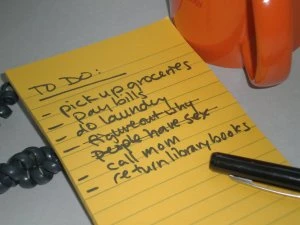
I’m a one for making lists. I make lists on top of lists because my brain is the equivalent of Swiss cheese.

tequila
limes
salsa
chips
cheese
beer nuts

You know…the hardcore staples that keep a black-hearted editor running. A shopping list isn’t meant to convey emotion (other than deciding how many bottles of tequila are required), so you put the bare minimum into your list. Just the facts, ma’am.

Character Description

What you want to avoid is allowing that shopping list into your writing. And believe me, it sneaks in a lot without you even being aware of it. Take character appearances, for example. Your mind’s eye has Jane as a brunette, long wavy hair, and big brown eyes. She’s about 5’4″, average build, with the knobbiest knees this side of the Rockies. She’s wearing a brown sweater over black pants and matching black belt with knee-high boots. And that is exactly how you write it.

You snoozing off yet? I am. Unfortunately, I see a lot. For starters, is it absolutely necessary to describe them in full detail? If not, then leave something to the reader’s imagination. If you’re hellbent to describe them, then let it out in dribs and drabs. Don’t knock us over the head with a blow-by-blow description of their eyes, weight, hairstyle, clothing, blah, blah, blah.

Reveal the shopping list of characteristics slowly by peppering them inside those multifunctional dialog tags.

She glared at him through icy blue eyes. “You realize you ate the last Twinkie, don’t you? Now I have to kill you.”

or

If Jack had an Achille’s heel, it was a woman with thick blond hair. One look at Ann, and he knew he was toast.

or

“You think just because you have eyes the color coal and shoulders that could balance my entire lunch tray, that I’m going to melt into a puddle at those boats you call feet?”

or

His height was a genetic offering from his father’s side of the family.

The thing you want to avoid is overkill, and that’s what shopping lists do. Readers don’t need the complete lowdown of a character’s appearance that includes the number of folds under someone’s chin, or the number of buttons on their shirt.

Narrative

The Shopping List doesn’t dedicate itself to character descriptions. Oh noooo….they insinuate themselves into the narrative as well, and yield boring results.

The beagle felt like she was going to die. She’d spent the entire day answering phones. She also filed. All she wanted was a nap. She could have used a margarita, too. Her boss, Overworked and Underpaid Editor didn’t understand. She was a slave driver.

You could easily turn these into bullet points and create a nice dull little shopping list. Nothing pulls the reader in because it lacks voice, emotion, or finesse. Here it is again:

The beagle had spent the entire day answering the phones and filing, and felt like she was going to die. More than anything, she needed a margarita and a nap, but her boss, Overworked and Underpaid Editor, was a slave driver with the personality of a lima bean. What’s worse, is the woman had sworn off booze. The beagle couldn’t help but wonder what self-respecting editor gives up a healthy margarita or chocolate martini? Nothing worse than a teetotaler boss.

Shopping lists are a bit of a cop out. Anyone can take a conglomeration of sentences and slap them into a paragraph. It takes talent to weave the important elements of your character’s appearance into the narrative or dialog, or to write a darn good bunch of paragraphs that transition nicely into each other.

Transitional Sentences

And speaking of those little transitional sentences, I’ve noticed that a collection of sentences (a shopping list), invariably lacks good transitional sentences that slide seamlessly into the next paragraph because there isn’t anything connecting the dots. A shopping list is usually made up of items that share no comment thread. The result is a choppy, gooey mess.

Write smart, and I guarantee that you won’t bore your readers…and your editor will dance on barroom tables and sing with glee. Or is that just me?


An Author’s Christmas Wish…

December 9, 2012

santa-author


What Do Your Cerebral File Cabinets Look Like?

December 7, 2012

disorganized

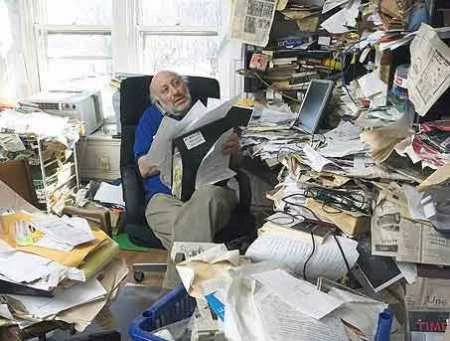
If someone took a tour through my cerebral cortex, they’d find open cabinets with my Vickie Secrets flung far and wide, some errant wisps of paper that need filing, and endless manuscripts awaiting my attention. In short, the inside of my brain is a disaster…but it’s a far sight better than the beagle’s, whose cabinets are filled with empty tequila bottles. But as disorganized as my cerebral files are, I somehow manage to paint a sentient thought or two when it comes to writing. But that doesn’t necessarily extend to everyone.

There are times during the editing process when I see a shortcut between what’s in the author’s head and what actually made it to cyber paper. This takes the form of an incomplete scene that’s crying out for more explanation. For example, you can’t have a scene about being arrested and not tell the reader what the infraction is, or having a surgery without explaining what kind of surgery and why it’s needed.

The result of these shortcuts is that the reader will begin asking questions…which takes them out of your story. If you shortcut too much, they’ll toss your book (or manuscript) across the room.

Your scenes need to be developed enough in order to satisfy your reader and keep them from asking basic questions. Of course, many stories are meant to confound and confuse because it’s the nature of the plot. But you can’t leave basics out. If your character is crossing the room, and in the next breath is pulling weeds in the garden, then your readers won’t be very happy. Neither will your editor.

The problem is that authors know their stories so well, that they don’t realize they haven’t connected all the dots. So think about cleaning up your cerebral file cabinets so you can arrange your thoughts in a logical, organized manner that won’t leave your readers scratching their heads, wondering where the lady with three belly buttons fits into your story.


Blending it all together – there’s one important ingredient…

December 5, 2012

I wish I could say I took this pic, but I didn’t. However, it does look eerily similar to the road we live on, so I’ll go with that. I’ve never experienced Fall like this, and seeing the leaves turning colors makes me think Mother Nature has a flair for art as she blends all the colors together in such a way that it takes my breath away.

I’m sure if the Cosmic Muffin handed Mother Nature an edict that said, “Thou shalt make bitchen colors on the leaves during Autumn,” I’m sure she would have handed in her wand and stuck to determining whether she was eating . But I think the old broad does pretty well with the leaves. They all just fit together.

I read a partial manuscript the other day that has those same ingredients. In fact, I really wanted to reject the work because I’m concerned about the topic being too impacted. But I couldn’t help myself. In spite of the fact that it’s a category that’s been written about to ad nauseum, this writer sucked me in. She blended in pace, flow, character development into a lovely pallet of gorgeosity. And let’s not forget VOICE…which is a big ticket item for me. Just like those trees that explode red in Fall and make you pull off the road just to soak it in, this author has a distinct color all her own that screams genius.

The problem with saying a story blends together is that it sounds simplistic. I can’t put my finger on any one detail that says I must have this book. In fact, t I probably shouldn’t have this book because I’m not sure it has the legs to swim to the top of a very big heap. There should be a section in the bookstores and libraries titled, “Yeah, it makes no sense to read this book, but do it anyway because it’s all that and more.”

So much of writing is by feel. You can take lessons on how to create a tantalizing plot, keeping tension in all the right places, making sure your characters are delicious, but none of it means you’ll actually accomplish your goal. Why? Because taste is subjective. Just because I love something doesn’t mean anyone else will. That’s why I have a team who can bring me down to earth when I go all gooshy over something. They are my wet boogers who say, “Yah, Pricey, you love the book. How you gonna sell it?”

And that’s what it comes down to. Will it sell in Peoria? as the saying goes. Something can be wonderful, but if I can’t put my finger on the exact elements that will turn readers’ heads, then it’s a no-go. Even if you self pub it, you’re still facing the same hill of selling your book – probably more because you’ll be a team of one versus a team of hundreds.

So when you’re blending all your lovely bits together, be sure you understand your book’s marketability. It’s the last ingredient that’s the difference between “SOLD!” and “I really want this, but I can’t take it.”


Follow

Get every new post delivered to your Inbox.

Join 1,261 other followers

Build a website with WordPress.com
%d bloggers like this: