Stories need narrative in order to shuffle our characters around, set the scene, the tone, and add in any vital backstory.
Ok, let me rephrase that. Stories need fabulous narrative…
Of late, I’ve been disappointed in the narratives of submissions that have crossed my desk because they’ve been as dry as my attempts at baking. Their character development and dialog may be wonderful things of art, but they fall flat when it comes to the narrative. This makes for lopsided reading.
Just as I’ve bleated on like a goat on crack about how dialog should be utilized to its max, the narrative can’t be ignored because it’s part and parcel of keeping your readers fully engaged. Sure, I get it; lots of writers want to keep the narrative low key so as not to get in the way of the story. But what’s wrong with flavor and spice? This is where you create your unique voice.
Voice
So what do I mean by that? Voice is where you create a distinct writing style. I’ve had people tell me they can recognize my writing from a mile away because it’s distinct. I’m still not sure whether that’s a good thing or a bad thing, but evidently, I write with a certain style that readers recognize as being uniquely mine.
The one opportunity you must not let pass by is creating your own distinct voice. For instance, your main character may wake up in the morning to the peels of his alarm clock, or you can spice it up a bit. Here’s the beginning paragraph of my novel.
Example 1 -What I could have written:
Erik woke up to the sounds of his alarm clock and got out of bed.
Example 2 – What I wrote:
“WAKE UP AND GET YOUR ASS OUT OF BED.” bellowed the mechanical voice emanating from the alarm clock that resided on Erik’s side of the bed. The clock, a birthday gift from his best friend, Mark, never failed to make him stifle a laugh when turning it off. There were several scratches and dents on the side attesting to Ann’s dismal failure at finding anything humorous at five o’clock in the morning. He swung his long legs out of bed, glancing back at Ann’s still comatose figure. “Sure you don’t want to come with me?” he whispered in her ear, already knowing the answer.
“I’d rather slit my wrists,” came the groggy, muffled reply.
My aim was to grab readers at the get-go in order to give the reader a quick feel for Erik’s general nature…and that’s the lovely gift of narrative voice. If I had used the first sentence, the reader wouldn’t have any feel for the character, so it becomes harder to pull the reader into the story. Obviously, I’m being extreme in these examples, but I’ve seen too many manuscripts that were written in the flavor of the first example. Avoid vanilla writing. You want to be memorable and distinct…which is what editors are looking for.
Your MC can go outside to pick up the morning newspaper off his driveway, or he can play the guessing game with the carrier, and wonder what clever place the carrier hid the paper. Is it necessary? Nope. But interesting narratives are like Christmas morning, where each gift you open is a surprise. I’ve read books whose narratives were so amazing that I actually slowed down my reading because I didn’t want to finish it too soon.
That’s narrative voice, baby.
Content/Length
So the question is, what do you write to enhance your narrative voice, and how long should it be? First off, there are no rules. Yay! You’re writing by gut and feel, so you have to noodle around with your writing to find your literary comfort zone. For instance, I lean toward goofiness, so my writing tends to include a lot of irreverent thoughts…like the alarm clock or a carrier hiding the newspaper. It’s just how I’m wired.
How are you wired? Figure that out, and write so your narrative supports your literary comfort zone.
My other advice is to keep it short and sweet. Blather on for too long about something, and it veers the story off course and makes the reader’s eyes glaze over. It’s important to keep them caring, and tidbits here and there in the narrative accomplish this goal.
I’ve had writers struggle with this concept, and my suggestion is that they refer to their everyday lives. We aren’t automatons, and we don’t get up, do our morning thing, go to work, come home, and go to sleep. We do a million things and have a gajillion thoughts filter through our cerebral hard drives all the time…so tap into that.
Put yourself in your character’s shoes. What thoughts would run through his head, or what actions would he take when doing some small action, like getting out of bed? Does he jump out of bed with a song busting out of his lungs, or does he slither out from the sheets with all the excitement of a tax audit? Give it some flavor.
In a word, use your imagination, but use your own experiences to tap into when you want to expand on your narrative. Writers are observers, by nature, so exploit all your observations in order to spice up your narrative voice.
Balance
Like everything else, narrative voice is about balance. I’ve seen cases where authors adored their writing so much, they got carried away. For example, I read a book (pubbed by one of the Big 6…er…Big 5) where the author took three pages to describe the moon rising. It got to the point where I was eyeing my kitchen knives, wondering which to choose in order to slice and dice the book. Mind you, the narrative was lovely, but come on…three pages?
So take comfort that it’s not just the new writers who commit narrative voice-ritcide. Now, of course, not every action requires a literary kapow. Sometimes your characters can simply pour a glass of orange juice or walk their dog. It’s your job to look for the appropriate places where it makes sense to add some punch to your narrative.
Take a long look at your writing. Are there places where you’re committing narrative voice-ritcide? Are there places you can create a more interesting, colorful, three-dimensional story while also making your narrative voice a distinct thing of beauty? You can take a lifeless story and make it sing like the angels, and it comes down to narrative voice. Pinky swear.
Now go forth and be brilliant.
Like this:
Like Loading...



 Posted by lynnpricewrites

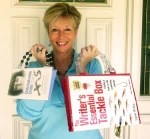
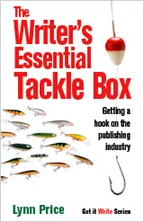 If you want the inside scoop on what floats our boats, The Writer's Essential Tackle Box is a must have.