“I don’t need an agent…”

November 25, 2013

“…because the publishing companies I’m querying don’t require agents.”

Hear me roar. Loudly.

It doesn’t matter whether the publishers you’re querying are open to anyone or not. If they offer you a contract, you need an agent.

Let me say that again.

YOU NEED AN AGENT.

We allow authors to query us directly, but that doesn’t mean I don’t hope and pray that an author I offer a contract to will rush out and get representation. There is nothing worse than trying to negotiate a contract with an inexperienced author. Plain and simple, you simply don’t know what points are negotiable, and what points are hands off.

I’ve seen more deals go south because the inexperienced author screwed the pooch, and the acquiring editor decided drinking poison was preferable to trying to convince an author why she couldn’t have 2,000 free copies.

Don’t make us drink poison. If a publisher offers you a contract, get yourself a good agent…A GOOD AGENT…who can negotiate on your behalf. It is literally the difference between being published, and being told to go forth and multiply with the Pillsbury Dough Boy.


Online Presence: Now Is Too-Late Thirty

November 22, 2013

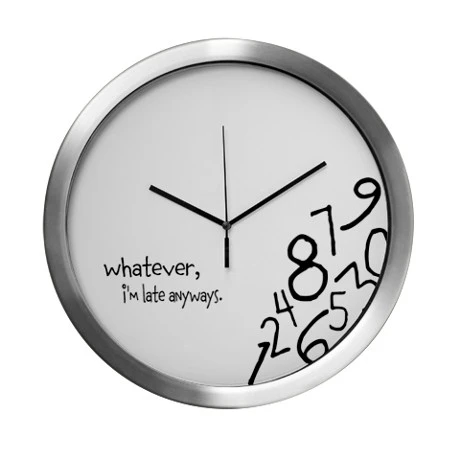
late clockI hate being late. I think it’s a leftover from my childhood when Mom kept insisting I had plenty of time before school. The clocks were wrong, and I was late for school one morning, which nearly made my intestines invert because my first grade teacher was a beast who loved to scream. It didn’t stop there. My brothers were slaggers when it came time for going to church, so I’d always arrive late to Sunday school. There I was, tromping through the door, all eyes scooped up and staried at me as the teacher brought out paper and crayons so I could catch up and draw my own version of Baby Jesus – which always looked more like Elvis riding bareback on a camel.

Every Sunday, as Dad broke all the laws of physics by getting us to church in 5.5 seconds on what in the real world would take 15 minutes, I would sit back in the car plotting my brothers’ painful demise while thinking, “Here we go again, it’s Too-Late Thirty.”

So I’ll readily admit that I have some issues with being late, which means that I recognize it as easily as the Rescue Beagles recognize a fresh margarita at 50 paces.

I see Too-Late Thirty in a lot of query letters and book proposals when they discuss promotion plans, and it sends chills up my spine – and not in a good way. It usually starts like this:

“Once my book is published, I’ll start a blog/Twitter/Facebook page to promote my book.”

No, no, no, no, a gabajillion times no. It’s too late. The prevailing thought is, “If I put up a FB page, Tweet, blog, they will come.” No. They. Won’t. You have to work your Times New Roman off to attract a readership, and it takes a lot of time. The time to be thinking about your online presence as a promotional tool is before your book even sells to a publisher. Preferably while you’re still writing your book. Yah, it takes that long.

And let’s face it, the internet is a huge behemoth that contains gynormous amounts of information, so not only do you need to establish your online presence in plenty of time, but you have to figure out “Who Am I?”

Intent/Message/Tone

You wrote your book with a particular intent, and your online presence is no different. The most popular blogs have a message/tone/intent. They’re consistent in the kind of content they put out.

Humor: Humor is always a great way to capture an audience. Don’t be afraid to use it. The more you make people chuckle over their morning cuppa, the more they’ll look forward to reading your posts. And when your book does come out, your readers will rush to support you. Cha-ching!

Don’t Clash: When I was 10, Mom told me I couldn’t wear my plaid skirt with a polka dot blouse because they didn’t go together. I thought she was daft. As I’ve grown up (ostensibly), Mom can still run circles around me when it comes to knowing fashion. It’s the same with your blog/FB/Tweets. If your writing style of your book is vastly different to your blog/Tweets/FB page, then you’re creating a disconnect. Of course, I’m talking in generalities.

Boring: An author I met awhile back has a brilliant book – it hits all the emotional highs with a delicious balance of humor and throat-grabby “holy crap” moments. His blog is about the most boring thing I’ve ever seen because all he ever does is talk about statistics and quoting other articles. Predictably, his blog has icicles on its little nose because he’s regurgitating boring stuff. He’s not sharing his own amazing story. I told him if he talked about his personal experiences, he’d have something to work with. Equally predictably, his sales are quite low.

Self-effacing: Is there anything more attractive than someone who’s not afraid to poke fun at their sillier moments? Let’s face it, we all have them, right? What you’re accomplishing by being self-effacing is that you’re showing your human side and allowing your readers to say, “Oh yeah, totally been there, done that.”

Create a Community Feel

There’s nothing more attractive than blogs that say, “Hey, you’re not alone.” Regardless of the tone/theme – be it writing woes, dependence, health issues, slogging through school, or romance – there are a lot of other people who’ve traveled the same road. Include your readers and ask them to share their experiences. For instance, there’s a great Facebook page called “I Love Beagles,” and it’s wildly popular because beagle lovers (not known for being particularly normal) love sharing their stories about this insane breed.

What elements of your book can create a community feel? The idea is to present material that has your readers itching to leave a comment. This means they’re engaged. Engaged = good.

Branching Out/Capturing Attention

Now that you’ve figured out how you want to project your online presence, you’re wondering how to get readers. Easiest way is to google other blogs that compare to yours. Get active on those blogs by giving thoughtful comments. People will link on your name and see your blog – and will mosey on over to see what you have to say. Now you see why this all takes time.

Also, be sure to use tags and do the rss feed thingy. When people google, your blog may show up.

The long and short of this is, if you’re going to go to the trouble of establishing an online presence (and I think it’s a good idea), then it makes sense to do it right, and do it early. Too-Late Thirty puts you constantly behind, and you’re forever playing catch-up…and your book won’t wait. In short, have fun with your online presence. Be you.


Publishing Contract – It’s Gotta Be Right For Both Parties

November 20, 2013

CrazyThe story plays itself out over and over again. A writer realizes the publishing contract he signed will guarantee that his book will circle the drain and never see the light of day. In fact, signing a horrible contract is akin to gnawing off his own foot. Why? Because the contract is a bulletproof piece of drek that guarantees the publisher will do…wait for it…absolutely nothing.

No ARCs will be mailed to reviewers
No editing will be done – unless you consider checking for punctuation as editing
No marketing or promotion will be provided
They have no distribution
They have no sales teams
They have no store placement

I’m not sure why authors sign these contracts. Well, yes I do. The desire to be published is powerful, and it’s intoxicating to hear that someone wants you. It’s flattering. It doesn’t take much for authors to dream of purchasing Pacific islands and a lifetime supply of Twinkies. However, that drug wears off and somewhere between the production process and publication, reality sets in. And it’s not pretty.

Here’s the thing; you have to have a really good reason for signing with anyone, and it’s because they can do for you what you can’t do for yourself. If the only thing a publisher is doing is putting your manuscript into a trade paperback format, then this isn’t a good deal. It’s a ripoff. If you’re told you’ll be responsible for all the advertising, marketing and promotion…and getting it into the store (which would be only on a consignment basis), then this is not a publishing deal – it’s indentured slavery.

So really, a bunion would make a bigger impact than a publisher of this type – and there are many of them around.

Check your contract. Check the publisher. Check the bookstores shelves. Buy a couple of their books to check the editing. Those will tell you whether someone is the real deal or a used car salesman. After all, talk is cheap. Actions speak volumes.

It’s gotta be right for you. A solid publisher has the ability to propel you into the marketplace and get your book widely distributed into bookstores and national accounts. If they don’t have that ability, then why are you considering them? Yeah, it’s that simple.


OFF THE STREET: REDEMPTION is in Da House!

November 18, 2013

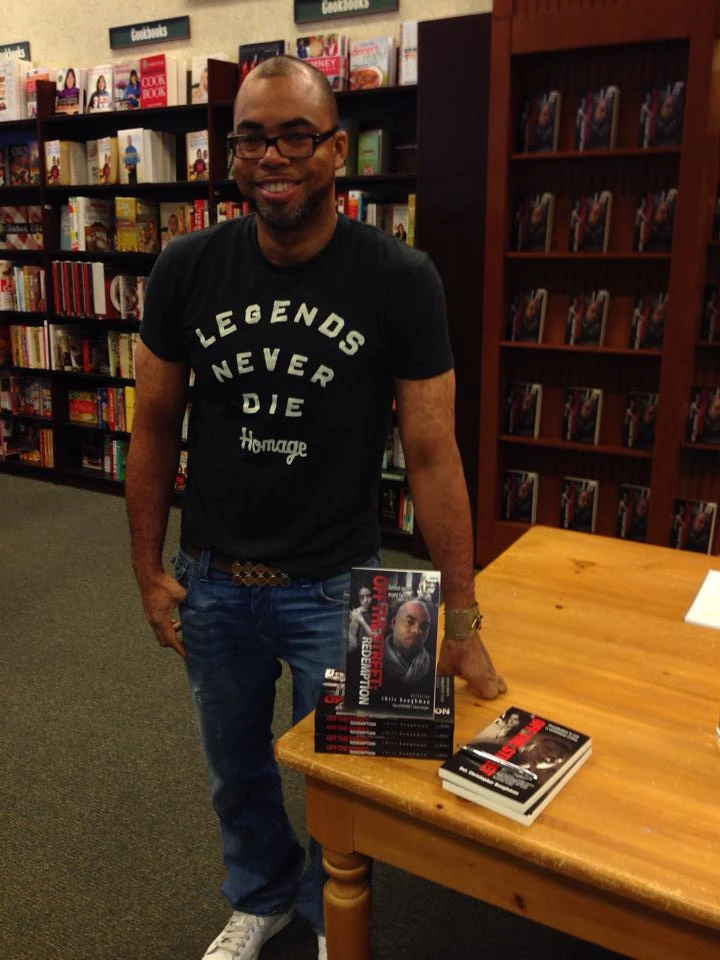
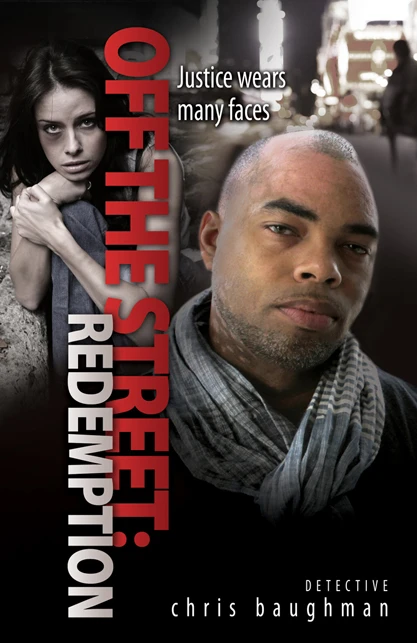
Chris booksigningChris Baughman is full of awesome. He’s an awesome sandwich. No…he’s an awesome banquet. Chris’ book signing at the Las Vegas B&N this past Saturday was a resounding success.

His new book OFF THE STREET: REDEMPTION (B&N link) had chills running up and down my spine because of the lengths he and his PIT unit (Pandering Investigative Team) do to rescue women who have been brutally victimized by the dirtbags who sell them to the highest bidder – even if it means jeopardizing the case against these dirtbags. With Chris, the women’s safety and well-being always come first.

Human trafficking is an incredibly ugly business, and Chris wades through the muck with grace and some of the most amazing detective skills I’ve ever seen. REDEMPTION is a gritty case that pits Chris against Mario Davis, someone from his old neighborhood, someone he looked up to as a fellow basketball player at his high school. Mario had it what it took to escape their rough Las Vegas neighborhood, but his life took a vicious U-turn, which brought him to Chris’ attention after Mario severely beat two of his stable of ten women. Chris needs to dig up the secrets and lies in order to build a case against Mario, yet do everything he can to protect the victims.

REDEMPTION is a story about coping with the brutality of the job, saving the victims, and saving a piece of Chris’ soul along the way. This book blew my doors off. Not many of us could do the job Chris does, and I give him a huge huzzah for taking on the cases that no one else can.

If that’s not enough, Chris is co-host of the new show SLAVE HUNTER on MSNBC starting December 1. See what I mean by awesome?


Second Book-itis

November 15, 2013
im sorry

Oh shit.

The memory is clear, as if it happened yesterday. My buddy was crying in her chardonnay over having her second book kicked out by her editor. I tried to console her. “Your first book was nothing short of a masterpiece, so you set the bar pretty high in terms of what your editor expects from you.”

And that’s it in a nutshell for any of you who may be experiencing Book Two-itis. Your editor picked you up because your writing is amazing, so your literary rockitude is all she knows. If you turn in anything less than that, she’s going to wonder what happened.Are you a one book wonder, or are you a writer with a career?

It’s devastating to know how hard you’ve worked on your book only to be told your attempt wasn’t good enough. Eeech. So you begin second-guessing yourself. “Do I suck?”…which is exactly what my friend asked.

No, she didn’t suck, and neither do you. And here’s why…

Time

There’s nothing quite like writing your first book. There’s no pressure, no deadlines, so you can take as long as you want. You can rewrite, edit, revise, and massage every sentence until it’s airtight. But now that you have a book deal, your world has changed – be it a 1 book or 2-3 book deal, .

Now it’s all about deadlines. Since your focus has been on writing and selling Book 1, you may not have much more than a working idea or outline for your subsequent books – and now the clock is ticking. You don’t have the gift of time as you did with Book 1, which means the process is entirely different. Now you’re not writing for just you – you’re hoping like hell your editor will embrace Book 2 with screeches of “You’re brilliant!”

Comparison

A helpful thing to remember is that you’re going to be compared to your first book – which your editor loved. How many of have read someone’s Book 2 and felt it was a huge letdown? Once you’ve burst on the scene with a blazin’ book, it’s hard to recreate that level of fabulosity. Your editor is expecting you to hit it out of the park with every subsequent book. Anything less, and your editor is worrying about sales impact.

Track Record

With your first book out, you have a track record, and your editor is checking your sales closely to see what kind of traction you have – or are gaining. If your sales are doing well, then your editor has higher expectations of those subsequent books. You’re now a brand.

Knowing is Half the Battle

This is a heady time. You’ve wanted this publishing deal from the time you wrote your opening line. But any multi-published author will tell you that Book 2 is the hardest because you’re trying to duplicate what’s already been done. Some hit, some miss. If your Book 2 is a miss with your editor, I recommend having a good cry, tip back a few if that floats your boat. After that, increase your BIC Index (Butt In Chair) and write. You’re in the big leagues now, and you’ve learned the valuable less that publishing is nothing less than unpredictable.

The good news is that you’re still sitting at the grownup table, so have a discussion with your agent, your editor, and your beta readers to see if there’s anything salvageable. If not, start over because, hey, thar be more than one great book in you. And yes, you’ll survive it. My buddy did. Her experience forced her to dig deep, and her next book apexed her first book.

Are you struggling with Book 2?


Negotiating Your Publishing Contract

November 11, 2013
You no spamma me...got it?

“Don’t even think of negotiating your own contract.”

The immediate response is DON’T. If you want to watch an editor mainline unleaded gas, tell her that you know nothing about the publishing industry BEFORE digging in to negotiate your own contract. Uh huh…been there, and my eyes bled.

I’m not talking to you multi-pubbed authors who have been knocking around the industry for years. I’m talking about the new authors who just completed their manuscripts and the ink on THE END is still wet. New authors don’t know what elements of a contract are negotiable and what’s inviolate, so your negotiating points may send the acquiring editor screaming for the hills. For example, publishers won’t agree to your keeping e-book rights, allowing you final approval on your cover art and manuscript edits, or allowing you to have thousands of free books that you’ll be allowed to sell.

These are deal killers because the publisher is buying the rights to your manuscript and assuming all the financial responsibilities and risk of production, marketing and promotion, and distribution, and they won’t agree to giving you all the artistic control. What it says is that you don’t trust the publisher. If that’s the case, then why sign with them? Ostensibly, you’re signing with a company who can do for your book that you can’t accomplish on your own. It’s counter-intuitive for a publisher to agree to anything that puts their investment at risk, or puts them in a position of competing against their own author.

If you’re offered a publishing contract, get thee to an agent asap, and let them do the heavy lifting. I know, you’re wondering if you can have your attorney look over the contract, and I say an emphatic NO. Literary contracts are a different beast than other contracts, and I’ve seen lawyers unfamiliar with the literary world agree to rotten contracts. Or they try to argue points that no publisher with a firing synapse would agree to.

Agents, on the other hand, do this for a living. No one understands publishing contracts better than a good literary agent. If you don’t have an agent at the time of a contract offer, you’ll probably find a willing agent if you tell them you have an offer on the table and need representation. I’ve experienced this many times, and I’m always grateful because I know my sobriety and sanity will be granted yet another reprieve.

The end run here is that you’ve taken time to write your story, and you don’t want to lose your book to a predatory contract, or  because you insisted on things that are highly irregular to the industry. The contract is the most important bridge between you, your story, and the marketplace, so don’t take this step lightly. Get an agent. Pronto.


Writers – A Different Breed

November 6, 2013

writers brain

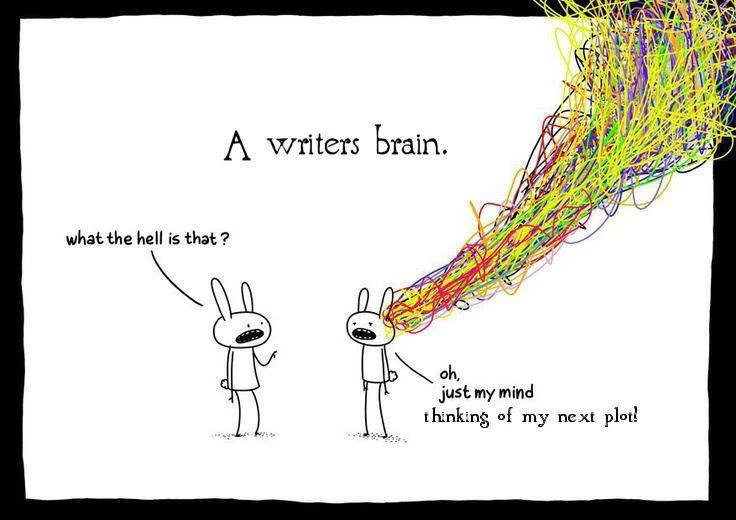
I remember the occasion well, even though it was years ago. The hubs and I were out to dinner at a fancy schmancy restaurant. The sun was sinking into the horizon, painting the waves in gold. Surfers were catching their final rides before heading home. Romantic doesn’t even begin to describe it. And there I was…in another world.

Hubs: Lynnie? Helloooooo, anyone home?

Lynn: <stares off in a fugue state>

Hubs: <picks up butter knife and clangs it on my wine glass> Hey, guess what? Antonio Banderas just walked in asking for a brilliant editor for his new book.

Lynn: <mentioning Antonio gets her attention, and she endures neck spasms looking for his backside> You dog. Antonio wouldn’t come to Laguna Beach without telling me. It’s the law, you know.

Hubs: Um yeah, I’m tired of holding a one-way conversation. You’re as exciting as a bowl of warm fish.

And there it was. A fabulous dinner in a fabulous setting, with a fabulous hubby, and I’m thinking of how I’m going to have to kill one of my characters…and it grieves me to no end. I’m almost in tears because I’ve come to adore this character. My muse’s timing couldn’t be worse, but my dear hubs is patient and waits for my inner plotting situates itself.

I’ve learned that ideas hit on their own schedule. They don’t wait until I’m at my computer, ready to pen brilliant tomes. They strike at weddings, fancy dinners, driving to the vet, shopping for jeans, or at 3 a.m.

I’ve also learned that we owe a platter of gratitude to those who suffer because they’re crazy enough to live with us. They’ve learned to inhale that coconut shrimp so we can madly scribble down a delicious plot twist on their cocktail napkin. They’ve learned to clarify our conversations about someone dying by making sure we’re talking about a character and not a real person.

Writers are a different breed, and I salute those brave souls who love us in spite of our passions…and insanity.

What are some of your crazier stories about writing and your loved ones that have gotten you into trouble?


Follow

Get every new post delivered to your Inbox.

Join 1,261 other followers

Build a website with WordPress.com
%d bloggers like this: