It’s time to push aside the less important things and focus on the truly important things.
It’s time to push aside the less important things and focus on the truly important things.
 3 Comments |
  publishing |
  Permalink
 Posted by lynnpricewrites
I lurve me a book with an ending that scratches every literary itch and leaves me spent. After all, endings are the literary caboose to your story. Your writing can be the stuff that bring nations to their knees and beg for a good spanking, but screw up the ending, and it’s, “Book, meet Wall.”
Your literary caboose can’t be taken lightly. Evah.
The good thing is that, like writing, there aren’t any real rules to endings. They can either knock you on your ass, or hint at the how the character’s conflict resolves itself, and they can be equally satisfying.
Balance
I look for endings that, first and foremost, are equally balanced to the story. If I read a thrilling adventure story, then I expect an equally thrilling ending. It’s a lot like my meatloaf dinner (about the only thing I cook well). I need to have an equal amount of mashed potatoes and meatloaf, so I can have a bite of each in one forkful. If it’s out of balance, I can go back and get more of whatever I ran out of. Unfortunately, the reader isn’t as fortunate, so they’ll simply say terrible things about you and throw your book to a couple of ravenous Rescue Beagles. Eeek.
Conflict
To me, an ending that puts the jam in my jelly doughnut is proportional to the conflict. Conflict gets my attention – the bigger, the better because the protagonist has more to lose. So I keep turning the pages to see how it turns out…will the protag get what s/he wants? Given the enormity of the conflict, I’m expecting a good payoff.
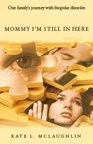 An example of conflict is in Kate McLaughlin’s book MOMMY, I’M STILL IN HERE. Kate’s daughter was diagnosed with one of the most severe cases of bipolar disorder docs had ever seen. Her cycling could happen in a matter of hours instead of days, and her daughter’s behavior threatened hers and her family’s life in the most horrific ways – which kept my heart in my mouth as I flew through the pages.
Because so much was at risk, I expected a huge payday…and I wasn’t disappointed. At. All. In fact, I think it was the first time I finally blinked.
So ask yourself whether your literary caboose is in proportion to the conflict. One shouldn’t overpower the other.
Evokes An Emotional Response
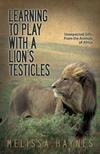 I remember reading Melissa Haynes’ LEARNING TO PLAY WITH A LION’S TESTICLES. I blubbered and laughed my fool head off throughout the entire manuscript. The animals of S. Africa (including the one on two legs) taught her so much about life and coming to terms with her mother’s passing, and I was right there along for the ride. She had me so emotionally invested in her story, that her ending was like landing on a soft cloud. I couldn’t read another book for about a week because I wasn’t ready to leave the aura of her story and the impact it made on me.
Melissa knew exactly how to tap into a reader’s soul (even those of us who don’t posses one), and give it a gentle massage.
Is your book an emotional story? If so, does your ending give the reader an equally emotional response?
Main Character Takes Action
Since your story has a main character and something is happening to him/her, and they’re working toward some kind of outcome, it only goes to reason that the ending would include the main character taking action.
Example:
Rescue Beagle #1 tries to figure out if stealing the ham off the counter is worth the risk of Overworked and Underpaid Editor’s brain blowing up. She decides that not only is it worth it – because ham is oh-so yummy, but that it would be kinda fun to see OW&UP Editor’s brain blow up. So she decides to go for it, and has Rescue Beagle #2 hoist her up on the counter.
The part in red is the action. Without taking any action, the ending – the literary caboose – falls flat.
The Great Hint
That’s not to say that you always see the main character taking action “on screen.” Sometimes a story is equally powerful if the ending hints at the main character’s action – and leaves it up to the reader’s imagination.
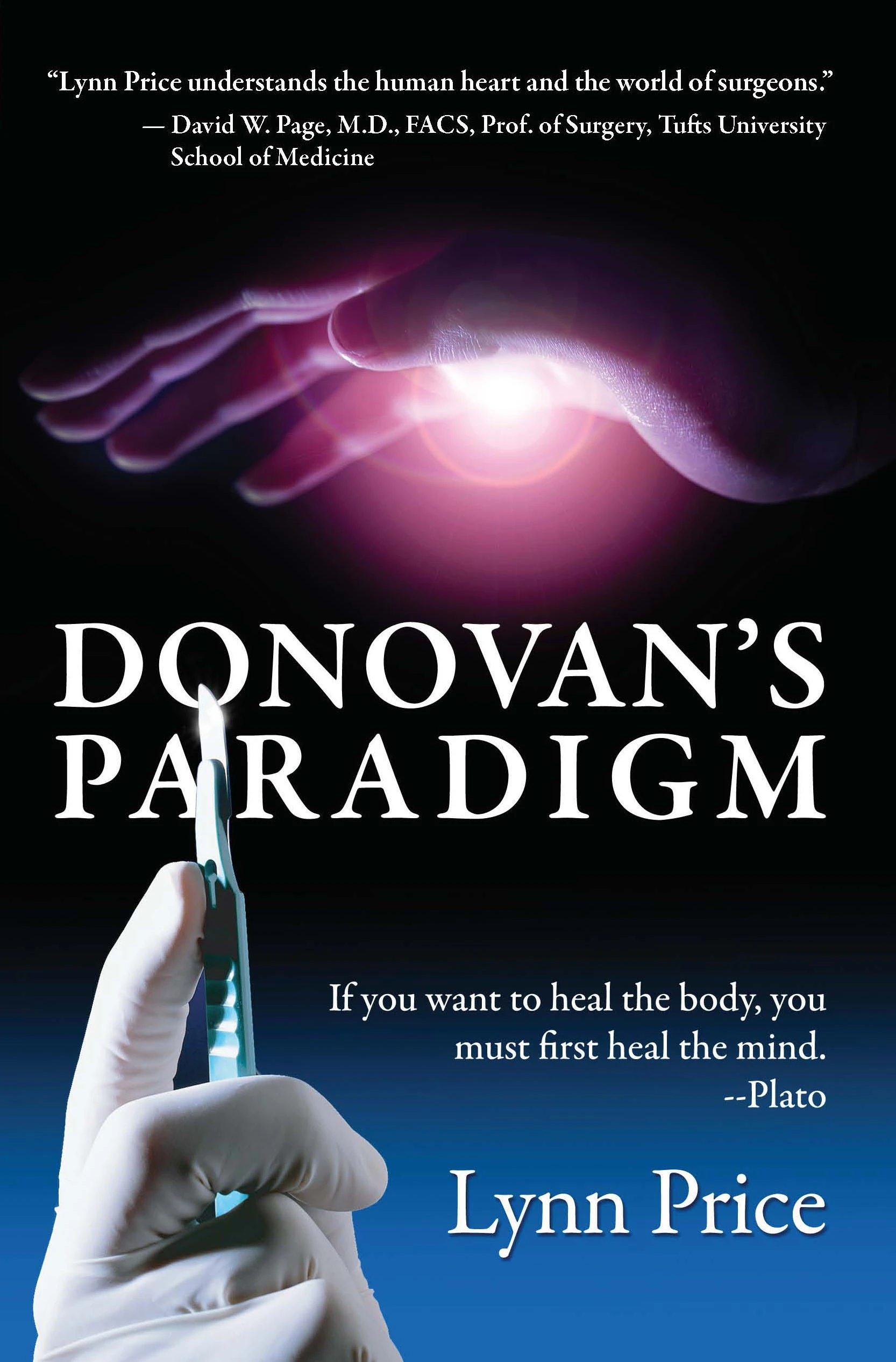 A prime example of that (wee horn tooting here) is with my novel, DONOVAN’S PARADIGM. New surgeon Kim Donovan has gone from crisis after crisis with her new hospital and the lead surgeon (love/hate relationship), and her soul is weary, used up, spent, crapped out. She needs a change of scenery, but it scares the hell out of her because she’s worked so hard to get a new experimental healing program at her hospital, and she’s afraid to let go.
I don’t reveal what action she takes because it felt emotionally right to do so, and actually made for a more powerful ending. Instead, I leave it up to the reader to decide what she does. Hmm…slight spoiler alert, huh? I will say I thought it a great ending.
Is the Hint Ending a good choice for your book? Sometimes writers simply don’t know how to end a story because they don’t want to leave some mystery. This could be a good option to think about.
Showdown Ending
I lurve me a good showdown. You know, where the bad guy, who’s been kicking everyone else’s ass, finally gets his own come-uppance.
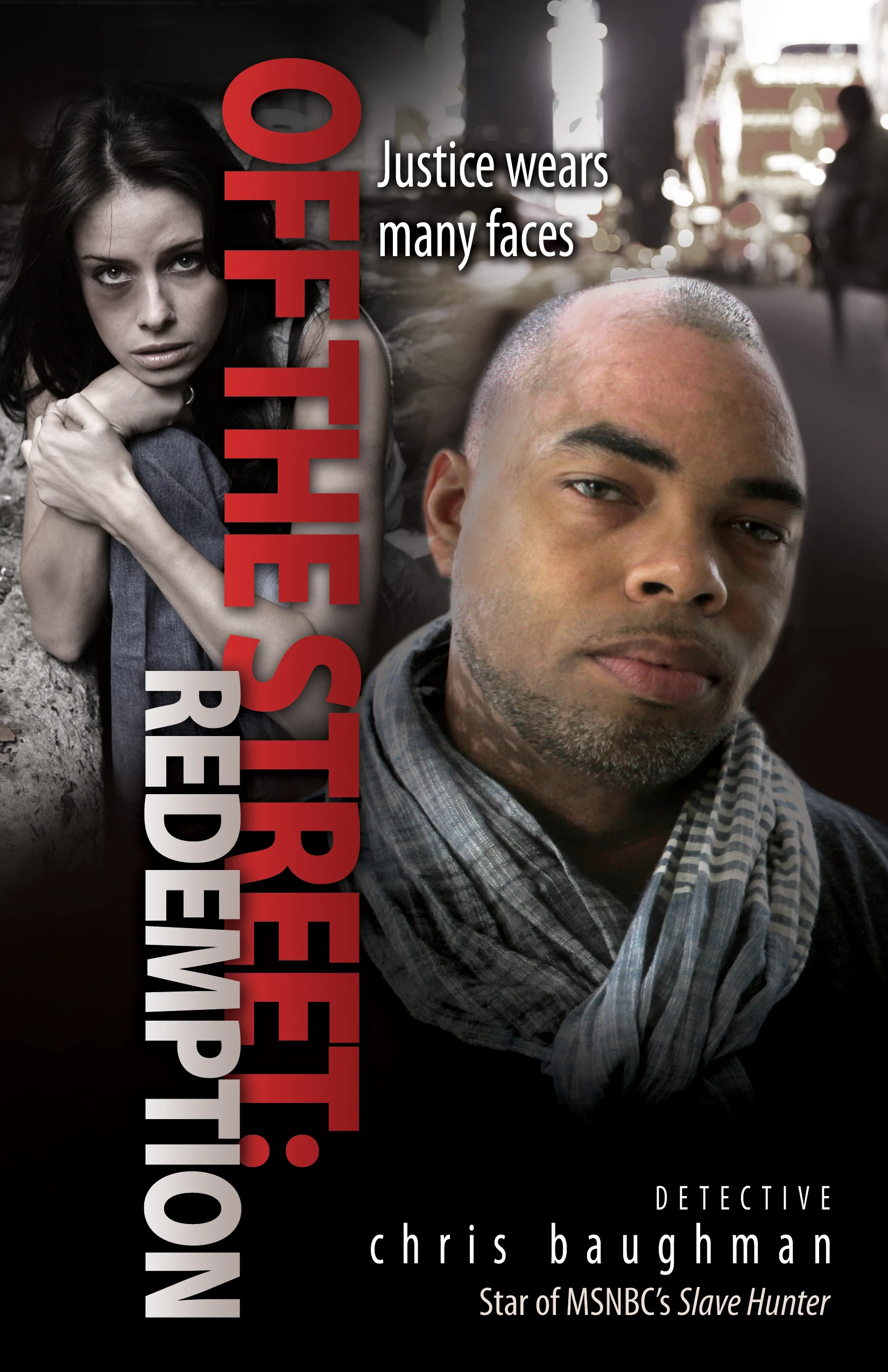 I have to think no further than Chris Baughman’s REDEMPTION – Book 2 of the OFF THE STREET series. Ho-lee-crap. This is one of the most amazing showdown endings I’ve ever read. I remember standing up on my couch and belting out a whoop and screeching, “Oh hell YES!”
The reason I was filled with such bloodlust is because Chris does such an exemplary job at making me hate, hate, hate the pimp in this case – which was actually a kid Chris had gone to high school with <shudder> – by showing the evil that drenches every cell of his pathetic being.
Throughout the whole story, I was itching for Chris to bust this guy’s ass into next year, yet Chris shows admirable, yet frustrating, restraint. But when it becomes absolutely necessary for Chris to take action, the showdown made my intestines explode. I was exhausted, yet exhilarated, when I got to the last page.
Is there a showdown in your book?
Other niggly things that I look for in a satisfying ending also include:
Climax: This is the part that leads to the ending, so it shouldn’t be rushed. Takes your time preparing your reader for the big kapow. Okay, I could get a bit X-rated here to refine the point, but you get the idea. Wham-bam-thank-you-ma’am doesn’t work anywhere.
The Big Kapow – keep it short and sweet: This is the actual ending, the big wrap up. It’s what happened to the main character as a result of the Climax. It’s the closure. And it’s short and sweet – a scene, max. If it dawdles on too long, it cancels out the climax, and the reader gets bored. “Yeah, yeah, I get it, they rode off into the sunset. No need to show that Mr. Cowboy Pants doesn’t know how to light a fire and asks the Western Beauty if she brought a lighter.” That’s for another book. End it and be done with it.
Deus Ex Machina: Oh, how I detest this element. Maybe someone can come up with an example where this was used effectively. But to me, this is what inexperienced writers do, and they’re so contrived that it makes me want to mainline cheap gin. Deus Ex Machina solves a seemingly unsolvable problem by introducing a new character, object, or event, and boOm…instant ending. Blah. I say rip the skin off that suckah. I usually refer to this as the Scooby Doo ending. Double blah.
Logical/Believable: A satisfying ending means that it makes sense. If your main character is a serious surgeon who’s wanted nothing more than to practice medicine and is passionate about incorporating alternative healing methods in her surgical practice, then it makes no sense for her to chuck it all to join the circus and ride elephants. The story HAS to lead the reader to that possibility. Readers are smart, and they have a good feel for what your character would and wouldn’t do. Your ending can have a surprise, but it has to be logical. Check to make sure readers will buy off on your ending.
If you’re stumped on your ending, try messing about with it, using some of the examples I put here. It could be that your literary caboose will have nations falling to their knees and begging for a good spanking.
2 Comments | publishing, Satisfying story endings, writing | Tagged: publishing, satisfying story endings, writing | Permalink
Posted by lynnpricewrites
An acquaintance excitedly told me about the publication of her book and urged me to rush over to her website and look at her cover art which, of course, I did. The little gold seal on the cover caught my eye, and I asked her about it. What’s with this “ABC Publisher Romance Winner”?
“Oh,” she said with no small measure of pride, “I won the contest and was awarded a publishing contract.”
Um. Oh. “Okay, but why is it on your cover?”
“I’m an award-winning author, and this will sell books!”
There were simply no words. It’s ludicrous to think this little gold seal is an amulet whose power will sell books because this is a no-name publisher with no marketing or promotion, no distribution, and no store placement. The only people who will see her book are those who have a book pressed into their hands by…the author.
Stuff like this make my teeth itch because it’s puffery and has zero meaning. Store-front publishers do this stuff to capitalize on the real award winning competitions, like PEN Award, Pulitzer, Man Booker, National Book Award, Edgar Awards, and to a smaller degree, Ben Franklin, and IPPYs, thinking having a little gold seal will sell books.
And it may. I mean, readers could see my acquaintance’s gold seal and believe her book is very important and buy several copies – and for her sake, I hope they do. But this will be limited to those who know her and attend the talks she’s planned around town. There is no grander reach to the reading market by the publisher.
Meanwhile, this acquaintance is calling herself an award-winning author, which I imagine makes her feel like a million bucks. But how does this translate to sales if her publisher sits on their hands and forces her to do all the marketing and promotion?
Authors tell me they’re award winners in their queries, and I check them out. First thing I look for is whether the contests are so obscure that they have no meaning. Can I see how many writers competed in each genre? It’s impossible to give credence to these contests. Now, if you won a Pushcart, then I know you have some writing chops.
My feeling is that these “award winners” by unknown publishers are meant to puff up the author’s ego and to attract more victims writers to their web. Without any marketplace presence, there really isn’t anything to crow about, right? We all love the feeling of being considered exceptional. When I was 10, I was voted “Smelliest Feet” at Y Camp. Now, one would think I’d be embarrassed, but oh nay nay. My distinction awarded me the top bunk, where there was a small rip in the tent at the foot of the bunk. Not only could my feet air out, but it was also the coolest place in the tent during a very hot summer in the mountains. And because it was such a goofy award, I made a lot of friends. Go figure.
But I digress…
My point is that if any of us are going to be awarded for being outstanding, shouldn’t it mean something? Shouldn’t we care about quality and depth, and not just the title? There are great publishers who hold contests from time to time and the winner receives a contract, so I’m not saying writing contests bite the big one. But talk is cheap, so stick with known publishers whose books grace the bookstore shelves.
Which would you rather have? A cover devoid of an Award Winner seal and widely distributed and promoted, or a pretty gold seal on a book that will end up sitting in your garage? …which is what I fear is the fate for this acquaintance of mine.
If you enter a publisher’s writing contest, please make sure that the publisher has the chops to distribute, promote, and market their books. How can you figure that out? Simple. Go to a bookstore. If you see their books on the shelves, then you know they’re walking the walk. Don’t let anyone appeal to your ego, lest you become their victim.
7 Comments | Book contests, publishing | Tagged: Book contests, publishing, writing | Permalink
Posted by lynnpricewrites
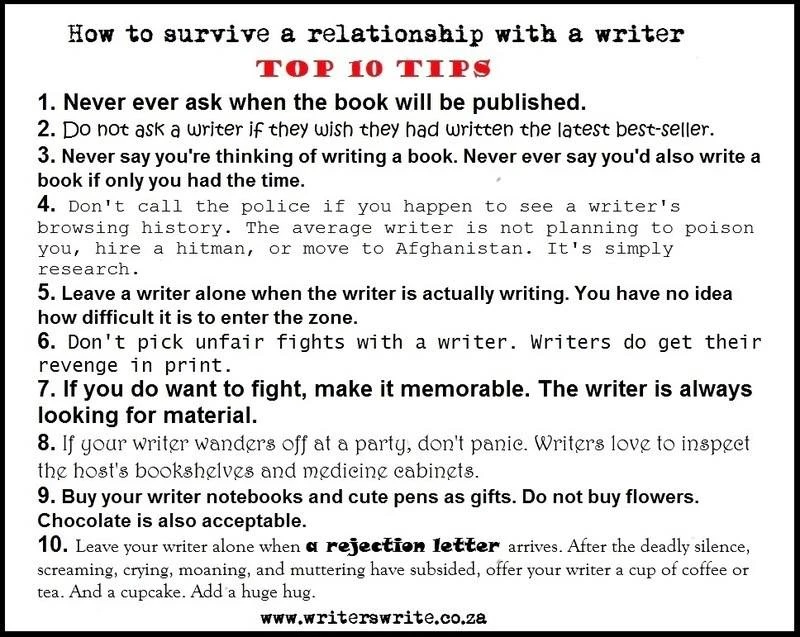 1. This warrants a quick kick to the shins of the person who deigns to ask such a ridiculous question.
2. Personally, I don’t have a problem with this question. I always tell them that I have written the latest bestseller.
3. Ok, I wanna show of hands for those of you who have heard this and wished you had a dime for every time someone uttered this. If we pooled our money together, I bet we could throw one hell of a party.
4. True story: I asked an ER doc about the weirdest thing he’d ever seen while on shift during a full moon, and he regaled me with a story about a patient who presented with a hairdryer up her hoo hoo. Now I had to research that. Hey, don’t look like that…you’d do the same.
5. My family has personal experience with this. Entire conversations took place that I have absolutely no memory of. The fallback in the Price Batcave was, “Was Mom writing when you said that?” It was my get outta jail free card.
6. Oh. Hell. Yes. To that bitchy teller at the bank…Chapter 3 is on you.
7. I…oh…um…yeah, whatever.
8. I can attest that I have NEVER done this. Ever.
9. To this I say, bless Doris Dumrauf and Annette Dashofy and their Christmas gifts…
10. Word.
6 Comments | authors, publishing, writing | Tagged: publishing, writing | Permalink
Posted by lynnpricewrites
You are currently browsing the Behler Blog blog archives for January, 2014.
 Behler Blog
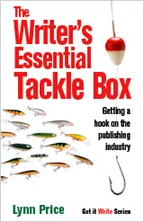 If you want the inside scoop on what floats our boats, The Writer's Essential Tackle Box is a must have.
"Hot Read" in OC Metro Magazine
Also available in Kindle
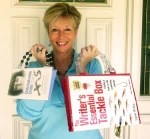
Look, Ma, I haz purses - click for larger view
Want to publicize your awesome new book? Do it with one of the beagle's cover art purses.
Click here for details.
Lynn Price: I am the editorial director for Behler Publications. This blog is about sharing information, advice, observations of various things that cross my desk, and getting a little silly sometimes.
Interview with Lynn Price
Quoting me?
Feel free to quote from my blog so long as you email me for permission, properly attribute me and post my link.
Email
I'm better off with email (lynn-at-behlerpublications.com) since my secretary, an unreliable beagle, normally ignores the phone - pleading the opposable thumbs issue. She's really only good at three things; mixing margaritas, copy editing, and sleeping on the job.
Click on cover for link
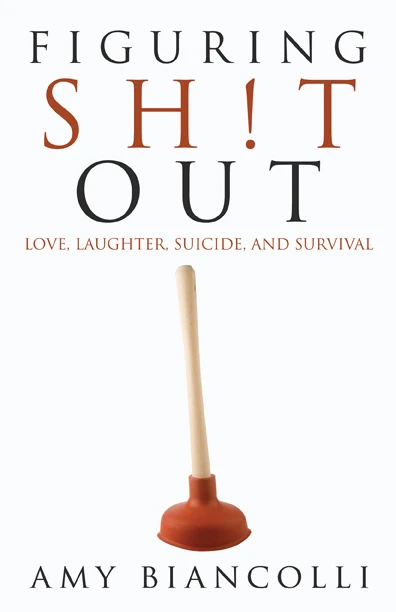 Amy Biancolli slams into widowhood wondering how fix broken doorknobs and dishwashers and discovers how to fix her broken heart.
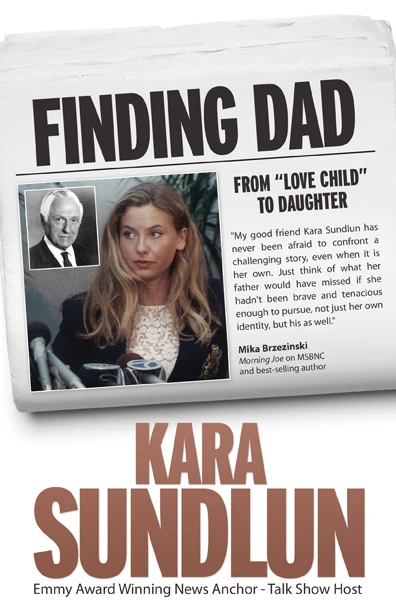 73-year-old, war-hero-business tycoon-politician and a Midwestern high school girl survive the scrutiny of spotlights, and build a loving father-daughter relationship.
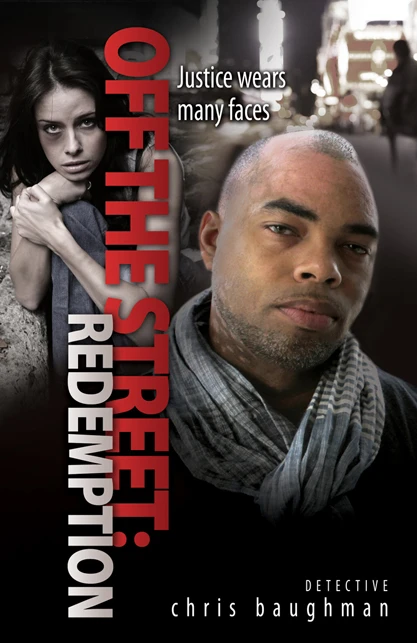 Chris Baughman fears his case against Mario Davis, a sadistic pimp and former high school friend, is slipping away when two brutalized victims are afraid to testify. Through countless hours, Chris fears a verdict that will offer no justice for the two young women. The tough lesson facing Chris is that justice sometimes offers a different kind of justice.
All his life, Scott Damian was imprisoned by the terror of being unable to utter a single word, until he transformed into a highly successful actor and writer. Scott speaks to the heart and soul of a stutterer, and addresses healing, help, and hope for the millions who are similarly afflicted.
Dr. Leahy’s successful techniques help you boost your self-esteem and confidence, decrease anxiety and feelings of helplessness, and develop resilience and strength during your unemployment, and live your life more effectively once you get a job.
Melissa visits Africa for animal conservation, but a cast of unlikely characters teaches her about grief, fear, and life
Heidi’s horrific accident burned over 53% of her body, claimed both her legs, and killed her best friend. Her year of countless surgeries, surviving, pain management, fighting, and loss is incomplete until she finally faces the driver, and Heidi realizes she has one last hurdle; forgiveness.
By all rights, Father Joe Bradley should be dead. If past usage of beer, marijuana, and cocaine didn't do the trick, then certainly dilated cardiomyopathy should have.
Moving memoir about unconditional love and blunt honesty that defines a new normal for Heart Couple, Brian & Patty O'Mara-Croft.
Stirring memoir byf Ann Meyers Drysdale's and her winning attitude of achievement and happiness
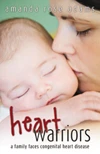
Amanda Adams' passionate and riveting story of what it means to be a Heart Mom for her son, Liam, whose 12 surgeries marked the first 8 years of his life.