Your Narrative – Is Your Ignition Switch in the ON Position?

May 19, 2014

ignition

Lots of stories – fiction and nonfiction – have characters who undergo some sort of change. Like in real life, characters don’t normally experience something and punch through on the other side completely unaffected. Those experiences (basically the plot of your story) is what alters their way of looking at themselves and the world around them.

Transformation.

In a writer’s perfect world, the character’s evolution and plot resolution come together like the Rescue Beagles and margaritas. But there are times when stories become unbalanced, and one overtakes the other. When this happens, it’s because the literary ignition switch is in the OFF position.

Sure sure, I see you scratching your head and cursing me for being confusing – so let me offer an example. I recently read a story about a man who lost his father and decides to go on a surfing Walkabout. Totally get that…when something horrible happens, escaping the confines of the everyday can be an attractive solution. The problem was that the author spent most of his time in his own head with long lyrical and esoteric passages of talking to nature and the waves, asking for answers – but he never fully developed the relationship between him and his father – his humor, his wisdom, his love for his son, and sadness knowing he was dying. The result was that I couldn’t appreciate the author’s sense of loss; the achingly long narratives; or the journey itself. In fact, there was very little attention paid to the actual physicality of the surf Walkabout, so he could have easily stayed home and knit toilet paper doilies,  replacing the surf and sand for knitting needles.

In this case, the key wasn’t even in the ignition, and the action was AWOL.

If you’re going to take some sort of action (walkabout, live on a boat, join the Hari Krishnas/join a group of space trash collectors) due to an igniting experience (divorce/death/threat to world peace/alien invasion), then it’s vital readers understand how influential the ignition and action are in altering you/your character’s life.

When writers strike a perfect balance between cause and effect/affect – ignition/action, then I can happily follow them into the depths of hell because I get it. I feel what they’re going through, so I’m silently sobbing/cheering them on to find their happy place, and I appreciate the lengths they went through (walkabout, live on a boat, join the Hari Krishnas/join a group of space trash collectors) to find equanimity. It’s impossible to have one without the other. Write without the ignition in the ON position, and your readers will toss your book against a wall.

How about your story? Is your literary ignition is on? If so, how? Is your character’s inner journey in balance with the plot?



Hanging On – The Surefire Way to Get Your Editor to Kill You

May 16, 2014

frustrated

So I’m out here in SoCal at the mo visiting friends/family/going to my future d-i-l’s bridal shower – squee! – and cleaning out our house so we can get it ready to rent out. It’s amazing the amount of detritus you hoard over the years. I think the attic alone could appoint several abodes.

There are the trophies the kids won, the drawings and scratching from early years in school…old baby clothes – including one very stained baby USC sweater…it’s hard to let go. There’s so much I want to keep, but I don’t have room for it all. And where would it all go? It’s not like I’d put them out on display – so is my desire to keep them a matter of really needing them or because they’ve wrapped themselves around my heart, even though they serve no purpose? I mean, the stained glass paper art is ripped to shreds, but I remember my son bringing it home, and I hung it on the fridge until it was replaced by another kid’s attempts at Picasso.

Same goes for the old pictures of my daughter’s softball days…a conglomeration of toothy 8-yr-old girls, wearing their uniforms and freckles – ready for battle. It’s a reminder of younger days, where she taught herself to pitch – and proceeded to either strike girls out with the arm of a heat-seeking missile or bean them hard enough so they had to limp to first base. Our motto: If you’re gonna walk ‘em, make ‘em limp.

How do I throw this stuff out? It’s fecking hard, I tell you. It’s the same for writing. You write brilliant tomes and fall in love with every single word. You send those loving words off to your editor…where those soulless, heartless harbingers of evil rip the snot out of them by saying, “Um, this doesn’t have anything to do with this scene, or the plot, for that matter.”

WHAT?? Kill. Your. Darlings? Unholy mother of banshees…why don’t we editors just run you through with a javelin while we’re at it? Could it be any more painful? Alas, we know it hurts. It hurts ‘cos you wrote it, so we expect the reply: No No No No…not gonna do it! Can’t do it.

Oh. Yes. You. Will. You will because you want your finished product to be strong and beautiful – and your editor has something you don’t: an unbiased eye. Hanging on won’t serve you or your book. Be willing to let go.

There’s also the pain of letting go of your finished manuscript. It’s a test of wills. Your editor wants to get it off to the printer. You want to tweak, rewrite, ponder, and hang on ’til it’s right. By this time, the moon has threatened to fall from the sky. You can’t agonize anymore about whether it’s perfect because, know what? – you’ll never be convinced it’s perfect. If allowed, you’ll continue to rewrite, re-think, rehash every steenkin’ word until your editor sends out a hit team to prep you for cement shoes.

You can’t hang on forever – you gotta let go. And that’s hard – I get it. Your book will be out there for-ev-er, and you don’t want to cringe four years later because that ONE word should have been “belly jelly” instead of “muck.” But like the dust on all the stuff in the attic, you’re gonna sneeze so much that you need to give it up because there simply isn’t enough Kleenex to continue blowing your nose.

I can’t repair the torn up stained glass picture or go back in time to when my kids were 8 and wore braces and skinned knees. I gotta move on, because I need to live in the now. And if you ever want to see your book on the shelves, you gotta move on, too. Listen to the advice of your editor and throw out stuff that no longer serves your manuscript. Let go of the desire to read, re-read, re-re-read, so your editor doesn’t have to pry it from your cold, dead fingers.

Take comfort that it’s not meant to be easy. If it were, then everyone would be a bestselling author.

Okay, I’ll admit that I found the hub’s old letters he sent me before we got married, and he was working in Saudi. I don’t care what anyone says, those puppies are coming home with me.


The Collision of the Unholy Cinquinities and “Holy Crap!”

May 14, 2014

holy crapitude

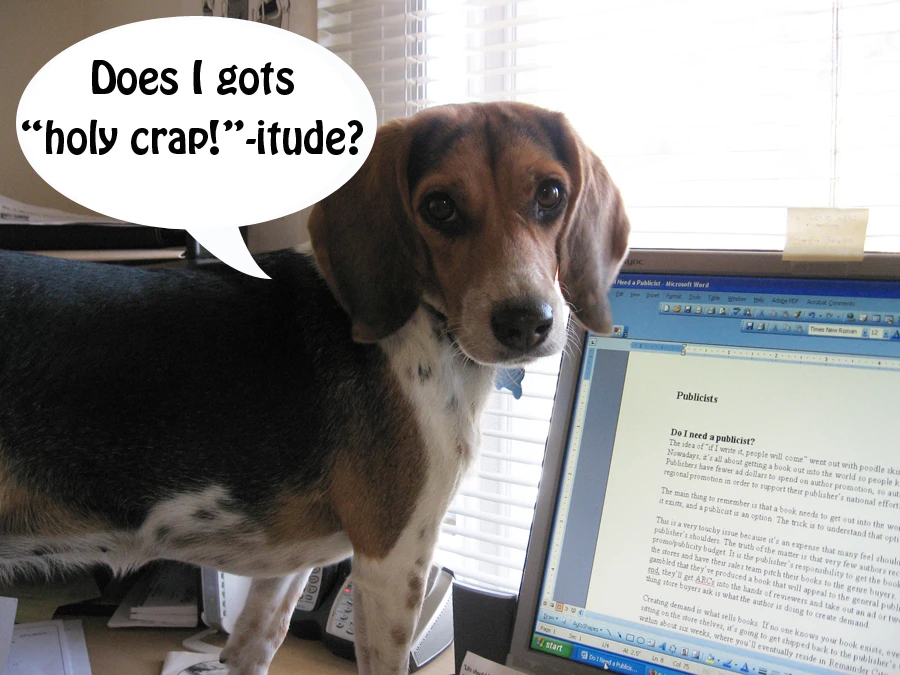
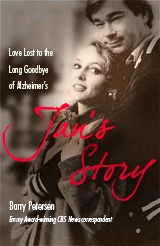
I appreciate a good story that says, “Holy crap, Pricey, wanna hear what happened to me?” But the operative is “holy crap.” It’s like when jan-storyBarry Petersen’s wife, Jan, was diagnosed with Early Onset Alzheimer’s while he was still CBS’ Asian correspondent. How do you care for the love of your life and still maintain your career? JAN’S STORY oozes “holy crap!”-itude…by opening a vital discussion about the unique problems of Early Onset Alzheimer’s – which include love, working, saying goodbye, all while trying to maintain a job. There’s nothing else like it on the marketplace and there’s a huge readership, so it’s easy to see why it’s a bestseller.

And I reject many, many other Alzheimer stories because they lack those qualities.

Now, I realize “holy crap!” stories are subjective, and what I perceive to be a “holy crap!”-tastic story and the author’s perception of “holy crap!”-tastic could be as far apart as my bank account and retirement. Since we pour time and gobs of money into each title, I have to depend on the marketplace. What’s already out there? Is what you’re saying unique? Will they buy it?

Using that as a litmus, I’ve been going through my latest round of query letters, and nearly all of them lack that “holy crap!” element that will merit the marketplace’s attention in numbers large enough to blip the reader radar.

I know – I can hear you screaming from here: “What the hell, Pricey, what makes a memoir “holy crap!”-worthy?? It’s all so subjective.” Well, here’s my take on it: We all experience life in a myriad of ways. Some get debilitating diseases or have the motherlode of Bandini drop in their laps. The thing with memoirs is that Life happens to us, not through us…and it’s how we choose to deal with that crap that makes a story.

Or not…

Ye Olde Cancer/Addiction/Death/Divorce/Life Change

These are the members of the Unholy Cinquinity tribe – so named because there are 5 instead of 3 – get it (oh the cleverness abounds)? These are the hot buttons that usually melt my brain before I finish reading a query letter. Why? Because they’ve been Written. To. Death. Unless you have a huge platform or have an incredibly unique message, these books are next to impossible to market.

But don’t despair…be aware.

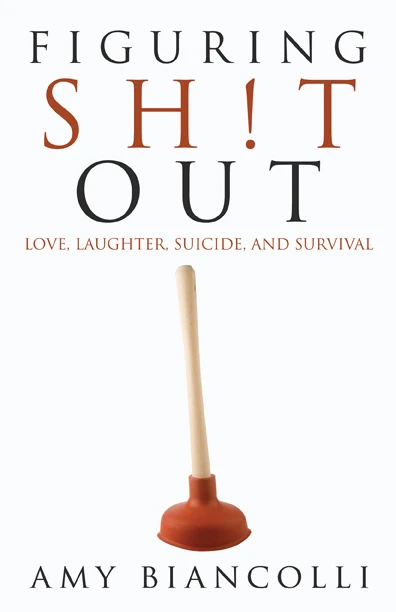
FSO - lo RESFor example, when Amy Biancolli’s lovely agent sent me her proposal over Christmas vacation – I wanted to reject it outright because it’s about losing her husband. In my mind’s eye Joan Didion already sailed that ship with THE YEAR OF MAGICAL THINKING. But her agent prodded me, so I huffed and puffed and committed to read the first chapter. Well, a few hours later I finished the entire manuscript because I couldn’t put it down. Not only is Amy’s writing some of the best I’ve ever read, but her story is unique when compared to all the other books of the same genre.

Of course, it details losing her husband, but it’s also about putting the pieces back and FIGURING SHIT OUT. It’s irreverent, poignant, honest – and carries the universal theme that we all have shit that needs figuring out, and we don’t always have to do it with dark-cloaked-respectful-whispers-knit-eyebrows seriousness. Sometimes gallows humor is the closest thing to sanity, yanno? I see Amy’s book as an inspiration for anyone wallowing in their own shit.

That is a “Holy crap!” story I know I can sell.

Conversely, I’ve rejected two other “death” books in the past two weeks that were, indeed, sad, but basically rode on Joan Didion’s coattails. Heartbreaking, yes, but there was no hook.

  • “My husband died.”
  • “I have/had cancer.”
  • “I suffered from addiction.”
  • “My husband left me after 30 years of marriage.”

I feel horrible for all of these stories, but what makes it marketable? These same experiences have happened to many others, so I always have to ask mysel, “Who cares?” Sure, it’s cutthroat and heartless (I have no soul, remember?), but so is publishing. If you don’t have your Big Girl/Boy panties on and objectively pre-screen yourself, then you’re going to suffer a lot of rejection. Which sucks.

I see many stories that are more like therapy sessions than marketable books. They’re too personal, so I sometimes feel like a Peeping Tonya. Many times, the stories are a rehash of books that are already crowding store shelves, so the “holy crap!” elements already exist…in someone else’s book.

If you write in one of the Unholy Cinquinites, you have to be able to defend your story’s viability:

  • What specific elements make my book unique?
  • Why would readers read and recommend my book?
  • Who is my direct competition – how does my book compare and contrast?
  • What specific kinds of people will read my book (intended readership)? –  I get a lot of, “This is a book that will appeal to everyone,” which makes me reach for the bottle. I can’t market to “everyone,” but I can market to cancer groups, bereavement groups, addiction groups, etc…so if you have a platform within those kinds of groups, it makes it easier to get bookstores interested in writing a big fat purchase order.

Writers of the Unholy Cinquinities who have a grip on these questions are in a better position to understand the “holy crap!”-ness of their stories and highlight those elements in their query letters so a heartless, soulless editor won’t reach for the bottle before hitting the Reject button.

Like I said, Don’t despair…be aware. Now go out and embrace your “holy crap!”-ness.


Read-a-thon

May 8, 2014

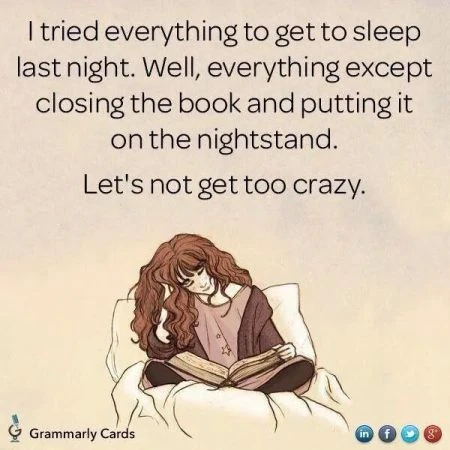
This is what happens when you read a Behler book…

image


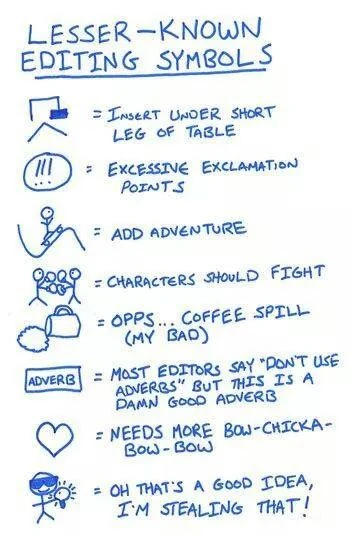
New Editing Symbols

May 4, 2014

image

My authors have been warned…


Follow

Get every new post delivered to your Inbox.

Join 1,261 other followers

Build a website with WordPress.com
%d bloggers like this: