He Said, She Said

July 31, 2008

Dialog tags drive me buggy when they follow every line of dialog. They also drive me buggy when writers seek to avoid using “said,” thinking that it’s boring. Instead, I see things like this:
He snorted
He laughed
He threatened
He guzzled
He burped
He cried
He yelled
Blah, blah, blah…

Only one thing should be going on with dialog tags: identify the speaker.

But too often, writers use dialog tags as a crutch to reveal emotion, hence the above examples, or don’t realize that they don’t need the tags – especially when two people are talking. Passages of dialog that has a “he said” after it creates a ka-thunk ka-thunk pace.

“Blah, blah, blah, blah,” he said.
“Blah, blah, blah, blah,” she said.
-yawn-

It’s unnecessary and unimaginative. Rather than using a dialog tag, use action instead.

Example:
Overworked and Underpaid Editor stood in the middle of the office and stared at the floor, now littered with envelopes and tip sheets. “Overpaid and Underworked Assistant, get in here immediately and clean up this abomination.”

Overpaid and Underworked Assistant cringed in the darkness of the closet where she’d been having a major makeout session with the computer technician who’d arrived to reboot her hard drive. Reboot her hard drive, indeed. “Coming, boss.”

No tags. Instead, I used this to set the scene while still identifying who is doing the speaking. This adds richness to a potentially boring scene. I’m not saying that you won’t use dialog tags, especially when there are three or more characters talking. Sometimes you need a more rapid fire pace. But if writers avoid overusing the “he said, she said” tags, this goes a long way to avoiding ka-thunk.


What’s going on in my office right now:

July 29, 2008

The beagle, who is supposed to be filing contracts and licking stamps, has her sock toy splayed out delicately in front of her little white spotty paws, daring anyone walking by for a quick game of tug-o-sock.

We’re trying very hard to ignore her. She realizes this and has taken to tossing about frustrated growls every three seconds. My dog, Mae West, who is a perfect lady in every way, has decided that she’s not interested in playing tug-o-sock, but is more than happy to yank the beagle’s tail.

Dog play has ensued.

Unfiled contracts and unread manuscripts are now flying about like confetti at a NY parade. Why in the hell don’t the ladies take this elsewhere? Like the freeway?

This has gotten the attention of the cockatoo, who also resides in our insane asylum. She has joined in with the vocals.

The agent I’m speaking to over the phone wonders if we’ve invited the Los Angeles Zoo and the Roller Derby team over for warm beer and Cheez Its.

I may have to find new digs. And new dogs.


My T-shirt of the month

July 29, 2008

Seen on a t-shirt down in Laguna Beach after tossing down a few margaritas and nachos…

“Be nice to me. Otherwise, you could end up in my next novel.”

Boy howdy. Been there, done that.


Writing a novel, a love story

July 29, 2008

Only a fellow writer can appreciate Libba Bray’s Writing a novel, a love story. I laughed so hard I passed a Twinkie through my nose.


“Whee doggies, my manuscript is done!”

July 28, 2008

Eager Beaver Author:…and now it’s time to start submitting! I can’t wait! Who should I try first? Ohboyohboyohboy!

Overworked and underpaid editor: Whoa, pardner. You got your spurs on backwards. What research have you done on the publishing industry?

Eager Beaver Author: Research schmeesearch. I have the greatest novel in the world!

Overworked and underpaid editor: Ah geez, here we go again…

Here is what is going to invariably happen. Eager Beaver Author is going to blow a year submitting to every agent and editor he can find. He’ll wrack up enough rejection letters to wallpaper the Taj Mahal. Only then will he begin to see a dim light bulb light above his head. “Wha’ happened?” he’ll ask.

Authors begin the submission process without knowing anything of the industry. It’s not enough to bang out a manuscript anymore. Writers MUST know the industry because competition is so fierce. Had Eager Beaver Author explored the industry and learned all about what agents and editors are looking for, and the general rules of the game, he could have saved himself a year of angst.

Yes, truth be known, I get impatient with these types because it’s a waste of my time when their submissions cross my desk. It sounds harsh, I know. But would anyone consider trying out for the equestrian Olympic team after having their first ride on a broken down old mare for an hour? Of course not…because they’re not experienced enough. Well, same goes here.

Had Eager Beaver Author done a fraction of research, he would have learned that a 250,000 word count is a guaranteed rejection. He would have known how to write a proper query letter. He would have thought about his platform and marketing strategy. He would have checked for competitive titles in his genre.

But what invariably happens is that writers, in all their excitement, do everything backasswards. It isn’t until they’ve collected countless rejections that they scratch their head and consider doing some research. Argh! Not only have they wasted valuable time, but they wasted a perfectly good list of agents or editors. No one can stuff that particular genie back in the bottle, so the best gift authors can give to themselves is to avoid being like Eager Beaver Author and pull the work if it’s currently being submitted around, do some serious research, THEN begin anew.


Bad Idea # 531

July 27, 2008

I don’t care if your writing contains colorful metaphors provided there is a reason for their inclusion. I do, however, take exception to the Mr./Ms. Potty Mouth in a query letter or synopsis. This is not effective communication.

See, when you’re writing, you’re in character and I understand your unique style of expression. But when you submit a query letter and synopsis – and please, no more 7 freaking page synops, thankyouverymuch – you are out of character and are expected to behave like a professional.

It’s not cute or endearing or make me think you’re really cool. You’re none of those things. What it shows me is that you’re a newbie who needs his mouth washed out with soap.


Be smart. Act smart

July 25, 2008

What I do not want to hear:
“Over the past six years, my novel has been submitted by a NY agent to more than 50 commercial presses, whose primary reason for rejection was its subject matter.”

My thoughts:
And I will make it 51 because the subject matter was hardly ground breaking. In fact, it’s been done to ad nauseum. Honestly, does a girl want to know that Joe Jock asked five other girls to the prom before asking you, and he’s probably only asking you out of desperation because he doesn’t want to be seen as a loser by his friends? Of course not. My suggestion is to leave this kind of honesty out of your query. I don’t need to have my face slapped with the knowledge of where I fit in your particular food chain.

If the bulk of your cover letter is filled with how many times your work was taken to submission committees by various publishers, then you’ve done little more than bore me to the point of eating an extra Twinkie. The truth is, I don’t care where your work has been or who fawned over it. End result is that they rejected it, and the whys don’t concern or interest me. Telling me you coulda been a somebody, a contendah, is not a selling point. It makes me reach for a rejection letter.

What I do not want to hear (part deux):
“I have included a sampling of praise from senior editors on page 2.”

My thoughts:
If you include glowing praise from the “editors” from Random House, Doubleday, Putnam, Little Brown, and Warner in your cover letter, the first thing I’m going to wonder is why none of those folks bought your work. Secondly, why are there no names accompanying those glowing remarks? After all, anyone can put this on a cover letter, right? My spidey sense smells a rat. I am not impressed, and this is not a selling point.

Conclusion in both cases:
Instant rejection.


There oughta be a pill…

July 15, 2008

…for authors suffering from “premature submitculation.” What symptoms does the author present with this particular affliction?

  • Huge Word Counts – I confess that when I see a query letter whose manuscript boasts a 150,000 word count, this is grounds for an automatic rejection. Authors oughta know better than to allow their story to get that big. Maybe there are two distinct stories trying to reside between one cover or there are 50,000 words of disposable fluff. I don’t know – figure it out and fix it.
  • The Whine Zone – Another confession; I grit my teeth when I have an author call me and ask if they can submit their first 100 pages because, well, the story really heats up on page 75. Argh! Can you hear my intestines folding in on themselves? If the first chapter doesn’t grab me – okay, I’ll be totally honest – if the first few pages don’t grab me, there is no compelling reason to continue turning the pages unless I feel the plot is so whiz bang that I’m willing to give it a bit of wiggle room. But I have to put myself into the head of the reader/buyer at all times, and I know good and well the customer will put the book back on the shelf if those first few pages don’t grab them. And you want me to read to page 75? Argh! If you don’t feel confident that your ms grabs readers at the very beginning, you need to take serious stock of your work. And your writing ability.
  • Query Letter – Yeah, yeah, I blather on about this topic a lot. But I can’t stress enough the importance of an effective query letter. This is the face of your manuscript. A writer could have the coolest story ever, and if he isn’t capable of communicating that story in one or two whiz bang paragraphs, then that coolest story ever will remain inside their desk. If you send me a poorly constructed query letter with a confusing pitch, I’ll more than likely not ask to see pages. I’ll just send out a rejection letter.
  • “This is my first draft” (I know I can do better) – ARGH!! If you know you can do better, then keep your manuscript and DO better. Don’t send it to me. I’m not your margarita-slurping Auntie Bertha who is willing to read your work through a tequila haze. I’m not Mom who, of course, loves everything you do. I’m a business woman who reads for a living. I see lots of incredible work whose sheer brilliance brings tears to my eyes. That’s your competition. Along this same line, don’t ask if you can send me a new draft after you’ve already sent me pages. I always go on the assumption that work crossing my desk is the final version. Don’t “whoops” me. If you have done revisions, keep it to yourself. If I like the work and contact you, then you may tell me you’ve revised the work. I may look at you cross eyed, but, well, you did get my attention, so I’m willing to forgive you. Sorta.
  • “I just finished this!” – This is the not-so-distant cousin to “This is my first draft.” This is the brand-spanking new author who banged out a story and deemed it ready for the world. It’s quasi-understandable. They’re excited about what they created and are eager to start submitting. It’s the validation that they created something marketable. But most times they haven’t because they jumped the gun. They didn’t give the manuscript time to age, like fine wine, they didn’t do any market research to analyze their competitors, they didn’t give it to a wide list of beta readers. Important Note: Manuscripts are not submit-ready while the words are still steaming on the page and your fingers are still smokin’. Walk away from your work and let everything cool down. It’s like the time I bought those Ferragamos. Upon waking the next morning, I gasped at the receipt. “What the hell was I thinking?”
  • “Dear Editor” – Ok, that gets my goat. Right, wrong, or indifferent, I really detest being addressed as “Dear Editor.” It’s akin to be called “Hey You! Editor Lady!” My name is clearly marked in our submission guidelines, so there’s no need for confusion. This irks me as much as those who don’t take the time to read our guidelines to see what kind of work we’re seeking.

I know there are other symptoms to Premature Submitculation, but these are the big ticket items that cause me to take a fraction of a nanosecond to reach for a form rejection letter.

The cure is to turn off your computer and lie down on the beach with a box of Twinkies. Go out and play volleyball with the man-meat of your choice. Have lunch with your best bud. Have your dog walk you on the bike path. After a month, go back and review your work. And research the industry. Never stop learning. After all, this is a world in which you’d like to reside. Make sure you’ve built a strong house.

*I admit it, I kept the shoes.


Lynnfucious Say…

July 15, 2008

Never submit too early. Manuscript is like fine wine, young grasshopper. Let it age. If you come back to it after a month and it still sings, then send it to to agent or editor for much pleasure.


It’s love at first button

July 12, 2008

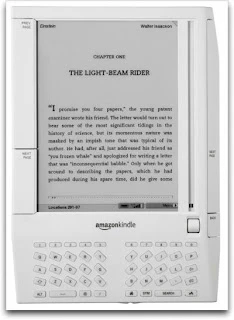
I bought a Kindle. I’m in love. Slap sticky kissy facey love. I spent all yesterday playing with it, and after learning all its ins and outs and uploading manuscripts and submissions, I wonder why I didn’t buy one ages ago. My newfound efficiency is beginning to frighten my family. I can make notes and highlights to my files, and make stickies as to which editor I’ll assign to the project. Think of it; I can make decisions while standing in line at Costco or riding the bike at the gym. Un-freaking-believable.


Follow

Get every new post delivered to your Inbox.

Join 963 other followers

Powered by WordPress.com