Halloween – the beagle is not amused

October 30, 2009

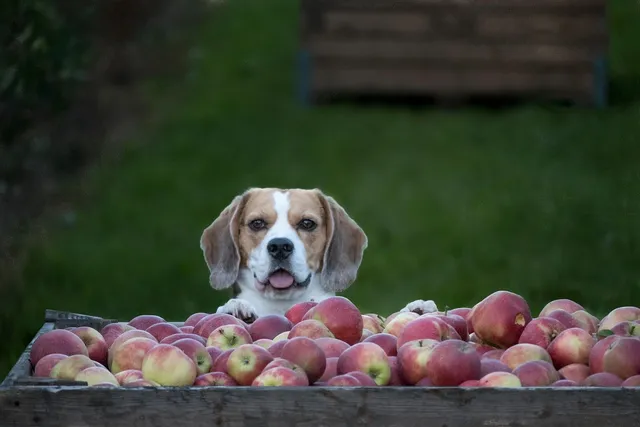
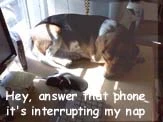
When I showed the beagle what her doggy friends were dressing up as for Halloween, she suggested I was brain addled and sauntered off in search of a chocolate martini. I don’t understand her problem. No holiday spirit, that one…

halloweenbassetHere’s her friend, Dudley…

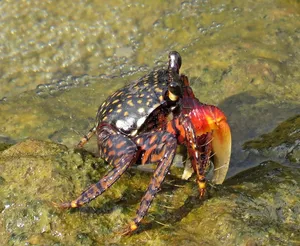
halloweencrab…and her buddy, Hot Sauce…


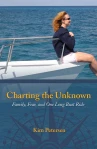
Meet Kim Petersen – brilliant author of the upcoming book, Charting the Unknown

October 29, 2009

kim1Back in August I wrote a post about falling in love with a particular manuscript and that I was infinitely fearful that my little heart would be broken – as it usually is once I get further into a manuscript.
Well, I’m giddy to report that not only did that beloved manuscript hold up, but I just got back the signed contract the other day.  Everyone, meet Kim Petersen – the object of my previous post and talented author of Charting the Unknown. Kim, everyone.

Kim’s story scratches my every literary itch, and I can’t wait to launch this book to readers in 2010. Kim’s story is about choices. In a way, it reminds me of The Bucket List – a dreadful movie, but a great idea. We all make little lists for ourselves when we’re young, stupid, and achingly idealistic, right? By the time I’m 40, I’ll have scaled Mt. Whitney, lunched with yaks, and written the Great American Novel.

Some lists are better than others. Well Kim and her husband stumbled across their old list they’d made when they first got married. After some tragedy and growing malaise, Kim’s discovery of that list seemed prophetic, and they set about fulfilling those promises.

The biggie on the list was to say, “Stuff it. Let’s get out of the rat race and sail the world on our homemade boat,” aptly named Chrysalis.  Now I don’t know about any of you, but that takes no small amount of guts and faith – especially when you have two kids. But they did it.

And that’s the lovely part of this book; they did exactly what so many of us dream of doing. It’s so easy to allow all the white noise to distract us from our fears and all the things that really matter. How many of us make a conscious choice to quiet the white noise and confront ourselves honestly – warts and all – and do something daring and borderline insane?

There is a lot of trust one must place in their crew and themselves when there is no visible land for eight days. This journey put Kim in touch with her biggest fears in a place where she was incapable of outrunning them. How many of us can say that? It’s painfully easy to sweep all the gunk in our lives under a carpet. But when your carpet is clear, blue ocean, it takes on a whole new level of immediacy. Reading Kim’s story was  a true privilege, and I knowthat once you are able to hold this beautiful book in your hands sometime next year, you’ll be glad you took my advice and kept the Kleenex box nearby.

Kim has a wonderful website that details all the aspects of how they pulled this off for four years – without killing each other.

In the meantime, it’s into the editing quarters. Avast, matey! And, Kim? Welcome aboard. The honor is mine.


Feedback; it isn’t just a radio term

October 28, 2009

Here’s what Wikipedia says about Feedback:

Feedback is a mechanism, process or signal that is looped back to control a system within itself.

Great holy Twinkies, isn’t that exactly what we writers look for when we write our brilliant tomes? Based on the feedback, we alter our “systems”  – our stories. This elevates feedback to a new level of importance, doesn’t it? It’s the vehicle that tells us we either have a good story or birdcage liner.

But what if the feedback is nonexistent or ill-advised? Then the author has no solid foundation in which to determine their book’s worth. In short, they make bad decisions that impacts their viability of their book.

I agree there are many good books out there that, for whatever reason, didn’t find a home and whose loss to the literary world is tragic. So how do we determine whether our writing is bilge water or the beagle’s overpriced designer water that comes in fussy little bottles?

Feedback.

Most authors who are caught in this net of “I MUST be published” get very little feedback from informed sources. Their mother, auntie, bestest friend, or wayward beagle insists the story is fahbulous, mahvelous, amazing! Pulitzer stuff. The problem is, they aren’t an informed source. There are a ton of layers a book goes through before it lands on the shelves, and the best gift an author can give him/herself and their book is getting feedback from informed sources who understand the marketplace.

Writer Boards:

There are any number of wonderful writer boards and blogs where authors can submit parts of their writing for critique and get their query letters checked over. I would be mindful about posting your work in a totally public forum. Seek boards that are private so that not every Tom, Dick, and Alice can see your work.

Independent Editors:

I know of many very good authors who use independent editors. Now, these folks are a dime a dozen, so choose wisely. I’m talking about folks who brag a clientele who have gone on to being published by solid trade publishers. These are editors who understand the marketplace and the rigors of publishing – because chances are, they worked in the industry at some editorial capacity or they’re well-published.

Beta Readers:

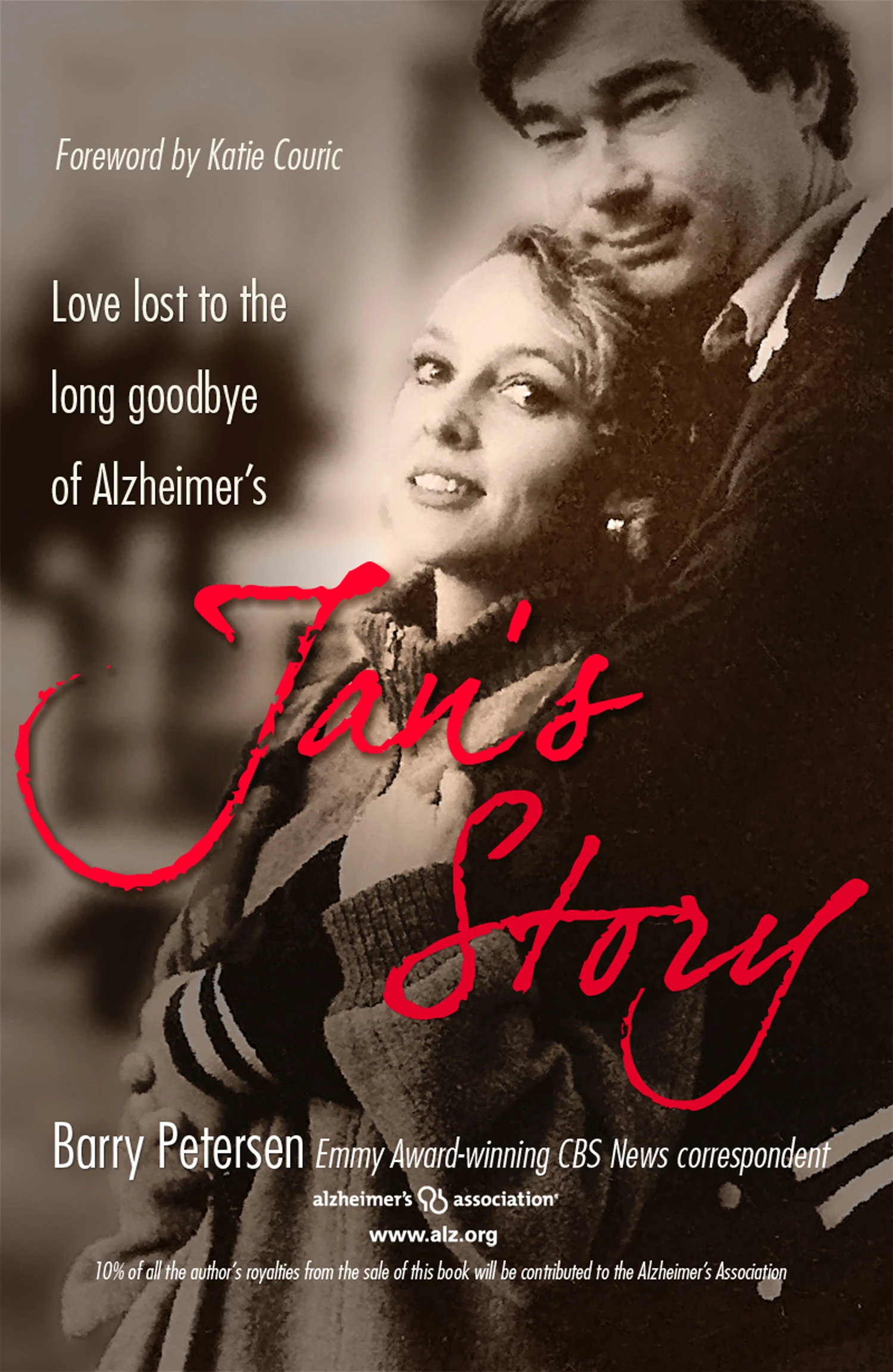
I’m not talking about a couple here and there, but a well-thought-out cross section of readers. Beta readers are your bestest friends because they represent the marketplace. I have an author, Barry Petersen (Jan’s Story, which is utterly brilliant) who chose a cross section of beta readers; people who knew nothing of his story (nonfiction), people who did know his story, and his agent. Aside from his agent, he chose readers, not people who are in the publishing business. These are the people who will tell you your main character is a wimp, or your plot is predictable.

Writer’s Conferences:

I can’t stress this enough. Go. To. A. Conference. This is where you pick all kinds of information that you never realized was out there. There are workshops where you can get crits and improve your writing. There are agent/editor one-on-ones, where you can get feedback on how your first pages struck us. You’ll get feedback on your pitch, your marketing ideas, learn about promotion. This is feedback on steroids, and I dare anyone to attend a conference and not come home a better, wiser writer.

How do I figure out the good feedback from the bad?

I love it when I get all rhetorical-like. The answer is, you don’t. I’ve seen authors go insane with feedback because so much of it is contrary. One beta reader may love a particular scene that another hated. How do you decide? That’s when you listen to your gut. Your gut always knows what feedback makes sense and what is white noise. It takes confidence to be a writer, and this is exactly why.

I have no problem duking it out with my authors during the editing phase. Just because I have an opinion about something doesn’t mean I’m always right. Maybe my problem with a particular character or scene is the result of improper development. Perhaps the way in which it’s written doesn’t showcase its importance to the story. That is why communication is vital. Once I can get the author talking about a character or scene, I can understand more what’s taking place in their minds and help them tailor the problem so that it communicates the intent.

And that’s something writers should think about when the receive feedback that makes their teeth itch. Ask yourself why a particular comment bothers you. Is it because it makes you think outside the box too much? You won’t always get well-detailed feedback. It could be as plain Jane as “I didn’t like your main character.” If you can ask why, do so. If you can’t, take into account as to why someone wouldn’t like your MC.

There’s a lot of detective work that goes on in writing, and the key is to not drive yourself crazy with conflicting feedback, but to lay it out on the table and consider their validity. Your gut will be your Sherlock Holmes.

So in the end, it’s lovely Mom lurves your work,  but let’s be honest; most of our moms would lurve our writing, even if it reeked. Moms are – or should be – totally off limits in the feedback department. Except you, Mom. You can always read my stuff. I just won’t take it to the bank.

Am I in trouble now?

For the most part, you want to be “in trouble,” and feedback will put you in the center of the bull’s eye. That’s what forces you to improve, to dig deeper in order to bring out the very best of your story. Feedback is, hopefully, what prevents you from making bad decisions about your book. Once it’s gone to a vanity press or a POD, it’s gone forever. Unless that was your intent all along, listen to the feedback and let them be your guide.


Smorgasbord

October 27, 2009

I’ve been collecting little tidbits that stand out because they me shake my head. I decided to collect all these little sillies and put them into this post.

** Email blasts: If you do one of those irritating email blasts to announce that your book has now been published [these seem to come from either POD or vanity presses], may I recommend that you not send them to every editor of every publishing house in the US? Pinky swear – just got one yesterday. It wasn’t even a bcc blast. Every one of our email addresses was listed. We will not rush out to buy your book. Really. You can take it to the bank.

** “My friend is with this publisher, and they are really happy with them.” [NOTE: many authors are thrilled with their publishers *yay*- their trade publishers. This is not the group I'm talking about.] This statement is usually attached to a POD publisher. Authors use this defense when asking my opinion. The problem with this is that the “friend” usually has no comparison or publishing experience, so “being happy with them” has no real meaning. Does it mean the editors are nice, or does it mean they have experienced editors and promote and distribute their books to bookstores? Being happy is a relative term, so it’s always a good idea to get more details as to why a friend is “happy.” Their idea and your idea could be vastly different.

** “My agent is brand new, but I love him/her!” This is an extension of the “I love my publisher” comment. If they’re new, then what is the foundation for that adoration? Where did they come from? How many books have they sold? What is their experience? Did they spend time working for a literary agency, or do they have some other footprint?

Fact: agents sell manuscripts to editors. This means that they need to have two elements going for them; they understand the marketplace and, therefore, have an educated feel for what will sell AND they have established relationships with editors from all kinds of houses – large and small.

Now, I’ve been involved in any number of discussions where the prevailing winds stated that those relationships weren’t all that important. None of those people sat behind an editor’s desk, and all I can say is that I’m far more likely to read the query of an agent I know over an agent that I don’t know.  I’m also far more likely to read the query of an agent who has a solid reputation and good sales. The brand new agent sits at the bottom of my food chain.

Your new agent may be as nice as the day is long and have some wonderful and innovative ideas on how best to sell your manuscript. But until they’ve actually made some decent sales, all of those ideas are mere conjecture. Do you want to be the guinea pig or a signed author with a good, solid publisher?

** Ouch:

“Dear Sir or Madam [what? no name? already you've made me cranky - hence the red font!],
I have a book that’s about Subject XYZ. Would you be interested in taking a look at it
with the idea of publication without a financial investment on my part?”

Gah, why don’t they just ask if I sell snake oil out of the trunk of my car? I realize the author simply doesn’t know any better, but geez, to be the recipient of an obvious email blast in which he assumes ALL publishers charge fees  is fingernails-to-chalkboard stuff.  Me could not delete fast enough. Me send no rejection letter. Me just delete at warp speed.

**The “I’ll Make You Rich!” Query

“This book will put you on the map and make us all rich.”

It’s probably a good idea to let me make that determination. That’s why I sit in the big girl chair. A word of advice; there’s risk telling an agent or editor your novel has the biggest WOW factor since the invention of the quill because, like, um, how do you know? Have you been an editor and can prognosticate with that kind of certainty? Now come on, be honest…

My first reaction is to roll my eyes – something that drove me mad when my kids did it – because it’s pure hubris to suggest that your book is THE ONE that makes the heavens open up and angels sing. I love a healthy sense of confidence, but I also appreciate feet that are entrenched on terra firma and not twilight zone-a.

Secondly, if you have to tell me how good your book is, then it probably isn’t because you set our expectations to an unrealistic level that’s reserved for Pulitzer winners. And even Pulitzer winners don’t say silly noob things like this.

It’s like those rare occasions when I cook for my family. “Come on, you guys, it’s really good!” I take a taste and try not to gag. “Yum!” Please. No one believes me. Even the beagle is on her back laughing her designer head off. It’s better to say nothing and let them be pleasantly shocked when I succeed in cooking something good.

**”My other three books have been optioned”

This is in the same family as the “I’m gonna make us all rich” query. This isn’t a publishing credit. Sure, it’s nice to have a book optioned, and it sounds really cool. But the reality is that books are optioned all the time, and nothing ever comes of it. The time I get all tingly-like is when filming begins, or a major studio or producer plunks down some serious cash for your book, and continues renewing that option by plunking down more money. Until then, it’s all heresay that doesn’t mean anything.

The same applies for the book you’re querying. An option isn’t a selling point until we’re talking money exchanging hands for that option, a film date, and stars we’ve actually heard of.

** I have this idea…

This is the author… eeek, did I say “author“? This is a person who queries an idea for a book. The kicker is the “I’m not a writer, so you’d need to hire a ghostwriter.” Sure. I’ll get right on it.

One of the things that brightens my day is the vast individuality of writers. Some get very cranky because they hate the idea of the query letter being the gatekeeper of publishing, and they bring that hostility to their query with things like, “I can’t possibly do justice to my story in two paragraphs, but that’s the way it is in this dumbass business.” Can anyone say self-affirming prophecy? Duuude, way to get to my heart.

Other writers are just lovely and  I can see them struggling to communicate the A’s and B’s of their story in a way that will excite me.

Given the entertaining smorgasbord of writers, my days are never dull. I may have a terrible secretary, and I may be too forgiving of her because she’s cute [dammit], but I haven’t forgotten how to pull back and have a good laugh every now and then. And that’s something we all should do, ‘cos life is a silly smorgasbord as well. If we all take ourselves too seriously, we’ll get warts, bad knees, crow’s feet, and a bad case of gas.


To blog or not to blog…

October 26, 2009

…in the end, what do I talk about??

I hear that from my authors from time to time. Blogs are awesome provided you have content to fill its little blank spaces. Otherwise they’re like the beagle without a margarita, a Twinkie minus the cream…utterly useless. The Intern has a wondeful post about blog topics for authors that should/could put the jam in your jelly doughnut.


Voice = literary fashion: you going to make me change my clothes?

October 25, 2009

One of my favorite columnists, Teryl Zarnow, has been stripped of her voice. Her newspaper column was filled with her ruminations of  the everyday stuff of being married and being a parent. How many times I nodded and mumbled out a,”you’re so right, sistah.”

The paper, in their search to cut costs, cut Teryl’s column and relegated her to the online paper. People must have complained because Teryl was given a reprieve and brought back to the paper. Yay. Well….no. They brought her back, but took away all the elements that made her her. The funny stories about visiting her daughter in NY are replaced with the economics of graffiti – articles that any intern could belt out.

The paper had removed the very essence of this talented woman’s unique writing – her ability to analyze the mundane of family life into the special. The thoughtful. I feel badly for Teryl because her articles lack zing. Sadly, I don’t read her anymore.

And that’s the importance of voice.

Oh dahling, I love what you’re wearing!

I think of voice as literary fashion. For example, there’s this one lady that I often see around town. She has a wonderful wardrobe and jewelery, and her hair and makeup are perfectly done. Doesn’t matter if she’s at the grocery store or at the post office. She. Looks. Fabulous. If she wore jeans and tennies like the rest of us, chances are I wouldn’t recognize her because she blends in with the rest of us slobs. She’s bland. She has no voice.

Try looking at your writing the same way. Is your writing style distinguishable and unique? Are the wearing snappy shoes and a fabulous necklace?

When I think of Thad Rutkowski’s writing, I know I’ll always see something darkly humorous in a minimalist style. He’s known for it. On the other hand, Ludmilla Bollow’s voice is lyrical and given to beautiful literary prose that makes my heart ache. Chip Jacobs voice is descriptive and ironically witty, and always makes me laugh quite unexpectedly – whether it’s his wonderful book or his newspaper articles. I could pick up any of these authors’ works and recognize it from a mile away.

The trick is to make your writing memorable by being your own personal shopper. Make sure that you pick complementary shoes and handbags, and don’t you dare think about mixing stripes and polkadots.

I don’t want my editor to take away my voice

I hear this at conferences a lot. Let me just say that this is a non-issue. Unlike short-sighted newspapers, editors buy books based on the story and how strong the writer’s voice comes through. It makes no sense to come in and destroy it. Anyone can write a flavorless work that contains characters and plot. But it’s HOW the author writes it is what makes it memorable. For example, I can say the same thing with or without voice:

I was so angry at Joe.

or

I was so angry at Joe that had someone offered me tar and feathers, Joe would be the punk version of Sasquatch.

Now imagine an entire book written in both voices – which one sounds like it would be a better read? One sentence has flavor and sets a tone, and the other just sits there like a wet booger. That’s voice. And thar be no way we want to interfere with that.

So how does the editor influence voice?

First off, we don’t. Editors are like the group of friends you bring to Macy’s. We sit in our comfy chairs and critique your fashion choices through the many chapters of your literary dressing room.

“Dahling, that dress makes your butt look fabulous, but you need flesh out your main character more.”
“I love that belt with those shoes, but I think you have this scene in the wrong POV.”
“Lose the jacket, it hides your arms, and while you’re at it, add some good transitional sentences between your paragraphs.”
“Try on that necklace, and also think about moving that scene to an earlier part of the book.”

Our job is bring out the very best elements of your designer words.

And that’s my bag-of-angry at my local newspaper. Teryl knew how to dress herself with amazing taste and quality, but they decided she looked better in clothes from the Salvation Army. You don’t bring a pea-shooter to a war, and you don’t waste a talented writer on parking meter violations. Sheesh, no wonder papers aren’t doing well.


POD and readership

October 23, 2009

On my wanderings through the many writer sites, I’ve noticed a reoccurring theme; readership. Boy, for the debut author, this is vital because without it, chances are slim you’ll get a second bite at the publishing apple. What concerns me about these discussions is that many authors believe the Print on Demand business plan [for further explanation, see the POD Series #1;  #2 ; #3;  #4;  #5;  #6;  #7; Print on a Dime ]will help them gain that oh-so important readership. After they have a following, they plan on going the mainstream publishing route. My problem with this logic is, how are you gonna get them?

Breakdown of gaining a readership

Gaining a following of readers means that your book reached a wide audience. That means your book was bought by the publisher for its marketable content, it was edited by an experienced editing team, was widely pitched by sales teams to the genre buyers, it was marketed and promoted on a national basis, it was distributed and placed on store shelves, hundreds of ARCs and free final copies were sent to media and reviewers, maybe you got a great trade magazine review.

With the Print on Demand business plan, none of these things happened.

Since Print on Demand business plans don’t have store placement, how do they stay in business? They rely on their authors to buy books. This is why many PODs have a ton of authors and accept every genre – it’s to balance the ratio of those authors who don’t buy their own books.

Since these publishers don’t have much money, they don’t do any marketing and promotion on a national level [and in most cases, not at all]. If the POD author shoulders the burden of marketing, promoting, and selling his/her books, how wide of an audience can they realistically reach?

I’ll hire a publicist

The problem with this idea is that the good publicists won’t take on a POD book because of the inadequate print runs. POD business plan means that the publisher prints off books only where there are physical orders. This reduces their financial risk. [Note: I am NOT talking about digital print runs, where it's financially conducive to printing smaller runs. All publishers use the digital technology for printing ARCs and backlist titles]

You hire a publicist because they can open media doors that you can’t. If you have dreams of being on a major morning show – don’t say Oprah, don’t say it, Lynn, don’t, don’t, don’t – then you need a mainsteam publisher behind you who can meet that potential demand.

Case in point; I had a friend who signed with a POD and, on her own,  struck a deal with a major sporting goods store. She took the contract to the POD, and they turned her down. Why? Because not only would they have to print up 10,000 units, but they faced the possibility of returns. It’s too much risk. As a consolation, they suggested she BUY the 10,000 units at a 50% discount. Then she could do whatever she wanted. Needless to say, that wasn’t an option. Now this author had a perfect chance to widen her readership by thousands, but her publisher squirreled the deal.

A publicist knows this and that’s why they won’t work with POD books. What would happen if they got a Fox News Channel interview with the ever-ascerbic Glenn Beck? Demand might go through the roof. But the problem is the book isn’t available in stores, nor are there enough printed books. Result; pissed off buyers and egg on the publicist’s and Beck’s faces. Beck, I’m certain can handle that. The publicist won’t fare so well because his credibility is shot.

What are the POD author’s options?

Options are few since the publicity comes down to what kind of footprint the author can make on her own. This costs time and money. Of course there are Cinderella stories all over the place, but keep in mind that they are the exception; not the rule.

POD as a publishing credit

The thing to keep in mind is that after everything is said and done, mainstream publishers and agents don’t consider a POD book as a publishing credit. So you’ve pubbed your first book with a POD, and chances are you sold maybe a hundred or so copies. You then query mainstream agents and editors with your second book and proudly list your POD credit.

This is where the needle goes scritchy scratchy across the record. Unless you sold a couple, three thousand units – that we can verify through Bookscan – no one will care about that book. As I always suggest to authors – don’t list a POD book at all in your query.

In short, when authors talk about going the POD route to gain a readership, I’ve come to think of this as shorthand for, “I’m not good enough.” Whether they are or not remains to be seen. But I can guarantee one thing; if every POD author didn’t buy their own books, PODs would go out of business. This isn’t opinion, but fact.


Job opening

October 22, 2009

Help wanted: reliable person to answer phones, file, do grunt work, and mix margaritas at the end of the day. Current secretary is busy taking a sunbath and can’t be bothered.

beagesondesk1


Time out for a song…

October 21, 2009

My talented friend, Bill Webb, wrote this tune instead of doing what he SHOULD be doing. I’m going to forgive him because he made me laugh so hard.

American Style

(sung to the tune of Don McClean’s “American Pie”)

A long, long time ago

I could still write prose

That used to make people smile

And I knew if I had an agent

They would treat me like a regent

All I had to do was send a file

But then my submission made them shiver

With every query I’d deliver

Bad news slid down the mail ramp

I couldn’t lick one more stamp

It’s hard to think how hard I tried

How long I labored, laughed and sighed

But something snapped and broke my pride

The day the query died

(Chorus)

So write, write with American Style

Got a laptop with a printer

But the inkwells ran dry

And the folks in New York are reading maybe one line

Singin’ add this piece of crap to the pile

Slush this one away in the pile


Did you write that book I read?

Can you raise it from the dead?

If the agent buys your soul

Do you believe it will really sell?

Can a contract relieve this living hell?

And can you teach me how to write really well?

Well I see you’re addicted to the dream

‘Cause I saw you typing at half past three

You worked until you cried

Man, I love the way you write

I was a college senior writing songs

With an old guitar and my roommate’s bong

But I finally saw right from wrong

The day, the query died

(Chorus)

So write, write with American Style

Got a laptop with a printer

But the inkwells ran dry

And the folks in New York are reading maybe one line

Singin’ add this piece of crap to the pile

Slush this one away in the pile


Now for ten years I’ve been writing alone

The local rag finally threw me a bone

But that’s not how I want it to be

When Adams hitchhiked in an English field

Drunk and broke, his fate seemed sealed

But his dream of fame refused to yield

And while the Old Man got lost at sea

Something wicked this way came to see

The way was paved with gold

All for Rowling alone to hold

And while agents read of a robot eye

And Gandalf caught him in the rye

We wrote stories of a sad goodbye

The day the query died

(Chorus)
We were typing…

Write, write with American Style

Got a laptop with a printer

But the inkwells ran dry

But the folks in New York are reading maybe one line

Singin’ add this piece of crap to the pile

Slush this one away in the pile


The classics gather in a musty store cavern

The writers left for a darkened tavern

Sick and tired of playing the game

They drank and shouted that it’s all the same

Can’t get published it’s a crying shame

And the newbie, in a corner thinking fame

Now the tavern smelled of failed stale air

The patrons wondering why they were there

We all got up to leave

But we never got a reprieve

‘cause the cell phone rang a lonely tone

My agent made his intentions known

Do you recall what was atoned?

The day, the query died

(Chorus)
And we were drinking…

Write, write with American Style

Got a laptop with a printer

But the inkwells ran dry

And the folks in New York are reading maybe one line

Singin’ add this piece of crap to the pile

Slush this one away in the pile


And there we all were in one place

Writing lame copy in cyberspace

With no will left to try again

So come on Dan be nimble Dan be quick

Dan Brown’s on the best seller list

Cause conspiracy is what we all insist

We all paid money to see his story staged

Debated the words he put on the page

Yet no editor born today

Would let me write that way

And as sales climbed high and advances soured

I threw myself upon Tolkien’s sword

I heard the agent laughing at my words

The day, the query died

(Chorus)
The agent was singing…


Write, write with American Style

Got a laptop with a printer

But the inkwells ran dry

And the folks in New York are reading maybe one line

Singing add this piece of crap to the pile

Slush this one away in the pile


I met at girl I’d like to thank

Whose grass was green on her septic tank

But she just said she’s At Wit’s End

So I went online to the new book store

Where I heard we writers had a chance to score

But the BookSurge there, said I had to pay

And in the Twilight the young ones screamed

The authors cried they were getting creamed

Not a contract was written

The agents all were smitten

By the three words they admired most

Wizards, vamps, and the celebrity roast

So they traded the writer for a ghost

The day, the query died.

(Chorus)

And we were tweeting…


Write, write with American Style

Got a laptop with a printer

But the inkwells ran dry

And the folks in New York are reading maybe one line

Singin’ add this piece of crap to the pile

Slush this one away in the pile


The honeymoon is over

October 21, 2009

Ok, the video is talking about marriage, but writing a book is a lot like a marriage. There’s infatuation, growing interest, deep love, I’ll-die-for-you commitment. As you tippy type away during the later months/years, you find the newness has worn off, and you work a harder to keep the spark going. There are days you snarl at your manuscript and swear your characters are gunning for you.

From there it all goes downhill until that fateful day when you write “The End,”and all you can say is “pass me a bottle.”


Follow

Get every new post delivered to your Inbox.

Join 963 other followers

Powered by WordPress.com