Rolling out the Welcome mat – Chris Baughman

March 31, 2010

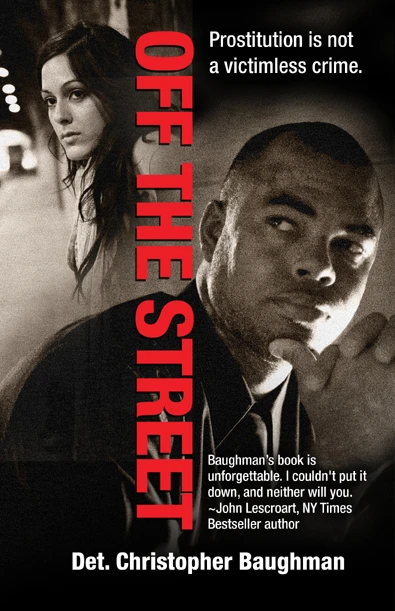
There are times when you love something and want it more than one of the beagle’s margaritas, and it slips through your fingers. I hate those times, and I have to say I’m very lucky to experience that sense of loss infrequently. But none hurt more than when I thought I lost author/cop Chris Baughman.

I. Loved. This. Story.

You may have read my post back in January where I first talked about this incredible man and his unique gifts of empathy for a forgotten element of society – hookers. As I said in my previous post, people think prostitution is a victimless crime. Well, Chris’ new book shows this is far from the truth, and the lengths he goes to to save these women are nothing short of intoxicating.

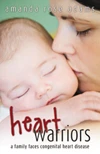
I can’t express loudly enough my happy-happy joy-joy that this lovely, gifted, amazing man, through his equally lovely agent, Verna Dreisbach, have returned to the Behler corral and signed with us. I love all my authors to bits and pieces because their talent brings tears to my eyes. Adding Chris to this lineup has me reaching for the Kleenex. And you will too when you read his gut-wrenching book – due out in 2011 – Anomaly.

Welcome to the fam, Chris. It’s an incredible honor.

You can see Chris here on Dateline NBC – Chris Hansen’s To Catch a Predator.


Had your literary vision checked lately?

March 30, 2010

I had an agent tell me a while back they were thrilled to have placed her client’s book with us because no other editor had shown as much passion as we did. Passion is great, but what I also think she meant was that we shared the same vision. No, no, I’m not talking vision like my myopic little friend here, but literary vision.

There is an imaginary demilitarized zone that good agents know not to cross. Like when the editor enthuses about a book: “Ooo. Ooo. Me lurves. Me wants. Um, me wonders if you can, like take out the parts with Ted in it? Oh, and can you maybe puff up the bitsies about Joan. That would make the book soooo much better.”

Is this editor barking mad? thinks the agent. How on earth do you, Editor McIdiot, attempt to accomplish removing Ted when the title of the book is Ted’s Hopes They Sell Margaritas in Hell. Dude…the story is about Ted.  The smart agent will realize he and Editor McIdiot share a vastly different vision.

And yes, this absolutely happens.

Stand Your Ground

The trick is to have a very clear vision of your book. You and your agent have discussed this already. Or you certainly should. What is it you want to accomplish with your story? If it’s a mystery, then how do you feel about it if an editor wants to noodle it into horror…or vampire romance. Sure, I’m being somewhat silly, but I have firsthand stories of  equally ridiculous suggestions by editors whose brains reside south of their personal beltway. And to be fair, it may be they have a very good idea, but it’s important that you are on board with it.

It can be hard to stand your ground when facing a contract offer. You’re wondering if this is the only apple that will dangle in front of you. Should you leap at it and hope for the best, or should you stay true to your vision? It’s important to project into the future. Can you honestly see yourself reconciled to a massive change in vision? Is this change in vision going to enhance your career?

And let’s not forget that where you got one serious bite, there will be others.

Ass-u-me

Be careful about assuming that you and the editor are on the same page. If they don’t discuss their vision, you or your agent need to bring it up. Boy, I learned that the hard way. Years ago I signed an author whose book I was terribly excited about. At every turn, she chaffed at our editorial suggestions. Why can’t we leave it as written, she’d ask. Because that’s not the vision I have for the book, I replied.

But that’s my vision, she said.

Ohhhh…[sounds of needle skipping across the record]. There was no middle ground for this book with the author. She had a very clear vision of  her book. Unfortunately, I felt it killed the book’s marketability. We parted ways. It was a valuable lesson for me.

Since that time, I’m painfully clear about my expressing my vision fora book. And I listen. It could be the author and agent have better ideas because they’ve been living this project far longer than the five minutes I’ve had it. It could be that my vision is woefully misplaced. I’m not so myopic that I’m not willing to think outside the box.

So before you set out on the Query Highway, be sure to have your eyes checked and your map firmly in your grasp. If you have no idea where you’re going, it could be that your editor will lead you into a blind alley.


Say what?

March 29, 2010

It’s been a while since I bleated on about dialog tags, and the discussion becomes a bit of an issue on the various writer sites I frequent. I’ve talked about how dialog tags – the oldy, moldy “he/she said” – creates a ka-thunk cadence if you don’t mix it up a bit to create balance. But it’s more than that. It robs the reader of action, color, dimension. This means the author either neglects to put that color/dimension/action in, or they have to inject it someplace else.

Example:

“You talkin’ to me?” the beagle asked. She wore a surly expression and spit when she talked.

or an even worse example because we are robbed of any kind of description:

“You talkin’ to me?” the beagle asked.

Alone, the sentence won’t cause liquid to shoot out your eyeballs. But when you multiply this times an entire manuscript, it comes off as pedestrian.

Said vs. descriptions

We readers like to know what ‘s going on during dialog. Simple “he said” is tedious without some semblance of setting the scene. All you have are talking heads. And who cares? It’s a snoozefest. You may have a terrific book filled with great characters and fabulous dialog, but you can kill it by forgetting to give us some tactile engagement. You need to go from good to great. Are the characters scratching their bellybuttons, drinking a chocolate martini, reading a menu, petting an errant, lazy beagle?

Descriptions:

Rather than using a tag, writers can use descriptive writing to identify the speaker.

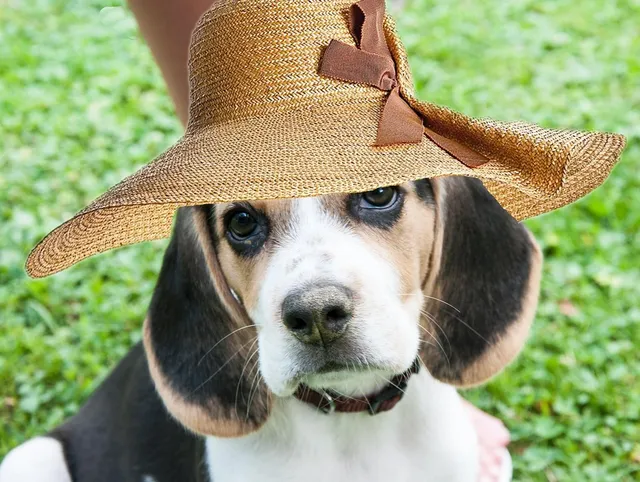
The beagle adjusted her hat and rearranged her lacy, pink six-shooter. “You talkin’ to me?”

Overworked and Underpaid Editor’s fingers twitched as they neared her evil red pen. “Yah, I’m talkin’ to you. File those contracts, or the tequila bottle gets it.”

No tags, yet we know who’s doing the talking. The description allows the reader to see the action and heighten their interest.

Descriptive tags

The manner in which you utilize a dialog tag is subjective because you’re looking for a sense of balance. I know many editors here in the US  will yank out every tag that isn’t “said” because the tags take on more importance than the dialog – as in:
” he intoned
begged
ordered
shouted

pleaded
laughed
yelled

…you get the idea. This strikes me as editing by numbers because it’s not that simple. Again, it’s about balance and how the sentences flow and play off each other to create a nice cadence. So while I’m not necessarily that picky about something other than “said,” I do have my radar set to stun because I’ve had manuscripts chock-a-block with these types of tags, and they create a cluttered mess. The overabundance strikes me as fifth-grade writing, and I’m looking for effortless sophistication.

Descriptive tags cause a showdown between Show vs. Tell

The by-product of using descriptive tags is the tendency to create a gunbattle between Show vs. Tell. Over reliance forces those tags do the work of the writing. IMO, it places way too much importance on the tag, thus robbing the reader from seeing the full picture.

“Look, a beagle that drinks margaritas!” he laughed.

Again, as a stand-alone, this is fine. But when a manuscript is filled with descriptive tags, it’s dull and lifeless because it’s all Tell. So what? The dialog is curious – a drinking beagle? Doesn’t that deserve something more than a “he laughed”? This is what I’d rather see in a submission:

He put his beer down and stared, disbelieving, at the apparition sitting at the bar. “Look, a beagle that drinks margaritas!”

To me, it’s the difference between a front yard that has a nice lawn and a front yard that explodes with flowers, bushes, and a patch of deep green grass. In this day and age of stiff writing competition, it makes sense to pay close attention to something as seemingly small, but achingly important, like our little friend, the dialog tag. Use him sparingly and with balance.

Otherwise we may be tempted to utter, “Say what?


Life on the bikepath

March 27, 2010

I’ve been riding my bike nigh on fifteen years, and I’ve seen some pretty amazing things over the years. I’m lucky to live off a gorgeous bike path. All I have to do is bike out of my driveway and I’m in the middle of nature. Lovely.

There are always the invariable mountain lion sightings, and about eight years ago I did see one draped across the branches of a very large tree, just staring at me, totally disinterested. Lucky me, since a few bikers have been eaten.

About ten years ago I had a family of deer dart out of the bushes right in front of me. While the sight of them took my breath away, their actions reminded me of some drivers I’ve encountered. I mean, really. There is NO ONE in back of me….couldn’t you have waited? I’m sure they thought the same thing about me, since there was a deer crossing sign.

I remember the time I saw the famed bike path exhibitionist, who loved nothing more than showing his dangling participles to unsuspecting women joggers. I dialed 911 and kept riding. What I really wanted to do is throw him under a boulder.

But things have changed over the years, and my bike ride today [in this gorgeous low-80s day] yielded some really odd [and alarming] things:

  • Two grossly overweight duffers with fat tires and crappy bikes who overtook me: 2 [totally humiliating given my whoopedoo bike. Note to self: must get out and ride more often]
  • Biker dressed in Speed Racer outfit and hooha bike pulled over for a cigarette break: 1 [WTF?]
  • People who nearly ran me off the path: 15 [all kids...all who should be shot]
  • Bikers carrying doggies in their baskets: 2 [way too cute for words...dogs looked totally bored, tho]
  • Number of kamikaze bunnies who love nothing more than playing a game of chicken with bikers: 12 [all of them should be stew, with carrots, potatoes, and gravy]
  • Number of times I smelled the intoxicating perfume of lemon blossoms which line the bike path: 6 [Lordy, how I lurve Spring]
  • Number of joggers who didn’t return my friendly “hello”: lost count. [joggers must be very grumpy. Hell, I would be too. Biking is much more fun]
  • Number of bikers talking on their cellphones: 2 [WTH? They're out in the middle of beautiful trees, flowers, and weather, and they're glued to a cellie? Criminal. Also should be shot]

So what does this have to do with writing? Not a darn thing, only to say that it’s really wonderful to back away from the literary bong now and then in order to regain that sense of balance.


B-a-l-a-n-c-e

March 27, 2010

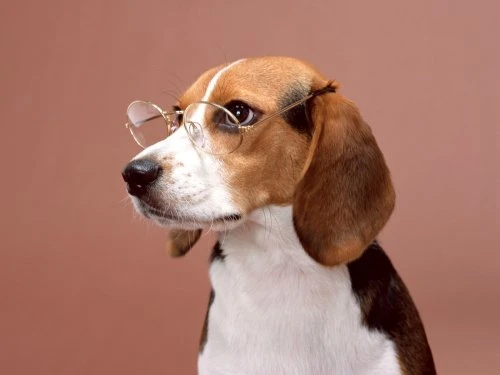
Overworked and Underpaid Editor put down her evil red pen and took off her glasses. Pinching the bridge of her nose, she let out a heavy sigh. She looked over at her secretary, the unreliable beagle, who was stirring a frothy margarita with her delicately painted pink toenail. “I’ve had it. I’ve read five partials this week, and all of them are overloaded with the usual suspects: POV switches, adverb-a-tosis, flat, mundane characters, and tell vs. show. I’m spent. It’s not that adverbs, for instance, are bad. But a truckload is horrible. Same goes for show vs. tell. You can’t show everything; sometimes you really need to simply tell it. It’s about balance, and I see way too many works that lack balance.”

The beagle licked her nail and stretched luxuriously on Underpaid’s desk. “Know what you need?”

“A lobotomy?”

“That’s always a good idea. But, no, silly. You need something to make you laugh, to lighten your load. You need…”

Underpaid gasped. “No, don’t say it…”

“…a song!”

Underpaid slunk down in her chair as the beagle busied herself shoving the keyboard, monitor, and piles of unread submissions off to the side. She handed Underpaid the half-drunk margarita and hit the On button of her iPod. Within seconds, the background music of Aretha Franklin’s “RESPECT” filled the office as the beagle grabbed Underpaid’s evil red pen and used it as a microphone. She began strutting across the desk, juttin’ and a-jivin’.

Oh dear god, Underpaid thought, the beagle is going to sing.

(oo) You’re all Tell
(oo) Baby, you got it
(oo) What you need
(oo) Is to add more show now!
(oo) All I’m askin’
(oo) Is for a little  balance when you write (just a little bit)
Hey baby (just a little bit) when you wriiiite
(just a little bit) mister (just a little bit)

I ain’t gonna do you wrong while I’m editin’
I’ll fix your punctuation (oo) with my little red pen (oo)
All I’m askin’ (oo)
Is for a little balance to your story (just a little bit)
Baby (with my little pen) baaaalance (with my little pen)
Yeah (with my little pen)

I’m about to give you all of my money
And all I’m askin’ in return, honey
Is to give me fewer adverbs
And one POV per scene (just a, just a, just a, just a)
Yeah baby (just a, just a, just a, just a)
And one POV (just a little bit)
Yeah (just a little bit)

B-A-L-A-N-C-E
Authors should know what it means to me
B-A-L-A-N-C-E
Adverbs…P-O-V…

Oh (sock it to me, sock it to me,
sock it to me, sock it to me)
A little balance (sock it to me, sock it to me,
sock it to me, sock it to me)
Whoa, babe (just a little bit)
A little balance (just a little bit)

The beagle finished, tossed the evil red pen down, grabbed the margarita and took a long, stiff drink. Smacking her beagle lips, she curled up on Underpaid’s desk and closed her eyes. “There now,” she said before dozing off, “I bet you feel all shades of better, eh?”

“I feel all shades of something,” Underpaid mumbled.

**abject apologies to Aretha Franklin – the beagle knows not what horrors she’s capable of committing while under the influence of tequila


“My dance card is filling up…

March 26, 2010

…and you are not the only game in town.”

No, this isn’t about those early Cotillian days where we were trussed up like a Sunday roast beef dinner replete with dressy dress, patent leather shoes, and gloves. I’m talking about when two editors are reviewing your work and one has expressed interest in making an offer. What do you tell the other editor who also has a full or partial?

Janet Reid has a blog post regarding this issue, and she touches on whether authors should contact other interested parties about an impending deal. Janet sez yes, with a caveat – which I wholeheartedly agree – and that’s the case where the author is undecided about the offer. To that end, there have been times when authors have asked me after a week or so whether I finished reading their full yet.

Huh? A week? Honey cheeks, I read fast, but not that fast. Not when there are other fulls in the queue before you. I usually write back saying something along the lines of, “when three months have passed, feel free to send me a nagmail. Until then, I appreciate your patience.” And no, I don’t read things necessarily in the order they arrived. I’m more like the doctor in triage – I assess the ones that have the most interest to me and read those first. But I do read them all – eventually.

I’m always somewhat leery of the “I’ve been offered a contract” unless I know who it is. If I have a carrot dangling in front of me, how do I know that carrot isn’t a load of yak droppings, said just to get to the front of the line?

I’m more likely to remove my name from your dance card if I know you have a contract offer from an editor because I don’t like making rush decisions. In that case, I’ll say, “If you find that you decide not to take up the offer, I’m still interested.” But I’m not going to get into a situation where I’m being played against an unnamed editor just to get me to hurry up and read the manuscript and make a rushed decision. Thar be lotsa great writing out there, so play your dance card smart-like.


When push comes to shove

March 25, 2010

There are some things I just don’t understand. Well, ok, there are many things I don’t understand. For starters, why does the beagle have to drink only the really expensive tequila? It’s going into a blender with ice, limeade, grand marnier, and a half a can of beer [the piece de resistance], so who’s going to notice if it’s the cheaper brand?

Another thing I don’t understand is my willingness to let the beagle sloth around all day, sleeping on my desk and chugging down designer doggy chewies while I answer phones and file. After all, that’s why I hired her. I weep at the thought that I’m a sucker for a cute doggy face.

Killing the golden goose

Another thing I don’t understand is a publisher who kills the golden goose. The golden goose I’m thinking of is Carrie Vaughn, author of the Kitty Norville Series. Galleycat has an interesting article that links to Carrie’s blog, where she discusses this heartbreaking issue. Carrie states that when she relates her tale of woe, seasoned pros react with a, “What?  Are they crazy?”

I couldn’t agree more. The breakup was so unnecessary. Her publisher has a non-competition clause which ties Carrie’s hands with her new books that she wants to publish elsewhere because her publisher rejected them.  The sticking point is that they want her to use a nom de plume, and she wants to use her real name in order to expand her exposure. An impasse. The publisher wouldn’t budge, so she left.

Wow.

‘Scuse me, are you on drugs?

This is just all sorts of stupid on the publisher’s part. I mean, there are things that are non-negotiable – the beagle’s walk time, 3 p.m. Happy Hour, intense editing, and promotion. But an argument over allowing an author to use her own name on other books? That they already rejected? Good grief.

I’ll admit that publishing can often be a game of chicken, especially during contract negotiations – which this was. Each side is wondering how far to push before the damn breaks. It comes down to who has more power. Turns out, Carrie did. Brava, I say.

There is nothing that ruins a relationship faster than an overbearing counterpoint who refuses to negotiate. They played a game of chicken and lost.

Vision

Carrie talks about the differing vision that she and her publisher had for her career. Oboy, it’s that and a bag ‘o chips. It is soooo important to discuss these issues with each other at contract time. There have been a few times when the author’s and my vision for their book were vastly different. In those cases, it’s better to let them find another publisher – no matter how much it hurts. Otherwise, you’ll spend a lot of time trying to squeeze a square peg into a round hole, and each comes through the experience battered and bloody. Life’s too short.

There is also the aspect of the writer’s career to think about. If I have an author who is working to establish herself with her nonfiction book, it’s going to be hard for both of us because her audience has been built on nonfiction. She is essentially starting over from scratch because she’s not fully established in the reading world, so she has no readership for her new fiction. Because of that, I’ll more than likely back away from the project.

In Carrie’s case, she is already established, which gives her a small amount of comfort about walking away. Now her books are in the very capable hands of Tor. Yay. I’m certain that her agent ensured that Tor shares her vision and that their relationship will live long and prosper…feeling rather Spock-like, aren’t I?

But what if you have no “power”?

Ah, the sixty-four million dollar question. Should authors allow the publisher to push and shove an important point even if it feels all kinds of wrong and adversely affects their career? Many authors are so hungry for that contract that they’ll agree to just about anything, no matter how oppressive it is.

So what would you do when push comes to shove? It’s a tough question. But more to the point is why a publisher would create that kind of scenario in the first place. Killing the golden goose is as stupid as when the beagle insists she’s overworked.


When to use “Who” and “That”

March 25, 2010

These are not interchangeable, yet I see the confusion all the time. So, I thought I’d drag out a retread to remind everyone to pay close attention to when they use “Who” and when they use “That.”

Thar be a difference, and it’s that wee difference that keeps bleary-eyed editors from downing an entire pitcher of the beagle’s margaritas.


Julie Genovese rocks it

March 24, 2010

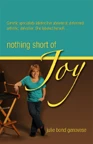
I remember shoving everything off my desk – including the beagle – and yanking out the telephone cord so I could read Julie Genovese’s manuscript in peace. I didn’t move for hours because I was so gripped with her story. Nothing Short of Joy is a story about a little person with a huge story and a huge life.

What made this book so important to me is that the theme goes far beyond the life of a brave woman suffering from a rare form of dwarfism. It’s about combating our inner demons that we build up in our lives so much that we become to believe they are what define us. Julie’s book shows us that’s all a load of yak dung.

Julie was interviewed by the lovely Harris Faulkner from Fox News, and I wanted to share this wonderful interview so you can capture the infectious essence of Julie Genovese.

Part 2


The Written Wyrd

March 24, 2010

Of late, I’ve seen some works where the authors thought it was oh-so cool to change the spelling of words in order to attract attention. At first I thought the authors were abysmal spellers, but I noticed that the misspellings were done on purpose for effect.

For instance, Magic became Magick, Classic became Clasick [that took me a while to figure out, dense soul that I am], Quest became Kwest. Bleh. When I used to teach school, I saw the most bizarre spelling of kids’ names: Ahn/Ann, Ghrase/Grace, Lihn/Lynn, Jenipher/Jennifer, Khristi/Kristi, etc. And I’m not talking about these being cultural changes, but your typical WAS [white, Anglo Saxon]. These poor kids were doomed to a lifetime of mispronunciation and misspelling all because mummy wanted to spruce up a “clasick” name.

The same goes for punctuation. I’ve seen authors eschewing quote marks to denote dialog. I’ve been told it’s because they write experimentally. The only thing experimental is the lack of quotation marks because it certainly isn’t in the writing.

WTF peeps? Spelling and punctuation are there to make life easy for the poor slob reading your work. Do you think it’s really in your best interest to make it harder with cutesy spelling? Being clever – Magic/Magick doesn’t turn a rotten banana into a banana cream pie. All it means, to me at least, is that you’re trying to deflect the real issue – and that’s your writing.

“Kutesie” doen’t equal “Phabulous.” Stick to the standard spelling, and let your writing stand on its own.


Follow

Get every new post delivered to your Inbox.

Join 963 other followers

Powered by WordPress.com