No-Whine Zone

August 23, 2013

I admit to having an aversion to whining. I ground my teeth when my kids did it as wee bairns, and I do it to this day whenever I hear someone uttering the most toxic words in the English language…”I can’t.” Those words are a personal choice. Don’t tell yourself you can’t finish writing that chapter, you can’t finish your manuscript, you can’t find your writing mojo, you can’t meet your deadline, you can’t promote your book.

It’s a choice. Nothing more. If you’re feeling challenged today, I suggest watching this. It’ll give you a whole new perspective about those damaging words, “I can’t.”

Yes, you can.


Don’t Let the Cat Out of Your Literery Bag Too Soon

August 22, 2013

cat-out-of-the-bag

An agent queried me with a terrific sounding book. Then I read the two chapters she sent me. They were rough. The subject matter was a tug-at-the-heart-and-take-no-prisoners, yet the voice was distant and disconnected, almost like a journalist’s accounting for Dry As Cardboard Weekly.

I wrote back to the agent with my comments about the lack of emotional appeal, and asked if there were more chapters because the subject matter was so compelling. Alas, the book had only those chapters, however the author was in the process of writing more chapters, and would I be interested in seeing them in a couple weeks? Sigh.

The agent let the literary cat out of the bag too soon, and didn’t have anything to back it up. I’ve already seen the chapters and complained about them, so what makes me believe some hastily written chapters will change my mind?

There is nothing worse than having an interested editor and not being able to provide, and here’s why:

First Chapters Danger Zone

I know you’re eager, and it’s not at all unusual to sell a nonfiction work based on a few chapters, but there is so much that can go wrong, and this is what I call the First Chapters Danger Zone.

You’re asking three chapters to do a lot of heavy lifting. Everything hinges on roughly 50 pages, so those pages need to rock.

  • The narrative needs to be lyrical and articulate.
  • The dialog needs to be snappy.
  • The pacing has to strike the perfect balance.
  • The tone and writing style needs to match the subject matter. For instance, if you have a story about beagle rescues, then your tone needs to be emotional and the writing style has to be open and approachable in order draw the reader into the story.
  • Your characters have to be so well developed that the reader instantly engages with them and their story.

Blow any one of these, and it’s a rejection. Simple reason being, you haven’t given me enough to sink my teeth into, so it’s easy to give it a pass. I’m not invested enough to care.

Offer to Quickly Write More Chapters

Let’s say I ask for more chapters – as I did with the example above – and there aren’t any written, but you’re more than willing to write some quickly and get them to me. Depending on the strength of those first chapters, I’ll either say fine, or no thanks – and here’s why:

Lack of Faith: If your first chapters are pretty weak and don’t hit the criteria I mentioned above, then I don’t have faith that subsequent chapters will be any better.

Hurry Hurry Rush Rush: In the eleven years I’ve been doing this, I have yet to see many authors who could quickly crank out subsequent chapters that rocked. Imagine having your agent call you and tell you that an editor wants to see more. You don’t have more. Yikes! Bite your nails down to the quick…then grab your laptop, five gallons of coffee, and some chocolate laced with uppers, and begin writing.

The whole time you’re writing and foregoing sleep, that wicked voice is screeching like a banshee loaded on dexedrine: HURRY THE HELL UP! THAT EDITOR NEEDS THESE CHAPTERS YESTERDAY! SHE’S INTERESTED!!!!! YAHOO!!!!!!!!! CAN’T WAIT TO TELL MOM I SOLD MY BOOK!!!!!!!!!!!!!! FINALLY, I’M GOING TO BUY GREECE AND LIVE IN LUXURY!!!!!!!!!!!!!!!!!!!

Is your writing at your literary peak under those circumstances? Experienced writers know what they’re capable of under most circumstances. Debut authors haven’t been in this position before, so they have a stronger tendency to send inferior chapters that end up killing the entire deal.

Long story short – nothing good comes from hurry hurry rush rush.

The Incomplete Manuscript Blues

The road of the incomplete manuscript is fraught with trolls and vampires…and snarly editors.

Not Planning Ahead: If you’re trying to sell a work based on a few chapters, you need to consider that an editor may want to see a bit more. Do have “more,” or will you have to barf it out in record time if someone asks?

Who Are You?: If you don’t have some sort of public presence, then I don’t have much to go on in terms of knowing how well readers may accept your book. Are you a debut author who doesn’t have any other books that I can read in order to see your complete writing? The less I know about you, the less willing I am to take a chance on you with a scant three chapters. How do I know the rest of your book will rock? How do I know you have what it takes to organize a book in an entertaining manner? We have no concrete way of knowing how your book will end. A detailed chapter outline only goes so far.

Publishers spend a ton of money, and they need as much of a sure thing as they can realistically get. If they’re on the fence about a three-chapter submission, it’s easier to say no than yes. Are you willing to gamble with your career like that?

Subsequent Problems With Selling a Partial

Tailor Made: An author sent me her first chapters and said she didn’t finish the manuscript on purpose so she could tailor it to my recommendations. It’s a nice thought, but it’s not an editor’s job to tell an author how to write their book. An editor’s job is to read a manuscript and make suggestions to make it better – nor does an editor have that kind of time. This is not a compelling justification for not completing your manuscript.

Underperformance: Over the years I’ve bought books based on a few chapters and a detailed chapter outline, and twice I ended up cancelling the project because the finished product simply didn’t live up to the first chapters. The rest of it fell apart. Since that time, I’m gun shy…and I’m not the only editor out there who is. We’ve all been disappointed at one time or another.

Time:  Authors have oodles of time to spend on those first chapters that are slated to go out for query. They have tweaked and perfected to the point of fabulosity (we hope). If they’re a debut author of memoir, chances are they haven’t written a full-length book before, so no one really knows if they can or not. Now you have a deadline AND figuring out how/if you can write a book.

Writing against a deadline is daunting, and debut authors don’t realize this until they’re knee-deep in the process. It takes buckets of time, and they end up turning in what is basically their first draft because they were in a rush to meet their deadline. May I be honest here? First drafts suck stale Twinkie cream. First drafts are you telling yourself the story, and I would rather eat a rusty razorblade than edit a first draft. In fact, I won’t. A turn-in ready manuscript needs to have many revisions before it’s ready for human consumption…assuming editors are human, that is.

And face it, second and third drafts are pretty rough stuff, too.

Adding to the deadline pressure is that your editor has slated your book to release in a certain season, and all their marketing and promotion is based on that date. Changing that season is akin to melting granite, and I guarantee editors will drink engine grease if you turn in a rough piece of work that requires huge chunks of editing time and huge chunks of rewrites that threaten meeting that release date.

Been there, done that. It’s why my hair color comes out of a bottle and I mainline cheap gin.

In short, if you really want to sell your book, then why not finish it? Not letting the cat out of the bag too soon could be the difference between a yes and a no thanks.

Any of you have reasons for not finishing your book?


Hang on to Summer and Get Your Freebie e-books!

August 13, 2013

free stuffOkay, so here’s the deal; this is the last hurrah before the kiddies start school and summer officially ends. Let’s make summer last a bit longer by hitting the beach, hiking in the mountains, and reading a fabulous book.

To help feed that cry for fun, we’re giving away freebie e-books to the first 15 readers. I’m offering a selection from our backlist  because they rock. You may only choose one book. Be sure to put which title you want in the Subject line.

Example: Free e-book: The War of the Rosens.

Email me at lynn-at-behlerpublications-dot-com

Charting the Unknown (memoir) – Have you ever dreamed of chucking it all and doing something you’ve always dreamed of doing? Like living on that tropical island? Well, Kim Petersen and her husband did it. They tossed it all aside to live on a gorgeous boat and sail the world with their two teenagers – and in the process, learned valuable lessons about fear and love…and laughing like a foolio.

Nothing Short of Joy (memoir) – Julie Genovese is about the most infectiously happy people I know. This beautiful woman always has a smile on her face and a song in her heart. But she wasn’t born that way. She had to work to overcome a childhood of taunts and physical pain to reach a point of sheer joy, love, and happiness.

KTLA’s News at Ten: Sixty Years With Stan Chambers (memoir) – If you live in Los Angeles, or anywhere in Southern California, then you know Stan Chambers. He has long been an L.A. news icon and one of the business’s nicest guys. He was able to get breaking news stories because people trusted him. That included the story heard ’round the world – the Rodney King beating…and many others.

Dr. Zastro (fiction) – This novel is just plain lovely. A historical love story that still makes my heart swell whenever I read it. In fact, I’ve read it so many times, my Kindle app on my tablet is threatening to explode. Le sigh…

The War of the Rosens (fiction) – Is there any more endearing character than little Emma Rosen? Personally, I don’t think so. She’s a bright spot in a dysfunctional family, whose honest, pure questions about the world around her eventually heal everyone she touches. Love, love, love this book.

Donovan’s Paradigm (fiction) – Um…ok, gotta come clean and admit this is my book. Two very lively surgeons are at odds with each other due to their beliefs about medicine, and their fireworks threaten to rip apart the sanctity of the surgical ward, and their own lives. Geez, that sounds really Harlequin-ish, doesn’t it? It isn’t. If you’re looking for sex, forget it. If you’re looking for delicious, thought-provoking characters who make you think about whether your doctor’s beliefs impact the way they treat you, then this be for you.


You Writes? You Needs Skillz

August 12, 2013

LOL cat

The ever-irascible Chuck Wendig has a terrific post on the 25 Things he’d like to say to new writers. Excellent post, go read it. Go ahead, I’ll wait.

You back? Great. Brilliant post, no? Number 11 stood out at me like a Twinkie in a sea of filet mignon. This point talks about writing rules and writing skillz…you needs ‘em. Chuck writes:

Writing is a technical skill. A craft. You can argue that storytelling is an art. You can argue that art emerges from good writing the way a dolphin riding a jet-ski emerges the longer you stare at a Magic Eye painting. But don’t get ahead of yourself, hoss. You still need to know how to communicate. You need to learn the laws of this maddening land. I’ve seen too many authors want to jump ahead of the skill and just start telling stories

I concur. I’ve seen too many memoir writers do this. Something happens to them, and their first reaction is to write about it, never thinking about the quality of their writing. Your story may be incredibly compelling, but if it’s wrapped up in mediocre writing, then it’s probably going to be rejected.

Publication is a business just like any other business, and editors are looking for professionals. That doesn’t mean only authors who have published tons of books. It means an author who has researched the business and understands how things work. It’s the author who understands her competition and her intended readership. It’s the author who understands pace, flow, story organization, character development, plotting. It’s the author who knows spelling and punctuation. It’s the author who looks at writing as a business, not a hobby.

That story burning inside of you isn’t going anywhere. I understand you’re eager to get your story on paper, so go ahead and do it. HOWEVER, put it aside and learn your craft. Don’t ever forget that you’re up against many, many people who take writing seriously, so ya needs mad skillz in order to compete.


Food to Nourish Your Writerly Soul – And a Freebie Book

August 9, 2013

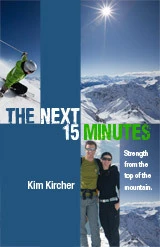
next15minutesI met up with our beautiful author, Kim Kircher – THE NEXT 15 MINUTES: STRENGTH AT THE TOP OF THE MOUNTAIN – at the fabulous Pacific Northwest Writer’s Conference in Seattle a couple years ago. Being the consummate hostess (she lives in Seattle), she suggested we grab a bite of lunch, and whisked me off to Nordstrom’s. I’d never eaten there, but oh my, what a treat. She recommended their salad – complete with yummies like grilled chickie, strawberries and candied walnuts.

Not only does Kim find strength at the top of the mountain, but she knows how to add fuel to an empty gastric tank. I was in heaven, especially over Nordy’s salad dressing. I can’t remember how I stumbled across the recipe, but it has become my go to salad dressing, and I thought I’d share it with my favorite peeps – writers. After all, we have to eat good food to write brilliant books, right? And it’s far healthier and cost-efficient to make your own dressing.

Nordy’s Champage Vinaigrette

1 tbs. shallot (actually, I laze out and don’t add them)
1 tbs. dijon mustard
2 tps. sugar
1 tsp. minced garlic
1 1/2 cups canola oil
1/2 cup champagne vinegar
3/4 tsp. salt
1/2 tsp. pepper

Dump everything into a food processor, or use a hand blender, and mix it up really well.

I toss this on baby spinach with grilled chickie, pine nuts, and raisins. El yummo. It also makes a terrific chickie marinade.

And while you’re munching on your brain food, enjoy Kim’s fabulous book. Oh…you don’t have it yet? A tragedy!! A crime against Readerhood!

I’ll send a free e-book to the first 15 readers who email me – lynn-at-behlerpublications-dot-com. Put Free Next 15 in the subject line. No one should be without Kimba – Queen of the Mountain. She’s as talented as she is gorgeous.


Victor Borge talks punctuation

August 8, 2013

Given my rant yesterday about punctuation abuse in writing, it’s only fair that speech be given the same benefits of punctuation. Enjoy


That Little Talk About Punctuation Abuse

August 7, 2013

punctuation_saves_lives

I’ve talked about punctuation abuse over the years, and I thought I’d bring it up again as a friendly community service reminder that this form of abuse will cause your readers to toss your book into the gardener’s leaf shredder.

Comma:  For the life of me, I’ll never understand why editors have decided to downgrade the comma. Sadly, this is one little puppy that suffers from no abuse. In fact, it’s under utilized, which forces readers to re-read sentences two or three times to make sure they understood it correctly.

Virtually every book I’ve read from the Big Pants Publishers have house rules that obliterate the comma. Call me old fashioned, but MY house rules are this: Go comma, or go home. I want our readers to understand a sentence at the first read, not the third. Dumb, dumb, dumb. Learn proper comma usage. Yes, that’s an order.

Ellipses: I once had a manuscript that contained over 250 ellipses shoved into a 90,000 word count. I nearly fainted. Almost every other paragraph was interrupted with … . Made me want to chew glass.

I understand the desire to use ellipses…it’s akin to taking a breath or adding emphasis. But it also creates lazy writing…especially if you used it 250 times.

Em Dash: A cousin of the ellipsis, the em dash performs the similar job of taking a breath or adding emphasis. Use too many of these, and you’ll experience chaffing and a desire to shave your eyebrows.

Exclamation Point: The idea of this little beauty is to convey excitement or extreme caution, as in, “Holy garbanzo beans, I got a seven-figure contract deal!” Yah, I’d say that warrants an exclamation point. But only use one.

The problems begin when you use them too much. They end up disappearing into the white noise. If you have a couple hundred exclamation points in your writing, then you’re either over-excitable and need a Xanax, or you’re lazy.

Don’t depend on the poor exclamation point to do your dirty work. There are a million ways to convey extreme emotion without depending on punctuation. You’re a writer, so write. Don’t be a lazy pants.

Semi-colon: Cousin of the comma that connects two related or contrasting statements together. “The Rescue Beagles make excellent margaritas after a hard day’s editing; it makes my life worth living.”

This little sucker is classically used in academic nonfiction, where we’re not necessarily looking for smooth pacing and flow. We’re looking to get our idea across with an economy of words. But more and more, we’re seeing them in fiction and narrative nonfiction, and I’m not necessarily a fan because, well, they feel academic-ish and tend to kill the melodic flow.

That doesn’t mean you can’t use them; just know how and when to use them. Time was the semi-colon did more heavy lifting than the comma because it added a bigger breath, or added more emphasis. But with fiction and narrative nonfiction, it’s OK to allow the comma to take on a bit more responsibility.

But here’s the thing…and this is an organic decision…ask yourself if you’d be better off breaking the sentence up into two sentences. “When the Rescue Beagles mix up a batch of margaritas, they invite the entire canine neighborhood over for drinks; they’re all about the partying.”

Personally, I would prefer to break that sentence up because the last part has a bit of a kapow, so I’d like to give it bigger emphasis by making it its own sentence. But it’s a personal decision.

For a concise and humorous take on semi-colon’s proper use, go no further than The Oatmeal.

Taking a page out of my love for Twinkies, moderation is key. Punctuation overuse is as naughty as eating too many Twinkies. Don’t abuse your writing by going overboard. Write consciously, and don’t be afraid to read your writing out loud. It’s how we find the warts. Now go out and be brilliant!


Memoirs: Answering the Tough Questions

August 5, 2013

Broken-Heart--1

The woman sat across the table from me. In between watery eyes, she pitched her memoir to me – a heartbreaking family story. She could barely choke it out, which had me vacillating between empathy and being really uncomfortable. I let her compose herself by looking around the large conference room at the 20-odd other agents and editors listening to pitches…and taking a deep breath myself.

Indeedy do…memoirs are very personal, but you need to have several degrees of separation from your story. If you’re still sobbing and emotionally wrought, then you’re still in Catharsis Land (July post). You’re not ready to answer the tough questions because you haven’t moved out of the grieving process. When I say grieving process, I don’t mean grieving over a physical death, but rather an emotional one.

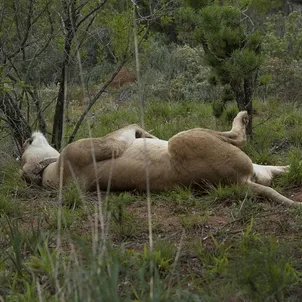
Memoirs are borne from Life happening to us. Something momentous drops in our laps and offers us the opportunity to act. It’s that process of action that creates the catalyst for a memoir. And it’s not the mundane “my mom died,” because unfortunately, everyone’s mom dies at some time. Rather, it’s the out-of-the-box action you decided to take because your mom died, and the evolutionary process you experienced because of that event…hello LEARNING TO PLAY WITH A LION’S TESTICLES – which had author Melissa Haynes volunteering at an animal reserve in South Africa after her mother’s death. Her intent was to help the animals – only it ended up being the other way around. This twist is not only amazingly out of the box, but entirely out of the zip code. An excellent summer read that’ll have you laughing and sobbing.

Unfortunately, the author sitting across from me at the writer’s conference was far from laughing. She was sobbing by now. She definitely had Life drop in her lap, but I needed to know more because I suspected she wasn’t ready for publication, and here’s why:

What happened?

I know this sounds elementary, but I’ve been amazed at the number of writers who have a hard time pinpointing the exact catalyst because they’re so caught up in the emotional blowback.

“My husband left me.” Okay…um…so what? I don’t mean to diminish anyone’s pain, but lots of marriages end, so the “what happened” has to go deeper than simply being abandoned.

“My husband left me after finding out I was diagnosed with cancer. I lost my health insurance, and all I had was a rescue beagle to comfort me.” Ah. Now we have something more to hang our hat on because we can see the crisis in full bloom and the direction of this story.

The writer who can’t get past her husband leaving her isn’t ready to move on. She needs time to work through the grieving process.

What action did you take?

The writer sitting across from me was taken aback at this question, and I watched her shift uncomfortably in her seat as she groped for an answer. She concluded that she really hadn’t taken any action because she was still living in a hell of her own making and trying to figure a way out.

Ah. So she’s reacting rather than proacting. If the “main character,” which is presumably the author, is constantly reacting to situations around her, then she is taking a back seat to the unfolding events. They become bigger than the “main character.” A compelling memoir can’t be about stuff constantly happening to you – you need to take action at some point by being proactive.

Face it, it’s dull to read about a woman whose husband abandons her, her sons take financial advantage of her, her dog dies, and her car blows up after she gets fired from her job…and all she does is continually play the victim. That’s reactionary. As tragic and sad as it all is, who cares? Bandini happens to all of us. While we don’t want to be heartless to someone’s plight, we know that audiences won’t flock to a story where the protagonist talks about all the crappy things happening to her, but never takes action and fights back.

What was your evolutionary process?

“No gets out alive.” I love this because it hints to a much deeper meaning that challenges us to make the most of what we have in the time we have it. We have to decide how we’re going to move through life. I don’t believe we remain unchanged by the events that happen to us. Do we either become better, more thoughtful, patient, or tolerant, or do we become bitter, frightened, angry, or passive?

The author sitting across from me was stumped by this question. She had no idea how she had changed, which told me a) she hadn’t thought about it, or b) she was so deeply immersed in the victim role, that she hadn’t evolved yet.

An interesting memoir needs to speak to how the author has evolved. This is how readers become engaged with you and your plight. Your “character” must move from Point A to Points B, C, D, and E.

What is the resolution to this event?

There needs to be an ending to the story. Even if the situation is still ongoing, there needs to be a resolution. You may still be divorced or have cancer, but you’ve learned to stand on your own and take control of your future. Your sons may have robbed you blind, but you’ve tossed them out on the street and are taking control of your life by being a foster home to rescue dogs.

The author at this conference had no resolution to her story because she was still neck-deep in the situation. I suggested that perhaps she was too hasty in writing her memoir. She’s still so embroiled in the current situation that there hasn’t been any personal evolution or resolution.

Since she was still emotionally fragile, I suggested that she might be better served to consider her writing as a catharsis because crisis events tend to warp if they stay inside of us. We need to get it out in some way. Some jog, some work out, some eat, others write.

The important thought to consider is where are you in your memoir journey? Ask yourself these questions:

  • What happened?
  • What action did you take?
  • What was your evolutionary process?
  • What was the resolution to this life-stopping-jaw-dropping event?

Analyzing your answers to these questions may help you decide whether you’re still in Catharsis Land or you’re ready to move into the business of a writing career.


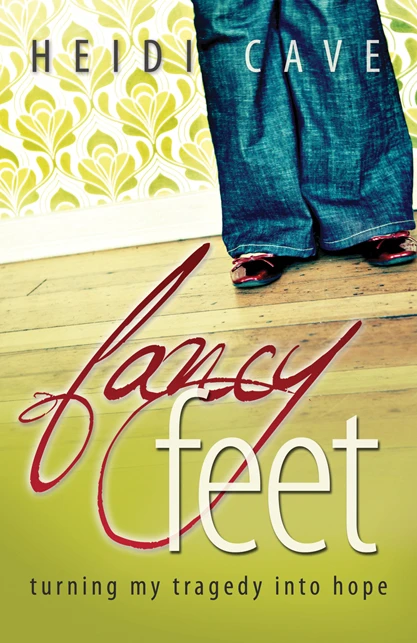
FANCY FEET Author, Heidi Cave – Global BC tv interview

August 4, 2013

FancyFeet-sm

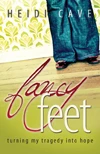
Major huzzah to our beautiful author, Heidi Cave, with her TV interview on Global BC in Canada. She is the perfect example of why we don’t act like idiots behind the wheel. Slow down, relax, and enjoy the ride. Be a survivor, not a victim.


Follow

Get every new post delivered to your Inbox.

Join 978 other followers

Powered by WordPress.com
%d bloggers like this: