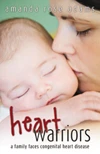
Amanda Adams’ HEART WARRIORS Rocks!

September 28, 2013

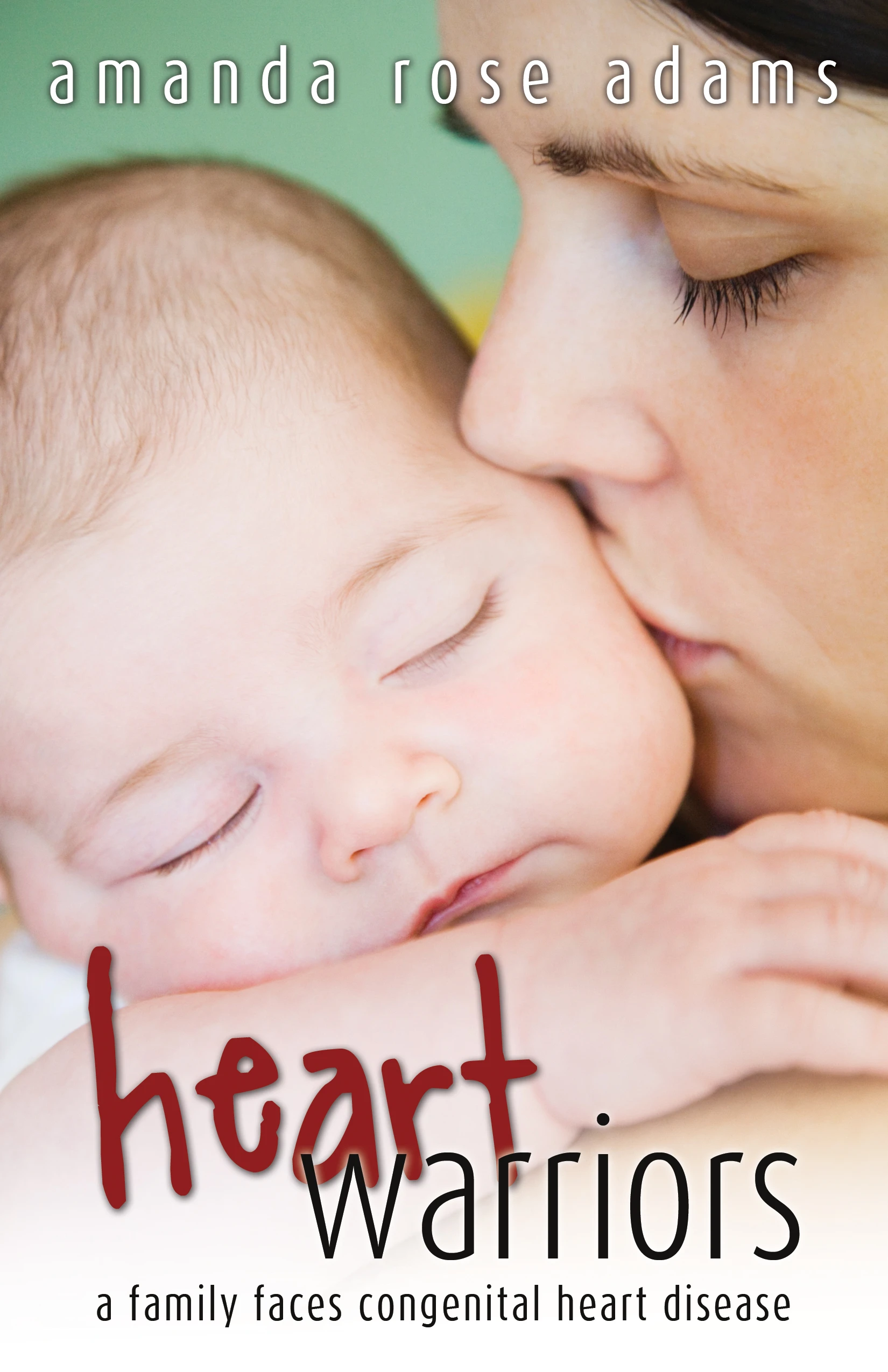
Heart Warriors High ResHuge congrats are in order for Amanda Adams and her win of a Cammy Maximus Award from Colorado State University for her amazing book HEART WARRIORS. They hand out a number of awards, but the Cammy Maximus is the granddaddy, and is described thusly:

Evidence of long-term, distinguished series or over-the-top single entry quality.  Demonstrates outstanding technical quality, depth of effort and recognition on a regional or national scale, with superb storytelling quality.

This is HEART WARRIORS to a tee. Amanda is a tireless advocate for childhood congenital heart disease, and puts a face on how this affects not only the child, but the entire family. HEART WARRIORS is a no-holds-barred emotional ride of a young mother faced with suggestions from her doctors that she abort her baby because chances were that the baby would die immediately after birth.

Well, Amanda told ‘em all to go to hell, and Liam is the beautiful, vibrant little bug who has braved countless surgeries with a brave smile and irrepressible spirit. But it hasn’t been all butterflies and rainbows, and Amanda’s book is the first book to give permission for family members not to shy away from their emotions – which vary as much as the wind.

The resource guide at the back of the book is jam-packed with “gotta have” tomes of wisdom that vary from “Supplies for the Battlefield,” to “Tactical Guide for Civilians on the Home Front,” to “The Final Word About Raising a Heart Warrior.” Oh…and Chapter 41? Ooh my, it’s a MUST READ.

In a word, HEART WARRIORS is the go to book for families, relatives, and friends of families who find themselves touched by CHD, and I’m thrilled to pieces that Colorado State University feels the same way by bestowing their Cammy Maximus Award to Amanda.

Amanda, you rock.


How Well Do You Know Your Characters?

September 23, 2013

character-development

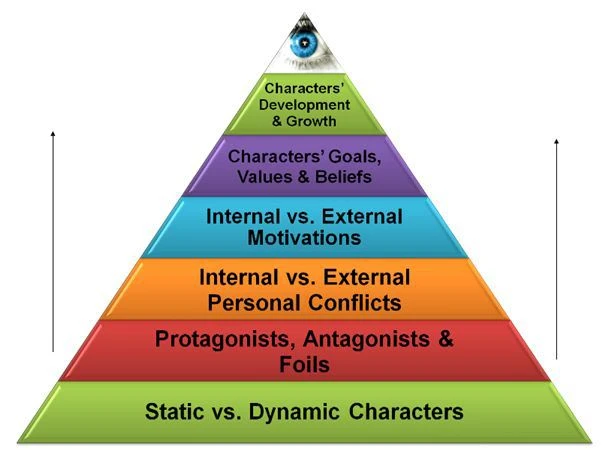
Character Development was the topic of a discussion I was having with a group of writers. I went through a general list of things I run up against when reading manuscripts – things that make my teeth itch. Things like:

  • React vs. Proact: Main character spends more time reacting to situations than proacting – being in control. This makes your main character disappear into the wallpaper.
  • Cliche: The cop who drinks and smokes too much, his apartment is always messy, and he’s divorced. Really? Why are there no healthy, happy, clean cops in these stories? Cliche characters is sloppy writing.
  • Weak supporting cast: Sometimes authors employ a weak supporting cast in order to elevate their main character. The result is a flat story. You need a strong supporting cast in order to have something solid for your main character to play off of.
  • Cause and Effect: If your intent is that your main character is viewed in a certain way, then you need to writer her that way. If she’s well respected, then she can’t be a dimwit who finger-curls her hair and says, “yanno” a lot. The dim bulb can’t be the Ivy League magna cum laude. If they are, then it has to be fully explained. Readers won’t go from Point A, to Point B and C unless you logically and artfully take them there.
  • Why Him/Her?: Your main character is your main character for a reason, which means they have some kind of trait(s) that are worthy of exploration, and is solely unique to this character. After all, anyone can save the world from that giant Twinkie, so why is Roger Ramjet the lucky one to do the honors? What makes him the only character to solve this problem?
  • Lack of a Personality: If you’ve chosen Roger Ramjet, then you need to give him a personality worthy of being up to this particular sequence of events. He’s gotta be real, with a personality we can touch. What kinds of quirks do they have? What are they afraid of?
  • Evolution: Characters who don’t evolve aren’t real. You know that saying about how no one gets out of this life alive…well, we don’t get out of this life unchanged, either. Characters who don’t change aren’t characters we can care about. If Margie is as dumb as box of rocks at the beginning and remains so at the end, then lots of readers will toss Margie against a wall and quit reading.

So all these things we talked about boiled down to one thing: How well do you know your characters? Many insisted they knew their characters very well, but then I asked how they felt their characters had evolved, I saw some thoughtful expressions. I asked why they chose THIS particular character to star in their stories, and saw some thoughtful expressions.

One author mentioned how she had killed off one of her characters and that he sat on the couch and told her all the reasons he should remain in the book. Ok, we realize that writers are the only people who can read that and not insist that little men in white coats carry them away, away, away….

After that experience, the author began to journal each character in her books, in each character’s POV.

I heard angels sing and watched a shaft sunlight blast through the clouds. What a brilliant idea. I know it’s not a new one, but it had been years since I’d heard it, and I thought this would be a good reminder to all you wonderful people.

And yeah, this goes for you nonfiction writers as well.

I see too many stories where I don’t feel the writer knows their characters well enough, and the result is lifeless, flat things that I don’t care about. A journal in your characters’ POV forces them to unveil themselves to you. You may realize things about them that you’d never thought of. This may be information you don’t plan on using…but you never know.

For example, I write bios for all my characters, and I ended up using some of the goofier traits here and there to add color and dimension to my characters. I do that to make sure those characters are as real as my fleshy friends.

And let’s face it, if you don’t have wonderful, rich characters, your book will probably fall apart. If the characters are fabulous, then I’ll follow them anywhere – even into the dentist’s office. But you can only attain that fabulosity if you know them really, really well.


Be An Asset to Yourself and Your Publisher

September 17, 2013

We_Can_Edit

I’ve overheard some semblance of a particular comment many times at writer’s conferences, and I never cease to be shocked and awed. It goes something like this:

“I don’t have to worry about spelling, punctuation, and syntax. That’s what my editor is for. I’m merely the writer.”

#1 Reason why that’s wrong, wrong, wrong:

When your manuscript comes back to you for editing and, eventually, the final read – you won’t be able to spot those errors that may have slipped through the cracks.

You are not an asset to yourself or your editor.

Case in point: Someone I know had an editor who, through her own ignorance, actually inserted mistakes into the manuscript. Luckily, the author was far more knowledgeable than the editor and pointed out the mistakes the editor had made. A conversation ensued until the editor had to back down and admit her blunders. Obviously, this isn’t a publisher (and I use that word loosely), who can afford to hire experienced editors.

Case in point: Mainstream publishers edit manuscripts to within an inch of everyone’s lives, however, we’re all human (despite the rumors), and mistakes do sneak through. We’ve all seen books that had a few errors that made it to the final print run. It sucks, but it does happen. The problem is that we’ve all read the manuscript so many times, those beasties sometimes become harder to catch. This is where Team Author is a godsend. We’re watching each others’ backs for the common goal of pubbing a perfect book.

Reason #2 why that’s wrong, wrong, wrong:

You probably won’t get a publishing contract from a solid house because mistake-riddled manuscripts are tossed out with as much zeal as my family does over my attempts at baking.

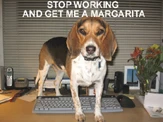
An author whose manuscripts are rife with spelling errors or punctuation blunders shows a lack of respect for their writing and, in turn, a lack of respect for anyone reading it. It basically says, “I wrote it, you fix it.” Uh. No. Mainstream publishers will boot those puppies out faster than the Rescue Beagles can suck down a pitcher of margaritas.

The only folks who don’t care about excellence of craft are publishers you don’t want anywhere near your writing.

Lastly, here’s Reason #3 why that’s wrong, wrong, wrong:

You’re a writer, so you should respect your craft by being knowledgeable. Absolutely no excuses. Every writer should have a copy of an excellent writing book, like THE CHICAGO MANUAL OF STYLE and Strunk and White’s ELEMENTS OF STYLE.

If your manuscript says, The Rescue Beagles staired at the wall, I’m going to change that to stared.

If your manuscript says, The Rescue Beagles’ favorite book is FANCY FEET, I’m going to italicize the title: FANCY FEET because book titles, plays, ships, movies, and a whole (not hole) host of other things are italicized. But if you don’t know that, you won’t catch that your editor forgot to italicize the name of the battleship in your book.

And need I go on about it’s vs. its? Gah. I think it’s one of the easiest mistakes to make when writing because I see it All. The. Time. And it’s also one of the easiest things to miss. Do you know the difference?

If not, you are not an asset to yourself or your publisher.

The point here is that you must be an asset to yourself FIRST because it’s your only protection with respect to your manuscript. Conversely, there is nothing sweeter than being able to depend on a smart, savvy author.

You can’t afford to be undereducated because the sanctity of your book may depend on it. Publishing is a team effort, which means there’s an assumption that both teams know what the heck they’re doing.

This is your book, so doesn’t it go to reason that you would take every step to maintain its integrity? As Ronnie said, “Trust, but verify.” Be an asset to yourself because you will definitely be an asset to your publisher. Pinkie swear.


“Can’t you see I’m writing here??”

September 13, 2013

rick-castle-pic

I adore the show Castle. I have about a billion shows on my DVR, so I have a fallback when regular TV lets me down (which is often). So last night’s program has Castle getting the “what, why for?” from his daughter and mother. They’d told him all kinds of things that he apparently forgot. His comeback: “Was I writing?”

Ahhh hahahahahaha.

Who of us hasn’t had this happen? Life happens around you, yet you have no memory of it because your nose was buried in your writing (or editing) ? I’ve apparently had complete conversations with my kids that are a total blank. There’s a probability they’re taking advantage of my altered state and making stuff up…which totally wouldn’t surprise me, clever things that they are.

It got so bad that I finally had to declare to anyone within fifty feet of my desk that when I’m either writing or editing, I get a free get out of jail pass. I’m not responsible for anything I may have said while doing either of those jobs…unless it makes complete sense, of course.

Writers, save yourselves. Take control of your independence and save hours of wondering whether you’ve lost your mind. Wait. We’re writers…of course we’ve lost our minds, but I digress. Make your computer a Safety Zone, and anything you say while you’re sitting at your desk creating great tomes of brilliance isn’t  your responsibility.

So the next time little Johnny comes in with a bleedy head wound, remarking that he’s feeling a bit woozy, you have the authority to shout, “HEY!  I’m writin’ here!! Go talk to the dog.”


Jimmy Fallon – You Rock (I think)

September 6, 2013

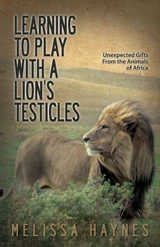
TesticlesOk, so I have to tell you about my wild week. I awoke to my beautiful author, Melissa Haynes, telling me about Jimmy Fallon’s show Tuesday night and his segment about THE 10 TITLES NOT TO READ. WTF, sez I. Well, guess who was #1? LEARNING TO PLAY WITH A LION’S TESTICLES.

Ok, a little about the  title.  We made a very conscious decision with this title – even after long barky discussions with our distributor about changing it. They were afraid we may offend someone. Huh? This coming from the same fabo distributor who distributes GO THE FUCK TO SLEEP? Hello? Long story short, I held my ground because it’s the very heart and soul of the book. and it’s a South African saying that means to take foolhardy chances. And hey, isn’t better to take foolhardy chances than to take no chances at all?

Ok, so that’s exactly what we did here. Talk about playing with a lion’s testicles…

So now we have Jimmy Fallon mentioning the #1 title to millions of viewers. Holy sweetbreads. Can we make lemonade out of this? Well, I guess I shouldn’t have worried. The book apparently sold out on Amazon/ Canada, and Amazon/US. Melissa’s blog blew up and she’s inundated with people emailing her to say how fabulous it is.

Our site has blown up as well, with LEARNING TO PLAY WITH A LION’S TESTICLES being the #1 search. Additionally, Becky Mushko’s Peevish Pen site blew up with her review of Melissa’s book. So lotsa people have inquiring minds…

So I contacted the producers on Jimmy Fallon Show with a very tongue in cheek email about how we all had a huge giggle over it all, and prompted all sorts of attention, and that it only seemed fitting to have our author (who is freaking drop dead gorgeous) on the show to redeem herself. I explained the title’s origin and how it was obvious that everyone connected with the show had mastered the art of playing with a lion’s testicles, given the popularity of the show.

The show’s booking agent contacted me and said my email was one of the most entertaining of the day, and we’re now in discussions about having her on the show! OMG. Holy pickle livers!

So here’s the segment in all its glory. I can’t help but wince a bit because Melissa’s book is so amazing. But at the end of the day, you have to be able to laugh because life is too short to get your Vickie Secrets in a twist. That said, I hope we kick ass with this.

Let this be a lesson to all you wonderful authors out there – life is stranger than fiction, and you have to be ready to ride the big wave. Yes yes, I’m mixing metaphors. So sue me. Or better yet, send my name to Jimmy Fallon…


Character Clichés – “Make Like a Tree and Get Outta Here”

September 4, 2013

I flew out to So Cal last week from the ‘Burg to see my adorable niece get married. As I got my seatbelt buckled, I noticed about three separate families with tiny babies, and another group of 45 kids get on the plane. Insert inward groan here. I’ve been on flights where I wished for a speedy death from a screeching baby, so the sight of all these mini-humans had my inner dialog sounding something like this: “1…2…20…25…gah! Look at all those walking hormones! On MY plane! Please, Benevolent Cosmic Muffin, just kill me now. Don’t make me wrestle the flight attendant for a rusty butter knife – even though I think I could totally take her…”

I had an overwhelming desire to dig my fingernails into my cerebral hard drive. Face it, we don’t real high expectations from a group of ‘tweeners, right? Well, the joke was on me. They were adorable…even the babies. I practically danced off the plane when it landed 5.5 hours later.

What I did is give in to a cliche. I made assumptions based on previous experiences, and gave no consideration that there could be any other outcome. We normally see ‘tweens as alien creatures whose breathtaking toxicity tarnish everything they come into contact with. We expect it.

As writers, we can sometimes fall prey to cliches, and it makes for boring, lifeless writing. The divorced, chain-smoking, messy detective; the airhead cheerleader; the dumb jock; the prudish/strict/scary teacher; the romance story clumsy female protag; the angry, resentful teen, the blushing bride…the list goes on forever.

Readers don’t want the expected because, well, they’ve seen it before. Lots of times. Readers are smart, and they want the unexpected. They want to be pleasantly surprised. They want twists. Nothing gooses my gander more than to finish a book saying, “Wow, awesome characters –  a welcome change from the typical run-of-the-mill.”

Take a look at your characters. Are they people you’ve read before, or do they have dimension? The cop/detective doesn’t have to be a divorced, chain smoking slob. He could be the fastidious type who’s borderline obsessive compulsive. Think of what that trait did for Monk. The idea is to think outside the box when it comes to your characters. They are the most important element of your story, so you have to make them leap off the page.

Take time with your characters, avoid the cliches. It’s the first thing that will cause an agent or editor to deep six a project. Now go out and be brilliant.


Follow

Get every new post delivered to your Inbox.

Join 1,261 other followers

Build a website with WordPress.com
%d bloggers like this: