I spent some time this past weekend getting caught up with queries and submissions. Out of twenty-five queries that were sitting in my goodie pile, I asked to see full proposals on two, and rejected the rest. Out of three proposals, I’ve rejected one and am still reading the other two.
As invariably happens, someone I rejected emails back wondering if my list is full and whether they’d misinterpreted my submission guidelines. I know what they’re getting at. They were under the impression their work was a perfect fit for us, and are puzzled as to why I rejected them. And sure, on the face of it, the works do fit our guidelines. But that doesn’t mean I’m going to request pages.
The fact that you queried someone who publishes the type of work you happen to have written isn’t cause célèbre. I mean, that’s WHY publishers have submission guidelines – to save all of us from wasting everyone’s time. All this confirms is that your reading comprehension skills are spot on. But that doesn’t instantly translate over to the fact that I’m going to be interested in reviewing the work.
Editors reject at the query stage for a whole host of reasons. But the main elements that go into my decisions are:
- Am I passionate about this story?
- Do I believe I can sell it to the marketplace?
- Do I believe the author has a large enough platform in which to help promote the book?
Am I passionate about this story?
Being a small publisher, I have the luxury of throwing my passion into every work we publish. That’s why it’s so hard for me to pick a favorite Behler book. I love them all for many different reasons. And I think this element goes into every editor’s thought process. We have to be passionate about what we choose because we have to fight for it over the lifetime of that book.
We have to convince our sales teams that it’s worthy. We have to convince reviewers why they’d be hoof-sucking bovines for reviewing this book. We have to convince libraries and bookstores that they’d be Butthead’s’ inbred second cousin if they don’t shelf/buy this title. All this takes passion because it’s spread over a long period of time. That’s why orphaned books [books who have lost their editors] often get canceled. They’ve lost their biggest advocate.
So what makes me passionate about a query that’s only one page long?
Communication: This is your story, so did you communicate effectively so that I have a clear view of its foundations? I do own a tinfoil hat, but it often clashes with my outfit, so I let the beagle wear it. Works great when she’s buying lottery tickets.
Many times I reject something and the author writes back stating that I misunderstood their story. Weeellll…until the day arrives when I can climb inside the peaks and valleys of your melon, I’m hindered by what you send me. You gotta say it right the first time, ‘cos thar don’t be no second chances.
Unique: Does the story – be it fiction or nonfiction – have a unique twist that piques my interest? And yes, this is subjective. And no, you have no way of knowing what that is because I don’t even know what it is – not until I see it.
Characters: Do I love the characters? Are they people I’ll fall in love with so much that I care what happens to them? They are the vehicle that makes your story sing. Flop characters = dry rot as far as I’m concerned.
Message: Sure, I want to be entertained, but I also want to learn something along the way. I want my life to be altered and elevated in some manner. So I look for what the story has to say, the overall message. I want to walk away from a book and feel that I’m a wiser/more thoughtful/introspective/smarter/kinder person for having read it. The stronger the impact, the higher my passion for the project. It’s a good thing if I’m blown out of my chair.
Do I believe I can sell it to the marketplace?
It may be that you’ve presented me with cool characters, some hearty food for thought, and a unique storyline, but that doesn’t mean I can sell it that that fickle mistress, The Marketplace. These are the hard rejections. They have all the elements that get my passionate juices flowing, but I’m unsure if it will appeal to a wide enough audience to warrant the costs of publication.
Yeah, about that Almighty Dollar: I’ve been embroiled in enough debates that denigrate being a slave to the Almighty Dollar and how it’s the root of all evil because it counts out some really good books. But facts are that I need that Almighty Dollar in order to keep the beagle in designer dog chewies and electricity powering my batcave. That means I have to look for books I believe will sell.
And yes, these are the times when I don’t like my job so much and wish we ran on an economy of designer dog chewies. I have lots of those.
Do I believe the author has a large enough platform in which to help promote the book?
There are times when all the stars aren’t quite in alignment – and I really hate it when the stars don’t play nice. I’m talking about the many topics written in an impacted category – cancer, bipolar disorder, divorce, family issues, Alzheimer’s. I can almost feel my trigger finger caressing the rejection button. But wait, sez my inner demons. Check out their bio.
Cha-ching! Platform.
There are so many worthy books that are written to enlighten, educate, inspire, and soothe. And many of those are in heavily impacted categories and take a big voice in order to be heard above the din of competing titles on a crowded bookshelf. None of those speak more loudly than a big author platform.
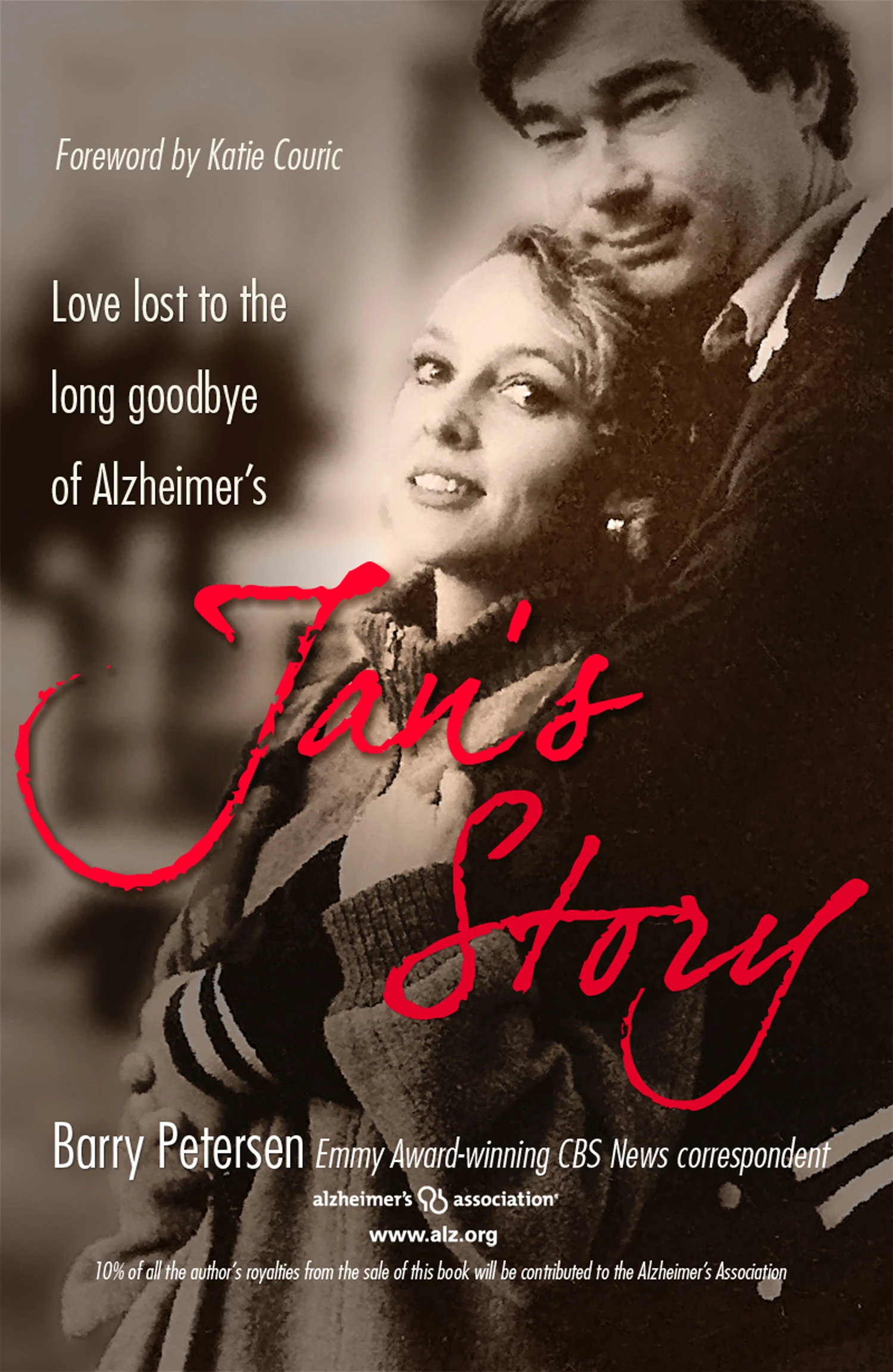
Rejection was nearly the end result with Barry Petersen’s Jan’s Story because the first words that bounced off his agent’s query was Alzheimer’s. Whoa babe, seen a gajillion of these. But I was intrigued because it was Early Onset Alzheimer’s. When one does an Amazon check, the number of Early Onset Alzheimer’s personal journeys slurks down to very few. And no one has Barry’s platform. Or his incredible story.
In the amount of time it takes to say, “beagle, fire up the blender,” I knew that Barry’s book would become the Great Yoda of Early Onset Alzheimer’s because no other book adequately expresses the personal journey of those left behind to care for the young victims of this cruel disease. If not for Barry’s platform, his book would probably not bear the Alzheimer’s Association’s logo or be on its meteoric rise as a “gotta have it.”
Yes, rejection blows, and it’s all too easy to scratch your head and wonder if the Cosmic Muffin is agin you. “What’s it take?” you scream. Well, a lot of things, actually.


 Posted by lynnpricewrites



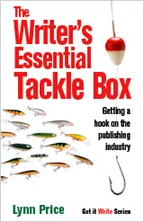 If you want the inside scoop on what floats our boats, The Writer's Essential Tackle Box is a must have. Out in November 2009.