Make your characters leap off the page

April 30, 2012

One of the things I look for in a book – be fiction or nonfiction – are characters that leap off the page. It’s an element of writing that can’t be overlooked. After all, if your characters are dull, one-dimensional- lifeless things, then it’ll be harder to become engaged in the plot. It’s also one of the big reasons I reject a book. I’ve talked a lot about character development over the years, so I thought I’d toss in a few more key elements to the mix.

If you’re worried that your characters aren’t all they could be, maybe they’re missing these:

Backstory – Stuff That Happened Off Camera

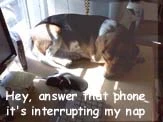
I’ve talked about Backstory a few times and how this little lovely can bog down a story with the same effect as the beagle after too many pitchers of margaritas. The same can be said for characters. However, used with care, backstory can give your character a delicious level of page leapage (totally made that up).

Your characters (real or imagined) didn’t just pop into your story. They are there for a reason, and that’s because something happened off camera that brought them to this point – a trigger point. What is it? Let’s take two examples – one fiction, one nonfiction.

Fiction:

I’m noodling around with a story where the protagonist opens a romance publishing company whose authors are five saucy ladies in their 70s and one very reluctant John Grisham-type character who’s working through his issues of writing on auto-pilot after twenty-something bestsellers.

The backstory is that Twist, the protag, was a talented and successful advertising wiz who discovers her partner is stealing her ideas and selling them to the highest bidder. She makes a splashy Custer’s Last Stand by flipping him the bird and exposing him at a woo-hoo advertising banquet in his honor, after which she sells her portion of the business for a hefty profit, sells her apartment in NY, and beats feet for a permanent hiatus from the rat race to Palm Springs, where she plans on writing a book. That’s the trigger point.

Sure, I could just leap in with the current story, but those colorful events that took place off camera add richness and dimension to the main character. Giving some backstory as to what brought my character this point helps the reader understand the decisions she makes and the kind of personality she has. Absent the backstory, the reader would have to just take my word for it. With the backstory, the reader understands and appreciates the decisions – and the trouble – the protagonist makes for herself and her authors.

What are the trigger points to your novel?

Nonfiction:

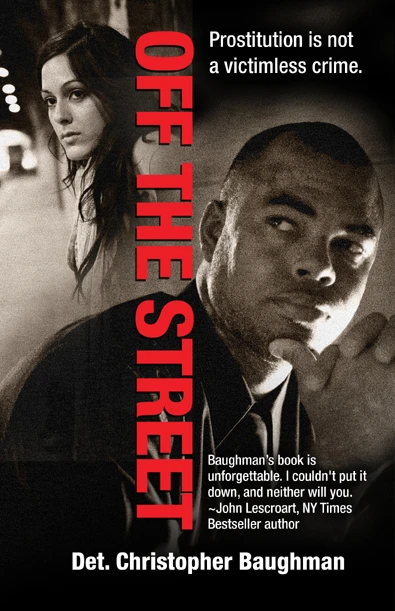
Chris Baughman wrote an amazing book, Off the Street, which focuses on a horrific human trafficking case he spearheaded and solved through his unique detective techniques. It would be an understatement to suggest Chris is passionate about saving women, and it would leave readers wondering what fuels that hard-charging drive, had he not gone into some backstory about his own youth.

Chris’ backstory reveals being a kid, living in the projects and having an innocent view of his surroundings where magic was around every corner. It was shattered one day while playing at his friend’s house when a man broke down the door and beat up the friend’s mother, taking all her money and tossing her out into the street – all because she tried to get out of the prostitution world. The man, who was her pimp, had other ideas.

The shock of the incident and helping his friend wipe the blood off his mother’s face and body, tore the blinders from his face, and he never again saw his neighborhood as the magical, ideal home. He saw the ugliness and brutality where women were beaten and killed, and it fueled the man he grew into. It is a hugely powerful backstory that communicates the passion Chris carries in his heart every day. Because you know what happened to Chris’ off camera, his trigger point, you understand what fuels him, and you cheer him on to break the animal that you see “on camera.”

Used with intent and care, Backstory rounds out a character.

How well do you know your character?

I find that many writers don’t know their characters all that well. They don’t know their backstories because they don’t go back far enough to really get to know them as real life people, their trigger points that brought them to the current story. Instead, writers get centered on a plot and stick in the characters in order to project the plot. Characters – real of fictional – aren’t chess pieces that you blithely pick up and move around. There has to be a logical reason for your characters to act the way they do. And that comes from knowing them as well as you know your best friend.

For example, I came up with the publisher story because I needed an example of plot for a seminar I was doing at a writer’s conference, so the idea of knowing my characters wasn’t part of the plan. People kept asking me if it was a real book and where could they buy it. Hah. So it got me to thinking maybe there was something more to this silly plot. First thing I needed to do is get to know my key players better.

  • Who are they?
  • What brought them to this point where the story begins?
  • What kind of personalities do they have?
  • What are their pluses and flaws (no one likes a Barbie or Ken)?

What to use, what to lose

The worry is often, “How far back do I need to go?” My answer would be, as far as you need to in order to fully understand your character as well as you understand your best friend. There is no magic bullet.

After I fully understand and know my protagonist, I have to analyze what parts of the backstory to use and what to lose. There will be elements of my character’s backstory that aren’t relevant to the story, but they’re just as important to me on a writerly level because the more I understand her, the more rounded I can write her.

It’s exactly like research. When I wrote my novel, Donovan’s Paradigm, I researched various aspects of the medical community (and medicine, in general) for nearly a year. I interviewed women surgeons in order to get a feel for their challenges, and I interviewed a chief of surgery in order to understand the decision-making process and how much power that position wields. In the end, I used a fraction of all the compiled research. A fraction. But I had a lot of doc readers ask what kind of medicine I practice. That’s research.

The more I knew, the more I knew what I could leave out. It’s the same with your characters. It may not be important that your character has a weakness for Twinkies, but you can use that little bit to round out a scene and add a measure of banter. If you didn’t know your character well enough, you will have missed that opportunity. Sure, it’s a small thing, but it’s also something the reader will remember. When Donovan’s Paradigm came out, I received a few boxes of Twinkies in the mail, which totally cracked me up.

And that’s what you want to do: leave an impression.

Fully researching your character will leave readers with a lasting impression.

Dialog

I love dialog (inner dialog included) because it’s the only way the reader can see the character clearly. You can narrate ’til the cows come home, but unless you hear them speak, they remain one-dimensional.  It’s all about communication, and it’s gotta be real. Too often, I see the exact opposite.

Dialog is the writer’s opportunity to reveal the soul and guts of their characters, and so many don’t take advantage of this. I hear all the time, “I suck at writing dialog,” and I don’t understand this. Ostensibly, we all interact with people, so what’s not to get? Even I escape my batcave to walk among the living, and I’m forced to actually speak.

If you speak, then how is it so hard to do this for your characters? And yet, I see this all the time. If your dialog is mundane and wooden, your characters won’t be memorable.

What makes you sit up and take interest:

“I’m going to the beach.”

“I’m going to hit the beach and french fry my skin into something the Golden Arches would envy.”
————————–

“I’m so sad.”

“Every crevice of my soul aches.”

Dialog is a valuable tool to expose your character’s soul.

So if you’re having trouble making your characters leap off the page, maybe you will find help with getting to know your characters, creating a backstory, and working on their dialog. Now go out and be brilliant!


You Let Some GIRL Beat You?

April 26, 2012

Out in June 2012

I love hearing reader feedback on our books because the comments are so varied; things I never saw through all the hours of editing knock my upside the head in reviews. Author Annie Meyers Drysdale gave an amazing interview with Dave Isaac, Host of Breakthrough Thinking and Breakthrough Sports heard LIVE on KXXT .

He says Annie’s story is a love story:  A love for the competitive spirit, love of the sport, a love to live her life to the fullest, of love of her family, and the love of her life.

He hit the nail on the head because that’s exactly what attracted me to Annie’s story when her agent brought it to me. Annie’s story hits all of us in some manner with her message of:

  • Have the courage to be who you are
  • Have the inspiration to be your best
  • Believe you can be whoever you want against all odds
  • Don’t be afraid to overcome culture obstacles

Whenever I’ve had a tough day, I can hear Annie’s voice ringing in my ears, “Come on, Lynn, you gonna let that get you down?”

Yeah, she’s all that. I hope you set aside some time to listen to the radio interview. You’ll feel ready to take on a cage full of lions. Pinky swear.


When all else fails…

April 26, 2012

My work here is done.


Reversion of Rights

April 25, 2012

It’s no secret that there are new publishers springing up on every corner – sort of like Starbucks on steroids – and many of them are run by people who have very little knowledge and experience of running a publishing company. As a result, many are imploding. Many of them disappear overnight without so much as a whimper, and take the authors’ rights with them. So the question all authors ask is, “What about my rights?”

If the publisher is someone who actually possess a soul, they will send you a letter of reversion, which frees you to take your book elsewhere. If it’s a bankruptcy case, then a letter of reversion may not be viable because books are considered assets of the company, and will be tied up in bankruptcy court.

Get the Paperwork

If they close their doors and slap up a sign on their website granting group dissolution of rights, like this company did, then you’re up a creek without a paddle. The problem is that you need to have a letter that specifies you and your title are free and clear. If you query another editor, they’re going to insist on proof that your book is back in your hands. Without it, you may as well forget trying to query it out.

Removal From Sale

While the now-defunct publisher may take down their online store, your book is still out there in all the online databases, like bn.com, Amazon, etc., and it’s the publisher’s responsibility to remove them. Most don’t. They simply slip away and leave your book in limbo. And yes, if your book continues to sell, guess who’s collecting the money? A guess: it isn’t you. And best of luck getting your royalties out of your ex-publisher.

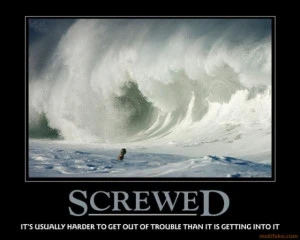
The good news for those who have a reversion of rights letter is that you can tell any online store like bn.com/Amazon to remove your title, and you’ll send a copy of your letter as proof. No letter, and you’re as screwed as that guy facing the wave.

Solutions

Sadly, there are few. If you find yourself in this position, you can sit down and write another book. Hopefully, you have many lovely stories burning inside of you. Yes, it sucks stale Twinkie cream to lose a book, but you have little recourse. I’ve know a number of writers who used this to their advantage and totally re-tooled the book and gave it a different title.

Let me warn you that you could have limited success. For instance, I’m a creeper, meaning I creep around the internet when I’m interested in an author. I want to get a feel for someone I may work with. Chances are that I’ll stumble across your previous pubbed book with a defunct publisher who left all their titles still active online. If I see the similarities of that book and the one in my grubby little paws, I’ll ask you about it. It’s not a bad thing because if I love the story, there are always solutions. But I do want to know so I can put out any potential fires.

Do Your Homework

Before you query out a work where you have no letter of reversion, do your homework so you can put out any potential fires. You may be shocked at what you discover.

In one case, an author discovered her book was being illegally sold as an ebook by a leading distributor. All rights had been reverted to the author before the publisher imploded (thanks to her agent), but somehow, the distributor got hold of her manuscript and was selling the e-book format online. The author never knew because she hadn’t done a search. It wasn’t until someone else found it that she threatened a lawsuit and instant removal of her book.

Researching is how I snuffed out a very odd experience with Smashwords. The author had met with constant rejection and decided to self-pub his book on Smashwords, only he couldn’t get the formatting down right, so it never went live. He saw this as a sign to give his book one more go. Voila, he got a great agent and I bought the book.

One night, I happened to be surfing the ‘net and Goggled ( misspelled on purpose) the title of his book. Bam! EPub Bud had his entire book (including the funky formatting) up on their site. I scratched my head and wondered how a file that was uploaded to Smashwords, but never published, made its way over to ePub Bud, where anyone could read the book in its entirety. I immediately alerted the author, who was beyond furious.

Of course, no one ever provided answers as to how one company illegally handed over a a file to someone else who illegally put it up on their site for all the world to read, but let’s just say that I have some serious reservations about Smashwords’ and ePub Bud’ ethics.

What gives me the heebie jeebies is, had I never done the Goggle search, no one would have realized there was a freebie file of his book. It doesn’t make any difference now, but when that book goes to market and is heavily promoted next year, readers will Goggle the title and boOm, that illegal file on ePub Bud would have shown up.

So be careful, dear authors:

  • If you have a reversion of rights letter, check to make sure all traces of your book are gone.
  • If you’ve ever uploaded a book to an online e-pub site, make sure that file hasn’t magically wormed its way to some other site. Goggle yourself and your book.
  • If you don’t have a letter in your possession, consider a serious re-write and title change. Or better yet, write a new book.

The most important thing is not to let a rotten experience tarnish your love of writing and the publishing process. I’m getting all psycho-babbly here, but it’s true that life is a constant re-write and some chapters are way better than others. It’s all in how you edit.


Plot vs Arc: Effecting Change

April 24, 2012

The pen is mightier than the sword, it just depends on how well you wield it.

The idea of Plot gives a lot of writers apoplexy…especially if they hear some scabby editor mention the weakness of said plot.

Plot is defined as the events that make up the story, particularly as they relate to one another through cause and effect. Yes yes, it all sounds so simple, right? Heh.

The problem that I see with a few queries that cross my desk is that they do have a plot, but it lacks interest because writers don’t necessarily grab the concept of cause and effect. It feels more like a science experiment. We always blabber on about conflict and resolution, but many don’t really get it.

So I thought maybe an easier way to explain things is to talk about Arc, which I see is missing in many queries that cross my desk. Arc, is defined as an extended or continuing storyline. In other words, the driving force that runs throughout the book.

Now here’s the kicker:  The purpose of a story arc is to move a character or a situation from one state to another; in other words, to effect change.

Where you have CHANGE, you have CONFLICT. Because, hey, no one changes without conflict. Something happens to ignite that change. Does that make sense?

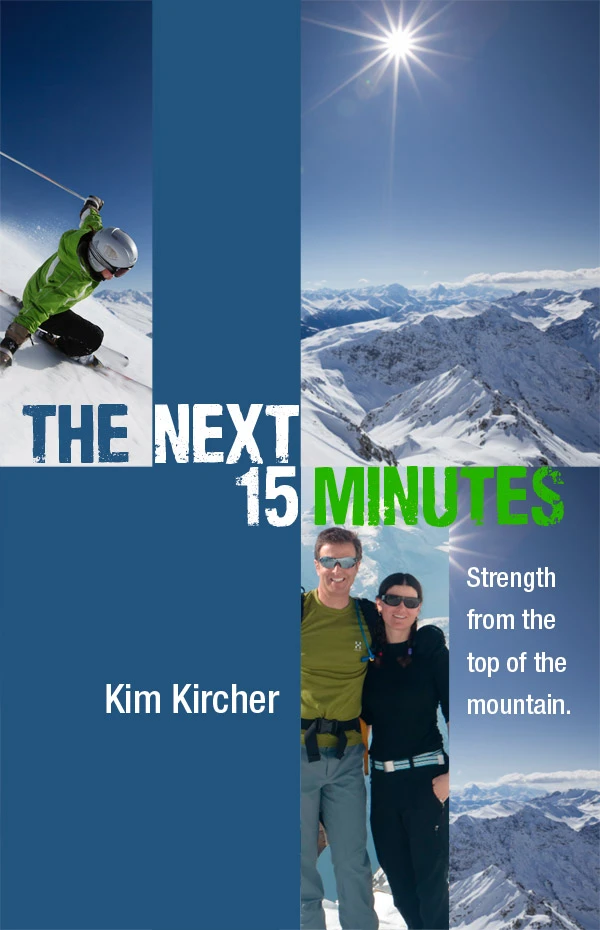
Since I specialize in memoir/biography, I see many works that have no arc. Just because you’re writing someone’s biography doesn’t mean there isn’t an arc at play. Let’s use an example. Our book THE NEXT 15 MINUTES: STRENGTH FROM THE TOP OF THE MOUNTAIN is a riveting story about Kim Kircher coming face to face with her husband’s near-fatal illness and finding a way to be strong for herself and her husband.

This isn’t a linear story where Kim’s story remains unchanged. She goes from Point A to Point B because of her husband’s illness. She went from idyllic, to holy shit, to a state of grace. That is arc. Few make a conscious decision to effect change – they are dragged into it kicking and screaming. That makes good reading because we’re all in the same boat.

Fiction is no different. If your character never evolves or has change forced upon him, then what’s the draw? What’s the point?

If you’re struggling with plotting, maybe it would be helpful to consider the arc – the driving force that effects change. That is where conflict takes place because change can suck stale Twinkie cream, and it can kick up your plot a notch or three.


Taking critique like a pro

April 23, 2012

"Too early to give up my day job?"

In our line of business, it seems our lives center on offering critiques – during the editing process with our authors, advanced readings at writer’s conferences, reading pages with queries – and we can never be certain how the other person is going to react. I think a lot of it has to do with trust.

If you’re sitting across from an editor at a writer’s conference who has only read 25 pages, do you trust them? Do you believe their crits are valid? What about a writer’s board where you post your work…do you trust those who read and offer their comments?

More importantly – are you willing to listen, even if the critique isn’t what you’d expected?

Defense Mode

It’s scary to dangle your big toe in the water and finding the temperature is freezy cold, knowing that you’re going to have to jump in anyway. The first thing your body does is go into defense mode in order to keep you warm. Listening to someone critique your work is a lot like that, and I have to say that if I have the choice of working with in full blown Defense Mode and getting run over by a bus – I may opt for the bus.

It’s hard delivering unhappy news, and few enjoy the prospect of sitting across the table from someone while you comment on the character development, writing style, or the pacing. The Defense Mode makes life sheer hell for both parties. I can see it in their face and body language. They go all stiff, and almost rear back with every little point I bring up.

Many years ago, I had a writer get quite verbal about being critiqued. She interrupted me and spat out that no one had EVER geven her writing anything other than laudatory reviews, and I MUST be brain dead. Taken aback, I reminded her that my opinion is simply that – an opinion – and that it was her decision to listen to what an experienced editor has to say, or she could leave. She packed up her things and blew out of there in a huff.

Wow. She paid $50 to storm out. Guess she showed me.

If you go into Defense Mode, then how can you possibly learn? The point is to listen, not defend. When you defend, you close your ears to all the valuable nuggets. Seems counterproductive to me.

If you’re asking for crits and spend your time defending why those crits are wrong, then people will wonder why you bothered asking in the first place.

Your Writing Doesn’t Come From the Hands of the Great Cosmic Muffin

I’m just thinking out loud here, but do those who are defensive believe their writing is perfect and needs no critique other than high praise? I’ve seen this aberration, too. Writers believe their writing is a direct gift from the Cosmic Muffin, and they pay for a conference critique in order to fight off the contract offers. And no one is more shocked than the author when this doesn’t happen.

Pardonez-moi? My writing ISN’T perfect? DO YOU KNOW WHO I AM? Yeah, seen it. Here’s the thing, I’d be willing to bet that Mrs. Cosmic Muffin would agree that her Husband needs editing. Everyone does. I’ve read authors for years whose writing declined and it’s because they are so big that they can insist that no editing be done. As a result, I quit reading their books until they developed some humility.

Being humble means that you acknowledge your human-ness and imperfections, and are willing to listen to an unbiased critique.

Crits Aren’t Personal Attacks

No one is out to get you when they offer their comments on your work, and you should honor the fact that people have taken the time to read, absorb, and write a thoughtful critique on what they feel does and doesn’t work.

OK, let me backtrack a second. MOST crits aren’t personal attacks. I’m sure we all know folks who are so insecure that they purposely attack someone’s writing in order to make themselves feel better. They’re jealous, petty little things who should be soundly thumped. A personal attack disparages you, not your writing. Or their crits may be so achingly paltry and shallow that they have no meaning.

An example of this happened with one of our books. A section of the book was very controversial, as was our intent because the issue needed to be recognized and discussed. We warned the author that he may be attacked, and he was fully prepared. The majority of the reviews were very powerful, but there were a few that disparaged the author for his choices and offered zip on the book itself. Those were personal attacks. Thankfully, these sorry folks are in the minority.

We all have varying degrees of suckosity, and wouldn’t you rather hear it now than read it in a Kirkus review?  You aren’t perfect – no one is – so bless those who take the time to bring your writing out of the heavens and more down to earth…where reality resides.

If you appreciate that the intent of a critique is to HELP, not attack, you won’t feel the need to be defensive.

What to Use, What to Lose?

Getting crits can be like the beagle in a bar. She sees all those bottles of booze lined up against the mirror and goes into overload because she can’t decide which one to pick. Crits are like that, too. You can get so many crits that say so many things, and you’re on overload trying to figure out what to use and what to lose.

Does It Resonate:  The first thing you must do is decide if a crit resonates, that when you see it, you say, “Yep, totally know what you’re talking about.” Or maybe it’s something you hadn’t seen or considered before, and it just feels right to consider making the change. If a crit goes against every fiber of your being, then consider not using it. I’m not saying the crit isn’t valid, but it’s simply not something that you’re comfortable changing. And we all know there are crits that, deep down, resonate, and we know we need to make the change – but oh, how it hurts!

Case in point, a lovely woman brought her advance submission to me at a writer’s conference. I loved the premise, but the writing just hit me wrong. It was too angry and belittling in all the wrong places, and the writing was choppy, making it hard to stay engaged. For the following three years after that, she brought me her advance submission, which was largely unchanged. She’d spent at least four years trying to sell the work, but without enough changes there was no way it was going to sell. She ended up giving up on it. It broke my heart.

Now, would she have had a hit on her hands if my crits had resonated with her? Who knows? Just because you’re shown a store of fabulous clothes doesn’t mean you have the sputz to choose a dress that looks good on you. And just because you’re given solid crits doesn’t mean you have the sputz to make it a great book.

I’m not sure if she didn’t have the sputz or was overwhelmed at the thought of changing the very foundation of her writing, but it was plain that she chose not to make very large changes, and her book now resides in her desk.

If you get a good cross-hatch of critiques, there has to be something that resonates, that says, “yes, that makes perfect sense.” Look for it. Be open for it.

The Consensus Crit:  In a perfect world, you get a consensus – tra la! I’ve given crits at writer’s conferences and watched the author nod her head, “Yep, that’s what I’ve been hearing all weekend.” Nothing better than a giant wart because it’s easy to fix (hopefully). That is why getting critiques is so important. We get so close to our work that we don’t see those big “oopsies.”

If you have enough people telling you something is a wart, take heed.

The Contradictory Crit:  This is the part that drives many to mainline engine grease because hearing contradictory comments is overwhelming. Some may love the character development, others may feel you need further character development. Gah! Whom do you listen to – Super Dooper Editor From Hoo-Ha House or Editor From Small House? Your writing buddies, or the guys at Starbuck? Believe it or not, valid critiques aren’t a matter of pedigree because they’re all readers. Deciding on what’s valid comes down to what you feel in your heart. It’s the crits that make you think, “Ah ha.”

You need to be selective about what makes sense to you and what doesn’t.

“I’ll Take Them All”:  If you make changes based on every single crit you receive, your work will lose its cohesiveness, and you will be ready for your designer straight-jacket because you’ll drive yourself nuts. What’s worse is the work will no longer feel like yours, but rather a collection of others’ opinions. Before long, you’ll hate your story and be thoroughly defeated and confused.

The best gift you can give yourself is to massage your confidence. No one knows your story better than you do. Yes, those unbiased eyes are a godsend, but you need to have the confidence about your story and your ability to filter out what’s right and what’s wrong for your book. I’m not saying that your work will be better for it, but it has to be yours. You have to own it.

Not everyone is right. Learn to grow your filter so you know what to use, and what to lose.

Being the Pro

When you take the giant leap to allow others to read and crit your work, you need to have your head screwed on straight. You need to be clear about why you want critiques. If it’s because you want to stroke your Ego, then look forward to a sound bruising. But if you truly feel that you’re floundering and are asking for specific help, then you’re all about learning and becoming better.

Being a pro means that you’re objective about your writing. You’re able to stand outside yourself and see your writing as a business, not just something that is near and dear to you. If an editor tells you that your book about cancer doesn’t bring anything new to this very crowded marketplace, then it’s not an attack, but a professional opinion from someone who does this for a living.

If a reader from a writer’s board tells you they found the pacing really slow in the first three chapters, they’re giving you honest feedback.

Writing is a solitary endeavor, and at some point you need to escape Writer’s Island and seek out other opinions.

You don’t need to defend it, but rather grow from those comments so you can become better. And really, that’s what we all want, right?


Does your book need a “Push to Add Drama” Button?

April 20, 2012

I like a “quiet” book as a switch up from my normal fare. However, there are times when books are too “quiet,” and I become impatient for something to happen. Anything. The worst offenders are dull beginnings. There has to be a reason for a reader to continue turning the pages, and if you choke your first three chapters with set-up and backstory, readers will fling your book across the room. Or worse, they won’t buy it.

I think I mentioned reading a book called Panama, where the author blabbered on for three pages about the moon rising. The. Moon. Rising. I looked at Sweetcheeks, who had recommended the book and asked him what he was mainlining, and would he please share. Honestly, that man has more patience (which he would need in order to put up with me), but this made me want to wash my eyes with bleach.

I’m not a fan of gratuitous action/drama because everything should have a reason to be where it is. But if someone comes along and says, “Keep walking, nothing happening here,” you may need a sign that says, “Push to Add Drama,” sorta like this video.


The Art of Patience

April 19, 2012

Publishing demands the same kind patience as these border collies. There’s a whole lot of hurry-up-and-wait. At one point you’ll be running around with your hair on fire, and the next you’re shooting rubber bands at the wall. If your editor says she needs something “Right f*&*ing now,” she’s not kidding.

It may look like your editor is about as disorganized as the beagle’s liquor cabinet, but it’s helpful to remember that there are a lot of moving parts in this business. She may get a call from the publicity dept who is hot on the trail of a big reviewer, and they want the book NOW. You may have been given a set time to turn in those edits, but when things break, they break quickly, so it’s helpful to always be on your toes.

Conversely, if things appear to be slow in your world, it doesn’t mean it’s slow at your editor’s office. My suggestion is to channel the border collie. Walk softly and silently, never let anyone get the drop on you, and be prepared to chase around. And may your experience be as much fun as a border collie.

Woof.


Small Presses: Exposing the Myths

April 18, 2012

While at a writer’s conference, I overheard two writers talking in the bar. One had an offer from a small publisher and wondered if signing with them would trash her credibility with agents when querying them for subsequent books. Her friend snorted that people who pub with small presses are only interested in getting their stuff out there and that agents laugh at these publishers and their authors.

The author with the book offer listened closely, then made up her mind. “That settles it, I’m waiting for a REAL offer from a REAL publisher.”

I nearly swallowed my tongue. The publisher being discussed is a respected niche house that has been around for a long time. Had she signed with them, she would have enjoyed solid sales, credibility, and a lovely publishing credit.

And here’s the problem:  the word “Small Press” has become bastardized to the point where it has no meaning – much like the senseless term “Traditional Publishing,” which makes me want to pull my hair out.

Terms that once clarified, now confuse. An independent press used to mean a publisher who isn’t part of a conglomerate, like the Big Six. But now the self publishers, PODs, and vanity presses have  stolen the term, so now everyone is confused…which makes having a conversation like the one above nearly impossible without further clarification.

The main problem is that we can no longer assume to know what Small Press means. Here are the flavors that now populate the publishing industry:

  • Small Commercial Press:  These are the Big Six’s little sister. They work exactly like the Big Guns but with fewer zeros in their operating cash. They have solid distribution, respectable sales, and their books are in stores across the country.
  • Print On Demand:  They have less operating cash, they don’t have distribution, they do small print runs, and their books aren’t shelved in bookstores.
  • E-Publishers:  Just what it says – they only publish in the e-book format. There are a few who will take their e-books to print after a title has X number of sales.
  • Vanity:  Pay to play.
  • Self-published:  Where the author is the publisher and handles all aspects of production, distribution, sales, marketing, and promotion.

So you can see why it’s vital to be very clear about WHAT publishing option the other guy is talking about because each option yields completely different results.

Myth:  Small Presses Suck Stale Twinkie Cream

Not all Small Presses are created equally. There are some very big differences that separate the wheat from the chaff, so it’s dangerous to lump all small presses into the same margarita blender.

Distribution:The author’s friend assumed Small Press meant a Print on Demand company that has no distribution and few sales, when in truth, the publisher who offered the book contract has excellent distribution and fabulous sales.There are many small presses who enjoy very solid distribution and sales. They coordinate with their distributor’s sales and marketing teams on a regular basis in order to maximize exposure and sales.

Instead of guessing and pondering with a friend who isn’t well-versed in publishing, you should be asking your prospective publisher who distributes their books. If they say IPG, Perseus, Consortium, NBN, IPS, then you know they are working on all cylinders because they have to have a certain amount of $$ coming in to even qualify. They are a proven quantity.

If they say Ingram and Baker and Taylor, then they do NOT have distribution. These entities are fulfillment warehouses. They don’t have sales teams out there pitching their catalog to buyers.

Promotion:  Don’t assume the worst of a small publisher; ask your prospective publisher what they do to promote their books. Do they send out ARCs to all the reviewers? Do they send media kits to print, radio, TV media? How many ARCs do they send out. For example, we send out 200 ARCs.

Editing:  Check out some of their books. If you’re wondering whether to sign on the dotted line, then you should consider reading a couple of their books in order to get an idea of the product they put out. If they are riddled with misspelled words and crappy formatting, then it could indicate what your book will look like.

Print Runs:  Ask what kind of print runs they do. If they say they use print on demand, then you know they do very small runs because they don’t expect to sell many books, or they’re waiting to see if the book actually takes off before investing in an offset run (which is cost-effective at about 1,000 units). Don’t be shy about asking how many books they plan on printing. If they’re offering you a book contract, they must have a good idea what kind of run they plan on doing because they’ve already done a P&L statement.

And here’s the thing; many small presses do these things, and agents know this.

Agents Laugh at Small Publishers 

The idea that agents laugh at Small Presses is laughable in itself. Many small presses work with agents on a regular basis – and these are agents who sell to the Big Guys as well.

Let’s face it, publishing is changing. The Big Boys are under the gun from their corporate overlords to make big bucks, so they’re looking for Big Books. The blockbuster. The problem with this is that many midlist authors are having a hard time getting placed. So guess who’s cleaning up? You got it; the Small Publisher.

The result is that midlisters become the #1 titles for their Small Publishers, and every bit of their arsenal is thrown into promoting those books – possibly moreso than if they’d signed with a Big Six. Because of this, many Small Publishers have a lot of very excellent books that are doing well. And because they’re doing well, agents come a-knockin’ a lot. What they WILL NOT DO is waste their time on a POD/vanity press, or any publisher who doesn’t have proper distribution, a good reputation, and solid sales history.

Sure, there are some agents who will only pitch to the Big Six and walk away. But most agents stick with the project because they love it and believe in it. It may not sell to a Big Gun, but that doesn’t mean it’s unworthy of publication and won’t sell quite well. Agents establish relationships with editors of all kinds of publishers because they’re always looking for a solid option. They’re not laughing, they’re selling.

Agents Laugh at Authors of Small Publishers

There’s this idea that agents look down their noses at authors who pubbed with a small press, and nothing could be further from the truth. If your publishing credit is with a small house, they’ll look up the sales via Bookscan. They may do a bit of research on the publisher of your previous book to decide whether they’ll include that publishing credit in their query letter/book proposal.

But first and foremost, they’re looking at the current book – not your past. If your previous experience is with a vanity press, or you self-pubbed, then you won’t even put that in your query letter because it’s not considered a publishing credit (because there is no litmus for talent). However, if you sold a bajillion copies of your e-book, then yes…include that.

The most important thing with publishing is to know the facts. People, like the one I saw in the bar, lost out on a wonderful opportunity because she listened to a myth. Apart from running out of the beagle’s margaritas, I can’t think of anything sadder.


Commercial Publishing: Don’t Count Us Out Too Soon

April 17, 2012

I read a blog post from A City Mom that posits Publishers Weekly enjoys tearing self-published authors to shreds by writing scathing reviews in an effort to keep in their place. She writes:

So, Publishers Weekly, it’s obvious what you’re up to. So entrenched and in bed with the traditional dinosaur publishing age and fearful of all that challenges it, you refuse to find much to like in the self-publishing world. That’s okay. Enjoy yourselves. It’s becoming more and more clear that the publishing world is changing. And before too long, this author thinks, you won’t need any more poison for the end of your pens.

There is one point that I agree with;  publishing IS changing. But I’m not so sure I agree it’s changing in the direction the author believes. I think it’s achingly tacky to inject cruelty into any review because it shows a lack of professionalism. Ridicule is just plain nasty. But I don’t think that cruelty can be traced to fear of self publishers.

In terms of overall publishing, self publishers don’t/can’t compete with commercial publishers, so there is little to fear. I don’t mean that as an insult, but stating  fact. Commercial publishers have the ability to get books to a wide marketplace by the strength of their numbers and quality. Self-publishers are a team of one, whereas commercial publishers are teams of hundreds. Do the math.

If you scan the self publishing boards, you’ll see post after post discussing distribution, marketing, promotion, and creating a bigger footprint with readers…the very things trade presses already have in place. If trade publishers already have this machine up and working (successfully I might add), then how can anyone advocate our impending demise?

Trust

I only buy Hostess sin snacks because I learned over time (by buying entirely too many of them) that they put out a quality product. If they come out with a new explosive calorie bomb, I’m sure to buy it because I trust them to only crank out quality yummies. In order for trade publishers to remain solvent and viable, they need to sell a consistently excellent product, which doesn’t go unnoticed by book reviewers and story buyers.

After a while, a publisher develops a track record for putting out great books, which engenders trust. They become a known quantity due to their consistency. DIY authors have a much harder time making those same inroads.

Reviews

While I strongly disagree with the manner in which PW words their reviews, they point out the norm that comes from the self-published author. The exceptions are harder to find, and proof of this is the lovely counter punch to PW is Jane Smith’s Self Publishing Review. Jane is never cruel, and her analysis is excellent. You’ll note that she finds very few books that are of publishable quality…which bears out my post about striving for excellence.

Logic

If a publishing option came along that competed with the current commercial press business plan, logic predicates that commercial publishing would have to evolve in order to remain relevant. That can be seen with the explosion of the small trade presses. They’ve always had to be happy with the crumbs that came their way because the market was saturated with the Big Guns. Over time, those small trade presses were noticed for turning out fabulous books. The result was that more marketplace attention was given to their lineups. It was, and still is, about quality. There is no better equalizer.

Were the Big Guns worried about us small fries? Probably not – and they still have little to fear from us. Now, does that mean small trade presses bellow about how publishing is changing, and Long Live the Small Press, so long Big Guns? Hell no. We coexist because we fill a gap…very effectively. Self-publishing may be popular for a whole host of reasons, but I wouldn’t say most self-pubbed authors are thriving.

What is concerning is the dissidence self-publishers have created, and I think they protesteth much by insisting commercial publishers are dinosaurs…legacy. There is no proof of our impending doom.

And may I just say that I detest this term LEGACY? It’s not that it’s dismissive and rude, but it’s plain wrong.

A legacy system is defined as an old method that continues to be used, typically because it still functions for the users’ needs, even though newer technology or more efficient methods of performing a task are now available.

Save for a minority of DIY authors who have done very well, I don’t see how the self publishing option is geared to replace a publishing system that has endured for the simple reason that it works. The lack of cohesion with in the DIY community is exactly why it remains a mixed bag of skepticism among book buyers. No one can guarantee quality, and  I do know is readers have a low tolerance for crappy books – from anyone.

So let’s talk about this definition of Legacy.

Newer=Better

In true advertising fashion, Newer = Better…and most of the time, I’d agree. For example, I love how my new tablet replaces the need to haul my laptop on trips, but it doesn’t mean my tablet can replace my laptop. My laptop still does many tricks that my tablet can’t. Rather, the two co-exist very nicely in my batcave.

It takes a lot of time, money, talent, and guts to be a successful DIY’er. These hearty souls are competing with a firmly entrenched behemoth, Commercial Publishing, and have to think of clever ways to get their name out into ReaderLand. When you go it alone, you’re a team of ONE. When you go with commercial publishing, you have a team of HUNDREDS, whose sole job is to get your book into the marketplace.

So the idea of Newer=Better is a mixed bag, and there’s something to be said for the ESTABLISHED because it continues to work quite well.

Efficient=Easier?

There is the agreed-upon notion that newer is more efficient. Makes perfect sense. What’s the point of inventing something new if it takes more time, money, and is clunky? We’re all about making things easier on ourselves…and this is the crux of this whole Legacy argument.

Does Easier=Efficient?

DIY’ers may advocate that yes, their publishing option is easier and more efficient because they’ve cut out the pesky middle-man – commercial publishers.

Personally, I think it depends on what is meant by EFFICIENT. Is it more efficient to press a few buttons and bada-boOm, I be a published author? Heck yes. Is it easier? No doubt. But we should carry this thought a few steps downstream and consider the outcome. After all, easy and efficient is meaningless if your outcome is a few sold books.

DIY’ers – in order to be successful – have to work far harder. You brave souls are the editor, cover designer, layout artist, distributor, marketing director, sales director, publicity director, and financial backer. This is why there are few truly successful DIY’ers out there – this is exhausting, expensive work which, more often than not, results in a poorly written book.

Few DIY’ers have the wherewithal to work efficiently because they don’t have any experience with editing, publishing, and selling books, yet they are competing against commercial publishers who do this for a living.

Legacy

When I first began seeing this term to describe commercial publishing, I quickly realized it was being used as a dig. We’re passé, dinosaurs whose time has long passed. However, if that’s the case, then wouldn’t it go to reason that commercial publishing would dwindle down in importance, and fewer writers would query these bloated Wooly Mammoths? Wouldn’t there be fewer sales of commercially published books?

I compare this to my old cell phone of yesteryear. It worked just fine, but when the new smart phones came out, I HAD to have one because it allowed me to stay in contact and conduct business even though I was shopping at Trader Joe’s. Sure, those little do-nothing cell phones are still being sold, but demand for them is extremely low. Ostensibly, commercial publishing – if we’re to apply this definition of Legacy – should be suffering the same fate.

Yet, this is far from the case. The majority of books being sold still come from commercial publishers, and it’s not because they are elitist snobs. They simply have a system that is conducive to getting a quality product in front of a large marketplace.

Contrary to the blog post above, don’t count us “dinosaurs” out too soon. Publishing is evolving, to be sure, but I can guarantee that commercial publishing won’t go down the tubes because it’s a business that invests in a product and bases their entire viability on whether it will sell. It has to be quality, or a lot of people will be out of a job.

I’m all for self publishing, but the thing holding it back is its lack of quality control. Many DIY’ers aren’t ready for prime time, while a few are very excellent. It’s a confusing place for a reader scanning the .99 store on Amazon.

More than anything, I’d like to dispel the myth that commercial publishers are threatened. Truth is, we’re not. I’m be the first person to clap with joy over someone’s self-pubbing success because they learned the business and went into going it alone with their eyes wide open. Gotta love that.


Follow

Get every new post delivered to your Inbox.

Join 786 other followers

Powered by WordPress.com