Book proposals for nonfiction

May 30, 2011

We specialize in nonfiction, so this blog post on the Berrett-Koehler blog scratched all my itches. Go. Read. Learn. It’s the difference between a fabo proposal that makes my mouth water and my thinking, “ho-hum-dee-dum, bummer they didn’t know what they were doing.”

Here are the questions Jeevan brilliantly posed in his post. I’d like to add my .0002 worth because, well, I want to, and it’s my blog.

1. Is the book really needed? Boy, Jeevan hit squarely this nail’s head, and I’m currently blowing him kisses. This is a universal cry for every editor and agent who works in nonfiction because we see so many of the same things: divorce, midlife crisis, cancer, bipolar disorder, family issues, addiction, the list goes on and on. We would never denigrate anyone’s personal journey, but we do have to consider whether the book has a place on bookstore shelves and in readers’ libraries.

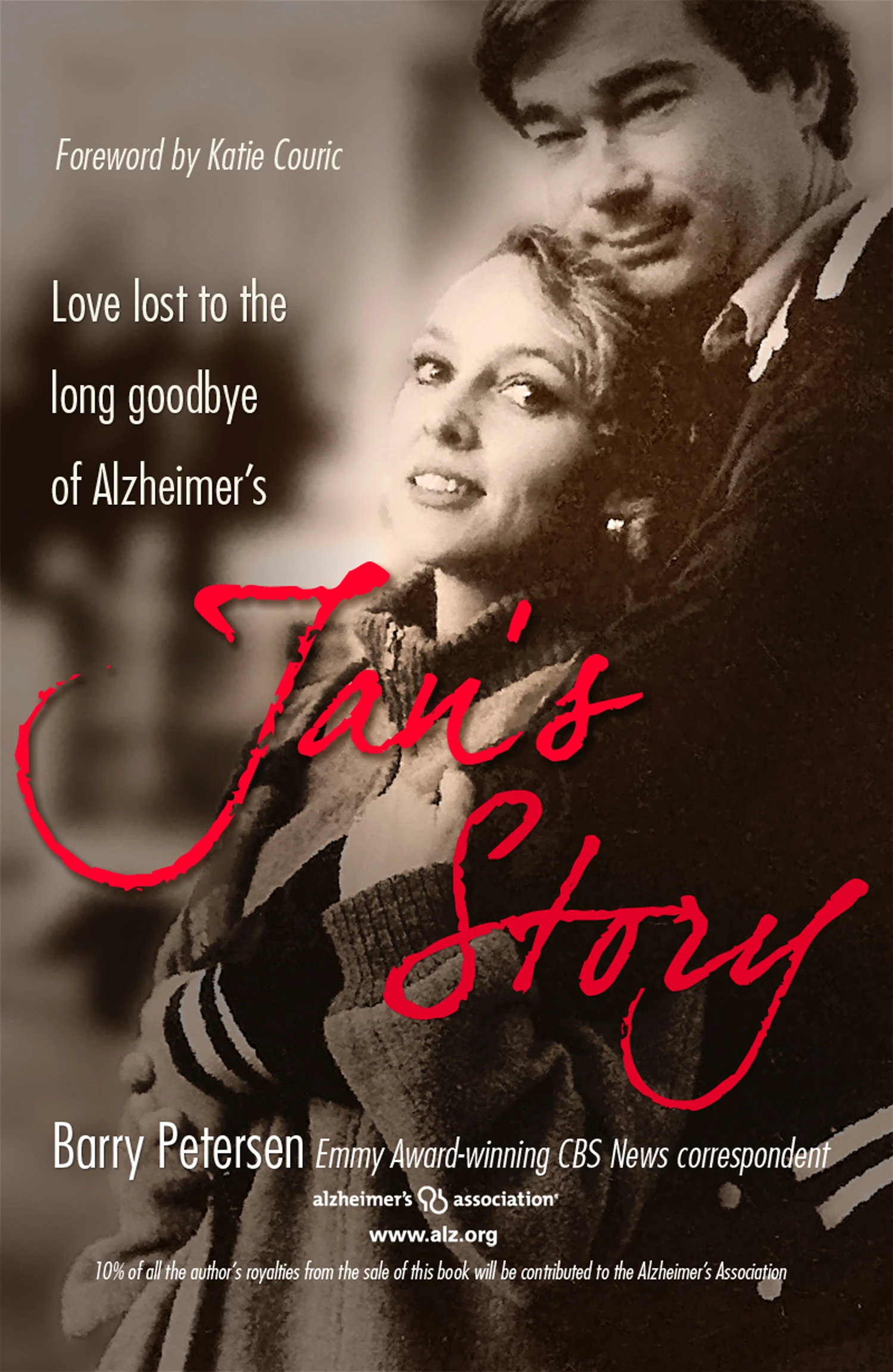
For instance, there are gazillion Alzheimer books in the marketplace. But when you look for Early Onset Alzheimer’s, the pickin’s be sparse. And that’s why Barry Petersen’s Jan’s Story is the go-to book for this topic. Sales back that up. So it’s all about what your book brings to a crowded banquet. And who doesn’t love a banquet with all kinds of unique foods that tickle the taste buds? So ask yourself, does the public need your book. If so, why?

2. Is your book tightly focused? You know those Ginsu knives commercial that make all kinds of claims about what they can do? Sweetcheeks and I usually insert our own additions to the usual cutting the Coke can in half. “But wait!” we scream, “the Ginsu knives can also wash your windows and cure cancer! It can clean earwax and invert your bellybutton!” Hell’s bells, a food knife is good for one thing…cutting food. Or if you’re Sweetcheeks, using it as a screwdriver. And no, he still hasn’t been forgiven for ruining one of our good knives.

My point is that it should have a central focus. Just lately, I had a discussion with an author about trying to say too much with her book. I knew she was in trouble when it took her fifteen minutes to sum up her book. I wanted to throw a sisterly arm around her and whisper in her ear, “Darling, you’re trying to say too much, and it’s killing the story.” She wanted her book to be inspirational, so she’d added lots of inspirational narratives. She wanted to inject a sense of mystery, so she added an extra plot twist to support that goal. Lastly, she wanted to give audiences a up close and personal travelogue of her country. No wonder it took her fifteen minutes to describe her book. I felt like I needed Cliff notes and a roadmap.

It’s a good idea to have a central theme that you can barf out to an agent or editor in a couple sentences. If you’re asking your book to do too much, no one is going to care.

3. Who is the audience for your book? Again, this is where I give Jeevan another big wet one. He’s right in that many authors say “Everyone will lurve my book.” Problem is, I don’t have “everyone” in my Rolodex. However, I do have Alzheimer groups in my Rolodex. I also have heart groups, cancer groups, dependency groups, religious groups, romance groups… you get the idea. Specificity is key because that’s how we have to sell it to our sales teams.

4. Are your qualifications, background, and knowledge directly related to your subject? Oh, this is so important. Nonfiction is quirky in that we need the authors to be experts in their subject matter. Obviously, one need not be an expert in writing romance or thrillers. But if you’re going to write about, say, heart disease, you need to have some sort of platform that qualifies you as the resident expert. And it’s not enough to have experienced heart disease because millions experience it, too. You have to be hooked into heart groups, have the support from heart docs, and be seen as an authority figure. That I can sell.

Those who sit at home and knit toilet paper doilies need not apply.

5. What are the competing titles? We need this information because it’s a frame of reference when classifying your book. “Oh! There is nothing like my book!” will only earn you serious eyerolls from the beagle and an express ticket to Noobville. Competing titles let us know that you understand your competition and have something extra to add. I’d like to also suggest that you not only know your competing titles, but that you appreciate how your book compares and contrasts. This is a vital marketing tool. If we can say that your book goes above and beyond the competition, and we’re able to say how, then this sets your book apart from the rest of the herd. Good stuff.

6. What will the length be and how will the layout look? Word count is vital. Many of us have word count minimums of around 45-50k words and maximums of around 100k words -depending on the topic. We do this because we have production costs and retail pricing mulling in the back of our melons. If you have photos, we need to know this as well because it impacts the layout. It’s frustrating to read an entire proposal and not have a word count. That means I have to ask. Argh.

7. How will you actively market and support the book? Jeevan hits the nail on the head with this. He writes:

Don’t tell the publisher that you are available to write articles, speak at events, and engage in other promotional efforts.

So, so true. Whenever I see this, it makes me believe the author is waiting for the book to launch their career – as Jeevan states. Nonfiction doesn’t have that kind of pull. You need to already BE embroiled in this stuff. Saying that you’ll “be available” means that you’re waiting for your publisher to make you a star. We can’t do that. What we can do is get your book distributed – but without your platform and active promo plan, few genre buyers are going to bite.

You must, must, must have an active, viable plan that you are already engaged in. Telling me that you’re gonna do this or that makes me think about my plans to take up ping pong and run the next NY Marathon…all, which are highly unlikely. However, the author who tells me they are already doing this and that is the author I want to work with. They’re already established.

Social Media

And may I say something about social media? I know much has been written about the pros and cons of Twitter, Facebook, etc. But I’m not swayed or at all convinced when an author tells me they plan on engaging on FB and Twitter. Social media takes a ton of time to gather followers. And at that, the number of followers don’t guarantee a hit book. Sure, the lovely thing about this medium is the lit match aspect, and I respect its power. But unless you’re attracting thousands of comments on your blog every single day, I won’t consider this a valid  element of your promo plan.

Publishing is tough and not for those with weak intestinal fortitude. The most successful authors are the ones who are prepared. For you nonfiction writers, I hope this helps. And truth be known…this isn’t a bad exercise for you novelists either.

In addition to the wonderful Berrett-Koehler blog post, I have a whole section on Book Proposals in my blog that you might find helpful.

*thanks to Janet Reid for my stumbling across the Berret-Koehler post.

NOTE: This is my last post for about a week. I’m going in early tomorrow for a hip replacement…yay! I think the docs will let me break out on Friday, so until then, I may be computerless – or not have any desire to post squat. Have a good one and don’t mess up the place while I’m gone.

Cat’s out of the bag, this is how agents do it

May 29, 2011


And here you thought agents actually read query letters and manuscripts and signed clients based on quality and talent…for shame. Here’s how it’s really done. You simply add your agent to your shopping cart and fork over $199.


Biggest laugh of the day…no…the month

May 28, 2011

I haven’t had a lot to laugh about over the past couple weeks, but reading Victoria Strauss’ blog post this morning brought me right out of my funk: Publish America is entering the literary agency business. They promise to “market” your book to one and all. But hey ho, keep in mind it’s gonna cost you. $199 – for ONE title. So guess that means if you have two books, it’s gonna cost you double.

I have to admit that it’s a brilliant profit center.

For those unfamiliar with PA, they are the lead dog in unusual publishing modalities. I have up close and personal experience with them. They are the backstory to Behler Publications. A lifetime ago, I got caught in this particular nightmare. I did everything you’re not supposed to do. I didn’t research, I didn’t travel the internet, I didn’t know about the Absolute Write Water Cooler (there is an entire section on nothing but PA) or Vic Strauss. So I bought their line of, “We treat authors the old-fashioned way – we pay them.”

Yes, by golly gosh, they paid all right. One dollar. My tale is as sad and pathetic as they come. Suffice it to say that I smelled a rat before my book left “editing” – which was nothing more than a spin and rinse cycle of Spell Check. I was so bereft, I complained to Sweetcheeks about how I could do a better job than these yahoos.

He looked at me. I looked at him. Oh  no. Are you thinking what I think you’re thinking? He grinned. Probably. And so with a lot of blood, sweat, and tears…and money…and the fabulous kinship with experienced experts in the publishing industry, Behler Publications was born.

PA caught wind of it and took it poorly, which is odd because I know lots of editors whose books are pubbed with other publishers. It’s done all the time. But PA didn’t see it that way. They publicized my husband’s name and where we live on their message boards via gent named HB Marcus (who admitted to working for them). He passed along my information to their message boards, along with as many lies about me as they could think up – like I was “stealing” authors and such.

It was a horrible time, and I had gut-wrenching moments where I feared for my safety after they revealed my home town. After all, PA had called the cops out on one of my fellow PA friends after accusing him of theft. What could they do to me? I believed I really had to watch my back. These are not people who tolerate dissension among the ranks, and I still retain all the proof and screen captures.

Why would a publisher behave like this?

Many years have passed since that horrible time. We’ve never looked back. Instead, we have award-winning books, bestsellers, and some lovely sales – and stellar distribution. And of course, fabulous, important, meaningful, entertaining books that enrich readers’ lives.

But seeing Vic’s story today brought back those surreal memories of my short tenure with PA. I can say firsthand that they don’t have authors, they have profit centers. And now they want to charge authors $200 to “market” manuscripts that I’m willing to bet won’t sell or even be read. And if they don’t sell, what are the odds they will offer the poor hapless author a contract with PA?

Always remember: Real agents do NOT charge money for their services. EVER. It is against the AAR, and is widely viewed within the publishing community to be an illegitimate, highly questionable practice. And real publishers don’t behave in a predatory manner by frightening you or blasting your personal information to a public forum.


Online class with yours truly

May 26, 2011

So the lovely women of the Orange County RWA (California) invited me to give a two-week online seminar on June 13-25: Agents/Editors: We Don’t Bite…Much. This is new territory for me, so I’m excited about reaching out through the internet.

If you’re interested in learning about the ins and outs of publishing, and how it’s changing, mosey on over to their sign-up page and join up. It’s hideously affordable, and I think we’ll have a barrel of laughs. And best of all is the beagle is passing out free margaritas for all. And who knows? Maybe she’ll throw in one of her cover art purses as a prize.

So don’t be shy…anyone can sign up! See ya mid-June.


Chapter headings – to be, or not to be

May 26, 2011

I read a lot of manuscripts that have chapter headings. Ch. 1: The Sniveling Beagle, Ch. 2: Of Peanut Butter and Daiquiris…and so on. I understand that the author uses chapter headings in order to set the reader up as to what they are going to read. But is it necessary?

I’m going to be honest here – I don’t normally read them because they don’t usually make any sense – like I”m supposed to derive some meaning from them but I’m too brain-addled to figure it out. Or worse – the chapter heading was far more clever than the chapter itself! Does this mean I should go stand in the corner and let the beagle draw frowny faces with my bloody red editing pen?

The reason I don’t read them is that they don’t normally reveal anything. I haven’t read the chapter yet, so “Of Peanut Butter and Daiquiris” has no meaning to me. Sure, it’s cute and catchy, but is that a reason to have it there? And by the time I’ve read the chapter, I no longer care about the chapter heading because I’ve moved on to the next chapter.

It seems that a lot of the chapter headings I’ve been seeing lately are like little teasers – as if to say, “Please stay engaged in my story.” It’s as though chapter headings want to join in with the elite crowd that consists of a great title, great synopsis, great tag line, great cover art…and a great story.

But the thing is, a great story doesn’t necessarily need chapter headings because the reader is so engaged, they’ll barely glance at the heading. They’ll simply dig into the chapter.

I know lots of people who don’t read a prologue because the poor prologue has been so abused over the years and reduced to info dumps and all sorts of other literary transgressions. My feeling is if the prologue belongs there – meaning that it contains information the reader needs so that the story makes sense, or it has information that doesn’t fit anywhere else in the book and it’s vital to the storyline.

And that’s the quandary with chapter headings. They carry none of those burdens, so what’s their purpose?

Laziness Factor?

Authors aren’t intentionally lazy, but there are certain things they do to create the same result. Most chapters need to transition into each other in much the same way paragraphs do. I’ve noticed that chapters headings tend to have little segue into the following chapter because the author let the heading do the job for them.

It’s a lot like my aversion to relying on punctuation to do the job of writing. If you pepper your manuscript with exclamation points, you tend to get lazy about conveying the emotion of fear or excitement. “Hey, no worries,” sez you, “I stuck an exclamation point in there. The reader understands my character is yelling/excited/angry.”

Problem is, they don’t always get it. Or they get bored because they keep seeing them. Chapter headings mean little to the reader because they haven’t read the chapter yet. Many headings are too elusive for the reader to derive its meaning, and by the time they read the chapter, the heading is moot.

Convey Information

Now, in spite of my heading aversion, there are times when it makes sense to have chapter headings. Nonfiction is one of those places where it’s helpful because you’re conveying little tidbits of information. These chapter headings aren’t cutesy or allegorical. They are to the point and let the reader know where this chapter is headed. And it’s intentional.

Why?

Like everything else literary, there are no hard fast rules. It’s a gut feel. It might be helpful to ask yourself is why you have chapter headings at all. Just like everything else in your manuscript, you need to have a reason for having it there – whether it’s a prologue or backstory. If you go about writing your book consciously, then you may find that chapter headings add zip to your book or have no impact whatsoever. Consider removing and ask yourself whether your book has the same punch and pow.

Conversely, ask yourself why you want them there. It may be that it’s perfectly fine to include them. All I ask is that you consider them consciously rather than falling into the trap that “all books have chapter headings.” They don’t, and you should make sure yours are there for a specific reason.

So how does it go for you? Chapter headings or simple numbers? If so, why?


Mass appeal – the bigger picture

May 23, 2011

It’s been a week of dichotomies. Last Monday, our beloved dog died suddenly. So we bundled up our heavy hearts and drove north to San Francisco to watch daughter’s graduation from SFSU. Yay, to daughter! It was good to give blogging a rest because my thoughts were either maudlin or not entirely sober, since I’ve discovered that graduation parties haven’t changed a bit over the years. Along with that new hip I’m scheduled to get next week, I may put in an order for a new liver.

So a week’s rest was good for the soul, and I’m ready to jump into the weightier issues of all things publishy. But I’d be remiss if I didn’t thank everyone who sent along their kind thoughts. I noticed that many of you had experienced some form of loss and the overwhelming sadness that invades your heart. And that’s what my blog post is about…understanding the bigger picture and how mass appeal is achieved through empathy.

I appreciate a query that includes the overall theme – the mass appeal that readers can relate to – because I can see which emotions will help me sell their book. For instance, I may not understand what it’s like to work with a therapy horse, but I can relate to learning to love and trust after a painful heartbreak.

I’m fairly certain that readers have no clue what it’s like to be a vampire princess, but they probably have some experience with feeling trapped in the expectations that people have of them.

Notice how it doesn’t matter whether I’m talking about a kid or vampire princesses – there is a basic emotion that everyone understands, that they can empathize with – which creates mass appeal.

It’s helpful for me is when authors pull out an overall theme that I can sink my teeth into. Readers may not necessarily care about a pigeon-toed dancer, but they can relate to the idea of facing fears. It is that basic emotion that I feel sells a book – far more than the actual story itself. After all, anyone can have a cop who falls in love with the suspect, but it’s the emotions – the mass appeal – that makes him and his story matter.

It doesn’t matter what type of story you’ve written, there is always some general theme you can pull out to help us empathize with your character and their plight. And empathy is key in our reading choices. We may not know what it’s like to be a stand-up comedian, but we can understand feelings of hope, fear, excitement, loss and rejection. And these emotions can be applied to a bajillion different stories.

My point is if you can reveal common emotions, then I think it makes for a stronger story – one that will stick with a reader via empathy. There is nothing sweeter to hear than a reader who says, “Oh yah, baby, I so related to that.”

But in order for us to know what that is at the query stage, it’s helpful if you tell us what those themes are. So take a look at your own writing. Can you see spots where you can pull out from your story that serve as your overall “bigger picture” theme?


May 17, 2011


Godspeed, Mae West

May 16, 2011

Not many people know we had more than one dog, since the beagle is such a ham and steals the limelight. But Mae was fine with that because she’d been around so much longer.

We adopted Mae from the pound 9 years ago after our dog, Hershey the Swamp Thing died. Our hearts were so thoroughly broken, and I didn’t think we’d get another dog. But the hole in our collective hearts continued to widen until we couldn’t stand the thought of not wrapping our arms around a ball of warm fur. And so Mae came into our life.

A relative had sent me the adoption photo – she was a blond version of the Swamp Thing. I remember how I couldn’t get up to the pound fast enough to see her. It was a  freezing cold, early December morning, and all the dogs were outside in kennels barking and wearing their best “come adopt me” smiles. Except Mae. She was tucked way back in her kennel, wrapped up in a tight ball, shivering against the cold. I knelt down and smiled at her. She looked at me as if to say, “you don’t want me, I’m nobody.” She was so sad and lonely, it shattered my heart.

“No,” I whispered, “you’re the reason I’m here.” I stuck my fingers through the kennel and waved them at her. “I’m here for you.”

With that, she popped up and licked my fingers and wagged her fuzzy tail. She was a mess – twenty pounds underweight and a healthy case of kennel cough. But I didn’t see any of that. All I saw was a bundle of fur oozing the need to give love. She was perfect – two years old, hideously polite, and a ceaseless need to be a part of a family.

She had a big task ahead of her – how to mend five broken hearts over losing their beloved dog. But Mae was up to the challenge, and for nine wonderful years, Mae West (so named for her flowy long blond hair) showered us with love and smiles every day. It felt good to have this polite little fuzzbucket in our lives, and we fell in love with her urgent need to always be at the center of our craziness. She was even good-hearted about accepting the beagle when our son brought her home with him from the Army, even though they were both females.

You could always tell when it was 6 o’clock in our house because that’s when their internal clock would ding, and they’d shoot around the house, upending tables, lamps, us, all in the heat of having a good romp.

I’d noticed Mae had been losing weight the past few months, but figured it was because she was 11. She still loved her walkies and had a good appetite. But all that ended this past weekend, and we knew something was terribly wrong. She never made it out of surgery today. Pancreatic cancer, massive internal bleeding. The doc rushed us over to say goodbye.

I declined to accompany hubby and the two boys. I just couldn’t. I’d been the one who loved her first. I’d found her in a cage, forgotten and unloved. I simply couldn’t be the one to give her a last kiss goodbye.

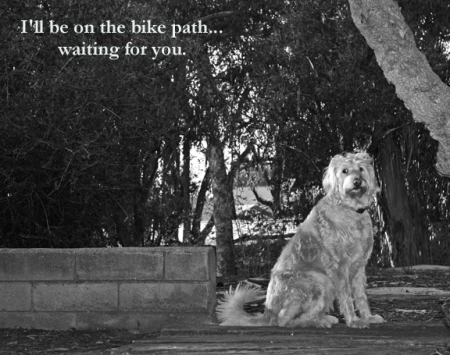
I’m sure I’ll regret that decision to let her slip away without one last hug, but I want to remember her racing on our bike path, with her blond hair waving in the wind, tongue hanging out. I can’t let my last memory be of her relinquishing her life on an operating table.

As I say my own, private goodbyes to my Maesie, I’ll take comfort that our Swamp Thing will be waiting for her at the Rainbow Bridge, welcoming her with a fresh chew bone. And I’m sure she’ll thank Mae for taking such good care of us for all those years.

Goodspeed, my little bug, my little pound princess. I loved you so very much, and I thank you for sitting at my feet while I edited manuscripts and never complained when I insisted that you were too heavy to sit in my lap. You truly mended our hearts, and I don’t know how I’ll find the strength to live without your smiley face.


Jokes About Editors/Publishers

May 13, 2011

These jokes were found here.

Q. How many publishers does it take to screw in a light bulb?

A. Three. One to screw it in. Two to hold down the author.

————————————-

Q. If you were lost in the woods, who would you trust for directions: the publisher who prints everything you write, an agent, or Santa Claus?
A. The agent. The other two indicate you are hallucinating.

————————————-

Three men: an editor, a photographer, and a journalist are covering a political convention in Miami. They decide to walk up and down the beach during their lunch hour. Halfway up the beach, they stumbled upon a lamp. As they rub the lamp a genie appears and says “Normally I would grant you three wishes, but since there are three of you, I will grant you each one wish.”

The photographer went first. “I would like to spend the rest of my life living in a huge house in St. Thomas with no money worries.” The genie granted him his wish and sent him on off to St. Thomas.

The journalist went next. “I would like to spend the rest of my life living on a huge yacht cruising the Mediterranean, with no money worries.” The genie granted him his wish and sent him off.

Last, but not least, it was the editor’s turn. “And what would your wish be?” asked the genie.

“I want them both back after lunch,” replied the editor, “the deadline for tomorrow’s newspaper is in ten hours.

————————————-

Q. What’s the difference between publishers and terrorists?
A. You can negotiate with terrorists.

(thanks, Darlene, for the link!)


Birthdays are a time for discounts

May 13, 2011

So I wrote about my upcoming milestone birthday in a previous post and pondered how best to celebrate turning fifty-effing-five.

DISCOUNTS!

The beagle lopped of the price of her cover art purses by $5.50. So large purses will cost $54.50 and the small one will cost $39.50.

Click to enlarge

She says that even if you don’t have cover art, you can still play. Do you have a couple favorite family photos? They make fun purses.

Or what about advertising your business? Or your photography?

You don’t have to be an author to have a cool one-of-a-kind bag. Oh, and the beagle says that you can order them as a shoulder bag as well.

So that’s it. If you’re interested, just go to I Can Haz Purse and follow the pathetically easy instructions. The beagle insists that satisfaction is guaranteed. I told her not to worry – the sales teams and our fellow publishers that we met in New York freaked out over my bag and wanted to order some for their authors.


Follow

Get every new post delivered to your Inbox.

Join 823 other followers

Powered by WordPress.com